Key Takeaways
1. Conflict Resolution: An Evolving Field for a Changing World
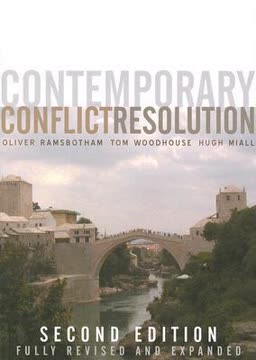
The international community is faced with a wave of new conflicts. Taken together they amount to nothing less than an epochal watershed: a time that future historians may describe as the moment when humanity seized—or failed to seize—the opportunity to replace obsolescent mechanisms for resolving human conflict.
Emerging discipline. Conflict resolution, born in the Cold War era from diverse academic disciplines, emerged to study conflict as a universal phenomenon, applicable from interpersonal to international levels. Pioneers recognized the potential of applying mediation and problem-solving approaches to prevent human survival threats, particularly nuclear war. Despite initial skepticism from traditional international relations, the field grew, establishing journals and institutions, and increasingly influencing real-world conflicts by the 1980s.
Post-Cold War shift. The dissolution of the Soviet Union marked a radical change, shifting the focus from interstate ideological competition to internal conflicts, ethnic strife, and state fragmentation. These "new wars" often involve the breakdown of state structures and economies, leading to mercenary armies and violence against civilians. This new climate brought conflict resolution ideas to the forefront, attracting international statesmen, organizations, and NGOs, and leading to the establishment of dedicated mechanisms and centers.
Addressing critiques. The field faced critiques from realists (seeing it as soft-headed), neo-Marxists (failing to address injustice), and cultural skeptics (Western bias). However, the book argues that conflict resolution is more relevant than ever, adapting to the changing nature of conflict by strengthening societal capacities, building peace constituencies in war zones, and integrating with development and social justice efforts. It emphasizes enriching Western and non-Western traditions through mutual encounter.
2. Classical Ideas Form the Bedrock of Conflict Analysis
Traditionally, the task of conflict resolution has been seen as helping parties who perceive their situation as zero-sumi (Self’s gain is Other’s loss) to re-perceive it as a nonzero-sum conflict (in which both may gain or both may lose), and then to assist parties to move in the positive sum direction.
Fundamental principles. Conflict resolution is built upon classical ideas that view conflict as an intrinsic and inevitable aspect of social change, but one whose handling is a matter of habit and choice. Key concepts include:
- Five approaches to conflict: Contending, yielding, avoiding, compromising, and problem-solving (high concern for both self and other).
- Outcome spectrum: Moving beyond win-lose or lose-lose to explore win-win possibilities.
- Prisoner's Dilemma: Illustrates how individually rational choices can lead to mutually detrimental outcomes, highlighting the need for cooperation.
Beyond positions to needs. A core idea is distinguishing between parties' stated positions and their underlying interests and needs. Interests are often negotiable, while basic human needs (identity, security, survival) are not scarce and can be mutually satisfied, opening pathways to resolution. This reframing allows for creative, win-win solutions where seemingly irreconcilable positions can be overcome by addressing deeper motivations.
Dynamics of intervention. Third-party intervention, whether "powerless" (facilitating communication) or "powerful" (using inducements), can transform conflict dynamics by dampening hostility spirals. The concept of "three faces of power"—threat, exchange, and integrative—highlights the shift from coercion towards persuasion and problem-solving. Asymmetric conflicts, where power imbalances are structural, require transformation of relationships, often involving empowering the weaker side through non-coercive tactics like "speaking truth to power" or mobilizing popular movements.
3. Protracted Social Conflict: Understanding the "New Wars"
For Edward Azar, in a sustained sequence of studies published from the late 1970s, the critical factor in protracted social conflict (PSC), such as persisted in Lebanon (his own particular field of study), Sri Lanka, the Philippines, Northern Ireland, Ethiopia, Israel, Sudan, Cyprus, Iran, Nigeria or South Africa, was that it represented 'the prolonged and often violent struggle by communal groups for such basic needs as security, recognition and acceptance, fair access to political institutions and economic participation'.
Shifting conflict landscape. The late 20th century witnessed a qualitative shift in warfare, moving away from traditional interstate conflicts to "wars of the third kind" or "new wars" predominantly within states. These conflicts are less about foreign policy or status and more about statehood, governance, and the role of communities within states. Edward Azar's theory of Protracted Social Conflict (PSC) anticipated this, arguing that the distinction between domestic and international politics was "artificial" in these cases.
Core of PSC. Azar identified PSC as prolonged, often violent struggles by communal groups for basic needs like security, recognition, and political/economic participation. He highlighted four preconditions for their escalation:
- Communal content: Identity groups (racial, religious, ethnic) as the primary unit of analysis, often stemming from colonial legacies that disarticulated state and society.
- Deprivation of human needs: Grievances arising from unmet security, development, political access, and identity needs, which are non-negotiable and lead to intense conflict.
- Governance and the state's role: Incompetent, parochial, fragile, or authoritarian governments that fail to satisfy basic needs, leading to a crisis of legitimacy.
- International linkages: Economic dependency and political-military ties within the global system influencing domestic institutions and state roles.
Dynamics of escalation. PSCs are characterized by blurred internal/external sources, multiple causal factors, and changing goals/actors. Azar's "process dynamics" include communal and state actions/strategies, and "built-in mechanisms of conflict" like mutually reinforcing negative images and the security dilemma. These dynamics intensify as political crisis spirals into war, where criminality becomes a norm and structures disintegrate. Azar's framework offers a robust model for analyzing non-interstate wars, correlating factors like infant mortality, democratic development, and trade with state failure.
4. Multi-Layered Factors Drive Contemporary Conflicts
It seems unlikely on the face of it that a single all-encompassing explanation will be adequate for conflicts of different types with different starting points in 43 countries that have different histories and cultures and are at different stages of economic and political development.
Beyond simplistic explanations. Understanding contemporary conflicts requires a multi-layered approach, acknowledging that no single theory can explain the diverse origins and dynamics across different regions and cultures. Explanations often vary and can be politically compromised, as seen in the contrasting interpretations of the Northern Ireland conflict. A comprehensive framework must integrate global, regional, state, group, and elite/individual factors.
Global and regional influences. Global factors include the end of the Cold War, which destabilized authoritarian systems and intensified economic liberalization pressures, and systemic inequalities in wealth, environmental constraints, and militarization. These can lead to "scarcity conflicts," "group-identity conflicts," and "relative-deprivation conflicts." Regional dynamics, such as spill-over effects, cross-border movements, and security arrangements, also significantly shape internal conflicts. For example, the Great Lakes region of Africa shows how conflicts can diffuse across borders, while ASEAN's non-intervention principle has historically dampened interstate instability.
State, group, and elite roles. At the state level, "weak societies," economic underdevelopment or inequity, and "incompetent, parochial, fragile, and authoritarian governments" are critical. These political failures often manifest as ascriptive party politics, kleptocracies, or "failed states." Group mobilization, driven by historical grievances and contemporary resentments, escalates conflict through "built-in mechanisms" like misperception and stereotyping. Crucially, elite and individual actions, such as "bad leaders" exploiting communal differences for political gain, can trigger widespread violence, even when underlying tensions are not the immediate cause.
5. Preventing Violence: A Dual Approach of Light and Deep Interventions
Conflict, including ethnic conflict, is not unavoidable but can indeed be prevented. This requires, however, that the necessary efforts are made. Potential sources of conflict need to be identified and analysed with a view to their early resolution, and concrete steps must be taken to forestall armed confrontation.
Proactive engagement. Preventing violent conflict is a central aim, driven by the realization that early intervention is more effective and cost-efficient than responding to full-blown crises. This involves distinguishing between "light prevention," which addresses immediate triggers, and "deep prevention," which tackles root causes. While proving prevention is epistemologically challenging (due to counter-factuals), efforts focus on making situations less "war-prone" by strengthening preventors and reducing causes.
Early warning systems. The development of early warning systems, both quantitative and qualitative, is crucial for identifying potential flashpoints. Quantitative approaches, like Ted Gurr's "Minorities at Risk" project or PIOOM's risk assessments, use indicators to predict proneness to rebellion. Qualitative monitoring, drawing on local expertise and NGO reports, provides rich, contextual information. However, even with warnings, political will and timely response from international actors remain critical, as seen in the failures in Rwanda and Yugoslavia.
Policy measures and actors. "Light" preventive interventions include diplomatic efforts (mediation, good offices, envoys), non-official diplomacy (problem-solving workshops, training), and inducements (sanctions, aid, preventive peacekeeping). "Deep" prevention focuses on promoting good governance, strengthening civil society, and addressing structural inequalities through constitutional reform, fair elections, and human rights protection. International organizations like the OSCE, EU, and UN, alongside NGOs, play vital roles, though their effectiveness is often constrained by sovereignty concerns, coordination challenges, and the need for cultural sensitivity. Successful cases like Estonia and Fiji demonstrate the power of multi-track approaches and sustained commitment.
6. Working in War Zones: Integrating Resolution into Humanitarian Action
When drums beat hard soft voices are not heard.
The grim reality of war zones. When prevention fails, conflicts escalate into "complex political emergencies" characterized by the deliberate targeting of civilians, destruction of social institutions, and the emergence of "war economies." These economies, driven by predation and control of resources (e.g., diamonds, timber), can make violence lucrative and rational for warlords, leading to widespread human rights violations and the erosion of normal social meanings, creating "cultures of violence."
Challenges for intervention. In such environments, traditional conflict resolution approaches face formidable obstacles, as interventions can be co-opted or manipulated. Humanitarian agencies, peacekeepers, and NGOs are often caught in agonizing dilemmas, with their impartiality and neutrality compromised. However, abstention is rarely an option, and there are countless examples of local resistance and "counter-life-world constructs" where communities strive for peace amidst brutality, often at great personal risk.
Creating space for peace. Working in war zones requires a multi-faceted approach to create:
- Security space: UN peacekeeping, evolving from impartial interposition to "peace support operations," integrates conflict resolution techniques like negotiation, liaison, and civic action to build consent and trust. Positive inducements and rewards are increasingly seen as essential to gain population support.
- Humanitarian space: Aid delivery moves beyond immediate relief to empowering displaced populations, rebuilding civil society, and linking relief to long-term development. This involves a wide array of international and local agencies, whose activities are inherently politicized and require conflict resolution skills.
- Political space: Committed third parties and local empowerment are crucial for nurturing peace constituencies. This includes ongoing mediation, back-channel diplomacy, and supporting indigenous peace-making efforts, even when violence is at its worst, as exemplified by International Alert's work in Burundi or Conciliation Resources in Sierra Leone.
7. Ending Violent Conflict: A Complex Process of Transformations
The requirements are best seen as a series of necessary transformations in the elements which would otherwise sustain ongoing violence and war.
Beyond military victory. Most post-Cold War armed conflicts do not end in clear military victories, with many fizzling out or leading to precarious ceasefires. Negotiated settlements, while less prone to genocide than military victories, often lead to recurrence of violence, highlighting the need for sustained peace-building. Ending violent conflict is not a singular event but a dynamic process requiring fundamental transformations across various levels.
Five generic transformers. Raimo Vayrynen and Johan Galtung's work identifies key "transformers" crucial for moving beyond protracted conflict:
- Context transformation: Changes in the broader social, regional, or international environment (e.g., end of the Cold War).
- Structural transformation: Altering the fundamental power dynamics and relationships between conflicting parties, often through empowering weaker sides.
- Actor transformation: Shifts in leadership, goals, or constituencies within the parties themselves.
- Issue transformation: Redefining or reframing the core issues of conflict to open new pathways for agreement.
- Personal and group transformation: Deep psychological and social healing, moving from hatred and distorted perceptions towards reconciliation and mutual acceptance.
Navigating peace processes. Peace processes are characterized by "turning points" (moments of opportunity) and "sticking points" (deadlocks). Third-party mediation, from "soft" facilitation to "muscled" intervention, is crucial for bridging divides, clarifying issues, and building trust, often through back-channels. The concept of "ripe moments" or "hurting stalemates" suggests that parties are most amenable to negotiation when they realize continued fighting is too costly. However, "ripeness" is a complex, evolving process, not a sudden event. Managing "spoilers"—those who seek to derail peace—is also critical, requiring strategies from inducements to marginalization.
8. Post-Settlement Peace-building: Sustaining Peace Beyond Agreements
Peace agreements provide a framework for ending hostilities and a guide to the initial stages of postconflict reform. They do not create conditions under which the deep cleavages that produced the war are automatically surmounted.
The UN's "SOP". Post-settlement peace-building, as defined by the UN Secretary-General, involves "actions to identify and support structures which will tend to strengthen and solidify peace in order to avoid a relapse into conflict." This has evolved into a "standard operating procedure" (SOP) applied to numerous internal wars, particularly after the Cold War. The SOP typically includes:
- Disarming and demobilizing warring parties.
- Repatriating refugees.
- Monitoring elections.
- Promoting human rights.
- Reforming governmental institutions.
- Supporting social and economic development.
Dual challenges. Peace-building faces two intertwined challenges:
- Preventing a relapse into war: Managing "Clausewitz in reverse," where the politics of war continue in non-military forms. This requires addressing the underlying interests that drove the conflict and ensuring that peace is more advantageous than continued fighting.
- Constructing a self-sustaining peace: Addressing the profound deficits left by prolonged war—political/constitutional incapacity, economic/social debilitation, and psycho/social trauma. This is a colossal, long-term undertaking that merges into broader development and reconciliation processes.
Critiques and dilemmas. The UN's liberal internationalist template, emphasizing market democracy, has faced criticism for:
- Neglecting local actors and "peace-building from below."
- Foreshortened timeframes and abrupt withdrawals.
- Cultural insensitivity in applying Western models.
- The suitability of military-heavy operations for non-military tasks.
- The inherent tension between achieving immediate peace (often through compromises with elites) and pursuing long-term justice and deep structural change.
Despite these challenges, UN interventions in cases like El Salvador and Namibia are seen as crucial in preventing relapse, though the ultimate test of a self-sustaining peace—a peaceful transfer of power after elections—remains largely unmet in many cases.
9. The International Community's Multifaceted Role in Conflict
The idea that the international community has the option of staying uninvolved and 'doing nothing' is an illusion.
Intervention is inevitable. In an increasingly interdependent world, the international community is inevitably involved in internal conflicts, whether through direct intervention or by the consequences of inaction. Many conflicts have external as well as internal causes, and protracted wars often deplete indigenous peace-making resources, making outside assistance crucial for ending violence and preventing relapse. The international collectivity is not a monolithic entity but operates through various aspects:
- International system: States acting out of self-interest, often using coercion.
- International society: States cooperating through mutual obligations and institutions.
- International community: Shared values and commitments driving collective action.
- World society: A global community of humankind with universal values.
Diverse actors and approaches. This multiplicity is reflected in the range of actors involved in conflict resolution:
- Great powers: Possess resources for inducement and coercion, but often act from self-interest.
- International organizations (UN, OSCE, EU): Coordinate state action, provide confidence-building, and offer constitutional guarantees.
- Non-governmental organizations (NGOs): Play key roles in governance-based approaches, human rights, and grassroots reconciliation.
- Indigenous actors: National, regional, and local leaders, as well as community groups, are ultimately responsible for sustained peace.
Coordination and legitimacy. The challenge lies in coordinating these diverse agencies and approaches, ensuring that external interventions strengthen rather than undermine local autonomy. The legitimacy of intervention is paramount, requiring cultural sensitivity and a genuine aspiration to represent universal values, rather than imposing external models. The goal is to foster a "multi-track" approach where different actors contribute at various levels and stages of conflict, from prevention to post-settlement peace-building.
10. Navigating the Enduring Dilemmas of Conflict Resolution
The struggle against violent conflict throws up difficult questions to which there seem to be no uncontroversial answers. Some of these take the form of hard choices, and some take the form of inescapable dilemmas, with resulting action or inaction hotly contested by conflict parties and challenged within the wider international community.
Coercion vs. non-violence. A central dilemma is the role of coercion and force. While conflict resolution traditionally seeks non-coercive means, realists argue that power is the ultimate currency. The book concludes that force has a strictly limited role, primarily in "peace support operations" to neutralize those who actively undermine peace. However, the dilemma of how to deal with demagogues and warlords who benefit from violence, and whose power is based on terror, remains a persistent challenge, often leading to inconsistent application of principles.
Justice vs. peace. Another critical dilemma is the tension between addressing structural inequalities and achieving immediate peace. The peace research tradition views violence, not conflict, as the antithesis of peace, advocating for "positive peace" (peace with justice). This means engaging with "economic despair, social injustice and political oppression." However, refusing to attempt conflict resolution until all root causes are addressed risks losing opportunities for "negative peace" (cessation of direct violence). The balance between truth, justice, and reconciliation (e.g., South Africa's Truth and Reconciliation Commission) is complex and culturally dependent, with no single, universally accepted path.
Intervention vs. autonomy. The relationship between external interveners and indigenous actors presents a third dilemma. While outside assistance is often crucial, particularly when local resources are depleted, the emphasis is shifting towards empowering local communities to devise their own solutions. The challenge is to strike a balance between providing a favorable international context and support for peace processes, and strengthening local autonomy and indigenous conflict resolution capacities. This requires careful consideration of who intervenes, their interests, accountability, and how their actions genuinely support local initiatives without imposing external agendas.
Last updated: