

Plot Summary
The Song Breaks
Before the world exists, Ilúvatar gives the Ainur a musical design to shape together. Melkor, greatest among them, introduces melodies of his own because he wants the power to create independently. Other singers falter or follow him, and the music fractures into competing themes.
Ilúvatar answers each disruption with a new theme, then reveals that the whole music has become a vision of a world, including events Melkor never intended. He gives that vision existence as Eä. Some Ainur enter it to shape Arda, among them Manwë, Ulmo, and Aulë. Melkor enters too, seeking dominion. His repeated attempts to possess the world’s beauty turn creation into a struggle between shared making and control.
The creation story makes evil an act of appropriation rather than creation from nothing. Melkor can distort what exists, but he cannot originate life or escape the larger design he contests. That limit does not make his damage harmless: the world still bears the fractures he causes. Ilúvatar’s answer also leaves room for consequences beyond any single will’s control. The myth establishes the tension that will govern the histories to come: making can be generous, as Aulë’s craft is, or become a claim of ownership, as Melkor’s ambition does.
Lamps Fall, Trees Rise
The Valar order Middle-earth and raise two great Lamps to illuminate it. Melkor destroys them, shattering the lands and seas and ending the first age of growth. The Valar withdraw to Aman, build the guarded realm of Valinor, and Yavanna brings forth the Two Trees, whose silver and gold light becomes the measure of time there.
Aulë, impatient for the coming Children, secretly makes the Dwarves. When Ilúvatar grants them independent life, he also decrees that they must sleep until the Elves awaken. Yavanna fears that later peoples will cut down the growing things she loves, so Manwë reveals that protective spirits will dwell among them. Creation continues, but each act of repair unfolds in a world already injured.
The Lamps and Trees make the world’s history visible as loss followed by partial renewal. The Trees do not restore the original design; they create a protected beauty whose eventual destruction will matter precisely because it cannot simply be remade. Aulë’s Dwarves introduce a second question about making: his impatience oversteps authority, but his willingness to relinquish his work allows it to become a gift rather than a possession. The response to Yavanna’s fear likewise gives the natural world defenders, suggesting that care requires more than admiration. It needs limits on those who would use what they did not make.
The Westward Sundering
The Elves awaken beside Cuiviénen, where Melkor’s servants have already made the dark dangerous. Oromë finds them and brings news of their existence to the Valar, who defeat Melkor and imprison him, then invite the Elves to Aman for protection. Some refuse; those who accept begin a long westward march. The Teleri fall behind, and many remain in Middle-earth.
Their lord Elwë becomes lost in Nan Elmoth when he meets Melian, a Maia whose song holds him there for years. Their union makes him Thingol, king of the Sindar, while his brother Olwë leads many Teleri across the sea. The journey therefore creates distinct Elven peoples, and leaves Thingol’s followers in Beleriand without the protection of Aman.
The summons is protective, but it also creates the divisions that shape the political map of the First Age. The Valar’s victory over Melkor does not erase the consequences of their intervention; the Elves who remain in Middle-earth inherit both greater danger and a different relationship to the land. Thingol’s meeting with Melian makes private love a force with public consequences: his choice to stay turns a missed departure into the foundation of Doriath. The chapter’s migrations resist a simple contrast between wise departure and foolish refusal. Every people carries a different form of attachment, and those attachments later determine who can help whom.
Fëanor’s Jewels, Morgoth’s Lies
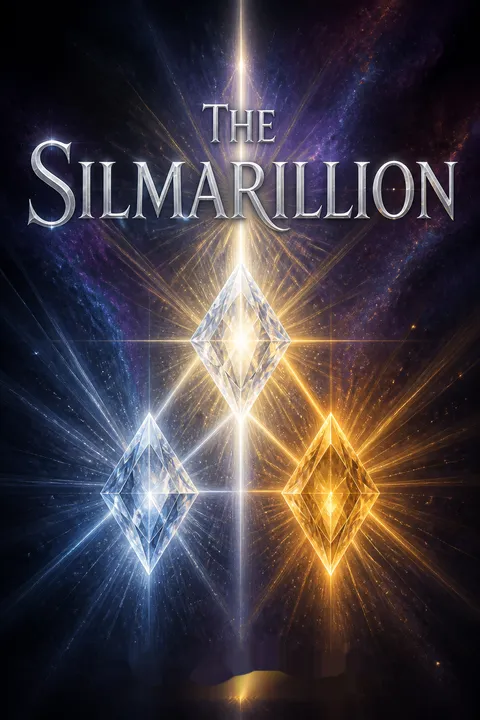
In Valinor, Finwë’s first wife, Míriel, dies after giving birth to Fëanor, whose fierce talent and possessive nature grow alongside his estrangement from his half-brothers. After three ages imprisoned, Melkor is released and wins the Noldor’s confidence with knowledge and insinuations that the Valar fear their independence. Fëanor makes the three Silmarils, preserving within them the light of the Two Trees.
Their beauty intensifies Melkor’s desire, while the rumors sharpen old family rivalries into political suspicion. When Fëanor threatens Fingolfin with a sword, the Valar exile him from Tirion. Finwë follows him to Formenos, and the Noldor’s peace gives way to a quarrel Melkor can exploit without openly commanding either side.
Fëanor’s tragedy begins in a collision between creative distinction and emotional insecurity. His skill gives him genuine authority, but his mother’s absence and his father’s second marriage make recognition feel scarce, something to guard rather than share. Melkor’s manipulation succeeds because it gives existing resentments a political vocabulary: family grievance becomes a story of captivity and stolen power. The Silmarils embody this conflict. They are made from light that Fëanor did not create, yet his labor tempts him to treat them as extensions of himself. The chapter shows how a real injury can become an opening for a much larger, deliberately manufactured falsehood.
Blood at Alqualondë
Melkor and Ungoliant destroy the Two Trees, then Melkor kills Finwë at Formenos and steals the Silmarils. Grief and fury drive Fëanor to name him Morgoth and swear with his seven sons to pursue anyone who keeps a jewel from them. The Noldor leave Valinor, but Fëanor’s demand for ships brings them to Alqualondë, where they kill Teleri who refuse to surrender their fleet.
The Valar pronounce a doom of exile and kin-strife. At Losgar, Fëanor burns the stolen ships rather than ferry Fingolfin’s larger host across. Fingolfin’s people must cross the deadly Helcaraxë on foot, losing many lives. Their arrival in Middle-earth is therefore marked by murder, betrayal, and a feud already carried into the war against Morgoth.
The departure from Valinor is not a single act of liberation. It is a sequence in which Fëanor’s language of freedom becomes coercion, first against the Teleri and then against his own kin. The oath makes private grief hereditary: his sons inherit a command that will repeatedly compete with their judgment and loyalties. The burning at Losgar reveals how distrust can become self-fulfilling. Fëanor assumes the other host may betray him, so he abandons them to danger and confirms their hatred. The Doom of the Noldor is effective not as an arbitrary curse but as a diagnosis of the political habits the exiles have chosen.
Beleriand’s Uneasy Alliance
Fëanor’s host defeats Morgoth’s Orcs in the Battle-under-Stars, but Fëanor pursues too far and dies of his wounds. Morgoth captures Maedhros and suspends him from Thangorodrim. Fingon climbs the mountain to find his old friend; when he cannot free Maedhros from the iron bond, he cuts off his hand and carries him to safety with help from the Eagles.
Maedhros yields the high kingship to Fingolfin, easing the division between their houses. The Noldor establish realms around Beleriand and begin a long siege of Angband. Finrod befriends the first Men to arrive, while Thingol keeps Doriath closed behind Melian’s protective boundary. The allies gain time, but their separate strongholds preserve old distrust alongside their shared purpose.
Fingon’s rescue is a rare repair enacted through bodily cost. He restores Maedhros to life and makes political reconciliation possible, but the missing hand remains a record of the damage that peace cannot undo. Maedhros’s decision to yield kingship similarly turns private gratitude into a public settlement, though not every brother accepts it. The siege that follows gives the exiles a shared enemy and a period of prosperity, yet its structure depends on scattered realms and imperfect trust. Finrod’s welcome to Men extends the alliance beyond Elven factions; Thingol’s guarded isolation shows that even among Morgoth’s opponents, fear of future conflict shapes present choices.
The Siege Burns Away
After centuries of watchful peace, Morgoth sends rivers of flame across Ard-galen. The plain becomes Anfauglith, the Siege of Angband collapses, and dragons and Orcs overwhelm the Noldor’s scattered defenses. Angrod and Aegnor die, and the House of Bëor loses many of its warriors.
Barahir saves Finrod from encirclement, earning a ring and a binding promise of aid. Fingolfin, believing his people ruined, rides alone to Angband and wounds Morgoth seven times before the Dark Lord kills him.
His challenge cannot reverse the defeat, but its scars remain on Morgoth. The surviving realms retreat or hide. Barahir stays in Dorthonion with a small outlaw band, while Sauron captures the western watchtower and turns it into a werewolf-haunted stronghold.
The Sudden Flame destroys the illusion that endurance alone can secure the Noldor’s kingdoms. Their long siege has contained Morgoth without breaking his power, and the attack exposes the difference between holding a border and possessing the strength to end a war. Fingolfin’s duel is both heroic and strategically futile: his courage answers overwhelming defeat with a personal act, but cannot save the people whose loss prompted it. Barahir’s rescue of Finrod creates a counterweight to the wider collapse, a promise grounded in reciprocal risk rather than dynastic claim. That promise will soon draw a mortal outlaw into the struggle over the Silmarils.
Beren Takes the Silmaril
After Sauron tricks Gorlim into revealing Barahir’s refuge, Orcs kill the outlaws and Beren returns too late to save his father. He escapes Dorthonion and enters Doriath, where he meets Lúthien, Thingol and Melian’s daughter.
Thingol sets an impossible bride-price: a Silmaril from Morgoth’s crown. Finrod honors his oath to Beren, but Celegorm and Curufin turn Nargothrond against its king. Finrod dies protecting Beren in Sauron’s dungeon; Lúthien and Huan defeat Sauron and free the captives.
She then escapes her father’s confinement and accompanies Beren into Angband. Her enchantment puts Morgoth and his court to sleep, allowing Beren to cut a jewel free. Carcharoth bites off Beren’s hand, but the lovers escape with the Silmaril and return to Doriath.
The quest overturns the hierarchy of power without pretending that power disappears. Thingol’s demand treats his daughter as a prize to be exchanged, but Lúthien repeatedly acts beyond the roles others assign her, escaping confinement and entering the enemy’s stronghold by choice. Finrod’s loyalty is costly because his followers, under the influence of Fëanor’s sons, abandon him. Beren’s success depends on partnership rather than solitary heroism: Lúthien’s skill and Huan’s loyalty make possible what armies could not achieve. Yet the jewel’s recovery does not settle its ownership. It carries the old oath into Doriath, converting a victory into a new source of danger.
Unnumbered Tears
Inspired by Beren and Lúthien’s success, Maedhros tries to unite Elves, Men, and Dwarves for a final assault on Angband. His plan depends on a coordinated attack, but Morgoth’s spies and the betrayal of Uldor delay the eastern force.
In the west, Gwindor charges after Morgoth’s soldiers kill his blinded brother Gelmir before the Noldor. The premature assault reaches Angband’s gates, then collapses when Morgoth releases his hidden armies. Ulfang’s sons turn against Maedhros, while the loyal sons of Bór die fighting them.
Fingon falls to Gothmog, but Húrin and Huor hold the rear long enough for Turgon to escape. Huor’s dying prediction places future hope in Turgon’s house. Morgoth captures Húrin and curses his family, intending him to witness their suffering.
The defeat is not caused by treachery alone. Maedhros’s coalition is weakened by the oath’s earlier damage, especially the refusal of Nargothrond and Doriath to trust his leadership. Morgoth then uses an atrocity against Gwindor’s brother to turn grief into the opening he needs. The contrast between the sons of Bór and Ulfang prevents the battle from reducing entire peoples to moral categories: some Easterlings honor their alliance, others exploit it. Húrin and Huor’s stand preserves Turgon’s force, but the victory of that act is inseparable from Húrin’s capture. Morgoth’s curse attacks kinship itself, making love the channel through which suffering can be imposed.
Túrin’s Doom Tightens
Morwen sends her young son Túrin from occupied Dor-lómin to Thingol’s care, but after he accidentally kills Saeros, Túrin flees Doriath rather than face judgment. Beleg finds him among outlaws and later follows him to Amon Rûdh, where the dwarf Mîm shelters the band. Mîm betrays them, and Orcs carry Túrin north. Beleg and the escaped thrall Gwindor rescue him, but Túrin mistakes Beleg for an enemy in the darkness and kills him.
Gwindor brings the shattered Túrin to Nargothrond, where he takes command and persuades the hidden kingdom to fight openly. Glaurung then destroys Nargothrond and uses a spell to send Túrin away from the captured Finduilas toward his family. Túrin reaches Brethil too late to save her, and adopts the name Turambar.
Túrin’s repeated flight from shame gives Morgoth’s curse a human mechanism. Each departure feels like self-defense, yet it cuts him off from the people who might correct his judgment. His killing of Beleg is the story’s most painful consequence of this isolation: he acts under fear, but the harm cannot be undone by learning the truth. At Nargothrond, his courage and military brilliance win influence while his confidence in open battle ignores warnings that preserve the kingdom’s safety. Glaurung does not simply overpower Túrin; he directs Túrin’s virtues, especially loyalty to family and refusal to seem cowardly, into choices that advance the enemy’s design.
Doriath’s Necklace of Ruin
After Túrin’s death, Húrin wanders through Beleriand and brings the Nauglamír, a famed dwarf-made necklace, to Thingol as a bitter reminder of his family’s suffering. Thingol orders the necklace remade around the Silmaril won by Beren. The Dwarven smiths covet the jewel; when Thingol insults them, they kill him and steal it.
Melian’s power leaves Doriath unguarded, and the Dwarves sack Menegroth before Beren and the Green-elves defeat them at Sarn Athrad. Beren recovers the necklace, then sends it to his son Dior. The sons of Fëanor demand the Silmaril, and their assault destroys Doriath. Dior, his wife Nimloth, and many defenders die; his young sons disappear in the forest. His daughter Elwing escapes toward the Havens with the jewel.
The necklace gathers several histories into one object: Dwarven craft, Finrod’s lost kingdom, Húrin’s grief, and the Silmaril’s contested light. Each attempt to possess it revives an earlier wound. Thingol’s pride turns a negotiation into murder; the sons of Fëanor’s oath then transforms grief over the jewel into another attack on kin. Melian’s departure matters politically as well as personally, because her protection had allowed Doriath to remain apart from the wars. The destruction of the kingdom shows how isolation can preserve a culture without making it immune to the conflicts surrounding it. Elwing’s escape keeps the jewel, and its danger, in motion.
Gondolin Betrayed Within
Tuor, son of Huor, reaches Gondolin carrying Ulmo’s warning that the city must be abandoned. Turgon refuses to leave the stronghold he has spent years building, and Maeglin, his sister-son, supports that decision.
Maeglin’s desire for Turgon’s daughter Idril and resentment of Tuor leave him open to Morgoth’s promises. Captured while mining beyond the city, he reveals Gondolin’s location and returns to help prepare the attack. Idril has secretly built an escape passage, but Morgoth’s army strikes during a festival and overwhelms the city.
Tuor kills Maeglin after he seizes Idril and their son Eärendil. Tuor and Idril lead survivors through Idril’s hidden route. At the Eagles’ Cleft, Glorfindel dies fighting a Balrog, while the Eagles help the refugees reach the River Sirion and the coast.
Gondolin’s defenses embody Turgon’s belief that beauty and secrecy can be preserved by withdrawing from history. Ulmo’s warning challenges that belief, but Turgon treats counsel as an assault on the city he has made. Maeglin’s betrayal grows from desire denied and from a political ambition that has no honorable route to fulfillment; Morgoth exploits both. Idril’s secret passage offers a different response to danger. She preserves the possibility of escape without confusing protection with invulnerability. The city’s fall therefore reveals the limits of Turgon’s control, while its survivors owe their lives to foresight that was quiet, practical, and prepared before catastrophe arrived.
Eärendil Carries Hope
At the Mouths of Sirion, Eärendil marries Elwing, who carries the Silmaril recovered by Beren and Lúthien. He builds the ship Vingilot with Círdan and sails west to ask the Valar for aid. While he is away, the surviving sons of Fëanor attack the Havens.
Elwing leaps into the sea rather than surrender the jewel; Ulmo turns her into a white bird, and she finds Eärendil at sea. Together they reach Valinor, where Eärendil pleads for Elves and Men. The Valar launch the War of Wrath.
Eärendil, joined by the Eagles, kills the dragon Ancalagon, whose fall breaks Thangorodrim. Morgoth is defeated and expelled. Maedhros and Maglor seize the remaining Silmarils, but the jewels burn them: one falls into the earth, one into the sea, and Eärendil bears the third as a star.
Eärendil’s mission succeeds because he represents both kindreds without claiming that either can speak for the other alone. His family history binds the Elven and human stories, while Elwing’s journey ensures the Silmaril reaches the West with him. The Valar’s intervention ends Morgoth’s rule, but it cannot restore the lands or reconcile every injury. The sons of Fëanor finally obtain the jewels and discover that possession cannot fulfill the oath that has governed their lives. Their differing fates place the Silmarils beyond political ownership. The ending grants immense victory, but the world that survives is changed and scarred, not returned to its beginning.
Númenor Reaches for Death
The Valar reward the Elf-friends among Men with Númenor, an island kingdom whose people live longer than other mortals but remain subject to death. Over generations, fear of dying hardens into resentment of the ban on sailing west.
The King’s Men reject the Elves and persecute the Faithful. Ar-Pharazôn, the mightiest king, captures Sauron in Middle-earth and brings him to Númenor; Sauron soon becomes his adviser and turns the island toward worship of Morgoth. He persuades the king to cut down the White Tree and build a temple.
Isildur secretly saves a fruit from the tree, while his father Elendil prepares the Faithful to flee. Ar-Pharazôn finally sails against Valinor. Ilúvatar changes the world, drowns Númenor and the fleet, and Elendil’s ships escape to Middle-earth.
Númenor’s fall begins with a gift that cannot satisfy the need it awakens. Longer life enables learning and achievement, but it also gives the kings more time to fear its end and to interpret mortality as deprivation. Sauron’s influence succeeds because he does not invent that fear; he gives it an enemy and a political program. The White Tree makes the change visible. Its destruction breaks a living link to the kingdom’s earlier gratitude, while Isildur’s rescue of its fruit carries a remnant of that inheritance forward. The catastrophe is not simply punishment for disobedience. It is the material consequence of a society that turns fear into domination.
One Ring Against the Elves
In the Second Age, Sauron returns to Middle-earth in a fair appearance and offers the Elven smiths of Eregion knowledge to preserve beauty and heal damaged lands. Celebrimbor and the jewel-smiths make Rings of Power, but Sauron secretly forges the One Ring to govern them.
The Elves sense his control and hide their three greatest rings; Sauron attacks Eregion, kills Celebrimbor, and distributes captured rings to Dwarves and Men. The Nine eventually enslave mortal kings as Ringwraiths, while the Dwarves resist direct control but grow more possessive of wealth.
After Númenor falls, Elendil and his sons found Arnor and Gondor. They ally with Gil-galad against Sauron. In the siege of Barad-dûr, both kings die, but Isildur cuts the Ring from Sauron’s hand and refuses to destroy it in Mount Doom.
The Rings turn preservation into an instrument of domination. The Elves’ original aim, to hold back decay, is understandable within their long relationship to Middle-earth, but Sauron redirects that aim toward control over other wills. The One Ring makes his own power portable and vulnerable at once: it allows him to rule others, yet concentrates his strength in an object that can be taken. Isildur’s refusal to destroy it shows how grief can make possession seem like justice. He understands the Ring as compensation for his family’s losses, not as a continuation of Sauron’s power. The decision leaves the victory incomplete and the next age unstable.
The Third Age’s Long Shadow
Isildur loses the Ring in the Anduin when Orcs ambush his company, and its whereabouts pass out of knowledge. Over the Third Age, Arnor fragments and fades, while Gondor endures repeated assaults. The Ringwraiths seize Minas Ithil and make it Minas Morgul.
Sauron later gathers strength in Dol Guldur, where the Wizard Gandalf eventually discovers that the power behind the fortress is Sauron himself. The White Council drives him out, but he returns to Mordor.
Saruman, chosen to lead the Council, secretly wants the One Ring for himself and withholds what he learns. The Ring has meanwhile passed to the Halfling people, then to Bilbo, before reaching Frodo. Gandalf recognizes its danger before Sauron can recover it, and sets a watch as the Nazgûl begin searching.
The Third Age is shaped by failures of memory as much as by military weakness. Isildur’s decision is followed by the Ring’s disappearance, allowing later generations to treat a live danger as an old legend. The Wise do not share one clear understanding: Gandalf urges action, while Saruman’s private ambition makes delay useful to him. The Ring’s movement among Halflings unsettles assumptions about who matters in history. Its concealment is not the result of a grand strategy, but of obscurity and chance. That accident does not make the threat smaller; it gives the Wise a narrow advantage that depends on recognizing significance where established power has not looked.
The Ring Returns to Fire
As Sauron’s forces rise, Aragorn, heir of Isildur, takes up the reforged shards of Elendil’s sword and joins the resistance. Saruman’s treachery is exposed, Isengard is broken, and the armies of Rohan and Gondor meet Sauron’s forces in open battle. The western leaders then march to the Black Gate, knowing they cannot defeat Sauron by strength alone.
Frodo, accompanied by his servant, crosses Mordor and reaches Mount Doom. There the Ring’s hold overwhelms his resolve, but Gollum seizes it and falls with it into the fire where it was forged. Sauron’s power collapses with the Ring, and his armies scatter. Aragorn is crowned, the White Tree grows again, and the Elves depart Middle-earth as the power sustaining their havens fades.
The ending tests the difference between defeating an enemy and mastering the means of his power. The leaders of the West cannot win by matching Sauron’s force, and Frodo’s journey brings the Ring to the only place where it can be unmade. Yet the final act is not a clean triumph of will: Frodo fails to relinquish the Ring at the brink, and Gollum’s grasp completes what the mission requires. The outcome depends on a chain of mercy, endurance, and contingency rather than a hero’s perfect control. Aragorn’s restoration and the Elves’ departure mark two different responses to the same change: renewal for Men, and an end to the old order.
Analysis
The Silmarillion is built around a recurring temptation: to preserve or improve the world by claiming authority over it. Melkor begins with the desire to create, but turns that desire into domination when he cannot accept limits. Fëanor’s craft is nobler, yet his attachment to the Silmarils repeats a smaller version of the same error. Later, the Noldor’s Rings seek to hold back change, and Númenor’s kings seek to hold back death. The book does not treat these motives as identical to evil. Love of beauty, grief, ambition, and fear are real human impulses. The catastrophe comes when those impulses become claims of ownership over other beings or over the shape of the world.
The story’s structure keeps testing how power might be used otherwise. Finrod honors a promise to a mortal stranger. Fingon risks himself to rescue a political rival. Lúthien acts without waiting for permission from her father or the Noldorin princes. Eärendil carries a plea on behalf of two kindreds rather than seeking a crown. These acts do not erase the consequences of violence, but they interrupt the assumption that only the strongest rulers can alter history. The decisive help often comes from people who are politically marginal, personally vulnerable, or willing to depend on others.
Mortality is the deepest divide between Elves and Men, but the book refuses to make long life an uncomplicated advantage. Elves remember more, yet their attachment to a changing world can become grief and possessiveness. Men have less time and less certainty, but their deaths release them from the world’s circles in a way the Elves cannot understand. Númenor falls when its leaders treat that unknown fate as a theft to be corrected by force. Against this, the book places a more difficult ethic: act faithfully without possessing the final outcome. The surviving world is not restored to its original beauty. It is diminished, altered, and still capable of renewal, but its hope depends on accepting limits rather than conquering them.
Review Summary
The Silmarillion is a complex mythological work that provides the history and lore of Middle-earth. While challenging to read due to its biblical style and numerous characters, many readers find it rewarding for its rich world-building, epic tales, and insight into Tolkien's universe. It covers the creation of Arda, the history of Elves and Men, and the events leading up to The Lord of the Rings. Some consider it Tolkien's masterpiece, praising its scope and depth, though others find it difficult to follow.
People Also Read

Characters
Ilúvatar
Maker beyond the worldThe source of the Ainur and the world, Ilúvatar gives others room to shape what he has conceived but retains the power to bring creation into being. His responses to Melkor’s discord do not erase conflict; they place it inside a larger design that no single being fully understands. He also gives Elves and Men distinct fates, leaving Men’s destiny beyond the knowledge of the Valar. Ilúvatar’s role is less that of a constantly intervening ruler than of a distant authority whose limits and judgments shape the characters’ choices.
Melkor, later Morgoth
The first Dark LordThe mightiest of the Ainur at the beginning, Melkor is driven by a desire to create independently and to rule whatever he cannot create. His envy turns his gifts toward disruption, and he corrupts people and works rather than making life of his own. He can present himself as a benefactor, offering knowledge and order, but his generosity is a route to dependence. As Morgoth, he becomes the central enemy of the First Age, drawing others into conflict by exploiting ambitions and grievances already present in them.
Manwë
Ruler of the ValarManwë is the chief of the Valar and the one who most clearly understands Ilúvatar’s purposes. He values peace and lawful authority, but his inability to imagine evil as Melkor experiences it leaves him vulnerable to deception. His decisions, including the pardon of Melkor and the summons of the Elves to Aman, are made from a desire to protect and guide. Manwë’s story asks how a benevolent ruler can act responsibly when patience, restraint, and intervention each carry costs.
Fëanor
Genius of the NoldorFëanor is the most gifted maker among the Noldor, a brilliant and forceful spirit whose work reshapes Elven craft and history. His mother’s death and his father’s second marriage deepen his sense of separation from his half-brothers. He wants his skill and creations recognized, but the desire for recognition hardens into possessiveness. Fëanor is not simply deceived by Melkor: he has strong motives of his own and resists the enemy even as pride and grief make him vulnerable to the same politics of ownership. His choices become the defining inheritance of his house.
Fingolfin
Steadfast Noldorin kingFingolfin, son of Finwë and Fëanor’s half-brother, is known for steadiness, courage, and a strong sense of duty to his people. He attempts to keep the Noldor united even when Fëanor humiliates and threatens him. His authority rests less on dazzling craft than on endurance and public responsibility. Fingolfin’s willingness to follow the exiles despite his better judgment reflects a recurring tension in the story: loyalty can preserve a community, but it can also bind people to reckless decisions.
Beren
Mortal outlaw and seekerBeren is a mortal Man formed by loss, exile, and life in the wild. He survives through courage and a resourcefulness that does not depend on armies or royal position. His love for Lúthien brings him into the affairs of Elven kings, but he does not approach her as a possession to be won. Beren’s stubbornness can resemble the pride of the greater lords, yet his reliance on companions and willingness to accept aid distinguish his heroism. Through him, the book tests whether a person with little political power can alter the course set by rulers and ancient oaths.
Lúthien
Defiant Elven heroineDaughter of Thingol and Melian, Lúthien combines Elven beauty with a will that refuses to remain within the boundaries imposed by family or rank. Her gifts of song and enchantment are not merely decorative; she uses them to act where kings and armies have failed. She loves Beren without treating his mortality as a reason to dismiss him, and she accepts danger as part of a shared choice. Lúthien’s independence challenges the habit of turning women into dynastic prizes, while her compassion makes power answer to attachment rather than ownership.
Thingol
King behind the GirdleThingol rules the Sindar of Beleriand with Melian, and his long years in Aman give him a singular place among the Elves who remained in Middle-earth. He values his people’s safety and the dignity of his kingship, often preferring guarded borders to uncertain alliances. His pride can make caution curdle into contempt, especially when he judges those whose status differs from his own. Thingol’s relationship with Melian joins political authority to deep affection, while his decisions about Lúthien reveal how a loving father can still mistake control for protection.
Finrod Felagund
King bound by friendshipFinrod is the eldest son of Finarfin and a founder of Nargothrond. Curious, generous, and unusually open to other peoples, he becomes the first Elven king to welcome Men as companions rather than merely as subjects. His sense of honor is personal and binding: a promise made to a friend matters even when fulfilling it threatens his crown and safety. Finrod’s rule balances political responsibility with a willingness to act on principles that cannot be reduced to strategy. His choices make him one of the clearest counterweights to the possessive politics of Fëanor’s house.
Túrin
Warrior pursued by doomTúrin, son of Húrin and Morwen, is brave, proud, and deeply sensitive to humiliation. He repeatedly tries to protect himself and those he loves by refusing help or leaving places where he feels judged. His skill in battle earns respect, but his need to control how others see him can make counsel feel like an insult. Túrin’s story is shaped by the gap between intention and consequence: he often acts to defend the vulnerable, yet his secrecy and anger make him easier to manipulate. He is one of the book’s most sustained studies of how trauma can become a pattern of self-isolation.
Húrin
Defiant human captainHúrin is a lord of the House of Hador, a formidable fighter whose courage is matched by an unusually stubborn refusal to submit. He loves his wife, Morwen, and their children, and understands the limited time available to mortal people in a way the Elves often do not. Húrin’s loyalty to his allies is expressed through action rather than ceremony. His capacity to endure makes him a figure of resistance, but it also exposes him to enemies who understand that his attachments are the places where he can be hurt.
Tuor
Mortal bearer of warningTuor is the son of Huor and Rían, raised among Elves after the wars scatter his family. He is shaped by displacement and a strong attraction to the sea, which becomes a source of direction rather than escape. Ulmo chooses him to carry a warning to Gondolin, and Tuor brings a mortal perspective into a city that has withdrawn from the suffering outside its walls. His patience and openness contrast with the pride of rulers who trust their own strongholds too completely. Through Tuor, the story links human endurance to the future of both Elves and Men.
Eärendil
Mariner between kindredsSon of Tuor and Idril, Eärendil belongs to both the Elven and human lines and feels an enduring pull toward the sea. He is a mariner by temperament, but his voyages carry a larger purpose: seeking the lost and pleading for help beyond Middle-earth. His identity makes him a natural mediator, though not an effortless one; he must choose a path that will permanently separate him from the lands he loves. Eärendil’s significance comes from turning inherited connection into an act of responsibility, speaking for two peoples whose histories have often been marked by division.
Sauron
The patient deceiverOnce a Maia in Aulë’s service, Sauron brings a maker’s knowledge to the work of domination. He is less openly destructive than Morgoth and often begins by offering order, craft, or the healing of damaged lands. His skill lies in identifying the desire beneath a person’s stated purpose and reshaping it to serve his own. Sauron prefers systems that extend his will, from political influence to the Rings of Power. His capacity to appear fair makes discernment more difficult than battlefield courage, and his long patience allows small concessions to become forms of dependence.
Ar-Pharazôn
Proud King of NúmenorAr-Pharazôn is the most powerful of Númenor’s kings, a successful captain whose military reputation and wealth win him public loyalty. He believes strength should command the world and is increasingly unable to accept the limits placed on mortal life. His pride is not separate from the culture around him; it grows in a society that has learned to equate achievement with entitlement. Sauron recognizes that the king’s ambition can be turned against the very kingdom he seeks to exalt. Ar-Pharazôn represents the danger of confusing greatness with immunity from consequence.
Elendil
Leader of the FaithfulElendil is a descendant of Númenor’s royal line and a leading member of the Faithful, the faction that preserves friendship with the Elves and reverence for the Valar. A seasoned mariner, he is also a careful political observer who recognizes when open opposition would endanger those he hopes to protect. His loyalty is not passive: he prepares for the survival of his people while resisting the King’s turn toward Sauron. Elendil’s character joins inherited memory to practical leadership, making preservation itself a courageous political act.
Isildur
Heir carrying a burdenIsildur is Elendil’s elder son, a Númenórean prince whose actions are shaped by loyalty to family and inherited responsibility. He has the resolve to risk himself for what he believes must be preserved, and he is willing to act without public recognition. Yet his sense of justice can become entangled with personal loss, making it difficult to distinguish an heirloom from a danger. Isildur’s story gives the book a pivotal example of how a seemingly defensible decision can carry consequences beyond the decision-maker’s own life.
Frodo
Reluctant Ring-bearerFrodo is a Halfling whose small scale and unassuming life place him outside the usual ranks of power. He accepts a burden whose danger is difficult for even the Wise to manage, and his courage consists less in combat than in continued movement through fear, exhaustion, and temptation. Frodo’s importance lies partly in the contrast between the Ring’s grand political history and the modest person who must carry it. His role tests whether humility can withstand an object designed to turn every will toward possession.
Gandalf
Wandering guardianGandalf, called Mithrandir by the Elves, is a Wizard sent to oppose the return of Sauron. He travels without establishing a permanent court, preferring counsel, observation, and the rekindling of courage in others. His vigilance leads him to recognize danger that more powerful figures dismiss, but he does not assume that wisdom entitles him to wield every source of power. Gandalf’s methods value cooperation and overlooked people over command. He is especially attuned to the possibility that small, unexpected actors can alter a conflict that appears decided by kings and armies.
Elrond
Keeper of ancient memoryElrond is the Half-elven son of Eärendil and Elwing, a lord of Rivendell who preserves lore from the Elder Days. He is both a political leader and a guardian of memory, offering refuge and counsel to travelers and heirs whose histories remain unsettled. His long view helps him recognize patterns that others hope have ended, particularly the persistence of dangers tied to the past. Elrond’s wisdom is tempered by restraint: he can advise, warn, and preserve, but cannot choose another person’s response for them.
Galadriel
Noldorin keeper of wisdomGaladriel is among the Noldor who leave Valinor, driven by a desire to see and rule lands beyond the Blessed Realm. Her intelligence and ambition coexist with a capacity to learn from older and wiser figures, including Melian. She is not content merely to inherit a place in her family’s hierarchy; she seeks a realm and authority of her own. Across the ages she becomes associated with preservation and discernment, qualities that carry a particular weight in a world where the desire to preserve beauty can slide into a desire to control it.
Melian
Maia queen of DoriathMelian is a Maia who leaves Valinor and makes her home in Middle-earth with Thingol. Her foresight, wisdom, and power shape Doriath’s security, but she does not rule by force alone; she advises, observes, and understands the emotional currents hidden beneath political decisions. As Lúthien’s mother, she combines supernatural stature with intimate attachment. Melian’s story explores the cost of entering the mortal world through love, and the limits that even great wisdom faces when others choose pride or refuse counsel.
Plot Devices
The Silmarils
Light made worth possessingFëanor makes three jewels containing the light of the Two Trees, which Morgoth destroys. The Silmarils preserve a beauty that cannot be recreated, making them both sacred objects and irresistible prizes. Morgoth steals them for his crown, and Fëanor’s sons swear to pursue anyone who keeps them. Their pursuit repeatedly turns victories into new conflicts, from Beren’s quest to the ruin of Doriath and the attack on the Havens. The jewels connect artistic creation to the dangers of ownership: characters seek to protect, reclaim, or display their light, but the claim itself often becomes destructive.
The Oath of Fëanor
A vow that outlives judgmentFëanor and his seven sons swear to pursue anyone who possesses a Silmaril, invoking the highest powers as witnesses. The oath binds them regardless of the circumstances in which a jewel changes hands, and it drives them toward violence even when restraint would better serve their war against Morgoth. Its consequences extend beyond the original oath-takers: allies become targets, kingdoms are attacked, and later generations inherit the danger. The oath functions as a political trap and a psychological one. It turns an expression of grief and resolve into an external command that the sons treat as stronger than conscience, friendship, or practical judgment.
The Doom of the Noldor
Consequences made propheticAfter the Noldor kill the Teleri at Alqualondë, the Valar pronounce a doom forecasting exile, grief, and conflict among kin. The prophecy does not remove choice from the exiles; instead, it names the patterns their actions have set in motion. Distrust between the houses of Fëanor and Fingolfin weakens alliances, while fear that kin will betray kin makes betrayal easier to achieve. Morgoth repeatedly exploits the divisions the Noldor carry with them. The doom gives the narrative a sense of tragic momentum, but it is not a simple excuse for every later act. Characters still choose, and their choices determine how the inherited danger unfolds.
The Rings of Power
Preservation bent toward controlThe Elves of Eregion make Rings intended to preserve beauty and resist the decay of time. Sauron secretly forges the One Ring to govern the others, placing a portion of his power into it. When he puts it on, the Elves perceive his design and hide their three greatest rings; other rings pass to Dwarves and Men, with different consequences for each people. The Rings make an abstract temptation concrete: the wish to keep what is loved can become a way to strengthen one’s power over others. The One Ring also makes Sauron vulnerable, since destroying it will undo the power he invested in it.
Mortality and the Ban
A gift mistaken for theftMen receive mortality as a fate distinct from the Elves’ long life within the world. Númenor’s people are granted unusually long years, but they remain mortal and are forbidden to sail west to the Undying Lands. As Númenor grows powerful, its kings begin to interpret the Ban as an unjust limit and death as a deprivation they should overcome. Sauron turns that fear into rebellion, persuading Ar-Pharazôn to invade Valinor. The device links the island’s political history to a more intimate fear: the desire to keep one’s life and achievements can become a demand to rule beyond one’s rightful limits.
FAQ
Synopsis & Basic Details
What is The Silmarillion about?
- Cosmic Creation and Conflict: The Silmarillion narrates the creation of the world, Arda, through the music of the Ainur, and the subsequent discord introduced by Melkor, setting the stage for the epic struggles of the First Age.
- The Fate of the Silmarils: The central narrative revolves around the creation, theft, and recovery of the Silmarils, three jewels containing the light of Valinor, and the wars fought over them.
- The History of Elves and Men: The book details the history of the Elves, their rebellion, exile, and return to Middle-earth, as well as the emergence of Men and their interactions with the Elves and the Valar.
Why should I read The Silmarillion?
- Deep Dive into Tolkien's World: It provides the foundational mythology and history that underpins The Hobbit and The Lord of the Rings, offering a richer understanding of Tolkien's universe.
- Epic Scope and Grandeur: The Silmarillion presents a sweeping narrative of cosmic creation, divine beings, and the epic struggles of Elves and Men against the forces of evil.
- Exploration of Complex Themes: It delves into profound themes of creation, free will, fate, loss, and the corrupting influence of power, offering a deeper understanding of Tolkien's moral vision.
What is the background of The Silmarillion?
- Mythological and Cosmological: The Silmarillion is rooted in a complex mythology, detailing the creation of the world by Ilúvatar and the roles of the Valar and Maiar in shaping its history.
- Linguistic and Philological: Tolkien's deep interest in language is evident in the creation of Elvish languages and their influence on the names and lore within the book.
- Historical and Legendary: The narrative draws inspiration from various mythologies and legends, creating a sense of ancient history and epic tradition.
What are the most memorable quotes in The Silmarillion?
- "For he that attempteth this shall prove but mine instrument in the devising of things more wonderful, which he himself hath not imagined.": Ilúvatar's response to Melkor's discord, highlighting the ultimate power of creation and the futility of rebellion.
- "And the light of the eyes of Melkor was like a flame that withers with heat and pierces with a deadly cold.": This quote captures the terrifying nature of Melkor's power and the darkness he embodies.
- "Then Fëanor rose, and lifting up his hand before Manwë he cursed Melkor, naming him Morgoth, the Black Foe of the World; and by that name only was he known to the Eldar ever after.": This quote marks a pivotal moment, establishing Morgoth as the ultimate antagonist and setting the stage for the conflicts to come.
What writing style, narrative choices, and literary techniques does J.R.R. Tolkien use?
- Biblical and Mythic Tone: Tolkien employs a formal, elevated style reminiscent of biblical texts and ancient myths, lending a sense of timelessness and grandeur to the narrative.
- Multiple Perspectives and Shifting Focus: The narrative shifts between different perspectives, from the Ainur to the Elves and Men, providing a comprehensive view of the events and their impact.
- Foreshadowing and Thematic Echoes: Tolkien uses foreshadowing and thematic echoes to connect seemingly disparate events, revealing the underlying patterns and the cyclical nature of history.
Hidden Details & Subtle Connections
What are some minor details that add significant meaning?
- The Significance of Names: The names of characters and places often carry symbolic weight, reflecting their nature, destiny, or historical significance, such as Fëanor's name meaning "Spirit of Fire" foreshadowing his fiery nature.
- The Role of Music: Music is not just an aesthetic element but a fundamental force in the creation and shaping of the world, with the Ainulindalë demonstrating its power to bring forth existence.
- The Importance of Light: The light of the Two Trees and the Silmarils is not merely a physical phenomenon but a symbol of purity, beauty, and the divine presence, with its loss marking a fall from grace.
What are some subtle foreshadowing and callbacks?
- The Doom of the Noldor: The curse of Mandos, uttered after the Kinslaying, foreshadows the tragic fate of the Noldor and their inability to escape the consequences of their actions.
- The Seeds of Treachery: The subtle hints of Maeglin's jealousy and ambition foreshadow his eventual betrayal of Gondolin, highlighting the corrupting influence of power.
- The Echoes of the Music: The themes and motifs from the Ainulindalë reappear throughout the narrative, demonstrating how the initial discord continues to shape the events of Arda.
What are some unexpected character connections?
- The Kinship of Elves and Men: The marriages of Elves and Men, such as Beren and Lúthien, and Tuor and Idril, highlight the interconnectedness of the two races and their shared destiny.
- The Shared Lineage of Elrond and Elros: The brothers' shared ancestry, stemming from both Elves and Men, underscores the complex interplay of fate and choice in Tolkien's world.
- The Unlikely Friendship of Dwarves and Elves: The friendship between the Dwarves and Elves of Eregion, though ultimately tragic, reveals the potential for cooperation and understanding between different races.
Who are the most significant supporting characters?
- Melian: Her wisdom and foresight, as well as her power, shape the events of Doriath and influence the lives of many characters.
- Ulmo: His role as the Vala of the waters and his continued concern for Middle-earth, even after the Valar's withdrawal, make him a crucial figure in the narrative.
- Huan: The great wolfhound of Valinor, his loyalty and courage play a pivotal role in the story of Beren and Lúthien, and his death is a significant loss.
Psychological, Emotional, & Relational Analysis
What are some unspoken motivations of the characters?
- Fëanor's Possessiveness: Beyond his stated desire to preserve the light, Fëanor's actions are driven by a deep-seated possessiveness and a desire to control his creations.
- Melkor's Envy: Melkor's rebellion is not solely about power but also about a deep-seated envy of Ilúvatar's creative abilities and the love he receives from the other Ainur.
- Thingol's Pride: Thingol's actions are often motivated by a deep-seated pride and a desire to protect his kingdom, even at the expense of others.
What psychological complexities do the characters exhibit?
- Fëanor's Obsessive Nature: Fëanor's brilliance is intertwined with an obsessive nature, leading to his downfall and the tragic consequences of his actions.
- Túrin's Self-Destructive Tendencies: Túrin's life is marked by a pattern of self-destructive behavior, driven by his pride, guilt, and a sense of inescapable doom.
- Maeglin's Internal Conflict: Maeglin's internal conflict between his loyalty to his father and his desire for Idril leads to his ultimate betrayal of Gondolin.
What are the major emotional turning points?
- The Death of the Trees: The destruction of the Two Trees of Valinor marks a profound emotional turning point, plunging the Blessed Realm into darkness and setting the stage for the conflicts to come.
- The Kinslaying at Alqualondë: The slaughter of the Teleri by the Noldor is a moment of deep emotional trauma, leaving a lasting stain on the Noldor and their quest.
- The Death of Fingolfin: Fingolfin's duel with Morgoth is a moment of both despair and heroism, highlighting the tragic consequences of the Noldor's rebellion and the indomitable spirit of the Elves.
How do relationship dynamics evolve?
- The Shifting Alliances of the Noldor: The relationships between the Noldorin princes are marked by shifting alliances, betrayals, and reconciliations, reflecting the complex dynamics of power and kinship.
- The Love of Elves and Men: The relationships between Elves and Men, such as Beren and Lúthien, and Tuor and Idril, highlight the power of love to transcend racial boundaries and challenge the established order.
- The Corrupting Influence of Power: The relationships between the Valar and the Elves, and between the Númenórean kings and their people, demonstrate how power can corrupt even the noblest intentions.
Interpretation & Debate
Which parts of the story remain ambiguous or open-ended?
- The Fate of Men: The ultimate fate of Men after death remains a mystery, with the Elves only knowing that they depart from the world, leaving their destiny unknown.
- The Nature of Evil: The origins and nature of evil, as embodied by Melkor, are not fully explained, leaving room for interpretation and debate about its source and purpose.
- The Role of Fate and Free Will: The extent to which characters are bound by fate or have the freedom to choose their own paths is a recurring question, with no easy answers.
What are some debatable, controversial scenes or moments in The Silmarillion?
- The Kinslaying at Alqualondë: The Noldor's slaughter of the Teleri is a deeply controversial event, raising questions about the morality of their actions and the consequences of their rebellion.
- Fëanor's Oath: The nature and implications of Fëanor's oath are a source of debate, with some viewing it as a noble commitment and others as a tragic flaw.
- The Valar's Intervention: The Valar's decision to intervene in Middle-earth at the end of the First Age is a subject of debate, with some questioning their motives and the extent of their power.
The Silmarillion Ending Explained: How It Ends & What It Means
- The Defeat of Morgoth: The War of Wrath culminates in the defeat of Morgoth, but his evil influence continues to linger in the world, highlighting the ongoing struggle between good and evil.
- The Loss of the Silmarils: The Silmarils are not recovered by the Elves, but are scattered across the world, symbolizing the loss of the light of Valinor and the enduring nature of grief and longing.
- The Departure of the Elves: The departure of the Elves from Middle-earth marks the end of their dominion and the beginning of the age of Men, signifying the cyclical nature of history and the passing of one era into another.
About the Author
Other books by J.R.R. Tolkien


Download PDF
Download EPUB
.epub digital book format is ideal for reading ebooks on phones, tablets, and e-readers.








