

Plot Summary
The Hall and Its Haunter
The poem opens with Scyld, a child found alone who grows into a ruler powerful enough to command tribute. When he dies, his people send him out to sea in a treasure-laden ship, beginning the line that leads to Hrothgar, king of the Danes. Hrothgar builds Heorot, a gold-roofed hall meant to gather his people around feasts, songs, and gifts.
Its joy draws the hatred of Grendel, a night-creature descended from Cain, who cannot bear the human revelry. He invades the hall, kills thirty sleeping men, and returns night after night. For twelve years Hrothgar cannot protect his warriors or restore the hall to use, and reports of their suffering reach the Geats.
Heorot is more than a building to defend. It is the visible machinery of a king's care: the place where food, treasure, song, and allegiance circulate. Grendel attacks that machinery by turning its sleeping guests into prey. The poem links the hall's splendor to its vulnerability, even hinting that human feuds will eventually destroy what the monster leaves standing. Scyld's sea-burial frames this crisis with a contrasting image of kingship: a people can honor a dead ruler, but Hrothgar must still find a living protector for those gathered beneath his roof.
Beowulf Crosses the Sea
Beowulf, a young Geat renowned for extraordinary strength, chooses fourteen companions and sails to Denmark after hearing of Hrothgar's plight. The voyage brings them to a guarded coast, where a Danish watchman rides down to demand their names and purpose. Beowulf identifies himself as Ecgtheow's son and explains that he has come to help Hrothgar.
The watchman judges the armed visitors more like an honorable war-band than spies and escorts them toward Heorot. At the hall, the herald Wulfgar carries their request to the king. Hrothgar recognizes Beowulf's family: Ecgtheow once took refuge with him, and Hrothgar settled the feud that drove him from home. He welcomes the son, hoping the old debt may now bring relief.
Beowulf's arrival is both a rescue attempt and a return of obligation. Hrothgar does not receive a stranger without history: he once used wealth and political authority to shelter Ecgtheow, so the son's offer ties present courage to an older debt. The coast watchman and Wulfgar also show that heroic action is not a solitary leap into danger. It must pass through the rituals of hospitality, security, and rank before it can reach the king. Beowulf's strength matters, but his lineage and manner make that strength legible to the court.
Unferth Tests the Stranger
At the feast, the Danish counselor Unferth challenges Beowulf's reputation by claiming that Breca beat him in a dangerous swimming contest. Beowulf answers that the two boys swam for five nights before a storm separated them, and that he killed sea-monsters while surviving the waves.
He turns the challenge back on Unferth, accusing him of failing to protect Hrothgar's people and recalling the counselor's crime against his own kin. Then Beowulf commits himself before the hall: he will face Grendel without sword or shield, matching the monster's bare-handed violence.
Queen Wealhtheow welcomes him with the ceremonial cup, and Hrothgar places the hall under his protection. The Danes withdraw for the night, leaving Beowulf and his companions to wait.
Unferth's attack makes the feast a public test of status. He tries to turn an old story into evidence that Beowulf's courage is only youthful recklessness. Beowulf's reply does more than defend his record: it exposes the gap between Unferth's verbal authority and the hall's actual safety. His vow then converts reputation into obligation. In this world, a boast is not empty display if the speaker accepts the consequences of failing to fulfill it. Wealhtheow's cup and Hrothgar's trust formalize the challenge as a duty to the people, not merely a contest for fame.
Grendel Loses an Arm
Grendel comes through the iron-bound doors expecting another easy meal. He kills and devours one Geat, then reaches for Beowulf, who has stayed awake. Beowulf clamps onto the creature's hand, and the grip that Grendel cannot escape begins a struggle that shakes Heorot and scatters its benches.
Danish warriors rush in with swords, but their blades cannot harm the monster, whose enchantment defeats ordinary weapons. Beowulf keeps hold as Grendel tries to flee toward the moors.
At the hall's threshold, the creature tears himself free by leaving an arm and shoulder in Beowulf's grasp. Mortally wounded, Grendel escapes toward his lair. By morning, his severed limb hangs beneath the roof, and the Danes can see that their long terror has finally been checked.
The fight reverses the roles Grendel has imposed on the Danes. He enters expecting to consume a sleeping body; instead, he discovers an opponent who makes his own strength a trap. Beowulf's refusal to use a sword also strips the encounter of technological advantage and makes bodily courage the decisive measure. Yet the warriors' useless blades matter: heroic force cannot simply be multiplied by a crowd. Beowulf's victory is intensely personal, while the helplessness of the other men exposes the limits of the community's defenses. The arm becomes public proof where rumor and boasts alone could not suffice.
Feasting Beneath Old Feuds
Hrothgar rewards Beowulf with a banner, armor, a sword, horses, and gifts for his companions, including compensation for the Geat killed by Grendel. At the victory feast, a Danish minstrel sings of Finn and Hengest, whose truce after a battle fails and ends in renewed killing. The tale makes the celebration uneasy: promises and shared halls do not erase inherited vengeance.
Wealhtheow also gives Beowulf a torque and asks him to show kindness to her sons; her mention of Hrothulf, Hrothgar's nephew, reveals the court's concern about who will protect the children if the king dies. That night Grendel's mother enters Heorot to avenge her son. She kills Hrothgar's trusted counselor Aeschere and carries away his body, reopening the hall's grief.
The rewards restore Heorot's social order, but the poem refuses to let generosity masquerade as permanent peace. The Finn story supplies a miniature history of violence returning after a settlement, while the references to Hrothgar's heirs place succession anxiety inside the feast itself. Wealhtheow's appeal is careful and public, not a simple accusation: she asks the king to secure her sons' future while acknowledging Hrothulf's place in the family. Grendel's mother's raid then makes revenge immediate. Her attack is terrible precisely because it follows the Danes' apparent recovery and answers Beowulf's victory with a new claim of kinship.
Aeschere's Trail to the Mere
Hrothgar tells Beowulf that Grendel's mother has avenged her son by taking Aeschere, a counselor whose judgment and companionship the king depended on. He describes the monsters' remote territory: a mere beneath hanging woods, where fire can appear on the water and even hunted animals refuse to enter. Beowulf urges Hrothgar to act rather than remain in grief, and the king leads a party over the moors to follow the tracks.
They find Aeschere's head beside the bloody lake, with sea-creatures moving in its depths. Before diving, Beowulf puts on armor and accepts Hrunting, a celebrated sword lent by Unferth. He also arranges for Hrothgar to return his possessions to Hygelac if he does not come back, making the descent a deliberate risk.
Beowulf's response to Aeschere's death reflects the heroic ethic Hrothgar's court has taught him: mourning alone cannot answer an injury, and vengeance must be undertaken by someone capable of carrying it through. Yet the scene makes the cost unmistakable. Beowulf specifies what should happen to his armor and treasure if he dies, acknowledging that strength cannot guarantee survival. Hrothgar's presence on the expedition also matters. The old king does not outsource grief entirely; he follows the trail to the place where his counselor's life ended. The lake shifts the conflict from a public hall into a domain where the Danes' authority has no reach.
A Sword Beneath the Mere
Beowulf dives into the mere and is dragged down by Grendel's mother, whose claws cannot pierce his ring-mail. In her underwater hall he tries Hrunting, but Unferth's famed sword cannot cut her. She knocks Beowulf down and raises a knife; his armor turns the blow, giving him time to rise and find an enormous sword made by giants.
He uses it to kill her, then discovers Grendel's body and cuts off its head. The giant blade melts in the monsters' poisonous blood, leaving only its hilt. Above, the Danes see the water redden and assume Beowulf has died; Hrothgar's men leave. Beowulf finally rises from the mere carrying Grendel's head and the sword-hilt, and his Geatish companions greet him alive.
The descent tests not only Beowulf's body but his dependence on inherited reputation. Hrunting's history as a trusted weapon cannot make it effective in a place governed by older, stranger powers. The rescue comes through a giant-made sword, an artifact whose force is inseparable from the dangerous world that produced it. Beowulf wins, but the weapon's melting prevents victory from becoming simple possession: only a hilt survives to carry the story forward. Meanwhile, the Danes' departure reveals how quickly hope can collapse when evidence is unavailable. Beowulf returns to people who had to decide whether to keep waiting.
Hrothgar's Farewell Warning
Beowulf presents Grendel's head and the giant sword-hilt to Hrothgar, who reads its runes as a record of an ancient destruction by flood. He praises Beowulf but warns him through the example of Heremod, a ruler whose success curdled into greed and violence.
Hrothgar urges the young warrior to use his strength without letting fame become arrogance. After a final feast, he gives Beowulf more treasure and parts from him with the tenderness of a father.
Beowulf returns to Geatland and recounts the Danish court to Hygelac, including Hrothgar's planned marriage of Freawaru to Ingeld. Beowulf predicts that old Heathobard resentment over captured heirlooms may undermine the marriage. His report shows political judgment alongside the strength that brought him to Denmark.
Hrothgar's warning gives the victory a moral horizon wider than monster-slaying. Beowulf has gained fame and wealth, but the old king asks what kind of ruler will possess them. Heremod represents the danger of treating power as personal entitlement rather than a trust that must circulate through gifts and protection. The sword-hilt deepens the lesson: it records a catastrophe older than either king, so no treasure escapes history. Beowulf's prediction about Freawaru and Ingeld shows that he can read the human threats that force alone cannot resolve. The young hero is beginning to resemble the counselor he has just left.
Beowulf Inherits the Geats
At Hygelac's court, Beowulf gives his Danish rewards to his king and offers Queen Hygd the necklace Wealhtheow gave him. He is generous with the wealth he earned and loyal to the ruler who once gave him little honor. Later Hygelac dies in a raid, and his son Heardred is killed after sheltering Swedish exiles.
Beowulf takes the throne only after Heardred's death, rather than displacing the younger heir. He supports Eadgils, one of the exiles, against the Swedish king Onela and helps him claim power. Beowulf then rules the Geats for fifty years. The young champion's fame has become a long stewardship, built through restraint in succession, loyalty to kin, and the defense of a vulnerable people.
The return to Geatland completes a social test that the Danish victories could not. Beowulf's generosity proves that he understands treasure as something to redistribute, not merely hoard, while his refusal to seize the throne from Heardred distinguishes ambition from service. His later support of Eadgils shows that loyalty can cross political borders when kinship and justice are entangled. The fifty-year reign changes the scale of the poem: the body that once made a single hall safe now carries responsibility for a whole people. That long success also sharpens the coming crisis, because Beowulf's identity is inseparable from the protection he has provided.
The Cup Wakes the Dragon
After generations have passed, a fugitive slave enters an ancient barrow and steals a decorated cup, hoping to win mercy from his master. The dragon that has guarded the hoard for three hundred years wakes to find the vessel missing. It searches the mound, then leaves at night to burn the Geats' homes and Beowulf's royal hall.
Now an old king, Beowulf takes the theft as an injury to his people and prepares an iron shield against the dragon's fire. He brings eleven companions to the barrow, with the frightened fugitive showing them the way. Before entering the dragon's lair, Beowulf recounts the family deaths and battles that shaped his life, then insists on facing the creature himself.
The cup is small beside the treasure surrounding it, but its theft releases violence on a national scale. The dragon's reaction is not a human feud that can be settled through compensation; it is an attack born of possession, and the hoard itself offers no useful social life. Beowulf nevertheless interprets the threat through the obligations of kingship: a ruler must answer when his people's homes burn. His decision to go nearly alone echoes his youthful contests, but age alters the meaning of the choice. What once secured a future now risks removing the last shield from the Geats.
Wiglaf Enters the Flames
Beowulf calls the dragon out and strikes it with his sword, but the blade fails to pierce its hide. The dragon's fire drives the king's companions into the woods, leaving Wiglaf, a young kinsman who remembers Beowulf's gifts and trusts, to come to his aid. Wiglaf's shield burns away, so he shelters beneath Beowulf's iron shield as they attack together.
Beowulf's sword Nægling breaks; Wiglaf wounds the dragon, and Beowulf finishes it with a knife. The dragon's bite has already poisoned Beowulf. Knowing he is dying, he asks Wiglaf to bring him a portion of the hoard so he can see what he has won for his people. After viewing the treasure, Beowulf gives Wiglaf his armor and dies.
The dragon fight repeats the shape of Beowulf's earlier victories only to expose what has changed. His strength remains formidable, but his sword breaks and his retainers abandon the compact that their gifts were meant to bind. Wiglaf's intervention turns loyalty from ceremony into action: he remembers that receiving armor created a debt to be paid in danger. The killing is genuinely shared, yet the cost falls on the old king. Beowulf's request to see the treasure is not a triumphal claim over it. He wants evidence that his final sacrifice has yielded something for the people whose safety defined his rule.
A Barrow Above the Sea
Wiglaf tries to revive Beowulf, then condemns the ten retainers who ran from the dragon after accepting the king's gifts. He sends a messenger to warn the Geats that neighboring Franks and Swedes may attack now that their protector is dead. The people gather at the barrow, see the dragon beside its hoard, and hear that the gold is cursed and useless to them.
They burn Beowulf with his armor and build a high mound on a headland, visible to sailors. The treasure is buried inside rather than shared among the living. Twelve warriors ride around the mound mourning their king, whom they remember as generous, gentle with his people, and hungry for lasting praise.
The funeral returns the poem to its opening image of a ruler sent beyond the sea, but the balance has changed. Scyld's ship leaves a dynasty and a prosperous people; Beowulf's mound marks the loss of a defender while danger gathers beyond the borders. The treasure that cost him his life cannot repair this political absence, so the Geats bury it instead of turning it into renewed bonds of loyalty. Wiglaf's rebuke makes the community's vulnerability partly self-inflicted: a king cannot protect people whose promises dissolve at the first heat. The final praise preserves Beowulf's name while admitting that memory cannot substitute for protection.
The Bear-Boy's Other Tale
As a separate imaginative tale in the volume, Sellic Spell recasts Beowulf as Beewolf, a bear-raised foundling mocked at home for his sluggishness and appetite for honey. His strength and swimming feats lead him across the sea to a king whose Golden Hall is haunted by Grinder. Two would-be champions, Ashwood and Handshoe, fail before Beewolf defeats the ogre with his grip.
He then follows Grinder's blood trail to a mere, where Unfriend abandons him by loosening the rescue rope. Beewolf kills Grinder's mother and the wounded Grinder with a giant sword, escapes with treasure, and returns to confront his treacherous guide. A new sword, a royal welcome, and marriage to the king's daughter turn the disregarded foundling into a ruler.
Sellic Spell strips away much of Beowulf's dynastic history to expose a folk-tale skeleton: an underestimated foundling, impossible strength, successive trials, a treacherous companion, and a royal marriage. Its changes also alter the emotional balance. Beewolf's early exclusion is answered by a homecoming in which the king must recognize what his own household failed to value. Unfriend's betrayal is punished and then partly repaired through the work of the sword he makes, giving the tale a tidier social closure than the epic's fatal ending. The appended story is not a sequel; it offers a different answer to what Beowulf might mean.
Analysis
Beowulf is structured as two linked lives: the young warrior who wins fame in Denmark and the old king who spends that fame defending the Geats. The first half offers victories that appear to confirm a coherent heroic code. Beowulf makes a vow, risks himself for strangers, accepts reward, and returns wealth to his own lord. Hrothgar's warning about pride complicates that apparent clarity by asking whether strength can remain generous after success. Beowulf's long reign suggests that, for a time, it can.
The poem's monsters make violence visible, but its human histories show why violence cannot be confined to a single enemy. The Finn story and Freawaru's proposed marriage expose the persistence of inherited grievance. Grendel's mother makes vengeance emotionally recognizable even as it is physically monstrous. The dragon, by contrast, guards wealth that has no living use; its hoard represents possession severed from fellowship. Beowulf can kill the dragon, but cannot convert the victory into a secure future for his people.
That failure is political as well as personal. The Geats' fate depends on a king whose retainers do not fulfill the reciprocal duties created by his generosity. Wiglaf's loyalty preserves the ideal of the bond, but one faithful man cannot replace an entire community. The funeral mound consequently echoes Scyld's ship-burial while reversing its promise: the first ruler's departure begins a dynasty, while Beowulf's death leaves a people exposed.
The volume's appended Sellic Spell recasts the epic's material as a more compact folk-tale of rejection, trials, betrayal, and restored status. Its happier closure throws the epic's severity into relief. The commentary and translation together present Beowulf not as a simple tale of monsters defeated, but as a meditation on the brief life of political order, the uses of wealth, and the cost of making one hero carry the safety of many.
Review Summary
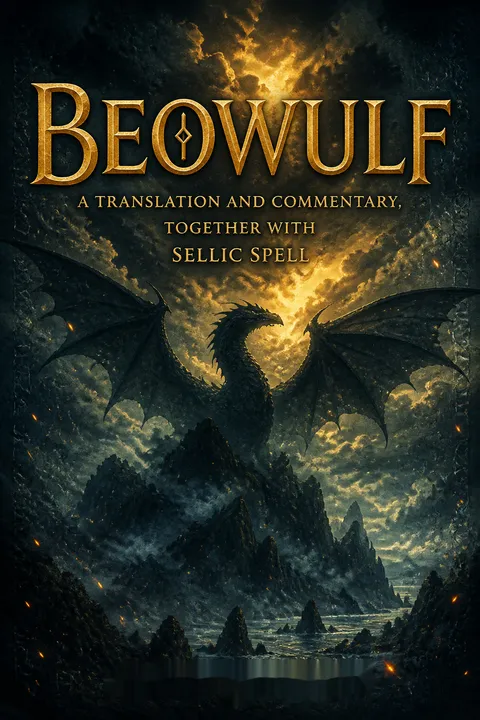
Beowulf, translated by J.R.R. Tolkien, receives mixed reviews. Many praise Tolkien's faithful translation and extensive commentary, appreciating his scholarly insights and the book's connection to his Middle-earth works. Some find the prose translation less poetic than verse versions but value its accuracy. The included "Sellic Spell" and "Lay of Beowulf" are highlights for many readers. However, some find the academic commentary challenging. Overall, reviewers commend the book for its scholarly merit and Tolkien's passion for the subject, though it may not be ideal for casual readers.
People Also Read


Characters
Beowulf
Geatish monster-slayerA Geatish prince of immense physical strength, Beowulf travels to Denmark because he can help where other warriors have failed. He is proud of his abilities, but the poem treats his formal boasts as commitments rather than empty self-display. His loyalty to Hygelac and care in handling treasure reveal a man attentive to obligations as well as renown. Beowulf's defining tension is between the solitary body that wins fame and the public role that demands protection of others. The poem follows him from a young adventurer into a ruler whose choices affect an entire people.
Hrothgar
Danes' embattled kingThe aged Danish king built Heorot as a center for feasting, counsel, and generous reward. Grendel's attacks make his authority painfully visible in its limits: Hrothgar can command a kingdom, but cannot drive the monster away. He is also a diplomat and a careful observer of character, welcoming Beowulf partly through an older debt to the hero's father. His counsel on pride comes from experience rather than abstract wisdom. Hrothgar serves as Beowulf's political model and emotional counterpart, showing how a ruler's strength must eventually make room for memory, judgment, and dependence on younger allies.
Wiglaf
Last loyal thaneWiglaf is a young kinsman of Beowulf, descended from the Wægmunding family and equipped with inherited armor and a sword. His place beside the king matters because he remembers the gifts and obligations that bind a retainer to a lord. Unlike companions who are more secure in speech than in danger, Wiglaf acts when Beowulf needs help. He represents the possibility that loyalty can survive as a personal choice, even when a whole band fails its promise.
Grendel
Cain-marked hall-stalking outcastGrendel is a monstrous exile who haunts the moors and attacks Heorot at night. The poem connects him to Cain, placing his violence outside the human laws of settlement, compensation, and kinship. Yet he is not an abstraction: he has a body, appetite, and vulnerability, and his presence makes the Danes' public life impossible. His hatred of the hall's music and fellowship turns the gathering place into the precise target of his raids.
Grendel's mother
Grendel's vengeful motherGrendel's mother lives in a remote, dangerous mere and enters the poem as a force of maternal vengeance. She acts within the same cycle of kinship claims that shapes human feuds, though her home and power place her beyond the Danes' law. Her attack unsettles the easy division between monster and human: she is terrifying, but her reason for striking is legible to the people whose own traditions demand revenge for a loved one's death.
Hygelac
Beowulf's Geatish kingHygelac is Beowulf's maternal uncle and liege lord, a young and warlike king when Beowulf returns from Denmark. He fears for his kinsman's safety, listens closely to his account, and rewards his service with land and honor. Their relationship gives Beowulf a home and a political allegiance beyond his own fame. Hygelac's reign also links the poem's monster-slaying adventures to the larger conflicts among Geats, Swedes, and Franks.
Wealhtheow
Keeper of court ritualWealhtheow, Hrothgar's queen, moves through the hall presenting the cup and affirming bonds among king, guests, and retainers. Her courtesy is politically alert: she honors Beowulf's achievement while asking Hrothgar to remember their sons and the future of the household. She understands that a hall's stability depends not only on its king's strength but on how affection, status, and succession are managed in public.
Unferth
Envious court counselorUnferth sits close to Hrothgar and uses his position as counselor to test Beowulf before the court. His challenge about Breca is sharpened by envy, but he is more than a simple heckler: he possesses social standing, knowledge, and a famous sword. The poem also associates him with violence against his own kin, complicating his role as a defender of Danish order. His encounter with Beowulf exposes the difference between having a reputation and accepting danger.
Ecgtheow
Beowulf's exiled fatherEcgtheow is Beowulf's father, a warrior who once killed a man during a feud and sought refuge at Hrothgar's court. Hrothgar settled the conflict on his behalf. Though absent from the main action, Ecgtheow's past creates the debt and history that shape the welcome Beowulf receives in Denmark.
Hygd
Geatish queen and patronHygd is Hygelac's young queen, praised for generosity toward the Geatish court. Beowulf gives her the necklace he received from Wealhtheow, extending the network of gifts between the two kingdoms. Her presence also helps distinguish the stable, open-handed court Beowulf serves from the destructive queens and feuds recalled in the poem's stories.
Aeschere
Hrothgar's trusted counselorAeschere is an experienced Danish counselor and close companion to Hrothgar. The king relies on his judgment in counsel and battle, so his absence represents more than a lost warrior. He embodies the human relationships Grendel's kinship feud tears apart.
Freawaru
Danish peace-broker princessFreawaru is Hrothgar's daughter, promised to the Heathobard prince Ingeld in a political effort to quiet a long feud. She is discussed through Beowulf's report rather than shown directly. Her proposed marriage reveals how royal women can be made central to diplomacy while remaining vulnerable to resentments that a marriage alone cannot erase.
Ingeld
Heathobard prince and bridegroomIngeld, son of Froda, is the Heathobard heir betrothed to Freawaru. His planned marriage is meant to reconcile his people with the Danes, but old losses and captured heirlooms threaten that policy. He represents the pressure between private attachment and the public duty of revenge.
Breca
Beowulf's swimming rivalBreca is a famous swimmer from another people who once joined Beowulf in a dangerous sea contest. Their childhood competition becomes the story Unferth uses to question Beowulf's courage. Breca's role lets the poem distinguish a reckless challenge from the hard-won endurance Beowulf claims.
Wulfgar
Danish court heraldWulfgar serves Hrothgar as a court officer who assesses the Geats and carries their request to the king. His judgment helps turn an uncertain landing into a formal welcome. He represents the customs and practical intelligence that mediate between armed strangers and a royal household.
The fugitive slave
Unwitting dragon's provokerA nameless fugitive enters the dragon's barrow while seeking shelter and takes a cup from the hoard. His act is driven by desperation, not a plan to attack the dragon. The stolen vessel becomes the small, accidental cause that exposes the Geats to a much larger danger.
Beewolf
Bear-raised wonderBeewolf is the hero of Sellic Spell, a separate folk-tale transformation of the Beowulf material. Found as a child in a bear's den, he grows into a powerful but socially disregarded young man whose strength, swimming, and appetite for honey mark him as unusual. His story emphasizes the contrast between how a household judges him and what he proves when tested. He is not the same narrative character as the epic's Beowulf in a continuous plot.
Handshoe
Gloved traveling companionHandshoe joins Beewolf on the journey to the Golden Hall. His hide gloves give him extraordinary strength when worn, and the tale later makes them useful in Beewolf's struggle to escape the monsters' lair.
Ashwood
Spear-bearing would-be championAshwood is a boastful warrior who meets Beewolf and Handshoe on the way to the Golden Hall. He claims confidence in his spear and chooses to face Grinder first, helping reveal how little courage can accomplish when confidence is not matched by readiness.
Unfriend
Treacherous court smithUnfriend is the Golden Hall's clever smith and counselor in Sellic Spell. Envious of Beewolf's place in the king's favor, he becomes the guide to the monsters' mere and hides hostility behind courtly manners. His skill as a craftsman complicates his treachery: he can both endanger Beewolf and contribute to the making of a sword.
Breaker
Beewolf's swimming rivalBreaker is the celebrated swimmer who challenges the young Beewolf. Their contest and the storm that separates them lead to Beewolf's encounter with the sea-monsters and begin the reputation that follows him into the Golden Hall.
Plot Devices
Heorot, the mead-hall
A kingdom's public heartHeorot gives the poem a concrete measure of Danish prosperity and political order. Its benches, treasure, music, and shared drink show how a king gathers followers and turns wealth into loyalty. Grendel's nightly raids attack those practices directly, emptying the hall and making Hrothgar's authority appear powerless. Later, the hall's fate is shadowed by human feuds and fire, so its splendor never becomes a promise of permanence. The building binds the monster story to the poem's wider concern with the rise and decay of ruling houses.
Gifts and heirlooms
Loyalty made tangibleKings give rings, armor, weapons, horses, and land to recognize service and secure future allegiance. Beowulf's rewards from Hrothgar pass on to Hygelac and Hygd, showing that treasure circulates through relationships rather than belonging only to its bearer. Heirlooms also carry older conflicts: a sword worn in a marriage hall can remind the Heathobards of fathers killed in battle. The dragon's hoard offers the opposite model. It is wealth locked away for centuries, unable to sustain a community, and its recovery comes at a devastating cost.
Boasts, vows, and reputation
Words bind future actionBeowulf's formal claims about his strength are treated as promises that he must fulfill, not as casual bragging. Unferth's challenge forces him to defend his reputation before witnesses, and his vow to face Grendel unarmed removes any easy retreat. The poem later tests the same code through the Geatish retainers, whose promises to defend their king fail when the dragon attacks. Wiglaf's intervention matters because he acts on the bond created by receiving the king's gifts. Reputation is therefore earned through action and measured by what others risk in return.
Feud and vengeance
Old injuries returnThe poem's human conflicts follow the logic of inherited injury. Hrothgar once settled Ecgtheow's feud with payment, and he hopes Freawaru's marriage will quiet the Heathobards. The Finn and Hengest story demonstrates how a truce can fail when grief and memory remain active. Grendel's mother applies the same demand for vengeance to the monsters' struggle, answering her son's death with a new attack. These episodes show why force can end a particular fight without dissolving the social memory that makes another fight likely.
The three monster trials
Strength tested across a lifetimeThe encounters with Grendel, Grendel's mother, and the dragon form a changing measure of Beowulf's power. The first tests youthful physical courage in a hall; the second forces him into an alien landscape where his borrowed sword fails; the last pits an aging king against a threat that his people cannot afford to lose. Each trial changes the meaning of victory. The monsters are not interchangeable obstacles: each exposes a different limit, from the failure of ordinary weapons to the danger of a community relying too heavily on one defender.
About the Author
Other books by J.R.R. Tolkien

Download PDF
Download EPUB
.epub digital book format is ideal for reading ebooks on phones, tablets, and e-readers.








