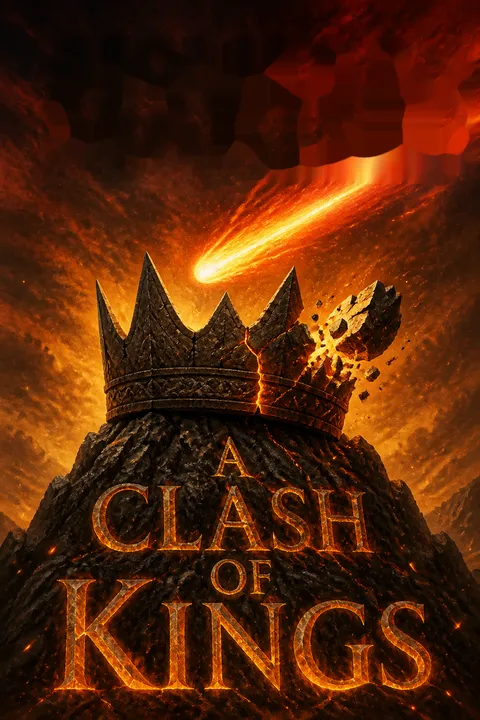


Plot Summary
Prologue
At Dragonstone, the red comet and the white raven announcing summer’s end unsettle Maester Cressen, though he distrusts omens. He worries that Melisandre, the red priestess, has turned Stannis’s wife toward a foreign god and is encouraging the king to seek power through fire.
When Davos returns with proof that the storm lords will not support Stannis, Cressen tries once more to counsel compromise. Stannis rejects him. That night Cressen slips poison into a cup meant for Melisandre, hoping to save the king from her influence. She drinks without harm; Cressen chokes to death, and the king’s cause becomes more tightly bound to her faith.
Cressen’s failed intervention establishes the novel’s central collision between practical judgment and belief in signs. He sees that Stannis needs allies, but the king’s old grievance and Melisandre’s promises make compromise feel like surrender. Cressen’s love for Stannis is both his moral strength and his blind spot: he treats the king as the unloved boy he once raised, then chooses murder when counsel fails. The scene leaves prophecy unresolved while making its political consequence immediate. Stannis’s dependence on Melisandre grows, and a private act of care becomes the first sacrifice in a war increasingly shaped by claims of divine authority.
The Boy Called Arry
After escaping the Red Keep, Arya Stark is disguised by Night’s Watch recruiter Yoren as Arry, an orphan boy traveling north. She carries Needle, the small sword her brother Jon gave her, and keeps her identity hidden from the condemned men and street orphans in the caravan.
When Hot Pie and Lommy threaten to take Needle, Arya beats them with a wooden practice sword; Yoren punishes her, then explains that her father was meant to join the Watch before Joffrey ordered his execution. At an inn, Arya meets the chained prisoners Jaqen H’ghar, Rorge, and Biter. Gold cloaks arrive with a warrant for a boy, but Yoren refuses them, and the whole company stands by him.
Arya’s disguise protects her, but it also forces her to test which parts of herself survive without name, status, or family. Her violence against Hot Pie is not a clean victory: Yoren makes her confront the difference between defending Needle and striking out at grief. The caravan’s loyalty becomes a provisional family, built from people who barely know one another. Yoren’s refusal to surrender Arya shows that decency can still operate outside formal power, though his protection depends on a fragile group and a dangerous road.
Dontos Earns a Fool’s Life
At Joffrey’s name-day tourney, Sansa Stark hides bruises beneath a fine gown and watches her betrothed mock the weak competitors. When Joffrey threatens to drown the drunken Ser Dontos Hollard for failing to joust, Sansa invents a plea for mercy that saves his life. Joffrey makes Dontos his fool instead.
Later, Tyrion Lannister arrives from the war with a rough company of soldiers, greets his niece and nephew, and takes the measure of Sansa’s frightened courtesy. Sansa knows Tyrion is still a Lannister, but his gentleness contrasts sharply with Joffrey’s cruelty. That night Dontos secretly approaches her in the godswood and promises to arrange her escape from King’s Landing, asking her to meet him there again.
Sansa’s courtesy has been taught as a shield, but here she uses it actively: she reads Joffrey’s vanity and gives him a way to spare Dontos without appearing merciful. The act creates a bond with a man she barely trusts, revealing how scarce reliable help has become. Tyrion’s arrival complicates her assumptions without erasing her danger. Sansa can recognize kindness while remaining cautious about its source, a small but important shift from the romantic certainties that once made her vulnerable.
The Imp Takes the Hand
Sent by Tywin Lannister to govern King’s Landing, Tyrion arrives as acting Hand and finds Cersei resistant to sharing power. He studies the city’s rising food prices, unrest, and weak defenses, then replaces Janos Slynt with the more capable Jacelyn Bywater. Tyrion also protects his position by cultivating his own guards and keeping the sellsword Shae in a guarded manse.
Through Cersei, he learns that she helped bring about Robert Baratheon’s fatal hunting accident and that Joffrey ordered Ned Stark’s execution against her instructions. Tyrion confronts Janos over his part in Ned’s death and sends him to the Wall. His attempts to control Cersei’s council expose a court where every ally may be serving another master.
Tyrion’s political intelligence rests on seeing power as a network of dependences rather than a crown alone. He uses appointments, information, and controlled fear to constrain Cersei, yet his own authority comes from Tywin and is therefore borrowed. His encounter with Slynt also shows that justice can be theatrical and strategic at once: Tyrion punishes a man who deserves blame, but does so to remove a rival. His attachment to Shae gives him a private vulnerability inside a public life built on calculation.
A Wolf Behind the Walls
At Winterfell, Bran Stark struggles with the life his fall has left him: he cannot walk, ride freely, or join the boys at their games. He hears the direwolves howl and dreams that he runs as one of them, while Maester Luwin explains the strange sounds away. The arrival of Jojen and Meera Reed gives Bran companions who treat him as more than a crippled heir.
Jojen claims Bran’s dreams connect him to Summer and to a three-eyed crow, and says Bran must leave Winterfell. Maester Luwin rejects the idea of greensight as superstition. Meanwhile, Bran is forced to hear petitions, including disputes over Lady Hornwood’s lands and the threat posed by Roose Bolton’s bastard.
Bran’s imagined wolf body gives him movement and agency where waking life denies both. The conflict with Luwin is not simply faith against reason: the maester offers a stabilizing explanation to a child whose disability makes every hope vulnerable to disappointment. Jojen, by contrast, makes Bran’s inner life consequential, but his certainty also frightens him. The Hornwood dispute turns lordship into another form of confinement: Bran must make decisions about bodies and land while unable to move his own body without help.
Beyond the Wall’s Empty Villages
Jon Snow rides beyond the Wall with Lord Commander Mormont’s ranging party, hoping to learn what happened to his missing uncle. The brothers find village after village abandoned, with no signs of battle and little game in the forests. At Craster’s isolated hall, they receive shelter but also see a household ruled by violence.
Gilly, one of Craster’s daughters and wives, tells Jon that her unborn son will be given to the cold gods. Jon realizes Craster has no surviving sons and understands why. Mormont already knows, but refuses to intervene because Craster’s information may help the Watch find Mance Rayder. At the Fist of the First Men, Ghost uncovers dragonglass weapons buried beneath a black cloak.
Jon’s growing knowledge brings no simple moral clarity. Craster’s abuse is horrifying, yet the Watch tolerates it because survival and intelligence may depend on his cooperation. Mormont’s choice exposes the institution’s limits: it is sworn to protect the realm, not to repair every cruelty within it. Jon’s desire to help Gilly collides with his vows and military orders. The buried dragonglass shifts the ranging from a search for missing men toward preparation for an enemy whose existence makes old stories newly plausible.
Two Baratheons, One Crown
Catelyn Stark travels to Renly Baratheon’s immense camp hoping to unite him with Stannis against the Lannisters. Renly refuses to yield to his elder brother, while Stannis insists the throne is his by law. When Catelyn presses them to stop dividing the realm, their parley collapses into insults. Renly offers Stannis Storm’s End, which Stannis rejects.
Before dawn, a shadow slips into Renly’s pavilion and cuts his throat while his sword remains sheathed. Brienne is blamed because she stands over his body, but Catelyn recognizes that the shadow bore Stannis’s shape. She helps Brienne escape the camp, and Renly’s followers begin transferring their allegiance to Stannis.
The brothers argue over legitimacy as if a crown can settle the question of who deserves obedience. Renly relies on popularity and force; Stannis on inheritance and law. Catelyn recognizes that neither claim can stop the immediate catastrophe they have created. Renly’s murder turns the dispute from political theater into something uncanny and irreversible. Brienne’s grief and Catelyn’s practical intervention bind them together through a shared knowledge that cannot be proved in public, leaving Catelyn to carry a truth that sounds like madness.
The Kraken Comes Home
Theon Greyjoy returns to Pyke after ten years as a Stark ward, expecting his father Balon to welcome him as heir. Instead, Balon mocks his mainland clothing and rejects Robb Stark’s offer of an alliance and a crown. Theon’s sister Asha, whom he fails to recognize while she tests him in disguise, proves more at home among the ironborn than he is.
Balon assigns Theon only a small coastal raid while giving Asha the larger strike. Humiliated, Theon decides he must seize a greater prize himself. He launches his own attack on Winterfell, using a handful of men and the castle’s trust in him to take the Stark seat while its defenders are away.
Theon’s homecoming reveals that both households have made him an outsider: the Starks raised him as a hostage, while Balon sees a softened son who has forgotten the Iron Islands. Theon’s hunger for recognition makes him mistake audacity for belonging. Asha’s disguise exposes his ignorance of the home he claims, while Balon’s unequal commands sharpen his resentment. His decision to take Winterfell is not simply military ambition; it is an attempt to force his father and the north to acknowledge him.
A City of Closed Doors
After crossing the red waste with a dwindling khalasar, Daenerys Targaryen reaches the abandoned city of Vaes Tolorro, where clean water and figs let her people recover. Her bloodriders scout the desert, and she sends Ser Jorah Mormont to learn what ships might carry them west.
Jorah admits that he loves her partly because she resembles his lost wife, while Daenerys resolves to restore his honor rather than return his love. At last Jhogo leads back three Qartheen visitors: warlock Pyat Pree, merchant prince Xaro Xhoan Daxos, and masked shadowbinder Quaithe. Qarth receives Daenerys in splendor, but its rulers refuse ships and soldiers. A Summer Islander brings word that Robert Baratheon is dead.
Daenerys’s progress from desert survivor to queen depends on caring for people who cannot repay her. The city of bones becomes a temporary refuge because she chooses to stop and rebuild strength instead of following the comet blindly. Jorah’s confession complicates her sense of protection: his devotion is sincere, but shaped by an old romantic loss. Qarth offers spectacle and hospitality without material commitment, teaching Daenerys that admiration for her dragons is not the same as support for her claim.
A Road Through Ashes
As Yoren’s caravan turns away from the kingsroad, Arya sees burnt villages and refugees fleeing the war. Yoren rescues a wounded woman and child from a ruined settlement, but Lannister soldiers soon surround a holdfast where the recruits have taken shelter.
Ser Amory Lorch’s men attack; Yoren dies defending the boys, while Arya, Gendry, Hot Pie, and the injured Lommy escape through a tunnel beneath a burning barn. Arya returns for the chained prisoners and gives Rorge an axe to break their wagon. Later, starving and hunted, Arya and Hot Pie are captured by Gregor Clegane’s men. At Harrenhal she is assigned to serve Weese under the name Weasel.
The journey strips Arya of the protective fiction that courage guarantees rescue. She fights when cornered, but cannot save Yoren, Lommy, or the villagers; survival requires improvisation rather than heroic mastery. Her choice to free the prisoners is both compassion and a dangerous gamble, and the fire makes its cost immediate. At Harrenhal, the loss of her disguise does not restore her identity. She must hide it more carefully, learning to survive by observation and silence.
Victory Breaks Robb’s Promise
Robb Stark wins at Oxcross, destroying the inexperienced Lannister host under Ser Stafford and opening the west to northern raids. While recovering from wounds, Robb marries Jeyne Westerling, breaking the marriage pact he made with Walder Frey. Catelyn, desperate to exchange Jaime Lannister for her daughters, secretly frees him and sends Brienne to escort him toward King’s Landing.
Jaime’s escape outrages Robb’s bannermen and leaves Catelyn fearing that her daughters may pay for it. The victories have not ended the war: Robb’s army is far from home, his alliance with the Freys is damaged, and the choice to release Jaime removes his strongest hostage.
Robb and Catelyn make decisions from different forms of care, then discover that care can carry political costs. Robb’s marriage protects Jeyne’s honor but breaks a promise on which his army depends. Catelyn’s release of Jaime is driven by the fear that Sansa and Arya will otherwise remain hostages, but it sacrifices leverage without securing their return. Their actions are emotionally intelligible and strategically dangerous, showing how war turns private obligations into public liabilities.
Winterfell Taken, Then Lost
Theon takes Winterfell with a small force, capturing Bran and Rickon and declaring himself its ruler. When the boys escape with Osha and the Reeds, Theon displays the burned bodies of a miller’s sons as proof that he has killed them. His hold on the castle weakens as northern forces gather, and a supposed ally from the Dreadfort returns with reinforcements.
Ramsay Bolton’s men turn on Theon, sack and burn Winterfell, and leave him captive. Bran, Rickon, Hodor, Meera, and Jojen survive by hiding in the crypts; afterward Osha takes Rickon away while Bran and the others travel north. The castle is ruined, and Theon’s claim is over.
Theon’s seizure of Winterfell gives him the recognition he craves only by making him the enemy of the people whose acceptance he wanted. His display of false Stark deaths turns rule into performance, but the lie cannot make his position secure. The burning castle reverses his triumph completely. Bran’s escape through the crypts turns the Starks’ ancestral dead into shelter, while Theon’s captivity leaves him with neither the family he betrayed nor the homeland he claimed.
A Girl Names the Dead
At Harrenhal, Arya hears the soldiers’ stories and learns that Robb’s army has won in the west. She gives Jaqen H’ghar the names of Chiswyck and Weese; each dies soon afterward, one in a fall and the other killed by his own dog. When Vargo Hoat’s men arrive with northern prisoners, Arya uses Jaqen’s final owed death to force him to help free them.
The prisoners escape during the confusion, and Jaqen changes his face before departing, leaving Arya an iron coin and instructions for finding him again. Roose Bolton arrives to claim Harrenhal, and Arya becomes his cupbearer, hiding her identity under another name.
Arya’s list of names gives shape to grief that otherwise has nowhere to go. The deaths she orders are not equivalent: Chiswyck and Weese have harmed her and others, but the ease of their removal unsettles the distinction between justice and vengeance. Jaqen’s power offers agency without requiring Arya to wield a sword, then takes that agency away when his debt is paid. Her new service to Roose Bolton returns her to concealment, but now she understands concealment as a skill rather than mere helplessness.
The Undying Demand Dragons
Daenerys asks Qarth’s rulers for ships and soldiers, but they refuse, and Xaro will offer only marriage and luxury. She enters the House of the Undying despite Jorah’s warnings, following a maze of doors and visions that show images of past and possible futures. The Undying speak in riddles about dragons, fire, and betrayal, then try to consume her.
Drogon burns them, and Daenerys escapes the palace. When Xaro’s servants later betray her and seize her dragons, she returns to the merchant’s home, frees them, and takes ships from his fleet. She leaves Qarth with her people, no army, but a new means of reaching Westeros.
Qarth tempts Daenerys with the appearance of power: ornate rooms, gifts, and promises that never become ships or soldiers. The House of the Undying offers the opposite temptation, knowledge without clarity. Its visions give her images to interpret rather than instructions she can obey. Her escape depends on the dragons she has protected since their birth, and the attack on Xaro’s household forces her to turn hospitality into a struggle for possession. She leaves with transport, not the army she wanted.
The Chain Across the River
Tyrion learns that Stannis is marching on King’s Landing and orders a massive chain built to seal the Blackwater. He trains the City Watch, strengthens the gates, and prepares wildfire, though the alchemists warn that the substance can ignite unpredictably.
He also sends Littlefinger to negotiate with the Tyrells, offering Joffrey’s marriage to Margaery in exchange for their support. When Cersei tries to regain control of the council, Tyrion exposes her lover Lancel and turns him into an informant. His defensive preparations bring him into conflict with his sister, but the immediate threat leaves no time to settle their rivalry.
Tyrion’s chain is both a literal defense and a political wager: it will work only if the enemy enters the river and the city can survive long enough to spring the trap. His use of wildfire reveals the moral cost of his competence, since protecting the city means deploying a weapon capable of consuming it. The alliance with the Tyrells also shows his preference for converting power rather than merely resisting it. Yet Cersei’s private influence remains active beneath the public machinery he controls.
Blackwater Burns Green
Stannis’s fleet sails up the Blackwater, where Tyrion’s chain traps it and wildfire erupts across the river, destroying ships and men. Tyrion leads a sortie against the landing force after the Hound retreats from the flames. When Ser Mandon Moore attacks him on the bridge of ships, Tyrion is slashed across the face; Podrick Payne saves him by knocking Mandon into the water.
Tywin Lannister arrives with the Tyrell army and drives Stannis’s forces from the city. The alliance secures Joffrey’s throne, and Sansa is released from her betrothal, though she remains a hostage. Tyrion wakes disfigured and discovers that his father has taken the Hand’s Tower.
The battle’s victory is built from devices Tyrion has prepared in advance, but its spectacle conceals the human price: wildfire consumes both fleets, and the chain turns the river into a trap with no safe exit. Tyrion’s sortie converts his political authority into bodily risk, while Mandon’s betrayal shows that formal loyalty is not protection. Tywin’s arrival saves the regime and displaces Tyrion in the same stroke. The scar on Tyrion’s face makes visible the cost of a victory whose public rewards belong to others.
Jon’s Bloodied Vow
On the ranging’s final approach, Jon and Qhorin Halfhand encounter wildlings in the Frostfangs. Qhorin orders Jon to join them and learn what Mance Rayder seeks, but the wildlings will not trust a Night’s Watch brother. Qhorin therefore forces Jon into a duel, making him kill his commander before the watching band.
Jon obeys, torn between his oath and the mission Qhorin has entrusted to him. The wildlings accept him as a turncloak and take him toward Mance’s host. Jon’s decision leaves the Watch without Qhorin, while Jon enters enemy territory with no assurance that he can return or keep his vows intact.
Qhorin turns Jon’s conflict between loyalty and duty into an act that cannot be undone. The duel is a tactical performance, but its emotional cost is real: Jon must kill the man who has trusted him in order to serve the Watch’s larger purpose. His choice does not resolve the meaning of his vows; it makes that meaning harder to define. By entering the wildling host under suspicion and borrowed allegiance, Jon becomes a boundary figure, forced to learn the enemy from within.
Analysis
A Clash of Kings treats legitimacy as a contest between inheritance, recognition, and the ability to protect people. Stannis has the strongest legal claim, Renly the broadest affection, Robb the loyalty of the North, and Joffrey the throne itself. None of these facts is sufficient on its own. The rival kings need soldiers, food, allies, and stories that persuade people to accept their rule. Tyrion understands this and turns chains, wildfire, marriage offers, and appointments into political instruments, but his success cannot prevent the city’s hunger from becoming revolt.
The book also places private bonds under pressure from public duty. Catelyn risks political leverage for her daughters; Robb’s marriage honors Jeyne but damages the Frey alliance; Jon’s vows make mercy toward Ygritte seem like betrayal; Theon’s need to be recognized as ironborn destroys the home he claims to want. These choices do not reduce neatly to virtue or foolishness. Each character tries to protect one value and discovers that another is exposed.
Across the parallel journeys, safety is repeatedly shown to be temporary. Arya survives by changing names, Sansa by controlling her expression, Bran by entering Summer’s body, and Daenerys by carrying her dragons through hostile cities. Such strategies help, but none abolishes dependence on others. The book’s most unsettling reversals come when apparent refuge becomes danger: Winterfell falls, Qarth refuses aid, and the Blackwater’s defense requires a weapon that threatens the city it saves.
The result is a political world where every victory creates a new vulnerability. The war does not merely ask who should rule. It asks what people are willing to sacrifice for rule, and whether the institutions meant to protect them can survive the methods used in their name.
Review Summary
A Clash of Kings is the second book in George R.R. Martin's epic fantasy series. Readers praise the complex characters, intricate plot, and expansive world-building. Many consider it a worthy sequel, though some find the pacing slow at times. The book introduces new characters and expands on existing ones, particularly Tyrion Lannister. Martin's ability to create memorable characters and settings is frequently lauded. The political intrigue, battles, and magical elements keep readers engaged, though some find the violence and sexual content excessive.
People Also Read


Characters
Arya Stark
The hidden wolfArya is the younger Stark daughter, quick, observant, and far more at ease with riding, fighting, and climbing than with the courtly behavior expected of a highborn girl. Her attachment to her family is fierce, especially to Jon and her father, and she carries Needle as a reminder of the people she has lost. Arya’s instinct is to act when others hesitate, but her anger can blur the difference between protection and revenge. On the road and in Harrenhal, she learns to survive through disguise, attention, and patience. Her desire to be brave is real, but so is her fear, and she increasingly understands that courage is not the absence of either.
Tyrion Lannister
The sharp-tongued HandTyrion is the youngest child of Tywin Lannister, a dwarf whose intelligence and wit make him valuable to a family that often treats him as an embarrassment. He reads people quickly, uses humor to expose vanity, and approaches politics as a contest of information, money, and leverage. His sympathy for the vulnerable coexists with a taste for control and a deep resentment of those who dismiss him. Shae offers him intimacy that he wants to believe is separate from power, while his relationship with Cersei turns sibling rivalry into a struggle over the crown. Tyrion’s confidence is hard-won, but he knows that a clever strategy cannot guarantee loyalty.
Catelyn Stark
The grieving envoyCatelyn is a daughter of House Tully, wife to Ned Stark, and mother to their children. She is politically perceptive, protective, and accustomed to carrying responsibility when the men around her are absent. Her instincts are shaped by the fear of losing her family, which can make her choices both courageous and costly. Catelyn seeks peace when she believes it might save lives, but she is not naïve about the motives of kings or lords. Grief for Ned sharpens her judgments even as it exhausts her. She is most herself in the tension between public duty and private love, especially when neither can protect all of her children.
Jon Snow
The sworn bastardJon is Ned Stark’s acknowledged bastard son and a sworn brother of the Night’s Watch. He is proud, observant, and acutely sensitive to exclusion, yet his loyalty to his family and his vows gives him a firm moral center. At the Wall he has found comrades and purpose, but the news that Robb has become king forces him to confront the life he has chosen: service instead of inheritance. Jon’s courage is not effortless; he feels fear and envy, then tries to discipline both. Beyond the Wall, encounters with abandoned villages, Craster, and the wildlings complicate the simple division between sworn enemies and people worth saving.
Bran Stark
The dreaming heirBran is an eight-year-old Stark boy whose fall has left him unable to walk, though his curiosity and appetite for adventure remain intact. He wants to ride, climb, and become a knight, and resents the dependence his injury imposes. As Robb’s heir at Winterfell, he is also expected to learn the duties of a lord before he feels ready. His dreams of running with Summer offer freedom, but they also bring fear and questions that Maester Luwin cannot answer. Bran’s vulnerability makes him reliant on Hodor, Osha, and the Reed siblings, while his growing attention to wolves and trees suggests that his inner life may be more than fantasy.
Sansa Stark
The captive courtierSansa is the elder Stark daughter, raised to value songs, courtesy, and the visible rituals of nobility. Her captivity in King’s Landing forces her to use those lessons for survival rather than romance. She learns to read moods, conceal her feelings, and offer just enough agreement to avoid punishment. Her instinctive kindness remains, as seen in her defense of Dontos, but she grows less willing to confuse good manners with goodness. Sansa’s relationship with Joffrey is defined by fear and coercion, while her cautious exchanges with Tyrion and Dontos show how carefully she must assess every apparent offer of help.
Theon Greyjoy
The estranged heirTheon is the surviving son and heir of Balon Greyjoy, raised for much of his life at Winterfell as a hostage and ward. He is charming, proud, and hungry to be recognized as a true ironborn, yet his years among the Starks have shaped loyalties he does not know how to acknowledge. Balon’s contempt and Asha’s competence make Theon feel diminished in his own home. He wants glory to prove his identity, but often confuses being feared with being accepted. His choices expose the strain between a chosen family and a birthright, and between the culture he remembers and the person he has become.
Daenerys Targaryen
The Mother of DragonsDaenerys is a young Targaryen claimant who has survived exile, the death of her husband, and the loss of her unborn child. She is learning to lead people who have little strength left, and sees their survival as a responsibility rather than a convenience. Her dragons give her a powerful symbol of inheritance, but they are still young and cannot yet win her throne. Daenerys wants more than vengeance: she imagines a realm where people can live safely and prosper. That ideal competes with the hard choices required to gain power. She is curious about visions and promises, but her experience has made her wary of anyone who wants to possess her or her dragons.
Robb Stark
The young northern kingRobb is the eldest Stark son, a teenage commander whose victories lead his bannermen to proclaim him King in the North. He is brave, direct, and deeply attached to his family, but his age leaves him learning kingship in the middle of a war. His instinct to protect those he loves can collide with the alliances and promises required to keep an army together. Robb takes advice seriously when it speaks to honor, yet he also resents being treated as a boy. His relationship with Catelyn shifts as she tries to guide him without undermining his authority, and his choices increasingly affect the survival of the whole North.
Stannis Baratheon
The unforgiving claimantStannis is Robert Baratheon’s elder surviving brother, a stern and disciplined commander who believes the Iron Throne is his by inheritance. He measures people by duty and justice, but his sense of having been wronged has hardened into a deep suspicion of compromise. Stannis dislikes flattery and speaks with little warmth, yet he is not indifferent to those who serve him. His reliance on Melisandre grows from political desperation as much as religious conviction. He is both a legal claimant and a man searching for a power strong enough to overcome the affection others feel for his rivals.
Cersei Lannister
The guarded queenCersei is Queen Regent and mother to Joffrey, Myrcella, and Tommen. She is proud, politically alert, and fiercely protective of her children, but distrust makes her interpret many actions as threats. The limits placed on women in court have sharpened her appetite for control, while her beauty and rank allow her to disguise fear as confidence. She sees Tyrion as both a rival and a necessary family ally, and her relationship with Jaime is bound to a secret that shapes her choices. Cersei’s protective instincts can become ruthless, especially when she believes her children or her authority are at risk.
Jaime Lannister
The captive KingslayerJaime is Cersei’s twin, a renowned swordsman and member of the Kingsguard, imprisoned by the Starks after the fighting in the riverlands. His reputation as the Kingslayer precedes him, making it difficult for others to separate the young knight’s skill from the political act that named him. Jaime uses mockery to keep control of conversations and resists showing fear or regret. His closeness to Cersei and his complicated history with the royal family make him a valuable hostage and a dangerous figure even in chains.
Tywin Lannister
The calculating patriarchTywin is Lord of Casterly Rock, father to Cersei, Jaime, and Tyrion, and a commander whose reputation rests on discipline and severity. He thinks in terms of leverage, supply, and consequences, and rarely wastes words on affection. His children respond to him differently: Cersei seeks his approval, Jaime resists his authority, and Tyrion measures himself against his contempt. Tywin’s presence shapes the war even when he is not in a scene, because allies and enemies alike anticipate his methodical response.
Brienne of Tarth
The sworn shieldBrienne is the daughter of Lord Selwyn of Tarth, a formidable fighter who has chosen the life of a knight despite being mocked for her appearance. She values vows and service more than praise, and her directness can seem awkward in courtly company. Brienne’s loyalty is intense, especially toward those she believes deserve protection. She is physically imposing but emotionally vulnerable to ridicule and rejection, a contrast that makes her devotion both admirable and dangerous. Her sense of honor is not abstract; it is expressed through concrete acts of guarding, accompanying, and keeping faith.
Davos Seaworth
The honest smugglerDavos is a former smuggler raised to knighthood by Stannis after bringing food to the besieged garrison at Storm’s End. He remains plainspoken and skeptical of grand claims, including Melisandre’s faith, but feels profound loyalty to the king who changed his life. His low birth makes him an outsider among Stannis’s highborn followers, and he knows that gratitude can become a form of dependence. Davos’s practical conscience repeatedly asks what loyalty costs when a ruler demands something morally wrong.
Melisandre
The red priestessMelisandre is a priestess of the Lord of Light from Asshai and an influential adviser to Stannis. Her certainty is absolute, and she interprets political events through visions of fire, prophecy, and a coming struggle against darkness. She is composed under pressure and treats fear as a tool as readily as faith. Others find her beautiful or frightening, but neither response explains her power over Stannis and his followers. Her presence challenges the familiar religions of Westeros and raises the question of whether belief creates power, recognizes it, or merely gives it a name.
Jaqen H’ghar
The debt-paying strangerJaqen is a prisoner from the Free City of Lorath, carried north in Yoren’s wagon with Rorge and Biter. He speaks in an unusual, formal manner and remains composed even when surrounded by danger. Jaqen notices more than he lets on and treats names, debts, and identity as matters with practical weight. To Arya, he is both frightening and useful, a rare person whose appearance and intentions are difficult to read. His presence links the prison road to a wider world of secrecy and skilled murder without making his motives easy to grasp.
Gendry
The stubborn apprenticeGendry is a strong, blunt young blacksmith’s apprentice who travels north with Yoren’s recruits. He dislikes being treated as helpless and has little patience for posturing, but he will defend those he considers his own. His skill with metal and his bull-horned helm make him distinctive among the boys. Gendry’s friendship with Arya grows through shared danger rather than easy trust; he challenges her assumptions while respecting her courage.
Yoren
The black-cloaked protectorYoren is an old recruiter for the Night’s Watch who knows the roads, the prisons, and the risks of traveling with desperate people. He is gruff and demanding, willing to punish Arya when she endangers the group, but his actions show a strong sense of responsibility. He protects his recruits because the Watch has given him a duty, not because they are easy to love. Yoren’s care is practical and rough-edged, shaped by years of moving unwanted men and boys toward the Wall.
Asha Greyjoy
The ironborn captainAsha is Balon Greyjoy’s daughter, a confident sailor and commander whose authority comes from competence rather than ceremony. She is quick-witted, sexually self-possessed, and comfortable challenging her younger brother Theon. Asha understands the Iron Islands’ politics and maritime culture far better than he does. Her sharp humor can wound, but it also exposes the gap between a claimed identity and lived knowledge. She is ambitious without pretending that tradition will make the path easy.
Roose Bolton
The cold northern lordRoose is Lord of the Dreadfort and a northern commander who speaks softly, watches closely, and rarely reveals his thoughts. His calm manner makes it difficult to know whether he is being patient, calculating, or threatening. He sees war as a matter of position and advantage rather than display, and his household reflects the harsh reputation of his house. Roose’s restrained style contrasts with the more openly forceful northern lords, making his quiet decisions consequential.
Ramsay Snow
The Dreadfort’s bastardRamsay is the illegitimate son associated with House Bolton, known through reports as a sly and cruel young man. His reputation reaches Winterfell before he does, through Lady Hornwood’s fears and the accounts of those who have served him. He is a product of a brutal household and seems to treat power as permission to prey on weaker people. His presence makes northern succession and land disputes more dangerous than they first appear.
Jojen Reed
The green dreamerJojen is a young crannogman from Greywater Watch, solemn and unusually certain about the meaning of his dreams. He speaks carefully, but his predictions unsettle people who prefer practical explanations. Jojen sees Bran as someone with a latent capacity others do not recognize, and he persists even when Bran resists. His relationship with his sister Meera is close and trusting, and his quiet manner hides the emotional weight he places on what he believes he has seen.
Qhorin Halfhand
The veteran rangerQhorin is a seasoned ranger of the Night’s Watch, known for discipline, patience, and skill despite losing most of one hand. He understands the wildlings as capable opponents rather than caricatures, and approaches danger with a willingness to sacrifice men for the Watch’s larger purpose. Qhorin’s terse manner leaves little room for comfort, but his attention to Jon shows that he recognizes the young man’s potential. He treats duty as a living judgment, not merely a rule recited by rote.
Margaery Tyrell
The rose brideMargaery is the daughter of Mace Tyrell and a central figure in the alliance between Highgarden and Renly Baratheon. She is courteous, poised, and accustomed to moving through courtly attention without appearing overwhelmed by it. Her marriage carries political weight, but she is not merely a token in other people’s arrangements. She shows warmth toward Catelyn and fits naturally into the public role expected of a young noblewoman, while the distinction between her private feelings and political function remains difficult to judge.
Plot Devices
The Red Comet
An omen everyone interpretsThe comet appears across the sky as summer ends, and characters give it meanings that reflect their fears and ambitions. Stannis’s followers see it as a sign of the Lord of Light; others associate it with dragons, blood, or the rise of a king. Because no single interpretation can be verified, the comet does not provide guidance so much as expose how people turn uncertainty into conviction. It links distant storylines while reminding the reader that prophecy can be politically useful even when its meaning remains unclear.
The Direwolves
Family made fleshThe Stark children’s direwolves reflect their owners’ temperaments and create a living bond between the family members, even when war separates them. Their strength can protect the children, as Summer does in Winterfell, but their presence also makes them dangerous to those around them. Bran’s dreams of running as Summer raise the possibility that the connection is more than symbolic. The wolves therefore serve both as companions and as a test of the Starks’ changing relationship to power, violence, and the natural world.
Wildfire
A weapon beyond controlThe Alchemists’ Guild produces wildfire, a volatile green substance that burns fiercely and can spread through ships, cloth, wood, or armor. Tyrion studies its dangers and prepares its use in the defense of King’s Landing. The substance offers an answer to Stannis’s superior fleet, but it risks turning the city itself into fuel. Wildfire makes Tyrion’s intelligence materially effective while showing that a successful defense may demand destruction on a scale no commander can fully govern.
The Iron Chain
A trap across the riverTyrion commissions a massive chain designed to stretch across the Blackwater and block an enemy fleet. Its construction is hidden among ordinary metalwork, giving the city a defense that depends on timing and surprise rather than open strength. The chain’s function is practical, but its image also captures Tyrion’s style of rule: he builds structures that constrain stronger forces and uses the enemy’s confidence against them. Its success depends on coordination with the wildfire and the city’s remaining ships.
Three Names
A debt that becomes leverageAfter Arya helps free the chained prisoners from a burning barn, Jaqen H’ghar offers to repay three lives. Arya can name the people whose deaths he will arrange, turning a debt born from rescue into a tool against her captors. The device gives her agency while limiting it: she must choose names carefully, and every choice draws her closer to vengeance. Jaqen’s ability to change his appearance further complicates the meaning of a name, making identity itself seem like another kind of disguise.
FAQ
Synopsis & Basic Details
What is A Clash of Kings about?
- Power struggles intensify: The novel depicts the escalating conflicts for the Iron Throne, with multiple claimants vying for control, leading to widespread war and political intrigue.
- Characters face trials: Various characters, including Robb Stark, Tyrion Lannister, Daenerys Targaryen, and Jon Snow, navigate personal and political challenges, shaping their destinies.
- Magic and mystery grow: The presence of magic and supernatural elements increases, with the red comet, Melisandre's influence, and the threat of the Others becoming more prominent.
Why should I read A Clash of Kings?
- Intricate political web: The novel offers a complex and engaging exploration of political maneuvering, alliances, and betrayals, keeping readers guessing.
- Character-driven narrative: The story is propelled by the compelling journeys of its diverse characters, each with their own motivations, flaws, and growth.
- World-building and lore: The rich world-building and deep lore of Westeros provide a captivating backdrop for the unfolding drama, drawing readers into its immersive setting.
What is the background of A Clash of Kings?
- Feudal society at war: The story is set in a medieval-inspired world with a feudal system, where noble houses vie for power, leading to constant warfare and shifting alliances.
- Political instability: The death of King Robert Baratheon has created a power vacuum, with multiple claimants to the throne, causing widespread chaos and conflict.
- Magical elements emerging: The presence of magic, once thought to be extinct, is growing, with prophecies, rituals, and supernatural threats becoming increasingly significant.
What are the most memorable quotes in A Clash of Kings?
- "Power resides where men believe it resides.": This quote by Varys highlights the subjective nature of power and how it is often based on perception and belief, not inherent right.
- "The night is dark and full of terrors.": Melisandre's ominous phrase encapsulates the dangers and uncertainties of the world, emphasizing the presence of dark forces.
- "A lion does not concern himself with the opinions of a sheep.": This quote, often attributed to Tywin Lannister, reflects the ruthless and arrogant nature of the Lannisters and their disregard for the common people.
What writing style, narrative choices, and literary techniques does George R.R. Martin use?
- Multiple POV narration: Martin employs a third-person limited perspective, shifting between various characters, providing a multifaceted view of the events and their emotional impact.
- Detailed world-building: The author creates a rich and immersive world with intricate histories, cultures, and geographies, enhancing the realism and depth of the story.
- Foreshadowing and symbolism: Martin uses subtle foreshadowing, recurring symbols, and motifs to hint at future events and deepen the thematic resonance of the narrative.
Hidden Details & Subtle Connections
What are some minor details that add significant meaning?
- The color of the comet: The red comet is not just an omen but a symbol of the Targaryen dynasty, foreshadowing Daenerys's rise and the return of dragons.
- The significance of names: The name "Lightbringer" given to Stannis's sword connects him to the Azor Ahai prophecy, highlighting his belief in his destiny.
- The description of the Red Waste: The harsh, desolate landscape mirrors Daenerys's internal struggles and the challenges she faces in her journey.
What are some subtle foreshadowing and callbacks?
- Bran's wolf dreams: Bran's dreams and visions of the three-eyed raven and the direwolf foreshadow his future role and connection to the mystical forces of the North.
- Theon's internal conflict: Theon's struggle with his identity and his desire for his father's approval foreshadow his betrayal and the tragic consequences that follow.
- The recurring phrase "Winter is Coming": This phrase, initially a Stark motto, becomes a constant reminder of the impending dangers and the harsh realities of the world.
What are some unexpected character connections?
- Varys and Illyrio's alliance: The connection between Varys and Illyrio Mopatis, revealed through their shared goals, hints at a larger conspiracy at play.
- The Hound's protection of Sansa: Sandor Clegane's unexpected act of saving Sansa during the riot reveals a hidden sense of honor and a complex character beneath his brutality.
- Arstan Whitebeard's true identity: The revelation that Arstan Whitebeard is actually Ser Barristan Selmy, a former Kingsguard, adds a layer of intrigue to Daenerys's storyline.
Who are the most significant supporting characters?
- Maester Cressen: His initial skepticism about the comet and his eventual sacrifice highlight the clash between reason and faith, setting the tone for the book.
- Qhorin Halfhand: His strategic thinking and sacrifice for the Night's Watch demonstrate the harsh realities of leadership and the difficult choices required in war.
- Ser Dontos Hollard: His seemingly harmless presence and promises to Sansa reveal the hidden dangers and manipulations within the court of King's Landing.
Psychological, Emotional, & Relational Analysis
What are some unspoken motivations of the characters?
- Theon's need for validation: Theon's actions are driven by a deep-seated need for his father's approval and a desire to prove his worth, leading to his tragic choices.
- Stannis's rigid sense of duty: Stannis's unwavering belief in his right to the throne stems from a rigid sense of duty and a need to impose order, often at the expense of compassion.
- Tyrion's desire for respect: Tyrion's constant struggle for recognition and respect from his family and the court fuels his political maneuvering and his desire to prove his worth.
What psychological complexities do the characters exhibit?
- Arya's trauma and resilience: Arya's journey is marked by the trauma of witnessing her father's death, leading to a hardened exterior and a focus on survival, yet she retains a sense of justice.
- Sansa's naivete and growth: Sansa's initial naivete and romantic ideals are challenged by the harsh realities of King's Landing, forcing her to adapt and develop a more pragmatic approach.
- Jon's internal conflict: Jon's struggle between his duty to the Night's Watch and his growing connection to the wildlings highlights his internal conflict and the difficult choices he must make.
What are the major emotional turning points?
- Theon's capture of Winterfell: Theon's capture of Winterfell marks a major emotional turning point, as he betrays his adopted family and faces the consequences of his actions.
- Catelyn's grief and resolve: Catelyn's grief over the loss of her sons fuels her determination to seek justice and protect her remaining children, highlighting her resilience.
- Jon's killing of Qhorin: Jon's forced killing of Qhorin Halfhand is a major emotional turning point, testing his loyalty and forcing him to confront the harsh realities of war.
How do relationship dynamics evolve?
- Robb and Catelyn's strained relationship: Robb's growing independence and his decisions as king create tension with his mother, highlighting the challenges of leadership and family loyalty.
- Tyrion and Cersei's animosity: The already strained relationship between Tyrion and Cersei intensifies as they vie for power, revealing their deep-seated hatred and distrust.
- Daenerys and her dragons' bond: Daenerys's bond with her dragons deepens, showcasing her unique connection to them and their growing power as she navigates her journey.
Interpretation & Debate
Which parts of the story remain ambiguous or open-ended?
- The true nature of the Others: The motivations and origins of the Others remain shrouded in mystery, leaving their threat ambiguous and open to interpretation.
- The meaning of the comet: The comet's significance is interpreted differently by various characters, leaving its true meaning and purpose open to debate.
- The extent of Varys and Illyrio's plans: The full scope of Varys and Illyrio's conspiracy and their ultimate goals remain unclear, adding to the intrigue and uncertainty.
What are some debatable, controversial scenes or moments in A Clash of Kings?
- Theon's actions at Winterfell: Theon's betrayal and capture of Winterfell are highly controversial, sparking debate about his motivations and the extent of his culpability.
- Melisandre's influence on Stannis: Melisandre's manipulation of Stannis and her use of dark magic raise questions about the morality of her actions and the nature of faith.
- Jon's decision to join the wildlings: Jon's decision to infiltrate the wildlings and his subsequent actions are controversial, sparking debate about his loyalty and the nature of duty.
A Clash of Kings Ending Explained: How It Ends & What It Means
- Multiple storylines unresolved: The ending of A Clash of Kings leaves many storylines unresolved, with characters facing uncertain futures and the war still raging.
- The rise of new threats: The emergence of new threats, such as the wildlings and the growing power of the Others, sets the stage for future conflicts and challenges.
- Themes of change and uncertainty: The ending reinforces the themes of change and uncertainty, highlighting the precarious nature of power and the constant flux of the world.
A Song of Ice and Fire Series Series
About the Author
Other books by George R.R. Martin



Download PDF
Download EPUB
.epub digital book format is ideal for reading ebooks on phones, tablets, and e-readers.








