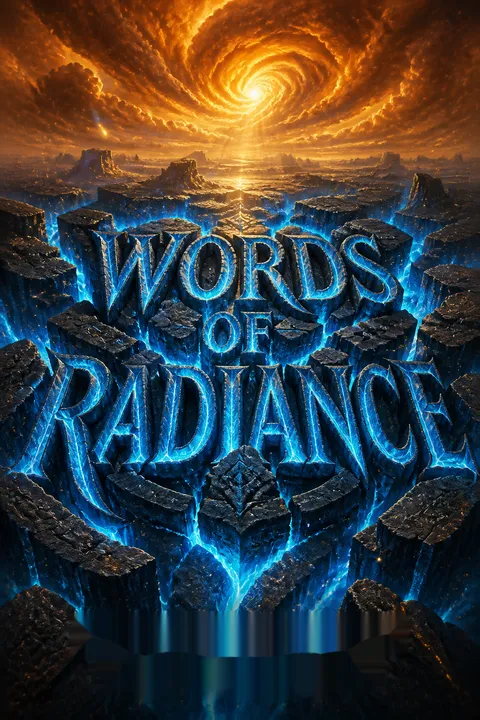


Plot Summary
Prologue
Six years before the main story, Jasnah Kholin notices her shadow pointing the wrong way during a feast celebrating her father’s treaty with the Parshendi. Shadows become armed figures, and the palace dissolves around her into a sea of glass beads. Jasnah survives by discovering that she can command those beads to form a platform and a moving statue.
When she returns to the palace, she finds her father, Gavilar, dying after a Shin assassin throws him from a balcony. The Parshendi leaders admit they hired the assassin because Gavilar planned something dangerous. Their confession does not explain the killer’s impossible powers, so Jasnah turns to scholarship to find answers.
The prologue makes scholarship an act of survival rather than detached curiosity. Jasnah meets the impossible at the exact moment her political world collapses, and her rational response is to observe, test, and record. Yet her rescue depends on a power that her established beliefs cannot explain. Gavilar’s murder also links private grief to public catastrophe: the treaty becomes a war, while the assassin’s abilities point toward a much older history. Jasnah’s decision to investigate is therefore both intellectual and familial. She wants to understand the world, but she also wants to protect a family that has already proved vulnerable to forces it cannot name.
Shallan Finds a Pattern
Aboard a ship bound for the Shattered Plains, Shallan Davar is still recovering from stealing Jasnah’s Soulcaster and fleeing the dangerous man she once trusted. She has lost her chance to study freely and fears her brothers will be ruined without her. When a strange pattern moves across her drawing, Jasnah explains that Shadesmar is a realm of thought and that spren can bond with people to grant Surgebinding.
Shallan’s own spren, a complex being she names Pattern, appears and begins learning how humans think. Jasnah also reveals her theory: the supposedly harmless parshmen are related to the ancient Voidbringers. She intends to reach Urithiru, find unaltered records, and persuade the world before it is too late.
Shallan’s first impulse is to turn danger into a problem she can study. That habit protects her from panic, but it also risks making catastrophe feel abstract. Jasnah’s explanation gives her a framework for understanding Pattern, yet no certainty about what the bond will demand of her. The revelation about parshmen disrupts the comfortable categories on which society depends: servant and enemy may be the same people seen from different historical distances. Shallan’s assignment therefore joins personal ambition to moral responsibility. She can no longer pursue scholarship as private fulfillment; the knowledge she wants may determine whether others survive.
Bridge Four Gets Freedom
After Dalinar’s army survives Sadeas’s betrayal at the Tower, Kaladin emerges from the highstorm as a free man. He rejects the officer’s cloak Dalinar offered him and instead organizes the surviving bridgemen. Hundreds more are too broken to act, so Kaladin appoints Teft to train them, makes Moash and Skar officers, and assigns Rock to feed them.
Bridge Four’s men mark their freedom with tattoos, choosing to carry the crew’s name as a badge of solidarity. Kaladin also accepts responsibility for guarding Dalinar, because the highprince is the only powerful man who has treated the bridgemen as people. His new command gives them a future, but places him once more between danger and his men.
Freedom does not immediately make the bridgemen feel free. Many remain withdrawn, unable to imagine a life beyond the bridge, so Kaladin builds a structure that gives them purpose before demanding courage. The Bridge Four tattoo transforms a shared instrument of exploitation into a chosen identity. Kaladin’s leadership is practical and protective, but also psychologically costly: he cannot stop measuring his worth by whether his people survive. His decision to protect Dalinar is not easy trust in lighteyes. It is a calculated bet that one imperfect ally offers a better chance than the old system, which treated their deaths as an operating expense.
Sixty-Two Days Left
During a vision of an ancient battle, Dalinar witnesses a Radiant knight fight a stone-bodied Thunderclast. The vision’s dying divine voice tells him to unite humanity, rebuild the Knights Radiant, and prepare for an approaching enemy. Soon afterward, someone scratches a countdown and a warning about death onto Dalinar’s wall. Dalinar takes the sign seriously and accelerates his plans.
He announces that gemheart hunts will be shared among paired highprinces, placing the spoils under the king’s control. To force cooperation, he plans to let Adolin win Shards in duels and to use the recovered weapons against Sadeas’s political influence. The highprinces resist, while Dalinar’s confidence grows faster than his coalition.
Dalinar’s visions make leadership a problem of acting under incomplete evidence. He cannot prove the source of the warning, but the cost of dismissing it may be civilizational. His reforms respond to two crises at once: the external threat and the kingdom’s habit of treating war as private sport. Yet the methods he understands best are command, pressure, and force. That creates a paradox: he seeks unity by trying to discipline people who do not yet trust him. The countdown sharpens the stakes, but it also tempts Dalinar to mistake urgency for authority. His moral goal is larger than his political leverage.
The Listeners Choose Power
On the Shattered Plains, Eshonai leads the dwindling listener people through a war they can no longer win by attrition. Her sister Venli has been studying ancient songs and secretly discovers stormform, a form associated with the listeners’ former gods. Eshonai distrusts it because the songs warn that it can summon a destructive storm, but the Five see their people surrendering to dullform rather than face another human attack.
Eshonai agrees to test the new form herself, believing she can stop it if it proves dangerous. Before the transformation, she visits her mother, whose failing memory preserves fragments of the listeners’ escape from their gods. Eshonai’s old maps remind her that exploration once defined her life.
Eshonai’s conflict is not between courage and cowardice, but between two risks that cannot be reconciled. Her people are disappearing, and refusing a dangerous power may be as fatal as embracing it. Venli’s scholarship offers a solution while concealing how much ambition has shaped the research. Eshonai’s choice to take the first transformation is protective, yet it also repeats her lifelong habit of volunteering herself for the unknown. Her mother’s fading memory gives the conflict historical weight: the listeners once chose weakness to escape domination. Now survival may require them to recover the very power their ancestors rejected.
Jasnah’s Ship Goes Under
At sea, Shallan studies Pattern while Jasnah teaches her that their bond grants both Soulcasting and another power associated with light. A group of armed men boards the ship, kills Jasnah, and captures the crew. When the intruders break into Shallan’s cabin, she draws in Stormlight and projects a false image that sends them chasing her apparent escape.
She then reaches Shadesmar and persuades the ship’s own cognitive self to change, flooding the vessel so the prisoners might escape their captors. Shallan is swept into the ocean, but a santhid carries her to a rocky shore. Alone, cold, and grieving, she finds a floating trunk containing Jasnah’s notes and books.
Shallan’s survival is a first test of whether imagination can become action. Her Lightweaving distracts the attackers, but her attempt to save everyone through Soulcasting forces her to bargain with an entity she barely understands. The choice is desperate, not triumphant: she cannot know whether the sailors will live, and she wakes without Jasnah or her own drawings. Finding the scholar’s trunk preserves a thread of the mission, but not its mentor. The scene converts Shallan’s reliance on art from a private refuge into a capacity with consequences. Creativity can mislead, shelter, and destroy, often within the same act.
Shallan Recruits Deserters
Shallan reaches the Frostlands with the slaver Tvlakv’s caravan, using an assumed air of authority to keep him from exploiting her. When deserters pursue them toward another caravan already under attack, she turns back instead of fleeing. She tells the former soldiers they can rescue people rather than continue living as killers.
Most follow her, though their leader Vathah remains skeptical, and the fight costs lives, including Bluth, who had begun to see himself as the hero in Shallan’s drawing. Shallan secures the survivors’ cooperation, frees Tvlakv’s indebted slaves, and promises the deserters a chance to start over. Tyn, a clever con artist traveling with the caravan, begins teaching Shallan how appearances can control a room.
Shallan’s authority begins as performance, but the consequences make it more than a con. She gives deserters a future they cannot yet believe in, then accepts the grief when their rescue costs lives. Her drawing of Bluth becomes a form of moral attention: she sees the better self he might have inhabited, and he carries that image into battle. The moment is not simple redemption; one speech cannot erase a history of violence. Yet it offers a practical alternative to shame. Shallan’s confidence grows because she learns that people may act into an identity before they fully believe it.
An Assassin’s Apprentice
Near the warcamps, Shallan learns that Tyn’s employers are the Ghostbloods and that Tyn helped arrange the attack on Jasnah’s ship. When Tyn realizes Shallan is Jasnah’s ward, she tries to kill her and cover the crime by blaming Vathah. Shallan resists, draws Stormlight, and summons a Shardblade she had not known she could create.
She kills Tyn, then sends the Ghostbloods’ contact a message agreeing to meet. At the meeting, Mraize tests her with a blowgun and offers her work: investigate Highlord Amaram, who has secrets hidden in his manor. Shallan accepts, believing the Ghostbloods may know what Jasnah was seeking.
Tyn’s betrayal turns Shallan’s education in deception back on its teacher. The confrontation is not merely a contest of tricks: Shallan’s past helplessness resurfaces, and she answers it with a capacity she did not know she possessed. Killing Tyn gives her immediate survival, but it also binds her more tightly to the world of covert violence. Mraize’s offer appeals to her hunger for knowledge and her need to protect her brothers, yet the price is moral uncertainty. Shallan is learning to perform identities without surrendering her judgment, but she has not yet learned how to distinguish strategic concealment from self-deception.
A King’s Guard Is Tested
Dalinar appoints Kaladin captain of the guard and expands Bridge Four into a force responsible for his family and King Elhokar. The assignment brings Kaladin into conflict with the Kholin princes, especially Adolin, who distrusts the gloomy bridgeman. After someone nearly kills Elhokar by sabotaging a balcony railing, Kaladin notices a Shardblade cut and realizes the failure was deliberate.
He also learns that Moash had been on the balcony shortly before the accident, though he cannot accept that his friend might be involved. Meanwhile Kaladin trains his Windrunner abilities, learning to stick people and weapons to surfaces and to run along walls, while refusing to tell Dalinar what he can do.
Kaladin’s new authority does not erase his suspicion of the powerful; it makes him responsible for protecting them. The near-fall of the king shows how easily a bodyguard’s success can be mistaken for an uneventful day, and how danger can come from familiar architecture rather than an obvious enemy. His reluctance to reveal his Surgebinding reflects more than distrust of lighteyes: he fears losing Syl and the fragile autonomy he has gained. The possibility of Moash’s involvement pressures Kaladin’s loyalty from both directions. He wants justice, but he also wants to believe Bridge Four can become a family rather than another chain of command.
Shallan Enters the Warcamps
After surviving the Frostlands and reaching the Shattered Plains, Shallan enters the king’s meeting carrying Jasnah’s recovered notes. She tells Dalinar and Navani that Jasnah died, then confirms that the proposed causal betrothal to Adolin still suits her. Dalinar offers her a clerk’s position in his own camp, but Shallan publicly claims she has already accepted Sebarial’s offer instead.
The bluff gives her a measure of independence and places her among a highprince who has quietly built workshops, farms, and trade rather than chasing gemhearts. Shallan and Adolin begin courting, and her irreverent questions about war, Shardplate, and chasmfiends win his attention more effectively than polished courtship would.
Shallan’s arrival is a test of whether she can use authority without being swallowed by it. She refuses a safe place in Dalinar’s household because she sees that protection can also become confinement. Choosing Sebarial gives her room to work, but it is still a risky dependence on a man she barely knows. Her connection with Adolin begins not through idealized romance but through curiosity and unguarded conversation. Their attraction matters because it complicates her strategic goals: he is both a possible ally and a person she does not want to treat as a means to an end.
The Stormform Gamble
Eshonai argues with the Five over Venli’s discovery of stormform, a power the ancient songs connect to the listeners’ gods. The people are fading, and many have chosen dullform to escape human violence, so Eshonai agrees to test the form herself. During a highstorm, she releases the captured spren and transforms.
Her eyes turn red, her body gains new armor, and she feels that the winds themselves will answer her. Eshonai returns to Narak promising that her people can summon a storm powerful enough to destroy the Alethi army. The crowd responds with hope, but Eshonai senses a voice inside her warning that something has gone terribly wrong.
Stormform offers Eshonai the freedom she has long wanted from a war that has reduced exploration to memory. Yet the freedom arrives through a bond that alters her perception and intensifies her certainty. Her public confidence contrasts with the private voice warning her, suggesting that power can solve a tactical problem while narrowing the ability to recognize costs. The scene also echoes the listeners’ ancient choice to abandon power for survival. Eshonai believes she is reversing a losing history; the warning within her suggests she may instead be repeating its central danger under new conditions.
Szeth Strikes the Palace
During a highstorm, Kaladin dreams that the Stormfather warns he will betray and destroy Syl. He wakes as Syl senses the Assassin in White approaching the palace. Kaladin orders the royal family evacuated, but the corridors are dark, a guard lies dead, and Szeth arrives with a Shardblade and the ability to move against gravity.
Dalinar and Adolin attack together and are quickly thrown aside. Kaladin fights with a broken spear until Szeth cuts through his arm and turns it lifeless. Dalinar catches Szeth’s falling Blade, and Kaladin follows the assassin out of the palace. Stormlight heals Kaladin’s severed arm; he reveals himself as a Windrunner, and Szeth flees.
The attack forces Kaladin to act before he understands either his powers or his relationship to Syl. His instincts and training keep him fighting, but the Shardblade wound strips away the identity he built as a spearman and surgeon. Healing the arm becomes more than physical recovery: it proves his abilities can answer a wound that should have been permanent. Yet the victory is partial. Szeth escapes, the king survives by chance and Dalinar’s intervention, and Kaladin hides the truth from the Kholins. He has become a protector, but still fears what that role will cost him.
A New Radiant Faction
Dalinar tries to persuade Highprince Aladar that coordinated plateau runs can save soldiers and strengthen the kingdom. Aladar accepts Dalinar’s tactical reading during a battle but refuses to trust the other highprinces, fearing another betrayal. At the same time, Eshonai sends a messenger to arrange a meeting with the Alethi, then transforms into stormform and declares that peace is no longer her goal.
Her forces begin preparations to use the new power against the humans. Dalinar’s attempt to make peace therefore faces an opponent whose priorities have changed, while he also prepares an expedition toward the center of the Shattered Plains to find the Parshendi and end the war.
This turning point places two kinds of leadership under pressure. Dalinar seeks cooperation through shared rules and military discipline, while Eshonai’s transformation makes decisive force feel like the only answer to her people’s slow extinction. Aladar’s refusal shows that good tactics cannot substitute for political trust. Eshonai’s private doubts, meanwhile, are increasingly separated from her public certainty. Both leaders see themselves as preventing collapse, yet their choices make a peaceful outcome harder to reach. The looming expedition turns a political disagreement into a physical gamble across territory neither side fully understands.
Shallan Kills Tyn
During the meeting with the highprinces, Shallan publicly claims a place in Sebarial’s camp and later uses her skill with disguise to meet the Ghostbloods as Veil. Mraize tests her with a blowgun, then orders her to investigate Amaram’s secret work without harming him. Shallan enters Amaram’s locked room and finds extensive maps and notes about the Shattered Plains, the Parshendi, and the Voidbringers.
She also recognizes his Shardblade as the weapon Helaran carried before he died. When she learns Amaram claimed to have killed Helaran in self-defense, she conceals what she knows and reports back. Her investigation links her family’s past directly to the conspiracy around the coming Desolation.
Shallan’s discovery makes her two central pursuits collide: Jasnah’s search for the Voidbringers and the unresolved history of her own family. The map room offers evidence, but not a simple explanation; Amaram’s motives remain obscured even as the weapon identifies him with Helaran’s death. Shallan’s disguise gives her access, yet also divides her into roles that can protect and endanger her. Her restraint is significant. She does not expose herself or attack Amaram before understanding the stakes. The scene turns private grief into investigative fuel while warning that knowledge alone does not tell her whom to trust.
Four Blades Against Adolin
Adolin challenges Relis after winning Shards from Elit, and Sadeas uses the rules to turn the bout into a four-against-one fight. Adolin’s first attacks break armor and unsettle his opponents, but their combined pressure overwhelms him. Kaladin joins the arena, striking Relis and drawing the man away long enough for Adolin to defeat another Shardbearer.
When the attackers close in again, Kaladin uses a fallen helm as a shield and helps Adolin survive until Relis yields. Adolin wins several Shards and claims the right to challenge Sadeas before the king. Kaladin then demands a separate challenge against Amaram, publicly accusing him of murder and theft.
Adolin’s duel is both a tactical trap and a political performance. He begins with the confidence of a duelist, then discovers that reputation and rules can be manipulated by opponents who control the terms. Kaladin’s intervention is decisive, but it also shows how their mutual distrust has shifted into practical dependence. Adolin can now challenge Sadeas through accepted law; Kaladin tries to obtain justice through the same public ritual, but his accusation carries a different social cost. The contrast exposes the unevenness of the dueling system: a highborn prince can turn spectacle into leverage, while a branded bridgeman risks punishment for speaking the same accusation.
The King’s Blood Stays
After Kaladin names Amaram as Helaran’s killer, Dalinar insists on evidence and Elhokar orders Kaladin imprisoned for publicly challenging a highlord. During his confinement, Kaladin’s anger and despair return, but Bridge Four and Dalinar secure his release. Moash then urges him to support a plot to kill Elhokar, arguing that the king murdered Moash’s grandparents through neglect and corruption.
Kaladin initially agrees to hear the conspirators, then changes course when he realizes their plan would make him complicit in another convenient killing. He reaches the palace during the next assassination attempt, finds the king in danger, and chooses to protect him rather than join Moash’s revenge.
Kaladin’s imprisonment makes his old helplessness feel immediate again, but the more consequential confinement is moral: Moash offers a clear target and a seemingly just reason for revenge. Kaladin understands the grievance because he knows what it is to lose family to powerful men. His refusal is not a declaration that Elhokar is innocent; it is a rejection of justice defined by whoever has the strongest grievance. The choice marks a turn from protecting only those he loves toward defending a principle even when the person benefiting from it is flawed.
The Oath Takes Shape
Dalinar leads his army toward the Parshendi, while Eshonai’s transformed forces prepare to summon the Everstorm. Shallan maps the ancient city hidden beneath the Shattered Plains and reaches the Oathgate, where she discovers that her Shardblade can activate its mechanism. During the convergence, Kaladin fights Szeth above the storm, recovers the assassin’s Honorblade, and saves Dalinar from the falling battlefield.
Dalinar accepts the Bondsmith’s path and swears to unite rather than divide. Shallan’s scholarship and Kaladin’s Radiant abilities now give the army a route to safety and a means to oppose the approaching enemy, though the Everstorm and the transformed listeners remain immediate threats.
The separate strands finally converge around a shared problem: how to protect people when ordinary military and political systems are failing. Shallan’s maps turn scholarship into a physical passage, while Kaladin’s return to the sky turns protection into a public power rather than a private secret. Dalinar’s oath reframes leadership as connection, not domination. Yet the victory does not erase the danger. The Oathgate opens a route, not a solution, and Eshonai’s stormform threatens to reshape the war. The ending therefore offers direction rather than comfort: the protagonists have found a way to act together, but they have not yet stopped what is coming.
Analysis
Words of Radiance repeatedly asks what people do when their inherited roles no longer explain the world. Kaladin was trained to save lives, then forced into a system that spent them; Dalinar was formed as a conqueror, then asked to unite a kingdom; Shallan learned to survive by becoming someone else, then must decide which of those selves can tell the truth. Their abilities make these conflicts tangible. Kaladin’s Lashings turn trust into flight or failure. Shallan’s Lightweavings make perception manipulable, while her memories and drawings test what counts as an honest image. Dalinar’s visions offer guidance but never remove the burden of interpretation.
The book’s political systems are not merely corrupt; they are built to reward the very behavior that threatens them. Sadeas can abandon allies and still speak in the language of order. Elhokar can harm people through negligence while remaining a legitimate king. The bridgemen can become disciplined soldiers without escaping the social structure that branded them. Against this, Bridge Four’s loyalty is meaningful because it is chosen, yet even that loyalty is strained by Moash’s desire for revenge.
The listeners provide the sharpest counterpoint to the Alethi. Their history began with a deliberate rejection of power, while their present desperation makes power seem like the only remaining form of agency. Eshonai’s decision shows how survival can become an argument for repeating the violence one hoped to escape. Across both peoples, the desire to protect can turn into control, and the language of necessity can disguise a choice.
The narrative’s deepest tension is not whether the characters can defeat a single enemy. It is whether they can build forms of trust strong enough to survive revelation, grief, and unequal power. Its answers remain provisional. The protagonists discover allies, pathways, and abilities, but each discovery exposes a larger danger. Progress means gaining the capacity to act while accepting that no power can make the moral decision effortless.
Review Summary
Words of Radiance is widely praised as a masterpiece of epic fantasy. Readers laud Sanderson's worldbuilding, character development, and intricate magic system. The book's emotional depth, plot twists, and epic battles are frequently mentioned. Many consider it superior to its predecessor, with Shallan's arc and the chasm scene being particular highlights. The novel's pacing, humor, and ability to evoke strong emotions are also commended. Fans express deep investment in the characters and eagerly anticipate future installments in the series.
People Also Read








Characters
Shallan Davar
Scholar with a hidden selfA young Veden noblewoman whose appetite for study and art has been shaped by a childhood of fear. Shallan observes people as carefully as she observes plants, using sketches to preserve details and to imagine what a person might become. Her humor and quick improvisation conceal how often she is frightened or overwhelmed. She wants to become a true scholar, protect her brothers, and understand the dangers Jasnah uncovered. Her habit of inventing personas helps her survive social and physical threats, but it also raises a difficult question: whether a self can be both a useful performance and a truthful expression.
Kaladin
Guarded protectorA former surgeon and soldier, Kaladin is a darkeyed man whose experience as a slave and bridgeman has made him fiercely protective of the powerless. He distrusts lighteyes because men such as Sadeas, Amaram, and Roshone have cost him friends and family. His discipline, tactical intelligence, and ability to inspire other former bridgemen make him a natural leader, but he carries every loss as a personal failure. He longs to return to the clean purpose of soldiering, while his bond with Syl draws him toward a role that demands more than obedience. His struggle is to protect without letting grief turn protection into vengeance.
Dalinar Kholin
Warlord seeking unityA veteran highprince and former conqueror, Dalinar is trying to govern through the same discipline that once made him feared on the battlefield. His visions and the countdown on his wall persuade him that a greater disaster is approaching, so he attempts to unify the highprinces and rebuild the Knights Radiant. He is honorable, but his confidence can shade into command without consent. Dalinar’s challenge is to become more than the strongest man in the room: he must build loyalty among people who remember his past violence and mistrust his authority.
Adolin Kholin
Duelist with a conscienceDalinar’s elder son is an accomplished Shardbearer, a polished courtier, and a man more thoughtful than his reputation as a flirt suggests. Adolin enjoys attention and combat, but he is also loyal to his family and troubled by the political uses of violence. His instinct is to act directly, whether that means challenging a rival in the dueling ring or protecting someone in danger. He is not his father’s political equal, yet he understands that spectacle and public perception can change the balance of power. His relationship with Shallan begins to draw out a more candid, less performative side of him.
Jasnah Kholin
Scholar of forbidden historyA royal scholar and Shallan’s mentor, Jasnah treats received history as a document to question rather than a truth to obey. Her research into Shadesmar, the Radiants, and the parshmen grows from a desire to prepare for a catastrophe others refuse to believe in. Her precision can appear cold, but it is also a form of care: she gives Shallan knowledge because ignorance would leave her vulnerable. Jasnah’s independence and skepticism make her difficult to approach, yet she is willing to share responsibility when someone proves both capable and committed.
Navani Kholin
Inventor and royal mediatorA gifted artifabrian, Navani combines political instinct with a practical fascination for how things work. She supports Dalinar’s reforms, records his visions, and sponsors experiments that may change military and civic life. Her relationship with her daughter Jasnah is marked by love complicated by distance, and her feelings for Dalinar are stronger than propriety permits. Navani’s competence often works quietly, through ledgers, devices, and carefully chosen alliances. She is also capable of being overwhelmed by grief, revealing the human cost behind the poise she presents to the court.
Eshonai
Explorer turned warleaderA listener general who once ranged across Roshar making maps, Eshonai is restless, curious, and uncomfortable with a life confined to war. She carries the memory of her people’s free past and understands how years of fighting have narrowed their choices. Her courage makes her willing to test dangerous possibilities herself, especially when the survival of the listeners seems at stake. Eshonai’s conflict grows from a genuine wish to protect her people, not from simple hunger for power. She fears that the forms she embraces may connect her people to the very forces their ancestors fled.
Venli
Scholar of dangerous formsEshonai’s sister is a patient researcher who records the listeners’ songs and searches for new forms. Her intelligence and ambition make her central to the listeners’ response to the war, while her closeness to the work can blur the line between discovery and desire. Venli believes knowledge and power are necessary for survival, even when the old songs warn against what she is pursuing. She and Eshonai share affection, but they differ over risk, authority, and whether their people can save themselves without awakening ancient forces.
Syl
Kaladin’s honorsprenA lively honorspren who appears as a ribbon of light or a young woman, Syl is Kaladin’s companion and the source of his Windrunner abilities. She is curious about human customs and emotions, often playful, but becomes stern when Kaladin’s anger threatens to overwhelm his judgment. Syl remembers fragments of a painful past involving the Knights Radiant, though she does not understand all of it. Her bond with Kaladin depends on trust and shared purpose, and she pushes him to see protection as more than a justification for violence.
Pattern
Shallan’s curious sprenA Cryptic spren whose body resembles an intricate, moving pattern, Pattern is fascinated by human thought, lies, and the meanings people attach to objects. He has little physical strength but gives Shallan access to Lightweaving and Soulcasting. His questions reveal how much ordinary human understanding relies on shared assumptions, while his own limited memory makes him uncertain about the bond’s history. Pattern is eager to learn, but he also warns Shallan that the Radiants’ broken oaths harmed spren before him. His curiosity is inseparable from fear of repeating that history.
Moash
Friend carrying a grievanceA former bridgeman and one of Kaladin’s closest companions, Moash is brave, capable, and deeply resentful of the lighteyed system. His grandparents’ deaths under Elhokar’s rule give his anger a personal history, and he sees political violence as a possible route to justice. He respects Kaladin but does not share his instinct to protect the existing order, especially when that order has failed people like his family. Moash’s loyalty to Bridge Four is real, yet his understanding of loyalty can conflict with Kaladin’s growing belief that principle must apply even to enemies.
Szeth
The Assassin in WhiteA Shin assassin known across Roshar for killing rulers, Szeth follows an oath that has stripped him of the right to trust his own judgment. He wields an Honorblade and uses powers that make gravity, walls, and ordinary combat unreliable. His calm manner contrasts with the horror of what he does, while his insistence on obedience suggests a man who has surrendered his moral agency to other people’s commands. Szeth is dangerous not only because of his skill, but because he is searching for a way to understand whether the beliefs that made him Truthless were ever true.
Amaram
Decorated commanderA highborn general with a spotless public reputation, Amaram presents himself as disciplined, honorable, and devoted to Alethkar. His polished manner and military competence make him easy for powerful people to trust. He believes that terrible acts may be justified by a greater good, a conviction that places him in moral conflict with Kaladin’s insistence on accountability. Amaram’s friendship with Dalinar and Sadeas gives him unusual influence across opposing camps. He represents the danger of a virtue made absolute: honor can become a tool for excusing harm when the person wielding it decides the ends are worthy.
Sadeas
Rival architect of powerHighprince Sadeas is a gifted political operator who once helped Dalinar and Gavilar unify Alethkar. He now sees Dalinar’s reforms as a threat to the kingdom’s fragile balance and to his own ambitions. Sadeas is intelligent enough to understand the moral cost of his decisions, but he believes force and manipulation are the only tools that can rebuild a strong state. His marriage to Ialai gives him access to a formidable network of informants. He is most dangerous when he can make treachery appear reasonable, lawful, or necessary.
Elhokar
Insecure kingThe king of Alethkar is anxious about assassins, sensitive to criticism, and unsure how to rule beside his powerful uncle. His impulsive decisions have damaged lives, even when he did not intend their full consequences. Elhokar wants respect and fears that everyone around him sees only his failures. Kaladin’s presence unsettles him because the bridgeman embodies competence without royal status. The king’s weakness is real, but so is his wish to become worthy of the office he inherited.
Teft
Bridge Four’s hard teacherAn older former bridgeman, Teft is practical, blunt, and more capable of command than he admits. Kaladin relies on him to train newly freed men, and Teft understands the habits of despair because he has lived through them himself. His dry complaints conceal loyalty to Bridge Four and a deep fear of failing the people who trust him. Teft knows more about the Radiants than he initially shares, but his past makes that knowledge painful. He is the kind of leader who can recognize another person’s strength before that person does.
Rock
Cook who sees sprenA Horneater bridgeman, Rock refuses to fight or kill, preferring to feed Bridge Four and keep its members alive. His warmth, jokes, and enormous appetite make him a steadying presence, though he also carries cultural beliefs that other soldiers dismiss. Rock can see spren invisible to most humans, a difference he treats as ordinary. His loyalty is expressed through cooking, practical help, and a deep commitment to his people. He reminds Kaladin that courage does not always look like carrying a weapon.
Renarin Kholin
A prince seeking purposeDalinar’s younger son is thoughtful, awkward, and determined not to be dismissed because of a blood disorder that affects his strength and coordination. He seeks training even when he fears he will embarrass himself, and his willingness to be treated as an ordinary recruit surprises those around him. Renarin’s gentleness contrasts with the martial expectations of the Kholin family. He wants to contribute rather than be protected, but he has not yet found a role that reconciles his limitations, his interests, and the demands of his family.
Tyn
Shallan’s con-artist tutorA practiced thief and mercenary, Tyn teaches Shallan how accents, clothing, and confidence can make people see the person they expect. She is witty, worldly, and capable of affection, but her survival depends on treating relationships as temporary arrangements. Tyn recognizes Shallan’s talent for performance before Shallan fully does, and pushes her toward harder lessons than the young woman expects. Her central tension is between her fondness for the people she mentors and her conviction that attachment is a liability.
Mraize
Ghostblood recruiterA scarred, composed operative of the Ghostbloods, Mraize tests people through calculated danger and values useful skills more than conventional status. He treats information as both currency and a weapon, asking Shallan to investigate Amaram rather than explaining his own organization’s aims. His calm demeanor makes him more unsettling than a visibly angry opponent. Mraize recognizes Shallan’s resourcefulness, but his praise is never free of calculation. He represents a world in which knowledge can open doors while drawing the knower deeper into someone else’s design.
Sebarial
Merchant prince in disguiseA highprince who appears lazy, rude, and uninterested in war, Sebarial has instead used the Shattered Plains to build workshops, farms, and trade. He prefers practical profit to military glory and dislikes the court’s performances of honor. His companion Palona understands his habits and keeps his household running. Sebarial gives Shallan a position partly because it annoys Dalinar, but he also recognizes the value of her independence and ability. His apparent laziness hides a carefully chosen economic strategy.
Rlain
Listener among bridgemenRlain is a listener who served in Bridge Four while hiding his identity among the parshmen. Quiet and observant, he understands the costs of being treated as property more deeply than the human bridgemen can. Kaladin’s decision to arm him and accept him as a soldier gives him a place built on trust rather than ownership. Rlain is caught between the people he was born among and the human companions who have become his community. His knowledge makes him a rare bridge between two groups that mostly see one another as enemies.
Wit
The court’s dangerous jesterThe king’s Wit uses jokes, insults, and stories to expose the assumptions of people who believe they are in control. He often seems frivolous, but his attention is exact and his warnings are rarely casual. Wit recognizes that Kaladin needs a story more than a lecture, and he gives the guarded soldier a way to think about perseverance without pretending that pain is noble. His motives remain difficult to read, and he prefers to leave others unsettled rather than explain himself.
Vathah
Deserter turned guardThe leader of a band of deserters, Vathah has lived by suspicion and force, and expects promises from lighteyes to fail. Shallan’s offer of a second chance makes him responsible for men who have never trusted anyone for long. He is blunt, intimidating, and often pessimistic, but he also recognizes what his group has become. His guarded loyalty tests whether Shallan can turn a charismatic promise into lasting protection.
Highprince Aladar
A cautious political allyAladar is a skilled commander and political strategist who understands the value of cooperation but fears what Sadeas might do to anyone who trusts Dalinar. He can recognize Dalinar’s tactical judgment on the battlefield without accepting his larger political project. Aladar’s hesitation is not mere cowardice; it reflects the danger of changing sides in a kingdom where alliances are often enforced by force.
Plot Devices
Stormlight and Nahel bonds
Power with a personal costStormlight is held in gemstones and can be breathed into the body, where it fuels healing and extraordinary abilities. A bond with a spren gives a person access to Surgebinding, but the relationship is not merely a source of power: the spren gains greater awareness, while the human is asked to live toward particular ideals. Kaladin’s bond with Syl enables Lashings and a strange resistance to Shardblades. Shallan’s bond with Pattern enables Lightweaving and Soulcasting. The bond’s fragility makes each character’s emotional and ethical choices materially dangerous, not simply symbolic.
Dalinar’s visions and countdown
A deadline from the pastDuring highstorms, Dalinar experiences visions of earlier eras and records their words with Navani’s help. A warning carved into his wall gives him a limited number of days, turning his visions into a political and military deadline. The visions reveal Radiants, Thunderclasts, and a coming enemy, but they do not provide a complete or orderly history. Dalinar must interpret them while other highprinces question his sanity and authority. The device links ancient events to present choices while preserving uncertainty about who is speaking and what the warning truly predicts.
Shardblades and Shardplate
Power made visible and contestedShardblades can kill with a touch, cut through nearly any ordinary defense, and vanish or return according to their bearer’s bond. Shardplate magnifies strength and protects its wearer, but requires Stormlight and careful use. These weapons shape rank, military tactics, and political bargaining: Adolin wins Shards through formal duels, Kaladin learns how to face a Shardbearer without one, and the assassin’s Blade reveals powers beyond ordinary combat. Their history ties the present war to the lost Knights Radiant, making each weapon both a practical advantage and a remnant of a broken past.
Urithiru and the Oathgates
A lost route to survivalJasnah’s research points to Urithiru, the ancient center of the Knights Radiant, and to pathways capable of connecting distant places. The Shattered Plains may hide the route or mechanism needed to reach it, though maps disagree about the city’s location. Shallan compares old records, Amaram’s maps, and the geometry of the plateaus until she identifies a pattern. The Oathgate makes the scholarship physically consequential: it can move people, but only a Shardblade can activate it. The search turns historical interpretation into the army’s possible means of escape.
The Everstorm
A new storm changes the warThe listeners’ songs warn of a storm associated with the ancient forms of power. Venli discovers stormform, and Eshonai’s transformation gives the listeners a way to manipulate weather and prepare an Everstorm. The resulting storm moves in the opposite direction from the familiar highstorms and carries a danger that reaches beyond the battlefield. Dalinar’s countdown, Shallan’s research, and the Parshendi shift in tactics all point toward it, but its exact effects remain uncertain. The Everstorm turns the conflict from a regional war over gemhearts into a threat to communities across Roshar.
FAQ
Synopsis & Basic Details
What is Words of Radiance about?
- A World on the Brink: Words of Radiance continues the epic saga of Roshar, a world beset by powerful storms and ancient conflicts. The story follows the intertwined journeys of Kaladin, Shallan, and Dalinar as they grapple with their newfound powers and the looming threat of the Voidbringers.
- Personal Struggles and Growth: The characters face internal and external challenges, as they navigate complex relationships, political intrigue, and the weight of their responsibilities. Kaladin struggles with his role as a leader, Shallan grapples with her past and her powers, and Dalinar wrestles with his visions and the burden of leadership.
- A World of Magic and Mystery: The story delves deeper into the mysteries of Roshar, exploring the nature of spren, the Cognitive Realm, and the ancient history of the Knights Radiant. The characters uncover secrets that could change the course of the war and the fate of the world.
Why should I read Words of Radiance?
- Intricate Worldbuilding: Brandon Sanderson's meticulous worldbuilding creates a rich and immersive experience, with unique cultures, magic systems, and a complex history. The novel expands upon the world of Roshar, revealing new layers of depth and intrigue.
- Compelling Characters: The characters in Words of Radiance are complex and flawed, each with their own unique struggles and motivations. Their journeys are both personal and epic, as they grapple with their pasts and their destinies. The novel explores themes of leadership, responsibility, and the nature of good and evil.
- Epic Scope and Action: The novel features large-scale battles, political intrigue, and personal conflicts, all woven together into a compelling narrative. The action sequences are intense and thrilling, while the quieter moments are filled with emotional depth and character development.
What is the background of Words of Radiance?
- A World of Storms: The story is set on Roshar, a planet ravaged by powerful highstorms that reshape the landscape and influence the lives of its inhabitants. The storms are a constant threat, forcing people to adapt and build their lives around their destructive power.
- Ancient Conflicts: The world is steeped in ancient conflicts between humans and the Parshendi, a race of beings with a mysterious connection to the storms. The history of the Knights Radiant, a legendary order of warriors, is also a key element of the story, as the characters seek to understand their powers and their role in the coming conflict.
- Political Intrigue: The story is set against a backdrop of political intrigue, as the highprinces of Alethkar vie for power and influence. The characters must navigate complex alliances and betrayals, as they seek to unite the kingdom against the looming threat of the Voidbringers.
What are the most memorable quotes in Words of Radiance?
- "Life before death. Strength before weakness. Journey before destination.": This is the First Ideal of the Knights Radiant, a guiding principle that shapes the characters' actions and motivations. It is a powerful statement of purpose and a reminder of the importance of living a life of meaning and service.
- "Power is an illusion of perception.": This quote, spoken by Jasnah Kholin, highlights the importance of perspective and the way that power is often based on perception rather than reality. It is a reminder that true strength comes from within, not from external sources.
- "I will protect even those I hate, so long as it is right.": This quote, spoken by Kaladin, reveals his internal struggle with his hatred for Amaram and his commitment to doing what is right, even when it is difficult. It is a testament to his moral compass and his desire to be a force for good in the world.
What writing style, narrative choices, and literary techniques does Brandon Sanderson use?
- Multiple Perspectives: Sanderson employs a multi-POV narrative, allowing readers to experience the story through the eyes of different characters. This technique provides a rich and nuanced understanding of the world and its conflicts, as well as the characters' individual struggles and motivations.
- Detailed Worldbuilding: Sanderson's writing is characterized by meticulous worldbuilding, with a focus on creating believable cultures, magic systems, and histories. He uses vivid descriptions and intricate details to bring the world of Roshar to life, immersing the reader in its unique atmosphere.
- Subtle Foreshadowing and Callbacks: Sanderson is a master of foreshadowing and callbacks, weaving subtle hints and clues throughout the narrative that pay off in unexpected ways. He uses these techniques to create a sense of mystery and anticipation, as well as to reward careful readers with deeper layers of meaning.
Hidden Details & Subtle Connections
What are some minor details that add significant meaning?
- The Weeping: The recurring mention of the Weeping, a period of constant rain, foreshadows the coming Everstorm and the changes it will bring to Roshar. The Weeping is not just a weather pattern, but a symbol of the world's instability and the impending chaos.
- The Color Red: The color red is used throughout the novel to symbolize danger, passion, and the Voidbringers. It appears in the eyes of the Parshendi, in the Stormlight of certain characters, and in the descriptions of the landscape, creating a sense of unease and foreboding.
- The Number Ten: The number ten is a recurring motif, representing the ten Essences, the ten Surges, and the ten orders of Knights Radiant. It is a reminder of the ancient history of Roshar and the power that once existed in the world.
What are some subtle foreshadowing and callbacks?
- The Assassin in White: The recurring mention of the Assassin in White, who is responsible for the death of King Gavilar, foreshadows the return of Szeth and his role in the coming conflict. The assassin's actions are a constant reminder of the dangers lurking in the shadows and the fragility of peace.
- The Stormfather's Warnings: The Stormfather's cryptic warnings to Dalinar about the coming storm and the need to refound the Knights Radiant foreshadow the major events of the novel and the challenges that the characters will face. These warnings are a constant reminder of the impending doom and the need for action.
- The Pattern on the Page: The pattern that appears on Shallan's sketches foreshadows her connection to the Cryptics and her role as a Lightweaver. The pattern is a symbol of the Cognitive Realm and the hidden forces that shape the world.
What are some unexpected character connections?
- Kaladin and Amaram: The connection between Kaladin and Amaram, once a respected leader and now a hated enemy, reveals the complexities of power and betrayal. Their shared history and the events that led to their conflict highlight the dangers of blind faith and the importance of questioning authority.
- Shallan and Jasnah: The relationship between Shallan and Jasnah is more than just a mentorship; it is a connection between two powerful women who share a unique understanding of the world. Their bond is a source of both strength and conflict, as they grapple with their own secrets and the weight of their responsibilities.
- Dalinar and the Stormfather: The connection between Dalinar and the Stormfather, a powerful spren, reveals the ancient history of Roshar and the forces that shape its destiny. Their bond is a source of both guidance and conflict, as Dalinar struggles to understand the nature of his visions and his role in the coming conflict.
Who are the most significant supporting characters?
- Navani Kholin: Dalinar's wife and a renowned artifabrian, Navani is a powerful and intelligent woman who plays a key role in the political and technological developments of the story. Her relationship with Dalinar is a source of both strength and conflict, as she challenges his beliefs and pushes him to embrace new ideas.
- Teft: An older bridgeman and a mentor to Kaladin, Teft is a voice of reason and experience. He provides guidance and support to Kaladin as he navigates the challenges of leadership and the weight of his past.
- Lopen: A one-armed Herdazian bridgeman, Lopen is a source of humor and levity in the story. Despite his physical limitations, he is a skilled fighter and a loyal friend to Kaladin. His unique perspective and his ability to find joy in the face of adversity make him a memorable and important character.
Psychological, Emotional, & Relational Analysis
What are some unspoken motivations of the characters?
- Dalinar's Fear of Failure: Despite his outward confidence, Dalinar is driven by a deep-seated fear of failure and the desire to live up to the legacy of his brother, Gavilar. This fear motivates his actions and his determination to unite Alethkar, even as he struggles with his own inner demons.
- Shallan's Need for Control: Shallan's use of illusions and disguises is driven by a need for control and a desire to protect herself from the pain of her past. Her ability to create and manipulate images is a way for her to cope with her trauma and to navigate the dangerous world around her.
- Kaladin's Desire for Justice: Kaladin's actions are driven by a deep-seated desire for justice and a need to protect the innocent. His hatred for Amaram and his commitment to his men are a reflection of his moral compass and his unwavering belief in what is right.
What psychological complexities do the characters exhibit?
- Jasnah's Intellectual Detachment: Jasnah Kholin is a brilliant scholar, but her intellectual detachment often makes her seem cold and unfeeling. Her struggle to reconcile her rational mind with her emotions is a key aspect of her character.
- Shallan's Dissociative Identity: Shallan Davar exhibits a complex psychological state, with multiple personas that she uses to cope with her trauma. Her struggle to integrate these different aspects of herself is a central theme of the novel.
- Kaladin's Survivor's Guilt: Kaladin Stormblessed is haunted by survivor's guilt, blaming himself for the deaths of his friends and family. His struggle to reconcile his past with his present is a constant source of internal conflict.
What are the major emotional turning points?
- Jasnah's Death: The death of Jasnah is a major emotional turning point for Shallan, forcing her to confront the reality of her loss and the dangers of the world. This event also serves as a catalyst for Shallan's growth and her determination to carry on Jasnah's work.
- Kaladin's Imprisonment: Kaladin's imprisonment is a major emotional turning point, as he is forced to confront his past and his fears. This experience tests his resolve and his commitment to his ideals, ultimately leading him to embrace his powers and his destiny.
- Dalinar's Visions: Dalinar's visions are a source of both inspiration and terror, as they reveal the impending threat of the Voidbringers and the need for action. His struggle to understand these visions and his role in the coming conflict is a major emotional turning point, as he grapples with the weight of his responsibilities and the legacy of his brother.
How do relationship dynamics evolve?
- Kaladin and Syl: The bond between Kaladin and Syl deepens, as they learn to trust and rely on one another. Their relationship is a source of both strength and conflict, as they grapple with their different perspectives and the challenges they face.
- Shallan and Adolin: The relationship between Shallan and Adolin evolves from a strategic alliance to a genuine connection, as they learn to appreciate each other's strengths and weaknesses. Their bond is a source of both comfort and conflict, as they navigate the complexities of their betrothal and the dangers of the world around them.
- Dalinar and Navani: The relationship between Dalinar and Navani is tested by the weight of their responsibilities and the challenges they face. Their bond is a source of both strength and vulnerability, as they grapple with their pasts and their fears.
Interpretation & Debate
Which parts of the story remain ambiguous or open-ended?
- The Nature of the Voidbringers: The true nature of the Voidbringers and their connection to the Parshendi remains ambiguous, leaving readers to question the origins of the conflict and the true enemy that the characters face. The novel hints at a deeper history and a more complex relationship between humans and Parshendi than is commonly understood.
- The Purpose of Urithiru: The purpose of Urithiru and its connection to the Knights Radiant remains a mystery, leaving readers to speculate about the true nature of the city and its role in the coming conflict. The novel hints at a deeper history and a more complex relationship between humans and spren than is commonly understood.
- The Identity of the Assassin in White: The true identity and motivations of the Assassin in White remain ambiguous, leaving readers to question his origins and his role in the larger conflict. The novel hints at a deeper history and a more complex relationship between the assassin and the forces that control him.
What are some debatable, controversial scenes or moments in Words of Radiance?
- Kaladin's Actions Towards Amaram: Kaladin's decision to challenge Amaram, despite the potential consequences, is a controversial moment that highlights his internal conflict and his struggle with authority. Some readers may see his actions as reckless and impulsive, while others may see them as a necessary act of defiance.
- Shallan's Deception: Shallan's use of deception and manipulation to achieve her goals is a controversial aspect of her character. Some readers may see her actions as necessary for survival, while others may see them as morally reprehensible.
- Dalinar's Decisions: Dalinar's decisions to trust Kaladin and to pursue a path of unity are controversial, as they challenge the established norms of Alethi society. Some readers may see his actions as wise and necessary, while others may see them as reckless and dangerous.
Words of Radiance Ending Explained: How It Ends & What It Means
- The Everstorm Approaches: The novel ends with the looming threat of the Everstorm, a powerful force that could bring about the end of the world. The characters are forced to confront the reality of their situation and the need to prepare for the coming conflict.
- The Return of the Radiants: The novel hints at the return of the Knights Radiant, as Kaladin and Shallan begin to embrace their powers and their destinies. Their journey is one of self-discovery and transformation, as they grapple with the weight of their responsibilities and the potential consequences of their actions.
- A World on the Brink: The ending of Words of Radiance leaves the world of Roshar on the brink of chaos, with the forces of good and evil poised for a final confrontation. The characters are forced to make difficult choices, as they navigate the complexities of their relationships and the looming threat of the Voidbringers. The ending is both hopeful and ominous, leaving readers to wonder what the future holds for the characters and the world they inhabit.
The Stormlight Archive Series

About the Author
Other books by Brandon Sanderson






Download PDF
Download EPUB
.epub digital book format is ideal for reading ebooks on phones, tablets, and e-readers.








