

Plot Summary
Prologue
Marsh, once a leader in the rebellion against the Lord Ruler, has spent three years trapped inside his own body as an Inquisitor. He tries to pull the spike from his back and end his life, but Ruin seizes control and makes him prepare to kill a Terris Keeper.
In brief moments of lucidity, Marsh recognizes the horror of his actions and the force directing them. The prologue establishes both the enemy's reach and its limits: Ruin can command Marsh's body, but cannot read his thoughts.
Marsh's imprisonment gives the threat a human cost before the wider catastrophe unfolds. He is not simply a villainous servant: he remains conscious enough to remember his loyalties and feel revulsion, yet those feelings cannot reliably govern his actions. That gap between moral knowledge and physical agency foreshadows the book's central struggle over who gets to direct a person's power. Ruin's control is terrifying partly because it does not erase Marsh's conscience. It forces him to witness his own betrayal, turning the Inquisitor's body into an occupied territory.
Elend Takes Vetitan
Ash-choked Vetitan is preparing to face ten thousand koloss when Elend Venture arrives without the armies he promised. He takes command anyway, teaches the skaa how to attack the creatures, and leads them into a surprise assault before the koloss can frenzy. The line begins to buckle until Vin drops into the battle and turns the enemy army against itself.
Together, she and Elend kill the Inquisitor controlling the koloss, then seize command of the survivors. Their victory saves Vetitan and gives Elend a new army. Beneath the city, they also uncover the next of the Lord Ruler's supply caverns, stocked with food, weapons, and a map pointing toward Fadrex.
Elend's arrival tests whether his authority can survive outside the institutions he has built. Fatren has kept his people alive through local discipline; Elend earns their trust by risking his own life beside them, not by appealing to his title alone. Yet the victory is also a hardening moment. Elend claims the city and its supplies after saving them, accepting that protection and coercion may occupy the same act. Vin's intervention turns his tactical gamble into success, while the hidden cache suggests the Lord Ruler anticipated catastrophe without explaining how to prevent it.
The Mists Take Their Toll
The mists now linger into daylight, and exposure makes some people shake violently; a smaller number die. Because Vetitan cannot remain habitable and the army lacks shelter for every refugee, Elend orders the villagers to face the mists before traveling toward safer farmland. Vin watches families suffer and feels responsible, although most recover and the survivors become immune.
On the road, she questions a koloss called Human, who insists that he is human and says the mists hate him. At the next cache, Vin finds the Lord Ruler's warning that Ruin can observe spoken words and writing, while thoughts remain private. She keeps that warning to herself and begins investigating the enemy alone.
The forced exposure makes leadership's moral arithmetic immediate: Elend chooses a controlled danger over the slower certainty of starvation, but the people who suffer cannot experience that choice as abstract necessity. Vin's guilt does not cancel the decision; it shows that she still registers the cost that policy tends to flatten into percentages. Human complicates her assumptions about koloss by voicing a desire for recognition. The warning about Ruin shifts the struggle from military secrecy to mental solitude. Vin can no longer safely solve the mystery by speaking it aloud, even to those she loves.
Sazed Loses His Bearings
While Elend consolidates the New Empire, Sazed studies the religions he has preserved, hoping one will explain death and the loss of Tindwyl. Instead, he finds contradictions in each faith and removes his copperminds, convinced that teaching beliefs he cannot trust would make him dishonest. Elend sends him with Breeze and Allrianne to negotiate with Urteau, whose skaa government rejects the New Empire.
Sazed accepts the assignment but continues to resist the role of leader his people want him to take. His grief leaves him useful in diplomacy and research, yet unable to offer others the certainty they seek. Meanwhile, TenSoon returns to the kandra Homeland to face judgment for breaking his Contract.
Sazed's crisis is not a simple loss of belief; it is a crisis of intellectual integrity. He has spent his life preserving other people's answers, so pretending to confidence now would feel like betraying both his discipline and his grief. His refusal to lead the Terris people is partly self-doubt, but also a principled fear of becoming another authority who asks others to accept what he cannot defend. The irony is that his rigorous skepticism narrows his world just as the empire most needs the knowledge he carries. His journey will test whether scholarship can serve people without pretending to certainty.
TenSoon Breaks the Contract
The kandra elders put TenSoon on trial for killing his fellow kandra OreSeur, serving Zane against Vin, and revealing how Allomancers can control their kind. TenSoon argues that he acted under a higher duty to Vin, whom he believes inherited the Lord Ruler's authority. The First Generation refuses to intervene, and the Second Generation sentences him to brutal imprisonment.
TenSoon escapes by using the speed and strength of the wolfhound bones Vin once gave him, then retrieves the Blessing of Potency he had hidden outside the Homeland. He leaves for the human world, determined to find Vin and warn her that the kandra's old rules may not survive Ruin's return.
TenSoon's trial dramatizes the difference between obedience and responsibility. He does not deny his crimes; instead, he challenges the assumption that institutional order remains sacred when its leaders refuse to face a changing world. His escape begins as an act against his people's judgment, but it is also a refusal to let punishment become an excuse for passivity. The wolfhound form, once a humiliation imposed through service, becomes the means of his freedom. His loyalty to Vin is therefore not merely personal affection. It is a wager that moral allegiance can outgrow the contract that once defined him.
Spook Sees Urteau Clearly
In Urteau, Spook has kept his tin burning for a year, sharpening his senses until darkness, distant footsteps, and hidden conversations become clear. He uses that gift to spy on Quellion, the Citizen, whose government claims to follow Kelsier while burning people with noble ancestry and enforcing rigid rules.
When Spook approaches Quellion's sister, Beldre, to challenge her complicity, guards attack him. A sword pierces his chest, and Quellion's men leave him inside a burning house. In delirious pain, Spook hears Kelsier's presence direct him to a vial of pewter. The new metal lets him endure the fire long enough to escape, but also draws him toward power he does not understand.
Spook's heightened senses make him an unusually effective witness, but they also turn ordinary life into an assault he must constantly filter. His desire to become useful grows from guilt over fleeing the siege and leaving Clubs behind; the danger is that usefulness becomes indistinguishable from self-punishment. The burning house supplies a dramatic answer to that guilt when he survives through pewter, yet the rescue comes with an ambiguous voice claiming Kelsier's authority. Spook's need for a mentor makes him vulnerable to anyone who can frame his pain as a test of worth.
A Survivor Rises
With pewter sustaining him, Spook discovers that Quellion secretly protects captured Allomancers while publicly condemning noble blood. When the Citizen stages another execution, Spook enters the burning building through a concealed passage, kills the guards holding the prisoners, and carries a child out through the flames.
The spectacle makes him a hero to Urteau's desperate underground. He enlists Durn's thieves, gathers support, and takes Beldre into custody after she comes to plead for her brother. Spook plans to expose Quellion as a hypocrite by provoking him into using Allomancy in public, while Sazed studies how to return water to the city's drained canals.
Spook's rescue earns him a public identity before he has learned how to inhabit it. The people see a Survivor where he sees an overlooked boy trying to compensate for earlier failures. That gap gives him influence, but it also makes theatrical heroism tempting: he begins to treat the crowd's belief as proof that he deserves the power they assign him. His decision to spare the condemned and use evidence against Quellion is more ethically grounded than simple revenge. Yet his plan depends on controlling a city whose anger has been suppressed, not removed.
Fadrex Welcomes Its Enemies
Elend's army reaches Fadrex, a defensible city ruled by the obligators' former administrator, Yomen. Vin's informant Slowswift reveals that Yomen has restored order and food distribution, making him more than the tyrant Cett expected. At a ball, Vin and Elend enter openly, unsettling the nobility and winning a chance to speak with their enemy.
Elend offers Yomen an alliance, but Yomen rejects his claim to rule and calls him a hypocrite for invoking popular consent while conquering cities. The exchange leaves Elend with no agreement, but it reveals that Yomen cares about his people and believes the Lord Ruler still matters.
Fadrex complicates the empire's political map by giving stability a credible face. Yomen's government may preserve hierarchy, but it also supplies food and restores familiar routines; people accept it because chaos has made order feel like shelter. Elend's democratic ideals are exposed as compromised by his own military power, and Yomen's criticism lands because it is not wholly wrong. Vin's skill at reading people helps the pair enter the city, but it cannot make their interests compatible. The ball turns diplomacy into theater, forcing both rulers to perform authority before an audience watching for weakness.
The Siege Turns Personal
Yomen's forces ambush Elend's camp, destroying half his koloss with a prepared barrage while cavalry distracts Vin. After Elend and Vin return to Fadrex for another ball, Elend keeps Yomen occupied with a public challenge while Vin slips toward the storage cavern.
Yomen's guards catch her and seal her inside, removing the metal fittings that would let her escape with Allomancy. Elend leaves the city wounded, having learned that Yomen can burn atium. With Vin imprisoned and supplies dwindling, Elend seeks a new force of koloss in the countryside. A mist spirit finds him there, but its cryptic gestures offer no clear solution.
The siege converts strategic uncertainty into intimate danger. Elend and Vin divide their skills to penetrate Fadrex, but their plan assumes that each can remain independently safe; Yomen exploits precisely that assumption. Vin's imprisonment exposes the limits of her usual escape mechanism, while Elend's wound and loss of koloss force him to confront how little control his power guarantees. The mist spirit's appearance offers a slender possibility without restoring certainty. Elend must act with incomplete information, and his decision to recruit more koloss risks making the force he fears into his own instrument.
The Koloss Were Human
While Elend is away recruiting a large koloss band, Vin discovers that the creatures are made by driving Hemalurgic spikes through human bodies. Human, the koloss she has spoken with, tries to bring a dead koloss to the wounded rather than harvest another victim. His refusal exposes a fragment of moral judgment beneath the violence.
Elend and his advisers connect the spikes to the Inquisitors and kandra, realizing that one hidden art has created all three kinds of servants. They also discover that precisely sixteen percent of exposed people fall sick in the mists. That repeated number suggests the sickness is not random and gives them a clue about the forces shaping events.
Human's act turns a biological mystery into an ethical revelation: the koloss are not an alien species but people altered until their humanity is difficult to recognize. His impulse to help the wounded shows that the process has not erased every capacity for care. Hemalurgy links bodies, powers, and political control, making the Lord Ruler's engineered servants part of a single system rather than separate horrors. The exact sixteen-percent pattern similarly challenges the assumption that catastrophe is merely chaotic. Both discoveries teach the survivors to look for structure beneath violence.
Urteau Burns Its Myth
Sazed's group finds the Urteau cache, including an underground lake, while Spook discovers that Quellion uses rescued Allomancers to maintain his authority. Spook captures Beldre and helps organize a revolt, intending to expose Quellion publicly. At the rally, however, the Kelsier who guides Spook urges him toward violence; Beldre's coin wounds Spook before he can kill her brother.
Spook realizes the voice has manipulated him and removes the spike hidden in his chest. Without pewter, he is badly injured, but he reaches the mechanism Sazed built and releases the water back into Urteau's canals. The flood gives residents the means to fight fires and saves much of the city.
Urteau's revolt shows how a liberating myth can become an instrument of coercion. Quellion uses Kelsier's legacy to justify executions, while the false Kelsier pushes Spook toward the same cycle of sacrifice and control. Beldre's intervention interrupts that pattern at the cost of Spook's borrowed strength. His choice to remove the spike accepts weakness rather than pursuing power without scrutiny. The restored canals then offer a different kind of spectacle: not a miracle claimed by one leader, but infrastructure that lets ordinary people protect their own homes.
The Kandra Choose Their Oath
After reaching Urteau, TenSoon joins Sazed on the road to the kandra Homeland, where Sazed hopes to learn the Terris religion. He discovers that the First Generation preserves its teachings and that the Lord Ruler's Trust conceals the atium hoard. Before the kandra can act, KanPaar stages a coup and imprisons Sazed with the Firsts.
TenSoon and MeLaan free them, but Ruin begins seizing the kandra through their spikes. The First Generation orders the Resolution: kandra must remove their Blessings rather than become Ruin's servants. Most obey, choosing death over enslavement, while Sazed and TenSoon survive to carry the warning and the remaining atium toward the final conflict.
The kandra's long obedience has preserved their society, but it has also made them vulnerable to a leadership that mistakes continuity for wisdom. KanPaar's coup repeats the very authoritarian logic the kandra were created to serve. The Resolution is a terrible countermeasure because it protects collective agency by destroying individual lives. Sazed's discovery of the atium and of a living Terris tradition gives him knowledge, not certainty; the kandra must still choose whether their inherited beliefs deserve action. Their choice makes faith consequential rather than merely ceremonial.
Yomen's Atium Was False
Marsh arrives in Fadrex demanding atium, but Yomen admits that his apparent wealth was a bluff and that the cache contained no reserve. Vin realizes Ruin has manipulated her search for the caches, hoping she would lead him to the metal he cannot perceive. She persuades Yomen that the Lord Ruler is truly dead and that Elend will not slaughter the city simply to possess it.
Elend, meanwhile, withdraws rather than unleash the koloss on Fadrex. A warning Spook scratched in steel explains that even a small spike can let Ruin influence a person. Marsh intercepts the message, but its discovery helps Vin see how Ruin's control works.
Yomen's false claim about atium turns a presumed prize into a test of interpretation. Vin recognizes that her own conviction has been used as a steering mechanism, and that the cache trail has served Ruin as much as it has served the defenders. Elend's retreat matters because he refuses to let tactical advantage dictate his moral identity. Spook's steel message preserves a warning that ordinary writing could not safely carry. Each character now understands a different fragment of the enemy's method, but no one yet possesses the whole explanation.
Luthadel Becomes the Trap
Vin leaves Fadrex and leads Ruin's Inquisitors across the ruined empire to Luthadel, drawing them away from Elend and the refugees gathering near the Pits. She confronts them at Kredik Shaw, where the Lord Ruler once ruled, and fights despite her wounds and dwindling metals.
Marsh joins the torture, but his remaining conscience stirs when he sees Vin's earring, a small metal object that has quietly aided Ruin's influence over her. Marsh tears it away. The mists return to Vin, and she discovers she can draw on their power as she once did in the Lord Ruler's palace. Her escape from Ruin's control becomes the opening for a final battle.
Vin deliberately turns herself into bait, choosing an exposed position because it may force Ruin to reveal more of his power. Her plan is not based on certainty but on a pattern she has noticed: desperate need sometimes brings the mists to her aid. The earring makes that pattern personal and tragic. A gift from her mother has also served as a hidden channel for Ruin's influence. Marsh's intervention shows that the self he believed lost has not vanished completely, and that a small act can reopen agency.
Atium Buys One Last Stand
In the Homeland caverns, Elend discovers that the soldiers sickened longest by the mists can burn atium. He gives the metal to Demoux and hundreds of other mistfallen, who become an army able to anticipate attacks. When Ruin's koloss arrive, Elend leads them into battle and spends the hidden atium to keep his soldiers fighting.
Marsh kills Elend after the reserve is exhausted, but Elend has already ensured that Ruin cannot recover the metal. Vin, now drawing fully on the mists, defeats the Inquisitors at Kredik Shaw and joins the struggle against Ruin. She gives up her life to destroy the force that has been consuming the world.
The number sixteen, first treated as a statistical oddity, becomes the hinge between bodily suffering and collective resistance. The mists have not simply punished the exposed; they have awakened powers that allow a small force to resist an overwhelming army. Elend's use of atium is costly and finite, but it transforms time itself into a weapon, buying others a chance to act. His death and Vin's sacrifice are not isolated heroic gestures. Together, they remove the resources and agents Ruin needs to complete his victory.
Sazed Remakes the World
As the sun burns hotter and the koloss attack the caverns, Sazed finds Vin and Elend dead beside Ruin's abandoned body. He recognizes that Vin has passed the powers of Preservation and Ruin to him, and that his copperminds hold the knowledge needed to use them.
Sazed moves the planet back into a survivable orbit, restores the sky and landscape, and repairs human and animal life using the records of many cultures. His lost religions prove useful not because any one is wholly correct, but because each preserves a piece of truth. The world survives, and Sazed becomes its new guardian.
Sazed's transformation resolves his conflict between faith and scholarship without making either one disappear. He does not receive a perfect doctrine that eliminates doubt; instead, he discovers that knowledge accumulated across generations can guide action when joined to trust. His restoration is deliberately informed by records that he once judged inadequate, and this makes intellectual humility materially consequential. The powers of Preservation and Ruin also cease to be simple moral labels. Sazed must combine stability with change, using both forces without letting either dominate.
Epilogue
Spook wakes among refugees in a cavern after the world has been remade. Beldre, Breeze, and Ham gather around him, then follow him outside to find grass beneath a blue sky. Spook discovers Vin and Elend lying dead among flowers, their bodies restored but their lives not returned.
Beside them he finds Sazed's account of the catastrophe and a message explaining that the knowledge of the Keepers has been preserved for the rebuilding ahead. Spook understands that the next task is not conquest but leadership: the survivors must build a society from what remains.
The epilogue refuses an easy resurrection. Sazed can repair bodies and landscapes, but he cannot return Vin and Elend to life, so the new world begins with gratitude and grief together. The flowers fulfill Mare's remembered hope, while Spook's survival carries forward the unresolved human work of rebuilding institutions. Sazed's books turn memory into a public resource rather than a private burden. The ending therefore closes the cycle of catastrophe without pretending history can be erased: survival depends on carrying knowledge forward and making better choices with it.
Analysis
The novel's central conflict is not simply whether the world can be saved, but whether power can be used without turning people into instruments. The Lord Ruler engineered kandra, koloss, and Inquisitors to serve his order; Ruin inherits those systems and turns their built-in vulnerabilities into tools of domination. Elend, Vin, Sazed, and Spook each confront a different version of the same problem: how to act when protection requires force, when belief can be manipulated, and when a symbol outgrows the person who inspired it.
The book also makes knowledge an ethical practice. Sazed's archive initially feels like a museum of failed religions, but its records eventually provide the maps, biological knowledge, and cultural clues needed to repair the world. Their value does not depend on every doctrine being literally true. Each preserves a human observation or hope that becomes useful when combined with others. Sazed's eventual faith is therefore not the rejection of reason, but a decision to trust without demanding that uncertainty disappear first. Vin's struggle with Ruin is psychological as well as cosmic. Ruin speaks through familiar memories and encourages her to mistake influence for her own judgment. The earring she associates with her mother becomes a physical emblem of that concealed interference. Her resistance depends not on purity or invulnerability, but on relationships that Ruin cannot interpret: Elend's trust, Marsh's remaining conscience, and Spook's refusal to become the tyrant he opposes.
The ending binds creation to preservation and destruction without reducing either to simple good or evil. Sazed restores the world by using both powers, guided by knowledge gathered across generations. The survivors inherit neither a perfect system nor a final answer. They inherit the harder task of making a livable society from memory, accountability, and care.
Review Summary
The Hero of Ages concludes the Mistborn trilogy with a thrilling, emotionally charged finale. Readers praise Sanderson's intricate world-building, complex characters, and masterful plotting. The book ties together threads from previous installments, delivering shocking twists and a bittersweet ending. Many found it a satisfying conclusion, though some felt the pacing was slow at times. Themes of faith, hope, and sacrifice resonate throughout. While opinions vary on specific elements, most agree it's an impressive capstone to an epic fantasy series.
People Also Read





Characters
Vin
Mistborn empressVin is a gifted Mistborn whose instincts were forged by a childhood of hunger, violence, and constant mistrust. She has learned to survive through vigilance, but her relationships with Elend, Sazed, and the crew have taught her that trust can be a form of strength rather than a weakness. She is uncomfortable when people turn her into a symbol, because she knows how far the symbol can drift from the person. Her sharpness in combat is matched by a growing willingness to listen, question her own assumptions, and accept that protecting someone may require letting them choose their own risks.
Elend Venture
Scholar turned emperorElend begins as an idealistic student of political theory and becomes a ruler responsible for armies, food, and frightened populations. He values consent and justice, yet the collapsing world repeatedly forces him to make decisions that resemble the coercive rule he opposed. His strength is not that he escapes compromise, but that he examines what compromise does to him and remains willing to change course. His marriage to Vin provides a relationship grounded in trust rather than perfect understanding. He leads best when he can combine his scholar's patience with a soldier's willingness to act.
Sazed
Keeper of lost knowledgeSazed is a Terris Keeper who has spent his life preserving religions, histories, and practical knowledge in copperminds. His disciplined reason makes him a trusted adviser, but grief over Tindwyl's death turns that discipline against him: he scrutinizes belief until he can find no reason to accept any of it. He is most himself when researching, yet he feels obligated to become a leader because his people need one. His story explores the difference between pretending to certainty and choosing to trust despite uncertainty, while his scholarship remains a practical inheritance for those who must rebuild.
Spook
The overlooked survivorSpook is a Tineye who grew up speaking a thick Eastern street dialect and assuming that the older members of Kelsier's crew barely noticed him. He carries guilt over fleeing the siege and losing his uncle, which makes the offer of power especially seductive. In Urteau, he discovers that observation, listening, and quiet persistence can matter as much as a grand speech. His empathy for people overlooked by rulers helps him challenge Quellion, though his hunger to become important also makes him vulnerable to manipulation. He is a young leader learning that courage includes resisting the role others invent for him.
TenSoon
Kandra contract-breakerTenSoon is an unusually experienced kandra who has spent centuries serving human masters while privately resenting the constraints of Contracts. He is observant, proud of his skill, and deeply shaped by his people's traditions. His bond with Vin disrupts his inherited view that humans are merely masters to be endured. TenSoon's struggle is not to become human, but to decide whether loyalty to a law still makes sense when that law leaves his people unprepared for disaster. His unconventional bodies, especially the wolfhound form, express a restless nature that the Homeland's rigid order cannot contain.
Ruin
The force of destructionRuin is an ancient power associated with change, decay, and the eventual ending of things. It presents destruction as a natural completion and treats human choices as instruments in a process larger than morality. Its influence is most effective when it works indirectly: changing written records, nudging emotions, and exploiting weaknesses built into Hemalurgic servants. Ruin's confidence comes from believing that every act of creation only prepares something else to be destroyed. That conviction makes it difficult to comprehend people who accept loss without surrendering their capacity to protect others.
Marsh
The captive InquisitorMarsh is Kelsier's older brother and a former leader of the skaa rebellion. Practical to the point of despair, he once abandoned the struggle when victory seemed impossible. His transformation into an Inquisitor leaves him trapped between his own mind and a power that controls his body. He is haunted by the fear that he has failed the people he once led, and by the knowledge that his brother achieved what he could not. Marsh's flashes of resistance reveal how much moral identity can endure even when a person's freedom of action is nearly gone.
Kelsier
The Survivor's legacyKelsier is the charismatic rebel whose audacity and sacrifice continue to shape politics and faith after his death. He understood how stories could move people, and he deliberately made himself a symbol powerful enough to outlast his individual life. His legacy is double-edged: his followers find courage in his example, while rulers such as Quellion use his rhetoric to justify cruelty. To Vin and the surviving crew, Kelsier remains a complicated person rather than a flawless god. His influence asks whether a liberating idea can remain humane once institutions claim ownership of it.
Lord Yomen
Fadrex's orderly rulerYomen is an obligator who governs Fadrex through bureaucracy, religious conviction, and a talent for preserving familiar routines. He believes that people need stability and that the Lord Ruler's authority remains meaningful, even after the empire's collapse. Unlike a purely self-serving antagonist, Yomen has worked to feed his city and maintain order. His conflict with Elend arises partly from sincere disagreement about legitimate rule. He is cautious, composed, and difficult to intimidate, qualities that make him a more formidable opponent than his scholar's robes first suggest.
Breeze
The calculating SootherBreeze is a Soother who enjoys manipulating emotions and presenting himself as selfish, worldly, and faintly bored. Beneath that pose is a deeply practical concern for the people around him, though he prefers to help by arranging others rather than taking center stage. He is skilled at reading social situations and understands that a leader's image can be as useful as an army. His relationship with Allrianne reveals a tenderness he usually hides. In Urteau, his political instincts help turn Spook's popularity into a workable movement.
Ham
The thoughtful ThugHam is a Pewterarm and soldier whose interest in philosophical puzzles sits alongside a genuine attachment to the people he commands. He dislikes treating soldiers as expendable numbers, which can complicate decisions that Elend must make quickly. His questions are not merely intellectual games; they expose assumptions that others would rather leave unexamined. Ham's loyalty to Elend allows him to challenge the emperor without abandoning him, and his warmth helps keep the old crew connected through years of exhaustion and loss.
Beldre
The Citizen's conflicted sisterBeldre is Quellion's sheltered sister, raised between noble privilege and the danger of her skaa ancestry. Her gentle manner and capacity for trust make her seem out of place in Urteau's violent politics, yet she is not merely passive. She watches the consequences of her brother's rule and struggles with her inability to stop him. Her kindness challenges Spook's instinct to treat everyone as either a threat or an ally, while her choices force him to confront the difference between winning a city and protecting its people.
Quellion
Urteau's CitizenQuellion is a revolutionary ruler who claims to fulfill Kelsier's promise of skaa self-rule. He rejects noble symbols and luxury, but replaces the old hierarchy with surveillance, executions, and strict social controls. His desire for stability appears genuine, which makes his extremism more unsettling than simple ambition. He has sheltered his sister from much of the city's violence, creating a private tenderness that sits uneasily beside his public brutality. Quellion shows how a movement against oppression can reproduce its methods when fear becomes the main instrument of government.
Human
The questioning kolossHuman is a koloss who insists on his humanity despite his altered body and violent instincts. His speech is slow, but his questions expose an intelligence that humans have too easily dismissed. He dislikes being controlled and longs for the ordinary life he associates with people, even when he cannot fully explain what that means. His compassion for wounded humans and resistance to the koloss' usual practices help Vin recognize the moral life still buried within the creatures.
Demoux
The faithful generalDemoux is a young general whose scars and devotion to the Survivor make him seem older than he is. He believes strongly in Kelsier's religious significance, and interprets his own suffering through that faith. Elend's insistence that Demoux's worth is not measured by whether he is spared helps him resist self-blame. As a commander, he is practical and attentive to morale, and he remains committed to serving even when his certainty is shaken.
Tindwyl
Elend's demanding mentorTindwyl was a Terris Keeper who trained Elend in practical leadership and shared Sazed's work on the Hero of Ages. Direct, disciplined, and skeptical of easy idealism, she pushed others to become more capable rather than more comfortable. Her relationship with Sazed combined intellectual companionship with deep affection. Though absent from the present action, her lessons shape Elend's rule and continue to influence Sazed's sense of duty.
MeLaan
TenSoon's rebellious protégéMeLaan is a younger kandra who favors an unconventional wooden True Body and questions the Second Generation's authority. Her sympathy for TenSoon leads her to challenge the passivity of the Homeland, even though its traditions discourage direct confrontation. She represents a generation less willing to accept inherited rules as permanent simply because they have endured.
Plot Devices
The Metallic Arts
Power with physical rulesAllomancy lets people burn metals for abilities such as pushing objects, enhancing senses, or influencing emotions. Feruchemy stores personal attributes in metalminds for later use. Hemalurgy transfers power through metal spikes driven through living bodies, at the cost of the victim's life and the recipient's independence. These systems are not interchangeable: their distinct rules shape battles, politics, and the creation of the Lord Ruler's servants. The story's revelations about their connections explain how Ruin controls koloss and Inquisitors, why the mists awaken powers, and how seemingly minor metal objects can affect a person's agency.
The Storage Caverns
A trail through the crisisThe Lord Ruler left five hidden caches beneath Ministry buildings across the empire. Each contains survival supplies and metal plates that direct the search toward another location. The caches give Elend's people food, water, and practical resources, while the inscriptions provide partial guidance about metals and the coming disaster. Their locations also form a pattern that the characters misunderstand for much of the story. What begins as a search for provisions becomes a race to understand why the Lord Ruler hid these sites and what Ruin hopes to find.
The Daymists
A crisis with hidden purposeThe mists once arrived only at night, but now linger through daylight and sometimes cause people to shake, fall ill, or die. Their exact effects produce an unusually precise sixteen-percent pattern, which prompts the characters to question whether the sickness is natural. Exposure eventually proves connected to Allomantic power, turning a source of dread into a difficult form of preparation. The mists also respond to Vin in a way they do not respond to others, and their changing behavior signals that the struggle involves more than weather or disease.
Metal-Bound Messages
Knowledge beyond Ruin's reachRuin can alter written records, making ordinary letters and books unreliable. Metal resists this interference, so Elend's forces send important instructions through etched plates or memorized messages. Spook's warning about the influence of spikes survives because he scratches it into steel. The device turns a simple material distinction into a strategic safeguard: preserving information requires understanding not only what a message says, but what it is written on. It also foreshadows the larger importance of metal as a boundary Ruin cannot easily cross.
The Survivor's Legacy
A symbol open to misuseKelsier's rebellion leaves behind more than a political victory. His reputation becomes a religion, giving ordinary people courage and offering new rulers a language of legitimacy. In Urteau, Quellion invokes the Survivor to justify executions, while Spook's apparent connection to Kelsier helps him rally the oppressed. The same legacy can inspire resistance or excuse cruelty, depending on who claims authority over it. The tension between Kelsier as a flawed person and the Survivor as an ideal forces the characters to decide whether honoring a hero means repeating his words or preserving the humane purpose behind them.
FAQ
Synopsis & Basic Details
What is The Hero of Ages about?
- World on the brink: The world of Scadrial is dying, choked by ash and increasingly dangerous mists. Resources are dwindling, and society is crumbling.
- The final battle: The story centers on the final confrontation between the forces of good, led by Elend Venture and Vin, and the destructive power of Ruin, an ancient entity seeking to unmake the world.
- Unraveling ancient secrets: The characters race to understand the prophecies of the Hero of Ages and the nature of Allomancy and Feruchemy, hoping to find a way to defeat Ruin and save humanity.
- Sacrifice and transformation: The narrative explores themes of sacrifice, leadership, and the power of belief as characters make difficult choices and undergo profound transformations in the face of impending doom.
Why should I read The Hero of Ages?
- Epic conclusion: It provides a satisfying and thought-provoking conclusion to the Mistborn trilogy, resolving long-standing mysteries and delivering a powerful emotional impact.
- Complex characters: The story features well-developed and morally ambiguous characters who grapple with difficult choices and undergo significant personal growth.
- Intricate worldbuilding: Brandon Sanderson's meticulous worldbuilding creates a rich and immersive setting with a unique magic system and a compelling history.
- Themes of hope and sacrifice: The novel explores profound themes of hope, sacrifice, and the power of belief in the face of overwhelming odds, offering a message of resilience and the potential for redemption.
What is the background of The Hero of Ages?
- Post-apocalyptic setting: The story takes place on Scadrial, a world perpetually shrouded in ash and plagued by deadly mists, a consequence of the Lord Ruler's actions.
- Allomancy and Feruchemy: The magic system is based on Allomancy (burning metals for power) and Feruchemy (storing attributes in metals), with complex rules and limitations.
- The Final Empire: The world is set in the aftermath of the Final Empire, a thousand-year reign of the Lord Ruler, a tyrannical god-king who oppressed the skaa population.
- Prophecies and religion: Ancient prophecies and religious beliefs play a crucial role, particularly those surrounding the Hero of Ages, adding layers of mystery and intrigue to the narrative.
What are the most memorable quotes in The Hero of Ages?
- "I am, unfortunately, the Hero of Ages.": This quote, spoken by the character Sazed, encapsulates the reluctant hero trope and the burden of responsibility that comes with it. It highlights the theme of unexpected leadership and the acceptance of one's destiny.
- "You have me.": Uttered by Elend Venture to Fatren, this quote signifies Elend's commitment to leading and protecting the people, even in the face of overwhelming odds. It embodies the theme of selfless leadership and the power of hope.
- "Peace gave her strength.": This quote, describing Vin's state of mind, reveals the source of her power and resilience. It highlights the theme of inner peace and the ability to find strength in understanding and acceptance.
What writing style, narrative choices, and literary techniques does Brandon Sanderson use?
- Intricate magic system: Sanderson employs a detailed and internally consistent magic system (Allomancy, Feruchemy, and Hemalurgy) with clear rules and limitations, adding depth and complexity to the world.
- Multiple perspectives: The story is told from multiple points of view, allowing readers to experience events from different angles and gain a deeper understanding of the characters' motivations and conflicts.
- Foreshadowing and mystery: Sanderson masterfully uses foreshadowing and subtle clues to build suspense and intrigue, gradually revealing the truth about the world and its history.
- Action-packed sequences: The novel features thrilling and well-choreographed action sequences, showcasing the characters' Allomantic abilities and strategic thinking.
Hidden Details & Subtle Connections
What are some minor details that add significant meaning?
- The color white: Symbolizes hope amidst despair: Elend's insistence on wearing white uniforms, despite the ashen environment, symbolizes his unwavering hope and commitment to bringing light to a dark world.
- The Lord Ruler's caches: Foresight amidst tyranny: The existence of the Lord Ruler's caches, filled with food and supplies, reveals a hidden layer of pragmatism beneath his tyrannical rule, suggesting that he anticipated the world's end and sought to prepare for it.
- The Terris stewards' castration: Oppression and control: The Terris stewards' castration, a practice enforced by the Lord Ruler, symbolizes the systematic oppression and control of a people, highlighting the cost of freedom and the fight against tyranny.
What are some subtle foreshadowing and callbacks?
- Kwaan's words: Echoes of betrayal: Kwaan's warnings about a force changing history foreshadow Ruin's manipulation of the Terris prophecies, creating a sense of unease and impending doom.
- The Eleventh Metal: Unveiling hidden powers: Kelsier's search for the Eleventh Metal (malatium) foreshadows the discovery of new Allomantic metals and the expansion of the magic system, adding layers of complexity to the world.
- The Lord Ruler's last words: Ominous prophecy: The Lord Ruler's final words, "You have doomed yourselves," foreshadow the release of Ruin and the impending destruction of the world, creating a sense of dread and anticipation.
What are some unexpected character connections?
- Marsh and the Lord Ruler: Shared Terris heritage: The revelation that both Marsh and the Lord Ruler were Terris, despite their opposing roles, highlights the complex relationship between heritage and destiny, challenging assumptions about good and evil.
- Vin and the Lord Ruler: Shared Allomantic power: The connection between Vin and the Lord Ruler, as both wielders of immense Allomantic power, creates a parallel between them, forcing Vin to confront her own potential for tyranny.
- TenSoon and Vin: Unlikely friendship: The unlikely friendship between TenSoon, a kandra, and Vin, a human, challenges prejudices and highlights the potential for understanding and connection across different species and cultures.
Who are the most significant supporting characters?
- Sazed: Keeper of knowledge and faith: Sazed, a Terris Keeper, serves as a moral compass and a source of historical and religious knowledge, guiding the characters and providing context for their actions.
- Breeze: Master manipulator and emotional guide: Breeze, a Soother, uses his Allomantic abilities to influence emotions and provide strategic insights, playing a crucial role in political maneuvering and crisis management.
- Ham: Philosophical Thug and moral anchor: Ham, a Thug, offers a grounded perspective and a strong moral compass, challenging the characters to consider the ethical implications of their choices.
Psychological, Emotional, & Relational Analysis
What are some unspoken motivations of the characters?
- Elend's desire for acceptance: Seeking validation through leadership: Elend's unspoken desire to prove himself as a capable leader drives his actions, as he seeks to overcome his past insecurities and gain the respect of his people.
- Vin's fear of vulnerability: Protecting herself through strength: Vin's unspoken fear of vulnerability motivates her to maintain a strong and independent persona, even as she yearns for connection and intimacy.
- Sazed's search for meaning: Coping with loss through knowledge: Sazed's unspoken need to find meaning and purpose in the face of loss fuels his relentless pursuit of religious knowledge, as he seeks to fill the void left by Tindwyl's death.
What psychological complexities do the characters exhibit?
- Elend's idealism vs. pragmatism: Balancing morality and necessity: Elend's internal conflict between his idealistic principles and the pragmatic demands of leadership creates psychological tension, as he struggles to reconcile his beliefs with the harsh realities of war and survival.
- Vin's trust issues and emotional growth: Overcoming trauma through relationships: Vin's psychological journey involves overcoming her deep-seated trust issues and learning to form meaningful relationships, as she grapples with her past trauma and her role as a powerful Mistborn.
- Sazed's faith crisis and identity struggle: Reconciling belief and reality: Sazed's psychological complexities stem from his crisis of faith and his struggle to reconcile his identity as a Keeper with his personal loss, leading him to question his purpose and his place in the world.
What are the major emotional turning points?
- Vin's acceptance of Elend's death: Finding peace in sacrifice: Vin's emotional turning point occurs when she accepts the possibility of Elend's death, finding peace in understanding that she cannot control his choices and that his sacrifices are necessary for the greater good.
- Sazed's loss of faith and rediscovery of belief: Embracing hope amidst despair: Sazed's emotional journey involves a profound loss of faith followed by a gradual rediscovery of belief, as he comes to terms with Tindwyl's death and finds new meaning in his role as a Keeper.
- Elend's transformation into a warrior: Embracing strength and ruthlessness: Elend's emotional turning point occurs as he embraces his role as a warrior and a leader, shedding his naivety and accepting the necessity of making difficult choices, even if they conflict with his ideals.
How do relationship dynamics evolve?
- Elend and Vin's partnership: Mutual support and trust: Elend and Vin's relationship evolves from a romantic connection to a partnership based on mutual support and trust, as they navigate the challenges of leadership and war together.
- Sazed and Tindwyl's love: Finding solace in connection: Sazed and Tindwyl's relationship provides solace and meaning in a world of chaos, highlighting the power of love and connection to overcome despair.
- Kelsier and Vin's mentorship: Legacy of inspiration and sacrifice: Kelsier's mentorship of Vin shapes her into a powerful Mistborn and a symbol of hope, even after his death, as she carries on his legacy and embodies his ideals.
Interpretation & Debate
Which parts of the story remain ambiguous or open-ended?
- The nature of Preservation and Ruin: Forces or entities?: The true nature of Preservation and Ruin remains ambiguous, leaving open the question of whether they are simply forces of nature or sentient entities with their own motivations and desires.
- The extent of Ruin's influence: Manipulation or inevitability?: The extent of Ruin's influence on the characters and events is debatable, raising questions about free will versus determinism and the degree to which individuals can resist external forces.
- The future of Scadrial: Hope or uncertainty?: The ending offers a sense of hope and renewal, but the future of Scadrial remains uncertain, leaving open the possibility of new challenges and conflicts in the years to come.
What are some debatable, controversial scenes or moments in The Hero of Ages?
- Vin's decision to release Ruin: Sacrifice or mistake?: Vin's decision to release Ruin at the Well of Ascension is a controversial moment, as it leads to widespread destruction and suffering, raising questions about whether her actions were justified or a tragic mistake.
- Elend's use of koloss in battle: Pragmatism or moral compromise?: Elend's decision to use koloss in battle is a morally ambiguous choice, as it raises questions about the ethics of using such brutal and destructive creatures, even for the greater good.
- The Lord Ruler's actions: Tyranny or necessity?: The Lord Ruler's actions, particularly his suppression of knowledge and his creation of the skaa, are open to interpretation, with some arguing that they were necessary evils for maintaining order and protecting humanity.
The Hero of Ages Ending Explained: How It Ends & What It Means
- Vin and Ruin's destruction: Balance restored through sacrifice: The ending sees Vin, as the vessel of Preservation's power, destroying both herself and Ruin, achieving a cosmic balance but leaving the world without its original gods.
- Sazed's ascension: Knowledge and compassion as divine traits: Sazed, the Terris Keeper, inherits the powers of both Preservation and Ruin, becoming the new god of Scadrial. This signifies the importance of knowledge, balance, and compassion in shaping a new world.
- A world reborn: Hope for the future: The ending offers a sense of hope and renewal, as Sazed uses his newfound power to restore the world and create a brighter future for humanity, free from the oppression of the past.
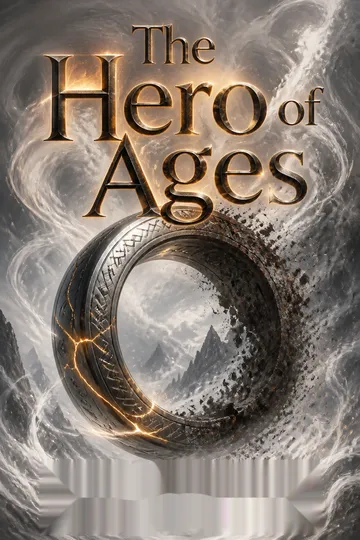
The Mistborn Saga Series
About the Author
Other books by Brandon Sanderson




Download PDF
Download EPUB
.epub digital book format is ideal for reading ebooks on phones, tablets, and e-readers.








