


Plot Summary
Prologue
At eleven, Wayne waits for his mother to return from a dangerous mine, stealing cards and clothes while trying to make her laugh. She tells him about a lawman who survives a monster by choking it from within, and Wayne recognizes the mine in the story: people sometimes have to enter the beast.
The next day, a collapse kills his mother. Her tale becomes a private measure of courage for the boy who will grow into a fast-talking lawman, though he will spend years believing he is unworthy of that name.
The prologue plants the story’s moral language inside a child’s bedtime tale, then makes its lesson painfully literal. Wayne’s mother does not promise that goodness keeps people safe; she offers him a way to imagine facing danger without becoming it. Her death leaves the story behind as both comfort and burden. Wayne later treats his own life as evidence that he failed her, but the opening presents his humor and imaginative play as forms of care, not proof of frivolity. The tale’s monster also foreshadows the novel’s final problem: survival may require entering danger, but the person who goes inside must still choose what to protect.
The Sewer Door
Twenty-nine years later, Constable Marasi Colms follows construction reports and old sewer maps beneath Elendel, bringing her partner Wayne along to investigate gang enforcers who have been vanishing. A recently used metal door opens onto ancient tunnels, and the pair find a concealed warehouse where armed workers pack military goods.
Marasi believes the gang is moving weapons toward Bilming, the Outer City resisting Elendel’s control, and that the Set may be financing the route. The discovery gives her the first solid evidence in years that the Set remains active. It also means that her investigation has moved beyond routine racketeering: someone is arming a political conflict from beneath the capital.
Marasi’s breakthrough comes from patient archival work, a form of competence that the heroic stories around Wax tend to erase. The hidden door makes the city’s infrastructure double as political evidence: the same underground passages that promise modern transit conceal a private supply chain. Wayne’s presence adds a counterweight to Marasi’s procedural discipline, but the discovery is hers. The Set’s method also mirrors Elendel’s governing problem. Both the capital and its enemies are trying to shape the Basin through control of movement, whether of goods, people, or authority.
A Vote for Supremacy
Waxillium Ladrian, former Roughs lawman and now senator, argues against a bill that would let Elendel’s governor override Outer City mayors. He believes the measure will deepen resentment and push the Basin toward civil war, just as tensions rise with the Malwish nations to the south.
When Senator Melstrom dismisses the Outer Cities as children who need Elendel’s rule, Wax reveals a letter showing that Houses Hasting and Erikell offered to buy Melstrom’s vote. The governor orders an impropriety hearing, but not before the Senate votes to proceed. The supremacy bill passes, 122 to 118. Wax’s public exposure of corruption cannot overcome a political system whose representatives fear appearing weak more than they fear division.
Wax’s defeat establishes that skill in a gunfight does not translate cleanly into political power. He can identify the danger and expose a bribe, yet procedure absorbs the scandal and keeps the vote moving. The bill’s parental rhetoric turns domination into benevolence, making the Outer Cities’ anger seem childish rather than politically legible. Wax’s own position complicates his protest: he is a hereditary lord arguing for broader representation. His appeal matters because he understands that legitimacy cannot be manufactured by force, even when force is dressed up as national unity.
The Spike in the Dark
Marasi and Wayne approach the hidden warehouse cautiously, but a guard spots them and triggers a pursuit. Wayne’s speed bubble and Marasi’s rifle help them fight their way through the cavern. Marasi uses Malwish Allomantic grenades to trap groups of gang members in slowed time, while Wayne improvises a way to pull individuals out of the bubbles.
He keeps many captives alive, though an explosion leaves the warehouse strewn with casualties. Marasi pursues the well-dressed Set officer, who grows unnaturally strong, heals from gunshots, and speaks of a coming ashfall. She discovers four spikes in his body, including one with red markings. Removing the red spike ends his healing and yields the first physical sample of trellium.
The raid turns Marasi’s hunch into dangerous material evidence, but it also exposes the cost of treating a clandestine network as an ordinary gang. Her grenades and Wayne’s control make their powers more precise, yet precision cannot keep a chaotic battle harmless. The enforcer’s spikes show Hemalurgy being used to steal and combine abilities, while the red metal suggests that the Set has found a way around familiar limits. His talk of ash transforms old catastrophe from folklore into an active threat. Marasi has evidence, but not yet the context needed to know what it means.
Godmetal Meets Its Match
Marasi brings the trellium spike to Wax’s laboratory, where he and Steris test its reaction to harmonium, the volatile metal also called ettmetal. The trellium repels both harmonium and other forms of Investiture.
Wax tries to stretch heated harmonium apart and bring the two metals together, hoping to learn how the Set might be pursuing ancient powers. The experiment detonates with enough force to wreck the reinforced laboratory.
VenDell explains that the blast appears to have converted matter or Investiture into energy, making the combination far more destructive than an ordinary harmonium explosion. Wax and Steris recognize that the Set may be building a weapon, while Marasi discovers shipping records that point toward further tests in Bilming.
Wax’s laboratory is where scientific curiosity becomes an ethical emergency. His experiments are not detached from the political conflict; he is trying to understand a technique the Set may already be weaponizing. The explosion demonstrates a danger that no one fully comprehends, and its very small scale makes the potential larger device more frightening. Steris’s safety procedures cannot prevent the blast, but they help the group survive and interpret it. The scene also shifts the novel’s conflict from stolen weapons to a new category of power, where scientific progress can outrun both law and moral understanding.
Wayne's Funeral Day
Wayne learns that MeLaan, the immortal kandra he has loved for six years, is leaving on a mission beyond their world and ending their relationship. He tries to turn the loss into a joke, then visits friends Ranette and Jaxy, who challenge his habit of visiting Allriandre, the daughter of a man Wayne killed years earlier.
Wayne has treated each monthly meeting as punishment, although Allriandre has asked him not to keep reopening the wound. At his estate accountants’ office, he discovers that his investments have made him extraordinarily wealthy. He arranges for regular money to reach Allriandre’s family without forcing her to see him, beginning to understand that remorse should not require another person to perform his punishment.
Wayne’s comic performance has always been a way of changing the terms of a painful encounter, but here it cannot make MeLaan’s departure negotiable. His friends reveal a subtler flaw: he has mistaken self-punishment for repair, centering his own guilt even when the injured person asks for distance. Wealth gives him a practical way to help, but the more important change is relational. By arranging support without demanding forgiveness or contact, Wayne begins to let Allriandre’s needs matter more than his need to feel punished.
Harmony Sees Too Late
Wax and Steris search broadsheets for signs of hidden explosions and find reports of years of unexplained tremors in Bilming, officially blamed on a subway project that never advances. Wax realizes the Set may have been testing underground weapons. He finally accepts Harmony’s invitation to commune and learns that the god is blinded by a red haze placed over Scadrial by Autonomy, a rival Shard.
Harmony identifies Wax’s sister Telsin as Autonomy’s chosen avatar and warns that she is trying to seize control of the Basin while an off-world force gathers. Wax has been reluctant to return to violence, but he takes up his guns and mistcoat again, choosing to stop Telsin because his family and city are in danger.
Wax’s return to the field is not a rejection of his life as husband, father, or senator. It follows his recognition that those commitments make the threat personal and political at once. Harmony’s blindness also reframes divine authority: immense power does not guarantee timely knowledge or decisive action. Wax must act without trusting the god who recruits him, while still accepting that the danger is real. His renewed identity depends less on recovering his old life than on choosing which responsibilities belong to the whole person he has become.
The Sting Turns Bloody
Marasi arranges a fake weapons delivery to draw higher-ranking Set members into a warehouse, with kandra VenDell posing as the captured gang leader. Bilming constables arrive first, turning the operation into a dispute over jurisdiction.
The Set’s Sequence, a powerful Coinshot, unleashes a massive Push that throws officers and vehicles across the warehouse. Marasi recognizes that he wants to provoke a deadly clash between Elendel and Bilming. Wax arrives and shields her team, but two constables die and many more are injured.
The escaped leaders leave the investigators with few answers. Marsh, the ancient Inquisitor known as Death, then warns them that the Set’s agents have acquired multiple powers through Hemalurgy and gives them a lead: a missing chemist named Tobal Copper.
The failed sting shows how the Set turns institutional distrust into a weapon. Marasi’s team is not merely outmatched by a powerful Coinshot; it is trapped between two police forces whose rivalry can be staged as proof of Elendel’s aggression. Marasi’s decision to follow procedure was not foolish, but the Set anticipated the political consequences and exploited them. The deaths leave her with responsibility as well as grief. Marsh’s appearance widens the scale again, confirming that the group’s stolen powers are part of a larger plan rather than isolated criminal escalation.
Evidence on Tin Walls
Records lead Wax and Marasi to Tobal Copper’s apartment, where they find traps and signs that the Set searched for evidence before them. Wayne traces Copper’s last message to a small broadsheet office run by Maraga Dulcet. In her basement, Maraga has copied years of stolen reports onto metal sheets: Bilming has been testing weapons, preparing caverns, and building a story of coming ashfalls.
A forged letter implicates Elendel senators in the bomb project. Before the group can sort out the evidence, Telsin arrives and warns that they have only two days. Wax decides to confront his sister while Marasi searches for the underground base. Their split gives each investigator a different route into the Set’s operation.
Maraga’s metal archive is a form of journalism designed to survive the destruction its contents predict. Her record is imperfect, but it preserves relationships among facts that institutions have buried or dismissed. The forged letter complicates the obvious story: the Set may be manufacturing evidence as carefully as it manufactures weapons. Telsin’s entrance turns a distant conspiracy into a family conflict, while her deadline makes delay itself dangerous. Wax and Marasi divide their work not because they disagree about the stakes, but because the threat has grown too large for one method or one investigator.
The Ghostblood Offer
Marasi follows Moonlight, the mysterious researcher who has been watching her, to a covert safehouse. There she meets TwinSoul and learns that Moonlight’s group, the Ghostbloods, works to protect Scadrial from powers beyond its borders. Kelsier, the Survivor, appears through a strange communication device and confirms the urgency of the threat.
He sends Moonlight and TwinSoul to assist Marasi and authorizes them to use stores of concentrated Investiture. The group correlates Bilming’s underground tremors with Set activity and identifies an old tire factory as a likely entrance to the caverns. Marasi is intrigued by the Ghostbloods’ knowledge, but their insistence on secrecy conflicts with her obligations as a constable.
The Ghostbloods offer Marasi exactly what her frustration with routine policing has made tempting: access to hidden knowledge and the ability to act on a planetary scale. Yet their secrecy is not a neutral tool. It asks her to trust an organization whose goals may align with hers while withholding the means to judge it. Marasi’s curiosity is genuine, but so is her discomfort. The group becomes useful through practical cooperation, not through a conversion of her loyalties. This distinction prepares her later choice between extraordinary reach and public accountability.
Wayfarer Beneath Bilming
Marasi, Moonlight, and TwinSoul enter the tire factory and descend by a freight elevator into the Set’s cavern network. After slipping past guards, they find an underground town called Wayfarer, complete with houses, imitation greenery, and residents who believe ash has destroyed the surface.
Marasi recognizes Armal Harms, a woman kidnapped years earlier because of her family’s Allomantic heritage. The Set has isolated these people from the modern world, telling them they were rescued from catastrophe while preparing their descendants as a future source of Metalborn abilities.
The apparent refuge is a controlled breeding community and a human experiment. Marasi now knows the Set’s plans have harmed people long before the bomb became imminent.
Wayfarer turns a familiar image of refuge into a method of captivity. The residents are not held by walls alone; their false history makes the prison feel like protection and makes escape seem irrational. Marasi’s recognition of Armal connects a long-unsolved series of disappearances to the Set’s ambition to control inherited power. The town also reveals how political violence can be disguised as care: the Set claims to save people from a disaster it has invented. Marasi’s duty becomes concrete in the faces of those denied both truth and choice.
The Portal's Human Key
Marasi escapes Wayfarer’s watch and reaches Lord Mayor Gave Entrone, who confirms that he is preparing to let Autonomy’s soldiers enter through a portal. When he attacks her, Marasi is thrown from the mansion, but Armal and the other captives intervene. Their Allomantic abilities, amplified by concentrated Investiture, overwhelm Entrone and his guards.
Marasi returns to the portal chamber and sees the army waiting on the other side. She organizes the captives to draw the Investiture out of its pool, charging her grenades as they burn through the power. The portal collapses before the soldiers can cross. Entrone is captured, and the people he deceived begin to learn that their world above has survived.
Marasi’s decisive strength is not a rare Allomantic gift but her ability to make people act together. Entrone assumes that an isolated constable cannot threaten a man empowered by stolen abilities; he fails to account for the people he has kept captive. Marasi gives them a chance to turn their powers toward a shared purpose, and the portal closes through collective action rather than a single heroic strike. The scene also transforms evidence into agency. The truth about Wayfarer matters because it lets its residents choose what they are willing to defend.
A Forged Trail
While Marasi works underground, Wax searches Entrone’s mansion and finds a hidden route through storm drains. Comparing Maraga’s incriminating letter with authentic examples, he recognizes that the document implicating Elendel senators is forged. Telsin plans to destroy the capital and blame its leaders, giving Bilming a pretext to unite the Basin under her rule.
In the drains, Wax and Wayne are ambushed by Set agents trained to imitate their powers. The attackers’ resemblance makes the fight personal, especially for Wayne, but the pair survive and continue toward Bilming’s central tower. The calendar Wax stole from Entrone shows no appointments after the day of the attack, confirming that the Set’s deadline is immediate.
The forged letter reveals that the Set’s weapon is not only explosive. It is also a planned account of who will be blamed afterward. Wax’s detective work matters because it separates real political corruption from a false narrative built to exploit it. The copycat attack makes imitation another form of control: the Set studies its opponents closely, then reduces them to functions it believes it can reproduce. Wayne and Wax resist not by being untouchable, but by recognizing that a copy’s assumptions about them can be used against it.
Steris Takes the Helm
Wax’s warning reaches Steris as she takes his place in the Senate. She secures a temporary emergency council and persuades Governor Varlance to listen to evidence of a city-destroying bomb. The council considers using the Bands of Mourning, the powerful relic entrusted to the kandra, but TenSoon finds them drained.
Malwish ambassador Daal takes the Bands under a political agreement, leaving Elendel without the imagined safeguard. Steris abandons the hope of a single miraculous defense and begins a carefully planned evacuation, moving residents by train and road while preparing for flooding near the docks. Her lists and contingencies give a panicked government a practical course of action.
Steris’s preparation becomes public leadership rather than private anxiety. She cannot control the bomb, the Senate, or the Malwish ambassador, but she can turn uncertainty into tasks people can perform. The drained Bands puncture a comforting myth: a legendary object cannot replace political judgment, planning, or collective labor. Steris succeeds because she knows that evacuation is not an all-or-nothing measure. Each train and each moved family matters, even if she cannot save everyone. Her method makes competence visible to people who had previously mistaken it for fussiness.
The Tower Was Bait
Wax and Wayne reach the towering Shaw, where Set soldiers guard a rocket launcher under construction. Wax fights through the tower with the Big Gun and Allomantic skill, while Wayne distracts the guards and confronts the trained attacker built to mimic him. At the summit, Wax finds Telsin beside what appears to be the bomb’s launch system.
A Steelpush topples the device, revealing it as a decoy. Wax understands that the rockets never carried the payload successfully and spots a Bilming warship leaving the bay. Telsin’s plan has shifted to the sea, beyond the road and rail blockades Steris ordered. The pair must reach the vessel before it nears Elendel.
The decoy forces Wax to return to the habit that defines him more deeply than combat: he tests what he sees against what the evidence supports. Telsin wants him to accept the role of a blunt weapon, but his detective’s attention catches the mismatch between her confidence and the failed launcher. The ship turns political spectacle into military cover. The same warship sent to intimidate Elendel can carry the bomb past the city’s defenses. Wax’s growing fluency in the modern city lets him move quickly, but recognition alone cannot solve the final problem.
Wayne's Final Push
Wax and Wayne board the warship and find three harmonium devices linked to a dead-man system. Disturbing one could trigger the others, and the full blast might destroy cities across the region. Harmony identifies a possible approach: a speed bubble might isolate the control signal while the devices are disabled.
Wax’s earlier experiment produced a trace of lerasium, which Wayne drinks, gaining the ability to burn every Allomantic metal. Wayne uses his bendalloy and duralumin to slow time around the bombs, pours water into each device, then Pushes them out of the bubble before the chain reaction can spread. The explosions are contained, but Wayne dies. Wax survives in the sea, and the bomb never reaches Elendel.
Wayne’s sacrifice completes a change that began when he stopped using Allriandre’s grief as his own punishment. He does not die to purchase forgiveness; he chooses a solution because it protects people who will never know how close they came to destruction. The scene also turns his comic improvisation into disciplined expertise. His years of practicing time bubbles, once treated as a quirk, become the precise skill no other person possesses. Wax’s survival matters, but the victory is not clean: the city is saved, and the friend who helped make Wax a lawman is gone.
Epilogue
In the days after the blast, Marasi refuses Kelsier’s offer to join the Ghostbloods and returns to public service, while Steris is asked to lead disaster preparation for Elendel. Wayne’s estate reveals that he left his fortune to Allriandre, the daughter of the man he killed, along with a brief apology. Wax survives and mourns his friend, then helps establish a memorial.
Marasi later accepts an ambassadorial post, intending to prepare for a larger political role. Meanwhile, Kelsier confronts Harmony about the god’s failures and the dangers still gathering beyond Scadrial. The immediate crisis has ended, but mistrust between the Basin and the Malwish remains, and the next conflict may not wait for the world to feel ready.
The epilogues refuse to make victory a return to normal. The bomb is stopped, but grief, diplomatic distrust, and the question of who should control dangerous knowledge remain active. Wayne’s inheritance gives material form to his belated recognition that repair should serve the injured rather than stage his own remorse. Marasi’s refusal of the Ghostbloods is not a rejection of wider knowledge; it is a decision about the conditions under which she can use it. Steris’s appointment makes her private habits publicly valuable. The final exchanges with Kelsier and Harmony widen the horizon again, suggesting that survival buys time, not safety.
Analysis
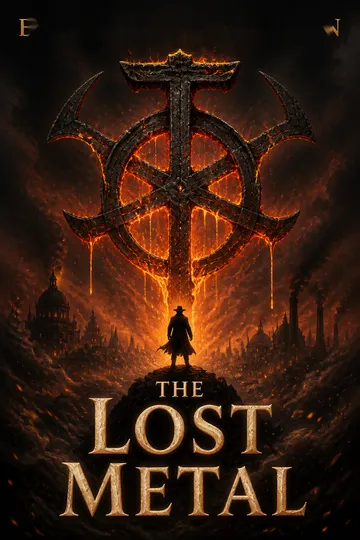
The Lost Metal makes the move from local detective work to planetary conflict without discarding the habits that made the earlier investigations matter. Marasi still follows records, Wayne still reads people, Wax still tests a theory against physical evidence, and Steris still plans for failure. Their skills become more consequential as the scale expands. The novel argues that scale does not make ordinary forms of responsibility obsolete. A city can be threatened by gods, but it is still protected through witnesses, constables, evacuation routes, and people willing to share what they know.
Its political conflict turns the language of independence against itself. Autonomy’s influence promises individual achievement, yet rewards competition within a system designed by someone else. Elendel’s leaders make a related mistake when they call coercion unity and treat the Outer Cities as dependents. In both cases, power claims to know what people need while denying them meaningful participation. Marasi’s commitment to procedure is not blind faith in institutions; it is a defense of accountability against secret actors who regard ordinary people as material to be managed.
The characters’ private arcs sharpen this argument. Wax learns that the Roughs lawman and the senator are not separate selves. Steris converts anxiety into a public capacity that her colleagues had underestimated. Wayne’s guilt gives way to a more useful ethic: help without demanding that the harmed person absolve him. Marasi declines access to secret knowledge when its price is silence, choosing imperfect public service over unaccountable influence. Their choices do not make the world safe. They establish what kind of people they intend to be in a world that keeps getting larger, stranger, and harder to govern.
Review Summary
The Lost Metal receives high praise as a satisfying conclusion to the Mistborn Era 2 series. Readers appreciate the character development, especially for Wayne, and the increased Cosmere connections. The book is described as action-packed, emotional, and filled with surprises. Many fans consider it the best of the Era 2 books, though some feel the Cosmere elements overshadow the main plot. Overall, readers express bittersweet feelings about the series ending but excitement for future Mistborn installments.
People Also Read









Characters
Waxillium Ladrian
Roughs-born senator-lawmanWax is a former lawman from the Roughs who now serves as a senator, husband, and father in Elendel. A Twinborn, he can Push metal and alter his weight, but his defining habit is investigative: he studies how people, objects, and motives connect. He distrusts political performance and divine certainty alike, yet accepts responsibility when others are in danger. His challenge is not choosing between his old life and his new one, but recognizing that love of family and public duty can coexist with the skills he once tried to leave behind.
Wayne
Guilt-ridden comic partnerWayne is Wax’s longtime partner, a quick-change impersonator whose jokes, disguises, and opportunistic trading can make him seem unserious. He is a Slider who creates bubbles of accelerated time and a Bloodmaker who can heal by drawing on stored health. Beneath his performance, he notices how people think and often understands their needs before they can explain them. He carries guilt over a past killing and tries to convert it into repeated self-punishment. His tenderness appears in practical acts, especially when he chooses to help without demanding gratitude or absolution.
Marasi Colms
Principled investigative constableMarasi is a senior constable and detective whose powers as a Pulser let her slow time in a bubble. Her talent once seemed unimpressive beside Wax’s more visible abilities, but she has learned to use it with specialized technology and careful aim. She relies on archives, procedure, and cooperation, while remaining alert to the human cost of each operation. Marasi wants more than to arrest individual offenders; she is interested in changing the conditions that allow harm to spread. Her loyalty to public service coexists with a fierce curiosity about forces beyond her world.
Steris Ladrian
Meticulous civic strategistSteris is Wax’s wife, a mother, and a precise political thinker. She prepares for contingencies by cataloguing risks, schedules, and practical responses, habits others sometimes mistake for fussiness. Her detailed planning is not an attempt to control every person around her; it is a way to make fear manageable and useful. Steris has learned to read people without assuming they experience the world as she does. She supports Wax’s work while developing authority of her own, especially in the political and administrative spaces where his instincts are less effective.
Telsin Ladrian
Wax's ambitious sisterTelsin is Wax’s sister, shaped by an appetite for influence, novelty, and self-determination. She has long been skilled at reading social hierarchies and finding ways to move beyond the limits placed on her. Her ambition is not merely a desire for comfort; she wants a world large enough to reward daring and power. That drive makes her difficult for Wax to understand, because he tends to interpret family bonds as obligations, while Telsin sees them as one force among many. Her confidence can make risk look like proof of vision.
Harmony
Divided planetary stewardHarmony, once the Terrisman Sazed, holds the joined powers of Ruin and Preservation and acts as Scadrial’s god. His two impulses pull toward different responses, making action difficult even when the danger is real. He wants to protect humanity without deciding every detail of its future, but restraint can become delay. Harmony is connected to Wax and relies on mortal agents to act where he cannot. His relationship with them is marked by a mixture of care, omissions, and difficult lessons about choice, power, and responsibility.
Autonomy
Distant rival powerAutonomy is a Shard whose influence extends across worlds through avatars, agents, and political movements. She values independence and achievement, yet her systems can turn those ideals into competition under her direction. Her presence is difficult to separate from the ambitions of the people who serve her, which makes her motives hard to interpret from Scadrial. She is not simply a distant enemy with a single plan; her power encourages local actors to prove themselves, sometimes with consequences they cannot control.
MeLaan
Wandering kandra agentMeLaan is a kandra, one of the Faceless Immortals, who can shape her body to suit a role or mission. She has a long history of service and a strong appetite for new experiences. Her relationship with Wayne matters to her, but she understands time and attachment differently from mortal partners. MeLaan’s candor can hurt, yet she tries to be honest rather than prolong a relationship through obligation. She is an independent agent, not merely an extension of Harmony’s authority.
Allik
Warm Malwish intermediaryAllik is a Malwish traveler who becomes a close friend and romantic partner to Marasi. His people’s masks and customs shape how he presents himself, but he is direct and generous with those he trusts. Allik brings knowledge of Southern technology, including devices that can extend the usefulness of Allomancy. He is also a gifted baker whose food helps turn borrowed rooms into homes. His loyalty to Marasi does not erase his complicated connection to Malwish politics or the responsibilities he feels toward his own people.
Moonlight
Mysterious visiting researcherMoonlight is a capable operative with a keen eye for culture, design, and hidden patterns. She first presents herself as a researcher, but her knowledge reaches far beyond Bilming and Scadrial. She can alter objects through prepared stamps and has access to skills Marasi has never encountered. Moonlight is careful about what she reveals, partly from caution and partly because information is a form of power in her organization. She recognizes Marasi’s intelligence and tests her judgment rather than simply treating her as a local ally.
Kelsier
Survivor's hidden commanderKelsier, revered as the Survivor, leads the Ghostbloods, a covert organization concerned with Scadrial’s place among other worlds. He is forceful, resourceful, and willing to act outside ordinary institutions, though he is not indifferent to the people his decisions affect. Kelsier values competence and self-determination, especially among people dismissed by established powers. His long experience has made him wary of divine promises and conventional authority. He offers Marasi access to vast knowledge, but his organization’s commitment to secrecy creates a real ethical divide.
TwinSoul
Aetherbound scholar and defenderTwinSoul is an elderly scholar and aetherbound ally of the Ghostbloods. He can grow roseite, a crystal-like material, into tools, barriers, and far larger forms, though his creations require water or other Investiture and are limited by his understanding. His manners are formal, his sense of hospitality sincere, and his physical frailty contrasts with the scale of what he can make. TwinSoul follows a set of spiritual commitments that shape how he treats enemies and civilians. He brings both unfamiliar knowledge and a strong protective instinct to Marasi’s mission.
Marsh
Ancient steel-eyed witnessMarsh is an ancient survivor of Scadrial’s earlier age, recognized by the metal spikes through his eyes. Known in legend as Death, he carries knowledge of Hemalurgy and the world’s past that few living people can match. He is weary, practical, and aware that his own body is subject to time and scarcity. Marsh does not pretend that history has made him wise enough to prevent every disaster. His advice gives Wax and Marasi context for the Set’s stolen powers and the larger conflict around them.
VenDell
Fastidious kandra scholarVenDell is a kandra scholar serving Harmony, distinguished by his careful manner and interest in bodies, Investiture, and the boundaries between life and matter. He is more comfortable explaining a phenomenon than fighting through one, and his restraint follows the kandra’s First Contract. VenDell can appear pedantic, particularly beside Wayne, but he takes his duties seriously and is willing to enter dangerous situations when ordered. His knowledge helps the human investigators understand what their experiments and discoveries might mean.
Gave Entrone
Bilming's calculating mayorEntrone is the lord mayor of Bilming, a polished politician who presents himself as a champion of the Outer Cities against Elendel’s dominance. He understands that resentment can be organized and used, and he is skilled at turning jurisdictional conflict into political leverage. Beneath his confidence, he is vulnerable to the larger powers he has chosen to serve. Entrone’s self-preservation can resemble pragmatism, but his calculations repeatedly place other people’s safety below his own position.
Armal Harms
Kidnapped Allomancer matriarchArmal is Marasi’s distant cousin and one of the people trapped in Wayfarer. She has a family and a strong wish to protect the life she has managed to build under severe deception. Her first response to danger is not rebellion, but caution, because she has been given reasons to believe the surface is lethal. Armal is capable of leadership when she has enough information to act. Her choices reveal both the resilience of the captives and the damage caused when people are denied the truth about their own circumstances.
Maraga Dulcet
Defiant broadsheet editorMaraga is the editor of a small Bilming broadsheet known for sensational and eccentric stories. Her reputation makes her an unlikely keeper of important evidence, but it also gives her a place to publish material respectable outlets might ignore. She is frightened by the consequences of exposing the Set and has spent years assembling records rather than trusting officials. Maraga’s mixture of skepticism, nerve, and hesitation reflects the difficult position of a journalist working where both government and conspiracy can punish disclosure.
TenSoon
Kandra among the constablesTenSoon is a kandra who has spent time among humans and understands more about their institutions than many of his kind. He can imitate people convincingly, but his long history sometimes makes him distant from the ordinary rhythms of politics. He serves Harmony while retaining his own judgment, particularly when agreements and trust are at stake. TenSoon’s presence inside the constabulary illustrates how close the kandra are to the human world, while his discomfort with political bargaining shows that familiarity does not make him fully human.
Admiral Daal
Hard-line Malwish envoyDaal is a Malwish admiral turned ambassador, accustomed to representing a powerful military tradition. He is disciplined, controlled, and openly skeptical of the Basin’s claims about its strength. The Bands of Mourning and the history of Northern-Southern relations matter to him as questions of trust, not merely as political symbols. Daal’s manner can feel threatening, but he is careful to frame his demands as the defense of his people’s interests. His arrival makes the cost of Elendel’s internal division visible to an external power.
Constable-General Reddi
Burdened constabulary chiefReddi leads Elendel’s constabulary and spends much of his time balancing police work against political pressure. He is gruff by reputation but recognizes competence, particularly in Marasi, and is willing to authorize risks when evidence warrants them. Reddi worries about the limits of his officers’ authority and the danger of turning lawkeepers into soldiers. His support gives Marasi room to investigate, though he cannot shield her from every consequence of acting in a divided political landscape.
Ranette
Inventive weapons engineerRanette is an independent engineer whose weapons and mechanisms are designed with exacting attention to function. She knows Wax and Wayne well enough to see both their skill and their recklessness, and she is blunt rather than soothing when they need correction. Her friendship with Wayne has deepened over years of shared meals and practical advice. Ranette’s inventions repeatedly influence what the lawmen can do, but she treats technology as a craft with consequences, not as a spectacle.
Allriandre
Daughter carrying old griefAllriandre is the daughter of a man Wayne killed in the Roughs. She has built a life in Elendel under financial and family pressures, with a young child who depends on her. Her connection to Wayne is painful and uneven, and she does not owe him an audience or forgiveness. Allriandre’s ordinary concerns give weight to Wayne’s guilt: the consequences of violence continue in rent, work, and childcare long after the gunfire has ended.
Max Ladrian
Wax and Steris's young sonMax is Wax and Steris’s lively young son, fascinated by flying, puzzles, and the playful stories Wayne teaches him. His openness brings out Wax’s gentler side and gives his father a concrete reason to value his life in Elendel. Max’s ordinary needs, from reassurance to family time, keep the adult characters’ political and supernatural struggles connected to the households they are trying to protect.
Adawathwyn
Governor's political deputyAdawathwyn is the governor’s vice governor, a capable political operator who often speaks with more force than her superior. She supports a strong central government and is willing to use institutional power to meet a crisis. Her judgment is shaped by the belief that external threats require a decisive response, even when that response risks deepening internal divisions.
Governor Varlance
Unsteady Basin governorVarlance is a former military man chosen to govern Elendel during a period of tension with both the Outer Cities and the Malwish. He is more comfortable with ceremonial appearances than with fast-moving political decisions, and often depends on aides to manage the details. Yet he is not beyond persuasion. When evidence becomes concrete and the city’s survival is at stake, he can lend his office to people better prepared to lead.
Plot Devices
The Metallic Arts
Powers with material costsAllomancy, Feruchemy, and Hemalurgy shape both the action and the social order. Allomancers burn metals for powers such as pushing metal or changing time, while Feruchemists store and later draw on physical or mental attributes. Hemalurgy steals traits through spikes, often at great cost to the victim. The novel makes mastery depend on preparation and limits: Marasi’s time-slowing power becomes effective with Malwish grenades, Wayne’s healing depends on stored health, and a stolen power can make an agent dangerous while tying that agent to a larger conspiracy. The arts are not merely spectacle; they are forms of technology, inheritance, and political leverage.
Harmonium and Trellium
A volatile godmetal pairingHarmonium is an unstable godmetal associated with Harmony, while trellium comes from the power opposing him. Their interaction changes when the metals are heated and manipulated, producing an explosive conversion of matter and energy. Early experiments establish that the effect is poorly understood, then the Set’s efforts turn it into the basis of a city-threatening weapon. The paired metals link scientific investigation to the supernatural conflict and make the climax depend on a specific material process, not simply on defeating a villain in combat. The description reveals a central plot mechanism.
Allomantic Grenades
Time bubbles made portableMalwish grenades use ettmetal technology to create a bubble of slowed time without requiring the user to remain inside and burn cadmium continuously. Marasi carries them into investigations, where they let her immobilize groups long enough to reposition, escape, or arrest them. Their usefulness depends on aim, charge, and the uncertain behavior of objects crossing the bubble’s edge. They also turn Marasi’s once-dismissed power into a tactical tool, showing how technology can amplify a modest ability without making it limitless.
Wayne's Mother's Story
A childhood tale becomes a mapWayne’s mother tells him about a lawman who crosses dangerous country to stop a monster, using wit and courage rather than brute force alone. The story gives the young Wayne a way to understand hardship after his father and uncle are gone, and its images recur in his adult imagination. As events drive him and Wax through tunnels, toward a towering structure, and finally onto a ship, Wayne interprets real dangers through the tale’s landscape. It is not a literal prophecy; it is an emotional framework that helps him identify what courage may require.
The Bands of Mourning
A relic used as leverageThe Bands are a legendary set of metalminds said to grant extraordinary abilities to their wearer. Their return and safekeeping remain a source of tension between the Basin and the Malwish, whose people regard the relic as sacred and politically important. When Elendel considers using them as protection from the bomb, the Bands prove unavailable as an easy solution. Their role exposes how public myths can distort the practical limits of an object and how an artifact can shape diplomacy even when its power cannot be reliably accessed.
The Mistborn Saga Series

About the Author
Other books by Brandon Sanderson







Download PDF
Download EPUB
.epub digital book format is ideal for reading ebooks on phones, tablets, and e-readers.








