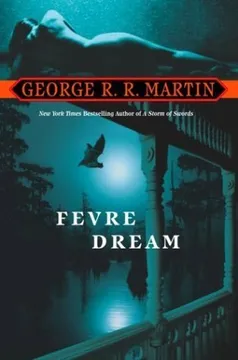


Plot Summary
The Bargain After Ice
In St. Louis in 1857, river captain Abner Marsh has lost nearly his entire fleet: a boiler explosion killed passengers aboard one boat, then winter ice crushed four more. He has only the aging Eli Reynolds left when Joshua York offers to buy half of his packet company.
Marsh admits the business is nearly worthless rather than conceal his losses, but York keeps the offer open and promises enough money to build a magnificent steamer. On the levee, Marsh shows him the celebrated Eclipse and names the scale of boat he wants. York agrees. The bargain gives Marsh a chance to restore his career, while York gains a partner who knows the river and will respect his privacy.
The partnership begins as an exchange of unequal but complementary needs. Marsh wants to recover a public identity shattered by financial ruin, and the dream boat is both a business plan and a measure of his remaining self-respect. York offers rescue without explaining why he wants a river vessel, making the bargain feel generous and dangerous at once. Marsh’s candor matters: he will accept risk, but not by deceiving a partner. That principle becomes the moral test of the story. The steamboat is not merely transport; it is the material form of Marsh’s ambition and the future York hopes to build.
Julian's Night Auction
In New Orleans, Sour Billy Tipton buys Emily, a beautiful enslaved teenager, at a high-priced auction for Damon Julian, the master of a decaying plantation. Billy dresses her in a fine gown and brings her into a ballroom where Julian and his pale companions wait.
Julian takes her blood, then allows the others to feed in turn. The controlled ritual reveals a household governed by hunger and Julian’s command. Elsewhere, two enslaved people who had escaped the plantation are dragged back by slave catchers; their mutilated hands show what it cost them to keep silent.
As night falls, Julian kills the returning pair’s captors and imprisons the fugitives again. His isolated estate survives by consuming people and intimidating anyone who comes near.
The parallel plantation plot establishes the human cost of Julian’s authority before Marsh encounters him. Slavery supplies both a literal market in bodies and a social language that Julian can exploit: his followers wait for permission, while Billy performs the practical work that keeps their predation hidden. The scene also refuses to make supernatural cruelty seem separate from ordinary institutions. Emily is already treated as property before Julian touches her, and the slave catchers’ violence is legally recognizable even as the vampires’ violence is not. Martin’s moral pressure comes from that overlap. The horror is not an intrusion into a just world; it feeds on a world already organized around domination.
A White Boat Takes Shape
At the New Albany boatyards, Marsh unveils the nearly finished side-wheeler built with York’s money. Eighteen boilers, a lavish saloon, silver fittings, and a glassy pilot house make her the vessel Marsh imagined after studying the Eclipse.
York admires her, then asks Marsh to teach him to pilot, revealing an unexpected hunger to master the river rather than simply command it. Marsh names the boat Fevre Dream, after the river where he was born. York worries privately over the name, but accepts it.
His four companions, Simon, Katherine, and the foreigners Marsh calls Smith and Brown, remain strange and withdrawn. The name and the nocturnal company make the new vessel beautiful, ambitious, and faintly ominous before she has even begun her first run.
The boat’s design gives physical shape to two different forms of longing. Marsh builds for speed, comfort, and recognition, hoping to return to the rank he lost; York wants passage into a world whose routes and rules he does not yet know. His request to learn piloting is important because it treats expertise as something earned through attention, not purchased with wealth. At the same time, the boat’s mirrors and silver are introduced as decorative choices that will later acquire defensive meaning. The name Fevre Dream binds Marsh’s childhood river to York’s troubled private associations, so their shared project carries unease inside its beauty.
Race Against the Southerner
On the Fevre Dream’s first voyage, Marsh spots the fast passenger steamer Southerner at Paducah and orders his pilot to chase her. The rival starts ahead, but the Fevre Dream gains ground after the crew shifts weight and Marsh orders valuable cooking lard into the furnaces to raise steam. She passes the Southerner and reaches Cairo first, proving the new vessel can compete with the river’s celebrated racers.
York misses the contest because Marsh woke him in daylight. When York finally opens his cabin, he is naked, furious, and frighteningly altered; he later apologizes and warns Marsh never to enter while the door is locked. He also says sunlight burns him. The race delights Marsh, but York’s daytime rage leaves a harder question behind.
The race lets Marsh experience the boat as a successful extension of his judgment. He improvises with cargo, crew balance, and timing, showing that river skill is practical intelligence rather than brute power alone. York, however, cannot share the daylight spectacle. His locked room turns the partnership’s first triumph into a breach between what Marsh can see and what York will reveal. The physical contrast matters: the public boat runs on open water, while York’s private life requires shutters and silence. Marsh agrees to honor the boundary, but the warning plants suspicion precisely because it asks for trust before offering an explanation.
The River's Dead Ledger
As the Fevre Dream travels south, York repeatedly orders unexplained stops and disappears ashore at night. Marsh notices that York has clipped newspaper reports about bodies found mutilated, drained, or dead without an obvious cause.
He searches York’s cabin and finds ledgers cataloguing such deaths along the lower Mississippi, alongside maps marked with the places York has visited. When York returns to Natchez, Marsh admits he broke into the cabin and demands an account of the blood he once saw on York’s hands.
York claims he is tracking vampires responsible for the killings, describing himself as their enemy but withholding the truth. Marsh recognizes that the explanation does not fit every clue, yet his partner’s secrecy and the pattern of deaths have become impossible to ignore.
Marsh’s investigation is an ethical compromise before it is a detective plot. He violates York’s privacy because the unexplained disappearances have begun to threaten the crew and the business, then confesses instead of disguising his intrusion. York’s invented account partly directs Marsh toward the truth while also preserving control over it. The ledgers transform rumor into a geography of violence: towns and landings become linked by repeated bodily evidence. The Mississippi functions as a route for both commerce and concealment, allowing a predator to move faster than local suspicion can accumulate. Marsh’s practical mind distrusts supernatural explanations, but he trusts patterns, and the pattern has begun to outweigh his disbelief.
Valerie's Midnight Test
At the edge of New Orleans, Valerie Mersault, a beautiful passenger close to York, privately asks Marsh to turn the Fevre Dream away from the city. She tries to overwhelm his resistance with an unnatural force of attraction, promising herself if he will change course.
Marsh fights through the compulsion and refuses to betray York by altering the route without his consent. York appears and confirms that Valerie acted from fear, not simple jealousy; he insists they continue into New Orleans.
The city’s slave markets, foul water, and feverish heat unsettle both captains, and York soon charts a side trip to Cypress Landing, the abandoned Garoux plantation. Marsh agrees to take the boat there, even after crew members warn that the place carries frightening stories.
Valerie’s encounter tests Marsh’s loyalty in a form tailored to his private vulnerability. He has spent his life imagining beauty from a distance, and her power makes that longing feel like consent even when it is being manipulated. His refusal is therefore not a rejection of desire so much as a defense of agency. He will not let another person use his appetite to make a decision that belongs to his partner and crew. The approaching plantation also connects supernatural danger to the South’s social landscape. New Orleans’s visible luxury and its slave markets trouble Marsh and York alike, while Cypress Landing promises a more hidden version of the same predatory order.
Sunlight on the Captain
Before the Fevre Dream can travel to Cypress Landing, the Black members of the crew warn Marsh that stories about the plantation have frightened the stokers into planning to flee. York refuses to reach the estate by land, insisting that the crew must not believe their captain is a threat.
He comes out in full daylight and joins them at a lavish meal, visibly weakened by the sun but determined to be seen. That night, Marsh reads a poem York once recited and connects its date to York’s apparent age.
When he confronts him, York’s burned face confirms that he cannot safely endure daylight. York then admits the vampire story was a lie: he and his companions belong to another race, the people of the night, and he wants Marsh to judge whether trust is still possible.
York’s daylight appearance is a costly act of leadership, not a cure for the crew’s fear. He accepts bodily pain because he understands that authority without visible accountability will look like menace. Marsh’s discovery follows a different route: memory, reading, and observation undo the false explanation. The contrast between public meal and private revelation shows how much each man risks to make a partnership possible. York exposes a weakness that could be used against him; Marsh admits that his first response is anger and suspicion. Their trust does not arrive as a feeling. It begins as a negotiated practice in which each person gives the other information and a meaningful choice.
Bloodmaster's Buried Past
York tells Marsh that he was born in France in 1785 and first killed during the Napoleonic Wars, when a wound and the sight of blood awakened a hunger he could not control. He tried prayer, confinement, and restraint, but each failed, until years of experiments produced a sheep-blood elixir that quieted the red thirst.
Searching Europe for his father’s vanished companions, York met Simon, became their bloodmaster, and learned how his people had survived by hiding among humans.
Their old strength has not made them creators or a true community; the thirst has kept them divided and dependent on human life. York hopes his cure can change that history. He came to the Mississippi looking for a larger group who had crossed to America, not merely to hunt murderers.
York’s history complicates the convenient division between monster and reformer. He has committed killings and can describe the hunger that drove them, but his response is not to claim innocence; it is to build a means of choice where there was none. The elixir is both a scientific achievement and a political proposal, because it could free a whole population from compulsory predation. His account of the night people’s history also exposes the limits of power: longevity and physical superiority did not produce culture or solidarity. York’s dream is not simply survival. He wants his people to make something, which places creative labor and mutual obligation against Julian’s doctrine of effortless dominion.
Julian Comes Aboard
York’s search leads to Cypress Landing and Damon Julian, the ancient ruler whose followers include Valerie and Sour Billy. Julian once promised Billy he would transform him, and now uses the human servant to maintain his plantation and obtain victims.
He accepts York’s invitation to dine aboard the Fevre Dream, but dismisses the proposed future of cooperation between night and day. To prove that humans are merely prey, Julian has Sour Billy bring an enslaved infant to the table and cuts off the child’s hand.
York stops the bleeding, but Julian’s influence paralyzes the guests. Marsh attacks Julian with a knife and is thrown aside; York orders him to flee as Julian’s followers close in. Marsh escapes the boat, leaving the dinner’s reformist hope shattered and Julian in control.
Julian’s argument is most chilling when it borrows the logic of the society around him. He invokes human hierarchies to excuse predation, treating the child’s enslavement as evidence that all moral distinctions are hypocrisy. Yet his violence is not an abstract debate: he deliberately wounds a helpless infant to force York into submission. That act strips away the elegance of the dinner and reveals how Julian uses spectacle as governance. Marsh’s attack is morally immediate, but tactically useless; his courage cannot substitute for knowledge of the enemy’s power. The scene turns York’s political project into a crisis of force, exposing how fragile consent becomes under a ruler who can command fear.
Jean in the Wrong Bed
After Marsh returns to the Fevre Dream, Julian claims he has bought Marsh out and prepares to leave. Marsh recruits clerk Jonathon Jeffers and mate Hairy Mike Dunne to kill Julian before nightfall. They enter the cabin assigned to Julian and crush the head of the sleeping man inside, only to discover they killed Jean Ardant. Julian had changed rooms.
He emerges, kills Jeffers, and drives Marsh overboard; Marsh survives the fall into the Mississippi. To prevent the remaining crew from resisting, Julian’s followers spread a false yellow-fever alarm and burn Jean’s body in a furnace. Most passengers and crew flee. Hairy Mike refuses to submit, and Sour Billy kills him, then takes command of the stolen steamer.
The failed ambush is a lesson in the cost of acting on incomplete knowledge. Marsh’s plan is not foolish in motive: he wants to prevent another killing and uses the daylight window he believes gives him an advantage. But the room switch turns a tactical error into a moral injury, because Jean dies in place of Julian. Julian’s survival then exposes the difference between courage and preparation. Jeffers and Hairy Mike are loyal, capable men, yet neither can overcome an adversary who controls information, bodies, and the crew’s perception. The fever deception completes Julian’s seizure of the boat by making ordinary fear do the work of supernatural command.
The Blackened Steamer
Marsh recovers in the river country and learns that Sour Billy has renamed the Fevre Dream Ozymandias, repainted her, and kept her moving so slowly that few recognize the famous vessel. Billy chains enslaved workers aboard and uses threats to keep the crew obedient. Marsh borrows his remaining resources, outfits the Eli Reynolds, and searches south.
Detectives trace the renamed boat to Natchez, where Marsh finds her preparing to leave. He follows through the night, but the Eli Reynolds cannot match her speed. At a cutoff, Marsh grounds his own steamer while the Ozymandias turns to attack. Trapped on the damaged Reynolds, Marsh is captured. The stolen boat has become a mobile prison, its former passengers and crew held under Julian’s rule.
The renamed vessel shows how possession can erase identity without changing the object itself. Billy obscures the Fevre Dream through paint, a false schedule, and coerced labor, turning Marsh’s proud creation into an instrument of its own betrayal. Marsh’s search is powered by attachment, but it also reveals how thoroughly the river’s commercial networks can be used for concealment. The Eli Reynolds is no match in speed, yet Marsh keeps pursuing because speed is not the only measure of a captain’s loyalty. His capture is the consequence of choosing the damaged, modest vessel over abandoning the chase. The river makes that commitment costly in a way no private vow could.
Escape Into Daylight
Aboard the Ozymandias, Marsh finds York weakened and under Julian’s control. With cook Toby Lanyard’s help, he escapes with York, pilot Karl Framm, and Valerie, who has been feeding on Framm. Sour Billy turns on them before they can leave, but Marsh and Toby reach the yawl and cut it loose. In open daylight, the night people begin to burn.
York shares his limited supply of the elixir with Valerie, while Marsh and Toby row toward shore with the unconscious Framm. Valerie’s injuries worsen; when her thirst breaks through, she lunges for Framm, and York restrains her. The party reaches land, but Valerie dies from the sunlight. York leaves Marsh soon after, returning toward Julian and the people he refuses to abandon.
Escape does not deliver uncomplicated freedom. The daylight that protects Marsh and Toby is physically lethal to York and Valerie, so the two groups inhabit incompatible environments even when they want the same future. Valerie’s turn toward Framm under pain makes the red thirst visible as a force that can overwhelm intention, without making her earlier choices disappear. Marsh’s insistence on carrying the wounded and rowing himself expresses a practical compassion that has grown beyond loyalty to his own boat. York’s return is not surrender to Julian so much as allegiance to a vulnerable community. The separation leaves Marsh with both grief and unfinished responsibility.
Thirteen Years Under Glass
Marsh searches for the Fevre Dream for years, then gives up when debt and the wreck of the Eclipse leave his racing dream without a finish line. In 1870, York summons him to New Orleans.
He explains that after Marsh’s escape, Julian’s rage triggered a massacre aboard the Fevre Dream; York eventually defeated Julian once, hid the boat in a drained plantation channel, and spent thirteen years resisting him from within. Julian later regained control, while the survivors dwindled.
Now Cynthia, one of York’s companions, is pregnant with York’s child, conceived without the red thirst. Julian would enslave or corrupt the child, so York has fled to ask Marsh for help. He falsely suggests the Fevre Dream will race again, knowing Marsh will come for her.
The reunion makes memory itself a form of labor. Marsh’s search has consumed money and years, while the Fevre Dream’s absence allows the river to turn shared history into something others can dismiss as fever or rumor. York’s account reveals that he once won power but could not sustain it, challenging the idea that moral conviction automatically defeats inherited hierarchy. Cynthia’s pregnancy changes the stakes from abstract reform to a future person whose life may not be governed by the thirst. York’s lie repeats the original bargain’s imbalance, even for a desperate cause. His need for Marsh is real, but he has again tried to recruit him through the one attachment he knows cannot be resisted.
The Last Choice
At the plantation, Marsh finds the Fevre Dream stranded, rotten, and unable to race. He confronts York over the deception, then follows him aboard anyway. Marsh shoots Sour Billy before Billy can stop them, but Julian takes control of York and traps Marsh beneath the broken skylight.
As the sun weakens York and Julian waits for darkness, Billy crawls back, wounded and begging Julian to complete his promised transformation. Julian refuses. Billy drives his knife into Julian’s eye; Marsh blasts Julian with the shotgun, and York finally overcomes him.
When Julian offers his own eye as blood, Marsh kills him with a shot to the head. York resists the thirst awakened by violence and accepts the elixir Marsh finds behind the bar. The two drink together, leaving the night people a chance to choose another way.
The climax turns on a sequence of choices rather than a simple contest of strength. Billy’s final violence is born from the promise Julian used to control him, and Julian’s refusal exposes the bargain as a tool of domination. Marsh’s intervention matters because he acts when York’s body and history are both pulling him toward submission. Yet the decisive victory is not merely Julian’s death. York must refuse the blood offered at the moment when violence has awakened his own hunger, choosing the discipline he developed instead of becoming the ruler he fought. The elixir is therefore not a cure that removes moral struggle. It is a means by which choice remains possible.
Epilogue
Years later, Abner Marsh lies in a quiet bluff-top cemetery above the Mississippi. His grave bears a carved image of two racing steamers, the Eclipse behind the Fevre Dream, and a brief poetic memorial.
The river below has changed from the crowded steamboat highway he knew into a quieter passage for modern craft. The visitor who returns most often comes only at night and touches the image of the Fevre Dream, keeping Marsh’s vanished boat and stubborn dream alive in memory.
The epilogue converts the river from a workplace into an archive. Steamboats disappear, the levee changes, and Marsh’s generation passes, yet the carved image preserves a race that history might otherwise forget. The nocturnal visitor links the living memory of York to Marsh’s grave without resolving the future of the night people. That restraint matters: the story grants no easy public recognition to their private experiment in coexistence. Instead, the memorial survives through touch, ritual, and a shared symbol. Marsh’s legacy is not simply that he built a magnificent vessel. He chose loyalty without surrendering judgment, and his friend continues to honor that choice after the river’s world has altered.
Analysis
Fevre Dream places two systems of predation beside each other: the night people’s hunger and the human institution of slavery. Julian does not invent hierarchy; he radicalizes it. His claim that the strong may consume the weak echoes the plantation’s treatment of enslaved people, but the novel refuses to let that resemblance excuse either system. Marsh initially insists that he is not an abolitionist, yet his experience with York and the slave labor aboard the boats forces him to see how easily practical neutrality becomes complicity. His moral change is expressed through action, including his refusal to carry enslaved people as freight and his willingness to risk himself for people he does not own.
York’s elixir introduces a second argument: inherited nature may constrain a person without erasing responsibility. York’s own past includes terrible violence, but he studies his condition and creates a means of resisting it. Julian, by contrast, turns history into justification. He treats age and strength as entitlement, while York understands leadership as an obligation to make a different life possible. Neither position is secured by rhetoric alone. The elixir can fail, the bloodmaster’s authority can return, and good intentions can still lead to secrecy, misjudgment, and death.
Marsh gives the novel its human scale. His dream of racing the Eclipse might seem vain, but the boat is also the work through which he understands loyalty, skill, and beauty. When he continues searching after the Fevre Dream disappears, he is not simply chasing property; he is refusing Julian’s attempt to turn a shared creation into a weapon. The river’s changeable channels make a fitting counterweight to the characters’ claims of permanence. Boats, reputations, and social orders all decay, but choices still matter while they last. The ending offers no guarantee that the night people will become a just community. It offers something narrower and more credible: a chance to choose again, sustained by friendship, memory, and the deliberate refusal to feed on another life.
Review Summary
Fevre Dream is a vampire novel set on the Mississippi River in the 1850s. Readers praise Martin's atmospheric writing, compelling characters, and unique take on vampire lore. The story follows steamboat captain Abner Marsh and the mysterious Joshua York. Many consider it one of the best vampire novels, with its blend of historical fiction and mythology. Some criticize pacing issues and similarities to Anne Rice's work. Overall, reviewers appreciate Martin's storytelling skills and the book's exploration of themes like racism and slavery.
People Also Read





Characters
Abner Marsh
The stubborn river captainA huge, blunt-spoken steamboat captain, Marsh measures himself by the vessels he commands and the promises he keeps. The loss of most of his fleet leaves him financially battered but not willing to pretend defeat is someone else’s fault. His appetite, temper, and pride make him formidable, while his deliberate thinking lets him notice patterns others overlook. He is drawn to beauty in steamers and in people, though he expects little tenderness for himself. His loyalty is practical rather than sentimental: he protects those he considers his own, questions authority when it threatens them, and is capable of revising his judgments when new evidence demands it.
Joshua York
The secretive dream captainA wealthy, pale gentleman with unusual hours, a private drink, and a deep interest in poetry and medicine, York enters Marsh’s life seeking both a steamboat and an ally. He is controlled and courteous, but his intensity suggests a history he cannot easily share. He wants to learn the Mississippi from the people who know it rather than treat it as scenery. His idealism is neither innocent nor abstract; he has seen what hunger and secrecy can do, and he hopes knowledge can make another way of living possible. York’s central tension is between the authority others grant him and the intimate trust he must earn.
Damon Julian
The plantation's velvet tyrantJulian is a cultivated, magnetic presence who rules his household through charm, fear, and carefully staged displays of power. He surrounds himself with beautiful companions and expects obedience without needing to raise his voice. His interest in people is possessive: he notices their appearance, usefulness, and susceptibility, then turns those qualities into leverage. Julian can speak as if hierarchy were simply nature, making exploitation sound like common sense. His confidence rests on being treated as inevitable, and he regards resistance as both an insult and an opportunity to demonstrate his control.
Sour Billy Tipton
Julian's human enforcerA scarred, sharp-eyed man from the margins of New Orleans, Billy serves Julian as overseer, procurer, and daytime agent. He is observant enough to manage money, people, and the practical details of concealment, but his intelligence is yoked to resentment. He wants the status and permanence he believes Julian can grant him, and he treats cruelty as proof that he is no longer powerless. Billy despises being mocked or dismissed, especially by those he considers socially superior. His longing to belong makes him both useful to Julian and vulnerable to Julian’s promises.
Valerie Mersault
The fearful night wandererValerie is striking, perceptive, and accustomed to living under another person’s authority. Her connection to York gives her hope of a different life, but fear makes her wary of the risks his plans demand. She understands the danger posed by Julian better than York does and tries to protect those she cares about, sometimes through manipulation rather than open trust. Valerie’s beauty draws attention, yet her defining struggle is not appearance; it is the effort to imagine freedom after years of dependence and hunger.
Jonathon Jeffers
The precise chief clerkMarsh’s educated, exacting clerk handles the Fevre River Packet Company’s records and keeps the boat’s business in order. He enjoys chess, books, and careful observation, and he notices York’s unusual habits without immediately turning curiosity into accusation. Jeffers brings a measured intelligence to Marsh’s impulsive plans, while his loyalty remains grounded in professional respect and personal courage.
Hairy Mike Dunne
The iron-fisted mateA powerful, rough-mannered mate, Hairy Mike keeps the Fevre Dream’s deckhands and roustabouts moving through noise, danger, and long hours. His methods are loud and intimidating, but his loyalty to Marsh is steady. He trusts action more than speculation and brings the physical force that complements Marsh’s authority.
Toby Lanyard
The trusted ship's cookToby is an experienced cook whose gentleness can conceal a firm moral center. Marsh has freed him from slavery, and Toby repays that trust through loyalty without becoming passive. He understands how fear moves through Black workers on a riverboat and tries to warn Marsh when danger threatens them.
Karl Framm
The boastful lightning pilotFramm is a skilled lower-river pilot, famous for his tall tales, easy grin, and confidence at the wheel. His stories teach York and Marsh how river knowledge travels through memory as much as charts. Beneath his humor, Framm takes professional skill seriously and knows that a pilot’s decisions can determine whether a steamer reaches its landing or its grave.
Simon
York's silent companionSimon is an old, quiet associate who accompanies York and understands the customs of their private community. His reserve makes him difficult for Marsh to read, but his loyalty to York is clear. He represents the memory of a history much older than the steamboat world.
Katherine
The watchful elder companionKatherine is a gaunt, unsettling member of York’s circle whose stillness and cold attention trouble Marsh. She carries the weight of long experience and seems less persuaded by York’s hopeful plans than some of his companions. Her presence signals that York’s authority is not accepted with equal warmth by everyone around him.
Raymond Ortega
The proud Creole companionHandsome, watchful, and socially assured, Raymond joins York’s circle in New Orleans. Marsh distrusts his restless manner, while Raymond’s self-possession reflects the status and pride of the Creole world he comes from. He follows power closely and is alert to shifts in authority.
Cynthia
A guarded member of York's circleCynthia is one of the pale companions who travels with Julian’s group before finding a place in York’s wider circle. She is cautious about danger and looks to powerful figures for security, but she is not merely an observer. Her hopes reveal how much the night people’s private loyalties depend on whether a leader can offer safety without domination.
Dan Albright
The exacting river pilotAlbright is a fashionable, taciturn pilot who trusts his senses and professional judgment. He can read weather and water with unusual precision, and his caution contrasts with Marsh’s appetite for speed. He is not easily impressed by a captain’s ambitions.
Jean Ardant
A new river passengerJean Ardant is one of the companions who joins York’s circle during the Fevre Dream’s journey south. He is earnest in his attachment to York’s project and helps show that the travelers are not a single, unified group.
Emily
The auctioned young womanEmily is a teenager sold at a New Orleans slave auction for her beauty. Her fear during the sale and the violence that follows expose the human cost hidden beneath the city’s polished public life.
Plot Devices
The Fevre Dream
A floating shared ambitionThe magnificent side-wheeler embodies Marsh’s return to the river’s highest ambitions and York’s hope of moving freely through a world that usually forces him into hiding. Her speed, mirrors, silver trim, and elaborate saloon first seem like costly luxuries, but each feature also becomes relevant to the dangers aboard her. When Julian’s followers rename and misuse the vessel, its altered identity mirrors the corruption of Marsh’s dream. The boat gives the plot a physical center: partnership is built, betrayed, pursued, and finally tested through the same machine.
York's elixir
A choice against hungerYork’s carefully prepared drink suppresses the red thirst that drives his people to kill. He creates it through years of study and experimentation, and he carries it as both practical protection and evidence that biology need not dictate every act. Its power is limited, however, and it does not affect Julian as York expects. The elixir keeps the moral conflict active: it makes restraint possible, but never removes the need to choose restraint. Its scarcity also raises the stakes whenever York and his companions are separated from their supply.
The bloodmaster's gaze
Power made intimateThe night people can use their eyes and voices to compel attention and obedience, with the bloodmaster holding authority over others of their kind. Julian’s influence turns this ability into a political system: followers obey, human servants become thralls, and fear can substitute for open force. York can sometimes challenge that control, but his victories are uncertain. The device makes power psychological as well as physical, complicating any simple plan to defeat Julian with weapons. It also makes attention itself dangerous, since looking directly at a leader can become an involuntary surrender.
The Mississippi River
A road that keeps changingThe river is Marsh’s workplace, home, and measure of reality. Its channels shift, its sandbars strand boats, its fog conceals them, and its current can turn a pursuit into an escape. York uses the river’s length and traffic to search for his scattered people, while Julian uses the same network to hide victims and move unnoticed. The water refuses to serve either man completely: it carries the Fevre Dream toward glory, then contributes to her capture and disappearance. Its constant motion gives the story an external force as unpredictable as the characters’ ambitions.
About the Author
Other books by George R.R. Martin





Download PDF
Download EPUB
.epub digital book format is ideal for reading ebooks on phones, tablets, and e-readers.








