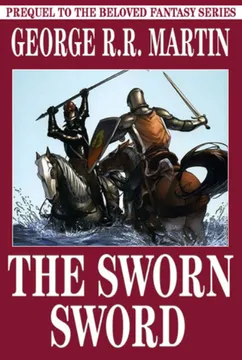


Plot Summary
The Stream Runs Dry
Dunk, a towering hedge knight, and Egg, his shaven-headed young squire, pass two corpses rotting in an iron cage as they carry wine toward Standfast. The second year of drought has driven smallfolk from their homes and left crops withering across the Reach.
At the bridge near Standfast, Ser Bennis of the Brown Shield greets them with contempt, and Egg notices that the Chequy Water has vanished. Dunk examines the damp earth beneath a stone and sees that the stream dried only recently, not gradually.
Ignoring Bennis's advice to leave the matter alone, he follows the dry channel upstream. Around a bend, he and Bennis find a strong dam diverting the water into Lady Rohanne Webber's fields and moat. The dispute is no longer a mystery: Standfast's crops are being denied water.
The story begins with a question of practical survival, not a grand political contest: who has the water, and who will go hungry without it? The caged dead establish how easily power turns deprivation into punishment, while Dunk's close inspection of the stream distinguishes a human decision from the drought itself. His instinct is to investigate even when Bennis urges passivity. That choice expresses the moral difference between them before either man draws steel. The diverted water also gives the feud a material basis, so later claims about ancestry and honor remain tied to land, food, and the vulnerable people who depend on both.
Blood at the Dam
At the dam, Bennis demands that the workers dismantle it. When they insist they are on Webber land and explain that Maester Cerrick ordered the diversion to save their crops, Bennis cuts the face of an old laborer. Dunk forces the men to withdraw, but the injury gives Lady Rohanne a reason to retaliate.
Ser Eustace Osgrey, Standfast's aging master, orders Dunk to summon fighting men from his villages. Only twelve arrive, and Dunk sends four home, leaving eight badly equipped farmers, among them two veterans of the Blackfyre Rebellion and the frightened Big Rob.
Dunk and Bennis fashion spears and crude shields, then drill the recruits. Egg worries that training will only make their deaths more personal. Dunk insists they must be ready, though their first exercises show how little chance they would have against knights.
Bennis converts a contest over resources into a contest over face. His cut injures a worker, but it also gives Rohanne a legitimate grievance and makes a negotiated return of the water harder. Dunk sees the difference between defending a community and escalating on its behalf, yet his loyalty to Eustace draws him into preparing an army. The recruits make the cost of aristocratic conflict visible: these are not faceless levies but farmers with families, poor weapons, and little training. Egg's objection presses Dunk to notice the human meaning hidden in the language of duty. His answer is not confidence that war is right, but a conviction that he must protect people once their lord has summoned them.
The Red Widow's Face
Eustace sends Dunk to Coldmoat to negotiate, giving him money for a blood price and dressing Egg in an Osgrey doublet. At the castle, Dunk mistakes Lady Helicent, a grieving widow, for the feared Lady Rohanne and tries to address her about the dam.
The crowd laughs, and Rohanne, a young archer with a long red braid, steps in to stop the humiliation. Dunk's awkward apology amuses her rather than angering her; she recognizes that Ser Lucas Longinch has deliberately let the confusion play out. She admits him to a private audience with Egg present.
There, Rohanne discusses the drought and the damage to her own fields, while Dunk argues that Standfast's crops also need the diverted stream. She refuses to surrender the water, and the meeting turns from awkward courtship to a dispute over who has the right to it.
Dunk's mistake makes visible the distance between reputation and person. He has been primed to expect an old poisoner, but finds a young woman who uses humor and public authority to control a room. His embarrassment is not merely comic: Longinch has arranged the encounter to diminish a rival before Rohanne can judge him herself. Rohanne's intervention shows that she sees both the cruelty and the weakness in that performance. The private audience then complicates the conflict. Her fields are also failing, so she is not hoarding water in comfort; she is defending her own people and the physical security of her castle. The scene prepares a conflict in which both sides possess real needs and unequal power.
A Charter Beneath the Lion
Rohanne rejects Eustace's offer of silver for the injured worker and demands Bennis instead. When Dunk argues that Standfast owns the Chequy Water, Maester Cerrick produces a royal charter granting its rights to Rohanne's family. Egg reads the document and confirms its meaning.
Rohanne then explains that Eustace supported Daemon Blackfyre against King Daeron, and that his sons died in the rebellion; the king spared Eustace but took his daughter as a hostage. Dunk learns that the old knight concealed both his rebellion and the water's legal ownership.
Rohanne slaps Dunk when he invokes her former love for Eustace's son, Addam, whose death she blames on his father. Returning to Standfast, Dunk hears Eustace admit the truth and leaves his service, returning the cloak he had been given.
The charter breaks the dispute open by separating inherited names from enforceable rights. The Chequy Water sounds like Osgrey property, but the royal grant says otherwise; tradition has carried the claim longer than the law supports it. Eustace's silence has made Dunk an unwitting defender of a false account, damaging the trust on which sworn service depends. Rohanne's anger reveals a second history beneath the land dispute: Addam's death binds her to a loss she cannot separate from Eustace's political choice. Dunk's departure is therefore not a simple change of allegiance. He refuses both the old knight's deception and Rohanne's offer of a place at Coldmoat, preserving his independence even as he searches for a more honest way to serve.
Wat's Wood Burns
That night, flames consume Wat's Wood, the small forest between Standfast and Coldmoat. Eustace accuses Rohanne, who denies ordering the fire; the drought has made the woods tinder-dry, so the cause remains uncertain. Bennis and Eustace discuss burning her crops and mill in revenge.
Although Dunk has decided to leave Standfast, he sees the untrained villagers would be slaughtered if they fought Coldmoat's larger force. In the yard, he draws his sword and orders the eight recruits to return to their homes. They scatter despite Eustace's protests.
Dunk then tells the old knight he will not abandon him while he remains under his roof. Eustace chooses to face Rohanne rather than hide behind Standfast's walls. Bennis stays behind to defend the tower, while Dunk, Egg, and Eustace ride toward the burned wood and the stream.
The fire transforms a local dispute into a threat that can no longer be contained by careful language. Because its author is unproven, it also exposes how quickly fear turns suspicion into certainty: Eustace accuses Rohanne, while her denial cannot restore the forest. Dunk's most consequential act is not choosing which accusation to believe, but refusing to let the villagers pay for the feud with their lives. Sending them home is disobedience to Eustace, yet it fulfills a deeper form of protection than battlefield courage would. He stays after dismissing them, so his choice is not flight from danger. It is a decision to risk himself rather than spend other people's lives to preserve a lord's pride.
A Cheek for a Cheek
At the Chequy Water, Rohanne arrives with thirty-three armed men and demands Bennis for wounding her laborer. Eustace refuses to yield him and accuses her of burning Wat's Wood. Dunk warns that crossing onto Osgrey land would violate the king's peace, then meets Rohanne in the stream.
He shows her the signet ring he found hidden in Egg's boot, making clear that the boy is Prince Maekar's son and that killing him would carry consequences beyond this feud. Rohanne still cannot return to Coldmoat without appearing weak.
Dunk cuts his own cheek and claims responsibility for the laborer's injury, offering blood for blood without surrendering Bennis. He also demands justice for the burned wood. Rohanne denies responsibility and calls for a trial to prove her innocence. Eustace refuses to withdraw his accusation, and Ser Lucas Longinch becomes Rohanne's champion.
The confrontation forces Dunk to make several kinds of power legible at once. The signet warns Rohanne that Egg's hidden identity raises the stakes, but Dunk does not use that leverage to dictate the settlement. Instead, he injures himself to satisfy the demand for blood without handing Bennis over to a punishment Dunk considers unjust. This is a costly act of mediation, not a victory: Rohanne still needs to defend her authority, and Eustace still refuses to retreat from his accusation. The trial by battle emerges because each ruler is trapped by the public meaning of concession. Dunk's body becomes the instrument through which he can negotiate, while his limited legal and political authority remains painfully clear.
The Longinch Goes Under
Rohanne's champion, the towering Ser Lucas, meets Dunk in the stream, both armored and mounted. Lucas attacks with a two-handed poleaxe, battering Dunk's shield while Dunk searches for an opening beneath his raised arm. Dunk's thrust misses, and Lucas strikes his helm and wounds Thunder.
The destrier rears, then crashes down with Lucas's horse, throwing both knights into the water. Dunk's foot catches in a stirrup before he frees himself, but Lucas resurfaces with a sword and cuts at him. When Lucas breaks Dunk's shield and knocks him to one knee, Egg's cries help Dunk locate his attacker.
Dunk tackles Lucas underwater, holds him down despite blows from a rock, and drives his dagger beneath the man's arm. Lucas stops fighting. Dunk survives the duel badly injured, and Rohanne's men pull him from the stream. His victory ends the immediate threat of battle, but the water has exacted its price.
Dunk wins through endurance and adaptation rather than a clean display of knightly mastery. The duel first strips away the advantages he depends on: Thunder is hurt, Dunk loses his sword, his shield breaks, and armor turns the stream into a trap. His survival depends on reading the Longinch's movement, using his remaining strength, and accepting that the fight has become a struggle at close quarters. Egg's warning matters because their bond has practical force under pressure, not merely sentimental value. The water that began the dispute also becomes the arena in which authority is decided. The outcome is decisive, but it does not make the original grievances disappear or undo the danger the two houses have created.
Rain Over Coldmoat
Dunk wakes in Coldmoat's maester's tower with a broken ankle, a damaged shoulder, and water still in his lungs. Maester Cerrick tells him that Lucas is dead and Egg pulled him from the stream. While Dunk was being treated, Bennis tied up Sam Stoops and his wife, searched Standfast, and escaped with Eustace's valuables.
Meanwhile, Rohanne asked permission to cross Eustace's land and visit Addam's grave. Eustace allowed it; when he found her weeping among the blackberry bushes, they spoke through the night about Addam and Rohanne's father.
The next morning they married, joining the Osgrey lion and Webber spider. Eustace became lord of Coldmoat, and the water returned to the stream. When Dunk finally prepares to leave, rain falls on the drought-stricken country, an answer neither knight could force by arms.
The resolution comes not from winning the duel alone, but from a private recognition of shared grief. Rohanne and Eustace can meet at Addam's grave only after the immediate violence has ended; the place that holds his memory becomes a setting for a conversation that political argument could not produce. Their marriage makes the alliance concrete, while the water's return resolves the original material conflict. Against this repair, Bennis's theft is a reminder that individual opportunism survives the settlement of larger disputes. The rain offers relief, not proof that either side was morally right or that power has become fair. Nature changes the conditions, but the people must still choose what to do with them.
North Beneath Gray Skies
Before leaving, Rohanne offers Dunk a swift blood bay named Flame, a better traveling horse than his battle-worn destrier. He refuses the gift, though he accepts her kiss and cuts off a lock of her red hair to remember her by.
Rohanne asks him to stay as captain of her guards and offers Egg a place among her squires, but Dunk declines. He and Egg leave Coldmoat with Thunder, Maester, and Egg's new palfrey. At the crossroads, the caged corpses they passed at the beginning are nearly bones, while rain darkens the road.
Dunk asks which way leads toward Summerhall, where Egg's father waits, and which way leads north. Egg chooses the road toward the Wall. Dunk recognizes how far they must travel, but continues with him, carrying no settled home except the road ahead.
Dunk's departure completes the emotional movement from reluctant service to chosen companionship. Rohanne offers the security of a household and a horse suited to the road, but accepting either would bind him to a life he has not chosen. His refusal is not indifference: the lock of hair preserves a private connection without turning it into a promise of permanence. Egg, meanwhile, chooses adventure over an immediate return to his father, and Dunk follows without pretending the journey will be easy. The crossroads echoes the opening, but rain has altered the landscape and Dunk now understands more clearly what duty costs. Their direction remains uncertain, yet the choice belongs to them rather than to a lord's summons.
Analysis
The Sworn Sword makes a local water dispute carry the weight of a realm still divided by rebellion. The Chequy Water is at once a crop's lifeline, a castle's defense, and a disputed inheritance; ownership cannot be separated from past conquest or present need. Eustace remembers the Osgreys as rightful lords, while the royal charter records the losses imposed after his choice of the Blackfyre cause. The gap between those accounts is not abstract. It leaves him ruling a diminished house and makes Dunk's loyalty depend on a history he was never told.
Dunk's central test is whether service means obedience or protection. He initially accepts Eustace's summons and prepares villagers for battle, but Egg's concern forces him to see each recruit as a person whose death will not be repaired by a noble victory. When Dunk sends the levy home and stays himself, he defines knighthood through risk accepted on behalf of others. His decision to take Wolmer's wound onto his own cheek extends that ethic: he uses his body to interrupt retaliation rather than magnify it.
Rohanne complicates any easy moral division. Her dam threatens Standfast, yet her own crops are dying, her charter supports her claim, and her authority is vulnerable to men who interpret compromise as weakness. Eustace, meanwhile, is neither simply a villain nor merely a victim of history. His loyalty to Daemon Blackfyre is bound to pride, lost family, and a desire to restore his house, but the consequences of that choice endure for others. Their eventual reconciliation begins not with a ruling about water, but with grief for Addam, whose memory both had used as a grievance.
The ending offers repair without pretending that violence or loss can be reversed. Rain relieves the drought, but it does not vindicate the fire or restore the burned wood. Bennis's theft shows that selfishness survives the settlement. Dunk and Egg leave because their bond and road remain more important than the security offered by a new household. The novella's moral scale is therefore intimate: a damaged cheek, a returned stream, a spared levy, and two travelers choosing what kind of service they will carry forward.
Review Summary
The Sworn Sword receives generally positive reviews, with readers praising Martin's world-building and character development. Many enjoy the dynamic between Dunk and Egg, as well as the insights into Westeros history. Some find it less engaging than the first novella but still entertaining. Readers appreciate the exploration of themes like loyalty, honor, and the consequences of war. The novella's compact storytelling and satisfying ending are highlighted, though a few reviewers felt it lacked the impact of its predecessor.
Characters
Ser Duncan the Tall
The reluctant championDunk is a nearly seven-foot hedge knight raised in King's Landing's Flea Bottom and taught the practices of knighthood by Ser Arlan of Pennytree. He is physically imposing but uncertain in courtly company, often mistaking bluntness for honesty and struggling to read what powerful people want from him. His sense of duty is practical: he wants to protect those placed in danger, even when he doubts the cause or the people who command him. His bond with Egg gives him someone to teach and protect, while also exposing how little he understands of noble politics. Dunk's courage is real, but the story tests whether courage means obeying a lord or accepting personal risk to spare others.
Egg
The hidden princeEgg is the ten-year-old squire of Dunk, traveling under a disguise that conceals his birth as Aegon Targaryen, son of Prince Maekar. His shaved head and plain clothes help him pass as an ordinary boy, but his knowledge of royal law and noble houses occasionally betrays his upbringing. Egg is clever, proud, and quick to challenge Dunk when he sees a moral inconsistency, especially when the people at risk are poor or inexperienced. His relationship with Dunk combines affection with apprenticeship: he depends on the knight, yet often supplies the political insight Dunk lacks. He wants to become a Kingsguard knight, though his curiosity and independent judgment keep him from being merely obedient.
Lady Rohanne Webber
The guarded landholderRohanne is the young ruler of Coldmoat, known as the Red Widow because several husbands have died before her. She is an accomplished archer and an alert political actor who knows that her lands, authority, and marriage prospects are all contested. Her humor can unsettle an opponent, but it also gives her a way to judge whether someone is performing courtesy or speaking plainly. Rohanne trusts physical defenses because personal attachments have brought grief and danger, and she resists being treated as a prize to be transferred between men. Her strength does not make her invulnerable: she must weigh justice against the public appearance of weakness in a world where rivals watch closely.
Ser Eustace Osgrey
The grieving old lionEustace is the aging master of Standfast and the last living Osgrey, a landed knight surrounded by the remnants of a once powerful house. He cherishes old banners, stories, and family memory, and measures the present against a vanished age when the Osgreys held castles and commanded the Northmarch. His grief for his wife and children is intertwined with political disappointment, making pride both his armor and his wound. Eustace can inspire loyalty through genuine feeling, but his attachment to a lost cause narrows his understanding of the present. His relationship with Dunk begins in dependence and expectation, yet Eustace's history complicates what it means to serve him.
Ser Bennis of the Brown Shield
The brutal sworn swordBennis is a shabby, foul-mouthed knight who serves Eustace and regards force as the quickest answer to insult. He is experienced enough to train a peasant levy and cynical enough to treat its members as expendable. His contempt for Dunk appears in mockery, while his familiarity with Ser Arlan hints at a shared past that Dunk cannot simply erase. Bennis's approach to service has little of Dunk's protective idealism: he values survival, comfort, and personal advantage, even when those priorities undermine the man he is sworn to serve. He is a useful contrast to Dunk because both are hedge knights, but they interpret the obligations of knighthood in sharply different ways.
Ser Lucas Inchfield
Coldmoat's iron castellanCalled the Longinch, Lucas is Coldmoat's tall, intimidating castellan and Rohanne's chief military protector. He treats Dunk as an intruder before hearing his case and uses ridicule and threats to control access to Rohanne. His authority is inherited from her father, yet his presence also embodies the danger of a protector who believes that protection gives him a claim over the person protected. Lucas understands strength in physical and institutional terms, which makes him a formidable opponent in a world where Rohanne's choices are tightly constrained.
Septon Sefton
The talkative mediatorSefton is Coldmoat's genial, corpulent septon and Rohanne's good-brother. He eases tense encounters with humor, hospitality, and an unusually free flow of political gossip. His religious office gives him a reason to urge reconciliation, but he is no detached moral authority: he is entangled in the household and understands its rivalries. Sefton sees how easily a public insult can become a private catastrophe, and repeatedly tries to move the disputants toward compromise.
Maester Cerrick
Keeper of the royal charterCerrick is Coldmoat's young maester, a careful administrator who presents the royal document establishing the Webbers' rights to the Chequy Water. He represents the written record against Eustace's inherited memory and helps explain why Rohanne considers the dam lawful. His role is practical rather than theatrical: he supplies evidence that changes the dispute from a quarrel of competing stories into a question of documented authority.
Ser Arlan of Pennytree
Dunk's absent mentorArlan is the hedge knight who raised Dunk as his squire and taught him the habits and obligations of knighthood. Though dead before the story begins, he remains present in Dunk's memory as a measure of kindness, discipline, and loyalty. His teachings do not provide easy answers; Dunk must decide what they require when a sworn lord has misled him and vulnerable villagers face danger.
Sam Stoops
Standfast's faithful servantSam Stoops is an elderly servant at Standfast who helps care for the household and its small community. His presence connects the tower's proud old traditions to the daily work that keeps it functioning.
Addam Osgrey
The lost young loveAddam was Eustace's youngest son, a squire who served at Coldmoat and loved Rohanne when they were young. His memory links the two houses through affection as well as old political grievance.
Alysanne Osgrey
Eustace's absent daughterAlysanne was Eustace's daughter, whose loss remains part of the old knight's family grief. Dunk's presence reminds Eustace of the kind of man he once hoped she might have married.
Wolmer
The wounded laborerWolmer is one of the workers building the diversion dam. Bennis's attack on him turns the water dispute into a matter of personal injury and gives Rohanne grounds to demand redress.
Plot Devices
The Chequy Water
The material cause of conflictThe stream that gives the Osgrey lands their name is diverted by a dam into Coldmoat's fields and moat. Its disappearance begins the dispute, but its legal ownership is less simple than Eustace's inherited claim suggests. The water makes the competing needs concrete: crops are failing on both sides, while Coldmoat also relies on its moat for defense. Because the stream runs through land shaped by conquest, royal grants, and changing borders, it becomes a physical record of political history. Its return after the houses reconcile resolves the immediate scarcity, though the drought itself remains a larger force neither family can command.
The Royal Charter
Evidence against inherited memoryMaester Cerrick's parchment carries the king's seal and grants the Webbers rights to the Chequy Water and resources in Wat's Wood. Eustace's account rests on an older sense of Osgrey ownership, but the charter reveals that the crown changed those rights after the Blackfyre Rebellion. Dunk cannot read the document himself, so Egg must interpret it, exposing both Dunk's educational limits and Egg's hidden courtly knowledge. The parchment does not settle the moral question of how to share scarce water, but it disproves the claim on which Eustace's demand depends. It is the story's clearest example of written law confronting inherited identity.
Maekar's Signet
A warning carried in secretDunk keeps a signet ring that Egg hid in a boot, bearing the arms of Prince Maekar. At the stream, he shows it to Rohanne to make clear that Egg is not an ordinary squire but a prince traveling under concealment. The ring functions as political leverage: harming Egg could draw consequences far beyond the local feud. Dunk does not use it to command Rohanne or end the dispute outright. Instead, it warns her of the danger of killing a royal child while preserving her need to defend her own authority before her followers. The object gives material form to the tension between Egg's plain disguise and his inherited status.
Blood Price and Trial
Rituals that contain retaliationThe proposed blood price offers a way to compensate for Bennis's injury to Wolmer without immediately resorting to violence. Rohanne refuses the payment because she sees the offense as an attack on her authority, not merely a wound to one worker. Dunk then cuts his own cheek and accepts responsibility, trying to satisfy the demand for blood while protecting Bennis from surrender. When neither side will withdraw its accusation over the burned wood, Rohanne calls for trial by battle. These customary forms place limits around retaliation, but they also make honor a public performance. Each character must judge whether compromise looks like justice or weakness to the people watching.
About the Author
Other books by George R.R. Martin




Download PDF
Download EPUB
.epub digital book format is ideal for reading ebooks on phones, tablets, and e-readers.








