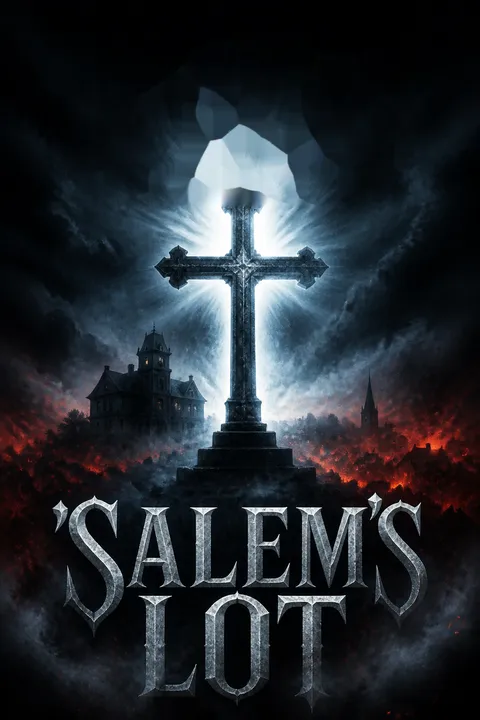


Plot Summary
Prologue
The frame opens after the catastrophe: Ben Mears and a quiet boy cross the country in an old car, changing jobs and watching newspapers for news from Jerusalem’s Lot. Ben is writing again, while the boy clings to him and suffers nightmares.
A report describing the town as emptied of its people finally reaches them in Mexico. The boy admits he is frightened, and Ben admits he is too. They leave their refuge and turn back toward Maine, where the story that made them fugitives is still unfinished.
The prologue gives the reader the aftermath before revealing the cause. Ben’s return to the Lot will look, at first, like a writer’s attempt to reclaim childhood and recover from grief; the frame quietly warns that memory has become an active danger. The boy’s silence and nightmares also make trauma communal rather than solitary: Ben may be the adult, but neither of them can simply put the town behind them. Their decision to return turns the novel into an account of how an ordinary place becomes a burden its survivors cannot abandon.
Marsten House on the Hill
In September 1975, novelist Ben Mears drives back to Jerusalem’s Lot, where he lived as a boy, hoping to write and recover a sense of home. His wife Miranda died in a motorcycle crash, and the return stirs grief he has struggled to contain. Before reaching town, he sees the roof of the abandoned Marsten House and remembers entering it at nine, finding Hubert Marsten hanging upstairs, then seeing the corpse open its eyes.
The memory still drives his nightmares. Ben learns the house has been sold, not rented, but he cannot look away from it. The town seems familiar enough to welcome him, while the house makes clear that his childhood is waiting in a more dangerous form.
Ben’s return is not nostalgia in its gentle form. He is trying to convert loss into work, and the house offers a seemingly practical subject for the book he hopes to write. But his childhood vision has never settled into memory as a completed event. The Marsten House functions instead as a sealed chamber in his mind, where grief over Miranda and fear from boyhood can meet. His desire to approach it suggests a writer’s faith that attention can master experience. The dread in his body challenges that faith before he has even entered town.
Susan Meets Ben Mears
At the town park, Ben meets Susan Norton, an aspiring artist who recognizes him as the author of a novel she admires. Their easy conversation becomes a date, then a growing intimacy. Susan hopes to leave the Lot for a career, while Ben explains that his return is tied to childhood and a new book.
Their attachment gives him a reason to imagine staying. Meanwhile, real-estate agent Lawrence Crockett has sold the Marsten House and an abandoned laundromat to Richard Straker, who acts for his absent partner, Kurt Barlow.
Straker pays through an unnaturally advantageous deal and demands secrecy. The men plan to open a furniture and antiques business, placing Barlow and Straker at the center of town before anyone knows what they have brought with them.
The romance and the property transaction establish two kinds of entry into the Lot. Susan enters Ben’s guarded life through shared recognition and the promise of a future; Barlow enters through legal paperwork, secrecy, and Crockett’s appetite for profit. The contrast matters because the town can welcome both without understanding their different intentions. Ben and Susan’s attraction gives the story emotional warmth, but it also makes later danger intimate rather than abstract. Crockett’s bargain shows how evil need not break into a community when it can purchase a door and persuade a respectable local man to keep quiet.
The Glick Boys Vanish
Before dawn, cemetery groundskeeper Mike Ryerson finds Win Purinton’s black dog, Doc, hanging from the gate at Harmony Hill. That night, brothers Danny and Ralphie Glick take a shortcut through the woods and fail to reach the Petrie home. Danny returns alone, confused and unable to explain where Ralphie went. Searchers comb the woods and rivers for days, but find nothing.
The Glick family’s ordinary grief deepens when Danny collapses and is hospitalized with severe anemia. At the same time, Straker arranges a delivery of crates to the new shop and a heavy sideboard to the Marsten cellar. The unexplained deaths and disappearances begin while the newcomers are settling in, but the town still treats each event as a separate misfortune.
The first losses are arranged to be explainable one at a time. A mutilated dog can be blamed on cruel children, a missing boy on an abductor, and Danny’s illness on medicine’s uncertain limits. That fragmentation protects the Lot from seeing a pattern. The town’s routines continue, so the horror gains time to root itself among ordinary explanations. The delivery to the cellar adds a parallel sign of preparation: while residents search familiar woods, Barlow’s household quietly receives what it needs. The terror grows not from one spectacular rupture, but from several small refusals to connect evidence.
A Grave Opens at Dusk
Danny Glick dies after his blood count collapses, and the town gathers for his burial at Harmony Hill. His father, Tony, cannot accept the coffin being covered with earth and has to be pulled from the grave. After the mourners leave, Mike Ryerson stays behind to finish the work. As evening falls, he becomes convinced Danny’s eyes are open and that the boy must be released.
Mike digs into the grave and opens the coffin just as daylight disappears. The following days leave him pale, feverish, unable to eat, and sleeping through daylight. At night he opens a window without understanding why. The burial has not closed Danny’s story. It has begun Mike’s transformation and given the dead a way into another home.
The funeral exposes the limits of the town’s rituals. Tony’s refusal to let the coffin be buried is a father’s attempt to interrupt an unbearable finality, while Mike’s later digging turns that same refusal into a supernatural invitation. Neither man can control what grief makes him do. The novel makes the grave both a physical boundary and a psychological one: people are supposed to accept that the dead remain dead, yet the story’s horror begins when that assumption fails. Mike’s wasting illness also converts an invisible attack into symptoms the town can name, but not understand.
Matt Burke’s Open Window
High-school teacher Matt Burke notices that Mike’s weakness does not resemble ordinary drunkenness or illness. He brings Mike to his house and lets him sleep in the guest room. During the night, Matt hears Mike invite someone inside, then hears the window rise and a child’s laugh.
Fear leaves him unable to investigate until he calls Ben. In daylight, Ben and Matt find Mike apparently dead in bed, lifelike except for a dried spot of blood. The evidence is maddeningly incomplete, and Matt fears the town will dismiss him as unstable.
Still, the outside screen has fallen without signs of forced removal. Ben, haunted by his own Marsten House experience, believes Matt’s account deserves testing. They agree to conceal their suspicions while they gather proof.
Matt’s ordeal marks the shift from private unease to shared investigation. His scholarly habits make him reluctant to accept a supernatural explanation, but his fear is not simply credulity: he is confronting evidence that his ordinary categories cannot absorb. Ben’s decision to believe him is equally consequential. It comes not from certainty, but from recognizing that Matt has no obvious motive to invent what he describes. The scene makes belief an ethical choice under uncertainty. Their silence toward the town is strategic, yet it also reveals how social credibility can become an obstacle to recognizing danger.
Floyd’s Sudden Assault
Ben and Susan grow closer, but her mother, Ann Norton, distrusts Ben and tries to steer Susan toward her former boyfriend, Floyd Tibbits. Ann finds an old newspaper report about Miranda’s fatal crash and treats it as evidence that Ben is dangerous, although it says he was not charged. Susan finally strikes her mother and decides to move out.
That same conflict gives Floyd an opening: he attacks Ben in Eva Miller’s parking lot, wearing odd clothes and gloves, and leaves him unconscious with a fractured skull and bruises. Floyd’s behavior is out of character, and Ben suspects the sunlight was painful to him. Susan’s independence has become urgent, but their new relationship is now entangled with the town’s spreading threat.
This turning point ties private conflict to supernatural pressure without making them the same thing. Ann’s suspicion is rooted in fear of losing her daughter, but she uses gossip as a substitute for trust and turns Ben’s bereavement into an accusation. Susan’s slap breaks the old pattern of placating her mother, though it does not erase their love. Floyd’s attack introduces a different danger: familiar people can act under an influence they cannot explain. The violence makes Ben’s physical vulnerability concrete and leaves Susan trying to choose both a life of her own and a man whose past has been misrepresented.
The House Takes Susan
Twelve-year-old Mark Petrie has already fought off Danny Glick at his bedroom window by pressing a toy cross against the vampire’s face. When Susan goes to investigate the Marsten House, Mark finds her and insists on helping.
Inside, they discover an abandoned, foul-smelling house and a cellar door standing ajar. Straker returns, knocks Mark unconscious, and takes Susan downstairs. Mark pretends to remain helpless, then uses a Houdini escape method to loosen Straker’s ropes and strike him with an iron bed leg.
He flees as darkness approaches, unable to rescue Susan from the cellar. That night, Susan appears at Mark’s window with a changed face and asks to be let in. He refuses her with his cross, understanding that she has become one of the creatures they feared.
Mark and Susan approach the same danger from different kinds of knowledge. Susan is an adult trying to verify a theory; Mark is a child who has already survived a direct attack and trusts what his senses have taught him. His resourcefulness saves him, but not Susan, and the failure forces him to carry knowledge adults are still assembling. The window becomes the decisive boundary: a vampire can exploit longing and familiarity, while refusal requires Mark to reject someone he cares about. His childhood expertise is not childish fantasy here. It is a practical form of attention that the adults need.
Marjorie Glick Rises
Ben reaches Mark after the boy escapes, and Mark reports that Barlow has taken Susan. Doctor Jimmy Cody and Matt Burke accept the account as a possibility worth testing, despite the risk to their reputations. When Marjorie Glick dies after wasting away, Ben and Jimmy arrange to observe her body at a mortuary. At sunset, Marjorie sits up and advances on them.
A cross made from tongue depressors drives her back, but she bites Jimmy before Ben can pull her away. She vanishes into a wall, leaving Jimmy wounded and the men with direct proof that the dead can rise. They conceal the encounter from the authorities and decide they need Father Callahan, the local priest, to help them confront Barlow.
The experiment turns suspicion into embodied fact. Marjorie’s return is not a report filtered through memory or a frightened witness; Ben and Jimmy see the corpse move and attack. Yet proof does not bring relief. It imposes a new cost, as Jimmy’s bite makes knowledge physically dangerous and their secrecy leaves official systems unable to help. The improvised cross suggests that belief and material action can cooperate, even when no one has settled the theology behind them. Marjorie’s attack also sharpens the emotional stakes: the vampire threat is not an abstract force, but a dead mother still driven by appetite.
Straker Hangs in Marsten House
Ben, Mark, Jimmy, and Father Callahan go to the Marsten House after Callahan agrees to test the threat rather than dismiss it. His crucifix bursts the new lock from the front door. Upstairs, they find Straker hanging upside down, killed by Barlow, and recognize that their enemy has anticipated their arrival. In the cellar, a letter taunts them and confirms that Susan is being held there.
They find her laid out with unnatural color and no heartbeat. Matt has instructed Ben, as the person who loved her, to release her from the vampire state. Ben drives a stake through Susan’s heart. The act saves her from an unending existence, but the blood and her final convulsions leave Ben shattered before the fight with Barlow has even begun.
The first assault on the house appears to grant the group a practical victory: Callahan’s faith has force, and Straker is no longer guarding the entrance. But Barlow’s letter reveals that he has shaped the encounter in advance. He gives Ben a choice that is morally necessary and emotionally devastating, making love the reason Ben must destroy the person he loves. The scene tests whether affection can remain protective when the beloved has been transformed. Ben’s decision is an act of mercy, but it does not feel like triumph. It makes the cost of the coming battle impossible to keep theoretical.
Barlow Breaks the Petries
After the group leaves the Marsten House, Barlow retaliates at the Petrie home. He cuts the telephone line and kills Henry and June Petrie by smashing their heads together, then captures Mark. Father Callahan confronts him with a crucifix, but Barlow uses Mark as leverage and challenges the priest to prove his faith without the object.
Callahan hesitates, and the cross loses its power. Barlow breaks it, forces Callahan to drink his blood, and sends him away alive but spiritually disgraced. Mark escapes through the dark woods and reaches the hospital, where Ben and Matt learn that his parents are dead and Callahan has vanished. Barlow has attacked their trust in one another as carefully as he attacks their bodies.
Barlow’s retaliation is designed to fracture the group’s sources of strength. He kills Mark’s parents in front of him, then makes Callahan choose between a child’s immediate safety and the integrity of his faith. The priest’s failure is more than a tactical loss: it exploits the doubt and private shame he has been carrying for years. Mark’s escape keeps Barlow from controlling the whole outcome, but leaves the boy bereaved and the adults responsible for protecting him. The sequence makes the vampire’s intelligence as threatening as his strength. He attacks relationships, beliefs, and communication before the survivors can regroup.
Callahan Loses the Cross
At the hospital, Ben and Matt listen as Mark explains Barlow’s attack and confirms his parents’ deaths. Ann Norton, now under Barlow’s influence, enters the hospital with her husband’s revolver and tries to reach Matt’s room. A visitor warns the staff, and an orderly disarms her before she can shoot Matt; Ann dies during the struggle. Meanwhile, Callahan wanders to St Andrew’s seeking refuge.
The church doors repel him and burn his hand, confirming that Barlow’s blood has made him unclean in the church’s eyes. He boards a bus out of town. The Lot’s residents begin locking doors and reaching for religious objects without understanding why. Matt recognizes that the vampire outbreak is spreading faster than the town can acknowledge.
This section shows two forms of contamination. Ann’s attack turns a mother’s fear and attachment into a weapon against Matt, while Callahan’s rejection makes his spiritual collapse visible in physical injury. The church, which once stood for protection, becomes inaccessible to him. Yet the townspeople’s instinctive search for crosses suggests that communal knowledge survives beneath conscious denial. They sense danger before they can name it. Mark’s return from Barlow’s control preserves a witness, but the group is losing both its emotional anchors and its time to act.
Matt’s Final Map
Matt Burke continues directing the investigation from his hospital bed. Mark recalls blue chalk on Barlow’s fingers, and Matt connects it to the old Brock Street School, where classrooms and a basement offer the darkness Barlow would prefer. Matt orders Ben, Jimmy, and Mark to work together, make stakes, and search the Lot without splitting up.
He understands that their adversary wants them isolated and panicked. Before they can carry out the plan, Matt suffers another heart attack and dies. His research and judgment remain with the survivors, but the man who helped turn scattered evidence into a strategy is gone. Ben and Jimmy must now protect Mark while facing the work Matt had organized for them.
Matt’s final contribution is not a supernatural weapon but a method: collect details, compare them, and act together. The blue chalk is small, almost trivial, yet his habit of disciplined inference gives it meaning. His death removes the group’s best interpreter at the moment the clues become actionable. This loss exposes the limits of expertise without making it useless. Matt cannot survive by understanding the pattern, but his understanding gives the others a chance. The section also links Barlow’s strategy to fragmentation: resisting him requires not only courage, but coordination strong enough to survive fear and grief.
Blue Chalk Leads Home
Ben, Jimmy, and Mark return to the Lot in daylight. At Barlow and Straker’s shop, they break open a crate and find Mike Ryerson’s body, then leave it when they realize their weapons are unfinished. Jimmy and Mark search the Bend for victims. At the McDougall trailer, they find Roy, Sandy, and their baby hidden beneath the floor.
Pulling Roy into daylight makes him writhe and retreat, showing that sunlight weakens but does not destroy him. Next door, they find the Evans family concealed in their home. In their belongings, Jimmy sees blue chalk beside the signs of a pool table and recalls Eva Miller’s covered table in her cellar. He concludes Barlow is hiding at Eva’s boardinghouse and leaves with Mark to confront him.
The search turns the Lot into a map of ordinary rooms made dangerous by what they conceal. The McDougall crawlspace is especially disturbing because a family’s private refuge has become a nest, and the baby’s presence strips the hunt of any heroic glamour. Sunlight offers a limit on the vampires, not a solution. Jimmy’s deduction depends on linking an obscure mark to a domestic object he remembers from Eva’s house. That chain of observation models the group’s best chance: not brute force alone, but a willingness to notice small evidence and connect it to the relationships that bind the town.
Jimmy’s Cellar Trap
At Eva Miller’s boardinghouse, Jimmy and Mark find the cellar stairs appear intact, but Barlow has secretly removed them beyond the first steps. Knives mounted beneath thin boards make the fall lethal. Jimmy plunges into the trap and is impaled. Mark finds another board, uses it to climb back out, and drives Jimmy’s Buick to meet Ben.
He blames himself for noticing the missing knives too late, but Ben stops him from accepting responsibility for Barlow’s trap. Together they learn that Matt has died as well. Their few remaining allies are gone or scattered, and night is approaching. Ben tells Mark he needs him for the final attempt, not because the boy is unafraid, but because they cannot face Barlow separately.
Jimmy’s death converts ingenuity into vulnerability. He has just found the correct location, yet Barlow has prepared a trap that turns ordinary architecture into a weapon. Mark survives through quick judgment, but survival leaves him carrying the guilt of having been present. Ben’s insistence that he is needed is both practical and relational: he refuses to let the boy’s grief become a reason to abandon him. Their partnership is no longer built on the adults protecting a child. It is built on two survivors acknowledging fear and choosing to move together anyway.
Parkins Leaves the Lot
Ben and Mark seek help from Constable Parkins Gillespie, but Parkins has packed his belongings and refuses to hear their account. He accepts that Barlow is a vampire, yet believes the town is already lost and chooses to flee. Ben and Mark continue without him. At St Andrew’s, they fill small vials with holy water, and Father Callahan’s housekeeper, Rhoda Curless, confirms that the priest went out to fight the evil.
The pair return to Eva’s house with stakes, a hammer, an ax, and the last of their courage. Mark hesitates at the cellar entrance, still carrying the deaths of his parents and Jimmy. Ben refuses to pretend the danger is manageable, but asks him to face it beside him.
Parkins’s retreat prevents the story from turning courage into a simple civic virtue. He sees the danger clearly, but concludes that survival means leaving. Ben and Mark continue because escape alone would preserve them while surrendering everyone else. Their visit to the church also makes faith practical: holy water is carried in small containers, while no certainty can restore Callahan or guarantee success. Mark’s hesitation is not a flaw to be overcome by a rousing speech. It is the residue of repeated loss. Ben’s appeal works because it offers companionship, not reassurance.
Barlow’s Last Sunrise
In Eva’s cellar, Ben finds Jimmy dead among the knife blades, then sees that a Welsh dresser hides a locked root cellar. He coats an ax with holy water and chops through the door. Inside, he and Mark find Barlow’s coffin and the bodies of Eva and other boarders. They carry the coffin out, but Barlow awakens and fixes Mark with his gaze, forcing Ben to knock the boy away before he can take the gun.
As darkness closes in, Ben fights the hypnotic pull of Barlow’s eyes, drives a stake through his heart, and hammers it deep. Barlow’s body collapses into dust. The remaining vampires emerge from the cellar, but Ben and Mark escape with holy water between them and the undead.
The climax brings the novel’s competing forms of power into direct contact. Barlow’s gaze attacks attention itself, while Ben’s physical labor with the ax and stake makes resistance bodily and immediate. His victory depends on Mark’s help, yet also on his willingness to strike the boy when Barlow takes control of him. The killing is not clean or celebratory; it leaves the remaining vampires alive and the town compromised. The sun’s approach creates a deadline, but not a promise of safety. Destroying the leader interrupts the colony without undoing what it has already done.
Epilogue
Ben and Mark flee the Lot, then return months later after newspaper reports show disappearances and strange deaths continuing nearby. The town remains populated by vampires, sheltered in familiar houses while daylight keeps them hidden. Ben and Mark walk through the abandoned streets and confirm that the Marsten House still overlooks the place where their friends died.
Near Harmony Hill, Ben drops a cigarette into dry brush. The wind catches the flame and carries it into the deadfall. They watch the fire take hold, knowing it may drive the vampires from their hiding places, though neither can promise it will end them. Then they leave together, committed to the next hunt.
The epilogue refuses the comfort of a completed victory. Barlow is destroyed, but the town’s remaining vampires continue to feed, and the region’s reports show that evil has not stayed within the Lot’s boundaries. Ben and Mark’s return is therefore not a homecoming. It is a decision to re-enter danger with clearer eyes. Fire offers a practical chance to expose the hidden, while also echoing the earlier blaze that scarred the town. The ending makes survival an ongoing obligation: they have escaped once, but cannot treat escape as the same thing as rescue.
Analysis
The novel’s horror comes from the collision between a supernatural invasion and the habits that make a town feel safe. Jerusalem’s Lot is not presented as an innocent community suddenly corrupted from outside. Its residents already conceal violence, resentment, exploitation, and loneliness beneath routines of work, church, school, and gossip. Barlow does not invent those weaknesses; he learns how to use them. His arrival through a real-estate transaction makes the threat especially pointed. The town’s doors are opened first by money, secrecy, and ordinary politeness, then by the vampires who exploit personal trust. The book also treats belief as a form of action rather than a fixed identity. Ben does not begin as a confident believer, Matt resists conclusions until he has evidence, and Callahan’s priesthood does not protect him from doubt. Their uncertainty is not simply a defect. It makes them test claims, compare observations, and rely on one another. Yet delay has consequences: the vampires spread while the living debate whether what they see is possible. The novel’s strongest moral tension lies there, between intellectual caution and the moment when caution becomes an excuse not to act.
Children occupy a distinctive place in this struggle. Mark’s monster stories give him usable knowledge, while adults often mistake his composure for immaturity or his evidence for fantasy. He is not protected from grief by childhood. He loses his parents and witnesses deaths that adults cannot prevent. His partnership with Ben therefore becomes a relationship between two kinds of survivor: one shaped by old trauma and one forced into premature responsibility.
The ending refuses to equate victory with repair. Barlow dies, but the town remains populated by vampires, and Ben and Mark must return to expose them. Fire becomes both a practical weapon and an echo of the Lot’s earlier disaster. Their final act does not promise purification. It commits them to continued resistance, accepting that the evil embedded in a community may outlive its most powerful representative.
Review Summary
'Salem's Lot is widely praised as one of Stephen King's best horror novels, with many considering it a masterpiece of vampire fiction. Readers appreciate King's ability to build tension and create a vivid small-town atmosphere. The novel's slow-burn pacing and rich character development are highlighted as strengths. While some find the beginning slow, most agree that the payoff is worth it. The book is often recommended as a perfect October read, with its chilling scenes and exploration of small-town evil resonating with fans of classic horror.
People Also Read





Characters
Ben Mears
The haunted novelistBen is a novelist returning to the Maine town where he spent part of his childhood. He hopes to write a book and reclaim a sense of belonging, but his memories of the Marsten House and the death of his wife make homecoming painful. He is observant, self-questioning, and more willing to listen than his public confidence suggests. Writing is both his craft and his way of ordering experiences that otherwise threaten to overwhelm him. His developing relationship with Susan gives him a possible future beyond grief, while his concern for the town draws him into danger. Ben’s defining struggle is whether looking directly at horror can help him act, or only expose how little control he has.
Mark Petrie
The fearless young witnessMark is a perceptive twelve-year-old who studies monster stories, models, and practical details with unusual seriousness. At school he refuses to let a larger bully define him, and at home his parents’ steady affection gives him a secure base. His strength is not fearlessness so much as the ability to keep thinking while afraid. He knows that adults often dismiss what children see, so he relies on observation and action rather than waiting for permission. His bond with Ben grows from shared danger and loss. Mark’s knowledge of folklore is a child’s resourcefulness, but the novel treats it as a genuine form of expertise rather than a substitute for adult judgment.
Susan Norton
The artist seeking escapeSusan is a young artist with a degree, a portfolio, and an unresolved wish to leave the town where she grew up. Her attraction to Ben is partly a recognition of someone who understands that childhood can remain vivid long after leaving home. She is warm and candid, but also impatient with the life her mother imagines for her. Their conflict reflects a struggle for adult independence inside a loving family whose care has become controlling. Susan’s curiosity and willingness to act distinguish her from the people who prefer rumor to investigation. She is drawn to possibility, whether in art, love, or a life beyond the Lot, and is learning to claim those choices as her own.
Kurt Barlow
The cultivated predatorBarlow arrives in town as the hidden partner in a furniture and antiques business, relying on Richard Straker to manage public appearances. He is patient, eloquent, and adept at reading what people want, from comfort to revenge. His manners do not soften his contempt for ordinary human life; they make his manipulation more effective. Barlow studies potential opponents before moving against them, and his long view gives him an advantage over people who assume their familiar town is still safe. He represents predation that can pass as refinement. His threat comes not only from physical power, but from his ability to turn affection, pride, and fear into instruments.
Matt Burke
The skeptical teacherMatt is a longtime English teacher whose patience with students extends to people the town would rather dismiss. His academic temperament makes him cautious about claims he cannot test, yet he is not so committed to rationality that he ignores evidence. A meeting with Mike Ryerson forces him to confront the supernatural directly, and he responds by organizing research and seeking allies. Matt’s isolation and private struggle with belief leave him especially vulnerable to fear, but his intellectual humility becomes a strength. He recognizes that the group needs more than conviction: it needs careful observation, shared responsibility, and a plan that accounts for an enemy capable of thinking ahead.
Father Donald Callahan
The searching priestFather Callahan serves the Catholic parish in the Lot and is known for intelligence, wit, and a tendency to drink. He wants a clear struggle against evil, but years of ordinary cruelty and institutional compromise have made his faith less secure than his priestly role suggests. His knowledge of folklore and theology makes him a valuable guide when the town faces something beyond ordinary explanation. Callahan is not a simple emblem of religious certainty: he questions what the church represents and whether its symbols still carry force. His willingness to investigate comes from a desire to test the beliefs he has been struggling to maintain.
Jimmy Cody
The practical doctorJimmy Cody is a general practitioner whose medical training has not erased his curiosity about what medicine cannot explain. He treats Matt as a former teacher and remains alert to both physical evidence and the limits of diagnosis. His calm manner gives him credibility in a town inclined to dismiss strange events, while his willingness to test an unconventional theory makes him more than a conventional skeptic. Jimmy believes that practical action matters even when the explanation remains uncertain. His medical bag, professional judgment, and willingness to take personal risks make him one of the group’s most useful bridges between the ordinary and the inexplicable.
Richard Straker
Barlow’s polished agentStraker handles the public side of Barlow and Straker’s business. Bald, impeccably dressed, and courteous, he unsettles residents by seeming both attentive and faintly contemptuous. He uses ordinary transactions to secure the Marsten House and the former laundromat, then manages deliveries and renovations without inviting questions. His controlled manners conceal a capacity for intimidation and violence. Straker is the practical organizer behind Barlow’s arrival, the human face that lets an extraordinary threat pass through a town’s ordinary routines.
Ann Norton
Susan’s anxious motherAnn loves her daughter and believes that caution is part of a mother’s duty. Her worry about Susan’s future turns into pressure to choose a familiar, dependable life, especially when she distrusts Ben. Ann relies on gossip and conventional respectability when she feels she is losing influence. Her concern is genuine, but it leaves little room for Susan to define adulthood for herself. Their conflict reveals how care can become control when fear is mistaken for knowledge.
Bill Norton
Susan’s practical fatherBill Norton is a labor-union man and Susan’s father. Direct and practical, he judges people by how they behave rather than by their education or artistic ambitions. He is more willing than Ann to give Ben a chance, partly because Ben’s seriousness and ease around ordinary work meet his tests of character. Bill’s affection for Susan is steady, though he is less inclined to interfere in her choices. He offers a grounded counterweight to the household’s anxieties.
Henry Petrie
Mark’s rational fatherHenry is an educated economist who trusts disciplined reasoning and the reliability of ordinary evidence. His love for Mark is steady, though expressed in practical rather than sentimental ways. He listens carefully when confronted with alarming claims and tries to examine them before reaching a conclusion. Henry’s composed confidence in rational explanations makes him a revealing contrast to Mark’s instinctive acceptance of what he has seen.
June Petrie
Mark’s observant motherJune is Mark’s affectionate mother, attentive to the emotional effects of events adults might dismiss. She worries about what the Glick brothers’ disappearance and death may mean for her son. June shares Henry’s desire to protect Mark, but she is more willing to wonder what he may be feeling beneath his calm exterior. Her care gives Mark a sense of security even when he chooses to face frightening things alone.
Tony Glick
A grieving fatherTony is father to Danny and Ralphie and a working man whose family life is shattered by one son’s disappearance and the other’s illness. At Danny’s funeral, grief overwhelms the rituals meant to help him accept the loss. His response is raw and physical, a father trying to interrupt the separation between himself and his child. Tony’s pain gives the town’s first deaths a human scale that rumor cannot contain.
Marjorie Glick
The bereaved motherMarjorie is Danny and Ralphie’s mother. Her family’s sudden crisis leaves her overwhelmed by grief and fear, while the town’s offers of help cannot restore the life she knew. She is one of the adults whose distress makes the threat visible before anyone understands its source. Her family’s losses become a measure of how deeply the Lot’s ordinary routines have been breached.
Danny Glick
The first missing boyDanny is the older Glick boy, a school-age child whose disappearance and illness bring the town’s danger into the heart of a family. He is part of an ordinary sibling bond with Ralphie and a familiar circle of neighborhood children. The abrupt collapse of his health makes his parents and the town search for medical explanations, even as the surrounding events suggest something stranger.
Ralphie Glick
The vanished younger brotherRalphie is Danny’s younger brother. He sets out with Danny on a short walk to visit Mark Petrie, turning a familiar woodland path into the site of the town’s first disappearance. His absence draws searchers into the woods and makes the Glick family’s ordeal public.
Mike Ryerson
The cemetery groundskeeperMike maintains the town’s cemeteries and approaches the work as a practical, outdoor job rather than a morbid calling. He is friendly, independent, and comfortable around death, seeing grave care as part of ordinary community life. His familiarity with Harmony Hill makes the events there more disturbing: what first seems like routine work becomes impossible to separate from the town’s growing crisis.
Lawrence Crockett
The dealmaking realtorCrockett is a real-estate agent and town selectman whose wealth comes from shrewd, often ethically careless deals. He prides himself on reading people and recognizing opportunities before others do. His desire for profit makes him receptive to Straker’s arrangement, even when its secrecy troubles him. Crockett embodies the way self-interest can make a community complicit without requiring anyone to understand the full danger.
Eva Miller
The boardinghouse keeperEva runs the Lot’s boardinghouse and maintains it through hard work, strict routines, and the help of tenants. She is generous within clear boundaries and has built a life around caring for people who might otherwise live alone. Her affection for her former companion, Weasel, remains under the practical habits that keep her household running. Eva’s orderly home offers Ben a place to work, but its familiarity also places her close to the town’s danger.
Weasel Craig
Eva’s troubled tenantWeasel is an aging former railway worker whose drinking has worn down his prospects and self-respect. He once shared a relationship with Eva and still regards her with tenderness, though neither makes much of it openly. His humor and easy sociability conceal regret over the life he has lost. He is one of the boardinghouse residents Ben grows fond of, helping make Eva’s place feel like a genuine home.
Floyd Tibbits
Susan’s former boyfriendFloyd works in retail management and assumes that his long relationship with Susan will eventually become marriage. He is neither especially ambitious nor openly cruel in ordinary circumstances, but his sense of entitlement grows when Susan turns toward Ben. His behavior shows how familiar social roles can become dangerous when jealousy and outside influence reinforce one another.
Parkins Gillespie
The wary town constableParkins is the Lot’s longtime constable, a quiet observer who knows the town’s habits and its people. He is not eager to turn uncertainty into a public accusation, and his mild manner can look like passivity. Yet he notices unusual details and understands how quickly small-town gossip can punish someone who speaks too soon. His caution reflects both practical experience and the limits of his authority.
Homer McCaslin
The county sheriffMcCaslin is the county sheriff, more perceptive than his country manner first suggests. He notices when witnesses are withholding information and understands that fear can be evidence, even when it cannot be entered neatly into a report. His presence connects the Lot’s private crisis to the wider authorities who struggle to recognize what is happening.
Rhoda Curless
Callahan’s loyal housekeeperRhoda keeps Father Callahan’s household and sees him as a priest whose courage and sincerity outweigh his weaknesses. Her loyalty is practical and unsentimental. When the crisis reaches the church, she urges those still able to act to continue the work rather than wait for reassurance.
Plot Devices
The Marsten House
A house that holds evilThe abandoned house on the hill gives the story a physical center and a history that predates Ben’s return. Its former owner, Hubert Marsten, murdered his wife and died by suicide there, leaving behind a reputation that the town has preserved through stories. Barlow chooses the house as his residence, and its position overlooking the Lot makes it a symbol of danger that can watch the community without being noticed. The house also joins Ben’s childhood fear to the present crisis. Its rooms and cellar turn old violence into a setting where new violence can take root.
Vampire thresholds
Invitation becomes a weaponThe vampires cannot simply enter every home; someone inside must admit them, often without understanding what the invitation means. This rule gives ordinary gestures such as opening a window or welcoming a visitor fatal importance. It also lets the vampires exploit loneliness, grief, and the wish to comfort someone familiar. The threshold creates suspense without relying only on physical barriers: a locked door may help, but the deeper defense is recognizing the danger before affection overrides judgment. Mark learns this rule through direct experience and uses it to resist a visitor he knows.
Faith-made defenses
Belief gives objects forceCrosses and other religious objects can repel vampires, but their power depends on the faith and conviction of the person using them. The novel puts this rule under pressure through characters whose beliefs are incomplete or uncertain. A homemade cross helps Mark survive, while Ben and Jimmy improvise a defense from simple materials. Callahan’s experience makes the difference between possessing a symbol and believing in what it represents central to the conflict. Holy water and the Host extend this system from personal protection to the group’s planned attack.
The town’s gossip network
Rumor hides the patternTelephone calls, store conversations, and neighborhood observation spread information quickly through the Lot, but they do not guarantee understanding. Residents learn about the dog, the missing boys, the new shop, and the unexplained deaths as separate stories. Gossip can sharpen suspicion, yet it also substitutes speculation for investigation and makes people vulnerable to convenient explanations. Barlow’s arrival benefits from this everyday network because the town is busy discussing him without asking the right questions. The device gives the novel a chorus of local voices while showing how information can circulate and still fail to become knowledge.
The body as evidence
Physical clues test beliefThe story repeatedly asks characters to interpret bodily evidence: Danny’s anemia, Mike’s apparent death, the marks on a neck, the condition of a corpse, and the response of a vampire to daylight or a cross. Medical practice supplies procedures and plausible explanations, but it cannot fully account for what the witnesses observe. Jimmy’s professional judgment keeps the investigation grounded, while the changing bodies make denial increasingly difficult. This device turns the supernatural into a problem of evidence without suggesting that evidence automatically resolves uncertainty. Each new observation demands both practical action and a willingness to revise assumptions.
FAQ
Synopsis & Basic Details
What is 'Salem's Lot about?
- Haunted town, dark return: A writer returns to his childhood town, Jerusalem's Lot, only to find it plagued by a sinister evil connected to the infamous Marsten House.
- Vampiric invasion, small town: The story follows the town's descent into chaos as residents become victims of a growing vampire presence, forcing a few brave individuals to fight back.
- Past and present collide: The narrative intertwines the town's dark history with the present-day horrors, exploring themes of good versus evil, faith, and the power of the supernatural.
Why should I read 'Salem's Lot?
- Classic horror, masterful storytelling: Stephen King's masterful storytelling creates a chilling atmosphere, blending suspense, terror, and a deep exploration of human nature.
- Complex characters, emotional depth: The novel features complex characters with compelling motivations, making their struggles and sacrifices emotionally resonant.
- Exploration of good vs evil: It delves into the nature of evil, exploring its insidious spread and the courage required to confront it, making it a thought-provoking read.
What is the background of 'Salem's Lot?
- Small-town America, 1970s: The story is set in a small, rural Maine town in the 1970s, a setting that emphasizes the isolation and vulnerability of the community.
- Historical darkness, local legends: The town's history is marked by a dark past, including the mysterious deaths associated with the Marsten House, which fuels local legends and fears.
- Cultural context, societal anxieties: The novel reflects the cultural anxieties of the time, including fears of the unknown, the loss of innocence, and the breakdown of traditional values.
What are the most memorable quotes in 'Salem's Lot?
- "What was it about the town? It was haunted for him.": This quote encapsulates Ben Mears's personal connection to 'Salem's Lot and the supernatural forces that draw him back.
- "No live organism can continue for long to exist sanely under conditions of absolute reality.": This quote from Shirley Jackson's The Haunting of Hill House, used as an epigraph, sets the stage for the novel's exploration of the supernatural and its impact on sanity.
- "The only emperor is the emperor of ice cream.": This quote from Wallace Stevens's poem, used as a section title, highlights the novel's themes of mortality and the fleeting nature of life.
What writing style, narrative choices, and literary techniques does Stephen King use?
- Detailed descriptions, immersive atmosphere: King uses vivid descriptions to create a palpable sense of place, immersing the reader in the town's atmosphere and the characters' emotional states.
- Multiple perspectives, shifting viewpoints: The narrative shifts between different characters' perspectives, providing a comprehensive view of the events and their impact on the community.
- Foreshadowing, suspenseful pacing: King employs subtle foreshadowing and a slow-burn approach to build suspense, creating a sense of dread and anticipation as the story unfolds.
Hidden Details & Subtle Connections
What are some minor details that add significant meaning?
- The snow globe, a symbol of the past: Ben's childhood memory of the snow globe in the Marsten House foreshadows his return and the cyclical nature of the town's haunting.
- The town's name, a dark irony: The name Jerusalem's Lot, derived from a pig named Jerusalem, ironically contrasts with the town's descent into unholy terror.
- The recurring mention of the fire of '51: The town's history of a devastating fire foreshadows the destructive power of the evil that is about to be unleashed.
What are some subtle foreshadowing and callbacks?
- The mention of Momson, Vermont: The article about Momson, a town that mysteriously emptied, foreshadows the fate of 'Salem's Lot and the inexplicable disappearances.
- The description of the Marsten House: The house's dilapidated state and sinister appearance foreshadow its role as a focal point of evil and the horrors to come.
- The recurring image of the snow globe: The snow globe, initially a symbol of childhood, becomes a recurring motif, representing the fragility of reality and the encroaching darkness.
What are some unexpected character connections?
- Weasel Craig and Eva Miller's past: The revelation of Weasel Craig and Eva Miller's past relationship adds a layer of complexity to their characters and their interactions.
- Larry Crockett and Straker's deal: The details of Larry Crockett's land deal with Straker reveal the insidious nature of evil and its ability to corrupt even seemingly ordinary people.
- Parkins Gillespie's knowledge of the town: The town constable's awareness of the town's history and his quiet observations hint at a deeper understanding of the evil at play.
Who are the most significant supporting characters?
- Eva Miller, the boardinghouse owner: Eva's boardinghouse becomes a central location, and her rules and observations provide a glimpse into the town's social dynamics.
- Parkins Gillespie, the town constable: Parkins's initial skepticism and eventual fear highlight the growing threat and the town's inability to cope with it.
- Loretta Starcher, the librarian: Loretta's knowledge of the town's history and her role as a source of information make her a key figure in the unfolding events.
Psychological, Emotional, & Relational Analysis
What are some unspoken motivations of the characters?
- Ben's need for closure: Ben's return to 'Salem's Lot is driven by a need to confront his past trauma and find closure, even if it means facing the supernatural.
- Susan's desire for independence: Susan's attraction to Ben and her decision to move out of her parents' house stem from a desire for independence and self-discovery.
- Straker's loyalty to Barlow: Straker's unwavering loyalty to Barlow suggests a deep-seated need for power and a willingness to serve a greater evil.
What psychological complexities do the characters exhibit?
- Ben's trauma and guilt: Ben's past trauma and guilt over his wife's death influence his actions and his perception of the supernatural.
- Susan's skepticism and curiosity: Susan's skepticism about the supernatural is balanced by her curiosity and her willingness to confront the unknown.
- Matt's intellectual curiosity and fear: Matt's intellectual curiosity and his love for the town are juxtaposed with his growing fear of the supernatural and his own mortality.
What are the major emotional turning points?
- Ben's encounter with the Marsten House: Ben's childhood experience in the Marsten House and his subsequent dream are major emotional turning points, solidifying his belief in the supernatural.
- Susan's realization of the vampire threat: Susan's encounter with the vampire and her subsequent fear mark a turning point in her understanding of the town's danger.
- Matt's acceptance of the supernatural: Matt's acceptance of the supernatural and his decision to fight back mark a shift from skepticism to a desperate need for action.
How do relationship dynamics evolve?
- Ben and Susan's growing intimacy: Ben and Susan's relationship evolves from a casual acquaintance to a deep emotional bond, tested by the horrors they face.
- The town's growing distrust: The town's initial sense of community is eroded by fear and suspicion, leading to isolation and paranoia.
- The bond between Ben and Mark: Ben and Mark's relationship evolves from a chance encounter to a deep bond of trust and mutual respect, as they face the darkness together.
Interpretation & Debate
Which parts of the story remain ambiguous or open-ended?
- The true nature of Barlow: The novel leaves the true nature of Barlow's origins and powers ambiguous, allowing for multiple interpretations of his evil.
- The fate of the townspeople: The fate of many of the townspeople is left open-ended, leaving the reader to imagine the extent of the vampire's influence.
- The ultimate meaning of the events: The novel does not offer a clear-cut resolution, leaving the reader to ponder the deeper meaning of the events and the nature of evil.
What are some debatable, controversial scenes or moments in 'Salem's Lot?
- The graphic violence and horror: The novel's graphic violence and horror have been a source of debate, with some readers finding it excessive and others finding it integral to the story's themes.
- The portrayal of religious figures: The portrayal of Father Callahan and his struggles with faith has been a source of debate, with some readers finding it insightful and others finding it disrespectful.
- The ending's ambiguity: The novel's open-ended ending has been a source of debate, with some readers finding it unsatisfying and others finding it thought-provoking.
'Salem's Lot Ending Explained: How It Ends & What It Means
- The town's fall, a tragic loss: The ending depicts the town's complete fall to the vampires, highlighting the devastating consequences of unchecked evil and the loss of innocence.
- Ben and Mark's escape, a glimmer of hope: Ben and Mark's escape from 'Salem's Lot offers a small glimmer of hope, suggesting that even in the face of overwhelming darkness, some can survive.
- The cyclical nature of evil: The ending implies that the evil that plagued 'Salem's Lot may not be confined to that town, suggesting a cyclical nature of evil that can resurface in other places and times.
About the Author
Other books by Stephen King




Download PDF
Download EPUB
.epub digital book format is ideal for reading ebooks on phones, tablets, and e-readers.








