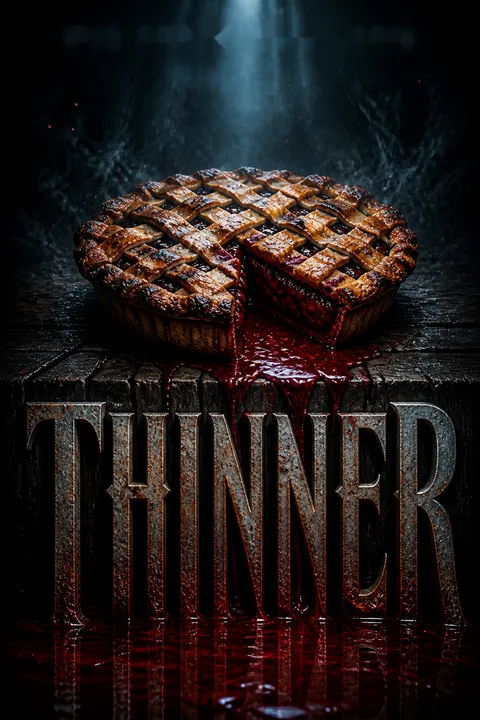


Plot Summary
A Curse at the Courthouse
Before the accident, Fairview’s police chief, Duncan Hopley, had driven a visiting Gypsy band from the town common, treating their presence as an offense against local respectability. Days later, Billy Halleck, an affluent lawyer, struck and killed Susanna Lemke while driving home with his wife, Heidi. Distracted by Heidi’s unexpected sexual advances, he failed to stop in time.
His friend Judge Cary Rossington presided over the hearing, overlooked the conflict of interest, and dismissed the case without a breath test. Outside the courthouse, Susanna’s father, Taduz Lemke, touched Billy’s cheek and pronounced a curse. Billy returned to his comfortable family life, but the old man’s touch and one word stayed with him.
The accident is both an individual failure of attention and the culmination of a town’s habit of deciding whose safety matters. Billy’s distraction does not erase his responsibility, just as Susanna’s crossing outside a crosswalk does not make her death deserved. Yet the courtroom converts unequal power into apparent innocence: Billy receives a friend’s leniency while the Gypsy family has already been treated as unwelcome. Taduz’s curse enters this moral vacuum as an answer to injustice, but its bluntness foreshadows that punishment will not be the same thing as repair.
The Scale Stops Lying
At Mohonk, where Billy and Heidi celebrate their marriage, she notices that he is visibly smaller despite his unchanged appetite. A penny-operated fortune machine confirms the change with a startling number and the same ominous word Taduz used.
Back in Fairview, Billy’s bathroom scale shows another loss, and Heidi insists he see their doctor. Michael Houston finds no signs of cancer and initially suggests that exercise or a faster metabolism could explain the change. Billy wants to believe him.
But the pounds keep disappearing, his clothes loosen, and even a heavy breakfast cannot alter the reading. When Billy’s belt reaches its final hole, the physical evidence defeats his explanations: whatever is happening is accelerating, and ordinary medical reassurance cannot account for it.
The scale becomes a domestic instrument of knowledge: Billy can dispute his wife, his doctor, and his own guilt, but not the changing fit of his clothes. His first response is not heroic resistance but selective perception, the same self-protective habit that let him treat the accident as finished once the court dismissed it. The supernatural threat works through ordinary measurements and ordinary routines, making each attempt at reassurance feel briefly plausible and then newly humiliating. Billy’s body turns into evidence that cannot be argued out of existence.
Cary’s Skin Turns Alien
Unable to locate Cary, Billy visits the judge’s wife, Leda Rossington, and learns that Cary is at the Mayo Clinic, convinced he has cancer. Leda explains that Taduz touched Cary at a flea market after the accident. A hard patch on Cary’s chest spread into thick, cracked scales, then advanced over his face and hands despite specialists’ treatments.
Cary insists the disease has a medical explanation, but Leda believes the Gypsy’s touch caused it. Her account changes Billy’s private terror into a pattern: the judge who excused him is suffering a strange bodily punishment too. Leda blames Billy for what has happened to Cary and herself, leaving him with guilt, anger, and a growing need to find Taduz.
Cary’s transformation makes the legal system’s abstract compromise grotesquely physical. The judge who translated Billy’s conduct into a dismissed case cannot translate his own affliction into a diagnosis, while Leda is left to witness a body that resists the language of respectable medicine. Her accusation also unsettles Billy’s self-image as the lone victim of the curse. He is implicated in a chain that reaches beyond him, yet he remains tempted to treat other people’s suffering as proof that his own fate is unfair.
Hopley in the Dark
Billy tracks down Hopley, who refuses to open his door until Billy admits that he believes Taduz cursed them. Inside the darkened house, Hopley reveals a face ravaged by enormous pimples and infected-looking growths. He had been touched by Taduz weeks earlier, after helping force the Gypsies out of Fairview.
Hopley also admits that he and the town’s officials pressured a farmer to evict the band, while the police failed to investigate Billy’s accident properly. Billy leaves determined to find Taduz and explain his share of the blame. During Billy’s subsequent stay at the Glassman Clinic, Hopley dies by suicide. Houston presents the death as the result of depression and ordinary acne, but Billy reads it as another consequence of the curse.
Hopley’s confession complicates the comforting idea that blame belongs neatly to one person. He did not kill Susanna, but he helped create the conditions in which her family was pushed from place to place, then helped protect Billy from scrutiny. His ruined face makes this complicity impossible to keep abstract. His suicide also reveals how institutions can fail twice: first through the harm they enable, then through the explanations they use to contain what they cannot understand. Billy’s pursuit begins as self-preservation, but Hopley’s account gives it a moral dimension.
Fairview Turns Against Billy
At the Glassman Clinic, specialists run tests but cannot explain why Billy continues to lose weight; they urge him to stay for more examinations, and he refuses. His daughter, Linda, has already been sent to her aunt’s because his worsening condition frightens her. Back home, Billy tells Heidi that he believes Taduz cursed him.
She and Houston dismiss the explanation as delusion, then arrange for Billy to be involuntarily committed if he returns to Connecticut. Meanwhile, Billy hires investigators through his law firm to follow the Gypsies, and calls Richard Ginelli, an old friend with criminal connections, for help if needed. When the firm’s investigator finds the band’s route north, Billy leaves Fairview to pursue Taduz himself.
Billy’s isolation is produced by more than supernatural fear. His doctors have procedures for illness but no account of his experience; his wife interprets his certainty as evidence of instability; and his daughter needs protection from a frightening household. Their reactions are understandable, yet they strip Billy of the relationships that might steady him. His decision to leave is therefore both an act of agency and an escape from accountability at home. By asking Ginelli for help, he trades institutional authority for loyalty that is more personal and far more dangerous.
North Along Route One
Billy follows the Gypsy band’s trail through New England and into Maine, moving from one coastal town to the next with photographs supplied by the investigators. At Old Orchard Beach, bartender Timmy introduces him to Lon Enders, an aging carnival worker who remembers the group. Enders recognizes Taduz in the photograph and says the old man looks exactly as he did when the Gypsies visited decades earlier.
He saw the band leave north toward Rockland or Boothbay Harbor. Billy continues along the coast, asking gas-station attendants and farmers for sightings. The repeated pattern of short camps and local expulsions narrows the search. In Bar Harbor, an ice-cream vendor confirms the Gypsies are nearby, camped on a farmer’s field outside town.
The road pursuit turns Billy’s private obsession into a social map. The band is visible wherever it goes, yet each town remembers it chiefly as a nuisance to be moved along. Enders’s recognition of Taduz’s unchanged face adds a measure of supernatural time to this familiar cycle of exclusion. Billy, meanwhile, is forced to experience the public gaze that once belonged to the Gypsies: strangers stare at his shrinking body, and he understands how quickly a person becomes an exhibit when the body violates expectation.
Gina’s Slingshot
Billy finds the camp at night and steps into its circle of vehicles and firelight. Gina Lemke, Taduz’s great-granddaughter, recognizes him as the man who killed Susanna and spits at him before accusing him of murder. Billy tells Taduz that blame is shared among himself, Heidi, the judge, Hopley, and Susanna, who crossed mid-block.
Taduz rejects this accounting and says he has already punished the judge and the police chief. When Billy demands that the curse be removed, Taduz refuses. Gina fires her slingshot, sending a steel ball through Billy’s palm. Samuel Lemke and another young man drag him from the camp. Billy climbs back to his car injured and exhausted, still losing weight, with no promise of relief.
Billy arrives hoping that confession will make the moral ledger balance, but Taduz rejects the premise that grief can be settled by distributing blame. The encounter exposes their incompatible ideas of justice: Billy seeks a limit, a point at which punishment can stop; Taduz sees no such limit after a life of persecution and the death of his daughter. Gina’s attack makes the dispute bodily and immediate. Billy’s wound is not only a failed negotiation; it is the first proof that the feud can produce fresh victims even while claiming to answer an old one.
Ginelli Raises the Stakes
Bleeding and in severe pain, Billy calls Ginelli, who sends a former doctor to treat his hand and then comes to Maine himself. Ginelli believes what Billy tells him and sets out to frighten the Gypsies into reconsidering. He poisons their fighting dogs, then uses gunfire to wreck vehicles and scatter the camp without deliberately shooting anyone.
A young man Ginelli hired to follow the band is found dead, apparently killed by a slingshot and marked with a warning. Ginelli hides the body and returns posing as an FBI agent. He isolates Gina, tricks her with Pepsi presented as acid, and threatens her family until she agrees to carry a message to Taduz. The old man will meet Billy in Bangor.
Ginelli’s loyalty offers Billy companionship, but it arrives in the form Ginelli knows best: calculated intimidation. The escalating tactics make the promise of controlled violence increasingly fragile. Ginelli avoids directly killing the Gypsies, yet poisoning their dogs, terrorizing the camp, and manipulating Gina reproduce the coercion Billy claims to oppose. The dead tracker demonstrates that Taduz’s people are not passive targets. By the time a meeting is secured, Billy has gained access to the old man at the cost of making the conflict more dangerous for everyone around them.
Blood Into the Pie
In a Bangor park, Taduz brings Billy a strawberry pie and explains that the curse is a living thing, not a simple spell. To remove it from his body, Billy must bleed into the pie, then ensure someone else eats it before the curse returns to him more strongly. Taduz also reveals that Cary died after jumping from a window at the Mayo Clinic.
Billy cuts open the wound Gina made in his hand and lets his blood enter the pie. The wound closes, his heart steadies, and the wasting stops. Taduz gives him the pie and warns him to choose carefully who eats it. Billy leaves carrying the warm, faintly pulsing dessert, now responsible for deciding where the curse goes next.
The cure is structured as a transfer of responsibility, not a restoration of innocence. Billy can remove the curse from his own body only by placing its consequences in another person’s reach. The pie makes that bargain intimate: harm becomes food, and survival depends on an act that may look like hospitality. Taduz’s description of the curse as a living child unsettles Billy’s wish to treat it as an external punishment that can simply be switched off. The ritual offers relief, but it does not offer a morally clean exit.
Ginelli’s Hand in the Car
Billy reaches Ginelli’s car expecting to find his friend, but discovers a severed hand on the seat, its palm packed with ball bearings. He covers it with a map, drives away, and later learns from a newspaper that Ginelli was shot dead and had a hand removed; the report suggests a gangland killing but cannot establish who did it.
Billy destroys evidence linking himself to the car and takes a cab to another motel. The pie remains with him. He calls Heidi and says he is coming home, while asking her to cancel the order that could have him committed. His relief from the curse has not restored his trust, and Ginelli’s death leaves the pie as the dangerous legacy of their alliance.
Ginelli’s death gives the story’s revenge logic a cost that cannot be folded into Billy’s recovery. Billy’s friend acted from loyalty, but his methods helped provoke a retaliation whose authorship remains uncertain. Billy responds with practical concealment rather than public mourning, a sign of how thoroughly crisis has narrowed his choices. The pie now carries both Taduz’s curse and the residue of Ginelli’s intervention. Billy has escaped one bodily sentence, but the means of escape keeps him entangled in the violence he hoped to end.
The Pie Comes Home
After several days recovering and gaining a little weight, Billy drives back to Fairview with the pie. He tells Heidi that his meeting with Taduz proved the curse was a delusion, concealing what really happened. He gives her the strawberry pie as a peace offering and goes upstairs, believing Linda is still with her aunt. In the night, he hears Heidi cut and eat a slice.
The next morning he notices Linda’s brush, suitcase, and roses: she returned early to reconcile with her mother, and the two women shared the pie. A quarter is gone. Billy understands that his daughter may now carry the curse, but the final action leaves him with no easy choice. He takes out a plate and cuts himself a slice.
The ending converts a cure into an act of compromised care. Billy brings the pie home to restore his marriage, but he hides its origin and gives Heidi no chance to choose knowingly. Linda’s return makes the consequences sharper: the family reunion he wanted has placed his daughter within reach of the same danger. His decision to cut a slice for himself can be read as an attempt to absorb the threat, as resignation, or as the repetition of his earlier self-deception. The novel ends before any interpretation can become certainty.
Analysis
Thinner sets two kinds of accounting against each other. Billy trusts the legal system to decide what he owes, and Judge Rossington turns that expectation into a technical acquittal. Taduz, whose family has repeatedly been displaced by people with more power, rejects the idea that official procedure can settle the death of his daughter. Neither system offers repair. The curse makes this failure visible through bodies: Billy’s weight vanishes, Cary’s skin changes, and Hopley’s face becomes a landscape of disease. Yet supernatural punishment does not create a clean moral balance. Taduz’s retaliation injures people who did not kill Susanna, and Ginelli’s counterattack adds a dead outsider to the chain.
Billy’s central conflict is therefore not simply belief versus skepticism. He must decide what responsibility means when causation is shared and no explanation can undo a death. His early habit is to distribute blame until it feels manageable: Heidi distracted him, Susanna crossed unsafely, the judge protected him, and Hopley expelled the Gypsies. Each claim contains some truth, but together they become a defense against choosing what to do now. The pie makes that avoidance impossible. Billy’s survival depends on transferring the curse, which turns care and hospitality into possible instruments of harm. When he gives it to Heidi without telling her what it is, his wish to return to family life repeats the very concealment that helped create the crisis.
The story’s ending refuses a comforting verdict. Linda has also eaten the pie, and Billy cuts a slice for himself, but the consequences remain unseen. That uncertainty is more than a horror cliffhanger: it tests whether Billy has learned to accept a burden or merely found another way to pass it along. His body can recover; the moral problem cannot be weighed away.
Review Summary
Thinner received mixed reviews but was generally well-liked. Readers praised its creepy atmosphere, vivid descriptions, and compelling characters, particularly Ginelli. The story's pacing and character development were criticized by some. Many found the premise intriguing and the ending shocking. Readers appreciated King's exploration of guilt, justice, and human nature. Some felt the portrayal of Romani people was stereotypical. Overall, the book was considered a quick, entertaining read with elements of body horror and psychological thriller.
People Also Read









Characters
Billy Halleck
The shrinking lawyerBilly is a successful Connecticut lawyer, husband to Heidi, and father to Linda. Before the accident, he relies on charm, professional confidence, and the comforts of affluence to keep anxiety at bay. His weight is both a physical fact and a refuge from harder questions about health, privilege, and responsibility. When his body begins to change, his legal instincts turn inward: he reconstructs events, weighs evidence, and searches for a defensible account of guilt. His struggle is not simply to survive but to decide whether explanation can absolve him. Beneath his sarcasm and appetite is a man capable of tenderness, though fear repeatedly narrows that tenderness into resentment.
Heidi Halleck
Billy’s frightened partnerHeidi is Billy’s wife and Linda’s mother, a smoker who shares with Billy a comfortable suburban life and a long history of affectionate friction. She worries about Billy’s weight before it becomes a supernatural crisis, and her attention to his body is practical as well as intimate. When he begins to deteriorate, she tries to keep the family functioning, but fear pushes her toward medical explanations and decisions made without his trust. Heidi is neither simply an antagonist nor a source of comfort: she loves Billy, yet cannot easily face her own part in the accident or accept an account that threatens her sense of reality.
Linda Halleck
The family’s clear-eyed daughterLinda is Billy and Heidi’s fourteen-year-old daughter, a junior-high student and cheerleader. She is affectionate with her father and more perceptive than the adults sometimes expect, especially when she asks him to explain the Gypsies’ expulsion from Fairview. Schoolmates’ teasing after the accident exposes her to a family shame she did not create. Linda’s needs are those of a young person trying to maintain ordinary friendships and a sense of safety while her parents manage a crisis badly. Her blunt humor and loyalty give Billy a reason to keep going, but she is also vulnerable to the consequences of decisions made by adults.
Taduz Lemke
The ageless patriarchTaduz is Susanna Lemke’s father and the elderly head of the traveling Gypsy band. His ravaged nose marks him as an object of fear to outsiders, but his composed manner and authority within the camp suggest a long life spent reading danger before it arrives. He remembers the repeated pattern of towns taking what they want from Gypsies and then forcing them onward. His response to Susanna’s death is shaped by grief, inherited persecution, and a conviction that justice must be enacted when institutions refuse it. He is perceptive about other people’s motives, but his certainty that punishment can answer injustice makes him dangerous.
Richard Ginelli
Billy’s dangerous allyGinelli is a New York underworld figure and an old friend of Billy’s, known for his restaurant ties and his comfort with criminal business. He once urged Billy to keep his distance so a connection to organized crime would not damage his legal career. Practical, observant, and loyal, Ginelli trusts what he can see more than what respectable people say they believe. His affection is expressed through action, but his ideas of protection come from a world where intimidation and force are familiar tools. He brings Billy the companionship he lacks at home while making the consequences of their conflict harder to control.
Cary Rossington
The compromised judgeCary is a local judge, Billy’s golfing and poker companion, and Leda’s husband. He presides over Billy’s hearing despite their friendship, helping turn a serious death into a case the town can put aside. His standing in Fairview rests on wealth, connections, and the authority of the bench. Cary’s confidence in familiar systems makes it difficult for him to consider explanations outside medical and legal convention. His choices connect private friendship to public power, and his marriage to Leda reveals the strain beneath his polished social position.
Leda Rossington
Cary’s isolated wifeLeda is Cary’s wife, a socially polished woman who has spent decades beside a powerful man and learned to conceal dissatisfaction beneath impeccable manners. When Cary becomes ill, she is both his witness and the person most frightened by what his body is becoming. Her account gives Billy crucial information, but her grief comes mixed with anger at the people who allowed the crisis to begin. Leda’s drinking and candor expose the loneliness hidden inside Fairview’s wealth, while her fear of being touched shows how bodily change can fracture even a long marriage.
Duncan Hopley
Fairview’s enforcing chiefHopley is Fairview’s police chief, a forceful official who helps move the Gypsy band out of town and protects the town’s preferred version of events after Susanna is killed. He understands how local businesses, landowners, and police can apply pressure without making the coercion look formal. His work reflects institutional habit more than a carefully examined moral code. Beneath his authority is a man aware that his actions have consequences, but who has spent years treating displacement and favoritism as routine.
Michael Houston
The confident family doctorHouston is the Hallecks’ family physician, a country-club regular whose confidence in medical reasoning is matched by a casual, sometimes reckless manner. He initially investigates Billy’s weight loss and finds no ordinary evidence of cancer, then relies on explanations that fit his professional worldview. Houston’s cocaine use and social ease complicate his authority without making him incapable of care. He prefers conditions that can be named, tested, and treated, so Billy’s case becomes a challenge to both his expertise and his self-image.
Gina Lemke
The fierce young marksmanGina is Taduz’s great-granddaughter and Samuel’s sister. She performs slingshot target shooting and is admired for her beauty, but her competence and anger are more important than the attention she draws. She sees Billy through the fact of Susanna’s death and has little patience for his explanations of shared responsibility. Her education and correspondence course suggest an individual ambition that exists alongside her loyalty to the band. Gina’s sharpness reflects a life in which outsiders often approach her family with prejudice, appetite, or threat.
Samuel Lemke
Gina’s protective brotherSamuel is Gina’s brother, a young performer who juggles clubs and helps sustain the band’s public acts. He is physically capable and quick to defend his family, especially when Billy appears at the camp. His anger is direct, but it sits within a community that has learned to expect police pressure and sudden danger. Samuel’s role ties the band’s everyday life to its defensive posture: entertainment and hospitality can turn quickly into vigilance when outsiders arrive.
Kirk Penschley
Billy’s firm’s investigatorKirk is Billy’s colleague at the law firm, a sharp and persistent lawyer who can organize investigators and trace the Gypsy band’s route. He is accustomed to reading motives beneath professional conversation, but he is also part of the firm’s culture of risk management. His work helps Billy reach Maine, while his response to Billy’s increasingly alarming behavior reflects the limits of loyalty within a workplace that sees a potential crisis as a liability.
Lon Enders
The old carnival witnessLon is a retired carnival worker who has spent decades in Old Orchard Beach and remembers the transient people who return each summer. His knowledge of the boardwalk’s regulars gives Billy a lead others cannot provide. Frail and ill, Lon recognizes Taduz and points Billy toward the band’s route north.
Susanna Lemke
The woman killed by BillySusanna is Taduz’s daughter and the elderly woman Billy strikes with his car. Her death begins the story’s conflict, but she is more than the occasion for Billy’s punishment: she belongs to a family repeatedly displaced by towns that welcome Gypsy business only on their own terms.
Plot Devices
Taduz’s curse
A bodily sentenceAfter Billy is spared legal punishment, Taduz’s touch begins a supernatural chain of physical changes. Billy loses weight without changing his eating habits, while others connected to the accident develop different afflictions. Medical testing produces no clear explanation, allowing the curse to remain in tension with rational diagnosis. Taduz later describes it as a living force that can be moved into a pie through blood, but that transfer places another person at risk. The device turns revenge into a question of responsibility: escaping the curse requires deciding who may inherit it.
Scales and clothing
Proof made visibleBathroom scales, a fortune machine, shrinking waistbands, and a belt with successive holes make Billy’s decline measurable. These ordinary objects resist his attempts to explain away what is happening. Each new reading provides a temporary fact, then raises the stakes when the next one is worse. Clothing also shows how a private bodily change becomes public: Billy can no longer control how strangers see him. The recurring measurements make the supernatural threat concrete without resolving whether medical reasoning or a curse offers the better account.
Fairview’s legal protection
Privilege disguised as procedureThe hearing and the police response turn local favoritism into a mechanism of harm. Cary presides over Billy’s case despite their friendship, while Hopley and other officials help remove the Gypsies under the cover of permits and routine enforcement. The town can therefore describe its choices as neutral procedure even when power determines who receives protection and who is pushed away. This device grounds the supernatural conflict in recognizable social arrangements: the curse follows a death that the legal system has treated as closed.
The Gypsy pie
A burden passed onwardTaduz uses Billy’s blood to transfer the curse from Billy’s body into a strawberry pie. The pie is warm, pulses as if alive, and appears ordinary enough to serve as a gift or dessert. Taduz warns that the curse will return to Billy if nobody else eats it soon. This object makes the final moral danger deceptively domestic: Billy can hide it, offer it, or consume it, but none of those choices is neutral. The ending leaves the consequence unresolved after members of the Halleck family share the pie.
Ginelli’s intimidation
Violence as leverageGinelli uses criminal knowledge, staged evidence, weapons, and threats to force a meeting with Taduz. His actions echo the coercion that the Gypsies have encountered from town authorities, though Ginelli believes he is protecting his friend. The escalation produces a dead tracker and leaves the camp fearful, demonstrating how quickly retaliation creates new targets. Ginelli’s methods advance the plot while exposing the danger in treating fear as a reliable instrument of justice.
FAQ
Synopsis & Basic Details
What is Thinner about?
- Supernatural curse takes hold: A successful lawyer, Billy Halleck, is cursed by a Gypsy after accidentally killing an old woman, causing him to lose weight rapidly and inexplicably.
- Desperate search for answers: As his health deteriorates, Billy seeks help from both conventional and unconventional sources, leading him on a desperate quest to reverse the curse.
- Confrontation with dark forces: The story explores themes of justice, guilt, and the supernatural, as Billy confronts the consequences of his actions and the power of the curse.
Why should I read Thinner?
- Unique blend of horror: Thinner combines elements of body horror, psychological thriller, and supernatural suspense, creating a truly unsettling reading experience.
- Exploration of complex themes: The novel delves into themes of guilt, justice, and the consequences of one's actions, prompting readers to reflect on their own moral compass.
- Fast-paced and gripping narrative: Richard Bachman's writing style keeps readers engaged with a fast-paced plot and a sense of impending doom, making it a page-turner.
What is the background of Thinner?
- Cultural clash: The story explores the clash between the modern, affluent world of Fairview and the ancient, nomadic culture of the Gypsies, highlighting societal prejudices and misunderstandings.
- Supernatural horror roots: The novel draws on classic horror tropes, such as curses and supernatural retribution, while grounding them in a contemporary setting.
- Personal responsibility: The narrative examines the theme of personal responsibility, as Billy is forced to confront the consequences of his actions and the choices he has made.
What are the most memorable quotes in Thinner?
- "Thinner,": This single word, whispered by the old Gypsy, becomes a chilling mantra, symbolizing the relentless nature of the curse and Billy's impending doom.
- "You die thin, town man!": This line, spoken by Taduz Lemke, encapsulates the vengeful nature of the curse and the inevitability of Billy's fate.
- "No poosh, not never!": This phrase, repeated by Lemke, highlights the Gypsy's belief in absolute justice and the futility of trying to escape one's fate.
What writing style, narrative choices, and literary techniques does Richard Bachman use?
- Fast-paced and direct prose: Bachman employs a straightforward, no-frills writing style that keeps the story moving at a brisk pace, mirroring Billy's desperate race against time.
- First-person limited perspective: The story is told from Billy's point of view, allowing readers to experience his growing fear and desperation firsthand, while also creating a sense of unreliable narration.
- Foreshadowing and symbolism: Bachman uses subtle foreshadowing and recurring symbols, such as the word "thinner" and the image of the old Gypsy, to create a sense of unease and impending doom.
Hidden Details & Subtle Connections
What are some minor details that add significant meaning?
- The Niques belt: Billy's belt, a gift from his daughter, becomes a physical representation of his weight loss, with each new hole marking a stage in his terrifying transformation.
- The penny weighing machine: The penny scale in New Paltz, which reveals the word "THINNER" as Billy's fate, serves as a turning point, confirming the supernatural nature of his predicament.
- The recurring thud: The double-thud sound, associated with the accident, haunts Billy, symbolizing his guilt and the inescapable nature of his past actions.
What are some subtle foreshadowing and callbacks?
- Heidi's handjob: The seemingly random act of Heidi giving Billy a handjob while driving foreshadows the accident and the subsequent curse, highlighting the role of chance and consequence.
- The mention of Ginelli: Billy's initial thought of Ginelli when faced with the possibility of a vehicular manslaughter charge foreshadows his later reliance on his underworld connections.
- The description of the Gypsies: The initial description of the Gypsies at the town common foreshadows their later role in Billy's life, highlighting their otherness and the fear they inspire.
What are some unexpected character connections?
- Billy and Ginelli: The unlikely friendship between a lawyer and a gangster reveals a shared sense of loyalty and a willingness to challenge societal norms.
- Billy and Leda Rossington: The connection between Billy and Leda, the judge's wife, highlights the shared suffering caused by the curse and the desperation it creates.
- Billy and Duncan Hopley: The parallel between Billy and Hopley, both victims of the curse, reveals the far-reaching consequences of their actions and the futility of trying to escape their fate.
Who are the most significant supporting characters?
- Richard Ginelli: Ginelli's underworld connections and loyalty provide Billy with a lifeline, highlighting the importance of friendship in the face of adversity.
- Leda Rossington: Leda's knowledge of the Gypsies and her husband's condition provides Billy with crucial information, revealing the extent of the curse's reach.
- Dr. Michael Houston: Houston's inability to explain Billy's condition underscores the limitations of conventional medicine and the power of the supernatural.
Psychological, Emotional, & Relational Analysis
What are some unspoken motivations of the characters?
- Heidi's guilt: Heidi's actions are driven by a deep sense of guilt over her role in the accident, leading her to both support and undermine Billy's efforts to find a solution.
- Lemke's desire for justice: Lemke's actions are motivated by a desire for justice for his daughter's death, but also by a need to assert his power and control over those who have wronged him.
- Ginelli's loyalty: Ginelli's willingness to help Billy stems from a deep sense of loyalty and a desire to protect his friend, even at great personal risk.
What psychological complexities do the characters exhibit?
- Billy's denial: Billy's initial denial of the curse and his attempts to rationalize his weight loss reveal his struggle to accept the supernatural and his own culpability.
- Heidi's fear and desperation: Heidi's emotional turmoil is evident in her attempts to control Billy's actions and her desperate search for a solution, highlighting her fear of losing him.
- Lemke's stoicism and rage: Lemke's seemingly calm demeanor masks a deep-seated rage and a desire for revenge, revealing the complexities of his character and the weight of his past.
What are the major emotional turning points?
- The penny scale: The moment when Billy sees the word "THINNER" on the penny scale marks a turning point, forcing him to confront the supernatural reality of his situation.
- The discovery of Rossington's condition: The revelation that Rossington is also suffering from the curse intensifies Billy's fear and desperation, highlighting the far-reaching consequences of his actions.
- The encounter with Hopley: The encounter with Hopley, who is also suffering from the curse, underscores the inevitability of their fate and the futility of trying to escape it.
How do relationship dynamics evolve?
- Billy and Heidi's strained marriage: The curse puts a strain on Billy and Heidi's marriage, as they struggle to communicate and understand each other's fears and motivations.
- Billy and Linda's bond: Billy's relationship with his daughter, Linda, becomes a source of both comfort and guilt, as he tries to protect her from the truth while also seeking her support.
- Billy and Ginelli's friendship: The unlikely friendship between Billy and Ginelli deepens as they face danger together, highlighting the importance of loyalty and trust in the face of adversity.
Interpretation & Debate
Which parts of the story remain ambiguous or open-ended?
- The nature of the curse: The exact nature of the curse and its origins remain ambiguous, leaving readers to question the extent of the supernatural and the role of human agency.
- The effectiveness of the "cure": The effectiveness of the pie as a means of transferring the curse is left open to interpretation, raising questions about the nature of justice and retribution.
- The ultimate fate of the characters: The ultimate fate of Billy and the other characters is left somewhat ambiguous, leaving readers to ponder the long-term consequences of their actions and the power of the curse.
What are some debatable, controversial scenes or moments in Thinner?
- Heidi's actions: Heidi's decision to give Billy a handjob while driving, which leads to the accident, is a controversial moment that raises questions about her culpability and the nature of responsibility.
- Ginelli's methods: Ginelli's violent methods and underworld connections raise questions about the morality of his actions and the extent to which the ends justify the means.
- The transfer of the curse: The act of transferring the curse to another through the pie is a morally ambiguous moment that forces readers to confront the dark side of human nature and the lengths one will go to survive.
Thinner Ending Explained: How It Ends & What It Means
- The curse is transferred: Billy, desperate to survive, transfers the curse to a pie, which he then gives to Heidi, highlighting the cyclical nature of violence and retribution.
- A chilling sense of inevitability: The ending leaves readers with a sense of unease and the realization that some burdens cannot be easily shed, and the price of survival can be steep.
- The cycle of violence continues: The ending suggests that the cycle of violence and retribution will continue, as the curse is passed on to another, leaving readers to ponder the nature of justice and the human capacity for both good and evil.


Download PDF
Download EPUB
.epub digital book format is ideal for reading ebooks on phones, tablets, and e-readers.








