

Plot Summary
Prologue
At eleven, Thad Beaumont begins hearing phantom sparrows before blinding headaches and a seizure. Surgeons open his skull expecting a tumor and find pieces of another body growing inside his brain: an eye, teeth, fingernails, and other tissue left behind when Thad absorbed his twin before birth.
They remove the mass, and the birds fall silent. Thad recovers and becomes a writer. Years later, he remembers the operation only as a frightening brush with death, unaware that his childhood illness, the sparrows, and the other life once inside him are still connected.
The prologue makes Thad’s talent inseparable from an early bodily mystery. The surgery appears to resolve the danger by cutting away the evidence of his twin, but it cannot erase the history that produced it. The sparrows function first as a medical warning, then as a memory Thad has learned to distrust. His parents’ unequal responses also establish the emotional conditions surrounding his identity: his mother treats his writing as promise, while his father dismisses it. The opening therefore frames authorship as more than a career. It grows from a body already marked by an unacknowledged second self.
Stark Gets Buried
By 1988, Thad Beaumont has written four successful crime novels as George Stark while his own literary career has stalled. Frederick Clawson, a law student who traces the pseudonym to Thad, tries to turn the secret into money and a writing career of his own. Thad and his wife, Liz, decide to end the deception publicly rather than pay him.
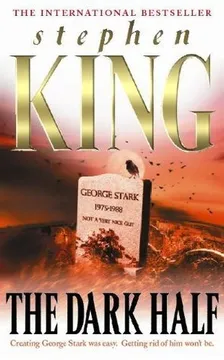
A magazine profile stages the announcement with a fake grave for Stark, complete with dates and an epitaph. The joke unsettles Thad more than he admits. That night he dreams that Stark leads him through his empty summer house, where every object he touches breaks and Liz lies dead.
The staged burial gives Thad a public ritual for separating himself from the work that rescued his career, but it also exposes how much he has invested in Stark as an identity. Clawson’s blackmail makes secrecy untenable; choosing publicity lets Thad reclaim the story, yet the magazine’s artificial grave turns that choice into spectacle. His laughter over the photograph coexists with dread, suggesting that the performance of control cannot settle the private question of who Stark is. The nightmare makes authorship feel less like disguise than occupancy: the supposedly discarded persona already seems to have a claim on Thad’s home and family.
A Grave Opens
At Homeland Cemetery, groundskeeper Digger Holt finds the plot used for the magazine photograph torn open. The hole is too deep and irregular to look like an ordinary prank, and the marks in the damp soil suggest someone climbed out with bare hands. Digger fills it in, then learns that Homer Gamache, an elderly local man with a prosthetic arm, has been found brutally beaten beside a road.
Sheriff Alan Pangborn discovers that Homer’s truck has been stolen. Police later find the killer’s prints in blood and gum, unusually clear and apparently identical to Thad’s. The staged grave has become a crime scene, and the killer seems to have left evidence pointing directly at its living subject.
The grave’s transformation from prop to apparent point of escape collapses the distance between publicity and physical danger. Digger reads the soil with practical expertise, yet what he sees exceeds his ordinary explanations. Homer’s murder gives that uncanny sign a human cost and draws the police into a case where evidence appears both precise and impossible. The fingerprints seem to solve the crime while making the solution less credible: they do not merely implicate Thad, they reproduce him. The section’s tension comes from the collision of material proof and an identity that should exist only on a book jacket.
The Prints Match
Pangborn and state troopers arrive at Thad and Liz’s home to question him about Homer’s murder. Thad is shaken to learn Homer is dead, but his account of a university retirement party places him in Ludlow during the killing. The guests confirm it. The investigation grows stranger when Pangborn reveals that the same fingerprints connect Thad to Frederick Clawson’s mutilated body in Washington.
Clawson had been killed after Thad went public, and the scene bears the cruel theatricality of a Stark novel. Liz explains how Clawson uncovered the secret and tried to profit from it. Pangborn cannot make the alibi and evidence agree, so he returns seeking Thad’s help rather than making an arrest.
The alibi establishes Thad’s innocence in the ordinary legal sense, but it cannot explain why his identity appears at two murder scenes. Pangborn’s investigation is therefore caught between competing forms of knowledge: verifiable witnesses support Thad, while forensic evidence insists on his guilt. Clawson’s death also converts the blackmail plot into something more intimate. The killer has not simply punished a betrayer; the staged mutilation borrows the emotional grammar of Stark’s fiction. Liz’s account restores Clawson’s motive without making him sympathetic, while Pangborn’s return marks the beginning of an uneasy alliance built on shared uncertainty.
The Sparrows Return
Pangborn brings Thad and Liz the details of Clawson’s murder, including a phrase written at the scene in blood about sparrows flying again. Thad recognizes the image from childhood: sparrow sounds once preceded his headaches and brain surgery. Now the phantom chirping returns, though no headache follows.
In his study, Thad slips into a brief trance and writes the same warning across his manuscript without remembering doing it. He hides this from Pangborn, fearing the sheriff will interpret it as guilt or madness. Liz notices his reaction and presses him until he explains the childhood symptoms. Thad’s past has re-entered the case, but he still cannot say how.
The returning birds change the murders from a forensic puzzle into a crisis of memory. Thad’s involuntary writing precedes any conscious explanation, suggesting that knowledge can arrive through him without feeling like his own. His decision to conceal the page is understandable, but it repeats the secrecy that made Stark possible: he tries to manage danger by withholding information from the people closest to him. Liz’s insistence forces the private symptom into the marriage, where it becomes a shared fear rather than Thad’s solitary secret. The scene makes uncertainty active: he does not know what the sparrows mean, but he knows they have returned for a reason.
Miriam Calls Home
George Stark breaks into the New York apartment of Miriam Cowley, the former wife and business partner of Thad’s literary agent, Rick. He forces Miriam to call Thad, then cuts her throat after she identifies herself and begs for help. Thad hears the attack but cannot keep her on the line.
He fights through panic, gives Pangborn Miriam’s address, and describes the assailant. Pangborn immediately alerts New York police and arranges protection for Rick and the magazine staff connected to Thad’s public exposure. When the news comes back, Miriam is dead. Thad’s disturbing sense that he somehow witnessed the attack now has a name and a consequence he cannot undo.
Miriam’s call turns Thad’s strange foreknowledge into an immediate moral burden. He cannot prevent the violence, but his ability to describe what is happening lets him mobilize Pangborn faster than a conventional report might. The difference between knowledge and control becomes painful: Thad seems connected to the killer’s actions, yet connection gives him no reliable power to stop them. His panic also exposes how fragile competence becomes under threat. Pangborn’s calm response gives the scene a practical counterweight, converting fear into action, but the later confirmation of Miriam’s death leaves Thad with the knowledge that urgency is not the same as rescue.
New York Becomes His Novel
Stark murders Mike Donaldson, the journalist who reported Thad’s secret, then attacks photographer Phyllis Myers and the two officers guarding her. He also kills Darla Gates, the former Darwin Press employee whose leak helped Clawson identify Thad. Rick Cowley survives the first wave under police protection, but Stark traps his apartment door with an explosive device.
When Rick returns with officers, the blast kills him and two technicians. Stark then phones Thad, falsely claiming the killings are over and that he no longer believes himself to be George Stark. Pangborn’s team records the call, but Thad knows the killer is lying. The citywide manhunt has not stopped Stark from choosing the next move.
Stark’s attacks turn the publicity trail into a literal list of people to erase. Each victim has a distinct connection to the revelation of his identity, so the violence resembles a grotesque effort to reverse public knowledge by punishing its messengers. The recorded call adds a different weapon: Stark manipulates the authorities’ need for a rational explanation, offering them a version of events they are ready to accept. Thad’s certainty exceeds the evidence available to Pangborn, isolating him even as his connection gives him insight. Rick’s death also removes a trusted professional ally, narrowing Thad’s world to Liz, the children, and a sheriff who still doubts what he knows.
Twins Share the Bruise
Thad’s medical scans show no returning tumor, but his trances and bird warnings continue. After Stark demands that he write another novel, infant Wendy tumbles from a stair and bruises her thigh. Soon Thad and Liz find an identical bruise on Wendy’s twin brother, William, though William never fell.
Thad recognizes a pattern in the matching marks and tests the connection through automatic writing. His hand begins recording Stark’s thoughts; when Stark resists, each man drives a writing instrument into his own hand, and Thad feels the corresponding injury. The link is no longer just evidence left at murder scenes. Stark can reach Thad, and Thad can reach Stark.
The twins’ shared bruise gives Thad a domestic, observable model for the impossible connection haunting him. William’s injury cannot be explained by imitation or coincidence, so the children’s bodies make a private theory visible. Thad’s experiment turns that discovery into danger: writing becomes a channel through which one mind can invade and injure the other. The parallel wounds suggest intimacy without consent, a bond that neither man can simply declare or dismiss. His insight carries a cost, but it also gives him a form of leverage. For the first time, the connection is not only Stark’s advantage.
The Family Is Taken
On the day Thad misses Stark’s deadline, he goes to the university while state police follow him. Stark reaches the Beaumont house, kills the officers assigned there, and abducts Liz, William, and Wendy. At Thad’s office, an involuntary trance makes him type a warning that his family has been taken.
He telephones home from a public phone and learns Stark is holding them at the summer place in Castle Rock. Liz secretly uses their old code about Aunt Martha to tell Thad where they are, but Stark hears enough to question him. Thad invents a false meaning and persuades Stark that she has not passed along a plan. He must now reach the lake without alerting either Stark or his escort.
The abduction converts the struggle over authorship into a direct threat against Thad’s family, stripping away the fantasy that he can keep Stark contained through silence or delay. His involuntary typing provides warning but not protection; the message arrives after the violence has begun. Liz’s coded signal shows that their marriage remains a working partnership under coercion, while Thad’s quick deception demonstrates a new willingness to manipulate Stark rather than merely endure him. That choice is morally precarious because the children are being used as leverage. Yet it marks an important shift: Thad begins acting strategically in a situation where every available action carries risk.
A Junkyard Escape
Thad uses a milk truck’s passage at a busy intersection to lose his police escort, then hides his conspicuous Suburban among wrecks at Gold’s auto junkyard. Sparrows gather across the rusted cars, and when they take flight toward Castle Rock, Thad senses Stark probing his mind.
He phones Rawlie DeLesseps, the university folklorist, who lends him an aging Volkswagen, a Red Sox cap, sunglasses, and an old bird-call. Rawlie also explains that folklore names sparrows as guides for the living dead. Thad reaches a massive silent flock at the road to the lake. The birds part beneath the Volkswagen’s wheels, allowing him to pass into the territory surrounding his family’s summer house.
The junkyard makes Thad’s escape a passage through discarded identities: he abandons the vehicle associated with his ordinary life and borrows Rawlie’s nearly worthless car instead. The sparrows turn the landscape into an active threshold, not merely a symbol in Thad’s mind. Rawlie’s folklore gives the birds a possible function, but it does not make them safe or obedient. His practical gifts matter as much as his interpretation: the borrowed car offers concealment, while the bird-call becomes a tool Thad may use later. This section moves Thad from helpless observation toward deliberate action, though the forces he invokes remain larger than his understanding.
Pangborn Finds the Twin
As Thad travels toward Castle Rock, Pangborn learns from retired neurosurgeon Hugh Pritchard what the 1960 operation actually removed. Thad’s apparent tumor was the remains of an absorbed twin, tissue that had begun growing inside his brain when he was eleven. Pritchard also recalls a real sparrow flock striking the hospital after the operation.
Separately, local farmer Fuzzy Martin reports a black Toronado with Mississippi plates leaving his locked barn, matching Thad’s earlier description of Stark’s car. Pangborn realizes the killer is not Thad and drives alone toward the lake. He sneaks through the woods, but Stark catches him at gunpoint and forces him down to the house.
Pritchard’s account supplies a biological history without reducing the supernatural events to a simple diagnosis. The twin was physically real, but the murders, birds, and matching identities exceed what the operation can explain. The hospital flock binds the present crisis to Thad’s childhood, turning an old coincidence into a recurring pattern. Fuzzy’s observation offers a second kind of confirmation: an object Thad described exists independently of his story. Pangborn’s decision to approach alone is both courageous and reckless, born of a new willingness to trust the evidence that official procedure cannot interpret. His capture places him inside the danger he had been investigating.
The Lake House Bargain
Stark holds Liz, the twins, and Pangborn at the summer house and demands that Thad help him begin a new Alexis Machine novel. Thad arrives through the sparrow-covered road, and Pangborn tells him what Pritchard discovered about the twin tissue removed from his brain. Thad accepts Stark’s demand and proposes that they write together in the study, where he arranges two chairs, notebooks, and pencils.
Liz has hidden a butcher-knife but, at Thad’s insistence, throws it outside rather than risk provoking Stark. Pangborn and Liz leave the two men alone with the babies. Outside, sparrows begin gathering around the damaged house. Thad knows Stark has not noticed them, and keeps that knowledge to himself.
The bargain is not a reconciliation; it is a controlled surrender designed to buy Thad access to the struggle’s central mechanism. His willingness to write acknowledges that Stark cannot be answered by police procedure or by simple refusal. The twin revelation clarifies their shared origin but does not settle responsibility: Thad still must choose what to do with the part of himself that wants the work to continue. Liz’s knife represents the understandable desire to end the threat by force, while Thad’s decision to discard it preserves a narrower chance of protecting the children. The silent flock gives him concealed leverage, but its presence also raises the danger of relying on forces he cannot command.
The Psychopomps Carry Stark
Thad and Stark begin Steel Machine by alternating sentences in their notebooks. As Stark writes, his rotting face heals, while sores appear on Thad’s skin; the exchange is transferring more than words. Thad secretly writes that the sparrows are flying and blows Rawlie’s bird-call. The flock crashes through the house and pours into the study.
When Stark reaches for the twins, Thad strikes his wrist with a slate paperweight, then drives a pencil into Stark’s throat. The sparrows engulf Stark, peck him apart, and lift what remains through the shattered wall. Liz and Pangborn reach Thad and the children after the flock thins. A sparrow wounds Thad before leaving, an unexplained reminder that the birds exact their own price.
The writing exchange makes the novel’s central metaphor physically consequential: authorship transfers vitality, and the body records who is gaining power. Thad allows Stark to begin because the process exposes the direction of that transfer, then interrupts it with the very motif Stark cannot recognize. The sparrows are neither a clean weapon nor a tame extension of Thad; their attack protects the children but damages the house and wounds their summoner. Stark’s end therefore does not restore a simple, uncontaminated self. Thad survives with responsibility for what he created and with a fresh mark from the force that helped destroy it.
Epilogue
A passage from Thad’s novel The Sudden Dancers closes on two characters leaving a place marked by grief. In the present, Thad and Pangborn burn the ruined summer house and Stark’s Toronado, destroying evidence no ordinary investigation could explain.
The fire consumes pages covered in handwriting, while Liz and the twins wait at the top of the driveway. Pangborn is too shaken to offer easy forgiveness, and Thad accepts the distance between them. He watches the manuscript pages rise in the flames, then covers his face. The house is gone, but the memory of what came from Thad remains.
The embedded passage from Thad’s earlier novel gives the ending a literary echo, but the real resolution refuses the comfort of a neatly completed story. Burning the house and Toronado removes physical evidence, not emotional consequence. Pangborn’s refusal to immediately resume friendship makes the cost of Thad’s hidden history social as well as supernatural. Liz and the children are alive, yet survival does not automatically restore intimacy or trust. The final image of Thad covering his face suggests a writer unable to convert catastrophe into a finished explanation. His dark half is gone, but the act of creating it remains part of his life.
Analysis
The Dark Half treats authorship as a problem of responsibility rather than a simple act of self-expression. Thad creates George Stark to escape a blocked career and the burdens of his public literary identity. That division initially works: Stark writes quickly, earns money, and gives Thad a sense of freedom. But the arrangement also lets Thad describe violent creativity as someone else’s nature. When Stark becomes materially dangerous, the story asks whether the author can disown a creation that has drawn on his own body, habits, and imaginative life.
The novel refuses to reduce this conflict to a tidy psychological allegory. Pritchard’s account of the absorbed twin gives the division a physical origin, but the forensic evidence, automatic writing, and sparrow flocks exceed medical explanation. The supernatural therefore does not replace psychology; it makes inner conflict externally consequential. Thad’s creative power is both gift and hazard because imagination can produce forms that resist the maker’s later intentions.
The family scenes sharpen that argument. Liz’s vigilance and the twins’ reciprocal bond contrast with Stark’s belief that survival entitles him to dominate others. Thad’s responsibility becomes measurable in the lives of people who never chose to participate in his artistic experiment. Pangborn’s skepticism is equally important: he does not accept the impossible because Thad insists, but because accumulated evidence defeats the explanations he prefers.
The ending offers containment, not absolution. The sparrows remove Stark, and the fire destroys the house and the material record, but Thad remains answerable for the violence connected to him. The book’s deepest warning is that creative freedom cannot be preserved by pretending its products belong to someone else. A self may be divided, but consequences are shared.
Review Summary
The Dark Half receives mostly positive reviews, with readers praising King's exploration of a writer's psyche and the concept of a malevolent alter ego. Many find the story gripping and suspenseful, with George Stark emerging as a memorable villain. Some criticize the pacing and plot as predictable, but overall, readers appreciate King's storytelling and characterization. The book's connection to King's own experience with a pseudonym adds depth to the narrative. While not considered King's best work, it's still regarded as an enjoyable and thought-provoking read.
People Also Read
Characters
Thad Beaumont
The divided novelistThad is a university writing teacher and novelist whose literary ambitions have been complicated by uneven success, depression, and a lucrative crime-writing identity. He is thoughtful, often self-doubting, physically clumsy, and inclined to manage fear by analyzing it. His love for Liz and their children gives his choices a domestic urgency, while his imaginative work draws him toward experiences he cannot fully explain. Thad wants to write as himself again, but the existence of George Stark forces him to confront how much of his own capacity for violence, confidence, and creative energy he has assigned to a separate name.
George Stark
Thad’s brutal alter egoGeorge Stark is the invented author behind Thad’s best-selling crime novels and the creator of the ruthless criminal Alexis Machine. He is forceful, cunning, physically imposing, and convinced that survival justifies almost any act. Where Thad hesitates and worries about consequences, Stark treats hesitation as weakness and turns people into obstacles. His loyalty to the world of his books is genuine, as is his fear of losing the identity that gives him purpose. Stark embodies the seductive fantasy of creative freedom without responsibility, though his violence makes that fantasy impossible to romanticize.
Liz Beaumont
Thad’s clear-eyed partnerLiz is Thad’s wife and the mother of their twins. Practical, observant, and emotionally resilient, she has stood beside him through literary disappointment, depression, and the strain of raising two infants. She understands that Thad’s artistic life affects their marriage, even when he tries to explain it away as a harmless professional arrangement. Liz is protective without being passive: she notices his evasions, presses him to share what frightens him, and acts decisively when the children are threatened. Her central tension is the desire to trust her husband while recognizing that his imagination may expose the family to real danger.
Alan Pangborn
The skeptical sheriffPangborn is the sheriff investigating Homer Gamache’s murder and the first law officer to remain in close contact with Thad. He values evidence, procedure, and practical judgment, but he is not so rigid that he stops asking questions when the facts refuse to fit. His personal loyalty to his community makes Homer’s murder more than a case file. Pangborn’s experience lets him act decisively under pressure, while his skepticism forces Thad to explain the impossible in terms a rational person might test. He is also a husband and father, so the danger to the Beaumont children reaches him on a personal level.
William Beaumont
One of Thad’s infant twinsWilliam is Thad and Liz’s infant son and Wendy’s twin. He is cheerful, curious, and closely attuned to his sister, often responding to her movements and moods. His presence makes the danger at the center of the novel concrete: Thad’s choices are not only about his career or identity, but about keeping a vulnerable child safe. William’s bond with Wendy also provides the family’s most intimate picture of connection, a quiet echo of the deeper links that shape the adult characters.
Wendy Beaumont
One of Thad’s infant twinsWendy is Thad and Liz’s infant daughter and William’s twin. Energetic and eager to explore, she is still learning to crawl and stand, which leads to ordinary household hazards. Her closeness with William is apparent in their shared play and mutual responses. Wendy’s vulnerability intensifies Liz’s protective instincts and forces Thad to weigh every risk against the safety of his family. The twins are not merely stakes in the adults’ conflict; their ordinary needs and lively presence keep that conflict grounded in family life.
Rawlie DeLesseps
The folklorist with a keyRawlie is Thad’s university colleague, a pipe-smoking scholar who teaches folklore and appears more absent-minded than he is. He recognizes that Thad’s questions about sparrows are not casual and offers help without demanding a full explanation first. His knowledge of folk belief gives Thad a possible framework for understanding the birds, while his old Volkswagen and bird-call become practical resources. Rawlie’s mixture of humor, curiosity, and genuine concern makes him one of the few people willing to assist Thad before he can prove what is happening.
Hugh Pritchard
The surgeon with the historyPritchard is the retired neurosurgeon who operated on Thad when he was eleven. He is confident in his medical judgment and remembers unusual cases with a scientist’s attention to detail. His account of Thad’s childhood condition gives Pangborn a crucial piece of history, though it does not provide a complete explanation for the present crisis. Pritchard represents medicine at its most observant and its most limited: he can describe what surgeons found in Thad’s brain, but cannot settle what that discovery means for the adult man.
Frederick Clawson
The would-be exposerClawson is a law student and George Stark fan who pieces together the connection between Stark and Thad. He is ambitious, self-dramatizing, and convinced that exposing the secret will earn him money and recognition. Rather than approach Thad directly at first, he builds a case from publishing records and surveillance, then attempts to turn his discovery into a personal opportunity. Clawson’s actions force Thad to reveal the pseudonym, setting the larger events in motion.
Rick Cowley
Thad’s literary agentRick is Thad’s literary agent and a trusted professional ally who has handled both Thad’s work and the Stark novels. He understands the publishing business and supports the decision to reveal the pseudonym when Clawson makes secrecy untenable. His former marriage to Miriam remains emotionally important, and his concern for her gives the danger a personal dimension beyond his work with Thad. Rick’s practical judgment helps connect the private creative life to the public machinery of publishing.
Miriam Cowley
The agent who raises alarmMiriam is Rick Cowley’s former wife and business partner in the literary agency representing Thad. She is capable and professionally experienced, with knowledge of the publishing network surrounding Thad’s two author identities. Her connection to Rick and her role in that business place her within reach of the threat created by the exposure of Stark’s identity. Miriam’s presence also makes the publishing world feel like a community of people with histories and loyalties, not merely a system of contracts.
Homer Gamache
The murdered caretakerHomer is an older Castle Rock resident who bowls regularly, lives by familiar routines, and performs occasional repair and caretaking work for Thad and Liz. He is known in town and has a prosthetic arm from his military service. His ordinary habits and local ties make his murder especially disturbing: he is not a rival or a celebrity, but a neighbor whose familiarity with the Beaumonts links him to the case.
Digger Holt
The cemetery groundskeeperDigger maintains Castle Rock’s cemeteries and knows how disturbed earth, footprints, and damaged sod usually look. His practical reading of the opened plot gives the police an early clue that someone left it in an unnatural way.
Dolly Arsenault
The roadside witnessDolly is a local farmer who sees a suited hitchhiker enter Homer Gamache’s truck late at night. Her detailed, rambling recollection gives Pangborn a crucial lead, even though she cannot clearly identify the stranger.
Phyllis Myers
The magazine photographerPhyllis photographs Thad and Liz for the profile that turns the secret of George Stark into public spectacle. Her eye for staged images helps create the graveyard picture that becomes an unsettling emblem of Thad’s decision.
Mike Donaldson
The revealing journalistMike is the journalist who interviews Thad about the George Stark pseudonym. His article carries the story beyond publishing circles and helps make Thad’s carefully controlled disclosure a national curiosity.
Darla Gates
The publishing insiderDarla is a former Darwin Press employee whose access to company records helps Clawson confirm the connection between Thad and George Stark. Her actions reveal how small leaks inside institutions can expose carefully guarded identities.
Plot Devices
George Stark’s pseudonym
A divided authorial selfThad invents George Stark to escape writer’s block and write commercial crime fiction without the expectations attached to his own literary name. The pseudonym becomes a complete identity, with a biography, publishing history, preferred writing tools, and a fictional criminal hero named Alexis Machine. Clawson’s discovery forces Thad to expose the arrangement. Stark’s existence then tests the boundary between imagining a person and taking responsibility for what that person represents. The device drives the central conflict by making creative freedom inseparable from the possibility of disowning one’s own impulses.
The sparrows
A threshold between worldsSparrows appear first as Thad’s childhood sensory warning before headaches and later return as a signal associated with Stark and the dead. Rawlie’s folklore identifies them as guides for souls returning from death, but the story leaves their exact nature larger than any single explanation. Thad can sense their presence and eventually summon them, while Stark does not understand their meaning. Their appearances tie the childhood operation to the present murders, provide Thad with a form of leverage, and make the final confrontation physically visible.
Matching traces
Evidence without explanationFingerprints, blood type, cigarette brand, voice characteristics, and later a shared injury connect the murderer to Thad with unnerving precision. Each clue resembles ordinary forensic evidence, yet none can account for how two people could leave the same biological signature. Pangborn and the other investigators keep testing explanations, while Thad recognizes that the evidence may point to a connection rather than a conventional impersonator. The device frustrates a standard mystery solution and forces both characters and readers to confront what happens when reliable methods produce an impossible result.
Automatic writing
A channel between mindsDuring trances, Thad writes phrases and scenes without conscious control, including information linked to Stark’s crimes. When he deliberately tries to make contact, writing becomes a two-way exchange that can transmit thoughts and bodily harm. Pencils and notebooks matter because they are the tools associated with Stark’s work, while Thad’s typewriter remains tied to his own writing life. The device turns authorship into action: the men do not merely compose stories about violence, they use the act of writing to communicate, struggle, and alter each other.
The buried twin
A body beneath identityPritchard’s account reveals that the tissue removed from Thad’s brain came from a twin absorbed before birth. The discovery links Thad’s childhood symptoms, the matching physical evidence, and the novel’s language of halves without offering a simple medical explanation for Stark’s actions. The buried twin supplies a bodily history for the divided identity, while the later sparrow event at the hospital connects that history to the supernatural. The device makes the conflict intimate and biological, yet preserves its mystery: knowing where the division began does not by itself determine how Thad should live with it.
About the Author
Other books by Stephen King



Download PDF
Download EPUB
.epub digital book format is ideal for reading ebooks on phones, tablets, and e-readers.








