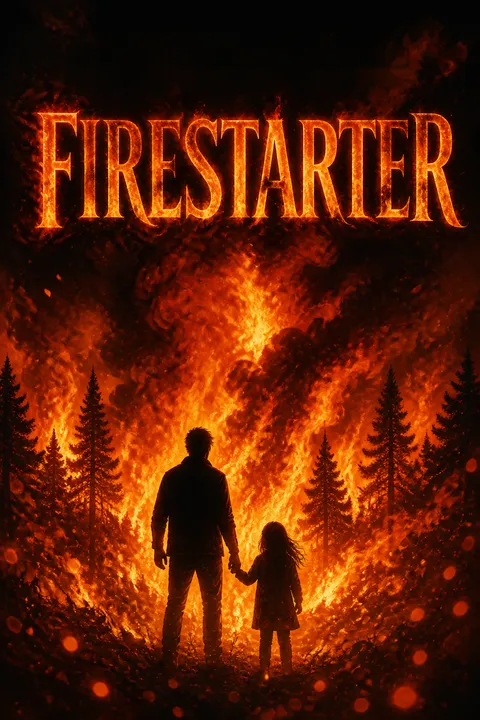


Plot Summary
Third Avenue Flight
At rush hour, Andrew McGee, a former English instructor, hustles his seven-year-old daughter, Charlie, through Manhattan while agents in a green car close in. The Shop has found them again, and Andy has just discovered his bank accounts emptied. With Charlie exhausted and no money, he uses his mind-control talent, which he calls the push, to make a taxi driver take them to Albany.
The effort leaves Andy with a crushing headache and nearly helpless. Charlie sleeps beside him while he struggles to stay conscious, knowing the men may still be following. The escape is only a temporary reprieve: the Shop wants the girl, and Andy’s power exacts a physical price each time he uses it.
Lot Six’s Human Cost
Twelve years earlier, cash-strapped college student Andy McGee signs up for a government-funded psychology experiment run by Dr. Wanless. There he meets Vicky Tomlinson, an auburn-haired volunteer who is uneasy about the test but drawn to Andy.
Both receive Lot Six, a hallucinogenic compound whose effects blur reality and expose psychic abilities. Andy discovers he can influence other people’s decisions; Vicky displays a small telekinetic gift. Their shared ordeal draws them into love, and later they marry.
The experiment is far more dangerous than its administrators admit: subjects die or suffer lasting damage, while the Shop conceals the results. The young couple leave with powers they barely understand and no warning about what they might pass on.
A Child Made of Fire
When Charlie is an infant, objects near her begin to smolder whenever she cries or becomes upset. Andy and Vicky hide fire extinguishers around the house and teach her to fear the ability, hoping caution will keep her and others safe. At five, Charlie accidentally sets Vicky’s hands alight during a tantrum; the water in the sink prevents worse injury.
Her parents explain pyrokinesis and warn her never to direct it at a person. Andy’s old college friend Quincey later confirms that the Shop still watches Lot Six survivors and may want any child born to them. Andy and Vicky understand that Charlie’s power makes their family visible to the agency, but they cling to ordinary work and school rather than flee.
The Dead Wife’s Trail
When Charlie fails to return from a sleepover, the Shop assumes the family has gone underground and moves against them. Andy comes home to find Vicky dead in the laundry room, her fingernails pulled out, and learns from the child at a friend’s house that Charlie left with two men in a gray van.
He follows their route by questioning witnesses and using small pushes to sharpen their memories. At a highway rest stop, he finds Charlie flanked by armed agents. Andy burns one man’s hand with a suggestion and makes the other believe himself blind, then sends a third agent unconscious. He gets Charlie into the station wagon and escapes, but the Shop now knows he can still fight back.
Albany’s Empty Phones
At Albany airport, Andy’s headache leaves him unable to travel farther without help. He asks Charlie to gather money from the pay phones, though he has taught her that using her power is dangerous and theft is wrong.
Charlie shakes coins from the machines, then accidentally sets a serviceman’s shoes on fire when her anger escapes her control. Andy reassures her that the man survives and gets her out before the Shop agents find them. They walk into the dark, accept a ride from a bearded traveler named Jim Paulson, and reach a motel near Hastings Glen.
The next morning Andy and Charlie hitch another ride, this time with farmer Irv Manders, whose unexpected invitation to lunch gives them shelter and brings them closer to the people hunting them.
Cap’s Containment Plan
As agents spread through Albany and its neighboring towns, Shop chief Captain Hollister, known as Cap, studies the McGee files and tries to contain the damage. Wanless warns that Charlie’s power may grow beyond control and urges the Shop to kill her and Andy before that happens. Cap rejects the murder order but authorizes force against Andy.
John Rainbird, a scarred former operative with a gift for reading people, learns the history of Lot Six from Wanless, then kills him. Rainbird becomes fascinated by Charlie and decides he wants access to her. At the airport, agents discover the emptied pay phones and infer that Charlie used her ability. The search tightens around Hastings Glen, where the Shop believes the fugitives have gone.
Manders Farm Inferno
Irv Manders brings Andy and Charlie home to lunch, where his wife, Norma, welcomes them despite their false names and thin cover story. Andy tells Irv that the Shop murdered Vicky and wants Charlie for experiments.
Before Irv can decide what to believe, Charlie senses the agents approaching and warns that they intend to kill her father. Andy tells her she may defend him, though she fears the fire inside her. When Shop agents rush the porch, Charlie ignites their hair, then sets Cap’s chief field agent, Albert Steinowitz, ablaze.
The parked cars explode, the farmhouse catches fire, and several agents die in the chaos. Irv is shot while protecting the fugitives. Once Charlie comes to, Irv gives them his Jeep and a back-road route toward Vermont.
Tashmore’s Frozen Refuge
Andy and Charlie cross rough back roads in Irv’s Jeep and reach his grandfather’s isolated cottage on Tashmore Pond. Charlie is shaken by the destruction at the Manders farm and vows never to use her power again. They spend the winter in hiding. Andy skis across the frozen pond for food, clothes, and fuel, while Charlie recovers from the cold and the guilt that makes her withdraw.
During those crossings, Andy recognizes that simply waiting for the Shop to lose interest will not protect her. He writes six accounts of the experiment, Vicky’s murder, and the pursuit, sending them to newspapers and members of Congress. A local shopkeeper, Charles Payson, watches Andy mail the letters and alerts the Shop, turning the refuge into a trap.
Six Letters, One Trap
The Shop intercepts Andy’s letters before they leave the region and keeps its agents watching the cottage. When the ice breaks and Andy decides they must move, Rainbird’s team is already in position.
Rainbird fires a tranquilizer dart into Charlie’s throat as she and Andy step outside with their bags. Don Jules shoots Andy in the neck, and both are taken to the Shop’s Virginia compound. There, the agency separates them into comfortable rooms designed to disguise their imprisonment.
Andy receives Thorazine and is tested for the push; Charlie is isolated, medicated, and repeatedly urged to demonstrate her firestarting. She refuses. The Shop’s researchers want her abilities, while Rainbird sees an opening to become the only person she trusts.
The Dark Between Them
Five months into captivity, a summer storm knocks out the compound’s power and locks the electronic doors. Andy, alone in darkness and dependent on Thorazine, panics until fear for Charlie breaks through his stupor.
He discovers that he can push himself, weakening his craving for the drug and recovering a measure of control. In Charlie’s room, Rainbird pretends to be terrified of the dark and tells her a false story about being imprisoned by enemy soldiers. Charlie sympathizes and confides her history, including the fire at the Manders farm.
Rainbird gently steers her toward using her ability, claiming practice will make it safer and could earn her privileges. The outage gives them both a new direction: Andy begins plotting, while Charlie starts to trust the man who helped capture her.
Andy’s Push Returns
Once Andy can push again, he secretly stops taking his pills and prepares to reach Charlie. During a garden walk, he uses his influence on Dr. Pynchot, one of his examiners, but fails to recognize how the suggestion will interact with Pynchot’s private shame.
The idea ricochets through the doctor’s mind until he kills himself. At Pynchot’s funeral, Andy uses the push on Cap and learns that Charlie has begun testing under Rainbird’s influence. Cap admits the Shop plans to send Andy to Hawaii and keep Charlie for further study.
Andy forces him to arrange a new departure, bring Charlie along, and deliver her a warning note. The plan is dangerous because each strong push worsens Andy’s headaches, but it gives him a chance to reunite with his daughter.
The Fire Tests Begin
Rainbird persuades Charlie that careful practice may give her more control and help her regain the things she misses, especially her father. She agrees to limited tests but sets safety conditions: a steel room, an asbestos-suited technician, and a tub of water.
In her first major demonstration, she ignites woodchips so violently that the metal tray flies across the room, then drives the water in the tub to a boil. Later tests grow more extreme. Charlie melts and breaks a cinderblock wall while researchers record the heat and her steady body readings.
The evidence frightens even the scientists, but the testing also gives Charlie precision and a troubling pleasure in the power she once feared. When she demands to see Andy, Hockstetter offers distractions instead.
A Note Through Cap
Cap tells Charlie he can arrange a meeting with her father, then slips her Andy’s note. It warns that Rainbird led the operation at Tashmore and urges her to meet Andy at the stables on Wednesday.
Charlie struggles to reconcile the warning with the man who has comforted her, but recalls the unease she felt when she first saw his smile. Rainbird notices her changed manner and investigates. Using the Shop computer, he discovers that Andy has regained his influence and that an escape is planned.
He cancels his own scheduled trip away, intending to return to Charlie. Meanwhile, Hockstetter’s tests have shown Charlie’s growing power, and her insistence on seeing Andy threatens the Shop’s control. The reunion is set for the stables, where Rainbird can reach them first.
The Stable’s Last Bargain
On the escape day, Andy and Cap drive to the stables, where Don Jules has brought Charlie. Charlie quickly heats Jules’s gun until he drops it and orders him away. Rainbird, hidden in the hayloft with a pistol, watches her send Jules off. He then calls to her and admits that he was the agent who shot her at Tashmore. Charlie’s anger raises the heat in the stable; a bucket boils and a water pipe tears loose.
Rainbird argues that the Shop will never release her and presents himself as the only person who cares about her. He draws her toward the loft while Andy enters and warns her away. Rainbird aims at Andy and threatens to shoot him if Charlie refuses. She begins to climb, torn between her father and the man who has manipulated her.
The Shop Burns
Cap’s childhood terror of snakes erupts when he mistakes a fused hose for one, distracting Rainbird long enough for Andy to command him to jump. Andy’s final push sends Rainbird crashing from the loft, but the effort causes a catastrophic injury.
Rainbird shoots Andy in the neck, and Charlie’s power surges beyond restraint. She incinerates Rainbird, blasts apart the stable, and releases the horses by melting their stall latches. Shop agents fire on the terrified animals; Charlie retaliates, setting the agents alight and destroying the compound buildings.
Andy dies after urging her to escape and refuse the Shop’s cover story. Charlie channels the remaining force into the duckpond until nearly all its water boils away. When the power finally subsides, she leaves the burning compound alone.
Charlie Goes Public
The Shop disguises the Virginia disaster as a terrorist attack and pressures Irv and Norma Manders into silence. Weeks later, a ragged Charlie returns to their farm, where they nurse her through fever and exhaustion.
The Manderses hide her through winter, and she begins cautiously using her power for small tasks, such as lighting kindling. When word of her presence spreads through town, Shop agents return. Charlie escapes before they arrive, leaving a note that she knows what to do.
She travels north, reaches the New York Public Library, and asks for a publication that is nationwide, independent of government influence, and willing to hear an extraordinary story. A librarian directs her to Rolling Stone. Carrying an orange and a bag of coins, Charlie enters its offices to tell what happened and show proof.
Analysis
Firestarter makes a parent’s most ordinary duty, keeping a child safe, collide with the machinery of national security. Andy and Vicky did not choose Charlie’s power, yet they inherit responsibility for teaching her how to live with it. Their fire training protects her and others, but it also plants shame that the Shop later exploits. The novel’s sharpest psychological insight is that coercion can imitate care: Rainbird wins Charlie’s trust by listening, offering comfort, and naming her loneliness accurately, then turns that intimacy into leverage. The Shop’s scientists similarly call confinement treatment and observation, converting violence into administrative language.
The powers are not clean gifts. Andy’s push damages his body and can injure another person’s mind through an unintended echo. Charlie’s fire becomes more controllable through practice, but control does not make its use emotionally harmless. Each parent tries to give the child a safer moral map, yet neither can promise that restraint will protect her from people willing to kill. The story refuses the easy distinction between a dangerous child and innocent adults: Charlie can cause immense destruction, while the institution’s decisions create the situations in which that destruction becomes likely.
The Shop’s cover story after the Virginia disaster extends its violence into public memory. Charlie’s final choice to seek a journalist is therefore not simply a bid for attention. She needs witnesses because secrecy has allowed the agency to define what happened, and because surviving alone cannot guarantee that the same system will not find another way to claim her. Her movement toward the press turns testimony into a form of self-defense. The ending offers no assurance of safety, only the possibility that a truth told widely may be harder to bury.
Review Summary
Firestarter receives mixed reviews, with most readers enjoying the suspenseful story and character development, particularly the father-daughter relationship. Some find it slow-paced or boring in parts. Many praise King's ability to create tension and explore the consequences of extraordinary abilities. The novel's themes of government conspiracy and the moral implications of power resonate with readers. While not considered King's best work, it's generally regarded as a solid thriller with memorable characters and intense action scenes.
People Also Read




Characters
Charlie McGee
A guarded young firestarterCharlie is the daughter of Andy McGee and Vicky Tomlinson, a bright, observant child whose extraordinary ability frightens her as much as it frightens adults. Her parents teach her to suppress it, so she grows up associating anger and power with shame and the possibility of hurting people she loves. She is quick to read others, but her longing for kindness can make her vulnerable to anyone who seems to understand her. Charlie’s struggle is not simply to control fire. It is to decide whether an ability she never chose makes her responsible for everything others do to exploit or fear it.
Andy McGee
A father with the pushAndy is a former English instructor and Charlie’s devoted father. Lot Six gives him a power to influence other people’s choices, but each use brings pain, exhaustion, and the risk of lasting harm. He is resourceful without being a trained operative, relying on observation, improvisation, and a fierce commitment to keep Charlie close. His tenderness has a practical edge: he teaches her to survive while trying not to make her feel monstrous. Andy’s own fear and anger are often held in check by his responsibility for her, and that responsibility becomes his main source of endurance.
Vicky Tomlinson McGee
A psychic young motherVicky is Andy’s wife and Charlie’s mother, a warm, perceptive woman whose modest telekinetic ability emerges after the Lot Six experiment. Her early fear of intimacy and her deep affection for Andy shape a relationship built on patience and unusual emotional honesty. As a parent, she shares Andy’s instinct to protect Charlie while struggling with the terror of what their daughter can do. Vicky represents the family’s attempt to turn a government experiment into a private life, even as the consequences of that experiment keep pressing into their home.
John Rainbird
A scarred, patient hunterRainbird is a highly capable Shop operative, a Vietnam veteran whose badly scarred face makes him an outsider even among colleagues. He is disciplined, intelligent, and fascinated by death, but his attention to Charlie has a tenderness that complicates his cruelty rather than redeeming it. He studies people as carefully as he studies a locked safe, looking for the vulnerability that will let him in. With Charlie, he recognizes that isolation and trust matter more than force. His self-image as a warrior and his desire for a connection he can control make him both attentive and dangerous.
Captain Hollister, Cap
The Shop’s weathered commanderCap directs the Shop’s response to the McGees, balancing ambition, institutional loyalty, and anxiety about what Charlie may become. He is a political operator who understands budgets, secrecy, and the leverage hidden in government files. Unlike the scientists who view Charlie chiefly as evidence, Cap can recognize the human cost of their plans, though that recognition rarely outweighs his belief in the agency’s mission. His increasingly strained control of the operation exposes how a bureaucracy can treat its own assumptions as facts, even when events are proving those assumptions wrong.
Irv Manders
A farmer’s stubborn conscienceIrv is a practical upstate New York farmer who gives Andy and Charlie a ride and offers them food before he knows their full story. His instinct to help strangers is tempered by a clear-eyed awareness of danger, but he resists letting fear decide what is right. Irv’s dry humor and directness make him a steady adult presence for Charlie. He understands that shelter is not the same as freedom, and his loyalty to his wife and community continually collides with his refusal to abandon a child in trouble.
Norma Manders
A farmer’s protective partnerNorma is Irv’s wife, a capable homemaker and shopkeeper whose welcome of Charlie is immediate even when Andy’s story unsettles her. She is more openly fearful than Irv, in part because she sees the damage the pursuit can bring to their home and family. Her concern is not abstract: she weighs Charlie’s need for care against the safety of relatives who could be threatened by the Shop. Norma’s compassion persists through that fear, and her practical care gives Charlie a glimpse of ordinary family life.
Quincey Tremont
Andy’s wary college confidantQuincey is Andy’s old college roommate and a psychology student who understands how government money can distort research. His warnings about Lot Six help Andy grasp that the experiment’s consequences have not ended with the volunteers. Sardonic and cautious, Quincey tries to give his friend useful information without pretending he can protect him. His role is brief, but his practical skepticism changes how Andy interprets the family’s strange abilities and the Shop’s interest in Charlie.
Dr. Joseph Wanless
Lot Six’s guilty architectWanless designed the experiment that exposed Andy and Vicky to Lot Six. He is a brilliant, deeply compromised psychologist who once treated human subjects as acceptable risks in pursuit of a government objective. Later, he becomes obsessed with the possibility that Charlie’s abilities could exceed anything the Shop can control. His warnings arise from genuine scientific fear, but they lead him toward extreme conclusions. Wanless embodies the way expertise can produce insight without wisdom: he recognizes the danger of the project yet still frames human lives as variables to be managed.
Dr. Patrick Hockstetter
The experiment’s cold examinerHockstetter oversees Charlie’s tests and treats her cooperation as a research problem to solve. He is methodical and ambitious, more comfortable with instruments and data than with the child attached to them. His paternal manner masks an eagerness to obtain results, and he underestimates how closely Charlie observes the contradictions between his reassurances and his actions. As the evidence grows more alarming, his confidence gives way to fear, revealing how quickly a scientist’s appetite for proof can become anxiety about the thing proved.
Dr. Herman Pynchot
Andy’s smiling examinerPynchot is one of the Shop’s psychologists assigned to test Andy’s mental influence. He presents himself as genial and professionally curious, but his desire for results often reduces Andy to an instrument. His personal vulnerabilities are largely hidden beneath a carefully maintained public manner. Pynchot’s role shows how a seemingly ordinary examiner can become part of a coercive system without seeing how his own mind and ethics are implicated in it.
Jim Paulson
A generous road strangerJim is a bearded traveler driving west in a van painted with images from Arabian Nights. He gives exhausted Andy and Charlie a ride, offers them money, and treats them with an unforced kindness that contrasts with the Shop’s pursuit. His brief appearance reminds Andy that strangers are not all threats, even when caution has become a habit of survival.
Don Jules
A disciplined Shop enforcerJules is a capable Shop operative who follows orders closely and is assigned to handle Andy during the capture at Tashmore. He values procedure and personal safety, traits that make him useful to the agency but leave him poorly prepared for Charlie’s power. His cool professionalism contrasts with the fear that erupts when an operation stops following its script.
Orville Jamieson, OJ
A frightened Shop operativeOJ is a Shop agent with a gun and a low tolerance for situations that turn dangerous. He participates in the pursuit and later confronts the consequences of underestimating Charlie. His self-preserving instincts are often stronger than institutional loyalty, making him a revealing observer of how quickly official confidence collapses under real danger.
Albert Steinowitz
The Shop’s pursuit chiefSteinowitz is a senior Shop agent trusted to take charge of the search for Andy and Charlie. Careful, competent, and ruthless when an operation requires it, he represents the professional machinery behind the pursuit. His authority depends on the assumption that a large force and a clear plan can contain the family’s abilities.
Charles Payson
The watched small-town shopkeeperPayson runs a struggling novelty shop in Bradford, near the McGee family’s refuge. His financial vulnerability makes him susceptible to the Shop’s surveillance and recruitment. He notices Andy mailing the letters and reports what he sees, demonstrating how easily a fugitive’s privacy can be broken by ordinary economic pressure.
Dr. Karl Hofferitz
A village doctor with judgmentHofferitz is the Manders family doctor, an elderly physician whose plainspoken manner is matched by a strong sense of professional and personal responsibility. He recognizes that Charlie is frightened and ill, and he questions whether keeping her hidden can be a life for a child. His presence gives Irv and Norma a candid outside perspective without offering an easy solution.
Plot Devices
Lot Six
A compromised experimentLot Six is a government-sponsored compound administered to student volunteers in a supposedly controlled experiment. It triggers psychic abilities in Andy and Vicky, while its dangerous effects are concealed from the subjects and the public. The Shop’s long surveillance of the survivors turns an experiment into a family inheritance: Charlie’s unusual power makes the agency regard her as both scientific evidence and a potential weapon. Lot Six supplies the causal link between the family’s abilities and the government’s pursuit.
Andy’s push
Influence at bodily costAndy’s mental influence can steer another person’s choices, from accepting a cab ride to believing a weapon is too hot to hold. The push works best on suggestible targets and can be applied lightly or with great force. Heavy use brings severe headaches, temporary incapacity, and the risk of permanent injury. Its limits shape Andy’s escape plans: he must conserve it, choose targets carefully, and accept that a successful command can still have unforeseen psychological consequences.
Charlie’s pyrokinesis
Fire as will made materialCharlie can generate and direct extreme heat through thought. In childhood, fear and anger can make the power erupt beyond her control; as she grows and practices, she can focus it more precisely. The ability gives the Shop a reason to capture and test her, while the lessons her parents taught her make every use a moral crisis. Fire is therefore both a physical force and the visible measure of Charlie’s struggle to distinguish self-defense from destructive pleasure.
The Shop’s surveillance
A cage disguised as careThe Shop monitors the McGees through records, informants, roadblocks, intercepted mail, and observation inside its compound. Its control also depends on drugs, locked doors, staged rewards, and carefully managed information. These mechanisms make the agency’s reach feel nearly total, but they repeatedly fail because the Shop mistakes compliance for trust and data for understanding. Surveillance provides both the practical obstacle to escape and the means by which the institution tries to convert a family into a research program.
Rewards and leverage
Behavioral control through promisesRainbird and the Shop offer Charlie small privileges, including time outdoors and access to a horse, in return for demonstrations of her power. The most potent promised reward is contact with her father. This arrangement exploits Charlie’s loneliness while allowing her to believe she is negotiating from strength. It also creates a fragile dependency: each concession encourages further testing, until Charlie recognizes that the people offering rewards control whether those rewards can ever be delivered.
FAQ
Synopsis & Basic Details
What is Firestarter about?
- A Fugitive Father-Daughter Duo: Firestarter centers on Andy McGee and his daughter, Charlie, who are on the run from a shadowy government agency known as The Shop. Andy possesses a psychic ability called "the push," allowing him to subtly influence minds, while Charlie has potent pyrokinesis, the ability to start fires with her thoughts.
- Legacy of a Secret Experiment: Their extraordinary powers are a result of a past government experiment, Lot Six, which involved Andy and his late wife, Vicky. The Shop seeks to recapture Charlie to study and weaponize her unique abilities, leading to a relentless pursuit across the country.
- A Fight for Freedom: The narrative follows their desperate attempts to evade capture, culminating in a violent confrontation where Charlie unleashes her full power, and her ultimate decision to expose The Shop's unethical activities to the world.
Why should I read Firestarter?
- Visceral Psychological Thriller: Firestarter offers a gripping blend of psychological tension and explosive action, exploring the terrifying implications of unchecked government power and the moral dilemmas faced by those caught in its crosshairs. Stephen King masterfully builds suspense, making every escape a heart-pounding experience.
- Deep Character Exploration: Beyond the thrilling plot, the novel delves deeply into the emotional and psychological states of its characters, particularly Andy's paternal devotion and Charlie's struggle with her terrifying gift. Readers gain intimate insight into their fears, hopes, and the profound bond that sustains them.
- Timeless Themes of Control: The book resonates with enduring themes of innocence corrupted, the ethics of scientific experimentation, and the human desire for freedom versus institutional control. It's a powerful commentary on how extraordinary abilities can be both a blessing and a curse, and the lengths to which power will go to maintain itself.
What is the background of Firestarter?
- Echoes of Real-World Experiments: Stephen King drew inspiration from real-life government programs like Project MKUltra, where the CIA experimented with mind control and hallucinogenic drugs on unwitting subjects. This historical context lends a chilling realism to The Shop's clandestine operations and their disregard for human rights.
- King's Personal Influences: The novel was written during a period when King was grappling with fatherhood and the fears associated with protecting a child. This personal experience deeply informs Andy's fierce protectiveness and Charlie's vulnerability, adding an authentic emotional core to the fantastical premise.
- Cold War Paranoia: Published in 1980, Firestarter taps into the pervasive Cold War anxieties of government secrecy, surveillance, and the arms race, particularly the fear of psychic warfare. The narrative reflects a societal distrust of powerful, unaccountable institutions operating under the guise of national security.
What are the most memorable quotes in Firestarter?
- "It was a pleasure to burn.": This chilling quote, taken from Ray Bradbury's Fahrenheit 451 and used as an epigraph, immediately sets a dark, ironic tone for Charlie's pyrokinetic abilities, hinting at the destructive pleasure she might find in her power.
- "The brain is a muscle that can move the world.": Andy's recurring internal mantra, particularly when he's pushing himself or others, encapsulates the novel's core theme of mental power and its immense, often terrifying, potential, whether for good or ill.
- "Never say that, Andy. God loves to make a man break a vow.": Spoken by Granther McGee in a flashback, this line foreshadows the inevitable breaking of vows and intentions, particularly Charlie's promise not to use her powers, highlighting the uncontrollable nature of innate abilities and external pressures.
What writing style, narrative choices, and literary techniques does Stephen King use?
- Dual Perspective & Internal Monologue: King frequently shifts between Andy's and Charlie's perspectives, often delving into their raw, unfiltered internal monologues. This technique provides intimate access to their fears, pain, and moral struggles, deepening reader empathy and understanding of their psychological states.
- Visceral and Sensory Detail: King employs rich, often unsettling, sensory descriptions to immerse the reader in the characters' experiences, from the "steel dagger of pain" of Andy's headaches to the "pungent smell of fried hair" during Charlie's fiery outbursts, making the fantastical elements feel disturbingly real.
- Pacing and Escalation: The narrative maintains a relentless, accelerating pace, particularly during chase sequences and confrontations, mirroring the characters' constant state of flight and the escalating stakes. King masterfully builds tension through a series of increasingly dangerous encounters, driving the plot towards its explosive climax.
Hidden Details & Subtle Connections
What are some minor details that add significant meaning in Firestarter?
- The "Comma" Bloodstain Symbolism: The "comma-shaped bloodstain" on the brain chart in Room 70, which changes "CORPUS CALLOSUM" to "COR OSUM," subtly foreshadows the permanent damage and fragmentation inflicted upon the test subjects' minds and lives. It represents a break, an incomplete thought, and the irreversible alteration of human potential by The Shop.
- Wanless's Cigarette Shredding Habit: Dr. Wanless's bizarre habit of "shredding a cigarette into the ashtray" rather than smoking it is a subtle character tic that reveals his deep-seated neuroses and perhaps a subconscious self-destructive tendency. It hints at his own internal conflict and the psychological toll of his unethical experiments, even before his stroke.
- The Shop's Deceptive Aesthetics: The description of The Shop's headquarters as "two handsome Southern plantation homes" with "gracefully looping bike paths" and "best horseflesh" creates a stark, unsettling contrast with the barbed wire, guard towers, and lethal electric fences. This aesthetic deception symbolizes the insidious nature of the organization, masking its sinister operations behind a facade of idyllic normalcy.
What are some subtle foreshadowing and callbacks in Firestarter?
- Andy's Headaches as a Warning: Early descriptions of Andy's debilitating headaches after using "the push" ("like a radio with a blown tube," "drill bits in his temples") subtly foreshadow the severe neurological damage he sustains, culminating in the "numb spots" on his face and the eventual "blowout" of his brain. This highlights the inherent cost of his power.
- Charlie's Early Uncontrolled Fires: The brief, terrifying flashbacks to Charlie's childhood, such as her setting her own hair on fire or burning her teddy bear, foreshadow the destructive potential of her pyrokinesis when uncontrolled. These callbacks emphasize the "fire-training" her parents instilled and the constant fear she lives with, setting the stage for the Manders farm conflagration.
- The "Blind Man" Game and Its Echoes: Andy's childhood memory of playing "blind man" and stumbling in the dark subtly foreshadows his later experience during the blackout in The Shop's facility, where he is plunged into "total darkness" and disoriented. This callback emphasizes his vulnerability and dependence on his senses, making his subsequent self-push to regain control even more significant.
What are some unexpected character connections in Firestarter?
- Andy and Vicky's Shared Psychic Link: Beyond their individual powers, Andy and Vicky experienced a form of telepathy during the Lot Six experiment, sharing hallucinations and emotions without speaking. This "telepathy" forms the bedrock of their deep bond and hints at the complex, unforeseen ways their combined "X" and "Y" factors would manifest in Charlie.
- Pynchot's Breakdown as Andy's Echo: Dr. Pynchot's descent into transvestism and eventual suicide, triggered by Andy's "push," reveals an unexpected and horrifying connection between the two. Pynchot becomes a tragic victim of Andy's power, demonstrating the devastating "ricochet effect" of mental manipulation on an unstable psyche, a consequence Andy had previously managed to avoid.
- Rainbird's Twisted "Fatherly" Bond with Charlie: Rainbird's manipulation of Charlie, presenting himself as a sympathetic "orderly" and sharing fabricated stories of trauma, creates a deeply disturbing pseudo-father-daughter relationship. His "love" for her is a perverse admiration for her power, a desire to "know her intimately" through her destruction, revealing a complex villain driven by nihilistic curiosity rather than simple malice.
Who are the most significant supporting characters in Firestarter beyond the main antagonists?
- Irv and Norma Manders: The Moral Compass: This rural couple provides a crucial moral anchor in a world of government corruption and psychic chaos. Their decision to shelter Andy and Charlie, despite the immense personal cost (their farm's destruction, Irv's injury), highlights themes of human kindness, integrity, and resistance against overwhelming evil, offering a stark contrast to The Shop's dehumanizing agenda.
- Charles Payson: The Unwitting Informant: The sad-faced owner of "Notions 'n' Novelties" in Bradford, Payson, unknowingly becomes The Shop's eyes and ears in Tashmore. His mundane existence and financial struggles make him susceptible to manipulation, subtly illustrating how ordinary people can be co-opted into larger, sinister schemes without fully understanding the implications.
- Jim Paulson: The Transient Samaritan: The bearded van driver who gives Andy and Charlie a ride to Hastings Glen and offers them five dollars, Jim Paulson, embodies spontaneous, unconditional human generosity. His brief appearance and philosophical musings ("Life is short and pain is long and we were all put on this earth to help each other") serve as a fleeting moment of grace and hope amidst the relentless pursuit, emphasizing the unexpected kindness found in strangers.
Psychological, Emotional, & Relational Analysis
What are the unspoken motivations of the characters in Firestarter?
- Rainbird's Quest for a Meaningful Death: Beyond his role as an assassin, John Rainbird is driven by a profound nihilism and an obsessive search for a "meaningful" death, particularly one that involves witnessing the "exhalation of the soul." His fascination with Charlie's power stems from a desire to experience a unique, perhaps transcendent, end, making her not just a target but a potential catalyst for his ultimate pilgrimage.
- Cap Hollister's Desperate Ambition: Cap's relentless pursuit of Charlie and his willingness to sacrifice others are fueled by a desperate ambition to secure his position and legacy within The Shop, especially after a series of failures and personal losses. His drive is less about national security and more about personal survival and proving his competence in a cutthroat bureaucratic environment.
- Charlie's Deep-Seated Guilt and Self-Punishment: Charlie's initial refusal to use her powers, even when threatened, is rooted in profound guilt over past "accidents" and the destruction at the Manders farm. Her self-imposed "fire-training" and acts of self-punishment (like standing under cold water) reveal a child grappling with immense power and the moral burden of its consequences, fearing her own capacity for harm.
What psychological complexities do the characters exhibit in Firestarter?
- Andy's Self-Destructive Dependency: Andy's reliance on "the push" for survival leads to severe physical and psychological deterioration, including headaches, numbness, and a Thorazine addiction. His passive acceptance of his drugged state in The Shop reflects a deep-seated exhaustion and a form of learned helplessness, highlighting the psychological toll of constant flight and trauma.
- Charlie's Traumatic "Fire-Training": Charlie's childhood "fire-training" by her parents, designed to instill a complex against using her powers, results in a deep-seated phobia and internal conflict. Her struggle to reconcile her destructive abilities with her desire to be "good" and her fear of becoming a "monster" showcases the profound psychological impact of her unique gift.
- Pynchot's Psychological Unraveling: Dr. Pynchot's descent into transvestism and eventual suicide, triggered by Andy's "push," reveals a pre-existing psychological fragility. The "ricochet effect" of Andy's power exacerbates Pynchot's hidden neuroses, turning his internal conflicts into a public, grotesque self-destruction, serving as a cautionary tale about the unforeseen consequences of psychic manipulation.
What are the major emotional turning points for Andy and Charlie in Firestarter?
- Vicky's Murder and Charlie's Kidnapping: The brutal death of Vicky and Charlie's abduction marks a catastrophic emotional turning point, shattering their semblance of a normal life. For Andy, it ignites a desperate, singular focus on rescuing Charlie, while for Charlie, it instills a deep-seated trauma and a profound sense of loss that fuels her later actions.
- The Manders Farm Conflagration: Charlie's uncontrolled unleashing of her powers at the Manders farm is a pivotal emotional moment. It forces her to confront the terrifying scale of her destructive capability and the direct consequences of her actions, deepening her guilt and fear of her own gift, even as it saves her father.
- Andy's Blackout Awakening: The power blackout in The Shop's facility, plunging Andy into total darkness and panic, serves as a crucial emotional awakening. It forces him to confront his own dependency and lethargy, reigniting his will to fight and reminding him of his primary purpose: protecting Charlie. This moment marks his psychological rebirth.
How do relationship dynamics evolve in Firestarter, particularly between Charlie and her captors?
- Charlie's Vulnerability and Rainbird's Exploitation: Initially, Charlie's isolation and longing for a friend make her deeply vulnerable to Rainbird's manipulative kindness. He exploits her emotional needs by fabricating a shared history of suffering, creating a twisted bond of trust that allows him to subtly influence her and gain access to her deepest fears and secrets.
- Hockstetter's Frustration and Escalation: Dr. Hockstetter's relationship with Charlie evolves from scientific curiosity to increasing frustration and fear as she resists his attempts to make her use her powers. His methods become more coercive, culminating in his willingness to use her father as leverage, demonstrating the dehumanizing effect of The Shop's objectives on its personnel.
- The Shifting Power Balance: As Charlie's powers grow and she gains more control, the dynamic shifts from her being a helpless captive to a formidable force. Her ability to dictate terms for her tests and her eventual defiance of The Shop's authority illustrate her growing agency and the reversal of power roles, forcing her captors to react to her demands.
Interpretation & Debate
Which parts of Firestarter remain ambiguous or open-ended for reader interpretation?
- The Full Extent of Charlie's "Z Factor": While Charlie's pyrokinesis is clearly demonstrated, Dr. Wanless's terrifying speculation about her "Z factor" – the potential to cause nuclear explosions or "crack the very planet in two" – remains largely unproven. This ambiguity leaves readers to ponder the true, unimaginable limits of her power and its implications for the future.
- The Shop's Long-Term Fate: Although Charlie's public revelation to Rolling Stone aims to expose The Shop, the novel doesn't explicitly detail the agency's complete downfall. The new head of the Shop remains determined to find and eliminate Charlie, leaving open the question of whether her actions truly dismantle the organization or merely force it to adapt and continue its clandestine operations.
- The Ethics of Charlie's Final Choice: Charlie's decision to unleash her power and kill those who stand in her way, including Rainbird, raises ethical questions about justified violence and the corruption of innocence. While presented as self-defense and a means to expose The Shop, the extent of her destruction leaves readers
About the Author
Other books by Stephen King




Download PDF
Download EPUB
.epub digital book format is ideal for reading ebooks on phones, tablets, and e-readers.








