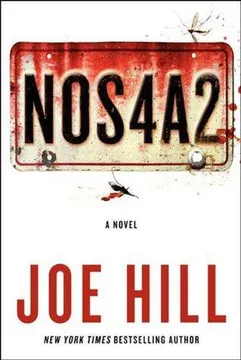


Plot Summary
Prologue
In 2008, Nurse Ellen Thornton brings Charlie Manx a blood transfusion in the prison infirmary where he has lain in a coma for years. He wakes, grips her wrist, and names her son, Josiah, as a child he means to take to Christmasland.
He also speaks of a House of Sleep and a gasmask-wearing accomplice. The doctor dismisses the episode as a dream, but Ellen leaves with bruises on her wrist and blood on her shoes, unable to forget that Manx knew her child’s full name.
The opening makes Manx dangerous before he can move. His threat reaches through the prison walls and enters a mother’s private fear, while the medical staff’s rational explanation leaves Ellen alone with evidence they cannot interpret. The scene also establishes the novel’s central conflict over childhood: Manx calls removal from the world a rescue, but his promise of safety already carries menace. His coma appears to contain him, yet his knowledge and will remain active, setting up a story in which physical confinement does not equal powerlessness.
A Bridge From Need
Eight-year-old Vic McQueen leaves home after hearing her parents fight over her mother’s lost bracelet. She rides her new Raleigh Tuff Burner into the woods and crosses the condemned Shorter Way Bridge, though the bridge should have collapsed into the Merrimack years earlier. It carries her to Terry’s Primo Subs at Hampton Beach, where the cook has the bracelet in lost property.
On the return trip, Vic emerges in her own woods to find the bridge gone again. Feverish and exhausted, she gives the bracelet to her father, who carries her to bed. Her parents’ quarrel pauses as they care for her, and Vic quietly learns that her bicycle can turn longing into a route through the world.
The bracelet journey establishes Vic’s gift through an ordinary childhood need, not a desire for power. Her bridge appears when family conflict makes home unbearable, and it delivers a concrete object that restores a moment of order. The cost is already physical: fever, dehydration, and pain behind her left eye. Her parents’ renewed attention also complicates the escape. Vic wants to repair their marriage, but her illness becomes the occasion that briefly brings them together. The scene plants the story’s defining ambiguity: imagination helps her act, yet crossing between thought and the world exacts a toll.
Maggie Names The Danger
Over the next few years, Vic uses the bridge to find lost toys, a wallet, a cat, and, at thirteen, a photograph of her father’s dead mother. That last trip takes her to a library in Here, Iowa, where she meets Margaret Leigh, a young librarian whose Scrabble tiles disclose hidden facts.
Maggie explains that Vic’s bicycle is a tool for crossing from imagination into reality, then warns her about an old man with a car who drains children and leaves them changed. When Maggie’s tiles identify the Wraith as the danger, Vic refuses to promise she will stay away. The crossing leaves Vic bloodied, feverish, and without her beloved Raleigh. Her parents keep the bike, and she loses the easiest proof that her journeys were real.
Maggie gives Vic a vocabulary for her experience, but knowledge does not make the gift safer. The Scrabble tiles and the Raleigh are both beloved objects turned into instruments, and both exact bodily costs from their users. Vic’s refusal to promise restraint reflects a moral instinct as much as adolescent defiance: if a monster is taking children, doing nothing feels like complicity. Yet the bridge’s price, her injury and lost bike, marks the boundary between childhood play and an adult danger she cannot yet confront. Her parents’ decision to remove the bicycle also deepens her isolation from the one person who can explain her.
Bing Joins Christmasland
In Pennsylvania, lonely NorChemPharm janitor Bing Partridge discovers an old magazine advertisement for Christmasland and becomes convinced the place will give him the perfect Christmases he remembers from childhood.
Charlie Manx arrives in his 1938 Rolls-Royce Wraith and offers him a place on the road, provided he helps rescue ten children from abusive parents. Manx shows Bing the Graveyard of What Might Be, where children lie beneath ice beside predictions of their unhappy futures.
He presents these imagined futures as proof that kidnapping is mercy. Bing brings his chemical-plant knowledge and sevoflurane to the work. Believing Manx has absolved his violent past, Bing accepts the role of protector and becomes the accomplice who helps seize children and silence adults.
Manx recruits Bing by converting guilt into a job description. Bing’s childhood memories of a loving Christmas are bound to military gifts, parental affection, and the fantasy of being approved of; Manx offers all three in a single destination. The Graveyard supplies apparent evidence, but its predictions are also an excuse to act without consent. Bing’s desire to be forgiven makes him especially susceptible to a story in which cruelty is prevention. His technical knowledge then turns fantasy into logistics: anesthetic gas, access to children, and a place to hide the adults. The horror begins not with a supernatural power alone, but with a moral story that makes violence feel virtuous.
The Sleigh House Escape
At seventeen, Vic runs from home after her mother reveals that her father has left them. She finds her old Raleigh in the basement and rides toward the Shorter Way, imagining an escape from the life she hates. The bridge takes her to Manx’s isolated Colorado lodge, where Christmas ornaments hang in the trees and a cold, altered boy waits in the Wraith.
Vic tries to free him, but he burns her wrist and alerts Manx. Trapped inside the lodge, she starts a fire and escapes through a laundry chute while Manx pursues her. On the highway, she flags down Louis Carmody, a young motorcyclist, who carries her to safety. Police arrest Manx after he attacks people at a gas station.
Vic’s first direct encounter with Manx grows from the same impulse that sent her across the bridge as a child: she cannot leave a lost person behind. This time the impulse exposes her to real violence, and escape depends on practical improvisation rather than confidence in the bridge. The laundry chute, fire, and flight through the woods make survival an effort of body and judgment. Lou’s rescue begins a relationship built on action rather than promise. Vic reaches adulthood through an experience she cannot fully explain, and the official account of what happened will later compete with her own memory.
A Family Splits Apart
After Manx goes to prison, Vic builds a life with Lou and gives birth to Wayne, but she struggles with motherhood, drinking, and the years she cannot reconcile with her account of the kidnapping.
She becomes a successful children’s book creator with Search Engine, whose illustrated mazes give her a place to work when the voices from Christmasland return. Manx remains in prison, aging rapidly and drifting into a coma. Meanwhile, Bing continues to abduct children and murder their mothers, including Wayne’s mother, Cynthia McCauley, while telling himself he is rescuing them.
The calls from Christmasland drive Vic toward addiction and a breakdown. She burns her house while trying to destroy the phones, loses custody of Wayne, and eventually enters treatment.
The aftermath shows that escape is not the same as recovery. Vic can build books, a home, and a family, yet the calls keep turning private fear into daily interruption. Search Engine offers a disciplined version of her imagination, one that can be shared and finished, while alcohol and drugs temporarily blunt what the work cannot contain. Bing’s parallel story reveals the cost of Manx’s ideology from another angle: he harms adults while insisting their children will be safer without them. Both Vic and Bing are shaped by childhood injury, but one struggles to protect a child without possessing him, while the other mistakes possession for protection.
The Triumph Returns
In 2011 and 2012, Vic leaves rehabilitation and returns to Haverhill to care for her dying mother, Linda. The two women make tentative peace before Linda dies, and Vic takes twelve-year-old Wayne to spend the summer at a Lake Winnipesaukee cottage. In its carriage house they discover a neglected Triumph motorcycle, which Vic begins restoring while she works on a new Search Engine book.
Maggie appears at Vic’s old home with reports that Manx’s body has vanished from the morgue and that he may be alive again. Vic rejects her warning and hides the papers from Wayne. The old motorcycle, however, becomes a new possible vehicle for the bridge, while the Christmas-themed drawings begin to echo a place Vic insists she does not believe exists.
This section puts Vic between two inheritances. Her mother’s illness forces her to confront the damage in their relationship, while the Triumph reconnects her with the father who taught her about engines and movement. Restoring the bike is both a craft and a temptation: work gives her structure, but its speed promises an exit from painful thought. Maggie’s warning arrives when Vic is trying to build an ordinary summer with Wayne, so accepting it would mean risking the fragile trust she has only just begun to repair. The drawings’ uncanny imagery suggests that creative work can be refuge and conduit at once.
The Lake Turns Hostile
When Vic takes the newly running Triumph out, Manx and Bing arrive at the cottage in the Wraith. They run down Hooper, Wayne’s Saint Bernard, then seize Wayne while Manx beats Vic with a silver bone mallet. Bing holds Wayne inside the car as Vic reaches the lake and dives beneath its float to evade gunfire. From hiding, she hears Manx promise that Wayne will be taken to Christmasland and taunt her with the bridge.
Vic reaches shore alive, calls emergency services, and describes the kidnappers, but the officers see a traumatized woman with a history of psychosis and no visible evidence of a Rolls-Royce or bullets. The abduction turns her private fear into a public search, while Manx again makes the truth sound impossible.
The attack collapses Vic’s two roles, survivor and mother, into one urgent choice: live long enough to pursue Wayne. Hooper’s death makes the cost of resistance immediate, and the lake offers concealment rather than safety. Manx’s promise to protect Wayne repeats the false moral logic he used on Bing, but now Vic can hear the threat beneath it. The authorities’ skepticism is not simple stupidity; they respond to incomplete evidence and a documented psychiatric history. That reasonable doubt nevertheless leaves Vic isolated at precisely the moment when ordinary channels of help are least able to reach her son.
A Prisoner In The Wraith
As Vic reports the kidnapping, Wayne discovers that the Wraith’s rear compartment defeats ordinary escape: its doors lock, its space seems to fold him back inside, and his phone is difficult to reach.
Manx’s gingerbread-scented anesthetic and the car’s influence make Wayne laugh at cruelty and lose his ordinary resistance. He tears apart a butterfly, then feels confused by his own act. His grandmother appears in dreams and speaks backward, urging him to think in reverse, but Manx’s cheerful promises keep pulling him toward Christmasland.
At the lake, officers question Vic while FBI agent Tabitha Hutter studies her account and the hammer she identifies. Vic refuses to wait for them to believe her; she takes the Triumph and follows the bridge toward Manx’s last known stop.
Wayne’s captivity is psychological before it is bodily. The Wraith does not merely prevent escape; it rearranges what feels funny, frightening, and worth remembering. His butterfly’s mutilation is an early sign that Manx’s promise of freedom from unhappiness also erodes empathy. Linda’s backward warnings offer a counter-method: not a stronger force, but a different direction of thought. In parallel, Hutter’s careful fact-gathering demonstrates the limits of evidence when the crime itself distorts perception. Vic’s departure is therefore both reckless and rational: she chooses the only route that has ever led her to what was lost.
Bing's House Of Sleep
The bridge carries Vic to Bing’s home in Sugarcreek, Pennsylvania, where she finds the wreckage of his life and a body concealed in the basement. The dead man is Nathan Demeter, a Kentucky engineer whose note identifies Bing as his captor and names Manx. Bing attacks Vic in a gasmask, trying to drug her with sevoflurane, but she ignites the escaping gas with Detective Daltry’s lighter.
The explosion kills Bing and opens the basement into the house. Vic finds a phone and reaches Manx, who confirms Wayne is alive but refuses to release him. Manx realizes her bridge can reach only a fixed place, not a moving car, and names the House of Sleep as their next meeting ground.
Bing’s house turns the rescue myth inside out. Its domestic details, gingerbread smell and tidy kitchen, camouflage a system of confinement and murder. Nathan’s note restores a human identity to a body Bing tried to reduce to evidence and disposal. Vic’s use of the lighter is not a triumph of raw power so much as an ability to connect details under pressure: the gas is flammable, the lighter works, and the room can become a weapon. Manx’s phone call then converts her escape into a contest of knowledge. He now understands the bridge’s limits, narrowing the advantage Vic thought she had.
Maggie's Last Warning
Vic crosses to Here, Iowa, and finds Maggie living among the ruined remains of her flood-damaged library. Maggie explains that Manx’s car feeds on children’s unhappiness and reshapes them for his imagined world; restoring Wayne may still be possible, but she cannot prove it. Her Scrabble tiles fail to answer, so Maggie injures herself to force a message and tells Vic that Manx has lost his capacity for regret and empathy.
While Vic sleeps after Maggie gives her pain relief, Manx arrives with Wayne. Wayne, already altered, cannot act on Maggie’s warning. Manx strikes her with the bone mallet and leaves her dying. Vic wakes to police searching the library, reads Maggie’s final message, and escapes before they can arrest her.
Maggie’s condition gives the novel’s magic system an ethical cost in plain view. The tiles still reveal knowledge, but repeated use has damaged her speech and driven her toward self-harm. Her warning therefore arrives with both authority and limitation: she can describe Manx’s transformation, yet cannot guarantee Wayne’s recovery. Manx’s attack makes the cost of delayed belief irreversible. Vic’s sleep is an ordinary need that becomes a fatal gap, and waking to Maggie’s note means she must act without the comfort of a mentor. Her escape carries guilt alongside purpose, rather than allowing the rescue mission to become a clean heroic ascent.
ANFO And A Father's Return
Vic uses the bridge to reach her estranged father, Chris McQueen, in Dover. He believes her account, gives her ANFO and detonators, and helps her prepare to destroy Manx’s world. Lou has tracked her down and insists on coming, but FBI agents and local police surround the house before they can leave. Chris distracts Detective Daltry long enough for Vic and Lou to escape on the Triumph.
Daltry shoots Chris as they flee. Vic carries the explosives through the Shorter Way to the burned Sleigh House, with Lou behind her on the motorcycle. The bridge collapses after them, leaving the pursuing officers in the ordinary woods and separating the pair from the father they have just begun to reconcile with.
Chris’s return offers Vic a brief repair, not an absolution. He believes her, equips her, and finally acts as the father she needed, but the time for that relationship is painfully short. His death occurs because he chooses to create an opening for his daughter, turning old failures into one concrete act of care. Lou’s insistence on joining her likewise makes love practical, yet Vic knows his heart and the bridge’s instability place him at risk. The escape carries both men’s devotion forward while showing that reconciliation does not reverse loss; it changes what someone can do in the minutes remaining.
Lou Left In The Trees
At the Sleigh House, Lou and Vic recover from the crash and prepare the explosives, but Lou’s heart condition makes another crossing dangerous. When Manx’s Wraith passes along the drive, Vic handcuffs Lou to a birch tree, insisting Wayne will need his father if she cannot return. She then starts the damaged Triumph and follows Manx through a newly appearing tunnel in the rock.
The tunnel opens into Christmasland, a private landscape of snow, lights, and amusement rides. Lou remains behind with the explosives and a view of the bridge, unable to follow. Vic rides into the park alone, knowing that her last chance to bring Wayne home now depends on reaching him before Manx finishes changing him.
Vic’s decision to leave Lou is an act of care that resembles abandonment, the wound she has carried from her father’s departure. The handcuff makes the choice literal: she limits his freedom to preserve his life and Wayne’s chance of having a parent left. The tunnel also clarifies the difference between Manx’s route and Vic’s. His car travels comfortably through an invented world, while her motorcycle and failing body must force a passage through it. Christmasland is not merely a place to enter; it is the material form of Manx’s refusal to tolerate limits.
The Road Eats Wayne
During the drive west, Manx tells Wayne that the Wraith turns painful feelings into fuel and promises to leave him innocent of sorrow. Wayne’s lost teeth grow back as sharp hooks, and his memories of Hooper and his mother grow faint.
His grandmother appears in dreams, speaking backward, while Manx promises a stop for fireworks and food to make captivity resemble a treat. Wayne’s brief call with Vic restores his awareness that he is poisoned, but Manx ends the call before he can explain their destination.
At Bing’s garage, Manx abandons Bing for failing him and keeps Wayne in the car. As they continue toward Iowa, Wayne’s growing cruelty and confusion show how the Wraith transforms a child by removing the feelings that might help him resist.
Manx’s method is more disturbing than simple coercion because it treats emotional pain as a contaminant and empathy as an inconvenience. Wayne’s teeth and fading memories make that claim physically visible, while the promised fireworks turn captivity into a counterfeit reward. His grandmother’s backward speech points toward resistance through memory and reversal, but he can only grasp fragments. The brief phone call matters because Wayne recognizes the change in himself and names it; awareness has not yet become control. Manx’s abandonment of Bing also exposes the limits of his sentimental rhetoric: loyalty lasts only while an accomplice remains useful.
Christmasland's Teeth Close In
Vic finds the park crowded with Manx’s altered children, whose porcelain-pale faces, fangs, and weapons turn the holiday setting into a trap. Manx presents Christmasland as a refuge beyond grief and asks Wayne to choose where he belongs. Wayne steps from the Wraith delighted by the lights and calls to his mother, but Millie, Manx’s daughter, whispers that he cannot leave before opening his present.
Wayne repeats that he wants to stay. Vic sees that the car has changed him, yet also hears him briefly struggle to think backward, as his grandmother taught him. She warns Manx that she will destroy the park unless he releases Wayne, and reveals the ANFO she carried into Christmasland.
The park’s cheerful surfaces and lethal children embody the difference between pleasure and well-being. Manx offers an environment without sadness, but the children’s weapons show what has been removed along with grief: restraint, pity, and the ability to recognize another person’s fear. Wayne’s greeting gives Vic a moment of hope before Millie’s whisper redirects him. His backward thought suggests that some inner resistance remains, although it is fragile. Vic’s explosives change the terms of the encounter. She refuses Manx’s debate over which parent can provide happiness and makes his supposedly perfect world answer to physical consequences.
A Fourth Of July Inferno
When Manx orders the children to kill her, Vic starts a timer on an ANFO charge and rides through the park. She blows up the costume shop, the Sleighcoaster, and the Ferris wheel, while an avalanche buries the rear of Christmasland. The explosions scatter the children but do not stop them. Vic is stabbed, bitten, and badly wounded; she keeps moving long enough to reach Wayne, who breaks free of Millie.
A final charge detonates beneath the great tree as Vic grabs him and races for the Shorter Way Bridge. The Wraith pursues them into the failing structure. Bats pour from the bridge and strike the car, which crashes through the floor into the Merrimack River, killing Manx and destroying his vehicle.
Vic’s attack does not depend on defeating Manx in a contest of strength. She attacks the material supports of his imagined paradise, turning his promise of permanence into an unstable structure. The blasts also reveal the moral cost of her plan: children are thrown into danger, and she risks killing herself and Wayne. Her refusal to strike them directly preserves a distinction Manx has erased, even when that restraint makes escape harder. The bats, formerly the damage and disorder in Vic’s mind, become agents against the Wraith. Manx falls only when the car that sustains him is destroyed.
The Children Come Home
Vic reaches the woods with Wayne, but her wounds are fatal; before she dies, she gets him out of Christmasland and back into the ordinary world. In October, Wayne lives with Lou and FBI agent Tabitha Hutter, while still hearing calls from the children left in the static. He and Lou return to the Sleigh House and smash the Christmas ornaments hanging in the trees.
As they break them, Marta Gregorski and Brad McCauley emerge from the woods, no longer trapped in Manx’s world. Wayne weeps and apologizes for the cruelty he remembers, and Lou stays beside him without asking him to hide his grief. The rescued boy does not become untouched by what happened, but he can again feel remorse, love, and the pain of being human.
The resolution refuses a complete cure. Wayne returns, but the phone calls and his disturbing memories show that destroying Manx’s car cannot erase what it did to him. Lou’s presence gives him a stable relationship in which grief is permitted rather than treated as failure. Breaking the ornaments reverses their original function: objects that marked Manx’s victims become the means of releasing them. Wayne’s tears matter because they signal the return of moral feeling, not the disappearance of trauma. Vic’s sacrifice makes that return possible, while the final work belongs to the people who remain and must help one another live with its cost.
Analysis
NOS4A2 asks what happens when pain is treated not as part of life but as proof that life has failed. Manx’s Christmasland is built on a seductive premise: remove sorrow and children will be happy. The novel tests that claim through the children’s altered bodies and behavior. Wayne’s lost empathy and cruel amusement show that suffering cannot be removed cleanly from memory, because memory helps form judgment and attachment. Manx calls this innocence, but it is closer to helplessness.
Vic’s gift offers a contrasting relation to imagination. Her bridge does not erase distance or loss; it lets her cross toward what she needs, and it charges her for the crossing. Her creative work likewise makes inner images shareable without pretending they are harmless. The cost of her power is real, as Maggie’s damaged speech makes clear. Both women must decide whether knowledge is worth the bodily price, while Manx uses imagination to evade accountability.
The family relationships keep the supernatural conflict emotionally specific. Vic repeats some of her parents’ failures, especially when she disappears from Wayne’s life, but she also tries to interrupt them by returning and accepting responsibility. Lou’s steady care challenges the idea that heroism requires spectacle. Chris’s late act of help cannot undo his absence, but it gives Vic a final moment of recognition. The ending does not restore an untouched child or an intact family. It gives Wayne people who can stay with him while he remembers, grieves, and begins to feel again. The novel’s answer to Manx is not happiness without pain. It is connection strong enough to survive pain.
Review Summary
NOS4A2 is widely praised as Joe Hill's best work, earning an overall 4.07/5 rating. Most reviewers highlight the imaginative premise, compelling villain Charles Manx, and strong protagonist Victoria McQueen. Many love the dark Christmas atmosphere and creative supernatural elements. Common criticisms include pacing issues in the middle sections and the book's considerable length. The audiobook narrated by Kate Mulgrew receives exceptional praise. Many readers draw inevitable comparisons to Stephen King's style while acknowledging Hill's distinct voice.
People Also Read





Characters
Vic McQueen
The finder on two wheelsVic is a gifted, stubborn artist from Haverhill whose bicycle can carry her across an impossible bridge to things that are lost. She is observant and resourceful, but her childhood instability and later trauma make it hard for her to trust her own perceptions or accept care. Her work on the Search Engine books gives her a disciplined outlet for imagination, while addiction and fear threaten to turn that imagination against her. As a daughter, partner, and mother, she repeatedly confuses self-reliance with protection. What drives her most is the refusal to abandon someone in danger, a strength that also makes her vulnerable to risks others might avoid.
Charlie Manx
The Wraith's driverManx is an old, child-stealing predator who presents himself as a benefactor. He believes unhappiness is an injury children should never have to endure, so he offers a world of endless amusement while ignoring the consent and humanity of the children he takes. His own history of family conflict feeds a grievance he recasts as moral purpose. The Wraith expresses his inner world and extends his will onto the road. Manx is charming when persuasion serves him, but his paternal language conceals a need to control, preserve, and consume. His certainty that he is rescuing children makes him more dangerous than a villain who knows he is doing harm.
Wayne Carmody
Vic and Lou's sonWayne is Vic and Lou’s thoughtful, inward twelve-year-old, accustomed to managing more of his own life than a child should. He loves his father, cares deeply for his dog, and is wary of his mother’s absences and instability. His imagination is shaped by comics, games, and the ordinary routines he shares with Lou, but he is also vulnerable to Manx’s promise of a place where sadness cannot reach him. Wayne’s seriousness is both a source of resilience and a target for Manx, who treats questioning as a flaw to be corrected. His struggle centers on preserving his own feelings when a powerful adult insists they are unnecessary.
Louis Carmody
Wayne's steadfast fatherLou is Wayne’s father, Vic’s former partner, and a motorcycle mechanic whose humor often masks insecurity about his weight, education, and usefulness. He is gentle by instinct and slow to anger, qualities that make him a dependable parent but can also keep him from confronting Vic’s destructive behavior soon enough. Lou loves through practical acts: raising Wayne, fixing machines, showing up when needed. He wants to be seen as a hero, yet the book defines his importance less through spectacle than through years of care. His loyalty to Vic remains complicated, because he understands both the harm she causes and the pain beneath it.
Margaret Leigh
The Scrabble seerMaggie is an eccentric librarian and Scrabble player whose tiles help her uncover facts beyond ordinary reach. Quick-witted and generous, she uses humor to manage loneliness and a severe stammer that worsens as her gift exacts a cost. Her knowledge of other people who can breach reality gives Vic the first framework for understanding her own ability. Maggie is drawn to books, language, and people who need help, even when her own life is precarious. Her compassion is not sentimental: she can be blunt, frightened, and exhausted, but she keeps trying to make knowledge useful to someone else.
Bing Partridge
Manx's willing accompliceBing is a lonely chemical-plant janitor whose memories of childhood Christmases leave him yearning for approval and belonging. Manx offers him a story in which violence can be recast as service, and Bing accepts the role with the fervor of someone desperate to be told he is good. His knowledge of compressed gases and sedatives makes him useful to Manx. Bing’s nostalgia, resentment, and sexualized view of women coexist with a childish need for affection, making him both grotesque and pitiable. He clings to Manx’s promises because he has few other sources of meaning.
Christopher McQueen
Vic's absent fatherChris is Vic’s father, a road-crew blaster who taught her about motorcycles, explosives, and the pleasure of making things move. He is funny and resourceful, but he also drinks, betrays his family, and hits Linda. His departure leaves Vic with a lasting sense of rejection, even as she preserves affectionate memories of his attention and practical kindness. Chris represents the painful coexistence of love and harm: Vic can miss him without excusing him. Their bond is shaped as much by what he failed to do as by the skills and confidence he gave her.
Linda McQueen
Vic's difficult motherLinda is Vic’s mother, a volatile woman whose criticism and anxieties fill the family home. She can be possessive and cruel, especially when she feels abandoned, yet she also nurses Vic through illness and wants a relationship with her grandson. Linda’s failures as a parent grow from her own insecurity and limited sense of how to give affection, not from an absence of feeling. Vic’s resentment of her becomes a measure of how much Vic fears repeating the same patterns. Their relationship remains tender in flashes, but neither woman finds it easy to speak plainly before time runs out.
Tabitha Hutter
The searching FBI agentHutter is an FBI psychological evaluator assigned to the search for Wayne. Patient, analytical, and attentive to details, she approaches Vic’s story with justified skepticism while recognizing that the evidence does not fully fit conventional explanations. Her method resembles Vic’s puzzle books: she gathers apparently minor facts and tests how they connect. Hutter is professionally controlled but not unfeeling; she can admit uncertainty and revise her view when the facts change. Her relationship with Lou develops through practical trust, and her presence offers Wayne a stable adult who listens without trying to replace his parents.
Nathan Demeter
The missing engineerNathan is a Kentucky engineer and devoted father to Michelle. His disappearance becomes one of the clues connecting Manx’s car, Bing’s crimes, and a trail of missing people. Nathan’s concern for his daughter remains central even when he is far from home and unable to protect her directly. He is practical and loving, and his written account gives Vic information that official reports have failed to provide. Through him, the story measures the human cost of being treated as fuel for someone else’s imagined world.
Hooper
Wayne's loyal dogHooper is the large Saint Bernard who accompanies Wayne through the summer at the lake. His appetite and nervous habits make him a comic presence, but his loyalty is absolute. He recognizes danger before Wayne can fully understand it and acts when the adults have failed to protect the boy. To Wayne, Hooper is more than a pet: he is a steady companion who asks for no explanations and offers uncomplicated affection.
Sigmund de Zoet
Vic's thoughtful neighborSigmund is a Dutch-American neighbor who paints miniature soldiers and once encouraged Vic’s artistic eye. His careful work and quiet attention make him one of the few adults who notices what she can do without treating her as a curiosity. Sigmund’s past includes grief and shame, but sobriety and ordinary acts of kindness have given him a modest stability. He is an example of how adults can recognize a child’s gifts without trying to own them.
Millie Manx
Manx's watchful daughterMillie is one of Manx’s daughters and a fiercely loyal presence in his world. She is composed, persuasive, and able to draw Wayne toward the rules of Christmasland when he is uncertain. Her attachment to her father appears bound up with the promise of safety and belonging he has built around her. Millie reflects how children can become guardians of the very system that confines them when they have been taught that it is home.
Chitra Surinam
The compassionate state officerChitra is a New Hampshire state officer who helps examine Vic after the attack. Calm and humane, she notices Vic’s injuries and gives her room to remain near the search for Wayne. Her brief kindness stands out amid the pressure and suspicion surrounding the investigation.
Ellen Thornton
The threatened prison nurseEllen is a nurse in the prison ward where Manx is held. Her concern for her young son shapes her ordinary thoughts until Manx names him and threatens to take him. Her reaction makes the danger of Manx’s influence legible before the main story reaches him.
Marta Gregorski
The missing chess prodigyMarta is a young chess champion whose disappearance becomes part of the pattern surrounding Manx. She is bright, accomplished, and still a child, a combination that underlines how little achievement protects someone from predation. Her case gives Maggie evidence that the threat reaches beyond Vic’s family.
Plot Devices
The Shorter Way Bridge
A road through thoughtVic’s bridge appears when she rides her beloved bicycle and needs to find something lost. It joins places across impossible distances, but it depends on her concentration and carries a physical and psychological cost. As Vic grows older, the crossings become more dangerous and the bridge becomes less stable. Its limits matter: it can connect fixed places, but it cannot simply catch a moving car. The bridge makes imagination actionable while showing that turning private thought into shared reality can damage the person who does it.
The Wraith
A car that feedsManx’s 1938 Rolls-Royce is both a vehicle and an extension of his inner world. It can leave ordinary roads for the St. Nick Parkway and carry passengers into Manx’s imagined Christmasland. The journey uses children’s unhappiness as fuel, gradually dulling their pain, memory, and empathy while sustaining Manx. The car also protects and obeys its driver in uncanny ways. Its close bond with Manx makes the vehicle more than transport: it is the mechanism that preserves his body and gives his private fantasy power over other people.
Maggie's Scrabble Tiles
Letters that uncover factsMaggie’s Scrabble set lets her assemble information she could not otherwise reach, including warnings about Vic and Manx. Like Vic’s bridge, the tiles work because they are a beloved object transformed into a tool for entering an inner world. Their messages arrive imperfectly and cannot answer every question. Using them worsens Maggie’s stammer and encourages her to inflict pain on herself to force clarity. The device links language with perception: Maggie has to arrange fragments into meaning, and the cost of knowing is written on her body.
Gingerbread Sevoflurane
A drug disguised as comfortBing’s access to sevoflurane lets him incapacitate adults and children during Manx’s kidnappings. A scented version is presented as a harmless, cozy smell, masking the drug’s power to reduce awareness and make people suggestible. The same chemical helps reveal Bing’s criminal methods and becomes dangerous when exposed to flame. Its familiar gingerbread aroma turns a domestic comfort into an alarm, tying Manx’s false promises of safety to the practical machinery of abuse.
Christmas Ornaments
Markers of Manx's worldManx decorates trees around the Sleigh House and Christmasland with ornaments that embody his private holiday mythology. They make the landscape seem festive while masking its history of violence. Their presence connects his real-world hideout to his imagined park, and their destruction later becomes a way to break the hold of that world and help trapped children return. The ornaments work as both camouflage and anchors: small, beautiful objects that carry the weight of Manx’s attempts to preserve a childhood without grief.

Download PDF
Download EPUB
.epub digital book format is ideal for reading ebooks on phones, tablets, and e-readers.








