

Key Takeaways
Treat family recipes as living archives, not instructions trapped in a drawer
Recipes hold a history. Rossella Rago’s first kitchen experiment was a fruitcake she made at six. It failed to rise, but the mistake became part of a family story about learning by doing. Years later, as she searched for direction, she realized her grandmother’s scattered notes and recipes carried more than cooking instructions. They recorded what her family ate, what ingredients were available, and what counted as a special meal.
A cookbook becomes a record. Rago gathers more than 100 recipes from Italian grandmothers, pairing dishes with accounts of migration, hardship, work, and family life. The food is the entry point; preserving the women’s knowledge and stories is the larger project.
What's powerful here is the cookbook's use as a form of family history. A recipe can preserve clues about migration, money, local crops, and who was responsible for feeding everyone. That resembles oral history: ordinary details often reveal a social world that formal records overlook. Still, written recipes are only fragments. They rarely capture the conversation, gestures, and sensory judgment that made the original dish possible. The book's stories help restore some of that context, while its recipes give readers a way to keep testing and renewing it.
Record a cook's intuition, then leave room for your own changes
Tradition is a starting point. Rago says her grandmother measured with familiar cups and often relied on judgment rather than exact quantities. That worked for an experienced cook, but made the recipes hard to reproduce without her. Rago translated those habits into workable measurements and instructions, turning family knowledge into something another cook could try.
Adaptation is part of inheritance. The book treats traditional dishes as foundations, not rules that must remain unchanged. A cook can swap ingredients, adjust cooking time, or respond to what is in season. This approach mirrors the recipes themselves: each generation received earlier knowledge, then shaped it to fit a new household and place.
This is a useful distinction between preserving a dish and freezing it. In practice, a recipe functions more like a shared protocol than a sacred text: measurements make it teachable, while variation keeps it usable. That balance also protects against the false choice between strict authenticity and careless improvisation. A small note about what changed, and why, can make adaptation more informative rather than less faithful. At the same time, not every substitution behaves identically, especially in baking, where proportions can determine structure.
Practice through imperfect batches; cooking skill is learned, not inherited
Mistakes are part of training. Rago’s fruitcake lacked baking powder, but her grandmother treated the failure as a lesson rather than a verdict. Nonna Rosetta recalls that her first loaf of bread was poor, while later attempts improved. Nonna Maria likewise says she learned by watching family members and then putting her hands to the work.
The book makes practice less intimidating. Fresh pasta dough may look crumbly before kneading brings it together. If it feels too dry, a little water can help; if too wet, flour can correct it. The message is practical: texture can be read and adjusted. Nobody begins with decades of experience, even if a grandmother’s practiced hands make it look effortless.
Cooking is a form of sensory learning. The cook observes texture, smell, color, and resistance, then adjusts; each attempt builds a more precise internal reference. That resembles skill acquisition in music or sport, where feedback matters more than simply repeating an action. The book’s reassuring tone is valuable, but repetition works best when paired with attention. Noticing what changed between batches helps turn a mishap into usable knowledge. Confidence grows not from pretending failure is irrelevant, but from discovering which errors can be repaired.
Use meals to make belonging tangible, especially across distance
Food is a welcome in action. Rago describes Sunday meals at her grandmother’s home, where relatives gathered around a small table and more people arrived for coffee and dessert. The meal was not just a menu; it was a dependable meeting place. When Nonna Romana lived in Venezuela, she made fresh orecchiette for her husband’s friends, many of whom were separated from their families.
Hospitality outlasts the occasion. Nonna Nina kept her kitchen open to relatives after her husband died, because cooking remained a way to give her family joy. Across the book, grandmothers feed visitors, send leftovers home, and prepare familiar dishes for people who miss home.
A recurring meal can act like social infrastructure: it gives people a predictable reason to gather, talk, and remain part of one another's lives. Food also communicates care without requiring a speech, which helps explain its force across language and distance. The book rightly celebrates this generosity, while its stories also reveal who performs much of the work. A fuller appreciation of hospitality includes valuing the cook's time and sharing the labor, rather than treating endless feeding as a natural obligation.
Turn humble ingredients into generous meals through technique and attention
Scarcity can sharpen invention. The book describes cucina povera, or cooking shaped by limited means, in which inexpensive or available ingredients become satisfying food. Nonna Anna remembers artichoke pie served as a main course when meat was a luxury. In Altamura, farmers softened hard leftover bread for cialledda, a cold salad with vegetables and olive oil. Sicilian panelle turn chickpea flour and water into fried street food.
Resourcefulness is more than substitution. These dishes depend on technique: soaking, simmering, seasoning, and combining textures. Their appeal comes from making ingredients work together, not from pretending hardship was easy. The same approach can help a cook waste less and make satisfying meals from what is already in the kitchen.
The book makes resourcefulness visible as a culinary skill, not merely a response to poverty. That distinction matters in a culture where humble food can be romanticized while the hardship behind it disappears. There is also a contemporary connection to food waste: stale bread, seasonal vegetables, and pantry staples can be transformed rather than discarded. But scarcity is not an aesthetic, and these recipes should not obscure the material conditions that made them necessary. Their lasting value lies in ingenuity, not in idealizing deprivation.
Balance contrasting flavors, then let the main ingredients stay recognizable
Contrast creates character. The book shows how regional flavor combinations can be bold without being complicated. Sicilian bucatini with cauliflower brings together anchovies, pine nuts, and dried currants, setting salty and savory notes against sweetness. In Puglia, orecchiette with broccoli rabe pairs a slightly bitter green with garlic, oil, and anchovy. A simple marinara, by contrast, keeps its focus on tomatoes, garlic, onion, and basil.
Let ingredients lead. The seafood recipes emphasize freshness because the clams, mussels, or fish supply much of the flavor. Rago’s examples suggest a practical rule: use contrast when it adds depth, but do not bury the ingredient that gives a dish its identity.
These dishes offer a compact lesson in flavor architecture. Sweetness can soften bitterness, salt can intensify sweetness, and texture can keep a rich mixture from feeling flat. The combinations are memorable because they have a clear center rather than a long list of competing seasonings. This is not a universal formula, however. Taste depends on ingredients, culture, and preference, and fresh seafood is not equally accessible everywhere. The transferable skill is learning to notice contrast and decide whether it clarifies or overwhelms the dish.
Let regional recipes travel and change without forgetting their origins
Italian cooking has many local voices. The collection moves among Puglia, Sicily, Campania, Liguria, and other regions, showing how ingredients and techniques shape distinct traditions. Pugliese cooking includes handmade orecchiette and dishes built around vegetables, beans, and seafood. Sicilian recipes often combine sweet, salty, and crunchy elements.
Migration keeps changing the table. Nonna Gilda describes a cooking style shaped by both Neapolitan and Sicilian family influences. Rago also notes that her grandmother’s wedding cake changed in America, where whipped cream replaced a simpler glaze and strawberries became a special decoration. These stories frame food traditions as evolving records of place, migration, and household preference, rather than one fixed national canon.
The book’s regional variety resists the idea that Italian food is a single, uniform cuisine. It also makes migration visible as a creative force: new ingredients and circumstances can alter a dish while leaving its memories intact. This fits a broader understanding of tradition as transmission through change, not perfect replication. The caution is that a collection of family recipes cannot represent every cook in a region. Its strength is more intimate: it offers particular women’s versions and lets their differences remain part of the story.
Master a few useful techniques before filling your kitchen with gadgets
Use what works. Rago’s grandmother prized practical tools over expensive equipment. Her family even used a slim piece of chair leg as a rolling pin. The book includes modern conveniences, such as mixers and food processors, but also encourages readers to learn by hand. A wooden board, a sturdy spoon, and an inexpensive small knife can handle much of the work.
Build skill through fundamentals. The pasta chapters explain how semolina dough differs from egg dough and which shapes suit each. They also show that dough can be corrected by feel and that resting helps it become easier to roll. These foundations matter more than owning every specialized tool: they help cooks understand how ingredients respond.
The practical case for modest equipment is also a case for agency. When a cook knows what a tool is doing, an improvised substitute becomes possible; when the process is opaque, equipment can seem like a gatekeeper. Handwork offers especially clear feedback, although machines can make repetitive tasks more accessible and consistent. The useful principle is not to reject technology, but to avoid confusing purchases with skill. A tool earns its place when it solves a real problem or makes cooking more inviting.
Ask questions, write recipes down, and cook together while relatives can teach
Knowledge can disappear quietly. Nonna Carmela began writing recipe books for her family, yet regrets not asking her own grandmother more questions. She warns that some details cannot be recovered once the person who knew them is gone. Rago’s project responds by recording both recipes and the women’s accounts of how they learned to cook.
Preservation needs participation. A written recipe is helpful, but cooking alongside someone reveals timing, texture, and judgment that a list of ingredients cannot fully explain. The book repeatedly shows grandchildren helping with pasta, cookies, and holiday dishes. The practical lesson is simple: ask how a dish is made, record the answer, and make it together.
This is a reminder that family knowledge is both documentary and embodied. A notebook stores quantities, but shared practice conveys pace, touch, and the small corrections that rarely make it onto a page. Recording a cook’s explanation can preserve context as well as ingredients: when the dish was served, what could be substituted, and what signaled doneness. The method need not be elaborate. A few thoughtful questions and a jointly prepared meal can preserve more than a polished recipe copied without its maker.
Analysis
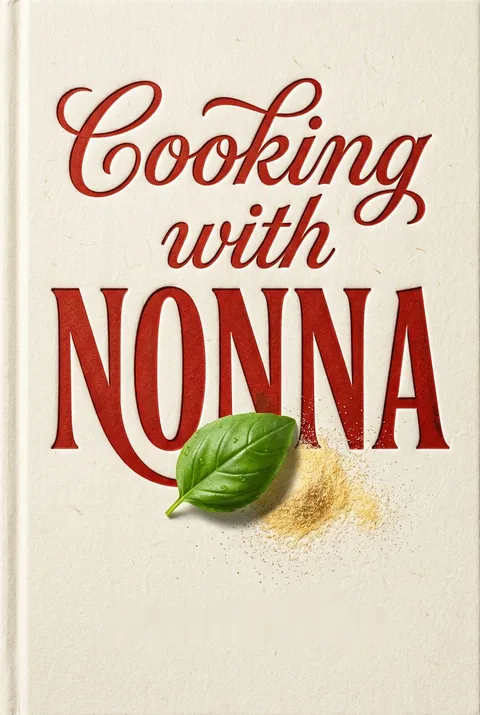
Cooking with Nonna is a cookbook with a second purpose: to make the people behind the recipes visible. Its structure moves from practical instruction to family stories and back again, so ingredients acquire context. A plate of pasta may recall postwar scarcity, a migration across the Atlantic, a husband working abroad, or a Sunday gathering that keeps relatives connected. That narrative approach makes the recipes easier to remember because each one belongs to a person and a place.
The book's central strength is its treatment of tradition as active knowledge. Rago translates imprecise family methods into measurements without claiming that the measured version is the only legitimate one. This is a productive compromise between reproducibility and the sensory judgment that experienced cooks use. The reader gets usable instructions, while the stories explain why variation belongs to the practice. The many regional recipes also resist a flattened idea of Italian cuisine, although a collection of individual family dishes should not be mistaken for a complete survey of Italy.
There is a productive tension between celebrating care and making its costs visible. These grandmothers feed large families, preserve recipes, and maintain rituals, often through work that has historically been expected of women. The book honors that expertise, but its own stories also invite readers to notice who shops, cooks, teaches, and cleans. Passing on a recipe can therefore mean passing on appreciation and responsibility, not simply reproducing an old division of labor.
Ultimately, the most transferable lesson is not a single dish or technique. It is a way of approaching cooking: begin with what is available, learn by doing, pay attention to flavor and texture, and treat a recipe as an invitation to make something meaningful with others. The book succeeds when it turns heritage from a keepsake into a practice that can continue changing.
Review Summary
Cooking with Nonna is a beloved Italian cookbook featuring authentic recipes and heartwarming stories from Italian grandmothers. Readers praise its beautiful layout, step-by-step instructions, and nostalgic feel. Many appreciate the traditional recipes, family stories, and cultural insights. The book receives high marks for its appetizing photos and wide range of dishes, from appetizers to desserts. While some find the recipes familiar, others are excited to try new dishes. A few reviewers note that some recipes are heavy on butter and oil. Overall, the cookbook is highly recommended for those interested in Italian cuisine and culture.
People Also Read

Glossary
cucina povera
resourceful cooking from scarcityAn Italian culinary tradition shaped by limited resources, seasonal availability, and the need to make inexpensive ingredients satisfying. In the book, dishes such as artichoke pie, made when meat was costly, show how vegetables, bread, beans, and careful preparation could form substantial meals. The term describes ingenuity under constraint, not a single recipe or fixed style.
semolina rimacinata
finely milled semolina flourA refined semolina flour, also described in the book as bread semolina flour, used for Southern Italian pasta dough. It produces a smoother dough with less effort than coarser semolina and gives pasta a firmer bite. The book recommends it for shapes such as orecchiette and cavatelli, and for pasta made with an extruder.
maritati
paired pasta shapesA Pugliese pasta combination made by serving orecchiette and maccheroni together. The name refers to married couples, with each shape imagined as one partner in a pair. In the recipe featured in the book, the mixed pasta is served with tiny meatballs in tomato and basil sauce.
chitarra (guitar)
stringed pasta-cutting toolA wooden pasta-cutting device fitted with taut strings. A sheet of pasta is placed over the strings and pressed with a rolling pin, which cuts it into long strands. The book uses the tool to make spaghetti and presents it as a hands-on way for family members to participate in pasta making.
pastina
tiny soup pastaA name for very small pasta shapes, including the star-shaped stelline used in one of the book’s simple soups. Pastina is cooked in broth or bouillon and often served with grated Parmigiano-Reggiano. The book notes its association with young children and remembers it as a comforting food from the author’s childhood.
pasta reale
traditional almond pasteAlmond paste used in Pugliese sweets and special-occasion baking. In the wedding cake described in the book, it forms a layer alongside custard and cherries between slices of sponge cake. The name means royal paste, and the book presents it as a distinctive regional element of a celebratory dessert.
Download PDF
Download EPUB
.epub digital book format is ideal for reading ebooks on phones, tablets, and e-readers.








