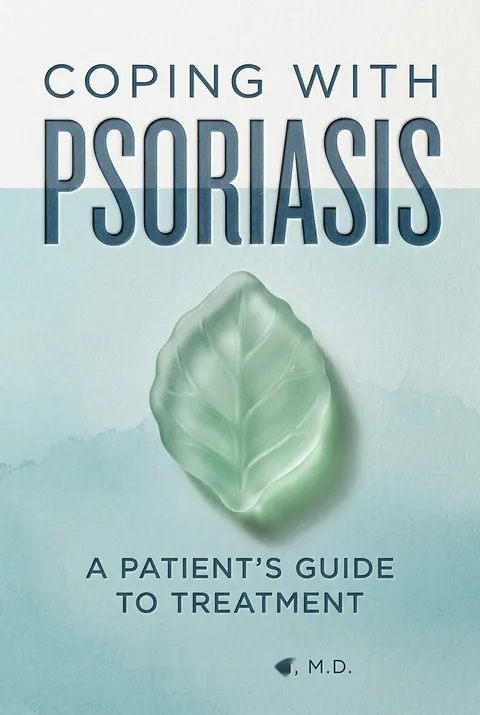


Key Takeaways
Treat psoriasis as a recurring immune-linked disease, not a cosmetic flaw
More than a surface problem. Psoriasis makes skin cells multiply too quickly, producing red patches and silvery scales. The book describes it as a likely T-cell-mediated autoimmune disease: immune cells appear to drive the skin changes, although the precise trigger remains uncertain. It estimates that about 2 percent of people worldwide have psoriasis, and that roughly 10 percent of affected people develop psoriatic arthritis.
Expect an uneven course. Symptoms may stay limited, spread widely, or flare after infections, skin injuries, stress, or certain medications. A family history raises the likelihood, but the disease can occur without one. Treatments can clear lesions, yet recurrence is common, so the practical aim is sustained control rather than assuming one successful course means the problem is gone.
The distinction between a visible symptom and an underlying disease matters. Calling psoriasis merely a skin problem can make both patients and insurers underestimate its effects, while treating every flare as a personal failure misunderstands its unpredictable course. The book's immune explanation helps replace blame with a biological model, but it is careful to leave the exact cause unresolved. That uncertainty is useful: a plausible mechanism can guide research without pretending that every trigger, flare, or individual case has already been explained.
Visible lesions can quietly reorganize intimacy, work, and ordinary life
Concealment has a cost. The book's patient stories show people reshaping daily life around the fear of being seen. Martha avoided dresses and swimsuits, and hid her skin from partners. Susan worried that customers could see through her clothes. Arthur, a business owner, moved to a guest room because of flakes and treatment odor, then struggled to tell employees why he needed care.
The burden is not only physical. A 1996 quality-of-life study cited in the book found that patients felt the public and doctors underestimated psoriasis's social and emotional impact. Participants reported that anger and embarrassment could affect life more than physical limitations. The cases also include profound despair, including suicidal thoughts, showing why severe distress deserves direct attention rather than being dismissed as vanity.
These accounts make an invisible burden legible: a person may look composed while spending considerable effort managing exposure, clothing, relationships, and other people's assumptions. The stories also resist the idea that distress is proportional to the number of lesions. A small visible patch can carry a large social meaning. At the same time, concealment is not inherently wrong; privacy can be a legitimate choice. The important distinction is whether it feels chosen or whether fear has begun to dictate the person's life.
Treat shame and depression as part of care, not private weakness
Name the emotional strain. Anger, embarrassment, denial, isolation, low self-esteem, and sexual concerns are presented as understandable responses to a visible, recurring condition. The book argues that acknowledging the disease and speaking about it can reduce the burden of secrecy. Patients may choose to explain that psoriasis is not contagious and varies in severity, especially to close friends or intimate partners.
Build support around the person. The author recommends talking with trusted people, seeking professional help when fear or depression becomes overwhelming, and using relaxation practices such as breathing, meditation, or guided imagery to manage stress. Children need particular care: the book advises parents to watch for withdrawal, school difficulties, or loss of interest in friends, and to enlist teachers when misunderstandings or teasing arise.
The strongest point here is that emotional care is not an optional consolation prize. Shame can narrow a person's social world, while informed support can make treatment and ordinary connection easier to sustain. The book's suggestions also distinguish acceptance from resignation: acknowledging psoriasis does not mean approving of its effects or giving up on treatment. Its more debatable claim is that a positive outlook may directly improve physical healing. A safer reading is that emotional support can improve coping and persistence, without making patients responsible for controlling the disease through attitude alone.
Choose a dermatologist who listens, explains options, and shares decisions
Care depends on trust. The book recounts patients who were dismissed after unsuccessful treatment or given confusing, unhelpful advice. Such encounters can deepen hopelessness and make patients less willing to follow a plan. It recommends seeking a dermatologist experienced with psoriasis who takes concerns seriously, communicates plainly, and treats the patient as a partner.
Make each visit useful. Patients are encouraged to ask about likely benefits, risks, side effects, cost, duration, and alternatives. They should report symptoms and treatment problems honestly, take notes, and bring a trusted person if that helps them understand instructions. A second opinion is reasonable. When insurance restricts specialist access or denies care, the book advises using appeal procedures and asking an employer's human resources department for assistance.
This partnership model recognizes that treatment is not simply a prescription delivered to a passive recipient. A plan that ignores the patient's work, finances, discomfort, or emotional state may be technically sound yet impossible to follow. Shared decisions make those practical constraints visible before they become reasons for silent nonadherence. The book's standard for a good physician is appropriately relational as well as technical. Still, patients should not have to compensate for every system failure through persistence; access and appointment time are structural issues, not tests of personal commitment.
Make adherence possible by fitting treatment to your actual life
Self-help is not going it alone. In this book, it means becoming informed and drawing on doctors, family, friends, support groups, and reliable educational resources. Patients can ask for written instructions, keep a record of questions, and enlist help when a regimen is hard to remember or apply.
Complexity causes real failure. The author cites studies indicating that, in some cases, half of patients do not follow prescribed treatment correctly. Psoriasis routines may involve different products for different body areas or times of day, making frustration understandable. The book advises giving a clinician's plan time to work, reporting side effects, and being honest when instructions are not being followed. The point is not to scold patients, but to make the plan workable enough to continue.
The useful shift is from asking whether a patient is sufficiently disciplined to asking whether the regimen is sufficiently feasible. That question changes the conversation: missed applications may reflect an impractical schedule, unclear instructions, cost, or discomfort rather than indifference. Support from another person can reduce the logistical load, but it should remain an invitation, not an obligation. The book's emphasis on knowledge is strongest when information helps patients ask better questions, not when it leaves them feeling responsible for mastering every technical detail.
Start with a manageable topical plan, then reassess its benefits and risks
Topicals vary in strength and burden. The book describes moisturizers as a simple way to soften skin and ease itching. Topical corticosteroids can reduce inflammation and improve lesions, but strong products are intended for limited, short-term use because misuse can thin skin, cause stretch marks, or worsen psoriasis. Coal tar and anthralin are older options that can be effective but may stain, smell, or require careful application.
Newer products had trade-offs too. The source describes calcipotriene, sold as Dovonex, as a vitamin D derivative that may take weeks to work, and tazarotene, sold as Tazorac, as a potent topical retinoid that can irritate skin. These details reflect a 2000 guide, not current prescribing advice. A dermatologist should help determine what is appropriate for a person's skin, health, and treatment goals.
Topical care illustrates a recurring trade-off in chronic illness: a treatment can work on paper and still fail if it is unpleasant, time-consuming, or difficult to apply consistently. The book is valuable for making those burdens explicit instead of treating them as minor inconveniences. It also shows why treatment should be judged by more than speed of clearing: tolerability and the duration of benefit matter. Because medication options and safety guidance change, the historical drug details are best understood as examples of trade-offs, not a present-day treatment menu.
For extensive psoriasis, supervised light therapy can offer relief beyond creams
Light can be part of a treatment plan. The book explains that ultraviolet B, or UV-B, can improve psoriasis and may be combined with topical treatments. It describes the Goeckerman regimen, a treatment using coal tar and UV-B, as an option for resistant or extensive disease. Its tar can be messy, so the regimen was commonly delivered in a day-care center, where staff could also teach home care and provide support.
Effective does not mean risk-free. The book reports favorable results for office-based UV-B and says four out of five patients in cited studies using PUVA, a combination of psoralen and ultraviolet A, cleared completely. It also warns of risks from excessive or cumulative ultraviolet exposure, including skin damage and cancer. These historical figures and protocols should not replace current specialist guidance.
The day-care-center model is notable because it treats intensive care as both a medical procedure and a learning environment. Patients receive treatment, but they also gain instruction and a sense that their condition is being taken seriously. That combination helps explain why the author's account emphasizes patients' relief as well as cleared skin. Yet the appeal of a visible result should not obscure cumulative risk. Light therapy requires individualized supervision, and a past success rate cannot determine whether a particular method is safe or suitable for an individual today.
Reserve systemic drugs for serious disease and monitor their cumulative risks
Whole-body medicines have a different risk profile. The book discusses methotrexate, cyclosporine, and oral retinoids for moderate to severe psoriasis, especially when disease is disabling or other approaches have failed. They can produce substantial improvement, but may affect the liver, kidneys, blood pressure, or reproductive health. The author emphasizes careful patient selection and regular medical monitoring.
Long-term exposure matters. The book describes rotational therapy, in which clinicians alternate treatments to limit the duration of exposure to any one potentially toxic drug. It also warns that systemic corticosteroids can provoke severe flares when stopped abruptly. These are clinical decisions, not do-it-yourself strategies. The book was published in 2000, so its specific medication guidance and risk estimates are historical and should be checked against current specialist advice.
This section asks readers to hold two truths at once: a powerful drug may restore function when disease is severe, and the same drug may require substantial monitoring. That is a more useful frame than labeling treatment either dangerous or miraculous. The idea of rotation reflects an effort to manage cumulative exposure, but it is not a universal formula; the right balance depends on the individual and the available options. The book's strongest practical lesson is to understand why a medicine is chosen and what follow-up is needed, rather than judging it by its name alone.
Treat supplement claims as hypotheses, not psoriasis cures
Anecdotes are not proof. The book reviews diets and supplements that have been promoted for psoriasis. The much-publicized turkey diet was based on a mistaken claim about turkey's tryptophan content, and later studies did not confirm its benefit. Fish oil showed modest improvement in one cited study, while other reports were anecdotal. The author recommends balanced nutrition and cautions against extreme dieting or unverified claims.
Natural products can still cause harm. The book cites reports received by the FDA from 1993 to 1998 that linked supplements to 2,621 serious problems, including 101 deaths. It notes that the evidence for many alternative treatments was weak and urges patients to check with a physician before using herbs or supplements, especially alongside prescribed treatment. Products advertised as miracle cures deserve particular skepticism.
The book avoids two easy errors: dismissing every nonstandard approach out of hand and treating popularity as evidence of effectiveness. That balanced stance matters for a chronic illness, where people may understandably search for relief beyond conventional treatment. A helpful test is whether a claim is specific, independently evaluated, and transparent about risk. The supplement examples also reveal a regulatory tension: consumers may encounter persuasive marketing before dependable evidence. Curiosity is reasonable, but it should not require abandoning a treatment plan or accepting unsupported promises.
Keep hope in research while today's plan targets control and quality of life
The cause was still unsettled. The book presents research into immune activity and genetics as promising but incomplete. It describes activated T cells as central to the disease process while noting that researchers did not yet know what initially triggered them or why they stayed active. It also reports that inherited susceptibility does not guarantee psoriasis, suggesting other factors are involved.
Research is not the same as a cure. The author surveys experimental approaches aimed at immune cells, signaling proteins, and genetic mechanisms, while acknowledging that much work remained. For people living with psoriasis, the practical message is to seek effective care, learn management skills, and protect quality of life without waiting for a definitive cure. The book's optimism rests on new avenues of study, not on a promise that a cure is imminent.
The research discussion models a useful kind of hope: it treats uncertainty as a reason for careful investigation, not as a reason to blame patients or claim that a cure is just around the corner. Its account of immune cells and inherited risk also links individual experience to mechanisms that can be tested. That distinction matters because scientific promise can be overstated when translated into consumer expectations. Hope is most durable when paired with a present-tense plan that addresses symptoms, relationships, and daily function.
Analysis
This book's enduring contribution is its insistence that psoriasis cannot be understood from the skin outward alone. Its patients are not simply managing lesions; they are managing visibility, stigma, intimacy, work, and the fatigue of recurring treatment. The narrative strategy supports that claim: four personal histories make the emotional consequences concrete before the book turns to practical guidance. This structure gives the clinical material a human purpose. Treatment is not an abstract contest over which drug clears skin fastest; it is a route back toward ordinary choices and relationships.
The strongest practical idea is partnership. A patient who understands the disease, can speak frankly about treatment burdens, and has a responsive clinician is better positioned to make a plan that can be sustained. The book also usefully distinguishes self-help from solitary self-reliance. Support, education, and professional care belong in the same picture.
Some claims need a careful reading. The book sometimes implies that positive outlook and psychodynamics may directly improve physical healing. Its cited small studies suggest a possibility, but they do not justify making optimism a treatment obligation. Psychological support has clear value as support for coping and quality of life, even when a direct biological effect is uncertain. Likewise, alternative therapies are treated with welcome openness, but the evidence described is often anecdotal or preliminary.
The publication date matters. This 2000 guide predates modern biologic treatments for psoriasis, and its drug options, safety figures, and treatment protocols are not a current clinical reference. Readers can retain its durable lessons about dignity, shared decisions, and evidence skepticism while checking all medical choices with a dermatologist familiar with present-day care. Its central message still holds: psoriasis deserves serious treatment, and no one should have to face it in isolation.
Glossary
T cell-mediated autoimmune disease
Immune-driven skin diseaseThe book's proposed model of psoriasis: immune cells called T cells become activated and contribute to the abnormal growth and inflammation of skin cells. The exact initiating trigger was not known in the book. The term describes a suspected disease mechanism, not a claim that every detail of psoriasis's cause had been settled.
Koebner phenomenon
Lesions at injury sitesThe appearance of psoriasis lesions at places where the skin has been injured. The book lists physical injury as one factor that can bring on or aggravate psoriasis in a susceptible person. The term helps explain why a flare may emerge on damaged skin, rather than only in the areas where lesions had appeared before.
Goeckerman regimen
Coal tar with UV-BA psoriasis treatment combining coal tar applied to the skin with exposure to ultraviolet B light. The book describes it as a long-established option for extensive or resistant psoriasis, often provided in a day-care setting because tar is messy and treatment requires supervision. Its specific methods and suitability require current medical guidance.
PUVA
Psoralen plus UV-AA form of photochemotherapy that combines psoralen, a light-sensitizing medicine, with ultraviolet A exposure. In the book's described protocol, the medicine is taken before the light treatment. PUVA could improve extensive psoriasis, but the source also discusses nausea and cumulative risks, including skin cancer.
Rotational therapy
Alternating treatments over timeA strategy described for managing serious psoriasis in which a clinician switches among treatments rather than keeping a patient on one potentially toxic therapy indefinitely. The goal is to limit prolonged exposure and allow time away from each treatment. The approach requires specialist judgment and is not a self-directed schedule.
Psychodynamics
Forces shaping behaviorThe book uses this term for conscious and unconscious motivations that influence a person's behavior and attitudes. In its discussion of psoriasis, the concept connects emotional experience, coping, and treatment participation. The author explores whether psychological factors may also affect the course of disease, while the strength of that direct physical link remains uncertain.
Download PDF
Download EPUB
.epub digital book format is ideal for reading ebooks on phones, tablets, and e-readers.








