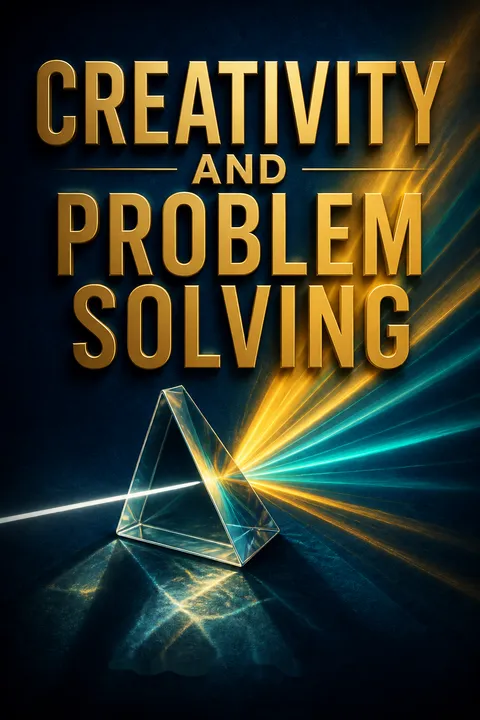


Key Takeaways
Creativity is a trainable work skill, not a rare gift.
Creativity has conditions. Tracy treats creative thinking as a capacity people can strengthen, not a talent reserved for a few. Past criticism can teach someone to dismiss their own ideas; a workplace that listens respectfully can help ideas surface. Self-image matters too: seeing oneself as capable of creative work can encourage more attempts, and practice creates more chances for a useful idea to emerge.
Kodak shows the cost. The company developed digital photography but, according to Tracy, rejected it because leaders defined the business around film. Competitors embraced the technology, and Kodak lost its dominant position. The lesson is not simply to praise every idea. It is to create conditions where promising ideas can be examined before habit or identity shuts them down.
The workplace point aligns with research on psychological safety, the shared sense that people can raise concerns without being punished or humiliated. That climate does not guarantee good ideas, but it improves the odds that weak signals reach decision-makers. Kodak also illustrates a subtler danger: expertise can narrow a company’s definition of its own business. Still, the story should not imply that believing oneself creative is sufficient. Skills, incentives, resources, and sound evaluation determine whether confidence becomes useful work.
Give your mind a precise goal and a harder question.
Focus creates a target. Tracy identifies three triggers for creativity: a strongly desired goal, a pressing obstacle, and a focused question. Naming a goal clearly helps distinguish the destination from the busywork surrounding it. To locate the obstacle, ask why the goal has not already been reached, then identify the most important reason. Test the assumptions built into both answers, since a mistaken premise can send effort toward the wrong problem.
Questions can redirect a business. Intel leaders Gordon Moore and Andrew Grove reportedly asked what new management would do if it replaced them. They concluded that Intel should leave commodity memory chips and concentrate on microprocessors. The question helped them imagine a different future instead of merely defending their existing strategy.
A focused question functions like a search instruction: it tells attention which details to notice and which possibilities to generate. This is useful in organizations, where vague ambitions often produce activity without a shared definition of success. The Intel story also shows why counterfactual questions can loosen attachment to current plans. The caution is that a vivid question can still smuggle in a flawed assumption. Good inquiry therefore pairs ambition with evidence, and asks not only what could work, but what would prove the diagnosis wrong.
Write twenty answers before deciding your first idea is best.
Quantity can unlock range. Tracy calls his individual exercise Mindstorming, also known as the 20 Idea Method. Write one specific goal or problem as a question, then produce at least twenty action-oriented answers before evaluating them. The first suggestions tend to be familiar; the effort of continuing can push thinking into less obvious territory. Tracy recommends exploring four kinds of change: do more of something, do less, start something, or stop something.
Choose an action. Once the list is complete, select at least one answer to try promptly. A goal such as doubling sales becomes more productive when converted into a precise question with a number and time frame. The point is not to treat every suggestion as wise. It is to delay judgment long enough to give less familiar possibilities a chance to appear.
Separating idea generation from evaluation is a practical form of divergent thinking, the deliberate production of multiple possibilities before selecting among them. It reduces the tendency to mistake the first plausible answer for the only answer. The exact target of twenty is a useful constraint, not a scientific threshold. For a complex decision, a long list can also create noise, so ideas still need testing against cost, feasibility, and evidence. The strongest feature is the sequence: first widen the options, then make a choice.
Make teams generate ideas before anyone starts judging them.
Protect the early draft. Tracy recommends brainstorming groups of four to seven people and sessions lasting roughly fifteen to forty-five minutes. Set a clear time limit, appoint a leader to invite contributions, and assign someone to record them. During generation, withhold criticism and aim for many ideas. A rough suggestion may become useful when combined with another, while immediate ridicule teaches people to stay quiet.
Give everyone a route in. Tracy also describes the Nominal Group Technique: pose a focused question or incomplete sentence, then invite participants to supply possible endings. This can help a group produce responses without relying only on whoever speaks loudest. The method works best when evaluation follows the idea-making session, rather than interrupting it. Later, the team can test promising proposals against evidence and practical constraints.
The structure addresses a common group failure: status and speed can make a few voices dominate while others self-censor. A turn-taking leader and a visible record make participation more equitable and preserve ideas for comparison. Separate generation from critique, but do not confuse temporary nonjudgment with permanent acceptance. Teams still need a clear decision process, including criteria and ownership, or brainstorming becomes performance without implementation. The time limit helps focus attention, though psychological safety and the quality of the prompt matter more than a precise session length.
Solve the actual problem in writing, then assign action and a deadline.
Start with a diagnosis. Tracy’s systematic approach begins by defining the situation clearly in writing. Gather facts, check assumptions, consult people who have solved similar problems, and consider possible causes before choosing a solution. If the answer remains unclear after serious effort, set the issue aside briefly; sleep or a change of focus may help useful connections surface. Record any promising insight rather than trusting memory.
Turn thought into work. Decide what to do, name who is responsible, set a deadline, and monitor whether the action is working. Tracy says that clear written definition alone can solve many problems, because it exposes fuzzy thinking. His account of Intel’s strategic shift offers a related lesson: identifying the desired outcome can reveal that the current route, not merely its execution, needs to change.
This process combines diagnosis, information gathering, option generation, and implementation, a useful antidote to acting on the first explanation that feels convincing. Writing also creates a durable object that colleagues can challenge and refine. A pause can help after concentrated preparation, but it is not a substitute for evidence or expertise, and an insight that arrives in the night still needs testing. The most operationally important move may be assigning responsibility: without an owner and feedback, even a sound solution remains only a discussion.
Break habitual thinking by changing the frame and borrowing the customer's view.
Try another description. Tracy contrasts mechanical thinking, which clings to familiar interpretations, with adaptive thinking, which stays open to alternatives. Lateral thinking deliberately disrupts the usual frame. A company saying its sales are falling might instead ask why customers are buying less. That shift can point toward customer needs rather than simply urging sales staff to push harder. Random associations, such as describing a business as an orange, can also expose hidden divisions or overlooked strengths.
Look from outside. Tracy urges businesses to study what customers want and to build around that knowledge, rather than falling in love with a product already made. He also recommends temporarily arguing the opposing view of a situation. These exercises do not guarantee a breakthrough, but they help expose assumptions that routine analysis may leave untouched.
Reframing changes the questions a team considers, which can matter as much as improving its answers. Customer-centered inquiry also counters a producer’s bias: internal teams often know their product far better than they know the friction customers experience. Random association is most useful as a prompt for exploration, not as evidence. Likewise, adaptive thinking should not become endless openness. At some point, a team must decide which interpretation best fits observed behavior and test it in the market.
Protect quiet time for deliberate thought, then let prepared problems incubate.
Switch out of autopilot. Tracy distinguishes fast, automatic thinking from slow, effortful thought. Quick responses suit routine situations, but decisions with lasting consequences deserve time, questions, and written analysis. He recommends creating uninterrupted periods of focused work, sometimes thirty to ninety minutes, by disconnecting from distractions.
Prepare, pause, capture. Tracy describes the conscious mind as the active analyst, the subconscious as a storehouse that can recombine experience, and the superconscious as a source of creative insight. The last term reflects his personal model, not an established scientific mechanism. His practical advice is more grounded: gather relevant information, work on the problem, step away or sleep, and keep a place to record ideas. He also suggests communicating through words, images, and discussion rather than relying on one format.
The strongest practical claim is about attention: sustained work is difficult when interruptions repeatedly reset the task. Research on incubation suggests that taking a break after working on a problem can sometimes support new associations, though it does not ensure an answer. Tracy’s three-minds vocabulary can serve as a memorable metaphor for analysis, stored experience, and insight, but the superconscious should not be mistaken for a validated cognitive system. The useful habit is to prepare carefully, allow distance, and evaluate whatever idea emerges.
Reassess commitments by asking whether you would choose them today.
Use current knowledge. Tracy calls this test KWINK analysis, short for asking whether, knowing what is known now, one would enter a commitment again. Apply it to relationships, business activities, products, and investments of money, time, or emotion. If the honest answer is no, the next question is how to exit or change course. Past effort alone is not a reason to keep investing.
Face what changed. Tracy describes a company whose growth stalled because a longtime colleague could no longer handle the demands of a larger business. Replacing that person was painful, but the company’s sales and profits reportedly rose sharply afterward. The point is not that every difficult relationship should end. It is that loyalty to an old decision should not prevent an honest assessment of present fit and performance.
KWINK is a practical defense against the sunk-cost fallacy, the tendency to let unrecoverable past investments dictate future choices. Decision quality improves when the question shifts from what has already been spent to what the next step is likely to produce. Yet the test should not become an automatic order to quit. Relationships and organizations involve obligations, transition costs, and possibilities for repair. A careful reassessment compares realistic alternatives, including renegotiation, role changes, and a planned exit.
Treat market surprises and mismatches as early signals for innovation.
Scan for change. Drawing on Peter Drucker, Tracy identifies seven sources of innovation: unexpected events, mismatches between expectation and reality, process needs, shifts in industry structure, demographic changes, changes in values or perceptions, and new knowledge. These categories direct attention toward places where customers, operations, or markets are changing.
Notice the accident. Pierre Omidyar reportedly built an online auction site to sell Pez dispensers, then expanded it after the unexpected response revealed broader demand. Tracy also describes Domino’s founder Tom Monaghan simplifying the pizza menu around popular orders so the delivery process could move faster. The examples point to two different openings: unexpected customer enthusiasm and a process bottleneck. Innovation can begin by noticing either one.
The seven sources act as an environmental scanning checklist. They encourage leaders to look beyond formal research and notice anomalies, operational frustrations, and changes in who is buying. Omidyar’s example highlights the value of responding to behavior rather than assuming a small initial use defines a market. Still, an anomaly is a clue, not proof of a scalable opportunity. Customer response should be measured, and a process improvement should be assessed for quality as well as speed.
Test ideas against customer value, simplicity, and a real alternative.
Compare the value. Tracy’s value-engineering principle asks what a product does for customers, what it costs, and what else could accomplish the same job at what cost. A product must improve meaningfully on the alternatives customers already use. Tracy also recommends exploring other uses, adapting successful approaches from elsewhere, changing size or packaging, substituting materials, combining offerings, or finding value in a by-product.
Make the case plain. Before investing heavily, assess whether an idea works, fits customer behavior, is timely and feasible, and can be explained simply. Tracy warns that many new products fail, even after research. His example of adhesive-electrode scraps repackaged as useful protective dots shows that overlooked leftovers can have value. Ask customers what would make an offering more useful, then test responses against actual buying behavior.
The alternative-cost question is powerful because it forces a product team to compete with the customer’s existing solution, including doing nothing. Simplicity also reduces the burden of explaining and adopting an unfamiliar offer. The product-change prompts encourage recombination rather than assuming innovation requires invention from scratch. However, asking customers what they want is not enough: stated preferences can differ from purchases. Strong evaluation pairs interviews with small, observable tests of use, willingness to pay, and repeat demand.
Analysis
This book is best understood as a practical field guide to making thought more deliberate. Its most durable contribution is not a single theory of creativity but a working sequence: identify a consequential goal, define the obstacle, generate alternatives, examine assumptions, choose a response, and act. The sequence connects individual habits, team discussion, and business strategy. Its examples make the cost of closed thinking concrete, especially Kodak’s defense of film and Intel’s willingness to reconsider what business it was actually in.
The book also contains a tension. It treats creativity as learnable and systematic, yet some of its explanations rely on broad claims about genius, brain capacity, intuition, and a superconscious mind that the text does not substantiate. Those ideas are most useful when read as metaphors for attention, memory, and associative thought, not as established neuroscience. Similarly, the visual, auditory, and kinesthetic categories can encourage varied communication, but should not be used to label people as fixed learner types.
The practical methods are stronger when treated as experiments rather than guarantees. Twenty ideas is a prompt to persist beyond the obvious, not a magic number. Optimistic language can make a challenge feel manageable, but it cannot replace diagnosis. A break may help a prepared mind connect ideas, but evidence and testing must determine whether an insight is sound. The same discipline applies to business innovation: customer interest, operational feasibility, and a clear advantage over alternatives matter more than novelty alone.
The book’s useful message is therefore both encouraging and demanding. People can improve how they think, but improvement requires environments that permit dissent, questions that expose assumptions, and follow-through that makes ideas accountable to results. Creativity is not merely having more ideas. It is building a repeatable path from uncertainty to a tested decision.
Review Summary
Reviews of Creativity & Problem Solving are mixed. Some readers find it helpful for learning techniques to enhance creativity and solve problems, praising its straightforward approach and practical tips. Others criticize it for being overly simplistic, lacking depth, and rehashing concepts from other books. Several reviewers note its focus on business applications. While some appreciate Tracy's motivational style, others find the content lacking substance. The book's brevity is seen as both a strength and weakness, depending on the reader's expectations and prior knowledge of the subject.
People Also Read







Glossary
Mindstorming
Individual idea generationA structured exercise for generating many possible answers to one clearly written goal or problem. The participant writes at least twenty action-oriented responses before evaluating them. Tracy presents it as a way to push past familiar first ideas, then select at least one response for prompt implementation.
20 Idea Method
Generate twenty answersTracy’s alternate name for Mindstorming. A person frames a specific objective as a question, then writes at least twenty possible actions in response. The exercise prioritizes quantity before judgment and encourages considering what to do more of, less of, begin, or stop.
Nominal Group Technique
Structured group idea elicitationA method Tracy uses in group idea generation. Participants respond to a focused prompt, often by completing an unfinished sentence with multiple possible answers. The technique gives a group a shared stimulus and can make it easier to gather contributions systematically rather than relying on spontaneous discussion alone.
KWINK analysis
Reconsider choices using current knowledgeA decision test based on the question, knowing what is known now, would someone choose this commitment again? Tracy applies it to relationships, business activities, and investments of money, time, or emotion. If the answer is no, the follow-up is to consider how to change or leave the situation.
Zero-based thinking
Reassess commitments from scratchA way of reconsidering existing decisions without treating past investment as a reason to continue. The person asks whether they would begin the activity or commitment today, given current knowledge. Tracy uses it to identify relationships, products, processes, and investments that may no longer justify further effort.
Lateral thinking
Disrupt habitual problem framesA style of problem exploration associated in the book with Edward de Bono. It deliberately moves away from the most familiar interpretation of a situation, using techniques such as reversing a phrase, making a random association, or imagining obstacles removed. The purpose is to surface options conventional reasoning may overlook.
Value-engineering principle
Compare customer benefit and costA method for examining a product or service through the customer’s perspective. It asks what the offering does, how it improves the customer’s life or work, what it costs, and what alternatives could provide the same benefit at what cost. The comparison helps clarify whether the offer provides meaningful value.
Seven Sources of Innovation
Checklist for innovation opportunitiesA framework attributed in the book to Peter Drucker. Its sources are unexpected events, incongruities between expectation and reality, process needs, changes in industry structure, demographic shifts, changes in values or perceptions, and new knowledge. The categories help businesses scan for potential opportunities in markets and operations.
Superconscious mind
Tracy’s model of creative insightIn Tracy’s account, a source of inspiration, intuition, and creative breakthroughs that works beyond deliberate conscious thought. He describes a clearly written goal or problem as material that can continue to be processed outside conscious attention. This is the author’s explanatory framework, not an established scientific category of mind.
FAQ
What's "Creativity and Problem Solving" by Brian Tracy about?
- Overview: "Creativity and Problem Solving" by Brian Tracy is a guide to enhancing creative thinking and problem-solving skills, particularly in a business context.
- Focus: The book emphasizes the importance of creativity in achieving success and provides practical methods to develop and apply creative thinking.
- Structure: It is structured around various techniques and exercises designed to stimulate creativity and improve problem-solving abilities.
- Goal: The ultimate goal is to help individuals and organizations generate innovative ideas and solutions to drive success.
Why should I read "Creativity and Problem Solving" by Brian Tracy?
- Skill Development: The book offers practical methods to enhance your creative thinking and problem-solving skills, which are crucial for career advancement.
- Proven Techniques: Brian Tracy provides a series of proven techniques that can be immediately applied to generate innovative ideas.
- Career Impact: The ability to solve problems creatively is highlighted as a key determinant of career success and organizational growth.
- Personal Growth: It encourages a mindset shift towards continuous learning and adaptation, which is beneficial for personal and professional development.
What are the key takeaways of "Creativity and Problem Solving" by Brian Tracy?
- Creativity as a Skill: Creativity is a learnable skill that can be developed with practice, much like riding a bicycle or using a computer.
- Mindset Shift: A positive and optimistic mindset is crucial for unlocking creativity and overcoming challenges.
- Systematic Approach: The book outlines a systematic approach to problem-solving, emphasizing clarity, research, and action.
- Innovation Sources: It identifies seven major sources of innovation, encouraging readers to look for opportunities in unexpected events and changes.
What are the best quotes from "Creativity and Problem Solving" and what do they mean?
- "Creativity is a skill, like riding a bicycle or operating a computer, that can be learned and developed with practice." This quote emphasizes that creativity is not an innate talent but a skill that can be cultivated.
- "A foolish consistency is the hobgoblin of little minds." Quoting Emerson, Tracy highlights the danger of sticking to outdated methods and the importance of flexibility in thinking.
- "The very worst use of time is to do very well what need not be done at all." This quote underscores the importance of focusing on meaningful tasks that contribute to goals.
- "You are a potential genius." Tracy encourages readers to believe in their untapped potential and the power of their minds to generate innovative ideas.
How does Brian Tracy define creativity in "Creativity and Problem Solving"?
- Natural Characteristic: Creativity is described as a natural, spontaneous characteristic of individuals with high self-esteem.
- Influence of Environment: A positive working environment that encourages idea generation is crucial for fostering creativity.
- Past Experiences: Past experiences significantly influence one's current level of creativity, with supportive environments enhancing creative abilities.
- Self-Image: Viewing oneself as a creative person is essential for unlocking creative potential.
What is the Mindstorming Method in "Creativity and Problem Solving"?
- Definition: Mindstorming is a technique for generating a large number of ideas to solve a problem or achieve a goal.
- Process: It involves writing down a problem as a question and generating at least 20 answers or solutions.
- Focus on Quantity: The emphasis is on quantity over quality, as the best ideas often emerge from a large pool of possibilities.
- Immediate Action: Implementing at least one idea immediately is crucial to maintain momentum and stimulate further creativity.
What are the Three Triggers to Creativity according to Brian Tracy?
- Intensely Desired Goals: Having clear and exciting goals stimulates creativity as individuals seek innovative ways to achieve them.
- Pressing Problems: Challenges and obstacles are powerful stimulants for creative thinking as they require new solutions.
- Focused Questions: Asking precise and challenging questions can unlock deeper levels of creativity and problem-solving.
How does Brian Tracy suggest using optimism in problem-solving?
- Positive Focus: Optimists focus on what they want and how to achieve it, which drives creative solutions.
- Language Shift: Using positive language, such as referring to problems as "challenges" or "opportunities," changes perception and approach.
- Seek Lessons: Optimists look for valuable lessons in every setback, which can lead to innovative solutions.
- Feed the Mind: Regularly consuming positive and motivational content helps maintain an optimistic outlook.
What is Zero-Based Thinking in "Creativity and Problem Solving"?
- Concept: Zero-based thinking involves reassessing past decisions with current knowledge to determine if they would be made again.
- KWINK Analysis: It stands for "Knowing What I Now Know," and it helps identify areas to change or discontinue.
- Application: It is applied to relationships, business activities, and investments to ensure alignment with current goals and realities.
- Flexibility: This approach encourages flexibility and the willingness to change course when necessary.
How does Brian Tracy recommend practicing Lateral Thinking?
- Breaking Patterns: Lateral thinking involves breaking habitual thinking patterns to find new solutions.
- Reverse Keywords: Changing the language used to describe problems can lead to new perspectives and solutions.
- Random Association: Using unrelated words to describe a problem can stimulate creative thinking.
- Fantasizing: Imagining ideal scenarios without limitations can reveal new possibilities and solutions.
What are the Seven Sources of Innovation according to Brian Tracy?
- Unexpected Events: Successes, failures, or external events can lead to new business opportunities.
- Incongruity: Discrepancies between reality and expectations can inspire innovative solutions.
- Process Need: Innovations often arise from the need to improve or create new processes.
- Industry Structure Changes: Shifts in industry dynamics can open up new opportunities for innovation.
- Demographic Changes: Changes in population demographics create new markets and demands.
- Changes in Values: Shifts in consumer values and perceptions can lead to new product opportunities.
- New Knowledge: Scientific and technological advancements can create entirely new industries.
How does Brian Tracy suggest evaluating new ideas in "Creativity and Problem Solving"?
- Effectiveness: Determine if the idea will work and make a meaningful difference.
- Efficiency: Assess if the idea is a significant improvement over existing solutions.
- Compatibility: Ensure the idea aligns with human nature and consumer behavior.
- Simplicity: The idea should be simple enough to be easily understood and adopted by consumers.
About the Author
Other books by Brian Tracy







Download PDF
Download EPUB
.epub digital book format is ideal for reading ebooks on phones, tablets, and e-readers.








