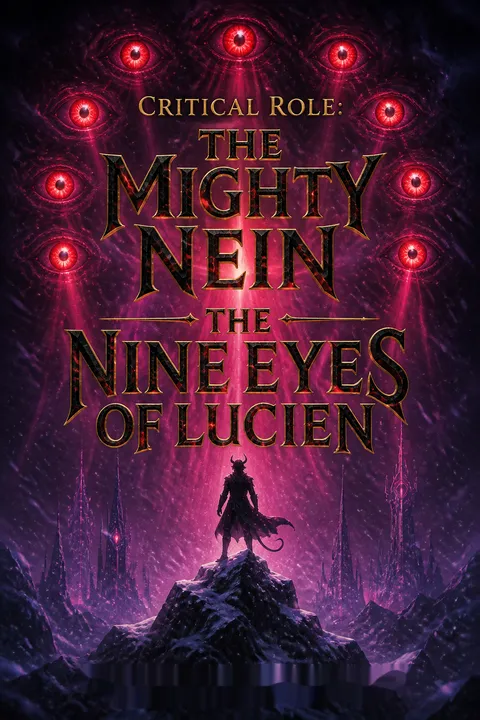


Plot Summary
The Witch's Hollowing
In Shadycreek Run, twelve-year-old Lucien survives by taking small jobs and sleeping in Auntie Mama’s cellar. His friend Cree brings him a more dangerous opportunity: find the stolen goods from a caravan raid and question the captive dwarf, Danya.
When armed pursuers arrive, Lucien leads Cree to the cottage of Azrahari, a witch he has met before. Azrahari kills their attackers by hollowing them through her amulet, then forces Danya to reveal where the stolen coffer lies. Cree flees, but Lucien stays long enough to learn that Azrahari considers his old debt repaid.
On the way to the coffer, Cree demands the truth. Lucien explains that his parents used him to lure victims to the witch, who hollowed his brother and made a puppet of the corpse. He eventually burned down his family’s caravan to stop them. The coffer’s trap explodes in his face.
Blood Beneath the Monastery
Years later, Lucien trains with Cree and Brevyn Oakbender in the secretive Claret Orders, whose blood hunters use their own blood to wield magic against monsters. The Order gives him food, shelter, and friends, but its chores and rituals feel like another life decided for him.
He keeps his distance from Karem Ferentus, the mentor who offers steady guidance, and hides his growing shame over neglecting letters from Aldreda, the sister he once promised to reunite with. When Cree receives her first hunting contract, Lucien discovers it concerns Azrahari.
Cree has accepted the assignment without telling him because she knows his history with the witch. He argues that the contract should be his, pressing his grief and their loyalty until Cree yields it. The decision gives him the chance to confront Azrahari, but it also turns Cree’s first hunt into a test of their friendship.
Azrahari's Last Hunt
Lucien, Cree, and the severe hunter Sarenne de Chastain reach Azrahari’s cottage and lure the witch outside with a false cry of a child. Lucien attacks first, cutting off the hand that holds the amulet and freezing the wounds with his blood magic.
When Azrahari falls, Lucien ignores Sarenne’s demand that Cree finish the contract cleanly and drives his daggers into the witch himself. He then enters the cottage and sees the puppets made from the people he once delivered to Azrahari. Lucien scatters the hearth’s coals across the room, setting the cottage alight.
The deed should feel like justice, but the empty house offers no answer for his murdered brother or the children his family sacrificed. Sarenne reprimands him for taking Cree’s contract. Lucien brushes her off, yet privately recognizes that killing Azrahari has left him feeling almost nothing.
Books for the Archmage
Bored with the Orders’ scarce contracts, Lucien works with Cree and Brevyn to steal a shipment of ancient books for Vess DeRogna, an archmage connected to the powerful Cerberus Assembly. At the Clever Copper Inn, Lucien negotiates with the nervous owners, Musty Deg and Sundry Daly, while mercenaries fill the room.
When bargaining fails, he and Brevyn fight their way through the armed crowd as Cree binds the attackers with blood magic. The trio delivers the books to DeRogna, who pays them and gives Lucien a separate reward: the location of Aldreda.
He finds that his sister has married a silversmith and built a household in Rexxentrum. At last he has an address, money, and a chance to return to the family life he has imagined. He leaves his friends to visit her alone.
A Door Already Closed
At the Center Stone, Aldreda greets Lucien with a baby in her arms and a young boy in the household. She has married silversmith Panvel Seriblo and become a mother to children who depend on her. Lucien offers money and proposes that they begin again, but Aldreda tells him that his long silence made her grieve him and build a life without him.
His blood magic, unexplained work, and resemblance to the brother she remembers from their family’s worst years frighten her. She refuses to risk the safety she has made.
Lucien returns to the others at dawn, stripped of the future he had planned around rescuing his sister. Brevyn admits that she, too, once tried to escape her own family and found only more pain. Lucien decides he will not abandon his friends. He proposes returning to Shadycreek Run, where they can build something on their own terms.
Auntie Mama's Last House
The returning crew finds Auntie Mama’s crooked house abandoned. A former Claret Order hunter, Zoran Kluthidol, and his companions Jurrell and Tyffial Wase arrive looking for shelter, then reveal that Reese Jagentoth publicly executed Auntie Mama. Brevyn’s grief turns the house into a claim she refuses to surrender.
Lucien bargains with the newcomers: they help recover Auntie Mama’s remains and belongings, and they may occupy the upper floors. The raid on Betrayer’s Row succeeds, and Brevyn finds her mother’s hidden will leaving her the house.
Over the following months, the group takes contracts and becomes the Tombtakers. Reese eventually surrounds the house and sets it on fire. Vess DeRogna arrives, reverses the flames, and pays Reese to withdraw. She hires the Tombtakers for an expedition to Aeor, offering enough money to make the dangerous journey possible.
Brevyn Beneath Aeor
DeRogna leads the Tombtakers across Eiselcross toward the buried ruins of Aeor, where lava, cold, unstable passages, and magical hazards turn every mile into labor. In a flooded rotunda, Lucien discovers a hidden chamber containing a dead scholar’s journal and takes it before DeRogna can notice.
When the archmage claims her relic, the chamber collapses. Brevyn returns to retrieve Lucien’s journal and is pinned beneath a falling wall. Lucien stays with her as she dies, and she presses the book into his hands. Grief makes the journal feel inseparable from the person he has lost.
Back at camp, he threatens to abandon DeRogna unless she shares her shelter. He and the remaining Tombtakers then extort extra payment and leave the expedition early, keeping the journal despite DeRogna’s warning that it has cost him dearly.
The Nonagon's First Death
At a remote cabin, Lucien studies the journal and learns of nine Aeorian philosophers who tried to escape the Calamity by carrying their ward into the Astral Sea. Their surviving city, Cognouza, can reshape dreams into reality.
Red eyes begin appearing on Lucien’s skin, and the voices of the philosophers tell him he is their chosen Nonagon. When DeRogna’s promised payment vanishes, Lucien draws his companions into his plan: make the archmage perform a ritual from the journal in exchange for the book.
DeRogna arrives at the Savalirwood clearing and casts the spell, but instead of sending Lucien to Cognouza, she tears his soul apart and takes the journal. Lucien dies believing she has stopped him. His body remains behind, while the book and the possibility of reaching the lost city pass into DeRogna’s hands.
Buried, Then Recalled
Two years after Lucien’s death, Cree and the surviving Tombtakers dig up his body and attempt to bring him back. Another personality, known to the Mighty Nein as Mollymauk Tealeaf, had occupied it in the intervening years, but that presence has now died.
Lucien wakes confused, then remembers his betrayal by DeRogna and the journal she stole. The Somnovem return to his thoughts and urge him north. To fund the trip, he manipulates the Tombtakers into selling Tyffial’s precious jewel while letting her forget the sacrifice.
They travel to Eiselcross, where Lucien follows DeRogna to Balenpost, enters her guarded room, kills her, and recovers the journal and her maps. The Mighty Nein are also heading north, searching for the friend whose body Lucien now inhabits. He recognizes them as an obstacle, not as people mourning someone they loved.
The Tombtakers Break
In Aeor, Lucien’s Tombtakers recover a threshold crest while the Mighty Nein pursue them, hoping to reach their former companion. Lucien bargains for a temporary alliance, but his crew steals the Nein’s magical bag during a fight with the white dragon Gelidon.
The Nein ambush them in the ruins with stolen intuit charges. The blast throws Zoran, Tyffial, and Otis into a pit; Fjord kills Zoran, and the others are left beyond rescue. Lucien takes what supplies he can and escapes with Cree, using a cloak to transport them away before collapsing the passage behind them.
He tells himself the dead served their purpose, and that he and Cree were always meant to continue alone. Cree accepts his explanation, though her grief and fear make their old loyalty feel increasingly like obedience.
The Gate to Cognouza
With DeRogna’s journal and maps, Lucien and Cree reach the Immensus Gate, an ancient device that can open a path to the imprisoned Cognouza Ward. They repair it with parts from Aeor’s Repair Terminal while the Mighty Nein close in.
Lucien opens the gate and crosses into the Astral Sea with the threshold crests. He sends Cree to place one at the city’s junction, promising that they will stand together at the end. The Nein find her first. As she dies fighting them, Lucien refuses to let her go; he remakes her body into a monstrous obstacle, buying himself time to reach the Aether Crux.
Cree’s final loyalty secures the crest’s placement, but Lucien leaves her to her fate. The friend who once followed him because she believed in his glint has become a tool in the destiny he insists they share.
A Self Torn Apart
At the Aether Crux, Lucien uses intuit charges to collapse Cognouza’s center, then takes control of the Somnovem and transforms into a vast creature fused with the city. The Mighty Nein fight him across the dream realm, but their appeals to Mollymauk’s memories reach the neglected fragment still inside him.
Lucien’s longing to restore his own broken past collides with Molly’s ties to the Nein, whose care for one another gives those memories force. As the city falls apart, Lucien’s monstrous form can no longer hold.
The Nein’s last attack ends his reign, and Lucien and Molly separate rather than remaining locked in one body. The battle does not restore the dead friends or undo the harm Lucien caused. It leaves a new life possible, but not yet named.
Epilogue
In the strange interval after the battle, an ocean-skinned card reader guides a consciousness toward another beginning. The final card shows a winged woman, and a tiny green shoot grows from its surface.
Then the body that had been Lucien’s stirs again. Lavender skin, red eyes, and a new name emerge together: Kingsley Tealeaf. He is not simply Lucien restored or Molly returned unchanged. He wakes as someone newly made, with a future that belongs to him.
The card reader’s image of a sprout turns the novel’s repeated language of beginnings into a genuine opening rather than a promise of restoration. Lucien spent the story treating identity as material to seize, edit, or perfect; his final separation instead permits a self that cannot be reduced to either of the two former occupants. Kingsley’s arrival is therefore not a tidy resurrection. It is a consequence of connection: the Nein’s memories and affection helped expose what Lucien tried to bury, while the fight forced a separation he could not accomplish through mastery. The ending preserves grief, but refuses to make grief the only possible future.
Analysis
The novel’s central question is not whether Lucien’s ambition is justified by suffering. It is whether suffering gives him the right to decide what other people should become. His early life teaches him that adults can disguise cruelty as necessity: his parents call the hollowing of his brother a restoration, while Lucien himself eventually calls his friends’ deaths the price of a promised future. The repetition matters. His revolt against his family does not automatically free him from their logic; he can condemn their coercion and later reproduce it on a grander scale.
The story makes that repetition visible through puppets, eyes, journals, and bodies. Azrahari turns people into puppets for a grieving family. The Somnovem offer Lucien a dream-world in which matter and identity can be remade. He believes he can master the same forces that once violated his family, but power does not repair the original wound. It lets him stage his preferred answer over the objections of everyone around him. The nine eyes sharpen his perception while weakening his respect for privacy and consent. Lucien sees more, yet understands less, because seeing into another person is not the same as recognizing that person as separate.
His failed reunion with Aldreda gives the ambition its emotional fuel. He arrives believing that money and power will prove he has become worthy of family, only to learn that his sister’s safety does not require his rescue. Brevyn and Cree offer another model of kinship, built through shared work and ordinary care. Lucien can accept that love when it confirms his importance; he struggles when it imposes limits. By the time he treats Cree as a vessel and the Nein as material for his new world, his language of loyalty has become a method of control.
The ending refuses easy repair. The Nein do not restore the dead or reward Lucien’s dream. Their memories instead help separate the identities he tried to collapse into one. Kingsley’s arrival suggests that a self can begin again without pretending the past never happened. The novel’s sharpest lesson is that hope becomes dangerous when it is purchased by denying other people the right to choose their own futures.
Review Summary
The Nine Eyes of Lucien received mixed reviews from Critical Role fans. Many appreciated the deeper exploration of Lucien's backstory and the unique perspective on familiar events. Readers enjoyed the audiobook narration and character insights, particularly Molly's presence. However, some found the pacing uneven and felt the book relied too heavily on prior knowledge of the campaign. Critics noted that the novel might not stand well on its own for those unfamiliar with Critical Role. Overall, fans valued the additional lore and character development despite some storytelling flaws.
Characters
Lucien Tavelle
Ambitious blood hunterA lavender-skinned infernal from Shadycreek Run, Lucien is quick-witted, observant, and practiced at turning charm into protection. Childhood hunger and the destruction of his family teach him to treat safety as something that must be earned, while his estrangement from his sister leaves him with a private fantasy of arriving one day as her rescuer. He distrusts authority but is drawn to any promise that he is destined for more than survival. His friendships with Cree and Brevyn offer genuine attachment, yet he often mistakes being needed for being loved and treats ambition as proof of worth. His sharp intelligence lets him read other people, but his own grief is harder for him to interpret.
Cree Deeproots
Lucien's steadfast companionCree is a catfolk blood hunter who has known Lucien since their childhood in the Run. Streetwise and perceptive, she balances his appetite for risk with a cautious sense of what survival costs. Her family taught her to recognize the glint of unusual destiny in others, and she sees that quality in Lucien long before he has the power to act on it. She values loyalty, but she is not naturally submissive; she challenges Lucien when his confidence becomes recklessness and offers care when he is ashamed or grieving. Her history of loss makes her especially attentive to the friends she chooses, and her conviction that she and Lucien belong together shapes many of her decisions.
Brevyn Oakbender
The crew's fierce anchorBrevyn is a powerful blood healer and fighter whose size, humor, and directness make her difficult to overlook. She has known Lucien and Cree since their days in Shadycreek Run, and she becomes both their friend and their practical counterweight. Her confidence is not invulnerability: family history has left her with grief she rarely displays, and she understands what it means to be rejected by someone who should have cared for her. She takes responsibility quickly, whether that means healing Lucien or carrying the burden of a dangerous job. Beneath her teasing manner is a deep investment in chosen family, expressed more often through action than sentiment.
Mollymauk Tealeaf
The remembered performerMollymauk is a flamboyant circus performer whose vivid style and personal history matter deeply to the Mighty Nein. The memories associated with him complicate their response to Lucien, because the body before them carries signs of a person they knew and loved. His presence in the novel raises questions of memory and selfhood without making identity feel like a simple possession. The details of his past surface gradually through the Nein’s reactions and through Lucien’s resistance to what those reactions stir in him. Molly’s warmth and theatricality stand in sharp contrast to Lucien’s increasingly rigid pursuit of a single, absolute future.
Vess DeRogna
The calculating archmageVess DeRogna is an influential antiquarian and member of the Cerberus Assembly, accustomed to making other people take risks on her behalf. Her interest in Aeorian relics is both scholarly and political: knowledge matters to her because it can increase her influence and shape the balance of power. She recognizes Lucien’s ambition and exploits his usefulness, but she also underestimates how personally he will attach himself to the journal and its promises. Her poise is a form of control, carefully maintained even when she faces danger. In Lucien, she sees an asset whose abilities might serve a larger plan, while he sees her as a route to the power he wants.
Aldreda Tavelle
Lucien's distant sisterAldreda is Lucien’s younger sister, once his closest family bond and the person he imagines he can still save. She is devoted to the household she has built in Rexxentrum and measures safety by the care and reliability she has earned through years of work. Lucien’s silence has left her with grief as well as independence. Her refusal to accept his offer is not a failure of affection so much as a defense of the life she has made.
Azrahari
The Savalirwood witchAzrahari is a powerful witch who lives in a cottage deep in the Savalirwood. Her elegant calm conceals a brutal magic centered on an amulet that can hollow people into empty remains. She once entangled Lucien’s family in a bargain that made him complicit in her crimes. Her presence links his early trauma to his later work as a hunter, giving his desire for revenge a concrete target.
Auntie Mama
A Run street refugeAuntie Mama is an aging former madame who gives Lucien a cellar, a little food, and conditional shelter when he has nowhere else to go. Her kindness is rough-edged and practical, shaped by the wary habits of Shadycreek Run. She does not romanticize poverty or pretend that she can protect every child who passes her door. Her house and her small acts of generosity become a measure of home for Lucien and Brevyn.
Karem Ferentus
The patient mentorKarem is a senior ghostslayer in the Claret Orders, marked by a permanent smile and a missing forearm. He offers Lucien guidance without demanding immediate trust, emphasizing that a hunter’s life includes care, chores, and community as well as combat. His patience unsettles Lucien, who expects adults to fail him, but Karem remains a steady point of comparison to the harshness Lucien has known.
Sarenne de Chastain
The uncompromising hunterSarenne is a formidable lycan hunter assigned to oversee Cree’s first contract. Severe and observant, she is quick to identify Lucien’s arrogance and unwillingness to accept instruction. Her standards are demanding, but she distinguishes a clean hunt from a personal vendetta. She functions as an antagonist to Lucien’s self-image without being merely cruel, insisting that talent alone does not make someone great.
Otis Brunkel
The sharp-eyed survivorOtis is a curly-haired halfling and blood warlock who joins the Tombtakers after training with the Claret Orders. Practical, skeptical, and good with a crossbow, Otis often punctures Lucien’s grand claims with blunt humor. Their difficult past has taught them to distrust promises of an ideal life, though they remain capable of investing in a shared plan when it offers their friends a chance to survive.
Zoran Kluthidol
The hard-hitting veteranZoran is a half-giant former Claret Order hunter who fights with a heavy hammer and prefers direct action to elaborate schemes. He has a dry, practical outlook shaped by the need to earn a living, but he is not without spiritual feeling or affection for his companions. His songs and blunt humor give the Tombtakers a rough warmth even in hostile country.
Jurrell
The daring grave robberJurrell is an elf thief whose confidence and elaborate manners disguise a life built around taking risks. She knows Shadycreek Run’s power structures and can plan an intrusion as readily as she can turn a negotiation into a joke. Her ambition is unapologetically personal, but she understands the value of a temporary alliance and brings useful expertise to the Tombtakers.
Tyffial Wase
The guarded swordfighterTyffial is an elf blood hunter and skilled swordswoman, often the most suspicious member of her small circle. She is devoted to Jurrell, whose confidence and daring contrast with her own caution. Tyffial’s reserve is not indifference; she is attentive to threats and slow to trust people who have not earned it.
Caleb Widogast
The wary scholarCaleb is a human mage among the Mighty Nein, drawn to books, difficult questions, and the hidden mechanisms of Aeor. He approaches Lucien’s journal with scholarly care, but his curiosity does not erase his suspicion. He offers practical shelter and negotiation when the two groups travel together, while remaining alert to the power Lucien is gathering.
Beauregard
The relentless investigatorBeauregard is a sharp-tongued human fighter and investigator who meets Lucien with suspicion and persistent pressure. She is physically fearless, but her real strength lies in noticing what people try to conceal and refusing to let a polished story go untested. Her bluntness makes her an especially difficult opponent for Lucien’s charm and certainty.
Jester
The bright-hearted clericJester is a blue-skinned infernal cleric whose playfulness and warmth make her seem disarming. She uses tarot, magic, and affectionate curiosity to reach people others might dismiss as unreachable. Her loyalty to the Mighty Nein is active rather than abstract: she keeps trying to recognize the person they miss, even when danger makes that hope difficult.
Fjord
The measured negotiatorFjord is a green-skinned half-orc and a steady voice for the Mighty Nein. He prefers to understand a conflict before committing his companions to it, and his calm manner can make his resolve easy to underestimate. When negotiation fails, he acts decisively to protect the group.
Yasha
The quiet protectorYasha is a powerful, reserved warrior whose actions reveal a capacity for tenderness that her formidable presence can hide. Her bond with the Mighty Nein is expressed through protection and persistence. To Lucien, her resilience and kindness evoke people he has lost, though he resists what that recognition asks him to feel.
Caduceus Clay
The calm healerCaduceus is a soft-spoken healer whose composure offers a contrast to the urgency of Aeor. He approaches danger without theatrical bravado and remains attentive to the lives around him. His steadiness makes him difficult for Lucien to read, but it also gives the Mighty Nein a grounding presence during their pursuit.
Veth
The resourceful scoutVeth is a halfling member of the Mighty Nein, quick with a crossbow and persistent in trying to connect with people she meets. Her resourcefulness is paired with a strong attachment to her companions and the family she has made. She approaches Otis with an easy assumption of shared ground, even when that friendliness is not returned.
Plot Devices
The Glint
A sign of chosen possibilityCree’s family can see a glimmer around people who seem marked for unusual destinies. She recognizes that glint in Lucien while they are still children in Shadycreek Run and uses it to explain why she trusts him with danger. For Lucien, the idea first offers hope that his life can exceed poverty and trauma. Later, it becomes a story he uses to justify command: if he is destined for greatness, resistance can look like disloyalty rather than concern. The glint therefore shifts from an intimate act of faith between friends into a belief that helps Lucien confuse being followed with being right.
The Aeorian Journal
A map into obsessionThe journal belonged to a scholar who investigated Aeor and the nine philosophers later known as the Somnovem. Its damaged pages mix research, personal grievance, magical diagrams, and an account of the scholar’s deteriorating mind. As Lucien reads, previously unreadable passages become accessible, the book draws his attention, and the red eye printed within it appears on his body. It provides enough real information to make his visions seem verifiable, but it also records how the earlier researcher was consumed by the same pursuit. The journal is both practical guide and psychological trap: it gives Lucien a route toward Cognouza while narrowing his idea of what a meaningful life can be.
The Nine Eyes
Power that binds and distortsThe red eyes mark Lucien and later connect him to Cree, other Tombtakers, and members of the Mighty Nein. Through them, he can sense thoughts, perceive distant events, interfere with magic, and exert influence over people who bear the marks. The eyes make the Somnovem’s presence tangible, turning a private set of voices into a shared network. At first Lucien interprets this connection as a gift that will let his companions reach a better future. As his control grows, however, he uses the same bond to override choices, hide information, and treat friends as instruments. The device externalizes the novel’s central conflict between belonging and possession.
Blood Magic
Pain converted into forceThe Claret Orders teach Lucien and his companions to draw on blood as a source of magical power. A cut can strengthen a weapon, create ice, heal an injury, or fuel a spell, so bodily harm becomes both risk and resource. This practice suits people accustomed to surviving through their own effort, but it also makes sacrifice feel measurable: pain can be spent in exchange for an immediate result. Lucien’s growing authority over blood and bodies echoes that logic in increasingly unsettling ways. The magic does not itself make him cruel; it gives his decisions a physical vocabulary in which other people’s lives can be turned into costs he believes are necessary.
The Immensus Gate
A prison door to dreamsThe Immensus Gate is an Aeorian device designed to restrict access to Cognouza, the ward the Somnovem carried into the Astral Sea. Lucien and Cree search Aeor for the missing parts and threshold crests needed to make it function. The gate turns the expedition’s scattered discoveries into a concrete objective, while its original purpose reveals that the lost city was sealed away for a reason. Opening it requires engineering, magical knowledge, and the crests that both the Tombtakers and the Mighty Nein seek. Its threshold makes Lucien’s ambitions physical: he can cross into a realm where imagination shapes matter, but the same freedom threatens to erase the boundaries that keep other people safe.
FAQ
Synopsis & Basic Details
What is Critical Role: The Mighty Nein—The Nine Eyes of Lucien about?
- Origin Story of a Villain: The novel delves into the formative years of Lucien, a tiefling from the harsh streets of Shadycreek Run, tracing his path from a desperate orphan to a powerful, complex figure driven by ambition and a connection to ancient magic. It follows his journey through hardship, found family, and the discovery of a destiny tied to a lost city and cosmic entities.
- Quest for Power and Belonging: The narrative centers on Lucien's relentless pursuit of power and a place where he truly belongs, first seeking refuge with the Claret Orders, then forming his own mercenary group, the Tombtakers, to chase relics and wealth, ultimately leading him to the ruins of Aeor and the promise of ultimate control.
- Descent into Cosmic Horror: The core plot revolves around Lucien's discovery of the journal detailing the Somnovem, nine ancient philosophers from the fallen city of Aeor, whose consciousness merged with their city in the Astral Sea. Lucien becomes increasingly obsessed with their power, believing himself chosen to become their "Nonagon" and bring their reality, Cognouza, to Exandria, leading to a confrontation with the Mighty Nein.
Why should I read Critical Role: The Mighty Nein—The Nine Eyes of Lucien?
- Deep Dive into a Fan-Favorite Character: For fans of Critical Role, this book offers an unprecedented look into the backstory and motivations of one of Campaign 2's most compelling antagonists, providing context for his actions and exploring the origins of his unique abilities and worldview.
- Exploration of Dark Fantasy Themes: The novel masterfully blends elements of dark fantasy, cosmic horror, and psychological thriller, exploring themes of trauma, identity, ambition, and the corrupting nature of power through vivid prose and unsettling imagery.
- Rich Worldbuilding and Lore Expansion: Set within the established world of Exandria, the book expands upon the lore of the Claret Orders, the fallen city of Aeor, and introduces the terrifying concept of Cognouza and the Somnovem, adding significant depth to the Critical Role universe.
What is the background of Critical Role: The Mighty Nein—The Nine Eyes of Lucien?
- Shadycreek Run's Brutal Environment: The story is rooted in the cutthroat, lawless environment of Shadycreek Run, a northern settlement in Wildemount where survival dictates morality and loyalty is a rare commodity, shaping Lucien's early cynicism and self-reliance.
- The Claret Orders' Secretive Existence: A significant portion details the Claret Orders, a clandestine organization of blood hunters who wield hemocraft to combat monsters and undead, operating from hidden ruins and adhering to strict, almost monastic principles that clash with Lucien's restless nature.
- Aeor's Cataclysmic History: The latter half is set in the frozen wastes of Eiselcross and the ruins of Aeor, a technologically and magically advanced city that fell from the sky during the Calamity, leaving behind dangerous relics, warped magic, and the lingering presence of its final, desperate experiment: Cognouza.
What are the most memorable quotes in Critical Role: The Mighty Nein—The Nine Eyes of Lucien?
- "There is no more wisdom in order than in chaos.": This epigraph, attributed to "Unknown," serves as a thematic cornerstone for the entire novel, reflecting Lucien's journey from seeking structure (Orders) to embracing the unpredictable, transformative power of Cognouza and the Somnovem.
- "To go forth... That is the mandate of the soul.": Repeated by both Lucien and Brevyn, this phrase encapsulates their shared drive for progress and escape from stagnation, initially a motto for survival and ambition, but later taking on a darker, more desperate meaning as they push toward a destructive destiny.
- "I am the Neo-Somnovem, and my Nonagon waits to rise.": Spoken by Lucien in his transformed state within Cognouza, this declaration signifies his complete embrace of the city's power and identity, marking the culmination of his ambition and the terrifying birth of a new entity.
What writing style, narrative choices, and literary techniques does Madeleine Roux use?
- First-Person Limited Perspective: The narrative is primarily told from Lucien's perspective, offering intimate access to his thoughts, motivations, and increasingly fractured mental state, allowing readers to experience his descent into obsession and madness firsthand.
- Unreliable Narrator and Psychological Horror: Roux employs an unreliable narrator, as Lucien's perception is increasingly warped by the Somnovem's influence and his own trauma, blurring the lines between reality, dreams, and visions, creating a pervasive sense of psychological horror.
- Motif and Symbolism: The text is rich with recurring motifs and symbols, such as eyes (representing perception, control, and the Somnovem), hands (action, connection, and transformation), dreams (desire, reality-shaping, and the Astral Sea), and puppets/hollowing (loss of self, control, and Azrahari's magic), weaving a complex tapestry of meaning beneath the surface plot.
Hidden Details & Subtle Connections
What are some minor details that add significant meaning?
- Auntie Mama's Torn Sleeve Will: The seemingly throwaway detail of Auntie Mama sewing her will into her torn sleeve (mentioned by Brevyn after retrieving her bones) subtly foreshadows the idea that valuable, hidden information can be found in unexpected, even damaged, places, mirroring the mage's journal found in the ruins.
- The Whisper Ring's True Purpose: Vess DeRogna gives Lucien a "Whisper Ring" for communication, but its true nature as a tool for scrying and tracking becomes apparent when Lucien uses it to contact her and later senses the Mighty Nein using it to spy on him, highlighting DeRogna's manipulative foresight and the pervasive surveillance in the world.
- The Mage's Journal as a Warning: The unknown mage's journal isn't just a guide to Cognouza; it's a detailed account of his own mental and physical deterioration due to the Somnovem's influence, serving as a stark, ignored warning to Lucien about the true cost of the power he seeks.
What are some subtle foreshadowing and callbacks?
- Lucien's Dream of the Gate: Lucien's recurring dream of a circular gate with an eye rune, initially confusing, is a direct foreshadowing of the Immensus Gate in Aeor and the method required to activate it, suggesting a pre-existing connection or destiny guiding him towards Cognouza.
- The Red Eye Tattoo's Origin: The sudden appearance of the red eye tattoo on Lucien's hand, matching the journal's illustration, is foreshadowed by the mage's own account of similar marks appearing on his body as he delved deeper into the Somnovem's lore, indicating the physical manifestation of their influence.
- Brevyn's "Mandate of the Soul": Brevyn's repetition of "To go forth... That is the mandate of the soul," first heard from Lucien, becomes a poignant callback to their shared ambition and bond, tragically underscored when she uses it as her dying words, linking her sacrifice directly to the path Lucien continues to follow.
What are some unexpected character connections?
- Otis's Shared Trauma with Lucien: Otis's backstory, briefly mentioned as involving a powerful family in Trostenwald whose downfall affected him and his mother, mirrors Lucien's own experience of being ruined by the Jagentoths and abandoned by his parents, creating an unspoken bond of shared trauma and distrust of authority.
- Tyffial and Jurrell's Orders Background: The revelation that Tyffial and Jurrell also washed out of the Claret Orders, specifically the Mutant and Profane Soul branches, connects them directly to Lucien, Cree, and Zoran's shared history and training, explaining their combat prowess and willingness to embrace fringe magic and a life outside established norms.
- Yasha's Connection to Mollymauk: Yasha's presence among the Mighty Nein and her specific interactions with Lucien (giving him the clover, her song) are subtle hints to her deep connection with Mollymauk Tealeaf, the previous inhabitant of Lucien's body, adding an emotional layer to the Mighty Nein's pursuit that Lucien initially fails to fully grasp.
Who are the most significant supporting characters?
- Cree Deeproots: As Lucien's oldest and most loyal friend, Cree serves as his emotional anchor and moral compass, her unwavering support and occasional doubts highlighting Lucien's increasing detachment and the human cost of his ambition. Her unique ability to perceive the glint and her blood healing skills are crucial to the plot.
- Brevyn Oakbender: Brevyn represents the protective, grounded aspect of Lucien's found family. Her strength, loyalty, and tragic death serve as a major emotional turning point for Lucien, though his reaction reveals his growing inability to process grief and his prioritization of his goal over personal loss.
- Vess DeRogna: More than just a client, DeRogna is a catalyst and foil. Her ambition, manipulation, and eventual fate at Lucien's hands demonstrate the dangers of seeking power without understanding its true nature, mirroring and contrasting with Lucien's own journey.
Psychological, Emotional, & Relational Analysis
What are some unspoken motivations of the characters?
- Lucien's Fear of Emptiness: Beyond ambition, Lucien is deeply motivated by a fear of being "hollow" or empty, stemming from his childhood trauma with Azrahari and the puppet of his brother. This fear drives his need to fill himself with power and purpose, even at the cost of his humanity.
- Cree's Need for Stability: Cree's loyalty to Lucien is fueled by a deep-seated need for stability and belonging after a life of hardship. She sees Lucien's "glint" as a promise of a better future, clinging to the hope that his destiny will provide the security she craves, even as his path becomes increasingly dangerous.
- The Tombtakers' Desire for Validation: The other Tombtakers (Otis, Zoran, Tyffial, Jurrell) are implicitly motivated by a desire for validation and a place where their unique, often shunned, abilities are valued, having washed out of or been rejected by established groups like the Orders or the military. Lucien's vision offers them this acceptance.
What psychological complexities do the characters exhibit?
- Lucien's Dissociative Identity: Lucien exhibits signs of dissociation and a fracturing sense of self, particularly as the Somnovem's influence grows and Mollymauk's memories surface. He struggles to reconcile his past identities (orphan, performer, hunter) with his present transformation into the Nonagon, leading to internal conflict and erratic behavior.
- Cree's Trauma Response: Cree's reactions to stress and danger, such as her physical shaking and need for reassurance, reveal a deep-seated trauma response from her harsh upbringing and dangerous life. Her loyalty to Lucien, while genuine, is also a coping mechanism, a way to feel safe by staying close to perceived power.
- The Somnovem's Collective Madness: The Somnovem, as a collective consciousness, exhibit psychological complexities akin to madness or extreme fragmentation. Their voices are chaotic, contradictory, and driven by primal needs (hunger, fear, desire for control), reflecting the shattered minds of the thousands absorbed into Cognouza.
What are the major emotional turning points?
- Brevyn's Death in Aeor: Brevyn's tragic death, crushed by falling debris while retrieving the mage's journal for Lucien, is a pivotal emotional turning point. Instead of expressing grief, Lucien immediately focuses on the journal's value and his mission, showcasing his increasing emotional detachment and prioritization of his goal over personal loss.
- Lucien's Confrontation with Aldreda: Lucien's reunion with his sister Aldreda, only to be rejected because she doesn't recognize the person he's become and fears the danger he brings, is a devastating emotional blow. It shatters his dream of a simple, shared future and reinforces his belief that his path lies outside conventional life and relationships.
- Cree's Vision of the Tombtakers' Deaths: Cree's terrifying vision of Otis, Tyffial, and Zoran being killed by "birds with red eyes" (the Mighty Nein in transformed states) is a crucial emotional turning point for her, confirming her fears about the mission's cost and solidifying her desperate, singular loyalty to Lucien as the only remaining constant.
How do relationship dynamics evolve?
- Lucien and Cree's Codependent Bond: The relationship between Lucien and Cree evolves from a partnership of necessity and mutual support into a deeply codependent bond, particularly after Brevyn's death. Cree becomes increasingly reliant on Lucien's perceived strength and vision, while Lucien relies on her unwavering loyalty and practical skills, even as he exerts psychic control over her.
- The Tombtakers' Fragile Unity: The Tombtakers' dynamic shifts from a group of allies bound by shared experience and ambition to a fragile, strained unity under Lucien's increasingly erratic leadership. Their loyalty is tested by hardship, fear, and Lucien's transformation, ultimately fracturing under the pressure of the Aeor expedition.
- Lucien and the Somnovem's Symbiotic Conflict: Lucien's relationship with the Somnovem evolves from seeking their guidance to a complex, symbiotic conflict. He initially sees them as mentors, then as tools to be controlled, but ultimately becomes intertwined with them, their voices and desires merging with his own, creating a terrifying new entity.
Interpretation & Debate
Which parts of the story remain ambiguous or open-ended?
- The True Nature of the Somnovem: The story leaves the true nature and intentions of the Somnovem open to interpretation. Are they genuinely benevolent entities seeking to share a higher form of consciousness, or are they manipulative, parasitic beings seeking to escape their prison and consume other minds? The journal and their actions offer conflicting evidence.
- The Fate of the Mighty Nein: While the Mighty Nein survive the final confrontation, their ultimate fate after escaping Cognouza is left open-ended. The narrative focuses on Lucien's transformation, leaving the consequences for the surviving members of both groups and their future actions unresolved.
- The Potential for Cognouza's Return: Despite Lucien's defeat, the Immensus Gate was opened, and the Somnovem's influence spread through the Eyes of Nine. The possibility of Cognouza eventually reaching Exandria or the Somnovem finding another way to manifest remains a looming, unresolved threat.
What are some debatable, controversial scenes or moments in Critical Role: The Mighty Nein—The Nine Eyes of Lucien?
- Lucien's Treatment of the Tombtakers: Lucien's increasing disregard for the well-being and lives of his Tombtaker companions, particularly in the latter half of the book, is highly debatable. His decision to sacrifice Otis, Tyffial, and Zoran in the pit trap, viewing them as necessary casualties for the "work," is a morally controversial moment that highlights his transformation.
- The Nature of Lucien's Transformation: Whether Lucien's final form is truly "him" or if he has been completely consumed and replaced by the Somnovem's collective consciousness is open to debate. The narrative suggests a merging, but the degree to which Lucien's original identity persists is ambiguous, raising questions about identity and free will under cosmic influence.
- The Morality of the Somnovem's Goal: The Somnovem's stated goal of bringing Cognouza to Exandria to end suffering and share their "joy" is presented as potentially benevolent, but their methods (mind-melding, consuming identities) and the resulting psychological horror raise questions about whether their "liberation" is truly desirable or a form of cosmic tyranny.
Critical Role: The Mighty Nein—The Nine Eyes of Lucien Ending Explained: How It Ends & What It Means
- Lucien's Transformation and Defeat: The ending sees Lucien fully embrace the power of the Somnovem, merging with the city of Cognouza to become a vast, monstrous entity. He confronts the Mighty Nein, attempting to absorb them into the pattern, but they resist, appealing to the remnants of Mollymauk within him. Through their combined efforts and Mollymauk's lingering presence, they manage to disrupt Lucien's transformation, causing him to collapse and seemingly dissipate within Cognouza.
- The Birth of Kingsley Tealeaf: In the aftermath of Lucien's defeat, a new entity emerges from the remnants: Kingsley Tealeaf, a tiefling with Lucien's appearance but seemingly a distinct personality, marked by the Nine Eyes but free from the Somnovem's control. This suggests that Mollymauk's soul, fractured but not destroyed, was able to re-form in a new body after Lucien's consciousness was overwhelmed.
- Meaning of the Ending: The ending is ambiguous, suggesting themes of rebirth, the persistence of identity, and the power of connection. It leaves open whether Kingsley is truly Mollymauk reborn, a new being entirely, or a complex fusion. The final oracle card, "The Love card" followed by a new sprout and the phrase "fourth time's the charm," hints at hope and new beginnings, suggesting that despite the horror, something positive and unexpected has emerged from the chaos, potentially offering a chance for redemption or a different path for the character's legacy.
About the Author
Other books by Madeleine Roux

Download PDF
Download EPUB
.epub digital book format is ideal for reading ebooks on phones, tablets, and e-readers.








