

Key Takeaways
Build Johnson's biography from corroboration, not the most colorful version.
A sparse record. Robert Johnson’s birth date is generally placed around 1911, but no birth certificate is known. His family history, childhood, and travels emerge from scattered documents and interviews recorded years after events. Even apparently solid clues can conflict: witnesses remembered different names, dates, and circumstances. Graves’s central task is to separate what can be supported from what has merely become familiar through repetition.
Useful uncertainty. This does not mean nothing can be known. Researchers compare oral histories with census, marriage, and death records, while acknowledging that the surviving evidence cannot settle every question. The result is a more human portrait, not a complete one. The book argues that removing unsupported stories need not diminish the music or the culture that grew around it.
The book makes a valuable distinction between a compelling story and a well-supported one. That distinction matters especially in biographies of people whose lives were poorly documented by institutions that often overlooked Black Americans. A missing official record is not proof that an event did not happen, but an anecdote repeated for decades is not proof that it did. The strongest account treats documents and memories as evidence with different limits, then shows how conclusions were reached. Such restraint can feel less dramatic than a tidy narrative, yet it gives readers a better way to judge what they are being told.
Keep Tommy Johnson's crossroads bargain separate from Robert Johnson's documented life.
A story transferred. The famous tale of a bluesman gaining musical skill through a midnight bargain at a crossroads was told about Tommy Johnson, a different musician, by Tommy’s brother LeDell. Robert Johnson was not related to him. The story entered Robert’s legend through later retellings and through interpretations of Robert’s dark lyrics and sudden improvement as a guitarist.
Context changes meaning. Robert did sing about the devil, but the book finds no reliable testimony that he claimed a supernatural bargain. His song about meeting the devil can also be heard as wry performance, not confession. The term crossroads legend describes the supernatural bargain attached to Robert after his death, not an established episode in his biography. A story can fit an artist’s image and still have the wrong source.
This is a clear example of how cultural memory works through resemblance. Two musicians shared a surname, a musical world, and an era in which devil imagery carried force. Those similarities made the transfer feel plausible, then repetition made it feel inevitable. The distinction does not make the legend worthless: it reveals what listeners and writers wanted the music to explain. But folklore should be labeled as folklore. Otherwise, the legend crowds out more interesting questions about how Johnson learned, performed, and made a living.
Read Johnson's wandering as an escape from cotton's narrow economic world.
Music as a livelihood. Johnson grew up amid the hard labor and limited prospects of Mississippi sharecropping. A juke joint was a local venue where Black residents gathered to drink, dance, gamble, and hear live music. These Saturday-night rooms offered both entertainment and paid work for musicians, though they could also bring violence and danger. Johnson resisted field labor and gravitated toward the performers who traveled between towns.
A walking musician. This was a player who moved from place to place, earning small sums at joints, roadhouses, and street corners. After his first wife and their child died in childbirth, Johnson did not return to plantation life. He rode freight trains, carried his guitar, and built a career town by town. His mobility was not just romantic restlessness. It was a practical alternative to the life he wanted to avoid.
The book usefully places artistic ambition inside the economics that shaped it. Johnson’s roaming can look like pure legend when separated from the work he rejected and the gigs that sustained him. The same setting could offer a musician freedom and expose him to exploitation, unsafe travel, and precarious income. That tension helps explain why his life cannot be reduced either to heroic independence or to simple escape. A fuller account asks what choices were available, and what each choice cost.
Johnson's guitar sound grew through borrowing, not cultural isolation.
Many musical sources. Johnson’s early instruments included the diddley bow, a simple one-string instrument made by stretching wire between nails and changing its pitch with a sliding object. He also played harmonica. The book connects the sliding technique of the diddley bow with the slide guitar style shaped in part by the popularity of Hawaiian steel guitar. Johnson’s playing also absorbed the phrasing of piano music heard around Memphis.
A distinctive synthesis. These sources became part of a guitar style that contemporaries found startlingly inventive. Johnson could also reshape material he had heard from other musicians, making familiar songs serve his own purposes. He recorded 29 songs across sessions in 1936 and 1937; 42 recordings or alternate takes survive. His achievement was not musical purity. It was the ability to turn a mixed inheritance into a recognizable personal sound.
Johnson’s example complicates the idea that a musical tradition stays authentic by remaining sealed off from outside influence. The book describes exchange among African American blues, popular songs, piano styles, and Hawaiian guitar techniques. That does not make the traditions interchangeable; it shows that musicians can borrow selectively while creating work rooted in their own circumstances. The useful question is not whether influence occurred, but how a performer transformed it. Johnson’s sound mattered because the ingredients became something listeners could identify as his.
Leave Johnson's cause of death unresolved where the evidence ends.
The record is incomplete. Johnson most likely died in August 1938, at age 27. His death certificate gives no medical cause; a registrar recorded a plantation owner’s opinion that Johnson had died of syphilis. Graves finds that diagnosis unsupported. The familiar account says a jealous man poisoned Johnson’s whiskey with strychnine, but the evidence is uncertain. A toxicologist cited in the book notes that serious strychnine poisoning typically causes rapid, distinctive symptoms, none clearly documented in Johnson’s final illness.
Several possibilities remain. Some researchers believe poisoning weakened Johnson and pneumonia killed him; others suspect contaminated moonshine or another cause. Three separate sites have been associated with his grave, though one is regarded as most likely based on a witness’s account. The available facts establish that Johnson died, but not exactly how or where. The responsible conclusion is not a more dramatic theory. It is that the answer remains unknown.
The death story shows how an emotionally satisfying explanation can outlast the evidence for it. A murder narrative supplies motive, villain, and tragic closure, while the actual record offers gaps and competing possibilities. The book’s skepticism is persuasive, though uncertainty should not be mistaken for proof that poisoning never occurred. The method here is more important than choosing a preferred theory: state what is documented, identify what is inferred, and keep the boundary visible. That discipline protects both the historical subject and the reader.
Listen for the crowd-pleaser as well as the haunted bluesman.
More than one mood. Johnson’s reputation often centers on ominous songs such as “Hellhounds on My Trail,” with their tense vocals and unsettling guitar. But “They’re Red Hot” is an upbeat novelty performance built around playful, suggestive humor. It sounds like music designed to entertain a lively crowd, not evidence of a man perpetually trapped in darkness. “Love in Vain,” by contrast, turns a departing train into a spare, intimate scene of heartbreak.
A working performer. Johnson played songs for audiences who might want blues, popular tunes, or something that made them laugh and dance. This range matters because a musician’s recorded persona is only part of the person and performer. The songs reveal craft, humor, grief, and stage sense. Treating every lyric as a direct diary entry narrows both the music and the life behind it.
The contrast among these songs resists the habit of turning an artist’s entire output into evidence for one dramatic biography. Music is made for listeners as well as from private feeling; humor, style, and audience response are part of its meaning. At the same time, performance does not make emotion unreal. The more careful reading allows both possibilities: a song may draw on personal pain while also being shaped for a room full of people. That wider frame makes Johnson more compelling, not less mysterious.
Johnson's global fame was built by successive audiences, not sales in his lifetime.
A slow afterlife. Johnson’s most successful record, “Terraplane Blues,” sold about 5,000 copies. He died little known beyond his regional audience. In 1938, producer John Hammond planned to feature him at the Carnegie Hall concert “From Spirituals to Swing,” but Johnson had already died. Hammond played his records instead and gave the story a dramatic, inaccurate account of the timing of his death.
New listeners, new routes. Columbia’s 1961 album King of the Delta Blues Singers brought Johnson to folk and blues enthusiasts. British rock musicians, including Eric Clapton and the Rolling Stones, adapted his songs for much larger audiences. Meanwhile, Black musicians shaped electric blues in northern cities after migration from the South. In 1990, The Complete Recordings gathered Johnson’s surviving work and sold more than a million units. His reach grew through audiences and musicians who encountered the music in different ways.
Johnson’s afterlife is not a simple chain of discovery in which one audience hands a legacy intact to the next. The book describes distinct pathways: archival preservation, the folk revival, urban electric blues, and rock covers that carried songs across the Atlantic and back. Each pathway amplified some parts of the tradition while changing how listeners heard them. That circulation brought recognition, but it also meant that later fame could obscure the limited commercial success and specific Black musical communities of Johnson’s lifetime.
The photographs humanized Johnson, but control of them became a fight.
An image altered the story. For decades, listeners had no verified picture of Johnson. A small photo-booth self-portrait became public in 1986, followed by a formal studio portrait showing him sharply dressed and confidently posed with a guitar. The second image challenged the familiar picture of a ghostly, tortured musician. It showed a stylish working performer, though no photograph can settle questions about his private character.
Preservation and profit. Researcher Stephen LaVere obtained rights to photographs and songs through an agreement with Johnson’s half-sister and pursued royalties from their use. The resulting disputes divided blues historians and users of the music. The 1990 release of The Complete Recordings used the photographs and helped make Johnson widely visible. The episode leaves a difficult question: how can cultural materials be preserved and fairly managed without treating either the family’s interests or public access as irrelevant?
The photographs reveal that evidence does not merely fill gaps; it can reorganize the story people think they already know. Yet an image is selective too. A confident pose can correct a caricature without providing access to a whole personality. The rights dispute adds another layer: public admiration does not erase questions of ownership, compensation, and stewardship. The book presents the tension rather than an easy solution. That is appropriate, since cultural preservation can serve public memory while also creating real financial value.
Include overlooked relatives when reconstructing a legacy and its assets.
Kinship came into court. Claud Johnson said he had known Robert Johnson was his father, though his grandparents, who raised him, would not allow the bluesman into their home. When money accumulated in Johnson’s estate, Claud’s claim had to be tested. His mother testified that Johnson was the father, and a childhood friend also gave testimony supporting the account. The court recognized Claud as Johnson’s son.
A personal and financial history. Claud had changed his surname to Johnson before the estate’s value became widely known. He had seen his father only a couple of times as a child. The estate, built from licensing fees and royalties, was worth more than a million dollars when the dispute unfolded. The episode shows that an artist’s legacy includes family relationships and legal rights, not just songs and public remembrance.
This case exposes a gap between cultural fame and the ordinary records through which family relationships become legible. A person may be known within a family long before institutions recognize the claim, and financial stakes can make the burden of proof especially consequential. The court’s decision does not turn every recollection into certainty; it shows how testimony and documents can be weighed together. Any account of a cultural legacy is incomplete if it celebrates the artist while ignoring the relatives whose lives and rights are bound up in it.
Analysis
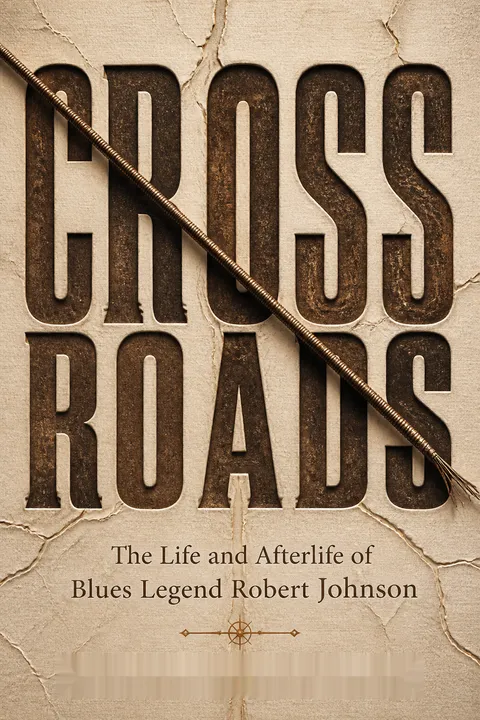
Crossroads works on two scales at once. It reconstructs Robert Johnson’s short life, then follows the record industry, researchers, musicians, courts, and audiences that made his afterlife. That second story is not an appendix to the biography. It explains why Johnson became globally famous despite modest sales during his lifetime, and why the best-known version of him is partly a product of people who never met him.
The book’s strongest method is evidentiary restraint. It puts oral testimony beside civil records, distinguishes the story about Tommy Johnson from claims about Robert, and refuses to declare a cause of death that the evidence cannot establish. Its most useful implication is that uncertainty need not flatten a life. The surviving details still show a musician who traveled, worked, borrowed, performed, and cultivated a public style.
The account also shows how technology and institutions shape cultural memory. A 1961 album could turn obscure records into essential listening; a photograph could challenge a received image; a compact-disc release could make an archival catalog a commercial success. Covers by better-known rock musicians expanded the audience while risking a shift in attention away from the Black musical world that produced the songs. Preservation is therefore never wholly neutral. It can rescue work from neglect, but the people who control access and revenue influence how the work is framed.
One caution concerns the book’s broad sketches of racial listening habits. Its contrast between Black audiences seeking newer music and white audiences preserving older blues helps explain different routes of circulation, but such claims can obscure variation within both groups. The more persuasive account lies in the concrete histories of migration, record labels, clubs, and musicians. The result is less a final answer to Johnson’s mystery than a sharper guide to which parts of the mystery are historical, which are inherited, and which remain unknowable.
Review Summary
Crossroads receives mixed reviews, with ratings ranging from 1 to 5 stars. Readers appreciate the book's concise exploration of Robert Johnson's life and legacy, debunking myths while maintaining the enigma. Some find it well-researched and informative, praising its insights into blues history and Johnson's influence. Others criticize its brevity, lack of new information, and perceived bias. The book is recommended for those new to Johnson's story but may disappoint readers seeking in-depth analysis or fresh perspectives on the blues legend.
Glossary
crossroads legend
supernatural bargain storyThe story that a blues musician gained exceptional skill by meeting the devil at a crossroads and surrendering his soul. In this book, the tale is traced to Tommy Johnson, not Robert Johnson. Later writers and listeners attached it to Robert, drawing on his lyrics and the story of his rapid musical improvement.
diddley bow
homemade one-string instrumentA simple instrument made by stretching wire between two nails, often attached to a board or the side of a building. The player plucks the wire and slides a smooth object along it to change pitch. The book describes it as an early instrument used by Robert Johnson and other Delta musicians.
juke joint
local music and drinking venueA gathering place, often in a modest building, where Black residents in the rural South could drink, dance, gamble, and hear live music. For musicians such as Johnson, juke joints provided performance work and audiences. They could also be dangerous places, with alcohol-related disputes and violence.
walking musician
traveling paid performerA musician who moved from town to town, earning money through performances at juke joints, roadhouses, street corners, and other local venues. The term captures a precarious career built on travel and short-term engagements rather than a settled home or steady position. Johnson followed this way of life across the South.
race music
period record-market categoryA label used by the record industry for music made by African American performers and marketed primarily to Black customers. It described a commercial category rather than one consistent musical style. The term reflects the racial organization of the historical record business and should be understood in that context.
Download PDF
Download EPUB
.epub digital book format is ideal for reading ebooks on phones, tablets, and e-readers.








