

Plot Summary
The Kiosk Crab
The Skinless Court’s blockade is choking off customers at Dan’s store, so he tests a franchise plaque awarded after his victory on the seventh floor. Croc warns that kiosks conceal predators, but Dan attacks the third-floor terminal anyway.
Its franchisee, Keke, erupts from the floor wearing the kiosk as a shell, then fills the mall with smaller crabs. Dan’s attacks barely dent the armor until he targets the eyes and exposes the unprotected underside. He kills Keke with a combination of corrosive magic and a precisely timed hammer strike.
The victory gives him the kiosk and access to a vast inter-floor auction network, though the corporation running it takes most of every sale. The possibility of claiming the whole network offers a bigger prize than the kiosk itself.
Dan’s decision is both entrepreneurial and military. The kiosk is a storefront, but also a possible breach in the Court’s siege, so commerce becomes a tactic for keeping people connected. The battle establishes his characteristic method: he survives not by overpowering every threat, but by observing the crab’s defenses and changing targets. Croc’s warning also matters. Dan’s confidence is not ignorance; he hears the risk and proceeds because inaction has consequences too. The network introduces a larger system of corporate power whose rules appear comical until they determine who can move, trade, and survive.
Fur, Votes, Laundry
Wraith, the bull-headed security chief of Howlers Hold, visits Dan’s store with Jakob and Temperance. He offers an alliance but admits the Hold’s Tribunal must approve it. Jackson, his Roomkeeper brother, opposes Dan and has already helped detain Temperance and Jakob. The remaining vote belongs to Ajax, a fox-costumed bartender who will support the deal if Dan protects his tavern, grants modest trade concessions, and finds the Hold’s fabled laundry room.
Dan accepts the risk of visiting the settlement rather than demand that Wraith trust him first. Inside the Hold, Wraith shows him children born in the Backrooms, making the stakes more than a profitable supply route. Dan shakes Wraith’s hand, then agrees to seek Ajax’s vote in person.
Wraith’s tour changes the alliance from an abstract bargain into a commitment to actual residents, especially children who have never known an outside world. The political obstacle is personal as well as procedural: Jackson’s influence threatens both Dan’s survival and Temperance’s place in her community. Ajax, by contrast, treats politics as negotiation, exposing how survival settlements convert trust into services and leverage. Dan’s choice to enter the Hold marks a shift from solitary shopkeeper to coalition builder. He cannot keep everyone safe by staying behind his own doors; he must accept that other people’s risks now count as his own.
Hotel Hell’s Hidden Door
To earn Ajax’s support, Dan leads Jakob and Croc through the fifth floor, Hotel Hell, where mimics, murderous porters, and trapped former guests haunt the corridors. A Lodger attacks Dan with a noose and a psychic assault that exploits his low Grit, but Croc tears the creature apart before it can kill him. Dan claims the Lodger’s suite as a private room, giving the team a shower and a foothold on the floor.
While preparing, he experiments with a trap-making Relic, learns that its runes can store spell effects, and turns tennis balls into healing and fire traps. On the journey, Jakob finally explains why he left the Hold: he wants scientific answers about the Backrooms and a way home, not merely a safe place to wait out his life.
The Lodger’s attack turns Dan’s neglected weakness into a physical near-death experience. His combat confidence depends on more than damage output; a low resistance to mental interference can make every other strength irrelevant. The room and the trap experiments answer that vulnerability with practical adaptation, not a sudden transformation into an invulnerable hero. Jakob’s confession deepens the partnership by revealing a goal that exceeds survival. His scientific ambition and Dan’s improvised engineering share a belief that the Backrooms have discoverable rules, even when its surface seems designed to make every explanation absurd.
The Brownies’ Covenant
Following a hidden maintenance route, Dan, Jakob, and Croc reach the Spin Cycle, where tiny Laundry Brownies worship Dan as the deliverer foretold in their prophecy. Their washing machines are ordinary; the Brownies themselves make the laundry service miraculous.
Before Dan can negotiate, the Shart Stain Golem attacks, aided by a gaseous assassin whose knife infects Dan with escalating Toxic Shock. Unable to stand, Dan crawls through broken machinery while his friends hold off the golem.
He reaches it and uses a sterilizing field to unravel the mana holding it together. After the Brownies celebrate, Dan promises them food and beer in exchange for work, then annexes their laundromat into his store. Their cleaning buffs turn a practical service into valuable protection for Delvers.
The Brownies transform labor into religion: their devotion is sincere, but Dan knowingly uses their prophecy to secure a workforce. The bargain is ethically uneasy, yet it also gives the Brownies food, safety, and a place in a wider community. Dan’s crawling approach to the golem makes the scene a test of bodily persistence rather than clean tactical mastery. He wins while poisoned, exposed, and dependent on his companions. The resulting laundry service is more than comic relief. Clean clothes and protective blessings become infrastructure, showing that dignity and survival can depend on mundane work as much as spectacular violence.
Jackson Gets Ejected
Back at the store, Dan upgrades its defenses and creates Camo Joe, an intelligent security golem built from survival gear and a concealment Relic. He installs cameras, prepares for customers, and removes the title earned for killing his first Delver because its reward makes further killing easier.
At the grand reopening, Howlers flood the aisles, trade years of stored loot for food and household goods, and crowd the new laundromat. Jackson arrives demanding reserved potions and discounts.
When his followers attack, Camo Joe incapacitates two, while the store’s protective stasis freezes Jackson. Dan uses the shop’s ejection power to send him to a random floor. The confrontation proves the store can defend itself, but Jackson’s anger and the growing Skinless Court pressure remain unresolved.
The store is becoming a community institution, and Dan’s security systems make that responsibility visible. His decision to discard the lucrative murderer title draws a boundary between necessary violence and violence rewarded for its own sake. Jackson’s attack tests whether that boundary can survive provocation. Dan does not kill him, but he uses the store’s power to humiliate and displace him, a compromise between restraint and retaliation. The reopening’s abundance is fragile: customers arrive because Dan can offer goods and safety, while those same crowds make the shop a more consequential target.
A Director’s Dangerous Map
Six Skinless Court Aspirants threaten a young Delver near Dan’s kiosk, but a woman calling herself the Director kills them with a single display of terrifying power. She reveals that Dan’s Compass has disrupted the Flayed Monarch’s network of doors, forcing the Court to rely on the kiosk system.
The Franchisor controls that network, and eliminating it could cripple the Monarch’s movement between floors, though it may provoke the Lord of Coin. The Director leaves a route map, access tattoos, a protective crown, and a mind-enhancing sigil.
Dan and his friends debate whether they are being manipulated, then choose to descend because staying put will leave them exposed. Before departure, Croc evolves into a more capable mimic and confesses fear of losing the family he has found.
The Director offers help that is also recruitment: Dan is valuable precisely because a powerful patron can use him without acting openly. Her gifts make the route possible, but their precision also suggests surveillance and manipulation. The team’s debate refuses the easy distinction between trust and distrust; every available alliance carries political cost. Croc’s fear gives that strategic choice emotional weight. He worries not only about dying but about becoming useless to the people he loves. Dan answers that friendship is not a transaction, then asks everyone to choose the danger together rather than command them into it.
Ice Cream at Sundown
The team reaches the twenty-fourth floor in an abandoned ice cream truck. A group of apparently ordinary children ask for cones; when Dan opens the freezer, the truck becomes pristine and the children eat as if the rancid contents were a treat.
A radio then broadcasts warnings about bleeding moons, forbidden fireworks, and laughter from cornfields. Outside, the neighborhood appears sunny and suburban, but Dan and his friends look like ordinary residents, showing that the floor’s illusions affect them despite their mental protections.
Dan’s painted warnings anger a homeowner, Kevin, who suddenly reveals a lawnmower torso, diseased flesh, and a projectile blade. He and a grotesque Kathy attack. The team kills them, learning that rule-breaking provokes violence and that ordinary-looking neighbors conceal far stronger forms.
The floor makes perception itself a form of compliance. The ice cream truck temporarily restores an inviting surface, while the radio packages danger as calm civic guidance. Dan’s attempt to warn future travelers violates the neighborhood’s aesthetic rules and triggers the first attack. The transition from Kevin to monster is not merely a visual trick; it exposes how normality can function as coercion, making an outsider feel unreasonable for noticing what is wrong. The team’s victory gives them useful information, but the encounter also signals that the inhabitants’ ordinary routines are part of a larger governing system.
Footloose Breaks the Spell
At a neighborhood cookout, a resident resembling Dan’s old friend tries to draw him toward food that is actually moldy flesh. Edward Myrl, a long-isolated Delver, warns Dan that the HOA uses spores and radio broadcasts to alter perception.
Edward blasts the party with a homemade device playing loud music, disrupting the illusion and turning the smiling guests into monsters that attack one another. He leads the group to his bunker and explains his theory that an experimental transmitter, the Nexus Pulse, fused the signal with the Blight and transformed the neighborhood.
Edward has spent years building Big Bertha, a disruptor intended to disable it. Before the team can reach the station, Dan sees Edward’s true altered body and learns that he feeds on memories to preserve his identity.
Edward’s warning is credible because he demonstrates it, yet his explanation remains a theory shaped by decades of isolation. His condition makes the floor’s central problem personal: the signal does not simply deceive people, it consumes identity and replaces it with a role. Dan’s recognition of Edward as both helpful and dangerous resists the simplistic categories the neighborhood imposes. Edward’s dependence on other people’s memories creates a moral boundary that the team must negotiate without reducing him to either victim or predator. His machine embodies a hope that knowledge can reverse damage, even after the damage has become part of the self.
Tiny Tots’ Living Maze
Edward guides the team toward the broadcast station through a preschool that serves as a hatchery for the floor’s children. Before entering, they use his smoke and gas masks to see through the SporeFeed illusion.
Dan discovers that Edward’s familiar appearance is another disguise, but Edward explains that he is a human Delver being altered by the floor and must consume memories from the dead to resist losing himself. Inside, spider-bodied toddlers attack from passageways hidden in the walls.
Dan’s traps and hammer trigger a chain of kills, while Temperance, Jakob, Woodstock, and his Horrors hold the corridors. Their noise draws Mr. Wiggles, an immense preschool overseer that resists their attacks. Dan opens a locked stairwell with a rare key and seals the doorway behind them with one of his anchors.
The preschool turns childhood into an industrial process: its inhabitants are not innocent figures corrupted later, but creatures raised through predation and competition. Dan’s mass killing is necessary for passage, yet the achievement system’s rewards make violence feel disturbingly game-like. Edward’s revelation complicates the team’s moral judgment at the exact moment they are surrounded by monsters. He is neither fully outside the system nor wholly absorbed by it. Dan’s doorway anchor provides escape through spatial control, a signature form of agency in a world where bodies and minds are repeatedly reshaped.
The Long Way Back
Rather than press onward while exhausted, the team uses Dan’s door to return to the store. Edward reacts with anger when the level restriction initially bars him, then stays after Dan lowers the limit and explains that the signal must still be stopped.
Dan upgrades his stats, repairs his Horrors, and gathers supplies. Reentering the preschool through the stairwell, they find an abandoned basement filled with cast-off relics and arcade machines.
Dan claims the room for his store, wins a powerful glove for Drumbo and a bone-breaking sigil for his hammer, then follows the tunnel toward the radio station. The detour costs time but supplies tools for the coming fight, while Edward recommits to his mission despite finally having an easy route off the floor.
The return to the store is a practical retreat, but it also tests whether Edward’s loyalty survives the discovery that Dan could have offered him an exit earlier. Dan’s admission and removal of the barrier make trust possible without erasing his earlier selfishness. The basement’s discarded games and relics preserve traces of an older neighborhood beneath the HOA’s imposed order. Dan turns that debris into a new commercial asset, repeating his effort to build safety through acquisition. Edward’s decision to continue is meaningful because it is no longer forced by lack of options; he chooses the unfinished obligation that has structured his life.
The Station Wakes
The team reaches the radio station through the forgotten tunnel, where the basement walls pulse like infected tissue. Edward admits that Big Bertha requires a half-hour manual sequence, not the quick shutdown he had implied.
Dan and his friends drive conductor stakes into the station floor, then start the machine as Pink Floyd blasts through the building. The station lurches upward, revealing itself as part of a vast living creature, and the team falls into the night.
Dan uses Neural Slipstream to separate himself from Edward in midair, then reaches injured Croc first and heals him. Edward lands nearby, while Jakob and Temperance remain inside the monster, defending the disruptor. The radio signal is failing, but the awakened HOA now threatens everyone at once.
Edward’s deception is a consequential breach of trust, motivated by fear that Dan would refuse a mission whose true cost was much higher. The building’s transformation converts an abstract broadcast network into an embodied antagonist: the system that organizes Sunnyside is literally alive. The fall divides the group and makes Dan’s priorities clear. He saves Croc before pursuing the larger strategy, even though Jakob and Temperance are still in danger. The sequence shifts the conflict from infiltration to survival, forcing the team to keep the machine running while the thing it is meant to disable actively fights back.
Ice Cream Against the HOA
Dan and Croc drive the damaged truck while Edward relays instructions to Jakob, who operates Big Bertha inside the HOA. Dan discovers that the Kannibal Kids will abandon a chase for the rotten ice cream they crave, so he fires pints at Sunnysiders and draws the children into a feeding frenzy.
When the HOA pursues them, Dan lures the children onto its body, where they begin tearing into it. A barricade blocks the road, so he packs spell cards into ice cream and detonates them to clear a path. The truck fails at the cornfield’s edge.
Dan summons his Horrors, combines them into a twenty-foot combat body, and drinks a potion that temporarily multiplies his strength. He fights the HOA until Jakob completes the disruptor sequence, then kills the weakened creature with a final saw strike.
Dan wins by joining systems that seem absurd in isolation: a food craving, an ice cream truck, prepared spell cards, and a machine operated by friends inside a monster. His strategy is not clean heroism. He manipulates children into attacking, risks Croc as a driver, and accepts that his own body will be the final distraction. The grotesque mechanics make the conflict funny at the edges, but the stakes remain intimate: the team must coordinate across distance while each person trusts another to complete a different part of the plan. Victory comes from interdependence, not solitary strength.
A Store After the Storm
The potion’s backlash leaves Dan unconscious and physically depleted, but Croc finds him before the Kannibal Kids can reach him. Edward uses Dan’s doorway anchor to return the group to the store, where Jakob and Temperance are safe after cutting their way out of the fallen HOA.
The team divides the recovered relics, while Dan’s achievements grant new levels and a permanent boost to every base stat. Croc stays beside him as he recovers, and Dan watches Twilight with his friend rather than immediately returning to battle.
The HOA’s defeat ends the radio rule over Sunnyside, but Dan’s evolving title now prevents him from gaining experience from weaker creatures. The message is unmistakable: if he wants to grow strong enough to challenge the Monarch and reach the Franchisor, he must descend.
The recovery scene deliberately narrows the scale after a kaiju battle. Dan’s reward is not only loot and levels but time with Croc, whose fear of losing his found family has shaped the journey. The movie night gives their friendship an ordinary ritual, a small refusal to let survival consume every hour. Yet the evolving title turns progress into pressure: the system rewards Dan while removing easy ways to remain where he is. The ending resolves the immediate crisis but not the larger war. Safety has been won locally, and its very success makes the next descent unavoidable.
Analysis
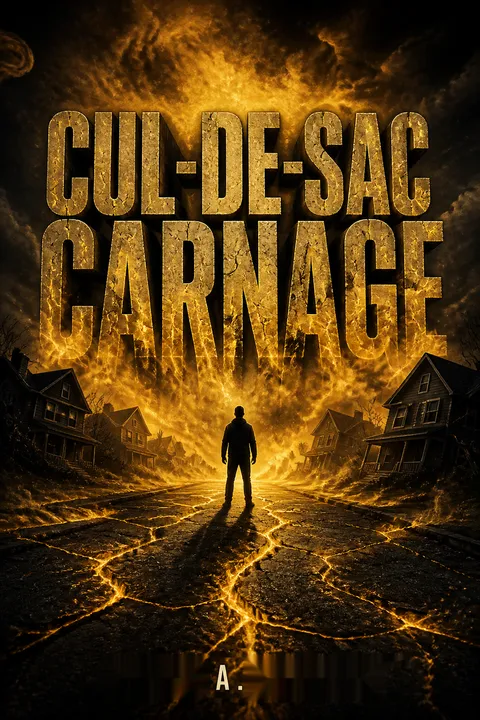
Cul-de-sac Carnage turns systems of exchange and control into physical dangers. Dan begins by treating a kiosk as a business opportunity, but learns that its fees, routes, and ownership shape the movement of entire factions. His store grows into a counter-institution: a place where food, beds, laundry, and safety are exchanged under rules he can enforce himself. That project complicates his identity. He wants a fairer haven, yet he exploits the Brownies’ prophecy, manipulates the Kannibal Kids with food, and uses increasingly catastrophic weapons. The story does not let good intentions erase those choices.
The twenty-fourth floor sharpens this tension by making conformity look comforting. Its lawns, cookouts, and polite neighbors conceal a signal that edits perception and turns a community into an obedient organism. Edward’s suspicion is partly a product of isolation, but his central warning proves accurate: a system can consume autonomy while presenting itself as protection. The HOA is terrifying not only because it is huge, but because its inhabitants mistake imposed sameness for belonging. Dan’s store offers a different kind of order, built from consent, negotiation, and imperfect relationships rather than a single controlling signal.
The emotional center is the team’s growing refusal to treat one another as tools. Croc fears that his usefulness will disappear as the group goes deeper; Dan insists their friendship is not a transaction. Jakob shares his scientific purpose, Temperance names the strength she needs, and Edward continues his mission after Dan gives him a genuine chance to leave. These exchanges make the climax collective even when Dan performs the final attack. He wins through friends operating the disruptor, a mimic driving the truck, a parrot carrying supplies, and a grotesque improvisation that only this group could assemble.
The ending offers no escape from danger. It offers a brief, ordinary reprieve: Dan watches a favorite movie with Croc after returning to the store. That quiet does not cancel the violence. It shows what the violence is meant to protect, and why Dan must keep descending.
Review Summary
Cul-de-sac Carnage receives mostly positive reviews with a 4.53 rating. Readers praise the creative world-building, visceral horror elements, and humor, particularly the character Croc. Many compare it favorably to Dungeon Crawler Carl, noting the series is finding its own voice. Common criticisms include repetitive crude humor, predictable dialogue, and some pacing issues. Reviewers appreciate the progression system, magical artifacts, and the suburban nightmare setting with an evil HOA. Most fans eagerly await book three despite noting the story can be crude and graphic.
Characters
Dan Woodridge
Shopkeeper under siegeDan is a former Marine and contractor who has become a resourceful shopkeeper in the Backrooms. He solves problems through improvised engineering, tactical observation, and a willingness to risk himself when his friends are in danger. His store is not merely a business: it offers supplies, shelter, work, and a rare point of stability for Delvers. Dan’s humor and bluntness help him endure horror, but he remains alert to the moral cost of becoming more powerful. He wants to survive and protect his community without turning every advantage into permission to kill. That tension drives both his business decisions and his growing responsibility for people beyond his immediate team.
Croc
Mimic with a heartCroc is a shapeshifting mimic who usually presents as a rubbery blue dog with googly eyes. He is powerful, food-motivated, and unusually well informed about the Backrooms, though his advice is often wrapped in anxious warnings and digressions about a romance series he loves. Croc’s loyalty to Dan is more than gratitude for protection; Dan treats him as a friend instead of a monster, and that acceptance gives Croc a place in a community. His fear of losing Dan reveals a deeper insecurity: he worries that his value depends on being useful. His playful appetite and unsettling nature coexist with genuine tenderness.
Jakob
Searching scientistJakob is a Cendral Transmog and former pharmaceutical researcher who approaches the Backrooms as a mystery to investigate, not simply a prison to endure. He is measured, curious, and reluctant to kill other Delvers, even when they threaten him. His knowledge of chemistry makes him the team’s healer and potion maker, while his disciplined reasoning balances Dan’s improvisation and Temperance’s appetite for violence. Jakob’s search for the truth about the Backrooms is bound to a personal desire for a way home. He values community, but refuses to mistake comfort for understanding, and his difficult history with the Howlers reflects the conflict between belonging and intellectual purpose.
Temperance
Cleaver-wielding survivorTemperance is a centuries-old Delver who escaped the Salem witch trials and found unexpected refuge in the Backrooms. She is volatile, fearless, and delighted by combat, but her violence is rooted in a history of betrayal and powerlessness. Her faith in the Roomkeepers gives suffering a purpose, even as the group’s leaders have exploited that need for belonging. She trusts Dan because he helped her without demanding submission, and she trusts Jakob because he once made her feel safe. Temperance’s sharp humor and appetite for bloodshed can obscure a real longing to be valued. Beneath the bravado, she is determined never again to be helpless in someone else’s hands.
Edward Myrl
Paranoid radio saboteurEdward is a long-isolated Delver who has spent years studying Sunnyside and building a device to disable its controlling signal. His skepticism has helped him notice patterns others accept, but isolation has also made him suspicious and prone to conspiracy theories. He is shaped by old promises to lost companions and by a stubborn belief that the damage done to the floor should be undone. Edward’s altered condition makes survival morally complicated, yet he continues to protect others and pursue his work. His relationship with Woodstock, his parrot, is one of his few enduring sources of companionship.
Wraith
Howlers security chiefWraith is the bull-headed Ecliputaur who leads security and outside relations for Howlers Hold. He is confident, direct, and conscious that an alliance with Dan could endanger the families living under his protection. Rather than demand trust, he shows Dan the children whose safety is at stake and makes the cost of his support explicit. Wraith’s leadership is pragmatic but not cold; he weighs military necessity against the human consequences of inviting war into a settlement. His strained relationship with Jackson gives the Hold’s politics a personal edge.
Ajax
Fox-faced power brokerAjax is a human Delver who wears a fox fursuit and serves as both tavern proprietor and Tribune of Howlers Hold. He is theatrical, flirtatious, and fond of turning practical negotiations into performances, but beneath the vanity lies a shrewd understanding of leverage. He supports Dan’s trade arrangement when it benefits the Hold and himself, then names clear terms rather than pretending the bargain is altruistic. Ajax’s self-interest makes him difficult to trust completely, yet his pragmatism allows him to broker useful cooperation in a dangerous political environment.
Jackson
Roomkeeper power brokerJackson is a human Tribune and influential figure among the Roomkeepers. He presents himself as a disciplined protector, but his authority is bound up with entitlement and a need to control those around him. His history with Temperance reveals how easily a spiritual role can become cover for personal grievance. Jackson views Dan’s independence as a threat, particularly when Dan gains support among the Hold’s residents. He is dangerous because he combines political influence, combat ability, and an unwillingness to accept rejection.
The Director
Sovereign’s emissaryThe Director is a formidable emissary who intervenes in Dan’s conflict with the Skinless Court while withholding the identity of the power she serves. She understands that political limits prevent her employer from acting openly, so she offers Dan information and resources in exchange for a dangerous proxy mission. Her manner is composed and calculating, and she treats people as useful variables in a larger balance of power. The Director may be genuinely helping Dan, but she makes clear that mutual advantage, not affection, is the basis of her offer.
Woodstock
Fire-breathing companionWoodstock is Edward’s African gray parrot, a Delver with a small but effective set of abilities. She communicates through a limited repertoire of repeated phrases and has a fierce fondness for fire. Edward treats her as family, and her loyalty gives him an anchor during years of isolation. Woodstock’s apparent simplicity contrasts with the intelligence and danger of the world around her, making her both comic and unexpectedly capable.
Bertrim
Laundry Brownie priestBertrim is the white-robed high priest of the Laundry Brownies. He interprets Dan’s arrival and victory through the Brownies’ prophecy, then negotiates a covenant of service in exchange for food and shelter. His sincerity makes Dan’s use of the prophecy ethically uncomfortable, while his leadership helps turn an isolated tiny society into part of the store’s community.
Camo Joe
Store security golemCamo Joe is a security golem fashioned from camping gear and powered by a concealment Relic. Unlike Dan’s earlier, simpler golems, Joe can assess vulnerabilities, recommend protocols, and patrol the store independently. His calm competence makes him an important part of Dan’s expanding operation.
Taylor and Stephanie
Human store employeesTaylor and Stephanie are young Delvers who survived long enough to reach Dan’s store and now work in exchange for food, shelter, and spending credit. They help run the concession stand and keep the busy shop functioning. Their presence reminds Dan that his enterprise depends on human labor and care, not only magic and summoned creatures.
Plot Devices
Corvo’s Blanket Fort
Builds a portable safe havenDan’s Mythic Relic allows him to cut eligible parts of the Backrooms out of their original locations and attach them to his expanding store. He uses it to claim a hotel suite, the laundromat, a security office, a freezer, and an abandoned arcade. Doorway anchors connect these spaces to the shop and can also restrict who enters. The ability makes Dan a business owner, community builder, and territorial power. Its limit is that a hostile owner must first be defeated before a space can be claimed, so every expansion requires risk. Its doors also become escape routes and strategic tools when ordinary passageways fail.
Variant Kiosk Network
Links commerce across floorsKiosks serve as terminals for a far-reaching corporate storage and auction system. Dan captures one kiosk, discovers its steep franchise fee, and learns that the network also offers routes between distant floors. The Director later supplies a map and access tattoos that let the team pass through protected terminals. The network converts trade infrastructure into military logistics: the Skinless Court uses it to move supplies and forces, while Dan hopes control of the system could weaken the Flayed Monarch and expand his store. Its corporate terms make every transaction a political relationship, not a neutral exchange.
Relics and progression
Turns scavenging into strategyDelvers equip Relics to gain spells, physical abilities, and passive advantages, then sacrifice lesser Relics to improve stronger ones. Dan experiments with forging compatible items into more powerful abilities and learns that certain combinations can form Emblems. Runic Resonance Trap lets him store spell effects in prepared surfaces, turning tennis balls and playing cards into healing tools, bombs, and tactical distractions. Levels also raise his capacity and stats, but titles can impose costs as well as benefits. The system constantly tempts Dan to optimize himself, while the consequences of each choice reveal how easily efficiency can become a justification for cruelty.
Nexus Pulse and SporeFeed
Makes conformity contagiousOn the twenty-fourth floor, a radio signal and airborne spores work together to disguise monsters as ordinary neighbors and steer the inhabitants through the HOA’s rules. Edward believes the signal originates in a transmitter called the Nexus Pulse, which has fused with the Blight and transformed the floor. Music from his improvised devices disrupts the illusion temporarily, while Big Bertha is designed to shut the signal down permanently. The system is both technological and biological, so the team must fight distorted perception, infected bodies, and an organized community that treats obedience as safety.
The HOA’s rules
Turns suburbia into a trapSunnyside’s residents appear to be ordinary children, parents, and homeowners, but their behavior follows a coercive neighborhood order. The radio broadcasts warnings and commands, harmless gestures can violate regulations, and the inhabitants become monstrous when outsiders break the rules. At night, the children transform into stronger predators, while the HOA acts as the floor’s enormous overseer. The system makes normality feel safe even as it conceals violence. Dan’s red warning on a wall triggers an attack, and Edward’s music later reveals that the seemingly unified neighborhood is held together by the signal.
Download PDF
Download EPUB
.epub digital book format is ideal for reading ebooks on phones, tablets, and e-readers.








