Plot Summary
Flames and Frost Unleashed
Everly, half-fae and half-dragon, enters a timeless, flame-filled cave to reclaim her lost mana, the source of her power and identity. She faces the ancient Dragon, her ancestor, who tests her resolve with fire and riddles, forcing her to confront her lineage and the cost of her choices. Meanwhile, Draven, her husband and the Frostgrave King, battles a monstrous frostbeast threatening his kingdom. Their bond, once a source of strength, is muted by distance and danger. Both are pushed to their limits—Everly by the Dragon's trials, Draven by the relentless siege. The chapter sets the stage for a world on the brink, where ancient magic and monstrous threats converge, and where love and sacrifice are the only hope for survival.
Monsters at the Gates
Draven's court is beset by a monstrous Korythid, an ancient frostbeast thought extinct. The creature's intelligence and malice surpass anything the court has faced, adapting to their defenses and slaughtering soldiers with calculated cruelty. Draven, aided by his allies and Everly's distant visions, fights desperately to protect his people and the palace. The battle is brutal, with casualties mounting and the wards—magical barriers that have protected Winter for centuries—beginning to fail. The threat is not just physical but existential, as the monster's presence signals a deeper unraveling of the world's balance. The court's unity is tested, and Draven's resolve hardens: he will do anything to protect Everly and his kingdom, even if it means embracing the ruin that surrounds him.
The Dragon's Heir
Everly's confrontation with the Dragon reveals painful truths about her heritage. She is not just a half-breed or a fae—she is the Dragon's heir, carrying a legacy of power and responsibility. The Dragon's disdain for her willingness to sacrifice herself for those who despise her forces Everly to question her motivations and the nature of her hope. Through visions of her mother's desperate bargains, Everly learns that her power was bound to protect her, but that protection comes with a price. The Dragon's final test is both physical and spiritual, pushing Everly to the brink. When she finally reclaims her mana, it is not a gentle reunion but a violent surge that threatens to consume her. She emerges changed, her power both a gift and a curse, and the fate of Winter now rests in her hands.
Shattered Wards
The battle against the Korythid reaches a fever pitch as the palace wards begin to fail. Draven and his allies fight with everything they have, but the monster's strength is overwhelming. Nevara, the court's Visionary, sacrifices herself to save others, taking a mortal wound that leaves her fate uncertain. The loss is devastating, not just for Draven but for the entire court, as Nevara's visions have guided them through countless crises. The cost of victory is high, and the sense of safety that the wards once provided is shattered. The court is left reeling, their unity fractured, and the threat of more ancient monsters looms on the horizon. The chapter ends with a sense of profound loss and the realization that the true battle for Winter has only just begun.
The Visionary Falls
Nevara's fall is a turning point for the court. Her selfless act to save another leaves her comatose, her fate hanging by a thread. Draven is consumed by guilt and rage, blaming himself for not protecting her. The court is paralyzed by uncertainty, their guiding light extinguished. Everly, newly empowered but struggling to control her volatile mana, is haunted by visions of death and destruction. The loss of Nevara's guidance leaves the court vulnerable, both to external threats and internal strife. The chapter explores the deep bonds of friendship and loyalty, and the devastating impact of loss on those who are left behind. It is a moment of reckoning, where the cost of leadership and the weight of destiny become painfully clear.
Bargains with Ancients
Everly's return from the Dragon's cave is both triumphant and terrifying. Her mana, once bound and suppressed, now rages within her, threatening to destroy her from the inside out. Draven, exhausted from battle and loss, struggles to help her control the surging power. Their relationship is strained by secrets and the fear of what Everly's new abilities might mean for Winter. The court is in disarray, mourning Nevara and reeling from the recent attacks. Everly's power is both a beacon of hope and a source of fear, as no one knows if she can master it before it consumes her. The chapter delves into the psychological toll of power, the burden of legacy, and the fragile nature of trust in a world where every choice has consequences.
The Price of Power
Everly and Draven's relationship is tested as they confront the realities of their situation. Everly's newfound power is unstable, and her attempts to control it often end in disaster. Draven, torn between his duty to his kingdom and his love for Everly, is forced to make difficult decisions. The court is divided, with some seeing Everly as a savior and others as a threat. The couple's arguments are raw and honest, exposing their deepest fears and insecurities. The chapter explores the complexities of love in the face of adversity, the sacrifices required by leadership, and the personal cost of wielding great power. It is a moment of vulnerability and growth, where both characters must confront their own limitations and the reality that they cannot save everyone.
Blood on the Snow
The court is rocked by betrayal as old wounds and new alliances come to the fore. Eryx, Draven's most trusted general, confronts him about the secrets he has kept, particularly regarding Everly's heritage. The revelation that Everly is Unseelie—a member of the enemy—threatens to tear the court apart. Draven must navigate the treacherous waters of loyalty and duty, balancing the need to protect his wife with the demands of his people. The chapter is a study in the complexities of trust, the pain of betrayal, and the difficult choices that come with leadership. It is a turning point for the court, as alliances are tested and the true nature of loyalty is revealed.
Fractured Loyalties
As the threat of war looms, the court's unity is further tested by the arrival of Everly's family and the revelation of her true heritage. The Skaldwings, her mother's people, are both a source of strength and a potential threat. Everly is caught between two worlds, forced to choose between her loyalty to Winter and her ties to her blood. Draven's kill-on-sight order for Unseelie is a constant source of tension, and the court is divided over whether to accept Everly as their queen. The chapter explores the themes of identity, belonging, and the difficulty of forging a new path in the face of tradition and prejudice. It is a moment of reckoning, where the characters must decide who they are and where their loyalties truly lie.
Shadows and Ice
The secrets of the Heartstone—the magical core of Winter—are revealed, and the true nature of Everly's power comes to light. The Heartstone is not just a symbol but the literal heart of the kingdom, and its destruction would mean the end of Winter itself. Everly's connection to the land is deeper than anyone realized, and her power is the key to restoring balance. The chapter is a race against time, as the court must find a way to access the Heartstone and use Everly's power to save the kingdom. The stakes are higher than ever, and the characters are forced to confront the reality that their destinies are intertwined, for better or worse.
The Heartstone's Secret
With Nevara still unconscious and the Heartstone sealed, Everly and Draven are forced to seek alternative solutions. The court's desperation grows as the monster attacks escalate and the land itself begins to unravel. Everly's research uncovers the truth about the ley lines and the ancient magic that sustains Winter. The realization that the Heartstone is both a source of power and a potential weapon forces the court to reconsider their strategies. The chapter is a meditation on the nature of power, the responsibility of leadership, and the sacrifices required to protect what matters most. It is a moment of clarity and resolve, where the characters must decide how far they are willing to go to save their kingdom.
Family and Betrayal
The arrival of Everly's father and the revelation of her mother's past bring old wounds to the surface. The family's history is fraught with betrayal, sacrifice, and secrets that have shaped Everly's identity. The chapter explores the complexities of family, the pain of abandonment, and the possibility of forgiveness. Everly is forced to confront the reality that her parents' choices have defined her life, for better or worse. The bonds of chosen family—Draven, Wynnie, Nevara, and the court—are tested and strengthened in the face of adversity. It is a moment of catharsis and growth, where the characters learn that family is not just about blood, but about the people who choose to stand by you when the monsters are at the gates.
The Siege Begins
The Unseelie, led by Everly's uncle, launch a coordinated assault on the palace, using monsters and magic to breach the wards and threaten the Heartstone. The court is besieged from within and without, forced to fight on every front. Everly's mother returns, torn between her loyalty to her daughter and her duty to her people. The battle is chaotic and brutal, with casualties on both sides. The chapter is a study in the horrors of war, the cost of leadership, and the resilience of those who refuse to give up. It is a moment of crisis, where the characters must draw on every ounce of strength and courage to survive.
Monsters Within and Without
As the siege intensifies, the true nature of the threat becomes clear. The monsters are not just physical but psychological, as the court is plagued by doubt, fear, and the specter of betrayal. Everly's struggle to control her mana mirrors the court's struggle to maintain unity in the face of overwhelming odds. The chapter explores the theme of monsters—both literal and metaphorical—and the ways in which fear can be both a weapon and a weakness. It is a moment of introspection and revelation, where the characters must confront the darkness within themselves as well as the enemies at their gates.
The Queen's Choice
Everly is forced to make an impossible choice: save her sister or save her kingdom. Her uncle's ultimatum is a test of loyalty, and the court watches as she steps forward to claim her power and her identity. In a moment of defiance, Everly unites her warring powers—shadow and ice—breaking the cycle of violence that has defined her life. The act is both a personal and political statement, signaling a new era for Winter. The chapter is a meditation on choice, agency, and the power of self-acceptance. It is a moment of triumph and tragedy, as Everly claims her place as queen and sets the stage for the final battle.
The Battle for Winter
The final battle is a cacophony of violence and heroism, as the court and their allies fight side by side against the monstrous horde. Everly and Draven, united in purpose and power, become the heart of the resistance. Their bond is both a weapon and a shield, allowing them to turn the tide of battle. The cost is high—lives are lost, sacrifices are made, and the land itself is scarred by the conflict. But in the end, the monsters are defeated, and the court emerges battered but unbroken. The chapter is a celebration of resilience, unity, and the power of hope in the face of darkness.
Sacrifice and Salvation
With the battle won, Everly must make one final sacrifice to restore balance to the land. She pours her mana into the earth, healing the wounds inflicted by centuries of conflict and misuse. The act is both redemptive and exhausting, leaving her on the brink of collapse. Draven, ever her anchor, pulls her back from the edge, and together they witness the land's slow return to life. The chapter is a meditation on the cost of salvation, the necessity of sacrifice, and the possibility of renewal. It is a moment of peace hard-won, where the characters can finally begin to imagine a future beyond survival.
Hope in the Ruins
In the aftermath of war, the court begins the slow process of rebuilding. Old wounds are tended, new alliances are forged, and the promise of peace hovers on the horizon. Everly and Draven, scarred but stronger, look to the future with cautious optimism. The court is forever changed, but the bonds forged in battle endure. The chapter is a celebration of resilience, the power of chosen family, and the hope that springs from even the darkest of times. It is a fitting end to a story of love, sacrifice, and the unbreakable will to survive.
Characters
Everly
Everly is the heart of the story—a half-fae, half-dragon woman whose life has been defined by trauma, secrecy, and the struggle for acceptance. Her relationship with power is fraught: her mana was bound to protect her, but its return threatens to destroy her. Everly's journey is one of self-discovery and agency, as she learns to embrace both her Seelie and Unseelie heritage, uniting shadow and ice within herself. Her love for Draven is both a source of strength and vulnerability, and her loyalty to her chosen family—her sister Wynnie, Nevara, and the court—drives her to impossible acts of courage. Psychologically, Everly is marked by resilience, a deep-seated fear of abandonment, and a fierce determination to protect those she loves, even at great personal cost. Her arc is one of transformation: from outcast to queen, from victim to savior.
Draven
Draven is the Frostgrave King, a ruler forged in tragedy and war. His childhood was marked by the violent loss of his parents and the burden of leadership at a young age. He is both a warrior and a strategist, willing to make brutal choices to protect his kingdom. Draven's love for Everly is transformative, softening his edges and challenging his worldview. He is fiercely loyal, but his need for control and his fear of loss often put him at odds with those he loves. Psychologically, Draven is driven by guilt, a deep-seated need for redemption, and a terror of vulnerability. His arc is one of learning to trust, to share the burden of leadership, and to accept that strength can be found in partnership, not just solitude.
Wynnie (Noerwyn)
Wynnie is Everly's half-sister and closest confidante. A healer by nature and necessity, she is pragmatic, fiercely protective, and unafraid to speak her mind. Her marriage and subsequent widowhood have left her with scars, but also a deep well of empathy. Wynnie's relationship with Everly is central to both characters' development, providing a model of chosen family and unconditional support. Psychologically, Wynnie is marked by resilience, a dry wit, and a refusal to be sidelined, even in the face of overwhelming odds. Her arc is one of reclaiming agency and finding purpose beyond survival.
Nevara
Nevara is the court's Visionary, chosen by the Shard Mother to guide Winter through prophecy. Her gift is both a blessing and a curse, isolating her from others and forcing her to make impossible choices. Nevara's friendship with Draven is a rare source of comfort, and her growing bond with Soren hints at a longing for connection beyond duty. Psychologically, Nevara is marked by loneliness, a sense of fatalism, and a deep compassion for those she serves. Her arc is one of sacrifice, but also of hope—her awakening at the story's end signals the possibility of a future not defined by suffering.
Soren
Soren is the Autumn emissary, a man of many secrets and shifting allegiances. Outwardly charming and irreverent, he is a skilled manipulator and a valuable ally. His true loyalty, however, is to Nevara and the court, and his actions are often motivated by a desire to protect those he cares about. Psychologically, Soren is marked by guilt, a need for redemption, and a longing for acceptance. His arc is one of moving from self-interest to self-sacrifice, and his relationship with Nevara provides a counterpoint to the story's central romance.
Eryx
Eryx is Draven's Lord General, a man defined by duty and loyalty. His relationship with Draven is complex, marked by both camaraderie and tension. Eryx's struggle to reconcile his loyalty to the king with his hatred of the Unseelie is a microcosm of the court's larger conflict. Psychologically, Eryx is marked by a rigid sense of honor, a fear of change, and a deep-seated need for order. His arc is one of adaptation, as he learns to accept new realities and forge new alliances.
Vaerin
Vaerin is Everly's uncle and the Thane of the Shadow Clan. He is a master manipulator, driven by a desire for power and a belief in the righteousness of his cause. Vaerin's willingness to sacrifice anything and anyone for his vision of justice makes him a formidable antagonist. Psychologically, he is marked by fanaticism, a lack of empathy, and a deep-seated need for control. His arc is one of tragic downfall, as his inability to adapt or compromise leads to his destruction.
Everly's Mother (Mirevyn)
Mirevyn is Everly's mother, a Skaldwing who has spent her life trying to protect her daughter from the dangers of their world. Her love is fierce but often misguided, leading her to make choices that hurt as much as they help. Psychologically, Mirevyn is marked by guilt, a fear of loss, and a tendency to prioritize safety over agency. Her arc is one of sacrifice, as she ultimately gives her life to protect her family.
Batty
Batty is Everly's skathryn, a magical creature drawn to souls intertwined by fate. More than a pet, Batty is a stabilizing force for Everly's volatile mana and a symbol of the bond between Everly and Draven. Psychologically, Batty represents the possibility of harmony between opposing forces, and her presence is a constant reminder of the story's central themes of unity and chosen family.
The Dragon (Veyr)
Veyr is the ancient Dragon, Everly's ancestor and the source of her power. He is both a guide and a judge, testing Everly's worthiness and forcing her to confront the legacy she carries. Psychologically, Veyr represents the weight of history, the burden of expectation, and the possibility of redemption. His arc is one of relinquishing control, allowing the next generation to forge their own path.
Plot Devices
Dual Narrative Structure
The story is told in alternating chapters from Everly and Draven's points of view, allowing readers to experience both the internal and external conflicts of the narrative. This structure creates a sense of intimacy and immediacy, as the reader is privy to the characters' private thoughts, fears, and desires. The dual narrative also highlights the differences and similarities between the protagonists, emphasizing the theme of unity in diversity.
Magical Realism and World-Building
The setting is a richly imagined world where magic is both a source of wonder and a tool of oppression. The rules of mana, the significance of the Heartstone, and the existence of ancient monsters all serve to create a sense of history and depth. The world-building is not just decorative but integral to the plot, as the characters' struggles are inextricably linked to the magic that defines their world.
Foreshadowing and Prophecy
Nevara's prophecies and the recurring motif of visions create a sense of inevitability and tension. The characters are constantly grappling with the knowledge of possible futures, and their attempts to change or fulfill these prophecies drive much of the action. Foreshadowing is used to build suspense and to underscore the story's themes of fate, choice, and sacrifice.
The Bond
The bond between Everly and Draven is both literal and metaphorical, serving as a conduit for mana, emotion, and communication. It is a source of strength but also vulnerability, as the characters' fates are intertwined. The bond is a plot device that allows for moments of intense intimacy and conflict, and it is central to the story's resolution.
The Chosen Family
The theme of chosen family is woven throughout the narrative, with Everly, Draven, Wynnie, Nevara, and others forming a support network that transcends blood and tradition. This device is used to explore the idea that family is not just about lineage but about the people who choose to stand by you in times of crisis. The chosen family is both a source of comfort and a catalyst for growth.
The Heartstone and Ley Lines
The Heartstone and the ley lines are central plot devices, representing the source of Winter's power and the key to its salvation. The struggle to access and control this magic drives much of the plot, and the eventual restoration of balance is both a literal and symbolic resolution to the story's conflicts.
Analysis
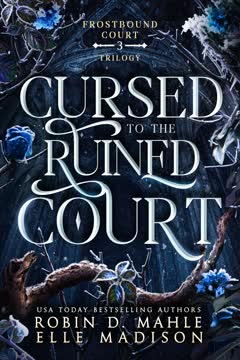
Cursed to the Ruined Court is a sweeping fantasy that explores the intersection of power, trauma, and chosen family against the backdrop of a world on the brink of destruction. At its core, the novel is about the cost of survival—what we are willing to sacrifice for those we love, and how we find hope in the ruins of our past. The alternating perspectives of Everly and Draven allow for a nuanced exploration of leadership, vulnerability, and the ways in which love can both heal and wound. The story's use of prophecy, magical bonds, and ancient legacies underscores the tension between fate and free will, challenging characters to forge their own paths even as they are shaped by history. The novel's greatest strength lies in its portrayal of resilience: the ability to endure loss, to adapt in the face of overwhelming odds, and to find meaning in connection. Ultimately, Cursed to the Ruined Court is a testament to the power of unity—within oneself, within relationships, and within a fractured world. It reminds us that true strength is not found in isolation or domination, but in the willingness to stand together when the monsters are at the gates.
Last updated:
Review Summary
Cursed to the Ruined Court, the final book in the Frostbound Court trilogy, receives mostly positive reviews with an overall 4.17/5 rating. Readers praise the epic battles, character growth, and satisfying conclusion to Everly and Draven's story. Many highlight the humor from side characters Wynnie and Batty, the dual POV storytelling, and emotional depth. The romance balances well with action-packed monster fights and court politics. Some criticism notes slow pacing in the middle sections and rushed battle sequences. Most appreciate the realistic, bittersweet ending rather than a perfectly wrapped finale.





