

Key Takeaways
Lead your family toward Jesus by stumbling forward, not waiting to become an expert.
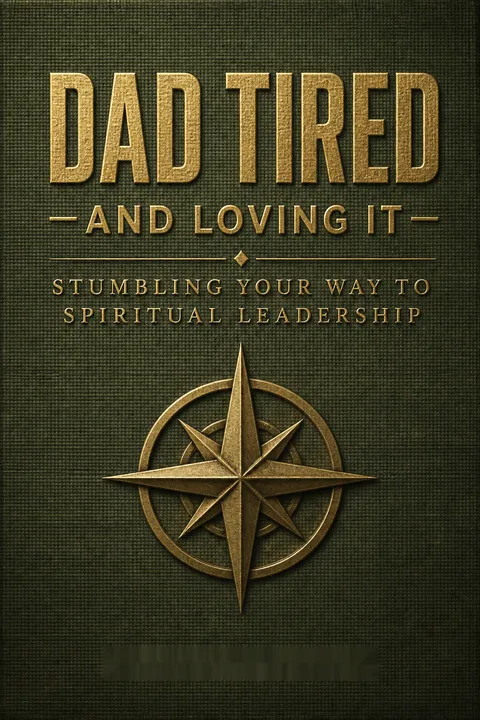
Start beside your family. Lopes introduces himself as a towel boy, not a parenting authority: he is still making mistakes while trying to guide his children toward Jesus. The point is not that preparation is useless, but that spiritual leadership does not require flawless knowledge or perfect behavior. It begins with showing up, learning, and taking the next faithful step. In the book's Christian frame, the Kingdom of God means God's intended order being restored, with Jesus bringing signs of that restoration into ordinary life now, not only promising a distant heaven.
Keep the larger story visible. Exhaustion can make parenting feel like a string of corrections and chores. Lopes asks fathers to see those moments within a story of God moving toward broken people and inviting them to join that work with their children. The parent is a fellow traveler, not a spiritual expert.
What's striking is how this approach lowers the threshold for participation without lowering the seriousness of the task. In education, a beginner who models curiosity can make learning feel shared rather than like an examination. Children also learn from watching how adults respond to failure, not just from hearing their advice. The claim has a useful boundary: humility is not a substitute for competence in situations requiring specialized help. A parent can lead spiritually while still consulting a counselor, pastor, or clinician when a family's needs exceed personal knowledge.
Let your marriage show your children what faithful love looks like under strain.
Make love visible. Lopes describes marriage as more exposing than he expected: his failures, including pornography and hurtful words, affected his wife and children. His Christian understanding of marriage asks spouses to reflect God's persistent love through commitment, forgiveness, and daily attention, rather than treating marriage as a machine for constant happiness. He recommends learning what makes one's particular spouse feel loved instead of completing a generic checklist. A grand vacation, for example, did not replace small, regular moments of connection in his own relationship.
Practice care each day. The practical examples include greeting one's spouse before turning to the children, protecting time to talk, and praying for her. For Lopes, children receive a lived picture of love when they see spouses know one another honestly and still act with care. The aim is not a polished performance, but a relationship marked by repair and pursuit.
The insight aligns with social learning: children infer what relationships are from repeated interactions, including how adults handle disappointment and make amends. The emphasis on daily care is also more realistic than expecting occasional grand gestures to carry a relationship. Still, sacrificial love must not be confused with tolerating abuse or coercion. In unsafe relationships, protection, professional support, and boundaries matter; endurance alone is not a sufficient measure of faithfulness. The strongest version of this lesson is reciprocal commitment that preserves the dignity and safety of both partners.
Raise disciples of Jesus, not polished children chasing the world's scoreboard.
Choose the destination. Lopes contrasts common measures of success, such as status, achievement, and comfort, with Jesus's Beatitudes, which call the blessed poor in spirit, meek, grieving, and persecuted. On a trip to Kenya, he saw local Christians whose faith and joy challenged his assumptions that material abundance equals spiritual blessing. He does not argue that health or wealth is automatically wrong; he warns that comfort can make dependence on God easier to forget.
Remember what children copy. A disciple is a learner who follows a teacher, and children learn by watching their parents as well as listening to them. Lopes recounts a father whose daughter copied the intimidating way he confronted her. He also noticed that parents' passions shape their children's priorities: intense devotion to sports, money, or appearance can teach more than occasional religious instruction. The central aim is a child learning to love Jesus, not merely behaving well.
This distinction between outward performance and inward allegiance is a pointed challenge to achievement-oriented parenting. Research on observational learning supports the basic mechanism: children attend to models and imitate behaviors that seem important or rewarded. Yet a parent's visible enthusiasm is not a guarantee that a child will share the same faith; children develop their own agency, and faith cannot be engineered like a test score. The useful parental question is therefore not only what children are told to value, but what adult attention, time, and sacrifice consistently communicate.
Choose a small next step before research turns into spiritual paralysis.
Begin before certainty. Lopes calls the fear of choosing wrongly about spiritual leadership analysis paralysis. He illustrates it with his wife spending half an hour considering pancake syrups while the family's breakfast went cold. Fathers can do the same thing with devotionals, Bible translations, podcasts, and worries about not knowing enough. His alternative is to become a lead learner: a parent who explores faith alongside children without pretending to have every answer.
Guide, do not perform. A guide notices what is already happening and helps children see it. Lopes suggests reading Scripture together, asking what it reveals about God, and trying to live that insight. He also admits that even good teaching can arrive at the wrong moment: when he began discussing forgiveness, his son was focused on an urgent bathroom need. The lesson is to initiate, pay attention, and adjust, rather than wait for ideal conditions.
The lead-learner idea makes authority compatible with intellectual honesty. Developmental learning often benefits when adults narrate uncertainty and investigate questions alongside children, rather than presenting knowledge as effortless. The timing example adds an important interpersonal skill: attention to a child's immediate state can matter more than delivering a prepared lesson. The tension is that acting quickly can also produce avoidable mistakes. The book's strongest advice is not to abandon judgment, but to stop demanding total certainty before taking ordinary, reversible steps.
Bring shame into trusted relationships instead of letting it silence your leadership.
Move toward grace. Lopes links shame with hiding, recalling how Adam and Eve hid after disobeying God and how he hid under a bed as a boy after causing another child to fall from a homemade swing. The Christian story, as he presents it, repeatedly shows God drawing near to imperfect people rather than waiting for them to become flawless. Peter's denial of Jesus is a central example: after Jesus's death and resurrection, Peter returns to him and finds breakfast, not rejection.
Seek healing with others. Lopes distinguishes being forgiven by God from being emotionally healed from the weight of past actions. He recommends confessing honestly to a trusted Christian brother, not merely to monitor behavior, but to bring pain and shame into a relationship where support and prayer are possible. He also encourages seeking counsel when needed. A father's failures do not make him incapable of guiding his family; refusing to face them can keep him absent.
Shame often drives concealment, while safe disclosure can make accountability and support possible. This section's breakfast image offers a memorable counter to the assumption that admitting failure must end belonging. Its practical wisdom lies in pairing spiritual conviction with human connection. Disclosure, however, requires discernment: not every person is trustworthy, and severe or recurring harm may require professional care alongside religious support. The distinction between moral forgiveness and psychological recovery is valuable because restored standing does not automatically erase distress, habits, or consequences.
Give your appetite for adventure a mission bigger than consumption.
Redirect the hunger. Lopes argues that the desire for risk, novelty, and purpose does not disappear in adulthood. If faith offers men only routine obligations, some may seek excitement in pornography, alcohol, affairs, or possessions. He is not excusing those choices; he is asking why the longing for adventure is so often left without a constructive outlet.
Join work beyond yourself. On a trip to Haiti, Lopes's group of high school boys helped build homes, clean streets, and encourage local Christians. The boys became more focused on serving than on their usual struggles with temptation. In another story, Lopes felt prompted to give a bed frame to a man whose wife had left him. The gift led to a conversation and prayer. These episodes portray spiritual mission as practical attention to neighbors, not merely church attendance.
Purposeful service can redirect attention from short-term reward toward shared goals, a pattern also recognized in research on motivation and prosocial behavior. The examples make mission concrete: carrying furniture, listening, and helping with local needs. Still, boredom is not a complete explanation for addiction or destructive behavior. Compulsion, trauma, and mental health conditions may require treatment, not simply a more exciting purpose. The insight works best as an invitation to build a meaningful life, while recognizing that service and clinical care can be needed together.
Turn Scripture into conversation wherever ordinary family life happens.
Connect text to life. Lopes reads Deuteronomy's instruction to teach children while sitting, walking, resting, and rising as a call to make faith part of daily experience, not a separate box on the schedule. Jesus models this by teaching disciples through conversations and situations they encounter together. A short devotional can matter, but memorizing stories without learning how to act on them misses the goal.
Use the moment at hand. When Lopes's son was upset after other children mocked him, Lopes connected the boy's anger to Jesus's teaching about loving enemies. The child began to see that following Jesus involved a real choice, not just knowing a verse. In another incident, losing two phones in a river and yelling at his daughter forced Lopes to confront his anger and seek forgiveness. Everyday events can prompt reflection, provided the parent first listens to what is actually happening.
This method resembles situated learning: ideas become usable when people practice them in the contexts where they matter. A family conversation after conflict can connect a moral principle to emotion, choice, and repair more vividly than abstract explanation alone. The approach also demands restraint. If every sunset, mistake, or meal becomes a sermon, children may experience faith as constant correction. Listening, wonder, and room for a child's own questions help keep spiritual conversation relational rather than simply instructional.
Build visible family rituals that make God's faithfulness hard to forget.
Give memory a place. Lopes calls the Israelites' stones beside the Jordan a model for creating reminders of God's actions. The stones were meant to prompt children's questions and help parents retell what had happened. He describes making this idea personal after leaving his church job just before learning his wife was pregnant. Fear led him to print a Bible passage about trusting God and tape copies around the house. The family later lost their home, but he remembers that season as spiritually formative.
Make reminders tangible. His family's practices include collecting notes about meaningful moments in a vase, displaying photographs of guests they have hosted, and setting an empty plate as a reminder to share food. These objects are not magic or decoration alone. They create openings to tell stories about provision, hospitality, gratitude, and service, making a family's values visible in the places where life happens.
Ritual and physical cues help memory by attaching abstract commitments to repeated, visible actions. A vase of notes or an empty plate can make gratitude and generosity discussable for children who might otherwise encounter them only as instructions. The practices also build a family narrative, giving ordinary moments a shared meaning. Their value depends on use: an object can become background clutter if nobody tells the story it represents. The reminder works when it sparks conversation, not when it is treated as a substitute for it.
Name your destination, then say no to detours that consume family life.
Decide what matters. Lopes uses Aspen as a metaphor for a consciously chosen destination and Nebraska for drifting somewhere unintended. His friend Dan worked long hours to provide for his family, then woke in the night worried he had forgotten his daughter's birthday cake. Finding the cake in the refrigerator brought home how far daily habits had carried him from the husband and father he wanted to be. Busyness can look like progress while obscuring direction.
Write the destination down. Lopes asks readers to describe where they hope to be in ten, twenty, and thirty years as disciples, husbands, and fathers, then explain why those aims matter. He recommends tracking how time is actually spent and learning to decline even good opportunities that crowd out core commitments. Jesus's ministry, in Lopes's reading, shows the importance of saying no to some immediate demands in service of a larger purpose.
A written destination converts vague aspiration into a reference point for decisions. Time tracking can then expose mismatches between stated priorities and actual routines, a useful form of self-audit. But the method should not reduce family life to an efficiency problem. Work schedules, caregiving demands, money, and health constrain what people can choose, so a crowded calendar is not always evidence of poor priorities. The exercise is most humane when it clarifies the next feasible choice rather than turning every shortfall into personal blame.
Analysis
The book is organized around three concentric questions: what is God doing around a family, what must change within a father, and how can that change shape life beyond him? Its central argument is that Christian fatherhood is not mainly a set of techniques. It is an embodied invitation to follow Jesus, offered by a man who is still learning. The towel-boy image establishes the tone: credibility comes from honesty and participation, not a claim to mastery.
The strongest practical thread is the movement from abstract belief to visible practice. A father's choices about attention, apology, marriage, money, and hospitality teach alongside his explicit religious instruction. The book repeatedly turns a memorable story into a prompt for action: speak with a child in the moment, confess rather than conceal, build rituals that preserve family memory, and name a destination before busyness chooses one by default. This makes its spiritual framework unusually concrete.
Its structure also matters. The Kingdom of God is presented not only as a future hope, but as restoration glimpsed in relationships, care for neighbors, and daily acts of service. That perspective gives chores and interruptions a larger meaning without pretending they are easy. At its best, the book reframes spiritual leadership from control over a household to attentive participation in a shared life.
The approach has limits worth keeping in view. Its default picture is a married father leading a wife and children, so readers in single-parent, blended, or non-Christian households may need to translate the advice rather than adopt its assumptions. Its strong emphasis on perseverance in marriage also needs the safeguard that safety and mutual dignity take priority in abusive situations. Finally, the book's theological claims are commitments of Christian faith, not conclusions established by its anecdotes. Readers can still assess the practical insights, especially modeling, repair, and intentional attention, while recognizing that those insights serve an explicitly Christian purpose here.
Review Summary
Dad Tired and Loving It receives mixed reviews, with an overall positive reception. Many readers appreciate the author's relatable stories, practical advice, and focus on spiritual leadership. The book is praised for its accessibility and encouragement for fathers. Some criticisms include a lack of depth, overuse of personal anecdotes, and insufficient Scripture references. While some found it inspiring and helpful, others felt it was more of a devotional than a parenting guide. The casual writing style resonated with some readers but put off others. Overall, it's recommended for Christian fathers seeking inspiration and guidance.
People Also Read









Glossary
Kingdom of God
God's restoring ruleIn this book, the Kingdom of God is God's intended order being restored through Jesus. It is not only a future destination after death. Followers are encouraged to pray and act for signs of that restoration in present life, including forgiveness, care for others, reconciliation, and the repair of what is broken.
spiritual leadership
Guiding a family toward JesusSpiritual leadership means helping one's family follow Jesus through lived example, shared learning, prayer, and attention to ordinary moments. Lopes rejects the idea that a father must be a perfect expert. He presents the role more like that of a guide who learns alongside his family and points out where faith can be practiced.
lead learner
Learning alongside one's childrenA lead learner is a parent who takes initiative in learning with children without claiming to know every answer. The parent studies Scripture, asks questions, looks for helpful resources, and practices what the family learns together. The term shifts the standard from expertise to engaged participation.
the Ronalds
Forgetting God's past faithfulnessLopes uses this phrase for a recurring spiritual failure: people quickly forget ways God has helped or provided for them, then return to fear and doubt. It draws on the story of Ronald, an older man who repeatedly forgot playing checkers with Lopes, and on biblical stories of people forgetting God's provision.
Aspen
A chosen life destinationAspen is Lopes's metaphor for a consciously chosen destination in life, especially the kind of disciple, husband, and father a man hopes to become. Readers are asked to describe that destination across ten-, twenty-, and thirty-year horizons and explain why it matters, so everyday decisions can be judged against it.
Download PDF
Download EPUB
.epub digital book format is ideal for reading ebooks on phones, tablets, and e-readers.








