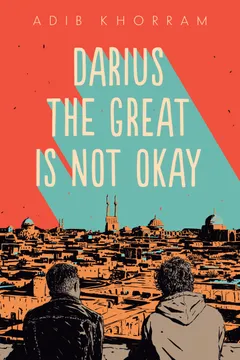


Plot Summary
The Bike Without Wheels
At his mall job, Darius Kellner tries to serve tea while Trent Bolger turns his work uniform into another target for sexual jokes. After a shift, Darius finds his bicycle stripped of its wheels and seat, with a crude prank left behind. His father, Stephen, retrieves him but treats the harassment as something Darius could stop by acting more normal.
Their strained routine rests on a few safe habits, especially one nightly episode of Star Trek, while both father and son take medication for depression. Then Stephen tells Darius that his Iranian grandfather, Babou, has an advancing brain tumor. Darius has never met his grandparents in person, so his parents decide the family must travel to Yazd before the chance disappears.
The opening makes humiliation concrete before it names the deeper wound: Darius is not only bullied, but repeatedly asked to interpret other people's cruelty as a failure of his own behavior. Stephen's advice echoes that pressure, though his concern is genuine. Their shared depression might seem like a bridge, yet it has become another subject they cannot discuss openly. The trip begins under the shadow of impending loss, but also with an unresolved question: whether Darius can belong to a family history he has experienced mostly through screens, food, and fragments of language.
A Family Across Customs
The trip begins in exhaustion and apprehension. On the long flight, Darius's mother, Shirin, warns him that mental illness may be misunderstood in Iran, while Darius worries about entering a country he knows mainly from family photographs.
At Tehran's airport, a customs officer singles him out, examines his antidepressants, and questions his depression before warming to the fact that Stephen is an architect. Released, Darius carries his sleeping sister, Laleh, through the airport. Mamou, his grandmother Fariba, rushes to Shirin and embraces her after seventeen years apart.
On the drive to Yazd, Mamou holds Darius close and welcomes him with a tenderness he has never received from his more reserved grandparents in America. Babou is too tired to meet them, leaving Darius both relieved and uneasy.
The border scene converts Darius's abstract fear of being treated as foreign into a brief, intimate encounter with institutional judgment. The officer's curiosity about architecture changes the interaction, showing how easily a person can be reduced to one visible or legible fact. Mamou's embrace then offers a contrasting kind of recognition: she welcomes Darius before he has to prove his fluency, confidence, or cultural knowledge. Yet Babou's absence keeps the reunion incomplete. Darius reaches Iran physically before he can feel at home there, and the family trip begins with both warmth and uncertainty.
The Friend Beside the Fig Trees
After waking in his grandparents' house, Darius sees Babou on the roof tending fig trees and meets Sohrab, the neighbor who helps with the hose. The two boys walk to Sohrab's uncle's grocery, where Darius discovers Sohrab is Bahá'í and fasting before Nowruz.
Sohrab invites him to play football. Darius borrows Sohrab's kit and cleats, and their energetic game makes him feel capable in a way school rarely does. But in the communal showers, Ali-Reza mocks Darius's uncircumcised body, and Sohrab joins the laughter instead of stopping it.
Humiliated, Darius leaves without his own shoes and decides their friendship was a mistake. Babou tells him not to let the boys' behavior matter, advice that only deepens Darius's sense that no one understands.
The first friendship is built through practical cooperation, shared play, and the relief of a boy who does not initially demand that Darius perform confidence. The shower scene abruptly changes the meaning of that closeness. Darius's body, which he has treated as ordinary, becomes a public marker of difference, and Sohrab's participation makes the betrayal sharper than the strangers' mockery. The episode also complicates Darius's belief that belonging depends on cultural sameness: he feels welcomed on the field, then exposed in the locker room. Babou's reassurance fails because it asks Darius to suppress pain rather than understand it.
The Apology at Mamou's
The next day, Sohrab returns Darius's Vans and follows him to his room, where he apologizes for laughing with Ali-Reza and Hossein. He explains that being mocked himself had made it feel good, briefly, to have someone else singled out.
Darius recognizes the impulse without excusing it, and accepts Sohrab's request for another chance. Their repaired friendship enters family life when Sohrab joins dinner. Babou criticizes Darius for knowing little about Persian culture and dismisses his depression medication as unnecessary; Shirin argues back, while Sohrab redirects the table with the offer of prized crispy rice.
Later, Babou teaches Darius to make Persian tea, unaware Darius already knows. Stephen sets up Star Trek, but watches with Laleh, leaving Darius to wonder whether even their private ritual is slipping away.
Sohrab's apology matters because it does not erase harm or hide behind a generic explanation. He identifies the selfish relief that drove him, allowing Darius to forgive a motive he recognizes without pretending the injury was small. The dinner scene widens that question of recognition: Babou's pride in heritage becomes a source of shame when he treats Darius's depression and limited Farsi as personal shortcomings. Meanwhile, Stephen's choice to include Laleh in their ritual threatens Darius's fragile sense of being his father's chosen companion. These pressures make connection feel precious, but also easily withdrawn.
Persepolis Bears His Name
For a family excursion, Babou drives everyone to Persepolis, where Darius sees monumental stone gates, broken columns, and the relief of Darius the Great, his namesake. Babou tells him the ancient king was strong, clever, and brave, qualities Darius doubts he possesses.
Stephen sketches the ruins, sharing his architectural attention with the place even as he remains distant from his son. On the drive back, Babou slows, misreads the road signs, and becomes angry when Mamou tries to guide him.
Shirin recognizes what is happening and asks Stephen to take over the driving. Sohrab quietly explains that Babou has become lost. Darius understands that his grandfather may never drive again, and sees his mother crying in Stephen's arms when they reach home.
Persepolis gives Darius a history large enough to inspire him and intimidate him at once. His name is not merely a family label; Babou uses the ancient ruler to offer him a lineage of courage, though Darius initially hears it as another impossible standard. The return drive collapses that grand scale into the intimate evidence of illness: Babou cannot safely navigate a familiar road. Stephen's quiet willingness to drive suggests care expressed through action, while Shirin's grief exposes what the children have only partly understood. Heritage here is not a monument untouched by time. It is a living inheritance under threat.
Nowruz Under One Roof
Nowruz brings Darius's maternal relatives and Sohrab's family together around Mamou and Babou's haft-seen. Sohrab gives Darius a Team Melli soccer jersey, a gift that makes him feel recognized as Iranian without requiring him to speak fluent Farsi.
The family takes photograph after photograph, and Darius is moved by how many relatives share his features. Then Babou abruptly shouts at Mamou, turning the celebration silent. Sohrab explains that the tumor can make Babou act unlike himself.
Darius cannot comfortably reconcile the gentle grandfather who showed him Persepolis with the man who has frightened Mamou. In the kitchen, Darius and Sohrab make tea while Sohrab's mother tells Darius he can ask her about the family, opening a door he is not yet sure how to enter.
The family photographs make belonging visible: Darius sees his own face echoed across generations, a form of recognition that neither school nor his father's standards have supplied. Sohrab's jersey offers a smaller, chosen version of the same gift, connecting identity to friendship rather than obligation. Babou's outburst then interrupts any easy celebration. The tumor does not make the scene less painful, but it changes how the family interprets it, forcing them to hold affection and fear together. Darius's impulse to make tea is a practical way to remain present when speech and explanation fail.
The Garden's Empty Place
After the party, Darius retreats to the jasmine garden because the relatives' fluent conversations and familiar dances make him feel like an outsider. Sohrab follows and listens as Darius describes his depression, his belief that Stephen is always disappointed in him, and the childhood stories his father stopped telling.
Sohrab reveals that his father was arrested during protests and imprisoned because he is Bahá'í. Their private histories give each boy a clearer view of the other's loneliness.
Later, Darius overhears Stephen admit to Babou that Sohrab may be his son's first real friend. In the kitchen the next morning, Shirin apologizes for failing to teach Darius Farsi, explaining that she wanted him to feel American and belong. Darius understands her intention without pretending it erased the cost.
The garden conversation turns friendship into a practice of witnessing. Darius does not offer Sohrab a solution to political imprisonment, and Sohrab does not try to cure Darius's depression; each instead allows the other's account to stand without correction. That difference is essential to Darius, who is accustomed to having his feelings debated or treated as evidence of weakness. Stephen's overheard judgment hurts because it confirms Darius's fear of isolation, but it also reveals that his father has noticed. Shirin's apology adds another layer: cultural distance was not simply imposed from outside, but partly created by a loving attempt to protect him.
The Mosque Above the Rooftops
The day after Nowruz, Darius visits Sohrab's home and tastes sekanjabin, a mint syrup Babou once made with Sohrab's father. Sohrab explains that Babou used to proudly keep a photograph of Darius on his phone, evidence that his stern grandfather had cared about him before they met.
Later, Sohrab leads Darius onto a park restroom roof, where the turquoise minarets of Yazd's Jameh Mosque rise above the low houses. They talk about faith, heritage, and the comfort of feeling connected to a larger community.
That evening, Darius sees Stephen and Laleh watching Star Trek without him and withdraws to the garden. Stephen calls him selfish when he protests that their father-son ritual has changed, and Darius goes to bed without either of them saying their usual good-night affection.
The rooftop view lets Darius experience Yazd as more than an ancestral backdrop: it becomes a place he has explored with a friend and can recognize on his own terms. Babou's hidden photograph revises Darius's assumption that emotional silence means indifference. Yet that new understanding does not immediately repair his relationship with Stephen. The Star Trek conflict shows how a ritual can become both a genuine bond and a narrow gate through which Darius measures his father's love. His withdrawal is not simple jealousy of Laleh; it is fear that the only reliable form of closeness he had with Stephen is being reassigned.
The Tower of Silence
At dawn, the family climbs to the Towers of Silence, where Darius learns that generations of his mother's ancestors were laid to rest above Yazd. Babou explains that the old Zoroastrian practice has ended and worries that the Bahramis may one day disappear from their ancestral city.
Darius recognizes his grandfather's grief as something close to his own fear of losing connection. He helps Laleh finish the climb and earns Babou's rare praise. Later, Darius takes Laleh to Sohrab's uncle's store for faludeh.
On a familiar rooftop, Sohrab notices Darius's sadness about Laleh and Star Trek, and reassures him that she cannot replace him as his best friend. Darius accepts that comfort, then hears Stephen affirm their affection before the day ends.
The Towers of Silence transform ancestry from an abstract source of pride into a physical question of continuity. Babou fears that migration, changing religious practices, and illness will loosen the family's bond to Yazd; Darius recognizes that fear because he has been measuring his own place in the family. Helping Laleh is a concrete act of care that earns him recognition from Babou, rather than a lesson about what a Persian grandson should be. Sohrab's reassurance then distinguishes forms of intimacy: Laleh can share her father's attention without taking Darius's friendship. The day offers connection, not a cure for insecurity.
Football Above the Khaki City
Sohrab takes Darius through Dowlatabad Garden, where its towering wind catcher and stained glass open a new view of Yazd. He also describes his father's transfer to Evin prison in Tehran, where visits stopped, and admits he fears never seeing him again. Darius stays beside him rather than offering quick reassurance.
Their soccer games grow beyond Ali-Reza and Hossein: Sohrab brings Darius into a larger group, backs him as a captain, and makes the boys use English when Darius cannot follow their Farsi. Darius discovers he can lead and play well. He begins saving money for new cleats for Sohrab. Their friendship gives him a place on the field, while Sohrab's trust lets him speak about the fear he has carried for years.
The soccer field becomes a social world Darius can enter through action before language. As he learns the rhythm of play, he gains authority without having to erase his accent, body, or uncertainty. Sohrab's insistence on English is a small but consequential act of inclusion, correcting the exclusion Darius often accepts as inevitable. At Dowlatabad, however, the friendship is not a fantasy of mutual rescue. Darius cannot free Sohrab's father or promise a reunion; he can offer attention and physical steadiness. Their bond grows because each boy is allowed to be both capable and frightened.
The Fire Still Burning
When the family visits Yazd's Zoroastrian fire temple, Babou is too unwell to leave the car, though he had wanted to show Darius the site. Darius stands before the ancient flame and imagines the generations of Bahramis who have watched it burn.
The moment makes his grandfather's illness feel inseparable from the history Babou has been trying to pass on. Back at the house, Shirin shows Darius an album of family photographs. One picture reveals Stephen holding baby Darius against his chest, tender and wholly absorbed in being a father.
Shirin explains that Stephen's depression once left him heavily sedated and unable to continue their bedtime stories. Darius sees that the distance between them grew from fear and illness, not from a lack of love.
The fire temple offers continuity without promising permanence. Its flame has outlasted generations, but Babou's absence from a place he hoped to share makes clear that cultural inheritance cannot protect an individual from illness. The photographs provide a counterweight to Darius's remembered rejection: they show a father capable of profound tenderness before depression altered his presence. Shirin's account does not erase the years of hurt or excuse Stephen's failures of communication. It gives those failures a history Darius did not know. The section shifts his central question from whether he was loved to what made love difficult to express.
The Cleats on the Floor
On the day of their last planned game, Darius brings Sohrab a new pair of cleats. At the Rezaei home, he finds Sohrab and his mother devastated: Sohrab's father has died after being stabbed in prison.
Darius offers the shoes and an awkward attempt to help, but Sohrab, overwhelmed by grief, calls him selfish and tells him nobody wants him there. Darius flees barefoot to the park rooftop they share. Stephen finds him there and listens as Darius finally confronts him about bullying, depression, and feeling replaceable.
Stephen admits that when Darius was seven, his own depression brought him close to suicide; strong medication kept him alive but left him numb, which is why the bedtime stories stopped. Father and son hold each other as Stephen acknowledges Darius need not be okay.
The cleats are a sincere gift delivered at the wrong emotional moment, and that mismatch exposes the limits of good intentions. Sohrab's cruelty is not justified by grief, but the scene makes its source legible without softening its impact on Darius. The rooftop repeats an earlier refuge, now carrying the story's most consequential confrontation. Stephen's disclosure changes the family history: the lost stories were not proof that Darius had failed to deserve his father's attention, but collateral damage from a crisis Stephen barely survived. The reconciliation begins not when either man becomes invulnerable, but when they stop treating distress as something to conceal.
A Photograph for the Road
After spending his birthday with Stephen at the Jameh Mosque, Darius returns to the Rezaeis' home. Sohrab apologizes for weaponizing Darius's insecurities and admits he spoke from unbearable grief, not from what he believes about their friendship.
Darius forgives him. That night, on their rooftop, Sohrab gives him a framed photograph of them laughing together and says Darius has helped him feel accepted without pretending to be someone else. They listen to the call to prayer and share a final embrace.
The next morning, Darius says goodbye to Sohrab, Mamou, and Babou. Babou tells him he matters to his father, then returns Darius's love with a kiss and an embrace. Darius leaves Yazd grieving, but no longer uncertain that he belongs to the family he has met.
The apology restores the friendship without asking either boy to pretend the loss has passed. Sohrab names his action as wrong, while Darius's forgiveness makes room for grief and hurt to coexist. The photograph becomes a portable record of mutual recognition, a counter-image to Darius's old assumption that he is forgettable. Babou's final words also alter Darius's understanding of his place in Stephen's life: he is not merely the son who disappoints his father, but someone his father needs. Leaving Yazd is therefore emotionally double. Darius loses daily closeness, but carries home a more durable sense of being connected.
Darius Comes Home
Back in Portland, Darius returns to school with rumors about his trip already circulating. Javaneh listens when he cannot easily explain what Iran meant to him. In gym, Darius uses the soccer skills he built with Sohrab to outplay Trent, and Chip unexpectedly criticizes Trent and checks that Darius's repaired bicycle is safe.
Darius remains cautious, but no longer assumes every classmate will behave like Trent. Coach Fortes notices his ability and invites him to try out for the school team; Darius considers it instead of refusing outright.
At home, he and Stephen resume Star Trek and begin a new habit of sharing tea and talking afterward. Darius stays himself, still managing depression, but can accept his family's affection without needing one exclusive ritual to prove it.
The ending resists a conversion narrative: Darius returns to the same school, the same body, and the same mental health condition. What changes is his range of responses. He can compete without becoming Trent, entertain Chip's unexpected decency without instantly trusting it, and consider soccer without treating a past failure as a permanent verdict. At home, the new tea conversation supplements Star Trek rather than demanding that the old ritual carry every emotional need. Iran has not made Darius invulnerable or wholly settled between cultures. It has given him relationships and memories that complicate the belief that he is alone.
Analysis
The novel's central problem is not whether Darius is Iranian enough or American enough, but how a person can live inside identities that other people treat as competing claims. At school, his Persian heritage makes him a target; in Yazd, his limited Farsi and unfamiliarity with custom make him feel like a visitor. The story refuses to resolve that tension by declaring one place the true home. Instead, Darius becomes more able to inhabit both through specific relationships: Mamou's unguarded affection, Babou's imperfect attempts at inheritance, and Sohrab's friendship, which makes room for difference without requiring Darius to translate himself perfectly.
Depression is handled as an ongoing condition rather than a plot puzzle with a single explanation. Darius's illness does not need a dramatic external cause to be real, and his medication is not a symbol of weakness or a cure that erases difficulty. Stephen's parallel history complicates the common parental instinct to protect by correcting. His fear produces advice that sounds like blame, while Darius's sensitivity makes each correction feel like evidence of rejection. Their eventual honesty does not make the past harmless; it gives both men a more accurate account of it. The novel's emotional progress comes through listening, apology, and a changed willingness to stay present.
Friendship is likewise neither idealized nor treated as rescue. Sohrab's betrayal wounds Darius because closeness has made the mockery intimate. His later grief explains why he lashes out, but explanation is not absolution; he must return and acknowledge what he did. Darius, in turn, learns to offer companionship without claiming he can repair Sohrab's loss. Their friendship models care as a capacity to remain beside pain, not to command it away.
The book's rituals carry its psychology. Tea, photographs, soccer, family meals, and Star Trek make affection observable when characters cannot easily name it. By the end, Darius has not become great by matching his namesake or stopped being depressed. He has acquired a less punitive understanding of himself and a wider network of people whose care can take different forms.
Review Summary
Darius the Great Is Not Okay is a heartfelt coming-of-age story about a Persian-American teenager struggling with depression, identity, and family relationships. Many readers praised the authentic representation of Iranian culture, mental health, and father-son dynamics. The book's focus on friendship rather than romance was appreciated, as was the subtle approach to complex topics. While some found the writing style and character development lacking, most reviewers were deeply moved by Darius's journey of self-discovery and recommended the book for its emotional impact and cultural insights.
People Also Read





Characters
Darius Kellner
A searching tea obsessiveDarius is a Portland teenager of Iranian and German American heritage who lives with clinical depression and is still trying to find treatment that steadies him. He uses wit, science fiction references, and precise tea knowledge to organize a world that often feels socially unpredictable. His self-deprecation can sound like confidence, but it often masks a habit of accepting other people's judgments as facts. Family rituals and friendship matter intensely to him, partly because he fears losing the few forms of closeness he trusts. His developing relationship with Iranian identity is not a simple return to an untouched origin; he must make room for what he knows, what he has missed, and what he chooses to learn.
Sohrab Rezaei
A generous guarded friendSohrab is a Yazdi boy, Darius's neighbor, and a gifted football player whose easy physical warmth helps Darius feel welcome. He is Bahá'í in a society where that identity can expose him to prejudice, and his family circumstances have forced him to carry adult responsibilities early. Sohrab is attentive to Darius's silences and often makes room for him without demanding explanations. Yet his desire for acceptance can lead him to behave against his own values, and grief can make him lash out at the person closest to him. His generosity is real, but not effortless: he is learning how to care for someone while carrying private pain of his own.
Stephen Kellner
A guarded architect fatherStephen is Darius's German American father, an architect who prizes discipline, practical solutions, and clear routines. His bond with Darius is strongest in shared habits, especially their nightly Star Trek viewing, but he often mistakes advice for understanding and worries that fitting in might shield his son from bullying. Stephen's own depression shapes how he parents, although he rarely speaks about it. He is not indifferent to Darius; he is frightened by how little control he has over his son's illness and by his own history with it. His care tends to appear first as correction, leaving tenderness present but difficult for Darius to read.
Shirin Kellner
A bridge between homesShirin, Darius's Iranian American mother, left Yazd for a life in Portland and has spent years balancing love for her family in Iran with the demands of building a home elsewhere. She is a UX designer, a fluent Farsi speaker, and the main link between Darius and his maternal relatives. Her wish for Darius to feel American comes from care, but it leaves him with less language and cultural knowledge than he wants. Shirin is affectionate and perceptive, though her work and old regrets sometimes keep her from noticing the cost of that choice. She can also challenge Stephen when his efforts to protect Darius turn into pressure to change him.
Mamou, Fariba Bahrami
A fiercely loving grandmotherFariba, whom Darius calls Mamou, is Shirin's mother and the warm center of the Bahrami household. She greets affection as something to give freely, embracing Darius despite years of separation and drawing him into family meals, photographs, and everyday work. Her hospitality is expressed through food and attention, not through tests of cultural fluency. Mamou's long marriage and closeness with Shirin give her a history Darius is only beginning to discover. She is also capable of redirecting painful conversations when the family cannot bear to remain inside them, protecting others while revealing how much grief she carries.
Babou, Ardeshir Bahrami
A proud, ailing grandfatherArdeshir, Darius's maternal grandfather, is a Yazdi Zoroastrian whose pride in family history often takes the form of instruction and expectation. He tends fig trees, makes tea, and knows the landscape and customs of his city intimately. His blunt opinions about depression and Persian identity can make Darius feel judged, while his reserve makes affection difficult to recognize. Babou's illness affects his memory and moods, complicating Darius's first understanding of him. Beneath his severity is a deep attachment to his descendants and to the continuity of the Bahrami family in Yazd.
Laleh Kellner
A bright younger sisterLaleh is Darius's eight-year-old sister, fluent in Farsi and naturally comfortable among the adults and traditions that make him feel uncertain. She is curious, energetic, affectionate, and often unintentionally disruptive, especially when she shares Darius's private rituals with Stephen. Darius loves caring for her, even as he envies her ease and fears that her closeness with their father will displace him. Laleh is not a rival by intention. Her warmth and dependence on Darius offer him another kind of family bond, one he gradually learns does not have to compete with his own.
Javaneh Esfahani
Darius's school confidanteJavaneh is Darius's closest friend at Chapel Hill High School, an Iranian American girl who wears a headscarf and navigates the same school's social pressures from a different position. Her quick humor and distinctive habits make their lunch-table friendship feel easy rather than performative. She listens when Darius returns from Iran unable to summarize what the trip meant, offering patience instead of pressing him for a neat account. Her presence reminds him that friendship can exist at home too, even when it does not resemble the intense companionship he found in Yazd.
Trent Bolger
A practiced school tormentorTrent is Darius's classmate and a popular athlete who uses sexual jokes, ethnic insults, and pranks to keep Darius in a lower social position. He learned early that cruelty can pass as humor when teachers and peers decline to challenge it. His role is not that of a grand antagonist, but of an everyday pressure that makes Darius question whether he is responsible for being targeted. Trent's predictable taunts contrast with the more complicated behavior Darius encounters in Iran.
Chip Cusumano
A conflicted classmateChip is Trent's taller, more socially polished friend and a varsity wrestler. He sometimes laughs along with Trent and contributes to Darius's humiliation, including an accident that ruins Darius's backpack. Unlike Trent, Chip shows discomfort with his own complicity and tries to apologize. Darius has little reason to trust him at first, but Chip's behavior suggests that a person can participate in harm without being fixed permanently in that role. He remains awkward and imperfect rather than becoming an instant ally.
Mahvash Rezaei
Sohrab's loving motherMahvash is Sohrab's mother and a longtime friend of Shirin and Mamou. She is expressive, hospitable, and energetic, showing affection through exuberant greetings and homemade food. Her closeness with the Bahramis helps explain why Sohrab is already part of their family gatherings, a fact that can stir Darius's jealousy even as he appreciates the welcome. Mahvash's warmth does not make her household free of sorrow; she and Sohrab depend on each other, and her emotional life is closely tied to her son's.
Ashkan Rezaei
Sohrab's generous uncleAshkan is Sohrab's uncle and the owner of the neighborhood grocery, where he sells sweets and welcomes Darius without hesitation. His large presence and easy generosity make the shop a safe meeting place for the boys. He also represents the practical network around Sohrab, offering family support in circumstances that can otherwise feel isolating. Ashkan's kindness is expressed through food, invitations, and making room for Darius rather than through elaborate speeches.
Jamsheed Bahrami
Shirin's lively older brotherJamsheed is Shirin's brother, Darius's maternal uncle, and the relative who drives the family from Tehran to Yazd. His teasing energy and confident hospitality contrast with Darius's reserve. He helps make the trip possible and connects Darius to the sprawling Bahrami family network. His comments about what counts as Persian can sting, particularly when Darius already feels culturally underprepared, but he is part of the noisy, affectionate family world Darius is trying to enter.
Soheil Bahrami
A practical maternal uncleSoheil is Shirin's younger brother, living in Shiraz with his family. He joins the Nowruz gathering and treats Darius with the familiar physical affection common among the relatives, though some of his remarks about Darius's body land awkwardly. His presence extends the family beyond Mamou and Babou's house and shows how widely the Bahramis are spread across Iran. He also helps Darius obtain a thoughtful gift for Sohrab.
Ali-Reza
A prejudiced soccer rivalAli-Reza is one of the boys who plays football with Sohrab and is openly prejudiced against Bahá'ís. He is competitive, quick to insult, and especially hostile when Sohrab's skill threatens his status. Darius initially reads him as another version of Trent, though the boys' rivalry unfolds in a different social setting. Ali-Reza's behavior shows that shared Persian identity does not erase religious divisions or make every community welcoming.
Hossein
A hard-edged soccer regularHossein is a regular on the local football field and often plays alongside Ali-Reza. He participates in the locker-room mockery that humiliates Darius, then later returns to the game as part of the wider group Sohrab assembles. His presence helps establish how a close-knit sports circle can include both cruelty and ordinary competition.
Dr. Howell
Darius's depression specialistDr. Howell treats Darius and Stephen for depression and helps Darius understand medication, side effects, and emotional symptoms without framing them as moral failures. He is not present in the family's daily conflicts, but his clinical perspective gives Darius language for experiences his relatives struggle to discuss.
Coach Fortes
A school soccer coachCoach Fortes teaches physical education at Darius's school and notices his soccer ability during class. His invitation to consider trying out gives Darius a concrete opportunity to carry new confidence into his Portland life, without forcing him to accept immediately.
Plot Devices
Tea and tea making
A language of careTea gives Darius a dependable way to act when conversation feels too exposed. He knows how to choose leaves, control water temperature, and prepare Persian tea, so making a cup can become hospitality, apology, or companionship. In Yazd, tea links him to Mamou and Babou through a practice he already understands, while his gift of Darjeeling lets him offer something personal rather than merely receive family attention. The ritual never solves the family's conflicts, but it provides a shared task around which difficult silences can become bearable.
Star Trek ritual
A father-son barometerDarius and Stephen's nightly episode of Star Trek is the clearest measure of their relationship. The routine gives them predictable time together when direct emotional conversation is difficult. Because Darius treats it as something uniquely theirs, changes to who watches and when can feel like evidence that he is being displaced. The show also supplies a shared vocabulary of captains, missions, and technology through which Darius interprets his surroundings. As father and son find other ways to connect, the ritual can remain meaningful without carrying the entire burden of proving their love.
Taarof
Hospitality with hidden rulesTaarof is the Persian etiquette of offering and refusing with practiced politeness, placing respect and generosity inside a social exchange. Darius often misses its cues, which makes his cultural dislocation visible through small encounters: refusing food, accepting help, or trying to offer assistance. Sohrab explains the rules without making Darius feel foolish, while family members use the custom to express welcome. The device makes belonging more complicated than simply knowing facts about Iran. Darius must learn how to read the intentions beneath formal gestures, while discovering that kindness can survive his mistakes.
Yazd's ancestral landmarks
Heritage made tangiblePersepolis, the Towers of Silence, the fire temple, and the Jameh Mosque turn cultural history into places Darius can walk through and see. Each site changes his understanding in a different way: Persepolis links his name to an ancient ruler, the Towers connect his family to generations in Yazd, and the fire temple brings religious continuity into focus. The landmarks do not automatically make Darius feel Persian. Instead, they give Babou, Shirin, and Sohrab ways to tell him what the places mean, allowing inheritance to become a relationship rather than a set of facts.
Football and the Team Melli jersey
Belonging through shared playFootball lets Darius participate before he can speak Farsi comfortably. Sohrab lends him equipment, brings him onto a team, and treats his contributions as real, giving Darius a place built through practice rather than ancestry alone. The Team Melli jersey becomes a visible sign of that friendship and of Darius's wish to feel Iranian. The device is deliberately imperfect: playing well cannot erase cultural or religious divisions, and a gifted uniform cannot guarantee that a friend will always respond gently. Still, football gives the boys a repeated space in which trust can be rebuilt through action.
Download PDF
Download EPUB
.epub digital book format is ideal for reading ebooks on phones, tablets, and e-readers.








