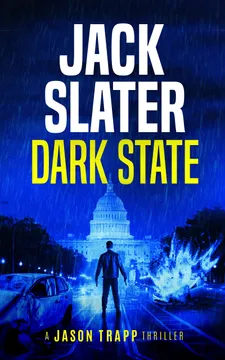


Plot Summary
The Zephyr Massacre
A signal-box explosion halts the California Zephyr near Glenwood Springs, Colorado, exactly where the attackers planned. Iraqi militant Raheem8 and his unnamed partner open fire from opposite ends of the train, killing passengers before throwing a grenade into a carriage.
Raheem’s8 fury began years earlier, when an American drone strike killed his wife and child; after soldiers captured him in Iraq, he survived because an officer refused to authorize a lethal strike. That reprieve did not soften him.
Now he believes his family’s deaths justify killing strangers, including a mother whose little girl he saw at the station. A third gunman waits outside with an escape route, while the attack is broadcast online. When local responders arrive, the shooters ambush them too.
The opening makes violence both intimate and engineered. Raheem’s private grief explains his hatred without excusing his choice to turn it on people who had no part in his loss. The earlier decision to spare him becomes an unsettling counterfactual: a single humane act might have prevented catastrophe, yet the novel refuses to pretend that mercy controls another person’s future. The livestream adds a second motive to the massacre. The attackers are not merely killing passengers; they are producing a spectacle for a distant audience, turning terror into an instrument of political communication.
Hangman Breaks Cover
Jason Trapp1 has come to Boston to deliver his dead partner Ryan Price’s9 savings to Ryan’s brother,10 Joshua,10 before disappearing for good. Then television footage shows the Colorado massacre, and gunfire erupts near TD Garden, where another team is attacking a basketball crowd.
Trapp1 takes a baseball bat from Joshua’s10 bar, reaches the arena, and replaces it with a dead officer’s pistol. He slips past a wounded young policeman, enters the stands, and kills two gunmen using a basketball to draw one attacker’s attention.
Police arrest him at the scene, but his fingerprints trigger a secret CIA alert. A helicopter carries him toward Langley, where his former superior, Mike Mitchell,3 is waiting. Trapp1 had planned to bury his past; the attacks drag him back into it.
Trapp’s return to violence is not driven by patriotism as an abstraction. He responds to a specific sight: civilians trapped in a place where he knows what trained attackers can do. The rescue revives the part of him he had tried to retire, but it also exposes the cost of a life built around intervention. He is once again useful precisely because he cannot watch helplessly. The money meant as a final act of loyalty to Ryan becomes a marker of unfinished grief, and the arrest that follows links Trapp’s personal mourning to a national emergency.
The Hoover Building Bomb
FBI agent Dani Carter2 is due to receive a medal when a man wearing an explosive vest enters the Hoover Building lobby. Dani2 recognizes the danger, orders her father, retired Marine Mitch Carter,11 to get down, and shoots the bomber. Her warning comes too late to prevent the explosion. Dani2 wakes in a triage tent with a concussion and shrapnel cuts; her father11 has been taken to hospital with serious injuries.
Across the country, the train attack is only one part of a coordinated wave: gunmen strike public places, bombs go off, and thousands die. The attacks leave the President, Charles Nash,5 sheltering underground with advisers who cannot identify the enemy or explain how the perpetrators evaded American intelligence.
Dani’s defining conflict arrives through action before she can prepare for it. She sees the threat and acts correctly, yet the explosion still wounds her father, leaving her to contend with the gap between professional competence and actual control. Her guilt is sharpened by their closeness: she invited him to the ceremony, so the public disaster becomes painfully personal. The medal she already doubted now seems grotesquely beside the point. Meanwhile, the scale of the coordinated attacks overwhelms institutions that claim to predict danger, establishing the novel’s central tension between surveillance and genuine security.
A Strike on the Potomac
At Langley, Trapp1 confronts Mitchell,3 convinced the deputy director arranged the Yemen mission that killed Ryan Price9 and nearly killed him. Mitchell3 denies involvement, and analyst Kyle Partey13 supports him with evidence: someone had entered CIA communications and manipulated intelligence used to target operatives.
Before they can investigate, an F-16 attacks their Virginia safe house on fabricated claims of an ISIS cell and a biological weapon. Trapp1 and the others escape through an old tunnel as the building is struck.
The scale of the conspiracy becomes unmistakable. The same hidden hand may have shaped Trapp’s1 disastrous mission and the nationwide attacks, while the government’s own security systems are being used to misdirect the people meant to protect the country.
The airstrike changes Trapp’s understanding of betrayal. He had made Mitchell the focus of his grief because a single guilty man offered a more bearable explanation than a compromised institution. The evidence does not restore trust immediately; it removes the certainty that made revenge simple. The false intelligence used to justify an American strike also mirrors the doctored intelligence that sent Trapp and Ryan into danger. In this story, information is not merely incomplete. It is weaponized, and the state’s capacity to act quickly becomes dangerous when its picture of reality has been deliberately altered.
Donahue Never Arrives
NSA director Rick Donahue returns from Utah carrying a resignation letter for President Nash5 and evidence of a crisis inside his agency. Trapp1 reaches the motorcade after spotting an Israeli sniper team near Andrews, but the mercenaries have a larger plan.
They jam communications, attack the vehicles on the Frederick Douglass Memorial Bridge, and fire missiles from a helicopter. Trapp1 joins Donahue’s Scorpion bodyguards and helps drive the attackers back, but an explosion crushes the director’s armored Suburban.
Donahue is dead. Searching the wreckage, Trapp1 finds the letter: Donahue believed a conspiracy had grown inside the NSA and that Birdseye, the agency’s surveillance system, had become a weapon against America. The one man who could explain it is gone.
Trapp’s failure here is not a lack of courage or skill. He reaches the scene, adapts, and fights, but cannot overcome an attack designed to overwhelm communication and protection at once. That distinction matters to his psychology: he is accustomed to treating survival as a problem he can solve through discipline. Donahue’s death forces him to face the limits of that belief. The letter converts the battle’s spectacle into a political revelation. The NSA’s director was not simply another casualty; he had recognized that the apparatus built to make threats visible might now be hiding them.
The Bureau Arrests Itself
Still recovering, Dani2 returns to the FBI and finds agents being arrested on allegations that they helped the terrorists. The supposedly decisive evidence comes from the NSA, while her supervisor, Rick Olsen,12 is among those taken away.
Dani2 believes the charges are false, but has no proof and little institutional room to challenge them. FBI director Vince Rutger makes her acting head of the Washington field office because her public actions during the bombing have left her reputation unusually strong.
At the bridge crime scene, Dani’s2 team finds a weapon linked by a police report to Trapp’s1 Boston arrest. She realizes the shooting there was an assassination attempt, not another mass attack. Her inquiry now has two targets: the people who killed Donahue and the people turning the Bureau against itself.
Dani’s promotion places authority in the hands of someone who still distrusts the institution’s account of events. That irony gives her new power but also makes her responsible for decisions whose evidence she cannot yet verify. Her loyalty to Olsen is not blind faith; it rests on years of observing his judgment, in conflict with the sudden certainty of the official case against him. The weapon at the bridge supplies a concrete thread through the confusion. Dani’s investigative strength lies in refusing the convenient story, even when challenging it risks her standing inside the Bureau.
A Knock After Midnight
Trapp’s1 team watches Dani2 because they believe the conspiracy will target anyone who gets too close. Their suspicion proves right when a gunman approaches her apartment late at night.
Trapp1 races through the building, but Dani2 opens the door first and knocks the attacker down by smashing a beer bottle against his weapon and taking his legs out from under him. A sniper positioned outside is killed by CIA operator Perkins before he can fire.
Dani2 recognizes Trapp1 from the Boston footage and demands an explanation; he admits he worked for the CIA and that someone tried to kill him in Yemen. When he connects the attempt on her life to the attacks, Dani2 chooses cooperation over arrest. She and Trapp1 carry the prisoner to a safe house to question him.
Dani’s first meeting with Trapp reverses the expected rescuer dynamic. He arrives in time to help, but she has already acted decisively, establishing that she is not merely an agent he must protect. Their alliance begins with mutual assessment rather than easy trust. Trapp discloses enough of his past to make the danger legible, while Dani accepts that ordinary procedure may not be adequate to meet it. The scene tests both characters’ habits: his instinct to operate beyond official channels and her obligation to law. Their agreement is provisional, grounded in the immediate evidence that someone wants them both silenced.
Birdseye Has a Backdoor
The captured gunman identifies himself as a white nationalist, and interrogation points Dani2 toward an armed training camp in South Dakota. Meanwhile, Trapp’s1 search for a staging warehouse leads to a firefight with two guards.
The lone arrival afterward is Dr. Timothy Greaves,4 a senior NSA scientist who had been presumed dead after investigating suspicious activity at the Utah Data Center. Greaves4 explains that Birdseye was not hacked from outside.
A Trojan-like intrusion was built into the system, allowing someone to manipulate intelligence and target people inside American institutions. The agency’s project team has been eliminated, including the contractor Neil Patel. Greaves4 has created a limited backdoor of his own, but using it risks alerting whoever controls Birdseye.
Greaves supplies the difference between a breach and a design flaw: the danger was not an outside enemy breaking through a wall, but a hidden passage built into the wall from the beginning. That shift changes the conspiracy from a security failure into a question of authorship and accountability. The scientist’s guilt over Donahue’s death complicates his technical brilliance; he understands that a system can be both an achievement and an instrument of harm. Trapp, by contrast, treats the discovery as operational terrain. Their partnership joins two kinds of intelligence, one that reads data and one that reads human danger.
Pilgrim Stands Empty
Dani2 authorizes a raid on the Pilgrim encampment in South Dakota, where Andrew Rawlin7 has trained white nationalists under the cover of a secluded ranch. The FBI team finds the camp abandoned, but one building contains a vast cache of rifles, explosives, and ammunition.
Outside lies a dead veteran, suggesting the group did not leave peacefully. Rawlin7 has already shifted his operation toward new targets. In Houston, he and five followers enter a packed Black church disguised as FBI agents, lock down the exits, and kill the Reverend Rafael Tucker before opening fire on the congregation.
Rawlin’s7 massacre is livestreamed, deepening the national crisis. The empty camp was not the end of the threat; it was evidence that an armed force has already moved into position.
The camp’s emptiness is more frightening than a successful raid would have been. Dani has found the infrastructure but not the people who can use it, so the evidence confirms danger without restoring control. Rawlin’s attack on the church makes the ideology concrete: he turns racial hatred into a tactical operation and uses counterfeit authority to make victims comply. The livestream echoes the Zephyr attack, but the propaganda now serves a domestic insurgency. By placing the massacre in a church, the plot attacks not only bodies but the assumption that familiar civic spaces remain outside the battlefield.
Woods Takes the Leash
Speaker of the House Randall Woods receives calls from a hidden operator who threatens to release compromising material unless Woods cooperates. The operator uses genuine indiscretions and fabricated deepfake footage, including an invented crime involving a missing child, to make the threat impossible to dismiss.
He promises to make Woods President, then pressures him to push Charles Nash5 into a joint address to Congress despite security warnings. Vice President Robert Jenkins,6 meanwhile, remains protected at his Texas ranch, publicly distant from the crisis.
Woods’s ambition and fear make him useful to the hidden operator: the Speaker can create political pressure without understanding the larger plan. As the attacks spread, President Nash5 faces a choice between appearing weak and exposing himself at the Capitol.
Woods is controlled through a blend of truth and fabrication, a combination more coercive than either alone. Real misconduct gives the blackmailer credibility; the deepfake demonstrates that even innocence cannot protect Woods once evidence itself becomes editable. His ambition is not erased by fear. It becomes the channel through which fear can be converted into political action. Nash’s predicament shows how public leadership can be manipulated by appearances: declining a speech may look like cowardice, while accepting it may be suicidal. The conspiracy exploits not only surveillance but the public’s demand for visible reassurance.
The Caller Is Found
Trapp1 and Greaves4 use Birdseye’s narrow backdoor to trace the hidden operator’s communications, while Trapp1 pressures Woods into calling FBI agent Dani Carter.2 During the call, the blackmailer phones Woods back, unknowingly exposing the system’s source.
Greaves4 traces the signal to a secure control room beneath Jenkins’s6 Texas ranch. The team also surveils a farmhouse near Clarksville and finds counterfeit Secret Service vehicles, confirming that Rawlin’s7 men intend to strike during the congressional address.
Trapp1 now understands the pieces as one operation: Birdseye supplies the false intelligence, Woods supplies political cover, and Rawlin7 supplies the armed force. Dani2 and FBI director Rutger prepare a counteroperation, but the plan depends on keeping the President’s5 real movements secret.
The conspiracy’s structure becomes legible because each character contributes a different kind of leverage. Woods can be induced to reveal the caller, Greaves can follow the electronic trace, and Trapp can recognize the tactical meaning of vehicles and staging sites. None could solve the problem alone. This division of labor counters the machinery of Birdseye with human judgment, though the team must use the very system that has been corrupted. The discovery also raises the stakes from a sequence of attacks to an attempted transfer of power. The threat is not only that Nash may die, but that the country’s own institutions may help deliver him to his killers.
Counterfeit Agents Advance
Rawlin’s7 force approaches Washington disguised as the Secret Service Counter-Assault Team, expecting to reach the President5 during the congressional address. A planted Capitol Police officer is supposed to trigger confusion inside the building, but he is discovered before he can act.
Rawlin7 changes his plan and diverts his trucks to the Washington Monument, where he expects the President5 to be evacuated by helicopter. Dani,2 acting on the intelligence Trapp’s1 group has gathered, sets a trap there.
FBI Hostage Rescue Team members arrive in helicopters while decoy vehicles draw the attackers into the landing zone. When Rawlin’s7 men recognize the setup and open fire, FBI teams and Army Apaches stop their vehicles. Several attackers die, and the survivors surrender. The President5 remains safe.
The climax of the public operation hinges on performance: Rawlin’s men imitate the government’s protective force, while Dani’s team imitates the conditions the attackers expect. Uniforms and vehicles become instruments of trust, which is why the deception is so dangerous. Dani’s plan does not rely on overpowering the conspirators by numbers alone; it uses their own assumptions to bring them into a controlled space. Yet the use of Apache firepower against a domestic target marks the cost of that control. The scene resolves the immediate threat through coordinated action, while showing how thin the boundary has become between homeland security and warfare.
The Vice President’s Bunker
While Washington prepares for the address, Trapp1 slips through an air vent into Jenkins’s6 underground command room in Texas. Jenkins6 is directing the final attack: explosives, a staged shooting, and a fake Counter-Assault Team are meant to kill Nash5 and clear the way for Jenkins6 to assume the presidency.
Trapp1 disarms him and forces him to explain the conspiracy, recording names and connections that Greaves4 and Partey13 can pursue. Jenkins6 offers money and power, but Trapp1 refuses them.
President Nash5 has authorized a deal: Jenkins6 can live if he provides information and resigns. Trapp1 appears to accept those terms, then leaves a poison-coated pen behind. Jenkins6 has helped expose the plot, but Trapp1 secretly ensures he will not escape accountability.
The confrontation puts Trapp’s private code under pressure. He rejects the forms of corruption Jenkins understands, money and advancement, but then imposes a personal punishment that bypasses public justice. His choice is emotionally comprehensible after Ryan’s death and the mass killing, yet it is also morally unstable: the man who has spent the novel protecting institutions decides that one powerful criminal is beyond their reach. Jenkins’s offers expose his belief that every person has a price. Trapp’s refusal breaks that logic, but his deception shows how easily resistance to corruption can reproduce its secrecy.
A Quietly Paid Price
With the assassination attempt stopped, Nash5 addresses Congress and tells the nation that a domestic terrorist cell has been captured, withholding the conspiracy’s full extent to avoid destabilizing the country. Woods resigns and pledges his fortune to veterans’ charities.
Jenkins6 is reported dead of a heart attack, concealing Trapp’s1 poisoning and the President’s5 quiet role in containing the scandal. Rawlin7 is convicted and sent to ADX Florence, but a guard later allows three inmates access to his corridor.
They kill him, and the warden’s report disguises the deliberate failure that enabled it. The violence is publicly finished, though justice has been divided between official prosecutions and covert arrangements. The country receives a version of events it can survive, not the whole truth.
The aftermath offers stability at the price of transparency. Nash’s restrained account protects a fragile public, but it also leaves citizens unable to judge the full scale of the conspiracy or the compromises made in response. Woods’s resignation and donation are visible acts of atonement; Jenkins’s death and Rawlin’s prison killing are hidden acts of retribution. These different outcomes expose unequal access to justice. The novel does not present secrecy as uncomplicated heroism. It can prevent panic and further violence, but it also lets powerful people decide which crimes become public and which are settled in darkness.
Ryan’s Barroom Legacy
After the conspiracy is contained, Trapp1 returns to Joshua Price’s10 Boston bar, where he had left Ryan’s9 cash. Joshua10 offers to return the money, but Trapp1 insists it belonged to Ryan9 and should help his brother.10 The bar is struggling, and Joshua10 admits he cannot afford to close it long enough to repair the place.
Trapp1 proposes staying to help and suggests Joshua10 use some of the money to rebuild, with Trapp1 as a silent partner. Joshua10 accepts. The two men begin trading stories about Ryan,9 a conversation Trapp1 had avoided since his friend died. He has not recovered the life he lost in Yemen, nor does he simply retire from danger. But he allows grief to become a bond with the person Ryan left behind.10
The ending returns Trapp to the modest errand that began his day in Boston, but changes its meaning. At first, the money was a debt he needed to discharge before vanishing; now it becomes a practical way to sustain Ryan’s family and a place of shared memory. Trapp’s willingness to stay is not a cure for trauma. It is a small movement away from isolation, made possible by a relationship that does not demand he explain every part of himself at once. The bar offers something his clandestine work cannot: a life built through ordinary labor and company.
Analysis
Dark State treats intelligence not as a neutral storehouse of facts but as a form of power: whoever controls the account of danger can decide who is watched, who is targeted, and which response appears necessary. Birdseye’s reach makes it seem almost omniscient, yet its hidden backdoor exposes the weakness beneath that promise. More data does not guarantee truth when the system’s makers, operators, and political beneficiaries have incentives to manipulate what the data means.
The novel’s protagonists answer this problem through complementary forms of attention. Trapp1 reads bodies, routes, weapons, and hesitation; Dani2 tests claims against evidence and refuses to let authority substitute for proof; Greaves4 understands how apparently technical systems encode human choices. Their cooperation matters because no single form of expertise can defeat a conspiracy that operates simultaneously through violence, code, and political theater.
The story is also uneasy about the methods its heroes use. Trapp1’s willingness to work outside the law helps stop an attempted seizure of power, but his secret killing of Jenkins6 repeats the very logic of concealed authority he opposes. Nash5 protects the country by limiting what the public learns, and the ending grants stability without full transparency. This is not presented as a clean moral victory. It is a thriller about the costs of defending democratic institutions when the attackers have already learned to wear their uniforms, manipulate their evidence, and exploit the public’s fear.
Characters
Jason Trapp
The disavowed operatorA former CIA special operator known as Hangman, Trapp is watchful, physically formidable, and shaped by an abusive childhood he rarely discusses. He learned to survive by controlling his body and emotions, then found a purpose in protecting people who would never know his name. Ryan Price9 was his closest friend and partner, and the loss of Ryan9 leaves Trapp with grief that he initially channels into revenge. Trapp is capable of tenderness, especially toward the vulnerable, but his work has trained him to treat violence as a tool. His central tension is whether service can remain honorable when institutions manipulate the truth and official justice fails those they harm.
Dani Carter
The tenacious FBI agentAn MIT-trained computer scientist who chose the FBI over a lucrative technology career, Dani is intelligent, disciplined, and impatient with policing that mistakes statistics for justice. Her father, retired Marine Mitch Carter11, is her closest family and a lasting source of values grounded in service. Dani can read patterns quickly, but she also knows that evidence and procedure matter; this makes her uneasy when the official account conflicts with what she sees. She combines analytical rigor with physical courage, and her direct manner can unsettle colleagues. Her deeper drive is to make public service mean more than institutional loyalty, especially when vulnerable people are treated as numbers or political proof.
Mike Mitchell
The embattled CIA chiefMitchell is deputy director of the CIA’s Special Activities Division and a former operator who rose through the ranks. He understands the secrecy and moral compromises of covert work, but also knows that institutional success can make people stop asking where intelligence comes from. His relationship with Trapp1 is marked by trust, anger, and the history of missions they shared. Mitchell is neither a distant bureaucrat nor an uncomplicated mentor: he has authority, but he is also capable of error and must answer for decisions made under his watch. He is driven by loyalty to his people and country, while struggling to distinguish necessary secrecy from the kind that protects wrongdoing.
Timothy Greaves
The NSA systems expertA brilliant, eccentric NSA research scientist, Greaves prefers code, data, and long stretches of uninterrupted work to the agency’s bureaucracy. His technical curiosity leads him to notice irregularities others dismiss as routine system problems. He has a personal relationship with NSA director Rick Donahue, and that connection gives his discoveries a human cost beyond professional risk. Greaves is not a field operative; he is anxious in physical danger and more comfortable explaining a system than navigating a room full of armed people. Still, he accepts responsibility when his work becomes implicated in harm. His character asks whether technical expertise carries an obligation to resist the uses powerful institutions make of it.
Charles Nash
The pressured new PresidentA former Marine and newly elected President, Nash entered office promising to restore opportunity to a country he believes has left ordinary people behind. His son’s death from addiction and the collapse of his marriage have left him carrying private grief into public responsibility. Nash is more sincere than polished, sometimes uncertain in the machinery of Washington, yet capable of listening when advisers challenge him. His struggle is to lead without letting fear, image, or political games make decisions for him. He wants to protect the country and rebuild it, but discovers that the presidency offers immense authority without guaranteeing that the people and systems beneath him are trustworthy.
Robert Jenkins
The ambitious Vice PresidentA former defense-contractor executive, Jenkins is polished, wealthy, and practiced at adapting his public identity to the audience before him. He treats politics as a contest of leverage and believes that influence comes from knowing what other people fear having exposed. His position near the presidency gives him access to power, while his business background connects him to the machinery of government contracting. Jenkins is not driven by public service so much as by control and personal advancement. His ease with secrecy and manipulation makes him dangerous, particularly in a world where private information can be turned into political currency.
Andrew Rawlin
The militia commanderRawlin is a former soldier who builds an armed white-nationalist organization at a secluded South Dakota ranch. His upbringing among addiction and economic hardship feeds a desire for order, but he converts those injuries into a violent racial ideology. He is disciplined enough to organize training, weapons, and operations, and ruthless enough to treat followers as expendable when necessary. Rawlin’s authority depends on presenting himself as both a comrade and a visionary, even as he demands obedience. His character shows how genuine grievance can be recruited into a political project that offers belonging while directing resentment toward imagined enemies.
Raheem
The grieving attackerAn Iraqi militant whose wife and child were killed in an American strike, Raheem carries grief that has hardened into ideological certainty. An earlier arrest in Iraq ended without a lethal strike, but the experience did not pull him away from violence. He interprets personal loss as proof that strangers deserve collective punishment, allowing him to call murder righteous. His role in the train attack makes the novel’s political violence intimate without making it morally ambiguous: his suffering is real, and his decision to inflict suffering on civilians remains his own.
Ryan Price
Trapp’s fallen partnerRyan Price was Trapp’s1 closest friend, military partner, and first experience of dependable kindness after a violent childhood. A loud, confident Bostonian, Ryan contrasts with Trapp’s1 guardedness and helps him feel less defined by his scars. His family ties, especially his brother Joshua10, remain important to Trapp1 after Ryan is gone. Ryan’s loyalty and humor give Trapp1 a model of companionship that survives the missions they share.
Joshua Price
Ryan’s brother and barmanJoshua runs a Boston bar decorated with family military history and resembles his late brother Ryan9 in both stature and striking blue eyes. He is friendly, practical, and still negotiating the ordinary demands of work and family grief. His connection to Ryan9 gives Trapp1 a reason to return to the life beyond covert operations. Joshua does not pry into Trapp’s1 classified past, but his openness creates room for the two men to remember Ryan9 without turning him into a mission or a monument.
Mitch Carter
Dani’s Marine fatherA retired Marine gunnery sergeant, Mitch is Dani’s2 closest family and the person whose example helped shape her commitment to service. He is proud of her work, but their bond is not simply one of parent and child: Dani2 has become capable of protecting him as well as seeking his counsel. His memories of military life and his steady presence give Dani2 an emotional anchor in a career where bureaucracy can obscure human consequences.
Rick Olsen
Dani’s FBI mentorThe large, blunt special agent in charge of the Washington field office, Olsen recognizes Dani’s2 talent and gives her room to question cases that trouble her. He is a seasoned investigator, skeptical of bureaucratic incentives, and willing to admit when the Bureau’s priorities have drifted from justice. His mentorship is direct rather than sentimental, built on trust and hard criticism. Dani’s2 respect for him rests on what she has watched him do, not simply on his rank.
Kyle Partey
The CIA intelligence analystPartey is an exceptionally gifted CIA analyst who can trace hidden connections through dense technical systems. His reserved, awkward manner contrasts with the confidence he displays when directing an operation from behind a keyboard. He helps connect Trapp’s1 field experience with the data that reveals the conspiracy’s structure. Partey’s work gives him influence without the visible authority of an operator, and his story highlights the courage required to admit that an earlier analysis helped place good people in danger.
Darren Gibson
Rawlin’s troubled confidantGibson is Rawlin’s7 oldest friend, a veteran and gifted marksman whose military injury and drug addiction have left him searching for purpose. Rawlin7 helped him through withdrawal and gave him a role in the militia, but Gibson remains uneasy about the money and unknown patron behind their operation. His loyalty to Rawlin7 competes with an instinctive suspicion that the group is serving someone else’s agenda. He offers a glimpse of how comradeship can both rescue a person and make him vulnerable to exploitation.
Plot Devices
Birdseye
Surveillance turned inwardBirdseye is the NSA’s vast intelligence-analysis system, designed to combine information from many sources and identify threats more quickly than human analysts can. Its success encourages agencies to trust its recommendations, including the intelligence that sends Trapp1 and Ryan9 into the Yemen operation. The system contains a planted backdoor that allows an unseen operator to alter intelligence, hide targets, and direct federal power against loyal officials. Greaves4 discovers the intrusion and creates a limited counter-access point. Birdseye embodies the danger of treating comprehensive data as objective truth: an immense system can make manipulation look like certainty.
The False Flag Attacks
Violence as political coverThe train massacre and the coordinated attacks across the country are staged to appear as conventional terrorism, with separate militant and white-nationalist forces serving the larger conspiracy. The attacks overwhelm emergency response, terrify the public, and leave the government chasing false leads. They also create the pressure used to push President Nash5 toward a vulnerable public appearance. Each operation is both an act of violence and a diversion from the hidden effort to seize political power. The device links individual atrocities to a broader strategy without erasing the agency or culpability of the people who carry them out.
Deepfake Blackmail
Truth made difficult to proveThe hidden operator pressures Speaker Randall Woods with real evidence of his misconduct and fabricated video that depicts a crime he did not commit. The false material is convincing enough to threaten his freedom and reputation, while the genuine secrets make the threat credible. This lets the operator control Woods without needing to persuade him ideologically. The deepfake also introduces a wider problem: once video can be convincingly altered, innocence becomes difficult to establish and evidence becomes another instrument of power. In the plot, the blackmail turns Woods’s ambition into leverage for the conspiracy.
The Dead Man’s Identity
A ghost moves unseenThe CIA and much of the public believe Trapp1 died in Yemen, giving him a measure of freedom from the ordinary systems that would track an active operator. His official absence helps him move outside the agency’s chain of command and makes him difficult for the conspirators to anticipate. It does not make him invulnerable: the attempt to kill him with an airstrike proves that someone can still locate him. His dead status is both a tactical advantage and a sign of the life he has lost, since the government that trained him has no formal place for him when he returns.
Counterfeit Authority
Uniforms turn trust into accessRawlin’s7 men use fake FBI credentials at the Houston church and later imitate the Secret Service Counter-Assault Team with matching vehicles, clothing, and weapons. Their disguises exploit the public’s and officers’ expectation that official insignia signals protection. The false identities allow the attackers to enter spaces where armed strangers would otherwise be challenged, and to redirect security personnel at the decisive moment. Dani’s2 counteroperation works by anticipating this tactic and staging an encounter where the counterfeit team can be identified and contained. The device makes authority itself a contested disguise.
Download PDF
Download EPUB
.epub digital book format is ideal for reading ebooks on phones, tablets, and e-readers.








