

Plot Summary
Prologue
The Allfather divides creation into powers of Order and gives the Aurea, immortal stewards, the task of shaping Aron-Lyr. Light creates the Elves, Earth the Dwarves, Dryads and Brownies, Water the Nyx, Fire the Drakuul and Djein, and Air the Aerieth.
Noctis,2 the Aurea of Darkness, refuses to create a people and resents his brother2 Aramaz’s3 authority. He turns to Chaos, corrupts some Humans into the clawed Rakash, and draws allies into rebellion. The other Aurea call him the Fallen One.2 Their conflict begins the world’s first war.
The creation account makes conflict part of the world’s design, not an accident that arrives from outside it. Humans inherit traces of every aspect, so their capacity for cooperation and corruption is built into their origin. Noctis’s rebellion likewise begins with a grievance against enforced limits, though his response turns a desire for freedom into domination. The story’s central tension is planted here: Order can protect life, but its claim to perfect authority invites resistance; Chaos can make new things, but its power does not promise humane use. Neither force is morally self-explanatory.
The Fallen One Returns
Rada,1 once the Star Queen Baradaz,1 has spent ten years living quietly as a farmer in Lasgallen. During a violent storm, the man who once devastated Aron-Lyr2 appears at her door, bleeding, feverish, and calling her by her divine name. She recognizes Noctis,2 formerly Belekoroz,2 the fallen god2 she believed had died.
Her first impulse is to kill him, but she carries him inside and treats his infected wound, even cauterizing it when her healing stone cannot close it. When he wakes, he mocks her mercy, yet she refuses to let him die before explaining how he survived and why he has sought her out. Their uneasy reunion begins with his life in her hands.
The opening makes care an action under pressure, not a declaration of forgiveness. Rada’s choice to treat Noctis does not erase what he did; it shows that she cannot make herself indifferent to a helpless person, even one she regards as monstrous. Noctis arrives stripped of power and status, so their old hierarchy is reversed: the former queen controls access to survival, while the former destroyer must depend on her. Yet his immediate taunting restores the familiar contest between them. Mercy here is neither absolution nor safety. It is an exposure to risk that forces both characters to confront a bond they hoped was finished.
A Maker's First Rebellion
Long before Rada’s1 farm, Noctis2 defies the Allfather’s limits by shaping dragons from Darkness, his own blood, and Chaos. When the Allfather orders him to destroy them, Noctis2 kills the creatures himself rather than let them suffer, and their deaths deepen his anger at being denied creation.
Aramaz,3 his loyal brother,3 finds him beside the burning pyre and persuades him to leave his frozen refuge for Lyrheim. There Noctis2 encounters the world his siblings are building and the rules they accept. His hunger for freedom, recognition, and power grows beside a painful need to belong, making rebellion both an intellectual conviction and a response to abandonment.
Noctis’s early story complicates the idea that rebellion begins as pure appetite for power. He acts from curiosity and creative ambition, then experiences the Allfather’s command as both rejection and forced complicity in his own creations’ deaths. That wound does not excuse his later cruelties, but it clarifies why he equates limits with humiliation and why he resists surrender even when it might prevent harm. Aramaz’s intervention offers genuine affection, yet it cannot resolve the deeper mismatch between Noctis’s desire to experiment and the family’s demand for obedience. Belonging is offered conditionally, which helps make defiance feel to Noctis like the only remaining form of selfhood.
The Queen Enters Darkness
Baradaz,1 the Aurea of Light and Aramaz’s3 intended queen,1 approaches Noctis2 to learn how Darkness might help her create lights that guide people through night. He takes her into the dangerous Other, where she discovers a realm of strange beauty and matches his daring rather than retreating.
Noctis2 initially plots to remove her, hoping to free himself from his brother’s bride,1 but a Chaos storm sweeps her toward the Abyss and he risks his life to pull her back. They become lovers, sharing minds and power while keeping the affair secret from Aramaz.3 Their intimacy grows alongside Baradaz’s1 effort to understand Noctis,2 while he still sees her both as a rival and as the one person whose judgment matters.
The romance begins inside a collision of motives. Baradaz seeks knowledge for a duty imposed on her; Noctis intends to exploit her curiosity, then discovers that her intellectual courage makes her more than an obstacle. Their rescue and affair do not resolve the power imbalance between them. They instead give each character access to the other’s vulnerabilities while leaving ambition and divided loyalties intact. The Other functions as a space where the court’s rules loosen, but it does not make their choices consequence-free. Their secret intimacy becomes a private counterworld, one that offers real recognition while also allowing both to postpone the harder question of what allegiance means.
Stars, Spiders, and Humans
When spider-like Kritak emerge from the Other, Baradaz1 and Noctis2 fight together and learn to close the breaches that bring them through. Their partnership helps contain the threat, and Baradaz1 uses what Noctis2 taught her to create stars, lights that make the night navigable without banishing darkness. But their growing trust faces a new test when all the Aurea join in creating Humans.
Noctis’s2 Chaos enters the forming race, giving Humans a volatile inheritance that the others did not intend. He sees the mixture as proof that Chaos can create as well as destroy; the Council sees danger. His refusal to accept their caution drives him away from Lyrheim and toward experiments with magical stones.
This section links the book’s romantic and political conflicts through shared creation. Baradaz’s stars make darkness legible without erasing it, an alternative to the Council’s instinct to contain whatever threatens Order. Noctis interprets the Human creation as evidence for his theory that Chaos can participate in life, but the result also reveals the ethical danger of experimenting on others without consensus. His insight is not wholly wrong, yet his conviction that being right entitles him to act alone reproduces the very domination he resents. Their collaboration briefly proves what they can accomplish together, while the Human inheritance shows how private disagreements can shape entire peoples.
The Tree Burns Twice
Noctis2 pursues Chaos and develops lyr-stones that let others channel stored magic. He gathers followers and builds influence in the north, while Baradaz1 remains caught between her love for him and her duties to Aramaz3 and the Council. Their secret affair continues as the Kritak threat returns and tensions deepen.
Eventually Noctis’s2 rebellion becomes a war against the forces of Order, and Yggdrasil, the Great Tree that steadies the world, is destroyed. The Sundering Wars rage for decades. Baradaz1 and the smith Masir11 help turn the tide against Noctis,2 but the victory costs countless lives and leaves their private betrayals bound to a catastrophe neither can openly explain.
The war grows from an intimate conflict but cannot be reduced to a lovers’ quarrel. Noctis’s political project offers power beyond the Aurea’s control, yet his pursuit of it escalates into violence on a scale that dwarfs his original grievance. Baradaz’s secrecy makes her both participant and reluctant opponent, complicating any simple story of loyalty or treason. The burning of Yggdrasil becomes a material rupture in the world and a moral rupture among those who built it. Because the characters have concealed motives even from one another, victory cannot restore trust. The war ends a political order, but not the underlying struggle over who gets to decide how power is used.
A Sentence Built on Lies
After the war, the Aurea sentence Noctis2 to lose his magic and be cast into the Abyss. Baradaz1 refuses to vote, but the others, including Aramaz,3 condemn him. Aramaz3 secretly spares his brother2 from the Abyss, then lets Baradaz1 believe Noctis2 was destroyed. The deception deepens her grief and helps drive her from Lyrheim.
She later leaves court for a farm, living under the name Rada1 and hiding her former identity. Noctis2 survives as a powerless mercenary, convinced she helped condemn him. He carries a star tattoo over his heart and an Air stone capable of finding her, but stays away until injury and isolation finally bring him to her door.
The punishment does not end the relationship; concealment prolongs it in distorted form. Aramaz’s mercy toward Noctis is inseparable from his deception of Baradaz, while Baradaz’s refusal to vote protects her from direct complicity but not from the political consequences of her past. Each character is left with an incomplete account of what the others chose. Noctis’s tattoo and tracking stone preserve attachment as a physical technology, even while he withholds himself. Rada’s retreat similarly turns a desire for peace into a life organized around concealment. The result is not closure but suspended grief, which the present-day reunion abruptly reactivates.
Blood on the Farm Floor
While Noctis2 recovers, Rada1 discovers the Air stone that guided him to her and the star tattoo he made after his sentencing. His arrival has also brought danger: Vultaron,17 a former Chaos priest, comes looking for his old master2 and attacks Rada1 outside the barn. Noctis2 leaves his sickbed to defend her, though his human body cannot safely channel the power rushing through a Chaosdagger.
He kills Vultaron17 when the magic overwhelms the acolyte, then collapses. Rada’s1 wrist is broken in the fight, and Noctis2 uses her healing stone to mend it through a carefully limited mental connection. Each learns the other is more vulnerable than expected, but neither can yet trust the explanations they offer.
Vultaron’s attack converts the past from an emotional burden into a present danger. The former followers are not a unified rescue party; they have turned against Noctis and are pursuing his power for themselves. Yet Noctis’s intervention does not automatically make him safe. His first access to Chaos since the sentence thrills him and nearly consumes his mortal body, revealing that the force he once commanded remains both identity and dependency. Rada’s broken wrist forces her to accept help from the man she fears will manipulate her. Their shared healing is a small rehearsal of intimacy built on consent, restraint, and the disclosure of limits.
A Home Becomes an Alliance
Rada’s1 injured wrist leaves her unable to manage the farm alone, so Noctis2 divides the chores and helps with milking, fences, and cheese. Their uneasy domestic routine gives them time to test one another outside battle. When Rada1 reveals she abstained from the vote that condemned him, Noctis2 learns she did not choose his death, though the truth cannot undo his years of grief.
He finds her Chaosdagger and briefly gives in to its power, but Rada1 persuades him to let it go. She also hints that the dragons the Council thought destroyed may have survived in Noctis’s2 northern stronghold. News from Tanez5 confirms Chaos is rising across Aron-Lyr, and Rada1 chooses to treat Noctis2 as an ally rather than send him away.
The farm is not merely a refuge from epic events; it is a test of whether these characters can share ordinary responsibility. Noctis’s competence with chores gives him a form of usefulness that is neither command nor magical power. Rada’s disclosure about the vote corrects a crucial false belief, but does not erase the larger pattern of betrayal between them. The Chaosdagger makes the threat of relapse concrete, while her insistence that he release it offers an alternative to shame: power can be acknowledged without being obeyed. The possibility that his dragons survived further complicates the Council’s moral authority, suggesting that its official version of events is incomplete too.
Dalath Calls Its Exiles
Rada1 rides to Dalath to bring an injured militia soldier to Kyree,6 the winged healer, and kills a Cave Troll that attacks the patrol. The village learns that a nearby family, the Irwings, has been murdered in a blood ritual. Mayor Brim and commander Adesh14 ask Rada1 to train the militia; she hesitates until her friend Briseis7 confronts her about sheltering Noctis2 and urges her not to let duty and fear dictate every choice.
Rada1 agrees to help protect Dalath, and Noctis2 reluctantly joins her. His training unsettles Portia Sommerhalt, whose son9 Tristan9 once courted Rada.1 The threat is no longer a rumor beyond the farm; it is beginning to take the people Rada1 has chosen as home.
Rada’s return to public action is triggered by a specific act of violence and a practical need, not by restored divine status. Killing the Troll demonstrates that her battle skills remain even when her magic is gone, while the Irwing murders show that individual courage cannot protect an entire region. Briseis’s challenge makes the choice emotionally legible: Rada has built a life among people who matter to her, and avoiding involvement would itself be a decision with consequences. Noctis’s participation is significant because it places him among ordinary villagers who know only the identity he performs. His past now has to coexist with mundane obligations and local trust.
The Storm Takes Itzi
A Chaos storm strikes while Rada1 and Noctis2 are tending their araks on the hills. They struggle through mud and falling trees, bring most of the herd down, and find three animals missing. Itzi is trapped beneath a tree with a broken leg, and Rada1 stays with her while Noctis2 kills the suffering animal and burns the body to keep predators away.
Back at the farm, he comforts Rada1 instead of using her grief to press for intimacy. She tells him that the dragons he once created may have survived, hidden from the Council. Their shared loss and her fragile trust alter the terms of their alliance; Rada1 calls the farm home and lets Noctis2 remain beside her.
The storm compresses the book’s central conflicts into a physical emergency: the characters must act together while neither can command enough power to control events. The loss of Itzi exposes Rada’s grief in an unheroic, ordinary form, and Noctis’s restraint becomes more meaningful than a grand rescue. He accepts the limits of what can be saved and offers presence rather than a bargain. Her revelation about the dragons reciprocates that vulnerability by sharing a secret that might restore something precious to him. Calling the farm home does not settle their past, but it shifts their relationship from temporary shelter toward chosen companionship.
The Sommerhalt Massacre
Tristan9 summons Rada1 and Noctis2 to his family farm, where they find the livestock dead and the missing workers, including Khendrik, suspended in a ritual pattern. Noctis2 recognizes the black binding roots as Deira’s4 work. Khendrik survives, and Kyree6 uses Rada’s1 Water stone to treat his wounds, though the Chaos has damaged his mind.
The group concludes that Deira4 is testing ways to open the Veil and draw on the Other. Rada1 and Noctis2 agree to help the Dalath militia, but Deira4 has already learned whom Rada1 protects. During the militia’s first training, Briseis7 and her son8 Varien8 are seized on the road to the village, and a message demands Noctis2 and the Chaosdagger in exchange.
The ritual murder makes the antagonist’s method legible before the rescue attempt: people are being used as conduits for power, not merely killed in a raid. Khendrik’s survival introduces the possibility that some Humans can withstand magic, but at a terrible psychological cost. The attack also reveals the strategic danger of Rada’s attachments. Her friends are not incidental hostages; they are leverage against her willingness to act. Noctis’s knowledge helps interpret the ritual, yet his presence is part of why Deira is hunting the group. Their alliance now has to address both tactical threats and the consequences of the history Noctis created.
Starfire at the Door
Noctis2 leads a small party toward Milford Ridge while Rada1 returns to the farm to retrieve Starfire, her bladed staff. Ten Rakash are waiting outside, sent by Deira4 to capture her. Rada1 reveals her skill with the staff and kills the attackers, but their leader breaks a Chaos splinter that releases a Kritak from a contained magical remnant.
The creature destroys the henhouse and wounds Rada’s1 calf before she kills it with the Chaosdagger. Her victory leaves her injured and confirms that Deira’s4 followers have weapons capable of bringing old horrors back into the world. Rada1 refuses to stay behind; she rides toward the Ridge, intent on reaching Noctis2 and the captives before the Chiasma can use them.
Starfire shows that Rada’s martial identity survives the loss of her divine powers, but the fight also makes clear that skill alone cannot neutralize an adversary who controls the conditions of battle. The Kritak is not a random escalation; it is a dangerous fragment of the past, released by a splinter introduced earlier through Noctis’s old weapons. Rada’s anger over her chickens supplies an earthy, particular motive amid the epic danger, while the wound to her leg raises the cost of continuing. Her choice to ride on anyway is neither simple courage nor prudence. It is a refusal to let physical vulnerability decide whom she will protect.
The Ridge Trap Springs
On Milford Ridge, Noctis2 and Kyree6 are ambushed by Rakash and Chiasma member Rahni,19 who nearly kills Noctis2 with a Chaosdagger before Kyree6 stops her. The others arrive under Rakash guard, and Calder admits he led the party into the trap after Deira4 threatened the captives. When Deira4 uses her roots to attack Briseis7 and Varien,8 Calder takes the blows meant for them and dies.
Noctis2 frees the remaining villagers, then opens a gate to the Other and draws Deira4 and her lover Kaius18 through with him, hoping to keep the fight away from the hostages. Rada1 reaches the Ridge after fighting off the Rakash at her farm, learns where Noctis2 went, and follows him through the gate.
The Ridge battle tests loyalty under coercion rather than in abstract terms. Calder’s betrayal is real, but it is produced by a threat to other lives; his final act then reverses the bargain by sacrificing himself to save the captives. Noctis’s decision to enter the Other is both tactical and morally charged. He removes the immediate threat from Dalath, but also accepts a near-certain disadvantage against former followers who know his vulnerabilities. Rada’s pursuit answers the central question of whether she will choose Noctis when duty, friendship, and fear pull in different directions. She does not abandon her friends; she moves toward the danger to recover them all.
The Abyss Takes a Prisoner
In the Other, Deira4 binds Noctis2 near the Abyss and uses Kaius18 to channel Chaos through his wounds, hoping his death will transfer the Adept’s power to her. Rada1 arrives and kills Kaius18 with Starfire, then defeats Deira4 by drawing on the Chaos stored in the weapon. She sends the Dryad4 falling into the Abyss and frees Noctis,2 badly wounded from the ritual.
After they return, Kyree6 recognizes Rada1 as the former Star Queen1 and Noctis2 as the Fallen One.2 He condemns the man who destroyed his people2 and cost him a wing, while Rada1 refuses to surrender Noctis2 to the Council. She compels Kyree6 to obscure Tristan’s9 memories, preserving their identities but damaging the trust between her and her friend.
The rescue reverses the opening image: Rada once tended Noctis’s wounds in her home, but now she enters his former realm and fights the people seeking his power. Her use of Chaos through Starfire signals that she can approach the force she fears without becoming its obedient instrument, though the danger remains. The return does not provide emotional relief without cost. Kyree’s discovery forces the hidden identities into the open, and Rada’s choice to manipulate Tristan’s memory violates the trust she hopes to preserve. Protection becomes ethically unstable when she decides that safety requires controlling what others are allowed to know.
The Queen's Flame Revealed
After Noctis’s2 sentencing, Aramaz3 tells Rada1 the truth he had withheld: at the end of the war, Noctis2 manipulated her, and her uncontrolled Flame destroyed Yggdrasil. Noctis2 took responsibility for the catastrophe, while Rada’s1 own memory of that night remained fractured. Convinced she had become a danger to everyone, she turned the Flame inward and severed herself from her powers.
She then left Lyrheim with Briseis,7 taking the name Rada1 and accepting a life without magic. This history explains both her shame and Noctis’s2 guilt, while exposing another deception by Aramaz.3 Rada1 recognizes that her exile was not merely punishment imposed by others; it was also an attempt to prevent herself from failing again.
The revelation redistributes responsibility without simplifying it. Noctis manipulated Rada and then concealed her role, perhaps to protect her, but that protection deprived her of the truth and left her carrying a false account of the world’s greatest disaster. Aramaz’s disclosure likewise arrives late, when it can explain events but cannot undo their consequences. Rada’s self-severing of power is an act of agency shaped by self-condemnation: she chooses safety by making herself incapable of repeating the harm. The episode reframes her farm as both recovery and self-punishment. Her problem is not simply whether to regain power, but whether she can imagine power without equating it with inevitable failure.
A Guiding Star, Again
Rada1 and Noctis2 return to the farm, where she admits she still loves him and chooses a future with open eyes rather than fear. Noctis2 confesses that he sought the Chiasma because he wanted the Chaoscrown and the power it could restore; Asiza16 now holds the Crown and has bent Galator10 to her will.
He still believes Chaos can be understood and used to give people more control over their lives, while Rada1 fears the ambition that once led him to war. They agree to test one another’s trust and face the danger together. Rada’s1 power remains sealed, though she senses it may not be gone forever. The novel ends with their reunion, not peace: Galator10 and the Chiasma are preparing for a larger conflict.
The ending offers a relational commitment without pretending that love has solved the political problem. Rada accepts Noctis while knowing his ambitions have not disappeared; Noctis promises allegiance to her but still wants access to Chaos and a transformation of the existing order. Their bond therefore becomes a practice of accountability rather than a guarantee of virtue. The image of the guiding star acquires new meaning: it does not remove darkness or dictate a route, but gives the characters a reference point when their judgments diverge. Rada’s dormant power keeps open the possibility of self-reclamation, while the approaching war prevents domestic happiness from becoming an uncomplicated escape.
Epilogue
Tayshren,13 Aramaz’s3 herald,13 reveals that he has spent years watching Rada1 and Noctis2 while disguised as her cat,15 Shadowbane.15 He reported on them to Aramaz,3 but chose not to expose every detail of their suffering. Aramaz3 knows Noctis2 has returned and that Rada1 has joined him, yet he orders Tayshren13 not to intervene.
With the realm’s armies divided and magic increasingly unreliable, the king3 is betting on his brother2 becoming a hero. Enlial12 quietly confirms that Rada’s1 power may still be dormant rather than lost, while urging Tayshren13 to reconsider the old choice between duty and love. The watcher’s13 private grief for Kyree6 makes that advice personal.
The epilogue shifts the frame from the lovers’ private choices to the political machinery observing them. Tayshren’s disguise makes surveillance intimate: Rada has trusted and loved the animal who was quietly reporting on her, even as the herald has become emotionally invested in the people under observation. Aramaz’s restraint may look like confidence, but it is also a gamble made under institutional weakness. He cannot simply deploy the old powers of Order, so he relies on the people he once tried to control. Enlial’s intervention stresses that insight does not excuse manipulation. The final perspective leaves the couple exposed to forces beyond their knowledge, while showing that even those enforcing duty are wounded by its demands.
Analysis
Darkness Births the Stars makes its central romance inseparable from a political argument about power: who may use it, who gets to define danger, and whether safety achieved through control can last. Noctis2 is right that Chaos cannot simply be sealed away forever, but his conviction that insight grants him permission to act without consent turns innovation into domination. The Aurea’s opposing strategy is no cleaner. Their institutions preserve order through hierarchy, secrecy, and decisions made on behalf of others, while the damage is borne by mortals and by the people those leaders claim to love.
Rada’s1 arc is not a simple recovery of lost divinity. She has equated power with the possibility of catastrophic failure, then chosen a small life where the consequences seem manageable. Her farm gives her real competence and community, but it also protects her from confronting what happened at Yggdrasil. The revelation that she destroyed the Tree makes her self-imposed powerlessness understandable without making it inevitable. By the end, she is beginning to distinguish responsibility from self-erasure.
The relationship between Rada1 and Noctis2 offers no easy absolution. Their intimacy repeatedly allows each to see beneath the other’s public role, but desire has also been used to manipulate, wound, and claim. Their renewed commitment matters because it remains conditional on truth and accountability. Rada1 does not promise to endorse Noctis’s2 ambitions; Noctis2 does not abandon his belief that Chaos might redistribute power. Their love is therefore a bond under examination, not proof that either is right.
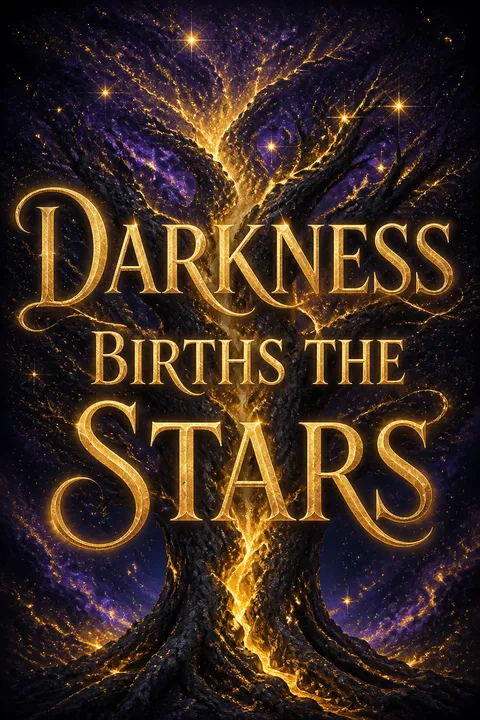
The novel’s most durable image is the star: light that depends on darkness without defeating it. That image resists both Noctis’s2 fantasy of limitless power and the Aurea’s dream of a world purified of Chaos. The ending offers hope as a discipline of attention, a way to choose one another without pretending danger has vanished. Yet the approaching war and Rada’s1 sealed power keep that hope provisional. Peace will require not only love, but institutions and methods capable of surviving disagreement.
Review Summary
Characters
Rada (Baradaz)
Exiled star queenRada is the mortal name of Baradaz, once the Aurea of Light and Queen of Aron-Lyr. She is intelligent, practical, and fiercely protective of people and animals in her care, but her sense of responsibility often becomes self-punishment. Her history binds her to Aramaz3 through duty and to Noctis2 through desire, grief, and a shared understanding of power. She is neither a serene symbol of Light nor a simple rebel: she questions authority while fearing the consequences of her own strength. Her farm reflects her wish for a life she can govern herself. At her core, Rada wants to protect others without surrendering her right to choose.
Noctis (Belekoroz)
Fallen god, Chaos adeptNoctis is the name people give Belekoroz, the Aurea of Darkness who becomes associated with Chaos. Brilliant, curious, and difficult to govern, he resents limits and yearns to create beyond the Allfather’s permission. He can read dissatisfaction in others and offer them the power they lack, a talent that makes him both persuasive and dangerous. His pride often disguises loneliness, while his capacity for affection is tangled with possessiveness and ambition. His relationship with Rada1 exposes the distance between wanting someone and respecting the choices that person makes. He remains drawn to Chaos not only for power, but because he believes it might let people shape their own lives.
Aramaz
King of OrderAramaz, the Aurea of Light and King of Aron-Lyr, is Noctis’s2 brother and Baradaz’s1 intended spouse. He is patient, protective, and committed to preserving the world, but his confidence in duty can harden into paternalism. He often tries to manage dangerous people and decisions through concealment rather than direct confrontation, believing that stability justifies the cost. His relationship with Baradaz1 contains genuine tenderness, yet also the pressure of a political and divine role neither can easily escape. Aramaz’s central conflict is between love for his brother and his obligation to prevent another catastrophe. He trusts institutions and restraint more than Noctis2 does, though the consequences of that preference remain uncertain.
Deira
Ruthless Dryad priestessDeira is a Dryad and one of the most powerful members of Noctis’s2 former priesthood. She combines Earth magic with Chaos and favors patient manipulation over open confrontation. Her gentle manner can conceal a relentless appetite for influence, and she treats affection as a vulnerability that can be cut away in pursuit of freedom. Deira’s past loyalty to Noctis2 gives her knowledge of his tactics, but she has her own ambitions and will not remain anyone’s subordinate if she sees a path to greater power. She functions as a distorted reflection of Noctis2: someone who learned from his teachings but takes his rejection of limits toward a more ruthless conclusion.
Tanez
Earth's harvest guardianTanez is the Aurea of Earth associated with growth, harvest, and the care of living things. She is Rada’s1 loyal friend, direct enough to challenge her self-deceptions and warm enough to remain present through years of distance. Her marriage to M’tar is passionate and argumentative, giving her a grounded perspective on conflict that the more formal Aurea often lack. Tanez values practical care, but she also understands that nurturing can include fierce defense. Her friendship gives Rada1 a connection to Lyrheim that does not depend on Aramaz3 or Noctis2.
Kyree
Wounded winged healerKyree is an Aerieth healer in Dalath, a former military commander whose wing was damaged in the war. His skill with Air and Water magic makes him essential to the village, while his history gives him deep distrust of the Aurea and their armies. He is loyal to Rada1 and Briseis7, and especially protective of Alona20, whom he raised after the war. Kyree’s compassion is not softness; he knows that a healer may have to make lethal choices to protect others. He needs friendship to be honest, which makes secrecy and divided loyalties especially painful for him.
Briseis Lyrasen
Exiled Elvish huntressBriseis is an Elvish princess who has built a life far from court as a hunter, craftswoman, and mother. Her friendship with Rada1 is intimate enough to include blunt advice and disagreement; she sees when Rada1 is using duty to avoid choosing what she wants. Briseis carries the losses of war without becoming passive, and her practical courage makes her a source of stability for her son8 and friends. She knows the value of love without confusing it with innocence. Her presence keeps Rada’s1 life connected to family beyond the divine court.
Varien Lyrasen
Briseis's half-Elven sonVarien is Briseis’s7 young son, raised among people who have survived the consequences of the war. Curious and affectionate, he looks to Rada1 as an aunt and learns practical skills from the adults around him. His bond with Alona20 is expressed through play, shared work, and a fierce loyalty that exceeds his age. Varien’s bravery is not fearlessness; he is frightened when danger comes, but he remembers what he has been taught and acts. His childhood gives the older characters a concrete reason to protect a future they have often treated as an abstract cause.
Tristan Sommerhalt
Kind-hearted farm heirTristan is a young farmer who once courted Rada1 and remains a friend to her. He is generous with his labor and concern, sometimes so earnest that he overlooks how little he knows about her past. His kindness is genuine, not a strategy to claim her, and he is willing to take risks for his family and village. Tristan represents the ordinary human life Rada1 might have built if her history had remained hidden. His decency makes her secrecy more complicated, because he is someone she does not want to hurt.
Galator
Rakash commander in exileGalator is a powerful Anima who once served Noctis2 and commands Rakash forces in the north and south. He values strength and direct military action, in contrast with the Chiasma’s preference for infiltration and manipulation. His loyalty is tied to hierarchy, capability, and the promise of a strong leader, making him a dangerous ally for anyone seeking open war. Galator reflects the military structure Noctis2 once built and the people who still look to him for direction, whether or not he wants responsibility for them.
Masir
Ambitious master smithMasir is an Anima skilled in metalwork and magical experimentation. He recognizes the possibilities of lyr-stones when others see only risk, and his curiosity aligns with Noctis’s2 desire to expand access to power. His ambition makes him receptive to new ideas, but he is more analytical than Noctis2 and attentive to consequences. Masir’s choices reveal how innovation can become political allegiance: a tool does not remain neutral once powerful institutions decide who may use it.
Enlial
Air's prophetic seerEnlial is the Aurea of Air, a shape-shifting seer whose visions reveal possible futures rather than fixed certainties. Their calm, distant manner can make their warnings feel like judgments, even when they know prophecy is vulnerable to interpretation. Enlial has a close bond with Khiraz and relies on their spouse, Ranon, to anchor the everyday life of their domain. They understand how knowledge can influence the choices it is meant only to describe, a tension that makes their role both valuable and morally ambiguous.
Tayshren
The king's watchful heraldTayshren is an Anima who serves Aramaz3 as herald and messenger. Careful, observant, and difficult to read, he follows orders while carrying private feelings that complicate his allegiance. His role gives him access to both court and field, making him a witness to decisions others would rather keep hidden. Tayshren understands the cost of choosing duty over love, but that understanding does not automatically free him from the same choice.
Adesh
Militia's pragmatic captainAdesh is a half-Djein, half-Human commander of Dalath’s militia and one of the Sundered, the generation orphaned by war. Practical and disciplined, he seeks useful training and clear plans rather than grand promises. He trusts Rada’s1 experience and works to turn a vulnerable village into a community capable of defending itself. Adesh’s authority comes from service and competence, not divine status, which gives him a grounded view of leadership.
Bane
Farm's suspicious catBane is Rada’s1 black tomcat, affectionate on his own terms and openly skeptical of newcomers. He moves freely through the farm, notices disturbances, and often acts as a small, comic counterweight to the former gods’ self-importance. His attachment to Rada1 is steady, expressed through presence rather than obedience. As a familiar creature in a house full of secrets, Bane helps make the farm feel like a lived-in home rather than a temporary hiding place.
Asiza
Chaos's ambitious high priestessAsiza is the high priestess among Noctis’s2 former acolytes, a leader whose authority depends on magical power and the loyalty of the Chiasma. She seeks to use the old order of Chaos for her own ends, and her ambitions make alliances among the former followers unstable. Though she remains outside the central action, her position connects the local attacks to the wider political threat gathering across Aron-Lyr.
Vultaron
Rogue Chiasma assassinVultaron is an Elvish member of the Chiasma who once served Noctis2. He uses a Chaosdagger to test the strength of Rada1 and her former master2, relying on magic and surprise rather than loyalty. His presence establishes that the old priesthood has splintered into factions willing to kill Noctis2 for access to his power.
Kaius
Deira's ruthless partnerKaius is a Human Chiasma member and Deira’s4 lover. Quiet and physically imposing, he supports her schemes with direct violence and magical force. His steadiness makes him a counterpoint to Deira’s4 shifting performance of harmlessness, while his allegiance to her shows how the former acolytes form personal as well as political alliances.
Rahni
Ambitious Dwarfish acolyteRahni is a Dwarfish member of the Chiasma who tends to attach herself to stronger leaders. She is a capable fighter with an axe and a Chaosdagger, but her ambition is paired with a habit of seeking power through proximity to others. Her role helps show why Noctis2 once encouraged rivalries among his acolytes.
Alona
Silent Drakuul survivorAlona is a young Drakuul girl orphaned during the war and raised with Kyree’s6 care. She does not speak, but communicates through signs and expressive gestures. Her friendship with Varien8 and her trust in Rada1 make her part of the found family gathered in Dalath. She carries the war’s losses visibly, yet retains humor, affection, and a sharp sense of others.
Plot Devices
The Other and the Veil
Chaos crosses into OrderThe Other is a realm of raw Chaos, separated from Aron-Lyr by the Veil. Where the boundary thins, creatures such as the Kritak can enter the world, and magic may surge unpredictably. The Aurea attempt to strengthen the Veil, but their barriers can redirect rather than eliminate Chaos. The Other is also where Rada1 and Noctis2 share private explorations, where their powers can meet beyond the court’s rules, and where the Abyss offers a perilous source of immense energy. The same place that enables discovery and intimacy repeatedly becomes a battlefield.
Lyr-stones and lyrin-stones
Stored magic changes the balanceLyr-stones hold magic from an Aurea and allow a wielder to draw on that power; smaller lyrin-stones contain preset spells. They let mortals use abilities they would not otherwise possess, but their reserves can run out, and excessive magic can burn out a stone or harm its user. Noctis2 and Masir11 experiment with ways to store and direct Chaos, while Rada1 uses stones to heal, defend herself, and conceal her strength. The devices make magic portable and political: control over them determines who can fight, heal, or influence the world.
The Flame of Creation
Creation can become destructionThe Allfather gives Baradaz1 the Flame, a power capable of bringing life into being but difficult for her to control. She uses it to complete creations shaped by other Aurea, including the stars and the Dryads’ connection to their trees. Under emotional and magical strain, the same power can turn destructive. The Flame makes Rada’s1 capacity for creation inseparable from her fear of harming others, and it stands in tension with Noctis’s2 experiments in Chaos. Its presence raises the question of whether immense power can be governed through trust, restraint, or shared responsibility.
Chaosdaggers and Chaoscrown
Chaos becomes a weaponNoctis’s2 daggers contain Chaos-filled lyr-stones and let their wielders channel the surrounding magic. They can make a mortal dangerous, but they also expose the wielder to a force that can overwhelm the body. The Chaoscrown is a separate artifact made to help control the Abyss’s power, and its location becomes central to the ambitions of Noctis’s2 former followers. Both objects express the book’s central problem in physical form: power can be carried and redirected, but possessing a tool does not guarantee mastery of what it releases.
Stars and the prophecy
Guidance without certaintyRada’s1 stars are lights made by joining Light and Darkness; they illuminate the night without conquering it. The constellation associated with reaching hands becomes a private sign between her and Noctis2, appearing both in the sky and in his tattoo. Enlial’s12 prophecy warns that lasting peace may require the Adept of Chaos to leave Aron-Lyr, but the seer12 also stresses that visions describe possibilities, not fixed outcomes. Stars and prophecy therefore serve opposite forms of guidance: one offers direction without dictating a route, while the other risks making fear feel like fate.
Download PDF
Download EPUB
.epub digital book format is ideal for reading ebooks on phones, tablets, and e-readers.








