

Plot Summary
The Book Beneath the Floor
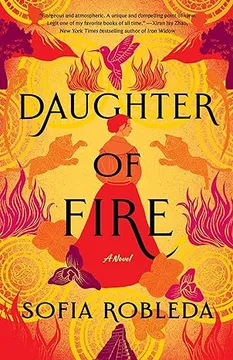
In 1540, five-year-old Catalina lives between her Spanish father’s Catholic world and the K’iche’ stories her mother, Raxal, shares in secret. Raxal explains that Spanish conquest and disease have killed nearly all her family, then places the Popol Vuh, the Book of Council, in Catalina’s hands. Their lineage has been charged with protecting it, and Catalina promises to guard the manuscript with her life.
Her father, Don Alonso, values learning but rejects Indigenous beliefs, so Raxal warns Catalina not to reveal the book or their language to him. Seven years later, hooded men seize Raxal while Catalina watches. The child is left with a vow, a buried manuscript, and a grief she can scarcely name.
The manuscript enters the story as both an object and a relationship: Catalina inherits not simply a text, but her mother’s trust and the duty to remember people whose public history is being erased. Her mixed ancestry makes that inheritance precarious. The person with the greatest power to protect her is also the person from whom she must hide half her identity. Raxal’s warning turns storytelling into a survival practice, while the child’s promise binds love to obligation before Catalina is old enough to understand their costs.
A Necklace at Sixteen
At her sixteenth-birthday celebration in 1551, Catalina hides from the dancers and mourns the mother and half sister no one mentions. Lord Juan de Rojas, the dispossessed K’iche’ ruler, arrives unexpectedly and asks her to dance. He recognizes her secret name and identifies the heavy jade necklace her father gave her as an heirloom belonging to Juan’s royal ancestors.
He warns that wearing it may bring a curse, then demands the Popol Vuh as another inheritance he claims is his. Catalina refuses and retreats in fear. That night she sees a ghostly Lady Blood beside the necklace and wakes convinced she has been cursed. By morning, the jade has vanished from her room, leaving her frightened and unsure whom to trust.
Juan’s entrance makes Catalina’s inherited obligations visible to someone outside her household. His claim to the necklace and the book is politically grounded, but his threat makes cultural repair feel indistinguishable from coercion. Catalina’s Christian prayers do not erase her fear of Lady Blood; instead, she tries to secure herself through both belief systems. The missing necklace turns a private supernatural terror into a practical mystery, while Juan’s knowledge of her secret name exposes how thoroughly Catalina has been cut off from the people who still recognize her as K’iche’.
Blood for the Book
When Juan returns to the villa with Catalina’s badly beaten cousin, Cristóbal, he again demands the Popol Vuh and accuses Catalina of keeping the necklace for herself. She insists the jade was stolen and refuses to surrender the manuscript. Soon a frightening, seemingly endless bleeding begins. Catalina believes Lady Blood is punishing her, and she refuses to give in for eight days, even as Cook and Noble River struggle to care for her.
When the pain becomes unbearable, Catalina tells Cristóbal to send word that Juan may have the book. The bleeding stops. Her decision brings immediate relief but does not settle the matter: Juan now expects the manuscript, and Catalina’s childhood promise remains at odds with the ruler’s demand.
The episode makes bodily suffering the price of Catalina’s attempt to hold two authorities apart. She cannot dismiss the curse as superstition, because her pain appears to change when she yields, yet that apparent cause and effect remains tangled with fear and exhaustion. Her surrender is neither simple weakness nor uncomplicated faith. It is a survival choice made under pressure, and it leaves her responsible for a bargain she does not fully understand. Cristóbal’s presence matters because he gives her a trusted intermediary when the people with political power are men who demand obedience.
The Manuscript in Ruins
When Juan comes to collect the book, Cristóbal opens the hiding place beneath Catalina’s floor and finds the wooden chest soaked through by weeks of storms. The amate pages inside are swollen and the ink has run. Catalina is devastated, but when she recognizes a damaged passage and recites it from memory, Cristóbal realizes she has learned far more than the basic stories.
Catalina insists she can reconstruct the work in Latin letters, writing the K’iche’ sounds she remembers. Juan argues that the three great K’iche’ houses should share the task, and Cristóbal agrees that preserving the book belongs to all of them. They arrange to meet in secret. Catalina’s failure to protect the original becomes the reason she must now recreate it.
The soaked pages transform Catalina’s private guilt into a collective crisis. Juan initially treats the damage as evidence against her, but her recitation shifts the question from whether she has failed to what can still be saved. Memory becomes a living archive, carried in a person the ruling order considers marginal because she is a woman and mixed-race. Catalina’s proposal to write phonetically does not restore the lost object exactly; it creates a new form of preservation suited to the danger around them. The three-house collaboration also begins to complicate Juan’s claim that the book belongs to him alone.
The Cave Beneath Q’umarkaj
Catalina slips out with Cristóbal to a hidden chamber beneath the ruins of Q’umarkaj, where Juan has prepared paper, ink, incense, and ritual drink. As Juan writes, Catalina and Cristóbal dance and embody the creation story, letting its sequence return through movement and memory.
The work gives Catalina a way to honor Raxal without denying her own K’iche’ identity. Returning to the villa, however, she finds Don Alonso waiting with a musket. He suspects her of disobedience and sexual impropriety, orders a humiliating examination to establish her virginity, and banishes Cristóbal.
He then moves Catalina to Santiago, confines her to the palace, and removes her from the people who shared the secret work. The first attempt to restore the book costs her freedom and companionship.
The cave offers an alternative form of authority: knowledge passes through bodies, ritual, and cooperation rather than through church or colonial office. Catalina’s participation is a personal act of mourning as well as cultural preservation. The punishment that follows shows how quickly a woman’s intellectual and spiritual agency is translated into sexual suspicion. Alonso’s fear may be protective, but his response repeats the colonial logic that makes Catalina’s mother dangerous and Catalina’s heritage unspeakable. Her removal to Santiago therefore raises the stakes: she must now preserve the manuscript while living under the surveillance that silenced her mother.
Ink Under Isabel’s Eye
In Santiago, Catalina is watched closely and denied the paper and ink she needs to write. At a Christmas gathering, Isabel Saavedra, the observant wife of Judge Ramirez, persuades Alonso to let Catalina accompany her to visit the aging conquistador Bernal Díaz del Castillo.
While Bernal recounts the conquest, Catalina uses a moment of household confusion to send Cristóbal a disguised letter through the post. A reply eventually reaches her inside Juan’s handkerchief. Cristóbal describes his life among a Kaqchikel family, while Juan promises to keep the manuscripts safe.
Catalina also meets Nicolao Lopes, a Portuguese humanist tutor who treats her opinions seriously and becomes increasingly attentive. The letter restores hope of continuing the work, even as Nico’s affection introduces a new complication.
Catalina’s first successful act of communication depends on borrowing the very channels that exclude her. Bernal’s papers, Isabel’s social access, and Juan’s discreet delivery create a narrow corridor through which she can contact her allies. The scene also places competing histories beside each other: Bernal’s account receives institutional attention, while Catalina’s manuscript must remain hidden. Nico’s respectful curiosity offers a different kind of recognition, but it does not automatically create intimacy. Catalina is learning that kindness, opportunity, and obligation can arrive together, and that she must judge what each person expects in return.
Cook Returns by Night
When Alonso falls dangerously ill, Catalina tries to care for him without the medicines and judgment she once relied on from Cook. Maribel, a palace maid, risks helping Catalina slip out at night.
Juan meets her near a small church and brings Cook back from Santa Cruz, where she has been living with her son, Noble River. Cook helps stabilize Alonso, while Isabel assists Catalina with supplies. The reunion gives Catalina a brief return to the person who raised her, but Cook is exhausted and her health fails soon afterward.
Before her death, Catalina learns that Juan has arranged a secret meeting with Cristóbal. She faces a choice between staying with Cook and keeping the manuscript project alive, and goes to say goodbye before leaving for the ritual.
Cook’s return temporarily reverses the household’s powerlessness: the woman whose tongue was taken by colonial violence brings practical knowledge that the palace’s male physicians lack. Her care is an embodied form of authority, grounded in experience rather than rank. But the rescue arrives too late to restore the old family structure. Catalina’s loss of Cook intensifies the cost of choosing the manuscript, since the work now competes with the last living bond that made her feel accepted without qualification. Maribel’s risk-taking also shows Catalina beginning to inspire the loyalty that she once received only from her mother and Cook.
The Name Beneath the Mask
After Cook dies, Catalina goes to meet Juan and Cristóbal in the palace cellar, then follows them through a concealed tunnel to a forest shrine. Juan reveals his K’iche’ name and apologizes for the curse that drove her to surrender the manuscript.
At the ceremony, Catalina and Juan embody the story of One Death and Blood Moon, while Cristóbal records it. Their attraction becomes difficult to hide, but Catalina overhears that Juan is already promised to Woven Tree’s daughter and that Cristóbal opposes a match with her.
When Catalina returns through the tunnel, palace guard Victorino catches her. Alonso confines her again, and the secret meeting leaves her with grief for Cook, fresh hope in Juan, and knowledge that he may not be free to choose her.
The ritual gives Catalina an intimate recognition that colonial society withholds: Juan knows her sacred name and sees her as belonging to the K’iche’ world. His apology changes their relationship, but does not undo the consequences of his earlier use of power. The overheard engagement then punctures the emotional refuge the ceremony creates. Catalina has begun to imagine love as a source of agency, only to discover that royal obligation and political survival constrain Juan as sharply as Spanish rule constrains her. Victorino’s capture returns the story from mythic time to the palace’s systems of surveillance and punishment.
Punishment in the Plaza
Alonso discovers Catalina’s muddy stockings and locks her inside the palace. Nico appears below her balcony singing publicly, and Alonso has him arrested. The tutor is sentenced to nine lashes, which Catalina must watch and count.
During her confinement, Isabel brings a letter from Beatriz and later helps Catalina return to limited freedom. Captain Lobo, the lord treasurer, is exposed as a buyer of stolen goods, including Catalina’s jade necklace. When Lobo escapes custody and seeks sanctuary in the cathedral, Judge Ramirez pursues him; Catalina pulls Bishop Marroquín out of the sword’s path and is injured.
Juan returns the recovered necklace, and Catalina hears how Alvarado tortured Juan’s family. Her intervention earns her freedom to move around the palace, but the theft and violence remain unresolved.
This section links private punishment to public corruption. Catalina’s silence helps keep the manuscript hidden, but Nico pays for the spectacle of his affection with his body. Lobo’s theft of the jade reveals that the supernatural threat surrounding the necklace also has a mundane explanation: colonial elites collect what they have taken from Indigenous families. Catalina’s rescue of Marroquín complicates her position further. She protects a church authority who is part of the order that erased her mother’s culture, yet earns a measure of freedom through that act. Moral action here does not fit neatly into either side of the conquest.
The Sister’s Buried Confession
After reading Beatriz’s guarded letter, Catalina presses Alonso about why he separated the sisters. He admits Beatriz told a priest about Raxal’s rituals, hoping the Church would remove her stepmother rather than kill her. Catalina remembers her mother’s final night through a vision: Raxal had gone to a K’iche’ ruin to offer blood and pray for her daughters, then was arrested and buried alive.
Before dying, she turned her final wish from vengeance toward Catalina’s future happiness. Alonso announces that he will take Catalina to Spain, where relatives can arrange a suitable marriage. Catalina outwardly agrees, but understands that the voyage will cut her off from the Popol Vuh, Juan, and the land her mother asked her to protect.
The revelation breaks Catalina’s simple account of betrayal. Beatriz’s action was motivated by fear and misjudgment, not a wish to have Raxal killed, while Alonso’s concealment was meant to protect Catalina from a truth he believed unbearable. Neither intention can undo the damage. Raxal’s final blessing also reframes the vow: preserving the book matters, but so does living beyond the inherited violence. Catalina cannot yet reconcile those duties. Spain appears as another form of custody, and her apparent obedience conceals the decision to choose her own route.
A Wedding Before Dawn
Instead of leaving for Spain, Catalina visits Nico at Bernal’s house and tells him she wants to marry before Alonso can take her away. She secures Bishop Marroquín’s help by reminding him of the promise he made after she saved him, and Bernal provides his private chapel. Catalina and Nico marry that evening.
The union is a practical escape as much as a romantic choice; Catalina has no time to tell Nico that her heart belongs elsewhere. When Victorino discovers the wedding, he seizes Catalina and throws her down, striking her head against a hard surface. She loses consciousness. The injury interrupts the freedom she has just claimed and leaves the marriage, the manuscript, and her relationship with Nico suspended beyond her awareness.
Catalina’s marriage is an act of self-determination made under brutally narrow conditions. She chooses the available legal protection, not the life she wants, and the haste leaves Nico believing that her consent means romantic devotion. The ceremony also turns Marroquín’s public promise into a resource she can use, showing how women can redirect institutional authority without escaping its limits. Victorino’s assault then makes bodily autonomy the story’s starkest measure of power: Catalina has outmaneuvered her father’s plan, but a guard can still violently alter the course of her life.
The Ocelot Wakes
Catalina wakes in Sololá in 1554, months after the blow, with a severe scar, impaired speech, weakened legs, and little memory of her marriage. Nico and Noble River care for her while she relearns words and movement.
Although grateful, she does not remember becoming Nico’s wife and cannot make herself share his bed. Isabel’s letters bring news that Lobo has escaped full accountability and that Victorino is gone from the household.
When Noble River travels to find Cristóbal, he discovers that his cousin has become the masked outlaw called the Ocelot, stealing from Spanish estates and supporting resistance. Cristóbal visits Catalina with companions and explains his anger at colonial cruelty. She asks him to help recover the Popol Vuh and reconnect her to the work.
The injury literalizes the novel’s central fear of cultural forgetting. Catalina knows that the stories matter, yet her access to language, movement, and memory has been damaged, making preservation newly dependent on care from others. Nico’s devotion is genuine, but it cannot manufacture the desire or memory she lacks. Cristóbal’s transformation into the Ocelot gives political action a clandestine form, while his anger reveals how deeply his former faith in Alonso’s reforms has eroded. Catalina’s recovery is not a return to her old self; it is a fragile negotiation among lost abilities, inherited knowledge, and renewed purpose.
Xibalba on the Lake
Cristóbal takes Catalina by canoe to a hidden cave on Lake Atitlán, where Juan and Juan Cortés, known as El Grande, join a masked gathering. With balché’ ki’ and ritual dance, Catalina and Cristóbal enact the story of the hero twins defeating the lords of Xibalba, while a scribe records the performance.
The ceremony briefly restores Catalina’s clarity, but afterward she tells Juan that she married Nico because Spain was the alternative. Juan, hurt, leaves her without the original manuscript.
Catalina returns to Nico and tries to make the marriage real, but he refuses intimacy and admits he loves Bernal’s maid, Carmen. They agree to seek an annulment. Catalina returns to Santiago, where she asks Juan to bring the old book and resumes her effort to recover the story.
The cave ritual makes cultural memory collaborative and physically accessible even as Catalina’s neurological injury disrupts ordinary speech. Its masked participants suggest that preservation requires both concealment and shared witness. The aftermath exposes the emotional cost of decisions made under constraint: Juan reads Catalina’s marriage as rejection, while she struggles to explain a choice forced by her father’s plan. Nico’s honesty prevents the marriage from becoming another arrangement sustained by duty alone. The section refuses to treat romance as a cure. Catalina’s commitments to Juan and to the book can only advance through difficult explanation, negotiation, and the recognition of other people’s desires.
The Chronicler’s Conquest
Back in Santiago, Catalina meets Juan and demands the old Popol Vuh, but their reunion is strained by the marriage and the year they lost. Her marriage to Nico is annulled, and she attends Bernal’s gathering for the completion of his conquest memoir.
As Isabel reads his account of Tenochtitlán’s fall, the guests applaud Spanish victory and the suffering of its inhabitants. Catalina leaves the gathering and prays among the graves, recognizing that her own status has benefited from the same conquest that destroyed her mother’s family.
She resolves to oppose the living injustices attached to that inheritance. Juan finds her afterward, listens to the full story of her injuries and separation, and returns Raxal’s manuscript. Catalina agrees that El Grande may take the royal genealogy to Spain, but only if she keeps the completed new copy.
Bernal’s public celebration forces Catalina to see that historical narration is an exercise of power, not merely a record of events. His account can make conquest appear providential because the conquered are largely absent from the room and from the story. Catalina’s response avoids the comfort of claiming innocence through mixed ancestry: she acknowledges that her life has also been materially enabled by colonial rule. Her renewed agreement with Juan is therefore more than romantic reconciliation. She sets terms around the manuscript and accepts political action without surrendering control of the version she has labored to recreate.
Fire at the Stake
At a public execution, Bishop Marroquín and the wounded Captain Lobo condemn two Maya men accused of helping the Ocelot. One is Pablo, Cristóbal’s young ally. As the executioners prepare the fire, hidden archers kill both prisoners with arrows and wound Lobo, sending the crowd into panic. That night Catalina joins Juan and Cristóbal in the forest to complete their work on the Popol Vuh and honor Pablo.
Under the ritual drink, she enters the creation story as an ancestor of the K’iche’ houses. When a hooded woman flees the ceremony, Catalina pursues her and throws her dagger. The woman is Isabel. Juan and Cristóbal conceal the body and send Catalina back to Isabel’s house, where she must act as though nothing happened.
Pablo’s death makes the resistance’s costs immediate and personal, while the archers’ intervention reveals how quickly colonial authorities turn political control into public spectacle. The ceremony is intended to answer that violence by preserving a shared past, but Catalina’s altered state collapses sacred performance into physical consequence. Her dagger, previously a tool of protection, becomes the instrument of an irreversible act. The scene does not offer a clean division between liberating resistance and moral innocence. Catalina’s participation may protect endangered knowledge, yet it also leaves her responsible for a death and dependent on concealment.
The Dagger Comes Home
Catalina spends the next day concealing her fear while the household searches for Isabel. She rides to the palace and asks Alonso to organize a search, pretending she knows nothing.
Later, Juan finds her and argues that the secret would have been exposed if Isabel had lived; he reminds Catalina that the Popol Vuh has been protected. When Alonso eventually comes to her with Catalina’s dagger, he has found it buried near the place where Isabel’s body was hidden. He says he will no longer recognize her as his daughter.
Yet when Alonso collapses in the street, Catalina runs to him and calls for help. The people around him cannot revive him. His death leaves Catalina grieving a father who both loved and controlled her, while Juan and Cristóbal stand beside her.
The dagger turns concealed guilt into material evidence, ending Catalina’s ability to keep her identities and actions in separate compartments. Alonso’s renunciation is both punishment and a final recognition that the daughter he tried to govern has become unreachable by his rules. Catalina nevertheless rushes to help him when he collapses, revealing that emotional attachment survives judgment and injury. His death does not resolve their conflict; it removes the possibility of further repair. Juan’s defense of Catalina offers solidarity, but cannot make the moral cost disappear or restore the family she has lost.
Pages Beneath the Pines
By autumn 1555, Catalina lives near Lake Atitlán with Juan and works alongside Cristóbal to copy the illustrations from Raxal’s original manuscript into the new Popol Vuh. She and Juan plan to marry and move to the home he has built near Chichicastenango. Cristóbal has begun teaching children, while the servants and their families have a place in the life they are making.
Catalina still carries guilt over Isabel and grief for the people she has lost, but she no longer treats survival as betrayal of her heritage. The book is not simply recovered; it is being reproduced by hand and passed toward another generation. Catalina believes Raxal’s memory remains near, and she renews the promise she made as a child.
The ending resolves the opening vow through practice rather than triumph. Catalina cannot restore the world that conquest destroyed, nor erase the injuries caused by her own choices. She can keep making copies, teach, and create a household where K’iche’ stories are spoken again. Her future with Juan is not presented as political restoration by itself; it is one part of a larger network of labor and transmission. The school, the copied drawings, and the promised child all extend preservation beyond Catalina’s individual memory. Her adulthood turns an inherited burden into an ongoing, shared responsibility.
Epilogue
In 1557, pregnant Catalina descends into the hidden chamber beneath the ruined Kaweq palace with Juan, Cristóbal, and El Grande. The men are preparing El Grande to carry documents to Spain in hopes of winning recognition for K’iche’ rights.
Catalina guards the new Popol Vuh while allowing the older manuscript to travel, and the group blesses the journey with incense and prayer. She imagines raising a child who will learn the songs her mother once taught her in secret, but now she believes secrecy need not last forever. The book, the family, and the political struggle continue beyond the ending.
The epilogue turns the private vow into a future-facing practice. Catalina’s pregnancy places cultural transmission in the next generation, while the planned journey to Spain makes clear that preservation also requires political advocacy. The old manuscript and the new copy now have different but connected roles: one may support a claim for Indigenous rights, and the other remains in Catalina’s care. Her hope that the child can learn openly is deliberately cautious. The colonial order has not fallen, but secrecy has become a temporary tactic rather than the whole shape of inheritance.
Analysis
Daughter of Fire makes the preservation of a story inseparable from the struggle over who is permitted to possess the past. The Popol Vuh is not simply a treasured book; it is a record of K’iche’ cosmology, political lineage, and collective memory in a society where Spanish authorities decide which beliefs may be spoken and which histories will be recorded. Catalina’s work as a daughter of both colonizer and colonized gives her access to institutions that can help her, but that access also makes her vulnerable to their rules. Her father protects Indigenous people through legal reform while enforcing Catholic and patriarchal control inside his own home. The contradiction is not incidental: the novel shows how benevolent intentions can coexist with structures that deny others agency.
Catalina’s vow changes meaning as she grows. At first, she understands protection as guarding an object. When storms ruin the manuscript, she learns that preservation also means carrying its contents in memory, reconstructing them with others, and deciding what form the work can take under threat. Dance and ritual make this act communal and embodied. The book’s stories are not sealed away from present experience; Catalina’s participation gives them new life while exposing her to real danger.
The novel also refuses to make resistance morally effortless. The Ocelot’s raids answer a system built on theft, yet they bring retaliation. Catalina’s choices protect the manuscript but cause personal harm, and her accidental killing of Isabel leaves no simple route back to innocence. Her eventual commitment to preserving K’iche’ culture is therefore more mature than a declaration of purity. She acknowledges that she has inherited benefits from the conquest and chooses to oppose its continuing consequences.
Love, friendship, and family offer forms of support, but none can substitute for political justice or erase trauma. Catalina’s future with Juan matters because it gives her companionship and a shared project, while the school, copying work, and hoped-for child extend that project beyond romance. The ending’s hope is deliberately unfinished: the past is not repaired, but it can still be transmitted, challenged, and kept alive.
Review Summary
Reviews for Daughter of Fire are generally positive, averaging 3.89/5 across over 6,000 ratings. Many readers praise the vivid historical setting of 16th-century Guatemala, the rich portrayal of K'iche Maya culture, and the compelling mixed-identity narrative of protagonist Catalina. The blending of history, mythology, and magical realism resonated strongly with many. Common criticisms include pacing issues in the latter half, underdeveloped romance, and occasionally flat characterization. The stunning cover and educational value regarding Spanish colonization and the Popol Vuh were frequently highlighted positives.
Characters
Catalina de Cerrato
The divided heirCatalina is the daughter of a Spanish colonial official and a K’iche’ noblewoman, a position that gives her access to power while denying her a secure place in either community. She is intelligent, observant, and hungry for recognition, but years of grief and paternal control make her cautious about expressing what she wants. Her attraction to Juan, loyalty to Cristóbal, and affection for Alonso pull her in different directions. Most of all, she is shaped by the promise she made her mother to protect the Popol Vuh. Her courage is practical rather than effortless: she lies, bargains, and takes risks, then must face the harm her choices cause.
Juan de Rojas
The dispossessed K’iche’ kingJuan is the K’iche’ cacique of Q’umarkaj, a ruler whose ancestral authority has been sharply reduced under Spanish rule. He is proud, strategic, and often abrasive, partly because political humiliation has taught him to guard his vulnerability. His determination to recover the jade necklace and Popol Vuh begins in a language of command, but his work with Catalina and Cristóbal exposes a more complicated commitment to cultural survival. Juan is drawn to Catalina’s courage and intelligence, yet he must contend with the obligations attached to his position. His history makes tenderness difficult, while his love of his people keeps him acting even when victory seems improbable.
Cristóbal
The scholar turned outlawCatalina’s cousin and closest childhood friend, Cristóbal grew up under Alonso’s protection after losing his parents. He is educated in Spanish institutions and deeply connected to K’iche’ traditions, which gives him unusual fluency across communities. His first instinct is to protect Catalina, sometimes by making decisions for her that he believes are necessary. He is thoughtful, loyal, and capable of humor, but witnessing exploitation changes his faith in reform from within. His role in preserving the Popol Vuh grows alongside his commitment to resist abuses that legal decrees have failed to stop.
Don Alonso López de Cerrato
The reforming Spanish fatherCatalina’s father is a senior Spanish official who enforces the Crown’s New Laws against the interests of settlers who profit from Indigenous labor. He is intelligent, forceful, and unusually willing to confront his peers, yet his public justice does not translate into gentleness at home. He treats control as a form of protection and expects his daughter’s obedience, especially where religion, sexuality, and reputation are concerned. His love for Catalina is real but difficult for her to access because grief and authority have hardened his emotional habits. Alonso embodies the contradiction of a reformer who opposes exploitation while remaining part of the colonial system that dispossesses K’iche’ people.
Raxal
Keeper of forbidden storiesRaxal is Catalina’s K’iche’ mother, a survivor of the conquest who lost nearly her entire family. She carries the Popol Vuh and the stories of her ancestors into a household governed by Spanish Catholic expectations. Affectionate but vigilant, she teaches Catalina through secret nighttime lessons and makes the child promise to preserve the book. Her grief is profound, and her spiritual practices are inseparable from her effort to remain connected to the dead and protect the living. Raxal’s presence shapes Catalina long after they are separated, offering a model of cultural loyalty that is loving, demanding, and far more complex than the colonial labels imposed on her.
Cook
Catalina’s second motherCook is Raxal’s longtime ally and the woman who helped protect children during the Spanish conquest. Her tongue was cut out, so she cannot speak, but her care is expressed through food, medicine, gestures, and an unwavering presence. Catalina trusts her with the manuscript because Cook has already shown that loyalty does not depend on recognition or reward. Her relationship with Catalina offers a rare shelter from demands to choose between Spanish and K’iche’ identity.
Beatriz
Catalina’s estranged half sisterBeatriz is Alonso’s elder daughter from his first marriage and Catalina’s only sister. She taught Catalina to read, cared for her during Raxal’s illnesses, and offered companionship in a household shaped by loss. Beatriz’s desire for love and independence puts her at odds with Alonso’s strict expectations of female conduct. Her absence becomes an unresolved wound for Catalina, who remembers both her affection and the years of silence between them.
Isabel Saavedra de Ramirez
The courtly social allyIsabel is the wife of Judge Ramirez and a socially capable woman who befriends Catalina in Santiago. She moves comfortably through charitable visits, elite gatherings, and household politics, and she often tries to guide Catalina toward safety and respectability. Her kindness is genuine, but she also has strong ideas about how women should behave and how Catalina can serve as a visible example. Isabel’s desire to help can blur into managing other people’s choices, making her an ally whose support carries expectations.
Nicolao Lopes
The humanist tutor and suitorNicolao is a Portuguese tutor who has studied classical literature and seeks work in the New World. He is warm, educated, and unusually willing to treat Catalina as an intellectual equal. His admiration becomes romantic, though he is less adept at reading her hesitation than at praising her. He is caught between sincere affection and the precarious social position of a poor foreign scholar. His relationship with Catalina raises questions about the difference between being valued, being desired, and being able to choose freely.
Juan Cortés, El Grande
The elder brother kingJuan Cortés is the second highland Maya king and a close, older companion to Juan de Rojas. He carries the experience of a generation whose political authority was broken by conquest, yet he remains practical and attentive to the needs of the K’iche’ houses. His education and diplomatic connections make him a possible advocate for Indigenous rights beyond Guatemala. He often tempers Juan de Rojas’s impulses and thinks in terms of collective consequences rather than personal desire.
Noble River
Cook’s loyal sonNoble River is Cook’s son and a trusted member of Alonso’s household. He is steady, observant, and deeply loyal to his mother and Catalina. His practical help becomes especially important when Catalina is isolated or struggling after her injury. He also connects her to the K’iche’ families and communities outside the Spanish palace, making him a quiet bridge between her childhood household and the life she later tries to build.
Captain Lobo
The encomienda power brokerLobo is a wealthy conquistador and lord treasurer who resents Alonso’s enforcement of laws requiring fair treatment and payment for Indigenous labor. He is politically shrewd, openly contemptuous of reform, and protected by the influence of fellow settlers. His appetite for power extends beyond labor and land into the collection of stolen treasures. Lobo represents the entrenched interests that turn colonial policy into a fight over profit.
Bishop Marroquín
The bishop with divided loyaltiesMarroquín is a senior churchman who advocates conversion and worries that Alonso’s reforms will undermine Spanish control. He is neither a simple villain nor a secure moral authority; his actions combine religious conviction, political calculation, and concern for his own institution. Catalina’s intervention in a crisis places him in her debt, creating an opening she can use. His role reveals how church power can oppose colonial abuses in some moments while maintaining the assumptions behind cultural suppression.
Bernal Díaz del Castillo
The conquistador chroniclerBernal is an aging conquistador and governor who is trying to dictate his account of the conquest before age and failing eyesight prevent him. He is personable and proud of what he witnessed, but he also carries the assumptions of a soldier who helped destroy the world he describes. Catalina’s work as his listener and occasional assistant puts her close to an influential version of history that rarely gives the conquered equal authority.
Maribel
The silent palace allyMaribel is a maid in Alonso’s household who appears quiet and cautious under the scrutiny of her employer. Her silence is not indifference: when Catalina is isolated, Maribel risks her position to help her reach Juan and Cook. She understands the dangers of moving between powerful households and makes her support practical, discreet, and costly.
Pablo
The Ocelot’s young lieutenantPablo is the son of Jun Kaaj, the Kaqchikel man who shelters Cristóbal after his exile. He becomes Cristóbal’s trusted companion and helps him resist Spanish theft and exploitation. Young, capable, and committed to the people around him, Pablo represents the generation drawn into resistance not by legend but by the conditions of daily life.
Victorino
The palace guard enforcerVictorino is a palace guard who uses his access to Alonso’s household to curry favor and advance his own prospects. He is physically imposing, suspicious of Catalina, and willing to enforce her father’s control without questioning its fairness. His presence makes the palace feel less like a refuge than a monitored space.
Plot Devices
The Popol Vuh
A living cultural archiveThe Popol Vuh is the K’iche’ Book of Council, containing creation stories, histories, and royal genealogies. Raxal entrusts the manuscript to Catalina, who hides it from her Spanish father and later discovers that storms have badly damaged it. Because Catalina has memorized much of the work, she, Juan, and Cristóbal begin recreating it through recitation, dance, and phonetic writing. The manuscript becomes at once a sacred inheritance, a record of political legitimacy, and a test of who has the right to preserve and interpret a people’s past. The new copy allows the story to survive even when the original is endangered.
The jade necklace
A stolen claim to sovereigntyThe jade necklace is a royal heirloom that Juan recognizes at Catalina’s birthday celebration. Its disappearance first seems tied to the curse he invokes, but it also leads into a theft investigation involving Captain Lobo and his associates. The necklace embodies the way conquest turns Indigenous symbols of leadership into Spanish possessions. Its return allows Juan to explain the violence inflicted on his family and gives Catalina a concrete way to restore something taken from his house. It connects supernatural dread, political dispossession, and the material economy of colonial theft.
Balché’ ki’ and ritual dance
Myth performed into memoryThe fermented ritual drink and traditional dance help Catalina, Juan, and Cristóbal enter the stories they are trying to preserve. Rather than merely reciting the Popol Vuh, they embody its gods, ancestors, and hero twins, while a scribe records the performance. These episodes give the narrative’s magical realism a cultural method: transformation may be spiritual, imaginative, or both, but it produces concrete acts of remembering. The rituals also create dangerous intimacy among the characters and expose them to discovery by colonial authorities.
Hidden tunnels and chambers
Secret routes through surveillancePassages beneath the ruins and the palace allow Catalina and her allies to travel without using public roads. Juan uses a tunnel connected to Alvarado’s former palace, while meetings beneath the Kaweq ruins and in a lakeside cave provide spaces for manuscript work and ritual. The routes are reminders that colonial power occupies both land and architecture: the Spanish build over K’iche’ sites, yet the older structures retain hidden paths and knowledge. Each passage offers temporary freedom while increasing the risk that discovery will bring punishment.
The Ocelot identity
Resistance hidden behind a maskThe Ocelot is the name attached to a masked outlaw blamed for robbing Spanish estates. His raids redistribute wealth and gather resources for the K’iche’ resistance, but Spanish officials also use the legend to justify arrests and public punishment. The masked identity lets resistance move through a world where open opposition is dangerous. It ties Cristóbal’s changing political beliefs to the larger struggle over land, stolen objects, and Indigenous self-determination.
Download PDF
Download EPUB
.epub digital book format is ideal for reading ebooks on phones, tablets, and e-readers.








