

Key Takeaways
Treat billionaire fortunes as political outcomes, not natural rewards
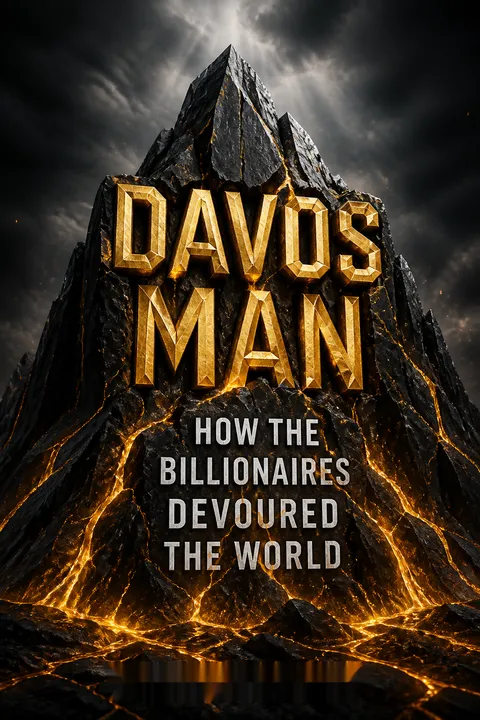
A designed hierarchy. Goodman uses Davos Man for an internationally mobile billionaire class with the money and influence to shape rules across borders. Their fortunes are not simply rewards for market success: lobbying and political allies helped lower taxes, weaken labor and financial protections, and relax antitrust enforcement. Since 1978, US CEO compensation rose more than 900 percent, while typical worker wages rose less than 12 percent. In the first pandemic year, the wealth of the world’s billionaires grew by $3.9 trillion even as hundreds of millions faced poverty.
The false promise. The Cosmic Lie is the claim that tax cuts and deregulation for the wealthy reliably benefit everyone. Goodman argues that gains instead concentrate upward, while public services weaken and public rescues protect powerful firms.
The argument shifts attention from individual virtue to institutional design. That is useful because outcomes that appear to be market facts often reflect prior choices about taxes, bargaining power, competition, and public spending. The book’s strongest point is not that every wealthy person acts in bad faith, but that private generosity cannot reliably correct rules that reward extraction. One caution: aggregate inequality figures reveal distribution, not each person’s contribution or motive. The more durable test is whether institutions let workers, communities, and governments negotiate over how gains are shared.
Keep trade open, but make its gains repay disrupted communities
Trade creates winners and losses. The postwar trade system was built partly to bind countries through commerce and reduce the appeal of conflict. Container shipping and China’s entry into the World Trade Organization helped make goods cheaper and lifted hundreds of millions of Chinese people from poverty. But the effects were uneven. Between 1999 and 2011, Chinese import competition eliminated nearly one million US manufacturing jobs, with further losses in businesses that depended on factory workers.
Local damage, political fallout. In Granite City, steelworker Dan Simmons turned his union hall into a food pantry as the mill laid off workers. Denmark cushioned a comparable family with jobless benefits equal to 88 percent of prior income after six months; in the United States, the figure was 27 percent. The Nordic Model pairs open markets with strong protections and retraining.
This distinction matters beyond trade policy. Economic shocks are easier to tolerate when people have credible routes to retraining, income support, and new work. Otherwise, a national gain can feel like a local betrayal, and political entrepreneurs can redirect justified anger toward immigrants or foreign rivals. The account also resists a false choice between protectionism and indifference. Still, cushioning losses is not the same as restoring a town’s identity or social networks. Successful adjustment requires material support and attention to place, not only a new job title.
When public capacity shrinks, crises become private-equity buying opportunities
Efficiency can erase reserves. Before COVID-19, US hospitals had about 924,000 beds, down from nearly 1.5 million in the mid-1970s. Mergers and closures reduced spare capacity, while owners pursued fuller facilities and higher returns. Private equity invested more than $833 billion in health care over two decades, including the purchase of TeamHealth, an emergency-room staffing company.
A warning from the front line. In Washington State, emergency physician Ming Lin urged his hospital to improve screening and protective measures as patients arrived with COVID symptoms. He said managers resisted changes that could disrupt profitable procedures, and his employer did not press the hospital to act. After raising concerns publicly, Lin was removed from his post. The episode shows how a system organized around lean operations can lack the slack needed for a sudden emergency.
Organizations often treat unused capacity as waste because its value is invisible during ordinary times. In public health, however, spare beds, supplies, and trained staff function like insurance: they cost money before a crisis and preserve options when one arrives. This makes resilience a governance question, not merely a logistics problem. The account is persuasive about incentives, though private ownership alone does not explain every shortage. Public systems can also underinvest or coordinate poorly. The key issue is whether financing and oversight reward readiness, quality, and access alongside immediate financial performance.
Do not confuse corporate compassion with enforceable accountability
Good intentions are not enough. Stakeholder capitalism is the claim that companies should consider workers, communities, customers, and the environment, rather than focusing only on shareholders. Marc Benioff presented Salesforce as a model of this approach, supported employee volunteering, and backed a local tax to address homelessness. Yet in a year when Salesforce reported more than $13 billion in revenue, it paid no federal income tax, using subsidiaries and accounting strategies to reduce its bill.
A pledge is not a rule. During the pandemic, Benioff urged companies to avoid layoffs for 90 days. After that pledge expired, Salesforce announced plans affecting about 1,000 employees, even as the company continued to grow. The contrast does not prove his concern was insincere. It shows that voluntary commitments can coexist with business decisions that leave workers exposed.
Corporate responsibility can produce real benefits, especially when leaders use their influence to improve a policy or mobilize resources quickly. The difficulty is durability: a pledge depends on management’s discretion, while public rules can establish a floor that applies across firms. This is a familiar problem in organizational ethics, where stated values matter only when incentives, oversight, and consequences support them. A fair assessment should distinguish valuable philanthropy from its limits. Giving money locally may help immediately, but it cannot replace transparent tax obligations, worker protections, or democratic decisions about public priorities.
Trace populist anger to material loss before accepting its scapegoats
Grievance has real roots. In Britain, residents of Sunderland voted for Brexit despite the risk to local manufacturing jobs. One explanation was anger at leaders associated with years of austerity and economic decline. The campaign’s demand to reclaim national control also served wealthy backers seeking less financial regulation. In France, the Yellow Vest protests began after a fuel tax hit people who depended on cars, while the president had cut taxes on wealth.
Scapegoats hide the machinery. Italian and Swedish political movements blamed immigrants for economic hardship even when the underlying problems included weakened public services, insecure work, and poor investment. Goodman’s account does not treat prejudice as imaginary: it shows how political leaders can attach real insecurity to false explanations, diverting blame from decisions made by governments and powerful businesses.
Economic insecurity and cultural threat often reinforce each other. A lost job can weaken status and belonging, while a simple story about outsiders supplies a target and a sense of agency. That helps explain why fact-checking alone rarely dissolves populist appeals. Yet economic explanations should not flatten politics into a single cause: racism, nationalism, and partisan identity have their own histories and appeal. The practical insight is to address both the lived grievance and the misleading story. Better wages or services matter, but so does making clear who benefits from the policies that produced the hardship.
Make lifesaving inventions a public-private bargain, not a corporate gift
Public research helped create treatments. Gilead’s antiviral drug remdesivir drew on research supported by US public agencies, yet the company sought special market protections during the pandemic and later set a price of $2,340 per patient course for governments in wealthy countries. The drug could shorten hospital stays for some patients, but evidence showed little effect on deaths. The case illustrates the gap between public contribution and private control.
Vaccine access followed purchasing power. Pharmaceutical companies produced effective vaccines with remarkable speed, but wealthy countries booked far more doses than they needed while poorer countries waited. By August 2021, Covax had delivered 196 million doses against a target of 1.9 billion, and only 2 percent of Africa’s population was fully vaccinated. Patent waivers alone were not enough; production expertise and technology transfers also mattered.
Biomedical innovation depends on a chain of contributors: public science, private development, manufacturing expertise, and distribution. Treating the final product as exclusively private obscures that shared history and narrows the public’s leverage over price and access. At the same time, the rapid vaccine development described here depended on capable companies and substantial investment. The question is not whether private firms should participate, but how public funding can secure fair terms in return. Patent rights matter, yet production capacity, know-how, and supply logistics can be equally decisive in turning a legal permission into actual doses.
Keep local spending circulating through institutions rooted in the community
Buy nearby, build capacity. The Preston model is a local strategy in which public institutions deliberately direct more purchasing to businesses in their region. Preston’s council, police, housing authority, and colleges began coordinating their spending instead of depending on a distant developer whose plans collapsed during the financial crisis. Within five years, the share of participating institutions’ spending that stayed in Preston rose from 5 to 18 percent; the share spent within Lancashire County rose from 39 to 78 percent.
Ownership can spread the gains. The book also describes worker cooperatives, including a Cleveland laundry that won hospital business while paying wages designed to support a middle-class life. Because workers share ownership, the enterprise does not need to send profits to outside shareholders. These approaches redirect money already in circulation toward local jobs and businesses.
Local procurement makes economic development tangible: the same public dollar can either leave a region or help sustain its suppliers, workers, and tax base. The strategy resembles an economic multiplier, but its distinctive strength is democratic proximity. Residents can see which institutions are spending and what local needs they address. Its limits matter too. Local businesses may lack the capacity to meet every contract, and procurement rules cannot replace national taxation or social insurance. Community wealth building is strongest as a way to anchor existing resources, not as a substitute for broader redistribution.
Use cash support to expand security, not replace public services
A predictable floor changes choices. Universal basic income is a regular cash payment made to everyone, regardless of employment or income. In Finland, a trial gave 2,000 unemployed people 560 euros a month without the usual job-search conditions. Recipients were only slightly more likely to be working than the comparison group, but reported greater happiness and less stress, loneliness, and depression. A Stockton, California, trial found that monthly payments helped recipients manage expenses connected to work, including childcare and transportation.
Design determines who benefits. Guy Standing’s term Precariat describes people whose work is insecure and whose income and protections are unreliable. Goodman warns that basic income could be used to excuse low wages or justify cuts to other assistance. Cash can improve security, but it should complement health care, housing, and employment protections rather than stand in for them.
The trials suggest that economic security has value beyond measured employment. Less time spent worrying about immediate bills can free attention for planning, caregiving, and job search. Cash also gives recipients more agency than tightly restricted programs. But small trials cannot settle how a national guarantee would affect prices, public budgets, or work incentives. The design question is therefore central: who receives support, how it is funded, and which existing services remain intact? A cash floor may strengthen bargaining power, but only if it does not become a cheaper replacement for the institutions people still need.
Tax accumulated wealth to rebuild the public capacity it finances
Tax cuts did not deliver broad prosperity. A study of major tax cuts for wealthy people in 18 economies found wider inequality but no significant increase in growth or jobs. In the United States, the top 1 percent’s share of income rose from 10 percent in 1980 to 19 percent, while the bottom half’s share fell from 20 percent to 13.5 percent. Goodman argues that public investment in education, health care, and infrastructure is a more reliable foundation for broad prosperity.
Enforcement is part of the solution. Wealth can grow through rising asset values without appearing as taxable income. The book notes that each dollar spent on IRS enforcement can produce about six dollars in additional collections. Stronger enforcement, progressive taxation, and closing avoidance strategies can help finance public services without relying on billionaires’ voluntary giving.
Tax policy shapes both distribution and state capacity. A government that cannot collect revenue from wealth effectively may struggle to maintain the infrastructure and services on which markets themselves depend. The case for reform is strongest when taxes are paired with visible public benefits and rules that limit avoidance. Wealth taxes also present real administrative challenges: assets are difficult to value, and legal structures can obscure ownership. Those problems call for careful design, not resignation. Taxes alone do not guarantee fair outcomes, but without reliable revenue, democratic governments have fewer tools to pursue them.
Use antitrust to stop digital markets becoming private governments
Low prices can conceal concentrated power. Amazon argued that its small share of all retail made monopoly concerns exaggerated. But in the more relevant US e-commerce market, it controlled nearly three-fourths of sales. Its platform gave it access to sellers’ data and the ability to favor its own products, while its scale made it difficult for competitors to reach customers.
Measure more than the checkout price. Goodman traces the dominance of a consumer-welfare approach to antitrust, which largely asks whether a company lowers prices for shoppers. That lens can miss effects on suppliers, workers, privacy, and future competitors. In 2020, a congressional inquiry examined Amazon and other technology giants, while new regulators considered a broader approach to monopoly power. The book presents antitrust as one democratic tool for preserving real competition.
Price is important, but it is not a complete measure of a market’s health. A platform can make transactions convenient today while accumulating data and control that shape what sellers can offer tomorrow. This is why competition policy increasingly has to consider gatekeeping power, labor conditions, and the ability of entrants to reach customers. Antitrust enforcement also requires caution: breaking up firms does not automatically create fairer institutions, and scale can bring genuine efficiencies. The goal is not smallness for its own sake. It is a market where no private actor can set the rules without meaningful public scrutiny.
Analysis
Goodman’s central argument is a political-economy account of distribution: modern inequality is not merely an unfortunate by-product of globalization, but the result of rules that determine who captures its gains and who absorbs its risks. The recurring pattern is clear. Firms and investors use lobbying, market power, tax strategies, and political access to shift costs outward. When crises arrive, public resources stabilize markets and corporations, while workers and communities often face weaker services and greater insecurity. The book’s stories make these mechanisms legible by moving from abstract wealth statistics to a steel town, a hospital, a warehouse, and a family waiting for remittances.
The strongest analytical move is connecting economic distribution to democratic legitimacy. When ordinary people experience insecurity but cannot identify the institutions shaping it, political anger can attach to visible outsiders or national decline. That does not make right-wing movements simple puppets of wealth, nor does it erase racial and cultural motives. It shows how economic grievance creates political terrain that demagogues can exploit. The account is therefore more persuasive as a description of reinforcing mechanisms than as a single-cause explanation for populism.
Its main limitation is evidentiary scope. Vivid cases reveal incentives and consequences, but cases alone cannot establish how much any one policy caused a national outcome. The book sometimes places diverse actors under the single label Davos Man, which can blur differences among sectors and countries. Its proposed remedies also require further design: local procurement cannot replace national redistribution, antitrust cannot by itself restore worker power, and cash transfers need sustainable funding and service protections.
Still, the framework offers a useful diagnostic. Ask who writes the rules, who carries risk, who receives public support, and who can contest a decision. Those questions cut through philanthropic branding and market fatalism. The answer is not to reject trade, technology, or private enterprise, but to make their dependence on public infrastructure visible and their social obligations enforceable. Democracy matters here not as an abstraction, but as a way to reopen decisions that concentrated wealth has made seem inevitable.
Review Summary
Davos Man receives mixed reviews, with ratings ranging from 1 to 5 stars. Many readers appreciate the book's exposure of wealth inequality and billionaire influence, praising its research and compelling narrative. Critics argue it's biased, oversimplified, and lacks solutions. Some find it eye-opening and important, while others consider it preachy and one-sided. The book's focus on billionaires' impact on global economics and politics resonates with some readers but frustrates others who desire a more balanced perspective. Overall, it sparks debate about wealth concentration and its societal effects.
Glossary
Davos Man
globally influential billionaire classA term coined by political scientist Samuel Huntington for people whose wealth and interests cross national borders. Goodman uses it for a broader billionaire class, largely composed of corporate and financial leaders, whose influence reaches into public policy while they present private success as a benefit to society as a whole.
Cosmic Lie
trickle-down promiseGoodman’s name for the claim that cutting taxes and regulations for wealthy people and corporations will reliably create prosperity for everyone. He argues that the promised broad gains have not followed, while wealth and influence have concentrated upward and governments have lost revenue for public services.
stakeholder capitalism
business serving broader interestsA view of corporate purpose that says businesses should consider workers, customers, communities, and the environment alongside shareholders. In Goodman’s account, the idea can encourage useful action, but voluntary pledges may also help executives project social concern without changing the incentives, tax practices, or power relations that shape business decisions.
Nordic Model
markets with strong social protectionsAn approach associated with Nordic countries that combines competitive markets with extensive public services, social insurance, and worker protections. It allows firms to succeed or fail while seeking to protect people from the consequences of job loss through benefits, training, health care, and other public supports.
Preston model
local purchasing for local wealthA community wealth-building approach developed in Preston, England. Public institutions coordinate their purchasing so more contracts go to businesses in the surrounding area. The aim is to keep wages, supplier spending, and economic activity circulating locally instead of allowing public money to flow mainly to distant companies and shareholders.
Precariat
people in insecure workGuy Standing’s term for a growing group of people whose work, income, and protections are unreliable. They may move between temporary jobs, contract work, or periods without employment, often lacking the stability associated with a regular wage and conventional benefits.
universal basic income
regular unconditional cash paymentsA policy that provides people with recurring cash payments without requiring them to meet employment or income conditions. Goodman presents it as a possible way to strengthen economic security and personal choice, while warning that it could be misused as a substitute for public services or adequate wages.
About the Author

Download PDF
Download EPUB
.epub digital book format is ideal for reading ebooks on phones, tablets, and e-readers.








