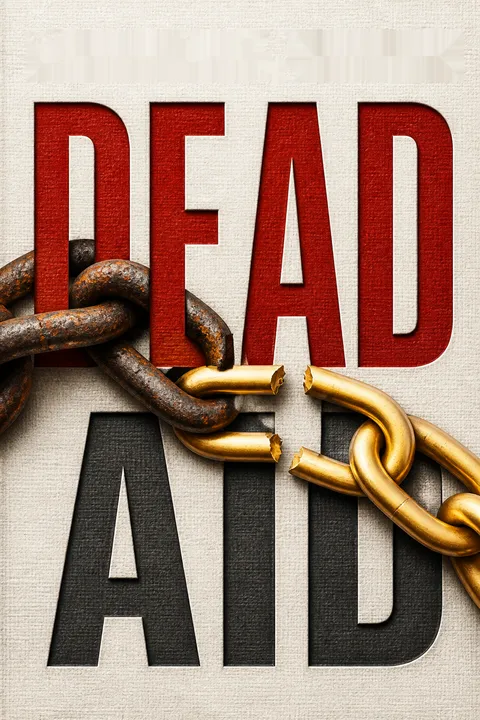


Key Takeaways
Treat government aid as a dependency risk, not Africa's growth engine
The central argument. Dambisa Moyo argues that long-running transfers to African governments have not delivered durable growth, and can help perpetuate poverty by weakening accountability, distorting markets, and discouraging alternatives to aid. The book cites more than $300 billion in development assistance to Africa since 1970, alongside decades of weak growth and rising poverty. Its target is systematic aid: grants and concessional loans that flow to governments. It is not a case against emergency relief or all charitable giving.
A disputed causal claim. The book's evidence links aid dependence with poor outcomes, but correlation alone cannot show that aid caused stagnation. Conflict, poverty, and weak institutions can attract aid as well as result from it. Moyo's sharper question is whether a financing system with repeated failures should remain the default.
What's striking is the shift from judging aid by money disbursed to judging the incentives it creates. That move resembles principal-agent analysis: donors delegate spending to governments, but often lack reliable ways to monitor how funds are used. The distinction between emergency relief and routine budget support is essential, since saving lives during a disaster is not the same policy problem as financing an economy for decades. The argument is strongest as a warning against treating aid as a universal growth strategy, and weaker if read as proof that aid itself explains Africa's varied economic histories.
Do not confuse Europe's postwar repair with Africa's institution-building
A different starting point. The Marshall Plan transferred about $13 billion to European countries from 1948 to 1952. At its peak, aid was roughly 2.5 percent of the GDP of major recipients, lasted five years, and helped rebuild economies with existing legal, administrative, and commercial institutions. Moyo argues that Africa's development challenge was not simply repairing a damaged system. It involved building infrastructure and institutions, while aid became a continuing source of public finance.
History shaped the model. Aid expanded from postwar reconstruction to industrial projects, poverty programs, structural adjustment, and governance reforms. During the Cold War, it also served geopolitical purposes, sometimes sustaining authoritarian allies. Moyo's point is that a successful, finite reconstruction program cannot by itself justify open-ended transfers in a very different political and economic setting.
The comparison usefully distinguishes reconstruction from development. Rebuilding a power system or transport network within an established administration is not equivalent to creating the institutions that decide who owns assets, collects taxes, and enforces contracts. This is a question of institutional complementarity: money tends to work differently depending on the systems receiving it. Still, Europe's recovery also had multiple causes, and the book's contrast should not imply that every European institution was fully functional after the war. The practical lesson is narrower: copying a funding instrument without copying the conditions that made it effective is poor policy design.
Make governments answer to taxpayers, investors, and citizens, not donors alone
Money changes accountability. Moyo argues that governments funded by outside transfers have less reason to raise revenue from citizens, which can weaken the public's leverage over spending. When political power controls large, flexible aid flows, officials may compete to capture the state rather than build productive businesses. The book recounts how Zaire's Mobutu was accused of stealing billions while aid continued to reach his government. Donor conditions, from reform requirements to anti-corruption rules, often failed to stop disbursements when those conditions were ignored.
A broken feedback loop. Taxation can create pressure for representation: people who pay for public services have grounds to demand results. Aid can interrupt that bargain. Moyo also cites a Ugandan tracking study in which only about 20 cents of each dollar allocated to primary education reached the intended schools. The problem is not just missing money, but weak public oversight.
This is a fiscal-social-contract argument: when governments depend on citizens' taxes, citizens have a direct stake in scrutinizing budgets. The same logic helps explain why transparent tax systems can matter beyond revenue collection. Yet taxation does not automatically produce accountability, and investment income or aid can sometimes finance valuable public goods. The key variable is whether people can see, contest, and influence how resources are used. Moyo's examples make a strong case for tracing funds to their destinations, while also showing why donor conditions alone cannot substitute for domestic checks on power.
Measure aid by its economy-wide effects, including exports and savings
Inflows can distort markets. Moyo describes how aid may increase consumption while discouraging domestic saving and investment. When foreign money raises demand for local goods and services, prices can rise. If the inflow strengthens a country's currency, its exports may become less competitive. This effect is known as Dutch disease, a loss of competitiveness in other sectors following a large inflow of foreign currency. Aid can also overwhelm a country's capacity to invest funds productively, leaving governments to spend or absorb money inefficiently.
The costs can compound. The book cites Uganda's issuance of about $700 million in domestic bonds in 2005 to absorb excess cash associated with aid inflows. Interest payments reportedly cost taxpayers $110 million a year. The example illustrates why a grant or loan's face value is not the full economic calculation: inflation, currency effects, and the expense of managing inflows also matter.
The macroeconomic lens adds an important test to project-level evaluation: does a program strengthen the sectors that can earn foreign exchange and raise productivity, or make them less competitive? Dutch disease is a risk, not an automatic result; its severity depends on exchange-rate arrangements, how quickly money enters the economy, and whether investment expands productive capacity. The same caution applies to aid's effects on saving. A useful assessment should trace actual channels rather than presume every inflow harms exports. Moyo's argument is most persuasive when it asks policymakers to count indirect costs alongside the visible benefits of funded projects.
Protect local producers from well-meaning giveaways that erase livelihoods
A net can save and displace. Moyo asks readers to picture a local mosquito-net maker producing hundreds of nets a week and employing ten people. Donors import and distribute a much larger supply for free. Recipients gain immediate protection, but the local manufacturer may lose customers, and the workers lose income. When the donated nets wear out, the local production capacity may already be gone. Moyo calls this the micro-macro paradox: an intervention that appears successful for individuals in the short term can damage wider economic activity over time.
Change how aid is delivered. The book suggests buying food or goods from local producers when feasible, rather than importing everything from donor countries. This preserves the immediate benefit while supporting local demand. It does not mean free distribution is never appropriate, especially in emergencies, but it asks donors to consider who will still be able to produce after the intervention ends.
The example captures a classic market-displacement problem: a subsidy can help consumers while pushing domestic suppliers out of business. It also points toward a practical design question, not a simple choice between aid and no aid. Local procurement can preserve livelihoods, but it depends on whether producers can meet the quantity, quality, and timing required. During an emergency, speed and safety may rightly take precedence. The broader lesson is to track effects across time and across groups: immediate beneficiaries are visible, while lost jobs and production capacity are easier to overlook.
Use bonds to replace donor discretion with repayment discipline
Borrow in markets, not just through aid. A bond is a loan raised from investors, with a commitment to repay principal and interest. Unlike concessional aid loans, commercial bonds generally carry market rates and stricter consequences for default. Moyo points to Ghana's $750 million, ten-year bond in 2007, which reportedly attracted around $5 billion in investor demand, and Gabon's $1 billion bond soon afterward. For countries that can borrow responsibly, market access can provide funds while requiring public financial information and a credible repayment plan.
Discipline has a price. A country needs a credit rating and must persuade investors that it can and will repay. Market borrowing is more expensive than concessional loans and exposes governments to refinancing, currency, and investor-confidence risks. Moyo argues that this scrutiny can encourage better management, but borrowing is no guarantee of productive spending. Debt still requires transparent budgets and investments capable of supporting repayment.
The case for market borrowing rests on a change in incentives: creditors can refuse future loans, while donor agencies may keep disbursing despite weak results. That distinction can encourage scrutiny, but it is not a substitute for competent public finance. Bondholders often prioritize repayment, not broad social welfare, and governments can borrow irresponsibly in markets as readily as they can misuse grants. The strongest version of Moyo's proposal is selective access: borrow when projects, repayment capacity, and public oversight are credible, and avoid treating investor demand as evidence that a loan is socially worthwhile.
Welcome investment, but bargain hard for local jobs and lasting assets
Capital can bring more than cash. Foreign direct investment means investment in a lasting business or enterprise abroad. It can fund infrastructure, create jobs, transfer technology, and build management expertise. The book reports that sub-Saharan Africa received about $17 billion in FDI in 2006, compared with $37 billion in official aid to Africa. Moyo points to China's growing role in roads, railways, energy, and mining as an alternative to government-to-government assistance, with investment tied to commercial returns.
Set terms at home. Investors are deterred by unreliable infrastructure, complicated licensing, opaque rules, and weak contract enforcement. Governments can improve these conditions while setting and enforcing standards for local employment, safety, and environmental protection. Chinese investment can provide needed assets, but it may prioritize resource access and can bring risks of its own. Moyo's position is not that investors are altruists, but that African governments should negotiate and regulate in the interests of their citizens.
This approach treats investment as a bargain rather than a gift. That is valuable because commercial projects have identifiable stakeholders, expected returns, and potentially durable assets. But the bargain is not automatically fair: a government with weak negotiating capacity may accept poor terms, while resource projects can create jobs without generating broad local prosperity. Strong contract enforcement and public reporting help convert private capital into public value. Moyo's emphasis on African agency is especially important here: rejecting paternalistic donor control should not mean abandoning standards for workers, communities, or the environment.
Trade access matters more than aid when rich countries subsidize competitors
Markets can be closed by policy. Moyo argues that African exporters face steep barriers in wealthy countries, especially in agriculture. The book cites OECD agricultural subsidies approaching $300 billion, nearly three times aid from those countries to developing nations. US cotton subsidies alone were about $4 billion in 2003, more than Burkina Faso's entire GDP, according to the comparison cited in the book. Subsidies let wealthy farmers sell at prices African producers struggle to match, undermining export income and rural livelihoods.
Open markets both ways. Preferential trade programs such as the US African Growth and Opportunity Act and Europe's Everything But Arms had limited reach, with benefits concentrated in a few countries and sectors. African governments also imposed high tariffs on one another's products, holding back regional trade. Moyo's prescription is to press for fairer access abroad while reducing barriers at home, so firms can reach larger markets and grow beyond commodity exports.
Trade policy reveals a mismatch between rich-country rhetoric and practice: aid transfers can be outweighed by rules that limit what poorer countries can sell. The distributional effects are concrete, particularly for farmers whose incomes depend on export prices. Still, market access alone does not build roads, processing capacity, or reliable power, and export dependence can leave countries vulnerable to price swings. The useful distinction is between trade as an opportunity and trade as a complete development strategy. Removing barriers matters most when domestic investment and infrastructure let producers respond to new demand.
Build finance from the bottom: savings, remittances, and tiny loans
Bring excluded people into finance. The Grameen Bank model lends small sums to people without conventional collateral. Borrowers form groups, and continued access to loans depends on repayment. This arrangement uses community ties and repeat lending to manage risk; the book reports Grameen default rates below 2 percent. Moyo presents microfinance as a way for small traders and entrepreneurs, often excluded by conventional banks, to finance businesses and build a record as borrowers.
Unlock money already moving. African migrants sent an estimated $20 billion home in 2006, but transfer fees could consume about one-fifth of the amount sent, compared with roughly 4 percent for transfers from the UK to India. Lower fees would leave more money with households. The book also urges governments to mobilize local savings by making banking accessible and property rights secure, so assets such as land can support investment rather than remain economically idle.
These channels shift attention from governments as the only source of development finance to households and small enterprises. Microfinance can extend access, and remittances often reach families directly, but neither is a cure-all. Small loans may be unsuitable for businesses that need larger, patient investment, and borrowing can become burdensome if income is unstable. Lower transfer costs and trustworthy banking infrastructure have benefits beyond any single loan. The deeper insight is that financial inclusion is not just about distributing credit; it also requires safe ways to save, make payments, and establish legal claims to assets.
Set a credible aid sunset and build institutions before the deadline
Give the transition a timetable. Moyo's fictional Republic of Dongo represents a country receiving 75 percent of its government revenue from aid. Her proposed financing mix reduces aid to 5 percent, with trade and FDI each supplying 30 percent, capital markets 10 percent, and remittances and mobilized savings the remaining 25 percent. The point is not that every country should copy these exact proportions, but that governments need a plan to diversify their funding.
Make the deadline real. Moyo proposes phasing out systematic aid over five to ten years, with the final chapter imagining a five-year notice to governments. Emergency relief would remain available. A credible transition requires choices about spending, borrowing, trade, and investment, alongside institutions that protect property, enforce contracts, and scrutinize public money. Without those foundations, private finance can be misused too. The goal is not simply less aid, but greater domestic capacity and accountability.
The Dongo exercise turns a broad critique into a planning problem: identify the funding gap, name replacement sources, and set a deadline that changes incentives. Its strength is forcing governments and donors to discuss an exit strategy rather than assume indefinite support. Its risk is treating a fixed timetable as feasible across countries with very different institutions, crises, and revenue bases. A transition should therefore be contingent on transparent plans and safeguards for essential services. The most durable measure of success is not whether aid reaches zero on schedule, but whether public institutions can finance and answer for development priorities.
Analysis
Dead Aid is most powerful as an argument about political economy, not as a simple claim that money harms poor countries. Its central mechanism is institutional: predictable transfers to governments can weaken the pressure to tax citizens, make access to state power more valuable, and sustain donor agencies whose success is often measured by disbursement. This shifts the discussion from donor intent to the incentives created by financing. The book's examples, from Mobutu's regime to aid-funded mosquito nets, make those mechanisms memorable and concrete.
The central empirical challenge is causal identification. Aid often flows to countries because they are poor, unstable, or in crisis, so the association between aid dependence and weak growth cannot establish that aid produced the weakness. The book also groups together distinct instruments, periods, and countries. Long-term government budget support may create different incentives from a targeted infrastructure loan, local procurement, or direct household transfer. A persuasive critique of one category should not be treated as a verdict on every kind of assistance.
Moyo's alternatives are best read as a financing portfolio, not a clean replacement for aid. Bonds can impose repayment discipline but also create debt and currency risk. Trade can expand markets while exposing economies to commodity shocks. Foreign investment can build assets but may yield narrow benefits unless contracts and regulation protect local interests. Microfinance, remittances, and domestic savings widen access, but cannot by themselves fund every public good. The book is less convincing when it implies that growth should precede democracy: efficient institutions and political freedoms are related but distinct, and concentrated power can undermine both. Its lasting contribution is a demanding question for policymakers: does each source of finance build local capacity, accountability, and productive work, or make the next transfer indispensable?
Review Summary
Dead Aid presents a controversial argument that foreign aid to Africa has been ineffective and harmful, fostering corruption and dependency. Moyo proposes alternative solutions like increased trade, microfinance, and bond markets. While many readers found her critique of aid compelling, some felt her proposed solutions were oversimplified or questionable. The book sparked debate about development economics and challenged conventional thinking on aid. Despite mixed reviews, it was widely regarded as thought-provoking and an important contribution to discussions on African development.
People Also Read



Glossary
Systematic aid
Government-directed development financeIn Dead Aid, systematic aid means grants and concessional loans transferred from richer countries or multilateral institutions to poorer-country governments. It is the principal target of Moyo's critique because it can become a recurring source of public revenue and affect government incentives. The term excludes the book's main focus on emergency relief and charitable giving.
aid-dependency
Reliance on ongoing aidAid-dependency describes a government's sustained reliance on foreign assistance to fund public spending and development. Moyo argues that this reliance can reduce incentives to raise taxes, attract other forms of investment, and answer directly to citizens. In her account, dependence is self-reinforcing: weak growth and institutions increase demand for further aid.
Fungibility
Funds can be redirectedFungibility is the ease with which money assigned to one purpose can be redirected to another. If a donor funds a school program, a government may use that money for the school while shifting its own funds elsewhere. Moyo argues that this makes aid conditions difficult to enforce and means a project's stated purpose may not reflect its wider budgetary effect.
micro-macro paradox
Local benefit, wider harmThe micro-macro paradox is Moyo's term for an intervention that appears effective for individuals in the short term but harms the wider economy over time. Her example is free imported mosquito nets that protect recipients while potentially displacing local manufacturers and their employees. The concept asks evaluators to measure effects beyond immediate recipients.
Dutch disease
Inflows weaken export competitivenessDutch disease is the risk that a large inflow of foreign currency raises domestic prices or strengthens a country's exchange rate, making its exports less competitive. In Dead Aid, Moyo applies the concept to aid as well as natural-resource revenues. The effect can reduce activity in export industries, although its severity depends on how the inflow enters the economy and is managed.
Grameen Bank's solidarity lending
Group-based small loansGrameen Bank's solidarity lending provides small loans to borrowers who lack conventional collateral. Borrowers are organized in groups, and access to subsequent loans depends on members repaying. The arrangement uses social ties and repeat access to manage lending risk. Moyo presents it as a way to finance small businesses and reach people excluded from ordinary banking.
Dead Aid proposal
A planned shift from aidThe Dead Aid proposal is Moyo's recommendation to reduce systematic government aid over a fixed period and replace it with a mix of market-based and domestic financing. The proposed sources include bonds, foreign investment, trade, remittances, microfinance, and savings. The aim is not merely to stop transfers, but to encourage accountability and build alternative sources of development finance.
FAQ
What's "Dead Aid" about?
- Critique of Aid: "Dead Aid" by Dambisa Moyo critiques the effectiveness of foreign aid in Africa, arguing that it has not led to sustainable economic growth or poverty reduction.
- Alternative Solutions: The book proposes alternative financial solutions for Africa's development, such as trade, foreign direct investment, and accessing international capital markets.
- Historical Context: Moyo provides a historical overview of aid, from its origins in the post-World War II era to its current role in Africa.
- Call for Change: The book advocates for a gradual reduction of aid over a five- to ten-year period, suggesting that Africa can thrive without it.
Why should I read "Dead Aid"?
- Insightful Analysis: The book offers a rigorous analysis of why aid has failed to deliver economic growth in Africa, challenging widely held beliefs.
- Alternative Perspectives: It provides alternative strategies for Africa's development, encouraging readers to think beyond traditional aid models.
- Author's Expertise: Dambisa Moyo, an economist with experience at the World Bank and Goldman Sachs, brings a unique perspective as an African woman critiquing Western aid policies.
- Engaging Narrative: The book combines economic analysis with compelling narratives and case studies, making it accessible to a broad audience.
What are the key takeaways of "Dead Aid"?
- Aid Dependency: Aid has created a cycle of dependency in Africa, stifling economic growth and fostering corruption.
- Alternative Financing: Africa should explore alternative financing methods like bonds, trade, and foreign direct investment to achieve sustainable development.
- Role of Governance: Good governance is crucial for economic growth, and aid often undermines the development of strong institutions.
- Call for Reform: The book calls for a radical rethink of the aid model, advocating for a gradual reduction of aid to encourage self-sufficiency.
What are the best quotes from "Dead Aid" and what do they mean?
- "Aid has been, and continues to be, an unmitigated political, economic, and humanitarian disaster for most parts of the developing world." This quote encapsulates Moyo's central argument that aid has failed to achieve its intended goals.
- "In a perfect world, what poor countries at the lowest rungs of economic development need is not a multi-party democracy, but in fact a decisive benevolent dictator to push through the reforms required to get the economy moving." Moyo suggests that strong leadership, rather than immediate democracy, may be necessary for economic reform.
- "The notion that aid can alleviate systemic poverty, and has done so, is a myth." This challenges the common belief that aid is a solution to poverty, arguing instead that it perpetuates it.
How does Dambisa Moyo propose Africa should finance its development?
- International Bond Markets: Moyo suggests that African countries should issue bonds to raise capital, as seen in the examples of Ghana and Gabon.
- Foreign Direct Investment (FDI): Encouraging FDI, particularly from countries like China, can provide the necessary capital for infrastructure and development projects.
- Trade Expansion: Increasing trade, especially with emerging markets like China and India, can boost economic growth and reduce dependency on aid.
- Microfinance and Remittances: Utilizing microfinance and remittances can empower local entrepreneurs and provide a stable source of income for development.
What is the "vicious cycle of aid" described in "Dead Aid"?
- Corruption and Dependency: Aid fosters corruption by providing easy money to governments, which reduces the incentive to develop transparent institutions.
- Stifling Investment: The influx of aid discourages private investment, as it creates an environment where businesses cannot compete with free resources.
- Economic Stagnation: Aid dependency leads to economic stagnation, as countries rely on aid rather than developing sustainable economic policies.
- Perpetuating Poverty: The cycle of aid perpetuates poverty by creating a dependency that hinders long-term economic growth and development.
How does "Dead Aid" address the role of China in Africa?
- Investment and Infrastructure: China has invested heavily in African infrastructure, providing an alternative to Western aid with fewer conditions attached.
- Trade Relations: China's trade with Africa has grown significantly, offering African countries new markets for their goods and resources.
- Criticism and Benefits: While some criticize China's involvement for ignoring governance issues, Moyo argues that it brings tangible benefits like jobs and infrastructure.
- Strategic Partnerships: The book suggests that Africa can benefit from strategic partnerships with China, leveraging its need for resources to drive development.
What historical context does "Dead Aid" provide about foreign aid?
- Post-War Origins: Aid began in earnest after World War II with the Marshall Plan, which successfully rebuilt Europe but was not designed for long-term development.
- Cold War Politics: During the Cold War, aid was used as a tool for political influence, often supporting corrupt regimes aligned with Western interests.
- Shift in Focus: Over the decades, aid shifted from infrastructure projects to poverty alleviation, stabilization, and governance, with mixed results.
- Current Challenges: The book highlights the ongoing challenges of aid, including its failure to adapt to the changing economic landscape in Africa.
What are the criticisms of aid highlighted in "Dead Aid"?
- Ineffectiveness: Aid has not led to sustainable economic growth or poverty reduction in Africa, despite decades of investment.
- Corruption: Aid often ends up in the hands of corrupt officials, who misuse funds for personal gain rather than public benefit.
- Market Distortions: Aid can distort local markets by flooding them with free goods, undermining local businesses and industries.
- Dependency: The reliance on aid creates a dependency that discourages innovation and self-sufficiency in African countries.
How does "Dead Aid" suggest improving governance in Africa?
- Reducing Aid Dependency: By reducing aid, African governments would be forced to become more accountable to their citizens and develop transparent institutions.
- Encouraging Investment: Attracting private investment requires stable governance, which can be incentivized by reducing aid and increasing trade and FDI.
- Strengthening Institutions: Building strong institutions that enforce property rights and contracts is essential for sustainable economic growth.
- Promoting Accountability: Without aid, governments would need to rely on tax revenues, creating a natural accountability mechanism with their citizens.
What role does trade play in the development strategy proposed in "Dead Aid"?
- Economic Growth: Trade can drive economic growth by increasing the volume of goods and services sold abroad and improving workforce productivity.
- Reducing Barriers: Moyo advocates for reducing trade barriers, both within Africa and with international partners, to boost exports and economic integration.
- Diversification: Expanding trade beyond commodities to include manufactured goods and services can help African economies diversify and become more resilient.
- Strategic Partnerships: Forming strategic trade partnerships with emerging markets like China and India can open new opportunities for African exports.
How does "Dead Aid" propose to address the issue of corruption in Africa?
- Reducing Aid Flows: By cutting aid, the incentive for corruption decreases, as there is less free money to be misappropriated by officials.
- Encouraging Transparency: Private investment and trade require transparency and accountability, which can help reduce corruption over time.
- Strengthening Legal Frameworks: Developing strong legal frameworks that protect property rights and enforce contracts can deter corrupt practices.
- Promoting Good Governance: By focusing on governance reforms and reducing aid dependency, African countries can create an environment less conducive to corruption.
About the Author
Other books by Dambisa Moyo
Download PDF
Download EPUB
.epub digital book format is ideal for reading ebooks on phones, tablets, and e-readers.








