

Plot Summary
Prologue
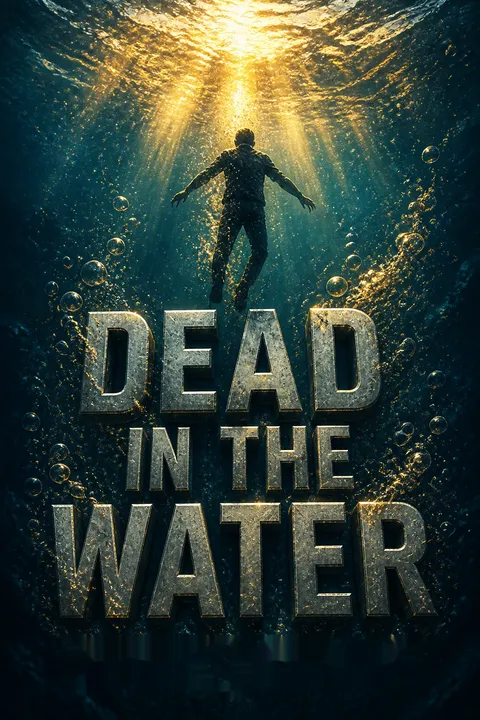
A woman holds a restrained man beneath water while his body fights for air. As his strength fails, memories flood back, carrying him through the people he has loved and lost. One image breaks through the rest: a dead child.
The scene promises that the drowning is not only a crisis in the present. It is a passage into a past the man cannot remember, and a warning that someone has brought him to the water with a purpose.
The opening makes the book’s central device physical before it becomes explanatory: memory arrives as the body is losing control. The unidentified woman’s deliberate violence also complicates the familiar image of a life review as private, almost sacred experience. Here, recollection is extracted under pressure, and the dead child appears less like a comforting vision than evidence. By withholding names and context, the prologue makes readers share Damon’s disorientation while establishing water as both instrument of danger and route into buried history.
Brighton Takes Its Due
Six months earlier, Damon proposes monthly challenges to his wife, Melissa, hoping to escape the routines closing around them as they consider starting a family. Melissa chooses a winter swim off Brighton, knowing how deeply he fears open water. A rip current pulls him under; she searches the grey sea, finds him unconscious, and brings him ashore.
Her rescue breaths restart his heart. While they wait for an ambulance, Damon asks about a boy he believes he killed. Melissa has no answer. The question turns their playful bargain into something darker: Damon has returned from the sea alive, but the memory that surfaced during his near-death experience may belong to someone who did not.
The challenge begins as a test of spontaneity, but the sea exposes how unequal the couple’s risks are. Melissa enters the water with competence and training; Damon enters because their pact has become a measure of intimacy and loyalty. Her rescue makes that imbalance consequential, while his question introduces memory as a threat rather than a gift. The scene also seeds the book’s ethical knot: Melissa can save Damon’s body, but she cannot decide whether the images that return are true. Their marriage and the mystery begin with the same act of care.
The Boy Follows Home
Two weeks later, Damon rejoins friends who celebrate his survival without asking how close he came to dying. He feels stranded among them, troubled by the red-haired boy and increasingly vivid apparitions. A bloody pool and child-sized footprints appear in his bathroom, then vanish; later the boy stands before him with a blackened mouth.
Damon searches for medical explanations and tries hypnosis, but the memory remains unfinished. At the same time, he agrees to help Melissa and her partner, Adrienne, conceive a child. He wants to become the dependable father he never had, yet his ex-wife’s closeness unsettles him and his fixation on the boy keeps him from the future they are trying to build.
Damon’s ordinary life is not a stable baseline so much as a performance he has learned to maintain. Friends treat survival as a reason to resume the old rhythm, while Damon experiences it as a rupture that no one else can see. The fertility plan sharpens this tension: he is invited into a family future even as his own childhood becomes less intelligible. His wish to father a child is sincere, but it also carries the burden of repairing what he lacked. The boy’s appearances turn that hope into a test of whether Damon can trust his own mind.
A Samaritan With a Noose
Convinced that dying again might unlock the missing memory, Damon asks Melissa to kill him and revive him. She refuses, so he finds Laura through an online forum where people discuss near-death experiences. Laura arrives presenting herself as an experienced helper. She binds Damon, tightens a rope around his neck, then moves the defibrillator away and records his distress instead of preparing to revive him.
Melissa, alarmed by Damon’s silence, arrives in time to cut him down. CPR and a shock from the defibrillator bring him back. Damon insists he saw his mother beside the boy during the blackout. Melissa recognizes that his desperation has become dangerous and, despite her fear, agrees to help him herself.
Laura exploits the gap between Damon’s stated goal and his actual vulnerability. He wants a controlled encounter with death, but his consent is built on the expectation that someone will return him to life. Laura’s betrayal makes that trust itself the weapon. Melissa’s intervention repeats the Brighton rescue, only now she must choose whether to become an active participant in the danger she once survived. Her reluctant agreement is not simple devotion: it is a frightened attempt to keep Damon from putting his life in the hands of another stranger.
Callum's Name Returns
Melissa holds Damon beneath ice-cold bathwater and revives him after his life review brings back the boy’s name: Callum Baird. Online reports identify Callum as a twelve-year-old murdered near his South London home, his killer never convicted. Damon visits the path and finds a neglected memorial, then recognizes the nearby tower block as a place from his childhood.
His return unsettles residents, one of whom treats him as connected to the killing. As memories break through, Damon also recalls watching his mother, Bobbi, fall from a burning building. The memories offer a name and a place, but not yet the answer to what Damon did there, or why his mother and Callum appear together.
A name changes the haunting from private terror into a crime with a public record. Damon can now test memory against evidence, yet the match does not settle the central question of responsibility. The memorial’s neglect contrasts with the vividness of his visions: the community has moved on, while his mind keeps returning to the scene. His mother’s reappearance complicates the investigation further, linking a child’s unsolved death to a family history Damon has avoided examining. Each recovered fact narrows the mystery while widening its emotional cost.
The Father Behind the Cases
A later return to the water brings Damon a vision of a badly injured girl. He identifies her as Daisy Barber, a thirteen-year-old whose death led to his father, Ralf Lister, being imprisoned for manslaughter. Damon had believed Ralf died years ago, but learns he was released and now works in a DIY store.
Before Damon can understand the family history, a man attacks him in a car park and threatens Melissa. Later, Damon discovers the same man trying to assault him again. This time Damon runs him over, kills him, and hides the body in a refuse bin. The act leaves him with a new secret and a recorded image someone can use against him.
The investigation expands from Damon’s uncertain memory into a living family threat. Ralf’s criminal past offers an apparent explanation for the dead children, but the discovery that he is alive forces Damon to confront a parent rather than a newspaper account. The attack raises the stakes outside his hallucinations, while Damon’s killing of his assailant breaks the identity he has trusted: he has now taken a life. Hiding the body is not a moment of triumph but the first evidence that his pursuit of truth is producing fresh harm in the present.
Helena's Buried Tapes
Damon’s foster mother, Helena, cannot explain the dead children, and the social-services records he obtains are heavily blacked out. He finds old cassette recordings of sessions with a child psychologist, Dr Dahl, and hears his younger self describing his mother’s depression, anger, and a baby brother named Bobby.
The final recording cuts off during a discussion of Daisy, leaving Damon without the part he most needs. Meanwhile, he confronts Ralf at work and later at home, demanding answers about the children. A fight leaves Ralf badly injured; his elderly mother, Maisy, strikes Damon with a coal shovel and drives him away. Damon still does not know whether the violence he fears belongs to his father or himself.
The tapes change Damon’s past from blankness into partial testimony, but the record is incomplete in ways that feel deliberate. His child-self speaks with a clarity the adult Damon lacks, yet even that account cannot explain the missing deaths. His confrontations with Ralf enact the same uncertainty bodily: Damon seeks a confession, but their violence replaces speech. Maisy’s intervention introduces a witness who remembers more than Damon does and regards him not as a victim of circumstance but as a danger. The past is no longer merely inaccessible; different people are guarding incompatible versions of it.
The Doctor's Second Chance
A note in Helena’s papers leads Damon to Dr Owen Fernandez-Jones, the specialist who treated him as a child. Fernandez-Jones confirms that he used electroconvulsive therapy on Damon after his mother’s death, intending to reduce violent impulses. He describes the treatment as successful and claims Damon had admitted to killing children.
Damon rejects the explanation, but a fresh treatment forces memories to surface. He sees Bobby’s death, his jealousy of Callum, and his fixation on Daisy. Afterward, he attacks Fernandez-Jones and leaves him critically injured. The memories no longer point to Ralf as the sole culprit. Damon’s search has uncovered an adult who concealed his past and a doctor who helped bury it.
The doctor’s account reframes memory loss as something imposed as well as something the mind may create. Fernandez-Jones speaks in the language of intervention and public safety, but his confidence masks a profound violation: he treated a child as a behavioral problem to be rewritten. Damon’s reaction exposes the danger of returning memories without care or containment. Yet the recovered past is not simply a victim’s story. His childhood violence becomes undeniable, and the man who wanted certainty now faces knowledge that implicates him.
The Son in the Mirror
The recovered memories show Damon suffocating baby Bobby and, years later, killing Callum after jealousy and fear of losing his mother overwhelm him. He also killed Daisy when she rejected him, while Ralf moved her body and accepted the conviction to protect his son. Damon confronts Ralf again, but the encounter ends in a beating.
At Ralf’s funeral, Maisy tells Damon that his assault caused his father’s fatal head injury. She also accuses Damon of setting the fire that killed Bobbi and reveals that Helena had once been Ralf’s partner. Damon leaves with a fuller family history, but Maisy’s accusation about the fire clashes with his memory of his mother jumping to escape it.
The revelation destroys the clean division Damon has relied on between himself and his father. Ralf’s crime was partly an act of concealment, while Damon’s own violence was hidden by treatment, silence, and a father’s sacrifice. Maisy refuses to let him convert discovery into exoneration. Her account of Bobbi’s death introduces a further ambiguity: even as Damon learns what he did, he cannot tell whether the most painful accusation is true. The book makes inherited guilt less a matter of blood than of actions repeated, covered up, and passed forward.
The Family Breaks Open
Damon’s relationship with Melissa and Adrienne has been strained by his repeated disappearances and missed fertility appointments. Adrienne discovers a video of Damon recording his intention to die and learns that Melissa has helped him drown and revive himself. The couple’s trust fractures, and their plans for a child are postponed.
Soon after, Adrienne reveals that Melissa had ended her pregnancy with Damon years earlier, despite telling him they had miscarried. Damon confronts Melissa with the truth, then leaves in a state he can no longer control. He kills Melissa and Adrienne with a mallet and hides their wrapped bodies at Helena’s house. His pursuit of a lost past has now destroyed the family future he claimed to want.
The pregnancy secret turns Damon’s grief into a claim of ownership over Melissa’s past and body. Adrienne’s disclosure does not cause his violence; it supplies the rejection he uses to justify it. His earlier language of fatherhood and repair collapses into retaliation when he learns he cannot reclaim the family he imagined. Melissa’s complicity in his near-deaths has already damaged her relationship with Adrienne, but Damon’s response makes that damage irreversible. The scene exposes how his longing to be needed can become coercive when love does not give him control.
Laura Returns for Payment
Laura sends Damon footage of his killing of the car-park attacker, revealing that she has been watching him and has used her accomplice, Garry, to frighten him. Damon identifies the book Laura left in Garry’s car and understands she expects him to honor their first arrangement. He has also attacked Fernandez-Jones, whose experimental treatment has restored memories and impulses he cannot safely contain.
Rather than seek help, Damon decides he will stop before he harms anyone else. He returns to Laura, prepares an icy bath, and asks her to finish what she began with the noose. Laura accepts. The final encounter appears to give Damon the death he has repeatedly pursued, but the people around him have reasons to doubt what they see.
Laura’s surveillance converts Damon’s secret killing into leverage and reverses the original arrangement: he once believed he was hiring a rescuer, but she has always treated his life as something owed to her. Damon’s choice now carries a different motive from his earlier experiments. He is no longer chasing answers alone; he fears what he might do with the memories he has recovered. That fear has moral weight, but it also lets him avoid the harder work of living with responsibility. His apparent surrender places the book’s final judgment in other hands.
A Death Behind the Water
Two years later, Helena’s daughter Sally receives emails Damon arranged to send after his death. They explain his crimes, his connection to her father, and the evidence surrounding Laura. Sally and her aunt Carolina choose to give police the material that can lead them to Laura while concealing the family link and parts of Damon’s confession.
The investigation convicts Laura of Melissa and Adrienne’s murders and finds her guilty of Damon’s manslaughter. But Sally’s account reveals a different final act: after Laura left, Sally found Damon still faintly alive and suffocated him. She later ended Helena’s suffering too. At the cemetery, she sees Damon’s face in a passing bus, then reminds herself that he is dead by her hand.
The epilogue shifts the book’s center of gravity from Damon’s guilt to Sally’s inheritance of it. She protects herself through selective disclosure, repeating the family’s old habit of deciding which truths others are allowed to know. Yet unlike Helena and Ralf, Sally acts not to preserve Damon but to end him and to spare her mother. Her claim that each death served a good purpose echoes the justifications that shaped Damon’s life. The final apparition refuses a clean moral ending: Sally has escaped the law, not the pattern.
Epilogue
Sally’s emails make her the keeper of Damon’s confession, but she and Carolina conceal the family connection and restrict what they give police. Investigators arrest Laura, who is convicted of Melissa and Adrienne’s murders and Damon’s manslaughter, though the truth is more tangled. Sally found Damon breathing after Laura left and deliberately finished killing him.
She later suffocated Helena, whose strokes had left her unable to recover. At the cemetery, Sally sees Damon on a bus and knows the vision is only in her mind. Yet she continues to imagine herself as someone who acts for the greater good, even as she carries forward the violence she condemns.
The ending refuses to make confession equivalent to justice. Sally receives the truth and immediately edits its circulation, protecting her future by withholding evidence and kinship. Her final revelation also destabilizes Laura’s conviction without making Laura innocent: she did kill Damon, but Sally ensured his death. More troublingly, Sally’s own account of killing Damon and Helena uses the same moral grammar as Damon’s childhood self-justifications. The book closes not with a solved mystery but with a pattern reproduced in a new generation, now wrapped in intelligence, restraint, and the conviction that violence can be merciful.
Analysis
Dead in the Water turns the familiar near-death life review into a thriller mechanism with a moral problem at its center. Damon wants memory to function as evidence, but his visions arrive without context, and the adults who might interpret them have their own reasons to conceal or reshape his past. The story therefore refuses the idea that remembering automatically heals. In Damon’s case, memory first produces names, then responsibility, and finally the return of impulses that others tried to suppress.
The book’s strongest psychological pattern is the conversion of attachment into control. Damon’s childhood fear of being abandoned helps explain his later possessiveness, but the explanation does not excuse the harm he causes. He repeatedly treats closeness as something that must be secured, whether through fatherhood, Melissa’s dependence, or the imagined promise of returning from death. Melissa’s caregiving has a similar danger: her professional ability to revive him makes it easier for both of them to mistake a desperate bargain for a sustainable form of love.
The plot also examines protection as a compromised virtue. Ralf accepts punishment to shield his son; Helena helps conceal a history she believes Damon cannot survive; Fernandez-Jones invokes public safety to justify experimental treatment. Each adult’s intervention may begin in care, fear, or ambition, yet each removes Damon’s ability to meet consequences honestly. Their secrecy does not erase his actions. It delays the moment when he and others must face them.
Sally’s final choices prevent the novel from settling into a simple warning about inherited violence. She is intelligent, strategic, and convinced her killings are merciful, just as Damon once framed harmful acts as solutions to unbearable problems. Her story suggests that the most dangerous inheritance is not a gene or a memory but a private moral permission: the belief that one person may decide whose suffering counts, and when it should end.
Review Summary
Dead in the Water by John Marrs receives polarized reviews averaging 3.94 stars. Most praise its dark, twisty nature and relentless pacing, with many highlighting the shocking crossover character Laura from The Good Samaritan. Readers appreciate the psychological thriller elements, supernatural undertones, and multiple jaw-dropping twists. The protagonist Damon's obsession with dying repeatedly to unlock repressed memories captivates many. However, critics find it overly repetitive, implausible, and predictable, with some calling the plot exhausting and the character motivations illogical. Most recommend reading The Good Samaritan first for maximum impact.
People Also Read








Characters
Damon Lister
A survivor with missing yearsDamon is a quiet, affectionate man whose instinct is to accommodate others, partly because he fears being left behind. He remains close to Melissa after their divorce and hopes that helping her and Adrienne have a child will give him a lasting family bond. His near-drowning unsettles the story he tells himself about his past, while his tattoos, nosebleeds, and habit of carrying a handkerchief connect present life to memories he cannot access. Damon’s gentleness is real, but it does not make him immune to possessiveness or fear. His need for certainty grows most dangerous when he confuses being loved with being entitled to another person’s choices.
Melissa
The paramedic who staysMelissa is Damon’s former wife and a trained paramedic whose competence becomes central whenever his life is at risk. She is practical, loyal, and capable of acting decisively under pressure, but her care for Damon sometimes blurs into responsibility for managing his choices. Her relationship with Adrienne gives her a future she chose after leaving her marriage, while her history with Damon keeps pulling her into his emergencies. Melissa’s conflict is not simply between two people she loves; it is between the rescuer she is trained to be and the boundaries she needs in order to live her own life.
Adrienne
Melissa's future-minded partnerAdrienne is Melissa’s partner and an active participant in their plan to become parents. She is warm and hopeful, but she also notices when Damon’s place in their lives begins to crowd out their shared decisions. Her directness contrasts with Melissa’s tendency to soften conflict and postpone difficult admissions. Adrienne wants a family built on consistency, mutual trust, and visible commitment, not on unspoken debts to an ex-spouse. Her perspective exposes how easily Damon’s crisis becomes everyone else’s obligation, even when he is not the only person whose future is at stake.
Laura
A helper with hidden motivesLaura presents herself as a calm, capable stranger willing to help people who want to die. She is observant and meticulous, gathering information before she enters Damon’s life and controlling what others can know about her. Her work with distressed callers and hospice patients gives her access to vulnerability, while her polished manner allows her to make manipulation look like care. Laura’s central psychological contradiction is her belief that she understands other people’s needs better than they do. She values control and intimacy, and treats another person’s final moments as a private connection she has earned.
Helena
Damon's former foster motherHelena is a former foster carer who offered Damon a brief place of safety after his mother’s death. She is perceptive, protective, and accustomed to making decisions on behalf of children in crisis. Her affection for Damon is deep, but it is shaped by professional habits that can turn protection into control. Years later, her declining health leaves her dependent on others, while her silence about Damon’s past reveals how burdensome secrets can become even when kept with loving intentions. Helena represents the care system at its most personal: generous, imperfect, and never free of consequence.
Ralf Lister
Damon's estranged fatherRalf is Damon’s absent father, a man whose criminal history and long absences shape the family’s fractured sense of safety. He is physically imposing and difficult to approach, but his relationship with Damon cannot be reduced to simple indifference. His choices are entangled with guilt, protection, and a belief that he can absorb the consequences of his son’s actions. Ralf’s life forces Damon to distinguish biological inheritance from moral responsibility, even as their resemblance makes that distinction emotionally difficult.
Bobbi Lister
Damon's troubled motherBobbi is Damon’s mother, a depressed and grieving parent whose periods of withdrawal shape his childhood understanding of love. He remembers trying to care for her, entertain her, and bring her back to herself, which gives his later need to be useful a painful origin. Her grief and family relationships are filtered through Damon’s incomplete memories, so even his most intimate recollections remain uncertain. Bobbi’s story matters because Damon’s longing to understand her is inseparable from his fear that he failed her.
Callum Baird
The boy in Damon's visionsCallum is a red-haired boy from Damon’s childhood whose death becomes the first mystery to emerge from Damon’s life review. He is connected to Damon through a neighborhood friendship that grows complicated as family loyalties shift. The child Damon remembers and the boy in his visions are difficult to reconcile, which makes Callum a figure of both attachment and accusation. His repeated appearances push Damon to investigate, but they also force him to confront how memory can conceal the person who caused the harm.
Daisy Barber
The girl from the old caseDaisy is a schoolmate Damon remembers with intense affection. As her friendships and interests change, Damon struggles to accept that she may no longer want the closeness he expects. Her story is tied to the difference between affection and possession, especially when a child mistakes rejection for an injury that must be corrected. Daisy’s absence becomes a defining presence in the investigation and in Damon’s understanding of how his childhood actions shaped the lives of other families.
Bobby
A child in Damon's pastBobby is a baby from Damon’s early family life, remembered through a blue checked blanket and fragments of adults’ grief. Damon’s childhood understanding of Bobby’s needs is limited, but he takes on a sense of responsibility far beyond what a small child can safely carry. The memories surrounding Bobby reveal how a child can mistake attention, exhaustion, and family strain for a problem he must solve. Bobby’s place in the story links Damon’s earliest ideas about care to consequences he could not understand.
Maisy Lister
Ralf's formidable motherMaisy is Ralf’s elderly mother, sharp-tongued, physically frail, and fiercely protective of her son. She refuses to soften her view of Damon merely because he is family, and she measures people by the harm they have caused rather than by their explanations. Her recollections give Damon information that no official record or therapy tape can supply, though her anger makes her a difficult witness to trust without question. Maisy’s bluntness brings buried family conflicts into the open.
Dr Owen Fernandez-Jones
The experimental memory doctorFernandez-Jones is a former specialist who believes unconventional treatment can redirect violent behavior. He speaks with the confidence of a man who sees himself as ahead of his profession, and he treats ethical objections as obstacles to useful innovation. His history with Damon raises questions about whether a person can be protected by having memory and agency taken away. He embodies the danger of confusing clinical ambition with moral authority, especially when a child cannot meaningfully consent to the future adults are designing for him.
Sally
Helena's observant daughterSally is Helena’s bright daughter, academically ambitious and unusually interested in death and forensic science. She grows up with questions about family that adults answer only in fragments. Her intelligence makes her attentive to details others overlook, while her reserve can conceal how intensely she processes what she sees. Sally’s connection to Helena gives the later story a new generational perspective, one shaped by secrecy, bereavement, and the search for a life beyond the family’s past.
Dr Hugo Dahl
Damon's childhood therapistDahl is the child psychologist whose recorded sessions preserve Damon’s younger self speaking about grief, anger, and family. He uses patience and play to build trust rather than forcing a child to explain what he cannot yet understand. The tapes are incomplete, but his gentle questions offer Damon a rare record of the feelings behind his lost memories.
Plot Devices
The life review
Memory released by dyingEach time Damon nearly dies, memories from different periods of his life surface in vivid, disordered fragments. The sequence is not a reliable confession: it gives him images and sensations without context, leaving him to decide whether a vision reflects a real event, a hallucination, or a memory distorted by trauma. The life review turns physical survival into an investigative method, but every attempt also risks further injury and damage. Its central function is to make the past accessible in pieces, forcing Damon to assemble a history that other people have helped suppress.
The dead children
Visions that demand answersThe children Damon sees are not supernatural witnesses in a conventional mystery. They appear as hallucinations linked to his memories, bearing visible signs of how they died and repeating a distorted clue that Damon cannot initially decipher. Their presence gives his investigation an intimate, frightening form: the victims are not distant names in news reports but figures who seem to look directly at him. As the story reveals the source of the visions, their accusations expose both what Damon cannot remember and the danger of treating a subjective image as proof.
The ECT treatment
A past deliberately suppressedFernandez-Jones’s experimental electroconvulsive treatment was intended to reduce Damon’s violent impulses, but it also left gaps in his memory. Helena and Ralf become part of the secrecy surrounding the treatment, helping Damon build an incomplete account of his own childhood. The device complicates the usual mystery of repressed memory: Damon’s missing past is not only a psychological defense, but the result of adults making a decision about what he should remember. When the memories return, the treatment’s claimed success and its ethical cost become impossible to separate.
The resuscitation pact
Death treated as a doorwayDamon repeatedly asks Melissa to stop his heart so he can recover more of his life review, believing her paramedic training can bring him back. The ritual moves from an accidental sea rescue to increasingly deliberate drownings, making their bond both intimate and dangerous. Melissa’s role shifts from rescuer to participant, while Damon treats survival as something they can plan rather than a contingency beyond their control. The pact drives the action and tests the limits of consent, loyalty, and professional care.
The physical records
Clues left by adultsRedacted social-services files, Dr Dahl’s cassette recordings, archived murder reports, and evidence stored on phones each provide partial accounts of Damon’s past. None is sufficient alone. The records sometimes contradict what Damon remembers, and their gaps reflect deliberate concealment as much as ordinary bureaucracy. Together they let the story move between subjective memory and external evidence, while showing how institutions and family members can preserve a version of events that protects some people and abandons others.
Download PDF
Download EPUB
.epub digital book format is ideal for reading ebooks on phones, tablets, and e-readers.








