


Plot Summary
The Leprechaun's Three Wishes
Inderland Security runner Rachel Morgan expects another trivial arrest when she goes undercover at the Blood and Brew Pub to catch a tax-evading leprechaun. Her pixy backup, Jenks, spots the mark behind the bar, and Rachel cuffs her after a staged spill. The arrest restores a flicker of pride, but Rachel has spent months being handed minor jobs despite earlier successes.
When the leprechaun offers wishes to escape custody, Rachel decides to bargain rather than take her in. In a cab afterward, Rachel tells her former partner Ivy Tamwood, a living vampire, that she plans to quit and open her own agency. Ivy and Jenks both choose to join her, each claiming one of the wishes Rachel thought she needed for herself.
The capture matters less as a police victory than as the moment Rachel recognizes how badly her employer has narrowed her sense of usefulness. Her impatience is not simple vanity: the I.S. has taught her to measure herself through assignments, then withholds assignments that might confirm her competence. The wishes turn an impulsive escape plan into a shared risk. Ivy and Jenks do not merely encourage Rachel; they stake their own futures on her judgment, creating a partnership before she knows how precarious it will be.
A Contract Comes Due
The morning after their decision, Rachel tries to resign, but her boss, Denon, tears up her contract and dismisses her before she can finish. Ivy pays her own way out, sacrificing nearly all her inherited wealth, while Denon privately makes clear that Rachel will be punished for taking his best runner with her.
A cursed final paycheck confirms the threat: Jenks detects black magic, and Rachel dissolves it with salt before it can harm her. She reaches her apartment to find her belongings spelled and her landlady has changed the locks.
Across the street, Keasley, an elderly witch, removes a delayed curse from her and warns that the attackers are using indirect traps. Ivy's rented church becomes Rachel's only affordable home and a base for the new agency.
The threats expose a workplace that calls itself lawful while using coercion to retain its people. Denon's sabotage also reframes Rachel's recent failures: some were manufactured, not proof of incompetence. Yet she cannot simply celebrate this vindication, because her former employer can reach her through ordinary systems, including housing and pay. Keasley's intervention introduces a counter-model of power: practical knowledge offered without formal authority. The church is shelter, but its safety is provisional, and Rachel's independence begins under surveillance.
The Church Has Teeth
The church offers Rachel a fully stocked witch's garden and attic, while Ivy's old-fashioned kitchen gives the partners a workable headquarters. Their living arrangement becomes more dangerous after Ivy's vampiric instincts seize control and she pins Rachel, nearly biting her.
Ivy breaks away and later apologizes, admitting that Rachel's scent and behavior can trigger a hunger she has been suppressing. Rachel studies the vampire etiquette book Ivy gives her, then keeps her distance while trying to decide whether she can trust her.
To make a discreet entrance into the I.S. records vault, Rachel brews a transformation potion and draws power from the ley line running through the graveyard. She dislikes the risk, especially because ley-line magic is connected to her father's death, but the danger outside leaves few safe choices.
The church's sanctuary is deliberately unstable: it shelters Rachel from attackers while putting her beside a roommate whose body can become a threat without her consent. Their conflict is not solved by Ivy's apology; it becomes a practical negotiation about scent, proximity, and control. Rachel's decision to use a ley line likewise marks a breach in her self-image as a strictly earth-bound witch. She accepts a dangerous tool not because she has changed her beliefs, but because institutional violence has made caution alone inadequate.
The Records Vault Ambush
Disguised as an old woman, Rachel returns to the I.S. records building with Jenks to learn why Denon's attacks have intensified. Her former colleague Francis Percy mocks her and warns that the office knows she is there. Three assassins then corner her, one firing a spell that burns her neck.
Rachel neutralizes it with saltwater, hides in the office maze, and uses Francis as a shield when she reaches the lobby. She forces him outside, where witnesses make the assassins hesitate, then escapes into the crowd.
The attack confirms that the death threat is real and that the I.S. has resources beyond simple curses. It also convinces Rachel that her best chance of buying safety is to find evidence against Councilman Trenton Kalamack, whom the I.S. already suspects of dealing Brimstone.
The attack reverses Rachel's professional role: the runner who once tracked suspects is now forced to read a building, its sightlines, and its witnesses as a route to survival. Her escape depends on improvisation rather than institutional equipment, especially after her cuffs and badge are gone. Francis functions as a reminder that workplace hierarchy persists even when its protections vanish. Rachel's turn toward Trent is therefore both strategic and ethically charged: she hopes to trade a real investigation for protection from the organization that trained her.
A Mink in the Archives
Rachel drinks her homemade potion and painfully transforms into a mink, then follows Jenks through the records building's ventilation system. He gets them past the cameras and shows her the papers Francis copied while researching Trent.
The files establish that Trent's parents died under suspicious circumstances, that investigators found little, and that the councilman has kept his origins obscure. His businesses span farms and estates, but none of the records proves he handles Brimstone. Jenks can detect that Trent's scent is unusual, yet cannot identify him as human or Inderlander.
Rachel leaves without the evidence she needs, but decides to attend Francis's scheduled interview with Trent. The failed search has sharpened her question: Trent's secrecy is extensive, and his business records may reveal what official files conceal.
The transformation makes Rachel's ingenuity tangible while refusing to make it effortless. She gains access through a skill she has never tested in practice, and the physical cost keeps her from treating magic as a convenient shortcut. The records offer an archive of absences: missing family details, inconclusive investigations, and a scent no one can classify. That lack of certainty frustrates Rachel, but it also changes her investigative method. She must observe Trent directly rather than expect the institutions pursuing him to have already solved the mystery.
Kisten Crosses the Threshold
Before Rachel can confront Trent, Ivy's associate Kisten visits the church and uses the power lent to him by the undead master Piscary to bespell Rachel. Ivy orders him away and claims Rachel is under her protection, but Kisten's taunts make Rachel suspect that Ivy's restraint hides a possessive hunger.
She accuses Ivy of lying and prepares to leave, then stays because the I.S. hunters are waiting outside. Ivy explains that Kisten is Piscary's chosen scion, whose borrowed power can affect people without their consent, and insists she would not have let him take Rachel.
Rachel cannot fully believe her. With Francis's interview as a possible lead, she turns back to the investigation, wary of both the vampire household around Ivy and the councilman she is about to meet.
Kisten's intrusion makes the distinction between attraction and consent dangerously unstable. His power exploits the same vulnerability Rachel fears in Ivy, so Ivy's protection cannot immediately feel like safety. The scene also reveals how authority operates in the vampire world: Piscary's influence travels through a chosen subordinate, allowing power to act at a distance. Rachel's decision to stay is not reconciliation. It is a constrained choice made under threat, which preserves the emotional tension rather than resolving it through a simple promise.
Trent's Disease Discs
Rachel disguises herself as Francis's replacement and reaches Trent's estate for the interview he was expected to give the I.S. Instead of questioning her, Trent calmly reveals that he knows about her resignation, her break-in, and her search for evidence.
Before he enters, Rachel has found a drawer of discs labeled with diseases and noticed that shipments recur on a monthly schedule. Trent offers to pay off her I.S. contract and give her a comfortable post managing an overseas plantation.
Rachel refuses because the offer would make her dependent on a man she believes is moving Brimstone. Trent lets her leave, but takes back a disc she pocketed. He has learned her skills and weaknesses; she has discovered that his private files concern far more than ordinary farm business.
Trent's polished hospitality is a form of control: he demonstrates that he knows Rachel's movements, then offers to solve the danger he may be helping create. His offer appeals directly to her neglected desire for recognition, making refusal a meaningful act rather than an easy moral pose. The disease discs complicate her Brimstone theory, hinting at a more consequential industry without yet proving it. Both characters leave the meeting with leverage, but Trent has more information and the power to decide when the conversation ends.
The Cage at Kalamack's
Rachel returns to Trent's compound as a mink, using the estate's gardens and Jenks's flight to reach his private office. She steals a disease-labeled disc, but Trent catches her before she can escape and imprisons her in a large animal cage. A laboratory associate identifies her as a transformed witch and explains how difficult such a potion is to make.
Trent decides to enter her in the city's illegal rat fights, hoping fear and confinement will make her accept his employment offer. Jonathan, Trent's severe security adviser, is allowed to torment her while she waits. Rachel's conviction that she can outlast the cage weakens as she realizes she cannot speak, reach her friends, or control what Trent will make her do in the arena.
The cage strips away the professional identities that have helped Rachel survive. As a mink, she cannot argue her case, invoke her authority, or even make her captors understand that she is a person. Trent's strategy is not simply imprisonment; he converts her body into a bargaining instrument and calls survival her responsibility. The scene exposes how quickly legal categories can erase personhood when a powerful employer controls the setting. Rachel's resourcefulness remains, but it now has to work inside a system designed to make resistance look like animal behavior.
The Rat Named Baron
At the rat-fight venue, Trent presents Rachel as a mink and expects her to battle an aggressive rat called the Bloody Baron. During the bout, Rachel recognizes that Baron is a transformed human, Nicholas Sparagmos, who has been trapped as a rat for three months.
They pretend to fight to a draw, then escape when the handlers reach into the pit. Jenks guides Rachel through the building while Nick distracts a tracking dog, and the pair wriggle through a hole beneath a sink into the crawlspace.
Ivy collects them after Jenks reaches her. Back at the church, Nick transforms into a man and explains that a vampire changed him after he took a book from a private collection. Rachel has rescued an ally, but Trent still controls the evidence she needs.
Rachel's escape begins when she recognizes a mind inside the opponent she has been ordered to kill. Cooperation replaces the fight's intended logic, and the staged draw allows both captives to exploit the audience's assumption that animals cannot plan. Nick's rescue of Rachel in turn makes their escape reciprocal rather than one-sided. The episode gives Rachel a concrete reason to trust someone outside her established circle, while leaving a moral residue: the spectacle depends on spectators mistaking human suffering for sport.
A Demon Knows Her Names
To prepare for Trent's next move, Rachel and Nick enter the university library's restricted vault, where Nick knows the old locks from his work-study days. A summoned demon appears, identifies Rachel by all three of her names, and attacks in shifting forms drawn from her fears, including Ivy's.
Nick binds it with a blood circle, but when Rachel is badly wounded, he releases it to carry them through the ley lines to the church. She survives, though the demon's passage leaves her wrist marked and owing it a favor.
During her recovery, Nick realizes Ivy's magazines and belongings show she rented the church before Rachel quit the I.S. Ivy admits she had been waiting for Rachel to leave. Rachel must absorb a second shock: her new partnership began with a concealed motive.
The demon weaponizes intimacy by borrowing faces Rachel already fears, turning memory into an instrument of attack. Nick's choice to release it comes from panic and care, but rescue does not cancel the cost: Rachel inherits a supernatural debt she did not agree to incur. Ivy's concealed timing similarly complicates care, making protection and manipulation difficult to separate. These revelations converge on a central problem for Rachel: other people may genuinely help her while still making decisions about her life without permission.
Edden Offers a Bargain
With the next shipment due to leave, Rachel decides the human-run FIB may be more useful than the I.S. Ivy and Jenks approach Captain Edden, but Ivy's confrontation with officers leaves her in custody and several agents injured.
Rachel reaches Edden with Nick and negotiates an occasional consulting role in exchange for action against Trent and payment of her I.S. contract. She explains that Brimstone seizures are a smokescreen for another trade, and identifies Francis as a compromised runner.
Edden agrees to investigate the shipment, though he needs evidence he can defend. The group first heads toward the airport, believing the drugs are on a late flight, then spots Francis driving away from it. Rachel realizes the real cargo is moving by bus.
Edden's bargain differs from Denon's coercion because he makes the terms explicit, but it still asks Rachel to convert hard-won knowledge into institutional value. The FIB's weakness is not lack of authority so much as lack of cultural fluency: its officers do not know how to handle Inderlanders without provoking them. Rachel's insight about the bus route shows the value of her field experience, while the mistaken airport approach preserves the danger of acting on incomplete evidence. Trust here is provisional, tested through competence rather than sentiment.
Tomatoes at the Depot
At the bus depot, Rachel and the FIB catch Francis with three boxes and paperwork linking him to the shipment. Before the officers can secure him, three ley-line witches attack.
Rachel uses her body to shield Francis from a spell, then fights the attackers inside their magical net, striking one and using a sleep charm to help Nick subdue another. Edden's officers capture the third. The boxes contain perfect tomatoes; Rachel crushes one and finds a vial of biodrug hidden inside its pulp.
With Francis's confession and the sample, Edden pays off Rachel's I.S. contract and has Denon cancel the death order. Then an explosion engulfs the van holding Francis and evidence. Trent survives the blast, so the FIB's case against him loses its strongest witness.
The depot confrontation forces Rachel to act according to an ethic she has not yet tested under lethal pressure. She protects Francis despite his betrayal, distinguishing accountability from the desire to let someone die. The tomato discovery is both grotesque and ingenious: the fruit humanity fears becomes the disguise for medicine humanity desperately needs. Yet the victory is structurally incomplete. Rachel wins release from the I.S., but violence destroys the witness who might connect Trent to the contraband, separating personal freedom from public justice.
The Hounds in the Moonlight
Knowing the tomato evidence may disappear, Rachel returns to Trent's estate with Ivy, Jenks, and Nick's help. Ivy's friend Carmen impersonates Rachel elsewhere, while Nick enters as a lawn worker and sprays the gardens with saltwater so Rachel can change back from mink.
The first office drawer is empty, so Rachel and Jenks search Trent's private workspace and take a disease disc from his briefcase. Trent finds them and mistakenly believes Rachel called the demon that attacked him.
He declares that she must flee under the full moon, then releases hounds and pursues her on horseback. Rachel crosses the garden wall and runs through the woods until Ivy finds her by motorcycle. Trent watches her escape and salutes, acknowledging that she has won this encounter.
Rachel's second entry is different from her earlier improvisations because the group plans for deception, access, and rescue. The careful structure does not eliminate risk; it gives her enough room to make a choice when Trent turns the theft into a hunt. His mistake about the demon becomes protective cover, but Rachel keeps silent rather than correct him, choosing survival over a truthful confrontation. The chase makes her independence physical: she must keep moving through terrain Trent believes he owns, until the people she trusts bring her back.
A Ring Returned
Back at the church, Rachel finds that Trent has mailed her missing pinky ring with a note asserting that her freedom is only an illusion. She understands the gesture as proof that he reached her while she slept, but also as evidence that her own infiltration has unsettled him.
Rachel keeps the stolen disc and has already given Edden a folder of supporting material, preserving leverage without trying to force an immediate arrest. The I.S. contract is paid, and Rachel's partnership with Ivy and Jenks continues.
Ivy serves community service at a children's hospital after her fight at the FIB, while Jenks gains a stake in the garden for his family. At a cookout, Rachel jokes that she will return to Trent's estate, then lets her friends know she is teasing.
The returned ring is an intimate counter-move: Trent demonstrates access, while Rachel interprets the gesture as proof that he feels threatened. Their conflict remains unresolved, but its balance has changed. Rachel no longer mistakes institutional permission for freedom, nor does she confuse a successful arrest with justice. Her final joke about another break-in tests Ivy's protectiveness and shows that she can now play with danger rather than be wholly governed by it. The shared meal locates her new security in chosen relationships, not a cleared file.
Analysis
Dead Witch Walking makes independence feel less like a clean break than a dangerous change of employers, loyalties, and forms of dependence. Rachel leaves the I.S. because it has reduced her to menial work, only to discover that its authority follows her into her home and reaches her through black magic. Trent offers the opposite temptation: recognition, resources, and a place where her ability would matter, but on terms that make her talent his property. Her refusal is therefore not a rejection of ambition. It is an attempt to keep ambition from becoming consent to coercion.
The book's supernatural rules make power bodily and administrative at once. A vampire's scent can shape another person's response; a contract can determine whether a runner is free; a transformed witch can be treated as livestock because her voice no longer sounds human. Magic does not suspend politics. It gives political pressure new instruments. The I.S. and FIB both claim public authority, yet each is compromised by rivalry, prejudice, and the practical difficulty of dealing with people whose capacities differ radically. Rachel's choices matter because neither institution can simply be trusted to act for her.
Her developing partnership with Ivy and Jenks is the emotional counterweight to Trent's model of control. They do not become safe by becoming alike. Ivy must manage hunger, Jenks must balance danger against his family's needs, and Rachel must learn that accepting help does not erase her agency. Nick extends that lesson beyond the supernatural community, though his attempt to save Rachel also binds her to a demon without her consent. Care in this story is powerful, imperfect, and sometimes costly.
The tomatoes crystallize the book's deepest contradiction. A society traumatized by biological catastrophe has outlawed the very research that might save lives, leaving medicine to criminal networks and private patrons. Trent's philanthropy and criminality can coexist because both grow from control over scarce resources. Rachel's eventual victory is consequently partial: she secures her freedom from the I.S. and gains leverage over Trent, but cannot force justice through institutions that lack proof or political will. Her real advance is learning to build a life with allies while keeping her moral judgment her own.
Review Summary
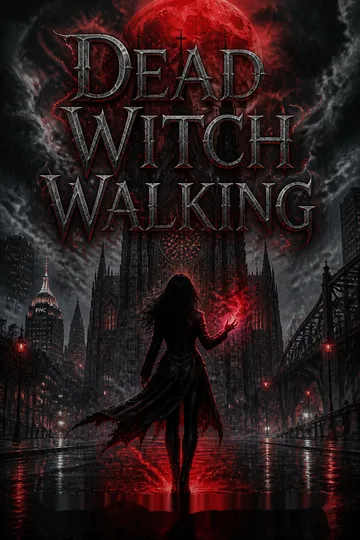
Dead Witch Walking receives mixed reviews, with some praising its world-building, characters, and humor, while others criticize its pacing and protagonist's decision-making. Many readers enjoy the unique urban fantasy setting where supernatural creatures live openly alongside humans after a genetically modified tomato virus decimated the human population. Rachel Morgan, a witch working as a bounty hunter, is a divisive character, with some finding her endearing and others frustrating. The series is often noted to improve in later books, with many readers continuing despite initial reservations.
People Also Read






Characters
Rachel Morgan
Stubborn witch runnerRachel is a red-haired earth witch and former Inderland Security runner whose quick instincts are often better than her patience. She wants meaningful work, recognition, and the freedom to choose her own cases, but she distrusts dependence and tends to mistake solitary action for self-reliance. Her white magic rests on plants, charms, and carefully prepared spells; she is wary of ley-line power because it connects to the death of her father. Rachel's humor protects her from humiliation, while her combat training and eye for small clues make her a capable investigator. Beneath her bravado is a strong moral boundary: she wants to stop dangerous people without becoming someone who treats others as expendable.
Ivy Tamwood
Living vampire partnerIvy is a living vampire, born with the virus and a soul, and one of the I.S.'s most capable runners. Elegant, disciplined, and intensely observant, she uses planning to manage both professional danger and the instincts she fears losing control of. Her relationship with Rachel is marked by loyalty, friction, and a difficult negotiation over physical boundaries. Ivy's family history gives her an intimate understanding of what vampirism can take from a person, while her reserved manner makes concern difficult for her to express plainly. She values competence and predictability, yet she is drawn to people who resist being managed. Her self-control is real, but it is also work she performs constantly.
Jenks
Pixy partner and scoutJenks is a four-inch pixy with quick wings, a quicker temper, and a gift for surveillance. He initially treats Rachel as a difficult assignment, but his sharp humor masks real professional pride and a deep loyalty to his family. Jenks is married to Matalina and has many children, so risk is never merely personal for him. He knows how to move through spaces larger people overlook, manipulate cameras, and read the scents of Inderlanders. His bravado sometimes disguises fear, especially when his family or garden is threatened. Jenks wants his skills respected rather than treated as a novelty, and he responds strongly when Rachel treats him as a partner instead of disposable backup.
Trenton Kalamack
Untouchable councilmanTrent is a wealthy councilman, businessman, and breeder of racehorses whose polished public manner conceals a formidable private will. He is observant enough to recognize Rachel's disguises and resourceful enough to turn hospitality, employment, and captivity into tools of negotiation. Trent prizes competence and seems genuinely interested in developing talent, but he assumes that people can be assessed, acquired, or disciplined according to their usefulness. His benevolent public image is supported by real philanthropy, which makes his motives harder to read rather than easier. He maintains unusual personal distance and does not fit the supernatural categories Rachel knows, giving him an unsettling air of controlled mystery.
Nicholas Sparagmos
Human scholar and survivorNick is a human scholar with a background in library work, archival research, and demonology studied for academic reasons. He grew up in the Hollows and learned to navigate Inderlander society without assuming that every supernatural being is hostile. His manner is gentle and self-effacing, but he can act decisively when someone is in danger. Nick's curiosity sometimes carries him into risks he does not fully understand, and his formal knowledge can give him confidence beyond his practical experience. He meets Rachel under extraordinary circumstances, yet his interest in her is grounded in respect and shared vulnerability. His calm presence offers Rachel a kind of safety that is different from Ivy's formidable protection.
Captain Edden
FIB pragmatistEdden is a human FIB captain, a practical investigator who understands that his bureau's rivalry with the I.S. often makes it look ineffective. He is ambitious, politically alert, and willing to bargain when a source brings him evidence worth pursuing. His humor and cluttered office make him seem less imposing than Denon, but he is no innocent: he evaluates Rachel as both a person and a valuable resource. Edden's willingness to listen gives Rachel an opening, while his need for defensible proof sets clear limits on what he can do.
Keasley
Watchful witch neighborKeasley is an elderly witch who lives across the street from the church and notices dangers that Rachel misses. Dry, private, and unexpectedly capable, he removes a delayed curse and later uses practical medical knowledge to treat her injuries. He dislikes hospitals and keeps his past obscure, but he is not indifferent to other people's suffering. Keasley respects self-reliance while understanding that survival often depends on accepting help. His wary kindness makes him a neighbor Rachel can trust gradually, rather than a mentor who demands obedience.
Denon
Vampire supervisorDenon is Rachel's former supervisor at the I.S., a muscular living vampire who has worked hard to overcome his low-blood status. He is ambitious, politically skilled, and accustomed to using authority as both reward and threat. His resentment toward people he cannot control shapes the way he manages subordinates. Denon understands institutional power well enough to make retaliation look like ordinary procedure, and he is more dangerous when he is calm than when he is openly angry.
Kisten
Piscary's powerful scionKisten is a handsome living vampire whose status as Piscary's chosen scion gives him power beyond that of an ordinary living vamp. He is flirtatious, provocative, and skilled at reading the desires and fears of the people around him. His teasing manner conceals a willingness to test boundaries, especially when he believes another vampire has a claim or opportunity. Kisten's presence makes the political structure of Cincinnati's vampires personal and immediate for Rachel.
Matalina
Pixy healer and matriarchMatalina is Jenks's wife, a poised pixy and the center of a large family. She is gentle in manner but firm about the responsibilities and dangers her husband accepts. Her practical skill at repairing pixy wings and treating injuries is matched by a strong sense of territorial custom. Matalina's affection does not make her indulgent: she is willing to challenge Jenks when she believes his ambition could put their family at risk.
Francis Percy
Envious I.S. colleagueFrancis is an insecure I.S. colleague who hungers for advancement and tries to cover his uncertainty with mockery and swagger. He envies Rachel's competence while remaining careless about how much he understands of the dangerous work around him. His social ambition makes him susceptible to promises of status and recognition. Francis is useful to the story because he shows how professional resentment can become a vulnerability in a workplace where loyalty is often measured by promotion.
Jonathan
Trent's severe adviserJonathan is Trent's tall, controlled adviser and security aide. Formal and protective, he takes his duty seriously and expects others to respect the hierarchy around his employer. His manners conceal a capacity for cruelty when authority permits it, and his long service has made his relationship with Trent unusually complicated. Jonathan is both a gatekeeper and a reminder that devotion can coexist with resentment.
Sara Jane
Ambitious new secretarySara Jane is a capable young woman from a farming family who wants a secure career and a chance to help her younger sister study. She is hardworking, observant, and alert to the power imbalance surrounding her new employer, even while she appreciates the opportunities he offers. Her practical intelligence makes her more than a background office assistant, and her vulnerability reflects how economic need can make a generous offer difficult to question.
Piscary
Cincinnati vampire masterPiscary is an ancient undead vampire and a powerful figure in Cincinnati's supernatural politics. Publicly, he operates a restaurant and maintains a reputation for obeying rules, but his influence reaches through the vampires who serve him. He is connected to Ivy's family history and to the broader system of scions and bloodlines. His power is most unsettling because it can be exercised indirectly, without his needing to appear.
Faris
Secretive laboratory doctorFaris is a redwood-scented laboratory specialist whose technical knowledge gives him access to dangerous work. He is blunt, proud of his expertise, and willing to judge others by their competence. His professional role links Trent's respectable business world to the hidden science operating behind it.
Jax
Jenks's young scoutJax is Jenks's eldest son, a young pixy eager to prove himself useful. His speed and curiosity help him notice threats adults overlook, though his excitement can outrun his caution. He wants to live up to his father's example while finding a role of his own.
Plot Devices
The Turn
Reverses human powerA lethal engineered virus kills a large share of humanity, while many supernatural species resist it. After the disaster, Inderlanders emerge publicly and take a leading role in maintaining society. The new order explains the divide between the human-run FIB and the supernatural I.S., as well as the tension between Cincinnati and the Hollows. It is not merely background history: the plague's origins make illegal biological research politically terrifying, while the supernatural population's survival gives witches, vampires, Weres, and smaller species new civic power.
Ley Lines and the Ever-After
Power with a spiritual costLey lines let practitioners draw magic directly from a parallel realm called the ever-after, granting more immediate force than Rachel's earth-based charms. That strength comes with psychological and spiritual danger, and the lines can also provide routes between worlds. Rachel distrusts them because her father died in work connected to their use. Her brief reliance on a line in the churchyard prepares both her fear of the library demon and the danger created when Nick uses a ley line to bring her home.
Transformation Potions
A body-sized disguiseUnlike illusion charms, transformation potions physically change the drinker's body and require careful preparation, ingredients, and a witch's blood. Rachel's mink potion lets her infiltrate places where her human shape would draw notice, but it also makes her vulnerable: she cannot speak normally, use her usual tools, or easily signal that she is a person. The transformation creates a practical route into the I.S. vault and Trent's estate, while its painful reversals and animalized confinement expose the cost of treating a body as a disguise.
Vampire Instincts
Scent complicates consentLiving vampires can exert influence through an aura, and scent can intensify their hunger or attraction. Ivy has a soul and tries to suppress the instincts her vampiric inheritance brings, but Rachel's scent and emotional agitation can make that control harder. Rachel's perfume, Ivy's protective scent, Kisten's borrowed scion power, and the demon's imitation of vampiric feeding all make physical closeness charged with uncertainty. The device gives the characters a bodily reason to negotiate boundaries, rather than allowing trust to remain an abstract promise.
Biodrugs in Tomatoes
Contraband hidden in fruitTrent's operation conceals biodrug vials inside growing tomatoes, exploiting the fact that many humans refuse to handle the fruit because of its association with the T4 Angel disaster. The method lets shipments pass as ordinary agricultural produce and complicates the FIB's search for evidence. It also joins the book's two central histories: the old catastrophe caused by biological engineering and the present demand for medicine that the post-Turn laws have made illegal. Rachel's discovery gives the FIB physical proof, though a later explosion threatens the case.
FAQ
Synopsis & Basic Details
What is Dead Witch Walking about?
- Witch on the Run: Rachel Morgan, a witch and bounty hunter for Inderland Security (I.S.), is fed up with menial assignments and lack of recognition. After a series of blunders and a direct I.S. death threat, she decides to quit and go freelance, but breaking her contract proves deadly.
- Unlikely Alliances: To survive, Rachel forms a precarious partnership with Ivy Tamwood, a living vampire, and Jenks, a sarcastic pixy. Their goal is to expose Trent Kalamack, a powerful and enigmatic businessman suspected of illegal biodrug manufacturing and distribution, hoping to use this information to pay off Rachel's I.S. contract.
- High-Stakes Infiltration: Rachel uses a transformation spell to infiltrate Kalamack's heavily guarded estate as a mink, uncovering shocking truths about his operations and facing betrayal from unexpected corners. Her journey is a desperate fight for survival, freedom, and justice in a world where supernatural politics and hidden dangers lurk at every turn.
Why should I read Dead Witch Walking?
- Gritty Urban Fantasy: Dive into a unique world where witches, vampires, pixies, and werewolves coexist (mostly) with humans in a post-Turn Cincinnati, offering a fresh, fast-paced take on urban fantasy with a strong, snarky female protagonist.
- Complex Character Dynamics: Explore intricate relationships, particularly the tense yet deeply loyal bond between Rachel and Ivy, and the surprising depth of secondary characters like Jenks and Nick, whose motivations and backstories add rich layers to the narrative.
- Subversive Themes: Beyond the action, the novel subtly critiques bureaucracy, corporate power, and societal prejudice, while exploring themes of identity, the cost of power, and the blurred lines between good and evil, making it more than just a thrilling adventure.
What is the background of Dead Witch Walking?
- The Turn's Aftermath: The story is set roughly 40 years after "The Turn," a global pandemic caused by a mutated bioengineered virus (T4 Angel) that decimated a quarter of humanity. Most Inderlanders (supernatural species) were resistant, leading to their numbers rivaling humans and forcing their existence into the open.
- Divided Society: Post-Turn society is sharply divided: humans mostly live in Cincinnati, while Inderlanders inhabit the Hollows across the river. This segregation fuels paranoia and rivalry between human-run law enforcement (FIB) and Inderlander-run security (I.S.), creating a complex political backdrop for Rachel's struggles.
- Bioengineered Fears: Humanity's fear of bioengineered science, which caused the Turn, led to the outlawing of medical research and the destruction of biolabs. This historical context explains the intense focus of the FIB and I.S. on illegal biodrugs and the black market, making Trent Kalamack's activities particularly heinous.
What are the most memorable quotes in Dead Witch Walking?
- "I'm not a practicing vamp. Not anymore. Not ever again.": This quote from Ivy Tamwood (Chapter 2) is pivotal, encapsulating her internal struggle and her desperate attempt to distance herself from the predatory nature of her vampirism, while also foreshadowing the immense self-control and inner conflict that defines her character.
- "Nobody makes me kill anyone!": Rachel Morgan's defiant cry (Chapter 31) during the witch duel highlights her core moral compass and her refusal to compromise her ethics, even when facing death. It underscores her white witch principles and her deep-seated belief in justice, even for those she despises.
- "You're a free witch, Ms. Morgan. How's it feel to come back from the dead?": Captain Edden's sardonic question (Chapter 32) marks Rachel's hard-won victory and the official end of her I.S. death threat. It symbolizes her rebirth and the heavy price paid for her independence, setting the stage for her new life as a freelance runner.
What writing style, narrative choices, and literary techniques does Kim Harrison use?
- First-Person, Snarky POV: The novel is told from Rachel Morgan's first-person perspective, characterized by her dry wit, internal monologues, and often sarcastic observations, which immediately immerses the reader in her personality and struggles. This narrative choice allows for deep emotional access and builds a strong connection with the protagonist.
- Fast-Paced, Action-Oriented Plotting: Harrison employs a relentless pace, with constant action, unexpected twists, and high-stakes confrontations that keep the reader engaged. Short chapters and frequent cliffhangers drive the plot forward, reflecting Rachel's chaotic and dangerous life.
- Rich World-Building through Sensory Detail: The author excels at creating a vivid, sensory-rich world, particularly through descriptions of smells (e.g., Brimstone, pixy dust, vampire pheromones, redwood), sounds (e.g., Jenks's buzzing, urban traffic, rat squeaks), and tactile sensations (e.g., sticky silk, cold cement, Ivy's touch), which grounds the fantastical elements in a tangible reality.
Hidden Details & Subtle Connections
What are some minor details that add significant meaning?
- Rosalind Franklin's Picture: Rachel keeps a picture of Rosalind Franklin, Watson, and Crick, noting, "One might think she knew what was going to happen. I wondered if she had been an Inderlander. Lots of people did." (Chapter 3) This seemingly throwaway detail subtly connects the historical scientific breakthrough of DNA to the supernatural world, hinting at deeper, hidden histories and the idea that Inderlanders have always been intertwined with human progress and pivotal moments. It also foreshadows the novel's central conflict involving bioengineered drugs.
- Keasley's "Lemonade": When Rachel first meets Keasley, he holds up a tiny self-stick amulet, drops it into his "lemonade," which then foams with yellow smoke. He reveals, "I took that one off you." (Chapter 5) This seemingly minor interaction immediately establishes Keasley's powerful magical abilities and his protective nature towards Rachel, revealing that he was actively monitoring and neutralizing threats against her even before she knew it. It highlights the pervasive danger Rachel faces and the subtle ways allies protect her.
- Trent's "Twenty, Five, One" Screensaver: Trent Kalamack's computer screensaver displays "twenty, five, one" (Chapter 14). This enigmatic detail, initially dismissed by Rachel, subtly hints at the number of years his parents and he have been involved in his biodrug operations, or perhaps the number of people he has lost or sacrificed. It's a clue to his long-term, calculated involvement in illegal activities, revealing his deep-seated commitment to his hidden agenda.
What are some subtle foreshadowing and callbacks?
- Ivy's Mother's Sundress: Ivy wears her mother's "skintight yellow sundress" as a disguise, noting, "She thinks my great aunt stole it. If she knew I had it, she'd make me give it back." (Chapter 17) This seemingly trivial detail foreshadows the later revelation that Ivy's mother is a true undead vampire, and the dress is a symbol of her past life and Ivy's connection to it. The mother's possessiveness over the dress hints at the deeper, more sinister control she might exert over Ivy, linking to Ivy's own struggles with her vampiric nature.
- Jenks's "Peter Pan" Appearance: Rachel frequently describes Jenks as looking like "a miniature Peter Pan posing as an inner city gang member" (Chapter 1). This playful description subtly foreshadows Jenks's deep connection to his family and his fierce territoriality over his "garden" (Chapter 16), mirroring Peter Pan's role as a protector of Neverland's children. It also callbacks to the idea of pixies being more than just mischievous sprites, but guardians with their own complex social structures and loyalties.
- The "Frog Incident" and Animal Transformations: Rachel's early mention of the "frog incident" (Chapter 1) and her later transformation into a mink (Chapter 10) serve as callbacks to the dangers and complexities of magic. The frog incident, where she "would have sworn fairies were too big to fit into a frog's mouth," highlights her past magical mishaps and the unpredictable nature of spells. Her mink transformation, while successful, leads to her capture and forced participation in rat fights, underscoring that even well-intentioned magic can have unforeseen and perilous consequences.
What are some unexpected character connections?
- Nick's Librarian Past and Demonology Expertise: Nick Sparagmos, initially presented as a resourceful human ally, reveals he was a university librarian with a "full scholarship" and majored in "data acquisition, organization, and distribution" (Chapter 23). More surprisingly, he "took three years of Demonology as a Second Language" (Chapter 25). This unexpected background explains his ability to bind the demon and his casual understanding of Inderlander lore, establishing him as far more than a simple human and a crucial intellectual asset to Rachel's team.
- Keasley's Hidden Power and Connection to Rachel: Keasley, the seemingly frail old neighbor, is revealed to be a powerful witch who actively protects Rachel, even removing a delayed spell from her on the bus (Chapter 5). His knowledge of Rachel's I.S. death threat and his ability to stitch her wounds with "vet-grade dissolvable sutures" (Chapter 27) suggest a deeper, almost paternal connection. His quiet wisdom and willingness to help without fanfare make him an unexpected mentor figure, hinting at a shared history or understanding of Rachel's unique challenges.
- Francis Percy as Trent's Mole: Francis, Rachel's bootlicking I.S. colleague, is unexpectedly revealed to be Trent Kalamack's mole within Inderland Security (Chapter 19). His rapid promotion to witch and his access to I.S. information, including Rachel's file, were orchestrated by Trent. This connection highlights Trent's extensive network of influence and his willingness to corrupt individuals within law enforcement, turning a seemingly minor antagonist into a pawn in a much larger, more dangerous game.
Who are the most significant supporting characters?
- Keasley, the Unseen Protector: Keasley, Rachel's elderly neighbor, is far more than a simple witch with arthritis. He acts as an early warning system and a quiet guardian, demonstrating his power by removing a delayed spell from Rachel and later expertly stitching her demon-inflicted wounds. His wisdom and calm demeanor provide a grounding force, and his willingness to offer sanctuary and practical magical aid makes him an indispensable, albeit understated, ally.
- Matalina, Jenks's Steadfast Wife: Matalina, Jenks's wife, emerges as a significant figure during the fairy attack. Her fierce protectiveness of her family and garden, her organized leadership of the pixy children, and her surprising medical skills (stitching Rachel's neck) reveal the strength and resilience of the pixy community. She represents the domestic, yet equally formidable, side of Inderlander life, and her directness with Rachel underscores the deep-seated values of her clan.
- Captain Edden, the Pragmatic FIB Leader: Captain Edden, the FIB officer Rachel and Ivy approach, is crucial for his pragmatic approach to inter-species law enforcement. Despite his initial skepticism and the FIB's rivalry with the I.S., he is willing to bend rules and form an alliance with Rachel based on tangible evidence and mutual benefit. His character highlights the potential for cooperation between humans and Inderlanders, and his dry humor and integrity make him a trustworthy, if gruff, partner.
Psychological, Emotional, & Relational Analysis
What are some unspoken motivations of the characters?
- Ivy's Desire for Control and Family Legacy: Ivy's decision to leave the I.S. and partner with Rachel, despite her illustrious career, is driven by a deep-seated need for control over her own life and a desperate attempt to escape her mother's influence and the expectations of her vampiric lineage. Her mother's desire for Ivy to produce "living bloodline" children (Chapter 6) and her own fear of becoming a soulless undead fuel her actions, making her partnership with Rachel a bid for self-determination and a way to forge her own path, free from the predatory instincts she constantly battles.
- Trent Kalamack's Pursuit of Knowledge and Power: Beyond wealth, Trent's motivation for biodrug manufacturing and his interest in Rachel stem from a profound desire for knowledge and control, particularly over life and death. His fascination with "gene-splicing techniques" (Chapter 20) and his willingness to blackmail and kill to protect his research suggest a god complex, a drive to transcend natural limitations, possibly linked to his parents' mysterious deaths and his own ambiguous Inderlander status. He seeks to understand and manipulate the very fabric of existence.
- Nick's Need for Purpose and Belonging: Nick's eagerness to help Rachel, despite the extreme danger, is rooted in a desire for purpose and a sense of belonging after his traumatic experience as a rat. His past as a "work-study peon" and his "hero complex" (Chapter 29) suggest a longing to be valued and to make a meaningful contribution. His willingness to risk his life for Rachel, even taking on a demon mark, indicates a deep need to prove his worth and find a place where his unique skills and moral compass are appreciated.
What psychological complexities do the characters exhibit?
- Rachel's Trauma and Moral Conflict: Rachel exhibits significant psychological complexity, particularly in her struggle with trauma and moral boundaries. Her near-death experiences, especially the demon attack and the rat fights, leave her deeply shaken, leading to moments of panic and self-doubt. Her internal conflict between her white witch principles (not harming others) and the necessity of using aggressive tactics to survive (e.g., making Francis take her hit, considering black magic) highlights the psychological toll of her dangerous profession and the blurred lines of morality in her world.
- Ivy's Suppressed Predatory Instincts: Ivy's character is a study in suppressed predatory instincts. Her constant battle to maintain control over her vampiric hunger, especially after midnight or when agitated, reveals a profound psychological burden. Her "vampy" shifts, where her eyes turn black and her aura of domination emerges, are not just physical changes but manifestations of her internal struggle to remain "non-practicing." This constant vigilance and self-denial create a tense, unpredictable dynamic, particularly in her relationship with Rachel.
- Trent's Calculated Detachment and Control: Trent Kalamack displays a chilling psychological complexity through his calculated detachment and absolute need for control. His ability to orchestrate elaborate schemes, blackmail individuals, and even commit murder with a calm, amiable demeanor suggests a profound lack of empathy and a highly rationalized worldview. His "businessman aura" (Chapter 19) is a psychological shield, allowing him to manipulate others while maintaining an outward appearance of respectability, making him a truly formidable and unsettling antagonist.
What are the major emotional turning points?
- Rachel's Decision to Quit the I.S.: The moment Rachel's boss, Denon, tears up her contract and tells her to leave (Chapter 3), is a major emotional turning point. It shifts her from frustrated employee to desperate freelancer, forcing her to confront her vulnerability and the reality of the I.S. death threat. This event ignites her fierce drive for independence and sets her on a path of self-discovery and dangerous alliances.
- Ivy's Confession of Vulnerability: Ivy's admission to Rachel, "I'm sorry about last night... You probably won't believe me, but it scared me, too." (Chapter 7), marks a significant emotional turning point in their relationship. It reveals Ivy's own fear and struggle with her vampiric nature, breaking down her stoic facade and fostering a deeper, albeit still cautious, trust between them. This moment humanizes Ivy and solidifies their partnership on a more emotional level.
- Rachel's Realization of Trent's True Nature: When Rachel, as a mink, witnesses Trent calmly orchestrate Faris's death and then offer her a job (Chapter 20), it's a chilling emotional turning point. She realizes Trent is not just a biodrug dealer but a cold-blooded killer and manipulator. This revelation solidifies her resolve to bring him down, transforming her mission from self-preservation to a quest for justice against a truly evil force.
How do relationship dynamics evolve?
- Rachel and Ivy: From Colleagues to Codependent Partners: Their relationship evolves from a professional, somewhat competitive dynamic to a deeply codependent partnership. Initially, Rachel resents Ivy's superior status, but Ivy's unexpected offer to leave the I.S. together and her subsequent protection forge a strong bond. Their shared vulnerability (Rachel's death threat, Ivy's struggle with her vampirism) forces them to rely on each other, leading to moments of profound trust and emotional intimacy, despite their contrasting personalities and Ivy's occasional predatory slips.
- Rachel and Jenks: From Annoying Backup to Valued Partner: Jenks starts as Rachel's sarcastic, often complaining pixy backup, viewed by Rachel as a necessary annoyance. However, his unwavering loyalty, quick thinking (like finding the spell on Rachel's check), and fierce protectiveness, especially during the fairy attack, earn Rachel's respect. Their dynamic shifts to one of mutual reliance and genuine friendship, culminating in Rachel making him a full partner (Chapter 15), acknowledging his invaluable contributions and solidifying his place in her chosen family.
- Rachel and Nick: From Rescuer to Confidant: Nick enters Rachel's life as a fellow victim in the rat fights, quickly becoming her rescuer and a surprising source of support. Their shared trauma and Nick's unique understanding of the supernatural world (due to his demonology studies) forge a deep connection. He becomes Rachel's confidant, offering emotional support and practical advice, and their relationship hints at a burgeoning romantic interest, built on mutual respect and a shared sense of being outsiders.
Interpretation & Debate
Which parts of the story remain ambiguous or open-ended?
- Trent Kalamack's True Nature: Despite Rachel's intense investigation, Trent Kalamack's exact species or magical alignment remains ambiguous. Jenks notes, "He doesn't smell like anything I recognize" (Chapter 18), and Rachel speculates he might be a "human scion" (Chapter 15) or something entirely new. This ambiguity leaves readers debating whether Trent is a uniquely powerful human, a new type of Inderlander, or a hybrid, adding to his mystique and the ongoing threat he poses.
- The Demon's Summoner and Motives: The identity of who summoned the demon that attacked Rachel and Trent remains unclear. While Rachel initially suspects the I.S., she later realizes, "Someone had called two demons—one for me, one for him—and it hadn't been anyone at the I.S." (Chapter 32). This leaves open the question of a third, unseen player in the supernatural power struggles, potentially a more powerful and manipulative entity pulling strings from the shadows, setting up future conflicts.
- Ivy's Long-Term Intentions for Rachel: Ivy's motivations for partnering with Rachel, particularly her long-term planning and her desire for Rachel to be her "scion" (Chapter 26), remain open to interpretation. While she claims to be non-practicing, her intense hunger and occasional predatory behavior towards Rachel suggest a deeper, possibly darker, agenda. Readers are left to debate whether Ivy genuinely cares for Rachel as a friend or sees her as a valuable asset, or even a potential food source, for her own survival and legacy.
What are some debatable, controversial scenes or moments in Dead Witch Walking?
- Ivy's Predatory Advances on Rachel: The scene where Ivy pins Rachel to the couch, exhibiting intense vampiric hunger and desire (Chapter 6), is highly controversial. While Ivy later apologizes and claims it was a misunderstanding of Rachel's "signals," the scene blurs the line between consensual attraction and predatory coercion. Readers debate whether Ivy genuinely lost control or was testing Rachel's boundaries, and how this impacts the nature of their partnership and Ivy's "non-practicing" status.
- Rachel's Forced Participation in Rat Fights: Trent's decision to transform Rachel into a mink and force her to fight rats to the death (Chapter 20) is a morally ambiguous and disturbing moment. It highlights Trent's cruelty and his desire to "break" Rachel, but also forces Rachel to confront her own capacity for violence and survival instincts. The scene sparks debate about the ethics of animal cruelty, the dehumanizing effects of captivity, and Rachel's moral compromises in extreme situations.
- Nick's Deal with the Demon: Nick's decision to release a demon from its binding circle in exchange for Rachel's life (Chapter 25) is a highly debatable act. While motivated by a desire to save Rachel, it unleashes a dangerous entity into Cincinnati and leaves Rachel with a demon mark and an unpaid favor. This moment raises questions about the morality of making deals with dark forces, the unforeseen consequences of such actions, and whether the ends justify the means, even in a life
The Hollows Series
About the Author
Download PDF
Download EPUB
.epub digital book format is ideal for reading ebooks on phones, tablets, and e-readers.








