

Key Takeaways
Act on converging evidence before the pathogen has a perfect label.
Patterns precede explanations. In 1981, epidemiologists saw unusual clusters of rare infections and cancers in otherwise healthy gay men. They did not yet know the cause, but surveillance and a clear case definition revealed that the cases were increasing and spreading. The investigation eventually identified AIDS and its viral cause. Waiting for certainty would have delayed recognition of the threat.
Action can precede answers. In Brainerd, Minnesota, investigators linked chronic diarrhea to raw milk from one dairy. Consumers were more than twenty-eight times as likely to have drunk that milk as matched controls. The dairy stopped selling it, and new cases stopped, even though investigators never identified the organism. The principle is to act on reliable patterns while continuing to test explanations.
What's striking is the separation of two tasks that are often confused: explaining an outbreak and interrupting it. Epidemiology can support a practical intervention before it supplies a complete causal account. This resembles engineering safety, where a system may be shut down after repeated warning signs even before the precise failure mechanism is known. The discipline required is calibrated action: interventions should match the strength of evidence, be proportionate to potential harm, and be revised as facts improve. Acting early is not the same as claiming certainty.
Allocate attention by impact and readiness, not headline fear.
Fear distorts priorities. The book describes two useful ways to compare threats. One weighs a pathogen's potential impact against its likelihood of emerging. Another compares the severity of an event with society's preparedness for it. Both expose a mismatch between what feels frightening and what is most consequential. Smallpox can provoke intense alarm after only a few cases, while malaria kills hundreds of thousands each year with far less public attention.
Consequences extend beyond deaths. A pandemic can disrupt hospitals, trade, food supplies, and government at once. Unlike a storm that damages one region while others send help, a pandemic can overwhelm many places simultaneously. The authors argue that preparedness should account for these cascading effects, not just count likely casualties.
The threat matrix is a useful antidote to salience bias, the tendency to judge risk by vividness rather than scale. It also adds a governance question: who bears the cost of preparation, and who benefits if disaster is avoided? The answer is often diffuse, which helps explain why preventive budgets lose out to visible emergencies. Still, a matrix cannot settle priorities by itself. Estimates are uncertain, and the public may rationally care about rare threats when consequences are catastrophic. Clear communication should explain both uncertainty and the opportunity cost of preparing for one danger instead of another.
Human mobility and livestock turn local microbes into global risks.
The world has changed around germs. For most of human history, small communities and slow travel limited many outbreaks. Agriculture concentrated people and domesticated animals, creating more opportunities for animal microbes to infect humans. Today, dense cities, forest disruption, industrial animal production, and rapid international travel amplify that contact. The authors note that global chicken numbers rose from about 3 billion in 1960 to roughly 20 billion by the time of writing.
Microbes adapt faster than people. Some reproduce about every twenty minutes, while a human generation takes roughly twenty-five years. Crowded animal populations and frequent movement give pathogens more chances to change and spread. A local infection can then travel rapidly through passengers, cargo, and interconnected supply chains, while the medicines and protective equipment needed to respond may come from the affected region itself.
This is a systems argument, not simply a warning about travel. Efficient supply chains and intensive farming lower costs in ordinary times but can concentrate risk and transmit shocks across borders. In network terms, connectivity is both an advantage and a vulnerability: it moves useful goods quickly, and it gives pathogens more routes and more susceptible hosts. The implication is not to reverse globalization, but to build redundancy into critical supplies and monitor animal, environmental, and human health together. A focus on microbes alone misses the economic structures that create their opportunities.
Finance vaccines before outbreaks erase the market incentive.
Prevention rarely pays on schedule. Vaccines can take more than a decade and about a billion dollars to develop, yet outbreaks are unpredictable and the people most at risk may not be able to pay. When SARS subsided in 2003, vaccine research lost its market and government support, leaving companies with much of the expense. During the 2009 H1N1 pandemic, US vaccine shipments peaked in January 2010, after cases had peaked in October 2009.
Public support can bridge the gap. Osterholm argues for long-term public-private partnerships that fund research, trials, manufacturing capacity, and advance purchases. The aim is to move promising vaccines through the costly development stage before an emergency. CEPI is presented as a promising coalition, but the authors stress that a partnership needs sustained funding and clear responsibility, not only goodwill during a crisis.
Vaccines are a classic public-good problem: the benefit of a successful vaccine spreads across society, while development costs and commercial risks fall on a narrower set of organizations. Advance commitments can correct that imbalance by making demand credible before an outbreak. Yet public funding also requires public accountability. Decisions about which pathogens receive investment should use transparent criteria, and manufacturing access should be planned alongside discovery. Otherwise, a vaccine may exist scientifically but remain unavailable where it could prevent the most harm.
Treat antibiotics as shared infrastructure, not convenient individual fixes.
Every use has a collective cost. Antibiotics select for resistant microbes, a natural process documented even in bacteria from a cave isolated from humans for millions of years. The authors describe inappropriate prescriptions for viral infections and heavy antibiotic use in livestock. The problem fits the tragedy of the commons: a small immediate benefit to one person or producer can impose a much larger future cost on everyone.
The forecast is severe. A British government review estimated that, without effective action, antimicrobial resistance could contribute to 300 million deaths and $100 trillion in lost economic output over thirty-five years. The authors propose preventing infections, using existing drugs more carefully, developing new antibiotics, and finding treatments that reduce reliance on them. They also emphasize sanitation, surveillance, and better reporting of agricultural use.
Calling antibiotics shared infrastructure clarifies why individual choice is not the whole story. Prescribing decisions are shaped by patient expectations, clinicians' fear of missing a rare dangerous infection, and inadequate access to diagnostics. Farm practices and weak regulation add further pressure. Stewardship must therefore support sound clinical judgment rather than reduce every decision to a quota. The unusual patient who needs an antibiotic despite a pattern that usually signals a virus illustrates the tradeoff. Protecting a shared resource requires better tools and incentives, not merely asking individuals to behave better.
Build pandemic defenses around influenza's speed, not last crisis's script.
Influenza can change its identity. Small genetic mutations can alter a strain, while reassortment allows different influenza viruses to exchange genetic material and produce a substantially new one. Wild aquatic birds are the main reservoir; pigs can host both avian and human strains, creating opportunities for mixing. The 1918 pandemic killed an estimated 40 to 100 million people worldwide, and often struck young, healthy adults especially hard.
A pandemic tests whole systems. The book's fictional H7N9 scenario shows how illness could disrupt hospitals, staffing, transport, food, and medicine supply chains at the same time. Seasonal flu vaccines are updated annually and have variable effectiveness. Osterholm calls for a long-term effort to develop a broader, more durable vaccine, alongside stockpiles and plans for shortages. The scenario is a stress test, not a claim that its exact sequence or death toll is predictable.
The strongest point is that pandemic preparedness is a continuity problem as much as a medical one. A hospital depends on workers, power, supplies, transport, and functioning manufacturers; a failure in one link can reduce the value of every other investment. Scenario exercises make these dependencies visible before they are tested under pressure. The caution is that vivid worst-case projections can be mistaken for forecasts. Good planning should test severe possibilities without implying that one specific outcome is certain, and should be useful across multiple emergencies.
Control mosquito habitats continuously, not only when cases explode.
The vector is part of the disease. Mosquito species differ in where they breed, how far they travel, and which pathogens they carry. Osterholm learned this personally when his son developed La Crosse encephalitis after the author watered tree holes that served as mosquito breeding sites. The episode shows why local ecology matters: a general spray campaign may miss the precise habitat that sustains a species.
Temporary action is not durable control. The authors describe how Aedes mosquitoes returned after earlier control efforts faded, spreading dengue, yellow fever, chikungunya, and Zika. Spraying can reduce adult mosquitoes but does not eliminate larvae or reach every breeding site. They argue for sustained programs combining source reduction, appropriate insecticides, surveillance, research, and vaccines, coordinated across public agencies rather than improvised during outbreaks.
Vector control is a reminder that public health often depends on maintenance work that becomes invisible when it succeeds. Once a disease recedes, budgets and attention move elsewhere, allowing the conditions that enabled it to return. The durable answer is not a single technology but a locally informed portfolio of interventions. At the same time, pesticide use has ecological and resistance costs, so programs need monitoring and adjustment rather than automatic escalation. The authors' emphasis on coordination matters because breeding sites and mosquito movement rarely respect administrative boundaries.
Track animal reservoirs and hospital transmission as one chain.
Outbreaks cross species and institutions. SARS likely passed from bats to other animals and then to people in southern China. Removing infected market animals, isolating patients, and tracing contacts helped stop human transmission in 2003. MERS presents a harder problem because the virus became established in camels, animals deeply woven into regional livelihoods and trade. Eliminating that reservoir is not a realistic control strategy.
Hospitals can amplify spread. In 2015, a MERS patient in South Korea visited several health facilities before diagnosis. The outbreak reached 186 confirmed cases and killed 36 people, while major institutions and schools were disrupted. The authors argue for a One Health approach that joins human and animal surveillance, alongside strong infection control and rapid diagnosis in healthcare settings.
One Health is most useful when it changes who shares information and who has authority to act. Veterinary surveillance can reveal a threat before human clinics see it, while hospital data can identify transmission that animal monitoring misses. The MERS example also shows why technically simple solutions can fail socially: removing camels would disregard their economic and cultural importance. Effective control must fit the relationships people depend on. The broader lesson is that prevention works best when animal health, clinical practice, and community realities are treated as connected parts of one response.
Make preparedness durable through accountable institutions and public commitment.
Warnings need owners. The book's Crisis Agenda prioritizes pandemic influenza and antimicrobial resistance, regional outbreaks, biological misuse, and persistent diseases such as malaria, tuberculosis, and AIDS. It also calls for stronger vaccine and diagnostic development, mosquito control, biosecurity, climate preparedness, and coordination between human and animal health. The authors argue that research without policy, funding, and implementation leaves critical knowledge unused.
Authority must match responsibility. The proposed remedies include sustained funding, clearer leadership, international coordination, and accountability for preparedness. Osterholm argues that the World Health Organization lacks the resources and authority needed for some crisis functions, and suggests a treaty-based model with member nations committing resources in advance. Citizens also have a role: press elected officials to support evidence-based, nonpartisan public health action before an emergency makes delay impossible.
Preparedness is a collective-action problem with a political time horizon mismatch: its benefits are dispersed and often invisible, while its costs are immediate and easy to contest. Institutions can protect long-term work from the cycle of panic and neglect, but central authority alone is not enough. Local responders need discretion, communities need trustworthy communication, and governments need mechanisms to explain failure as well as success. The proposed stronger command structure is persuasive for coordination, provided it is paired with transparency and local legitimacy.
Analysis
Deadliest Enemy is both a field memoir and an argument about the political economy of prevention. Its narrative begins with the epidemiologist learning to recognize patterns in illness, then widens to the conditions that let pathogens move: animal production, urban growth, travel, fragile health systems, and global supply chains. The recurring practical lesson is that action and explanation need not arrive together. Removing a contaminated source, isolating cases, or changing behavior can interrupt transmission before the exact microbe or mechanism is known.
The book's strongest contribution is its insistence that preparedness is not a stockpile alone. It is a sustained system of surveillance, skilled staff, manufacturing capacity, trusted communication, and authority to coordinate across borders and institutions. Vaccines and antibiotics reveal the same structural weakness: society benefits from products whose development is expensive, uncertain, and commercially unattractive. Market failure is not an abstract economic concept here. It becomes delayed supply, abandoned research, and preventable illness.
The threat framework also challenges the public's tendency to confuse fear with danger. Dramatic outbreaks draw attention, while malaria, tuberculosis, and HIV continue to cause enormous harm. Yet the book's emphasis on low-frequency catastrophes can itself skew priorities if readers mistake a vivid scenario for a forecast. The most responsible interpretation is not that every frightening outcome is imminent, but that systems should be robust across plausible failures.
The war metaphor makes urgency memorable, though it can obscure the fact that infectious disease control depends on cooperation, trust, and unequal access to care, not simply command. The book's cases repeatedly demonstrate that social conditions shape transmission and determine who receives protection. Its lasting argument is therefore broader than defeating germs: societies must build institutions capable of noticing weak signals, acting under uncertainty, learning from error, and maintaining protection after headlines move on.
Review Summary
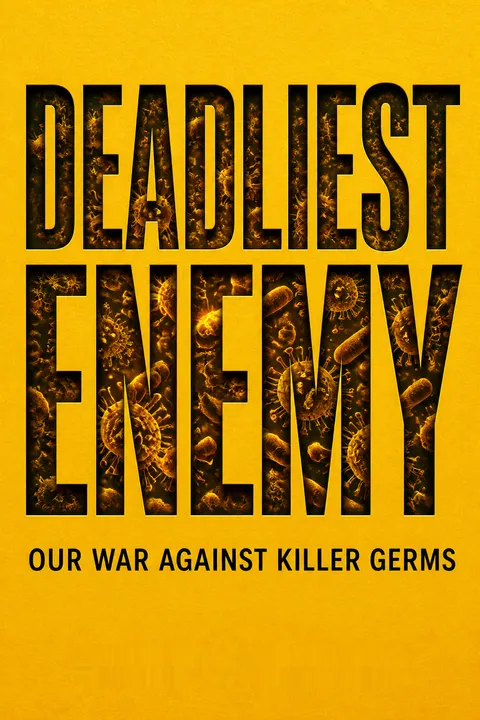
Deadliest Enemy by Michael T. Osterholm, published in 2017, receives praise for prophetically predicting aspects of the COVID-19 pandemic. Reviewers commend Osterholm's expertise in infectious diseases, his accessible writing style, and his comprehensive coverage of threats including Zika, Ebola, SARS, MERS, influenza, and antibiotic resistance. The book presents a 9-point crisis agenda and warns about inadequate global preparedness. Some readers found his tone arrogant, and one criticized scientific accuracy. Most consider it essential reading for understanding pandemic threats and public health policy failures.
People Also Read


Glossary
Consequential epidemiology
Prevention through foresightAn approach to epidemiology that seeks to change what happens by identifying threats and acting before their consequences unfold. It contrasts with work that only documents and explains outbreaks after they occur. The goal is to use evidence, surveillance, and policy to alter the future course of disease and prevent avoidable suffering.
Threat matrix
A map of risksA framework for comparing disease threats along dimensions such as likelihood of emergence, potential impact, severity, and preparedness. It helps distinguish pathogens that are likely to arise from those that could cause extreme harm, and reveals when a society is poorly prepared for a severe event. It is a planning tool, not a precise prediction.
One Health
Joined human and animal healthAn approach that treats human, animal, and environmental health as connected. Because many emerging infections originate in animals or move between species, prevention requires shared surveillance and coordinated action across veterinary medicine, public health, and other relevant fields. The approach is especially important where people, wildlife, and food-producing animals interact.
Crisis Agenda
Priorities for infectious threatsOsterholm and Olshaker's proposed set of priorities for reducing infectious disease risks. It emphasizes pandemic influenza, antimicrobial resistance, regional outbreaks, biological misuse, and persistent endemic diseases, while calling for stronger vaccines, diagnostics, mosquito control, surveillance, and governance. The agenda links scientific priorities to funding, institutions, and practical public health action.
Dual-use research of concern (DURC)
Research with harmful potentialLife-sciences research that could reasonably be used for beneficial purposes but also has the potential to cause harm, intentionally or through accident. The term focuses attention on work whose knowledge, methods, products, or technologies could threaten public health or safety. Oversight aims to preserve scientific benefits while reducing the risk of misuse.
Gain-of-function research of concern (GOFRC)
Research that heightens pathogen capabilitiesResearch that deliberately changes a pathogen in ways that may increase its ability to cause disease, spread between hosts, or evade treatment or prevention. Such work may provide information relevant to surveillance or preparedness, but it can also create risks if the organism escapes or the methods enable harmful replication. The book argues that its risks require serious oversight.
Antimicrobial stewardship
Careful use of antimicrobial drugsThe coordinated practice of selecting the appropriate antimicrobial drug for the right patient, diagnosis, dose, and duration. Stewardship seeks to preserve drug effectiveness by reducing unnecessary or overly broad treatment, while still ensuring that patients who need timely antibiotics receive them. It applies to healthcare and, in the book's account, should also inform animal production.
Tragedy of the Commons
Private gain, shared harmA situation in which individuals receive a direct benefit from using a shared resource, while the resulting damage is distributed across the community. In the book, antibiotic overuse illustrates this pattern: one prescription or use in livestock may seem beneficial in isolation, but widespread use accelerates resistance and reduces the drugs' future effectiveness for everyone.
Download PDF
Download EPUB
.epub digital book format is ideal for reading ebooks on phones, tablets, and e-readers.








