

Plot Summary
The River Takes Two
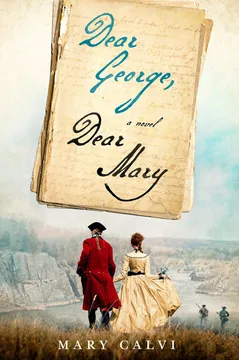
On Valentine’s Day 1756, Mary Eliza Philipse1 hides from the crowded celebration her family is hosting for Colonel George Washington.2 Her fear began when she was a child: after gardener’s son Elbert Peck23 slipped into the river, Mary1 plunged in after him, and her mother,24 Lady Joanna,24 followed. A young sailor10 rescued Mary,1 but Elbert23 and her mother24 died.
Mary1 has carried the belief that she should have died too, and her father’s daily encouragement to protect and save others became both purpose and burden. Now her brother Frederick3 insists she attend the ball, where Washington2 is expected. Mary1 has read his frontier journal repeatedly, but the prospect of meeting him cannot quiet the dread that crowds and hair powder awaken.
Mary’s trauma is not simply grief over two deaths. She has built a moral identity around survival, treating the fact that she lived as evidence that she owes the dead a life of service. That bargain gives her purpose, but it also turns ordinary pleasure into something she must earn. The ball makes the conflict immediate: she longs to meet Washington, yet the setting reproduces the social pressure associated with her childhood terror. Her refuge at the river and her father’s injunction to be a light establish the story’s central tension between retreat and chosen presence.
The Journal Across the River
Mary’s1 reading carries the story back to Washington’s2 first journey into French territory in 1753. Barely experienced, he leads a small party through winter wilderness, secures Iroquois guides, delivers Virginia’s demand that the French withdraw, and survives a treacherous return across an ice-choked river with frontiersman Christopher Gist.18
Later, during General Edward Braddock’s19 campaign, Washington2 warns that the French and their Indigenous allies will attack from the woods. Braddock19 ignores him.
When the British formation collapses at the Battle of Monongahela, Washington2 rallies survivors and carries the wounded from the field. The campaign makes him a celebrated commander, but Mary1 knows him first through the journal that records his exposure to danger and makes his courage feel personal.
The journal creates intimacy before the lovers have met. Mary encounters Washington through his written account, while he has no knowledge of her attention; the relationship begins as an asymmetry of looking and being looked at. His military record also complicates the heroic image she has assembled. Washington’s courage matters, but so does his capacity to observe, learn, and revise his methods after failure. The story places his public reputation beside Mary’s private fear, preparing two people who are admired for very different reasons to recognize vulnerability in each other.
The Ball Breaks Open
At Philipse Manor, Mary’s1 first meeting with Washington2 follows a lavish dinner, but the evening turns dangerous when her cousin5 James Jay5 corners and assaults her. French cook François13 wounds Jay5 with a broken plate, giving Mary1 time to escape; Frederick3 orders Jay5 out, and Mary1 chooses to continue the ball rather than let fear cancel it.
She dances first with Washington,2 then helps introduce a playful hat dance that brings the guests together. The choice is an act of courage, not a cure: she steadies herself by focusing on dancing master7 Michael Tenoe,7 whose indenture she has arranged to buy out.
After the festivities, Frederick3 pays the full amount Mary1 negotiated, and Tenoe7 becomes free. Mary’s1 celebration gives someone else a life beyond service.
The ball links two forms of coercion without equating them. Jay asserts ownership over Mary through intimidation; Tenoe’s indenture binds him through a legal contract. Mary cannot undo what Jay has done, but she can choose not to surrender the entire evening to him, and she can use her wealth to remove a constraint on Tenoe. Her agency is therefore practical before it is psychological. The dancing matters because it lets her act while afraid. Freedom in this section is not a grand abstraction; it is a contract paid, a door left open, and a dance she elects to finish.
Poetry Becomes Courtship
After the ball, Washington2 asks to see Mary1 again, and she grants him an interview at the manor. Their conversation begins awkwardly, then deepens when she admits she has read his journal and asks about the hardships it records.
Mary1 takes him riding, shows him the family’s deer park, and shares a comic poem about a bluebird. Washington2 answers with verse of his own, and the exchange gives them a language for attraction that neither can manage through ordinary compliments.
He admires her intelligence and candor; she discovers that the celebrated officer2 listens to her without treating her as a prize or a fragile invalid. When they visit an elaborate mechanical model of the universe, its coordinated movements give form to the harmony they are beginning to imagine between them.
Their courtship develops through attention rather than conquest. Mary’s knowledge of Washington’s journal lets her ask about the person beneath the public legend, while his willingness to hear her poetry grants her mind the same seriousness he gives his military work. The recurring verse also provides emotional cover: each can disclose desire indirectly, testing whether the other will receive it. Their imagined harmony is compelling precisely because it is not yet secure. They are learning how to be seen by one another, even as social rank, money, and military duty remain forces neither can simply charm away.
The Bread and Butter Ball
Mary1 and Washington2 grow closer through a New York race meeting, shared confidences about lost siblings, and a private birthday celebration at Philipse Manor. At the birthday ball, they improvise a modest supper of bread and butter, then dance together and kiss on the roof balcony.
Washington2 leaves soon afterward for military business, expecting to return, but his requests for leave are repeatedly refused while he commands an under-supplied Virginia frontier. Mary1 waits and sends updates about the horses they shared an interest in.
Instead of hearing from him, she encounters a Virginia newspaper attack accusing him and his regiment of misconduct. Washington2 receives the same slander and cannot identify its author. Distance begins to turn a promising separation into a test neither understands.
The improvised supper makes the lovers’ intimacy feel distinct from the lavish world around them. They do not need the wealth of the Philipse table to recognize one another; they need time, privacy, and the freedom to speak without performing for guests. The separation exposes how little control affection has over institutions. Washington’s superiors command his body and time, while anonymous print can damage his public standing. Mary’s silence is not proof of diminished love, but from her position it resembles abandonment. The novel makes distance psychologically active: it gives uncertainty room to impersonate fact.
Powder in the Darkness
At Lord Loudoun’s15 Christmas banquet, Jay5 approaches Mary1 again and revives the terror he first imposed when she was a child. The encounter forces her to remember that his threats drove her outside on the night Elbert23 and her mother24 entered the river. Captain Roger Morris6 helps after she is found unconscious, and Loudoun15 assigns guards to protect her.
Mary1 is grateful for the rescue but resents the surveillance and the social pressure to accept Morris6 as a husband. Meanwhile, Washington2 remains unable to secure leave or reach her. Morris,6 an aide to Loudoun,6 pursues Mary1 while her family sees his position as a means of protecting their estate and community. Her need for safety begins to be confused with the choice of whom to trust.
Jay’s return collapses the distance between Mary’s childhood and adulthood. The trauma has persisted not as a complete, settled memory but as bodily alarm, especially around powder, confinement, and loss of breath. Morris’s protection is materially useful, yet it arrives through the same political network that restricts Mary’s independence. This creates a difficult psychological bind: accepting help can feel like consent to a larger arrangement. The section also sharpens the contrast between safety and freedom. Mary’s family can guard her from an immediate threat, but their protection risks deciding her future on her behalf.
A Visit Too Late
Pressured by Frederick3 and anxious about her family’s security, Mary1 signs a marriage agreement with Morris.6 Washington2 arrives in a snowstorm that night, only to learn that the wedding papers are being carried to Loudoun.15
Mary1 runs after him, and the two spend the night together, unable to explain the silence that has kept them apart. Washington2 leaves before morning, placing a gift in the room. Mary1 proceeds with the marriage to Morris,6 entering the ceremony in a state of emotional confusion; during the service, a prophecy warns that the Philipse possessions will pass away when an eagle strips the lion’s mane.
Later, Washington2 discovers that newspaper sheets carrying the slander against him were used to wrap china ordered for his intended visit. He begins to suspect that powerful men deliberately kept him from Mary.1
This is the novel’s most painful collision between choice and constraint. Mary signs before Washington arrives, so his return cannot simply restore the future they imagined. Their night together confirms feeling but does not resolve the practical and political machinery already in motion. The wedding’s dreamlike quality suggests dissociation rather than wholehearted consent, while the prophecy gives material loss an ominous voice before the Revolution begins. Washington’s discovery of the slander’s packaging changes his interpretation of the past: what looked like personal rejection may have been engineered. But suspicion arrives after the decisive moment, when recognition cannot undo the marriage.
The Enemy Was Ink
Washington2 traces the anonymous attack signed L. and V. toward Lord Loudoun15 and the officials around him, and realizes that the obstruction of his leave may have served more than military convenience. He had written to his friends about Mary,1 but she never received the letters.
Their correspondence remained hidden, leaving each to believe the other had chosen silence. Washington2 considers abandoning public service, wounded by the sense that his superiors have manipulated both his career and his private life.
He eventually marries Martha Custis,9 while Mary1 lives as Morris’s6 wife. The marriage does not erase her attachment to Washington,2 and Morris6 later leaves for England. By 1776, Mary1 is at her Harlem Heights estate, receiving refugees and watching British ships gather offshore as war approaches New York.
The revelation turns a romantic misunderstanding into a study of political power. Letters and newspaper articles are not neutral records here; whoever controls their circulation can shape what people believe about one another. Washington’s suspicion is understandable, though the novel presents the conspiracy through evidence and inference rather than a complete public confession. His later marriage to Martha and Mary’s marriage to Morris show that private lives continue after the imagined romance has been interrupted. Yet emotional attachment survives as an unresolved fact, making the approaching war more than a new political crisis for Mary and Washington.
Mount Washington Again
As commander of the Continental Army, Washington2 makes Mary’s1 Harlem Heights mansion his headquarters. Mary,1 now separated from Morris,6 meets him there after years apart; their old affection returns, and they privately acknowledge a bond neither can make public.
The intimacy does not pause the war. Washington2 prepares to block British movement up the Hudson with a chain, a spiked marine barrier, and a plan to sink a small submarine against a warship.
A young housekeeper detects poison in peas served at headquarters, while Washington’s2 guard Thomas Hickey20 is exposed in a conspiracy against him and later executed. At the same time, James Jay5 advances a proposed attainder that could strip the Philipse family of its land and condemn them without an ordinary trial.
The reunion is both emotional return and ethical complication: Mary is still legally Morris’s wife, Washington is married, and the country is moving toward a conflict that will demand public loyalties. Their secrecy protects a private attachment, but it also reflects the political danger surrounding Mary’s family. The threats converge around access and control. British ships threaten the river; a conspirator reaches the general’s household; an attainder could erase the Philipse family’s legal standing. Washington responds with engineering and command, while Mary confronts how little her inherited security can protect her from shifting definitions of loyalty.
Harlem Heights Holds
When British forces advance north through Manhattan, Washington2 rides out to assess them and finds his inexperienced troops beginning to break. He rallies New England volunteers, draws the British into open ground, and orders riflemen to attack from the trees and flank the enemy.
The tactic succeeds, and the Americans drive the British back at Harlem Heights. The victory cannot shield the city. New York catches fire, and Mary1 escapes the burning streets with her portrait before riding to her mansion, where a British cannonball has punched through the roof.
She confronts Washington2 over the devastation, but the meeting brings the old intimacy back into focus. He has made the estate his headquarters and changed its name to Mount Washington, even as the war threatens the home she inherited.
The battle reverses the humiliation Washington experienced under Braddock: this time he applies the lessons of forest warfare and persuades his forces to fight outside rigid formation. The victory is real but limited; it cannot prevent New York’s destruction or guarantee Mary’s safety. Her confrontation with Washington joins their personal history to the war’s material consequences. He is both the man she loved and the commander whose decisions shape the danger around her. The mansion’s new name makes that contradiction visible: his military presence protects the strategic ground, but it also occupies a place that belongs to her.
Letters Beneath the Blanket
As attainder makes the Philipse family vulnerable to confiscation and death, Mary’s1 relatives scatter and she boards Captain Garvan Rous’s10 ship. In the trunk she has carried for decades, she finds the letters Washington2 wrote in 1756, along with the ring he left behind.
The letters show that his silence was not indifference: he had tried to reach her, while the messages that might have changed her decision were kept from her. Mary1 finally understands how their separation was prolonged by other people’s choices and by her own belief that she was cursed.
She cannot reclaim the lost years or stop the Revolution, but she keeps the letters and ring rather than surrendering them to the river. She leaves with grief, truth, and a new sense of her own worth.
The ending resolves the opening’s deepest question, not whether Mary can recover her wealth or Washington, but whether survival must remain a sentence of guilt. The hidden letters revise her understanding of the past without making it reversible. Their discovery does not produce a conventional reunion or erase the consequences of marriage, war, and time. Instead, Mary chooses what to carry forward. The ring’s private inscription and the preserved correspondence turn objects once associated with absence into evidence that her love was real and her life was not defined by a curse. Her departure becomes an act of self-recognition rather than mere flight.
Analysis
The novel makes historical romance depend less on whether two people love each other than on whether they can control the conditions under which that love is understood. Mary1 and Washington2 repeatedly meet through institutions that speak louder than either of them: military orders, inherited property, newspapers, marriage contracts, and laws of allegiance. Their separation becomes persuasive because each has plausible reasons to misread the other. Letters are withheld, leave is denied, and slander gains authority simply by appearing in print. The plot therefore treats misinformation as intimate violence, not merely political noise.
Mary’s1 arc also complicates the language of resilience. Her father’s call to protect and save gives her a moral vocation, but Mary1 initially turns that vocation against herself, interpreting survival as guilt and self-denial as responsibility. Her acts of care, especially buying Tenoe’s7 freedom and sheltering vulnerable neighbors, show that generosity is genuine even when it becomes a way to avoid her own needs. The ultimate shift is not that she stops grieving or escapes every consequence. She stops treating suffering as proof that she deserves less than other people.
Washington’s2 public development mirrors this movement in a different register. He begins as an ambitious young officer seeking respect, learns from military failures, and becomes a commander whose authority rests on observation and adaptation. Yet his discipline has a cost: he often lets duty govern personal decisions and cannot prevent institutions from controlling the time in which love might have acted. The romance thus resists a simple division between private feeling and public history. The same land that holds Mary’s1 memories becomes a military position; the same man who once courted her becomes the commander whose decisions determine whether her home survives.
The ending offers recognition, not restoration. Mary1 cannot reclaim the years, the marriage, or the estate, but the letters and ring give her evidence against the story of abandonment she had accepted. What remains is a more modest and hard-won freedom: the ability to remember love without mistaking loss for proof of worthlessness.
Review Summary
Dear George, Dear Mary receives mixed reviews, averaging 3.49/5. Readers appreciate the extensive historical research and Mary Calvi's engaging writing style, with many enjoying the fresh perspective on George Washington as a romantic figure. However, common criticisms include the premise that Washington's Revolutionary War involvement stemmed from a failed romance, which many found unconvincing. Some felt the narrative was too descriptive and document-heavy, while others loved Mary Philipse's character. The book's blending of fact and fiction left readers debating its historical accuracy.
Characters
Mary Eliza Philipse
The haunted heiressMary is a wealthy Hudson Valley heiress whose reserve hides a quick intelligence, a gift for poetry, and a practical generosity toward the people who serve her family. Childhood trauma leaves her convinced that survival makes her responsible for everyone she could not save. Crowds, hair powder, and water can pull her back into fear, yet she repeatedly acts despite that fear: she supports Tenoe’s7 freedom, cares for vulnerable neighbors, and seeks companionship on her own terms. Her romance with Washington2 matters because he attends to her mind as well as her beauty. Mary’s central struggle is learning to distinguish responsibility from self-punishment and protection from surrender.
George Washington
The disciplined commanderWashington is a young Virginia officer shaped by ambition, bereavement, and a strict personal code. Without the education and connections available to his half-brother Lawrence, he treats military service as a chance to acquire knowledge and earn respect. He studies terrain, records experience in his journal, and is willing to challenge conventional tactics when lives depend on it. His restraint can look like coldness, especially when duty keeps him from acting on private feeling, but his attention to Mary1 reveals a more tender and self-doubting man. He wants both public distinction and private affection, and struggles when those desires seem to demand opposing choices.
Frederick Philipse
Mary’s protective brotherFrederick manages the Philipse estate and feels responsible for its reputation, property, and future. His impatience with Mary’s1 withdrawal often makes his care feel controlling, especially when he presses her to attend social events and consider marriage. He is also capable of tenderness, sharing memories of their family and trying to reach his sister1 through humor rather than force. Frederick’s decisions are shaped by an inherited duty to preserve a vast estate in a world where politics can endanger it. His affection is sincere, but he often trusts social arrangements more than Mary’s1 private judgment.
Susannah Philipse
Mary’s graceful confidanteSusannah is Mary’s sister1 and a practiced hostess whose poise contrasts with Mary’s1 shyness. Her marriage to Beverley Robinson8 gives her experience in courtship and household diplomacy, which she uses to encourage Mary1 toward Washington2. Susannah recognizes that pressure cannot heal her sister1, even when she sometimes nudges Mary1 toward the social world she fears. Her elegance is not simply vanity; it is a form of competence in a society where women’s choices are mediated through family and reputation. She remains close to Mary1 while balancing loyalty to her husband8, brother3, and the family estate.
James Jay
Mary’s childhood tormentorJames Jay is a physician from a prominent New York family whose resentment and entitlement distort his conduct toward Mary1. He treats family connection as a claim upon her and reacts to rejection with anger rather than self-restraint. His polished social position makes his private menace harder for others to recognize, while his fixation on the Philipse family’s property gives his behavior a political edge. Jay embodies the danger of mistaking status for moral authority. His presence activates Mary’s1 deepest fears, making him threatening even before his political ambitions become relevant.
Roger Morris
The persistent suitorMorris is a British officer and Loudoun’s15 aide, an energetic courtier who believes persistence can eventually win Mary’s1 affection. He is socially confident and attentive, and he helps Mary1 when she is in danger, making his role more complicated than a simple rival’s. His military connections also make him useful to a family anxious about protecting its people and property. Morris’s courtship sits at the intersection of personal desire and political calculation. He offers security and status, but Mary’s1 feelings are directed elsewhere, leaving his sincere gestures difficult for her to accept.
Michael Tenoe
The liberated dancing masterTenoe is a gifted dancing master whose indenture restricts the life he hopes to build. He speaks of dance as a place where his identity cannot be reduced to servitude, and he teaches Mary1 that grace is less about flawless steps than about freedom of expression. His scar is a visible history he chooses to carry with pride. Tenoe becomes one of Mary’s1 most important allies because he encourages her without pity and recognizes her capacity when she doubts it. His presence links bodily movement, personal dignity, and the possibility of choosing one’s own direction.
Beverley Robinson
Washington’s childhood friendBeverley is Washington’s2 old Virginia friend, Susannah’s husband4, and a trusted connection between the Washingtons and the Philipse family. His recollections give Washington’s2 character a human scale beyond military reports, while his marriage places him inside Mary’s1 closest circle. Beverley is diplomatic and observant, often helping others interpret one another without taking over their choices. He understands the social and political stakes surrounding the families, but his loyalty does not erase the compromises those stakes demand.
Martha Custis Washington
Washington’s capable wifeMartha is a wealthy Virginia widow whom Washington2 marries after the earlier courtship with Mary1 has been interrupted. She is practical, family-minded, and anxious about the dangers of war. Her relationship with Washington2 is shaped by shared household responsibilities and the uncertainty of military life, rather than by the dramatic courtship that defines his earlier connection with Mary1. Martha’s presence reminds the story that private lives continue beyond first love, and that marriage can be a partnership formed under the pressures of property, family, and public duty.
Garvan Rous
Mary’s steadfast sea captainGarvan is a sea captain whose connection with Mary1 reaches back to the night he rescued her from the river. He carries gratitude for the care she once showed his family, but their bond is not transactional: he repeatedly offers help without demanding repayment. His ship and his steady presence give Mary1 a practical route through moments of danger and displacement. Garvan represents a kind of loyalty grounded in remembered kindness rather than status or obligation.
Joseph Chew
Washington’s trusted messengerChew manages horses and serves as a reliable link between Washington2 and the Philipse household. His practical knowledge makes him valuable on the road, while his correspondence helps Washington2 learn what is happening in New York when military duties keep him away. Chew is frank, observant, and personally invested in his friend’s2 happiness. His reports carry the limits of secondhand information, but his loyalty gives Washington2 a rare source of human connection amid a career governed by orders.
Temperance Gooch
The exacting kitchen keeperTemperance runs the Philipse kitchen with discipline and pride, protecting its standards against both waste and condescension. Her long familiarity with the family lets her understand Mary’s1 moods without demanding explanations. Temperance’s exchanges with French chef François13 reveal a guarded romantic curiosity beneath her stern work ethic. She is important because she makes care tangible: meals are prepared, food is shared with the needy, and a household’s emotional life is sustained through ordinary labor.
François
The French chefFrançois is an inventive French cook whose pride in his craft clashes with Temperance’s12 skepticism about French methods. His skill and playful manner gradually soften her reserve. He also intervenes when Jay5 attacks Mary1, turning culinary rivalry into a moment of physical courage. François brings warmth, humor, and cultural friction into the manor’s household life.
Lasthenia Sherwood
Mary’s young dependentKnown as Lulu in childhood, Lasthenia is the daughter of dressmaker Rosie Sherwood. A wolf attack leaves her with a lasting leg injury, but she remains lively, blunt, curious, and determined to participate in the world around her. Mary’s1 affection for her grows into a protective bond, and Lulu’s reading and independence reflect the care she has received. Her presence keeps Mary1 connected to the ordinary needs of children and working families even as political events engulf the estate.
Lord Loudoun
The remote military governorLoudoun holds powerful military and colonial offices but remains distant from the frontier conditions Washington2 is trying to manage. His authority affects Washington’s2 access to leave, the movement of troops, and the safety of Mary’s1 family. Loudoun’s elaborate rank contrasts with the practical demands of command, and his proximity to Morris6 makes him part of the social world surrounding Mary’s1 marriage prospects. He represents an institution whose decisions can shape lives without requiring its leaders to witness the consequences directly.
Hugh Mercer
Washington’s military confidantMercer is a Scottish-born officer who becomes a trusted friend and adviser to Washington2. He shares military responsibilities and helps connect Washington’s2 Virginia service to the fighting around New York. Mercer’s perspective is practical, and his reports carry important information about people and political conditions. His loyalty gives Washington2 a companion able to speak candidly when command isolates him.
Alexander Hamilton
The young artillery captainHamilton is a young officer whose ability and political conviction bring him into Washington’s2 planning for New York’s defense. He understands the strategic importance of the Hudson and takes an active role in military preparations. His sharp mind and ambition fit a moment when the colonies need people able to turn argument into action. Hamilton also speaks against the attainder threat facing the Philipse family, placing his legal and political judgment beside his military service.
Christopher Gist
The frontier pathfinderGist guides Washington2 through the Ohio country during the dangerous mission to the French. He knows the terrain, reads signs of danger, and acts decisively when their small party is threatened. His experience balances Washington’s2 ambition with practical knowledge of wilderness travel. Gist’s presence helps establish the kind of field learning that later informs Washington’s2 military judgment.
Edward Braddock
The rigid British generalBraddock is a senior British commander who trusts conventional military formation and dismisses Washington’s2 warnings about fighting in wooded terrain. His confidence in European tactics puts his troops at a disadvantage against an enemy who uses concealment and mobility. Braddock’s command offers Washington2 an early lesson in the costs of refusing local knowledge and in the difference between rank and sound judgment.
Thomas Hickey
The compromised guardHickey is a former British soldier assigned to Washington’s2 personal guard in New York. His position gives him access to the general2 and makes trust within the headquarters a matter of immediate safety. He reflects the uncertainty of allegiance during a conflict in which military roles and political loyalties are rapidly changing.
Chief Red Hawk
The warrior turned allyRed Hawk is an Indigenous chief who once fought against Washington2 and later approaches him with an offer of support. He remembers Washington’s2 courage under fire and frames his survival as evidence of a larger destiny. His appearance complicates the simple division between former enemies and present allies, though the novel gives him limited space beyond his prophetic role.
Margaret Philipse
Mary’s lost younger sisterMargaret is Mary’s1 beloved younger sister, remembered as spirited, affectionate, and able to draw Mary1 out of social anxiety. Her illness and absence deepen Mary’s1 grief and guilt. Memories of Margaret’s music, laughter, and childhood mischief preserve the warmth of the family life Mary1 fears she has lost.
Elbert Peck
The gardener’s sonElbert is a playful boy from the gardener’s family whose kindness to young Mary1 ends in a river accident. His gift of flowers becomes inseparable from Mary’s1 guilt and from the memory of the night her mother24 died. He represents the innocence of the moment before trauma reshapes Mary’s1 understanding of herself.
Lady Joanna Philipse
Mary’s remembered motherJoanna is remembered by Mary1 as loving, gentle, and closely attuned to the natural world. She teaches her daughter1 to think of each girl as a distinct kind of flower, a thought Mary1 carries into adulthood. Joanna’s memory gives Mary1 comfort as well as sorrow, shaping her longing for spring and her wish to become a source of light.
John Jay
The earnest young guestJohn Jay appears as a thoughtful boy welcomed by Mary1 among the children at the manor. He is ambitious, serious about learning, and interested in a future in public service. His presence is distinct from that of his volatile relative, James Jay5, a difference important for following the story’s separate family and political threads.
Plot Devices
Washington’s Journal
A courtship through pagesMary1 first encounters Washington2 through his published account of a dangerous mission into French territory. The journal gives her specific knowledge of his choices, hardships, and uncertainties before they meet, so her attraction begins as sustained attention rather than rumor alone. Its publication also foreshadows the power of written records: Washington2 did not expect the account to circulate so widely, and later newspapers use print to damage his reputation. Across the story, writing can reveal character, create intimacy, or distort truth depending on who controls it.
The Missing Letters
Silence made by othersWashington’s2 correspondence and the letters Mary1 never receives turn physical separation into a false emotional story. Each is left to interpret the other’s silence, while military orders and family decisions make direct contact difficult. The hidden letters later change Mary’s1 understanding of the years she spent believing Washington2 had abandoned her. The device makes communication itself part of the plot: affection exists, but it cannot guide a choice when someone else controls access to its evidence.
Water and Flowers
Memory made visibleThe river holds Mary’s childhood trauma, while flowers connect her mother’s lessons, Elbert’s final kindness, and the possibility of renewal. Forget-me-nots recur as tokens of memory and fidelity; roses carry both beauty and injury through their thorns. Mary’s flower paintings and arrangements let her handle grief at a distance, transforming dead or cut blossoms without pretending loss never happened. The natural imagery gives private emotions a physical form that can be revisited as Mary’s understanding changes.
The Eagle and Lion
A prophecy of dispossessionAt Mary’s1 wedding, a stranger’s prophecy links the eagle to the destruction of the Philipse lion, the family emblem. The image initially reads as an unsettling warning rather than a clear prediction. As revolutionary conflict brings attainder, threatened confiscation, and the loss of the estate, the prophecy gathers political meaning. Its function is to bind Mary’s1 private marriage to the larger collapse of inherited authority and to make the coming loss feel present before its legal consequences arrive.
The Hudson Defenses
Landscape turned into strategyWashington2 treats the Hudson, the Palisades, King’s Bridge, and Harlem Heights as parts of a defensive system. Chains across the river, a spiked marine barrier, a proposed submarine, blocked roads, and field positions all grow from the geography already central to Mary’s1 memories and property. The defenses connect the lovers’ private landscape to the Revolution’s military stakes. Their use also shows Washington2 applying hard-won lessons from earlier campaigns rather than relying on formal rank or conventional formations alone.
Download PDF
Download EPUB
.epub digital book format is ideal for reading ebooks on phones, tablets, and e-readers.








