Plot Summary
Waking to Dread
Flora wakes in a haze, her body aching and her mind clouded by exhaustion and fear. She is alone in bed, her infant daughter Iris missing from the bassinet. The silence in the house is oppressive, and fragments of memory—water, crying, the desperate need to get clean—swirl in her mind. Panic rises as she tries to piece together what happened, haunted by the possibility that she has harmed her baby. This opening moment sets the tone of dread and uncertainty, plunging the reader into Flora's fractured reality and the overwhelming anxieties of new motherhood, where love and terror are inseparable.
Motherhood Unraveled
Flora's days are a blur of pain, guilt, and relentless self-doubt. Breastfeeding is agony, her body betrays her, and every small failure—forgetting a diaper, misplacing things—feels monumental. Her husband Connor is deployed, leaving her isolated and overwhelmed. The house, once filled with hope and anticipation, now feels hollow and haunted by her inadequacy. Flora's stepmother and father's brief support is gone, and she is left to navigate the impossible demands of caring for a newborn alone. The emotional weight of motherhood, compounded by loneliness and exhaustion, threatens to break her.
The Night Hag Returns
Flora's exhaustion triggers the return of her childhood sleep paralysis, the Night Hag—a crushing, paralyzing presence that sits on her chest, blurring the line between nightmare and reality. The terror is visceral, and Flora's mind conjures images of harm coming to her baby, of her own body betraying her. The Night Hag is both a literal and symbolic manifestation of Flora's fear that she is not enough, that she might fail to protect her child, or worse, become the source of danger. The past and present merge, and Flora's grip on reality begins to slip.
Haunted by the Past
As Flora's mental state deteriorates, she is haunted by memories of her estranged mother, Jodi. The longing for maternal guidance is acute, even as Flora recalls the pain and distance that defined their relationship. She unblocks her mother's number, drafts messages she cannot send, and is tormented by the absence of the support she desperately needs. The house itself becomes a character—filled with echoes of the past, the threat of infestation, and the weight of unresolved family trauma. Flora's isolation is both physical and emotional, deepening her sense of vulnerability.
The Singing Cube
Flora is plagued by inexplicable events: a children's activity cube that turns on by itself, toys moving, and a persistent sense of being watched. The cube's cheerful music becomes distorted and menacing, a symbol of the intrusion of chaos into her domestic life. Flora's attempts to destroy the cube only intensify her fear that something is deeply wrong. The boundaries between reality and hallucination blur, and Flora's sense of control unravels further. The supernatural disturbances mirror her internal turmoil, amplifying her dread and sense of helplessness.
Zephie's Return
In her darkest moments, Flora's childhood imaginary friend, Zephie, reappears—first as comfort, then as a guide, and finally as a force with her own agenda. Zephie's presence is both soothing and unsettling, blurring the line between memory, imagination, and haunting. Through Zephie, Flora revisits formative childhood traumas, including her mother's emotional absence and the mysterious loss of a beloved family dog. Zephie's reemergence signals a return of repressed memories and unresolved grief, and her influence over Flora grows as the supernatural events escalate.
The Baby Monitor's Secret
Flora becomes convinced that a man's voice is coming through the baby monitor, whispering to Iris. The possibility of a hacker is raised, but the threat feels more intimate and sinister. The monitor becomes a symbol of Flora's inability to protect her child, and her paranoia intensifies. Jodi's arrival at Flora's home—unexpected and fraught—coincides with the escalation of these disturbances. The boundaries between external threat and internal breakdown become indistinguishable, and Flora's fear for Iris's safety reaches a fever pitch.
Unraveling Sanity
Flora's mental state deteriorates as she experiences memory lapses, misplaced objects, and hallucinations. She questions her own sanity, fearing she is following in her mother's footsteps—Jodi, who was once hospitalized for postpartum psychosis. The house becomes a labyrinth of confusion, with evidence of Flora's actions appearing where she cannot remember placing them. The return of the beetles, the reappearance of the plastic pig, and the curdling of milk all point to a malevolent force at work—or to Flora's own unraveling mind. The line between victim and perpetrator blurs.
The Birth Tusk
Flora discovers a carved hippo's tooth—an ancient Egyptian birth tusk, meant to ward off evil. Both her parents have conflicting stories about its origin, but it becomes clear that the tusk is connected to the supernatural events in the house. The tusk is alternately a source of protection and a conduit for harm, its power ambiguous and shifting. As Flora's paranoia grows, she becomes convinced that the tusk is the key to understanding—and possibly ending—the haunting that threatens her and Iris.
Jodi Arrives
Jodi's arrival brings old wounds to the surface. The two women circle each other warily, their interactions fraught with accusation, guilt, and longing. Jodi's presence is both a comfort and a threat, as Flora oscillates between needing her mother and fearing her influence. The generational trauma of motherhood—its failures, sacrifices, and betrayals—plays out in their tense exchanges. The house becomes a battleground for control, and the question of who can be trusted with Iris's care becomes central.
The Line Between Love and Harm
The supernatural threat intensifies as Flora becomes increasingly convinced that her mother's spirit—or something wearing her mother's face—wants to harm Iris. The boundaries between Flora, Jodi, and Zephie blur, culminating in a violent confrontation in the bathroom. Flora's body becomes a battleground for possession, and the risk to Iris is immediate and terrifying. The birth tusk, Zephie's presence, and the legacy of generational trauma all converge in a desperate struggle for survival and agency.
The Flood and the Fire
The haunting reaches its climax as Flora, possessed by the Mother, is driven to the brink of destroying herself and her child. The house is flooded, set ablaze, and the birth tusk becomes the instrument of exorcism. With the help of her father, Connor, and the spiritual medium Belinda, Flora confronts the Night Hag—the embodiment of her mother's trauma and rage. In a final act of will, Flora sacrifices her own body to destroy the evil that has haunted her family for generations, breaking the cycle of harm.
The Truth About Zephie
In the aftermath, Flora learns the truth: Zephie was not just an imaginary friend, but her twin sister, who died in infancy under mysterious circumstances. Her mother's breakdown, the family's silence, and Flora's lifelong sense of incompleteness are all rooted in this original trauma. The revelation reframes Flora's entire life, casting her struggles with motherhood, identity, and mental health in a new light. The ghosts of the past are finally named, and the possibility of healing emerges.
Possession and Sacrifice
Flora's body and mind are nearly destroyed by the possession, but in a final act of love and will, she manages to reclaim herself. The birth tusk is burned, the Night Hag is banished, and the generational curse is broken. The cost is immense—Flora is left physically and emotionally scarred, her family forever changed. But in the aftermath, there is a sense of hard-won peace. Flora's survival is an act of defiance against the forces that sought to consume her.
The Final Exorcism
With the help of Belinda, Flora and her family conduct a séance to confront Jodi's spirit and the legacy of harm. The ritual is harrowing, with each participant facing their own hallucinations and fears. The boundaries between the living and the dead blur, and Flora is forced to relive the trauma of her infancy. In a final, desperate act, she uses the birth tusk to banish her mother's spirit, freeing herself and her daughter from the cycle of violence and loss.
Aftermath and Healing
Flora survives, but not unscathed. She is physically injured, emotionally raw, and forever changed. Her relationships—with Connor, her father, and her daughter—are marked by the scars of what they have endured. Yet there is hope: Flora finds purpose as a postpartum doula, helping other mothers navigate the darkness she has known. The ghosts of the past linger, but they are no longer in control. Flora's journey is one of survival, forgiveness, and the possibility of breaking the cycle for the next generation.
Characters
Flora
Flora is the protagonist, a new mother whose life is upended by postpartum anxiety, isolation, and supernatural terror. Her relationship with her own mother is fraught with longing and resentment, and she is haunted by the legacy of generational trauma. Flora's psychological unraveling is both a product of her circumstances—sleep deprivation, loneliness, the impossible demands of motherhood—and the literal haunting of her home and body. Her journey is one of survival, self-discovery, and the desperate fight to protect her daughter from both external and internal threats. Flora's development is marked by her struggle to distinguish love from harm, reality from delusion, and ultimately, to reclaim agency over her own life.
Jodi
Jodi is Flora's mother, a figure defined by absence, emotional distance, and unresolved trauma. Her own experience of motherhood was marked by mental illness, the loss of a child, and a breakdown that led to hospitalization. In death, Jodi becomes both a literal and figurative haunting—her spirit (or the memory of her failures) possesses Flora, threatening to repeat the cycle of harm. Jodi's relationship with Flora is complex: she is both a source of longing and fear, love and danger. Her character embodies the generational transmission of trauma and the difficulty of breaking free from inherited pain.
Iris
Iris is Flora's infant daughter, the center of her world and the focal point of both her love and terror. Iris's vulnerability amplifies Flora's anxieties and becomes the battleground for the family's unresolved trauma. She is both a symbol of hope and the next link in the generational chain. The threat to Iris—whether from supernatural forces or Flora's own unraveling mind—drives the narrative's tension and emotional stakes. Her survival represents the possibility of breaking the cycle.
Connor
Connor is Flora's husband, a deployed soldier whose absence exacerbates Flora's isolation. Upon his return, he is both a source of comfort and a witness to Flora's unraveling. His struggle to understand and support Flora is marked by frustration, fear, and helplessness. Connor's role is that of the outsider—unable to fully grasp the depth of Flora's suffering, yet desperate to protect his family. His development is shaped by his confrontation with the limits of rationality and the demands of love in the face of the inexplicable.
Michael
Michael is Flora's father, a man burdened by the secrets of the past—most notably, the death of Flora's twin sister, Zephie, and Jodi's breakdown. He is supportive but emotionally reserved, having learned to compartmentalize pain. Michael's role as the family's "referee" is both a strength and a weakness; his reluctance to confront the truth perpetuates the cycle of silence and shame. His eventual confession is a turning point, allowing for the possibility of healing and reconciliation.
Zephie
Zephie is Flora's childhood imaginary friend, later revealed to be the ghost of her twin sister who died in infancy. Zephie's presence is both comforting and unsettling, embodying Flora's sense of incompleteness and the family's unspoken grief. As the haunting intensifies, Zephie becomes a guide, a warning, and ultimately a victim of the same forces that threaten Flora. Her character represents the persistence of unresolved trauma and the longing for connection beyond death.
Belinda
Belinda is a friend of Jodi's who becomes instrumental in the final confrontation with the supernatural. As a medium, she brings both skepticism and open-mindedness, grounding the séance in ritual and intention. Belinda's role is to facilitate communication with the dead, but she is also a witness to the family's suffering and a catalyst for Flora's final act of agency. Her presence underscores the need for community and the limits of individual endurance.
Esther
Esther is Flora's stepmother, a figure of competence and care who provides practical support in the early days of Flora's motherhood. She represents a different model of maternal care—nurturing, organized, and emotionally available. Esther's presence highlights the contrasts between generations and the ways in which support (or its absence) shapes the experience of motherhood.
The Night Hag
The Night Hag is both a literal sleep paralysis demon and a metaphor for the crushing weight of generational trauma. She appears in Flora's nightmares and waking life, representing the inescapable legacy of harm passed from mother to daughter. The Night Hag's presence blurs the line between psychological and supernatural horror, making her both a symptom and a cause of Flora's suffering.
The Mother
The Mother is the entity that possesses Flora in the climax—a fusion of Jodi's worst impulses, the Night Hag, and the generational curse. She is relentless, inhuman, and single-minded in her desire to harm. The Mother's possession of Flora dramatizes the ultimate fear of becoming the very thing one dreads, and her defeat requires both sacrifice and the breaking of silence.
Plot Devices
Generational Trauma and Haunting
The novel's central device is the intertwining of generational trauma with supernatural haunting. The sins and sufferings of the mothers are visited upon the daughters, both through psychological inheritance and literal possession. The birth tusk, the Night Hag, and Zephie's ghost all serve as conduits for the unresolved pain of the past. The narrative structure mirrors this inheritance, with memories, hallucinations, and supernatural events blurring the boundaries between past and present, self and other.
Unreliable Narration and Memory Lapses
Flora's perspective is marked by memory lapses, hallucinations, and unreliable narration. The reader is kept in a state of uncertainty—never sure what is real, what is imagined, and what is supernatural. This device heightens the psychological horror and mirrors the experience of postpartum mental illness, where reality itself becomes unstable.
Symbolic Objects and Foreshadowing
The birth tusk, the singing cube, the baby monitor, and the plastic pig are all imbued with symbolic and supernatural significance. These objects foreshadow danger, trigger memories, and serve as focal points for the haunting. Their movement and transformation signal shifts in the narrative and Flora's mental state.
Dual Timelines and Revelations
The novel employs dual timelines—Flora's present-day unraveling and the slow revelation of her family's past. The truth about Zephie, Jodi's breakdown, and the origin of the birth tusk are revealed gradually, each revelation recontextualizing the events of the present. This structure builds suspense and deepens the emotional impact of the climax.
Possession and Exorcism
The final act of the novel is structured as an exorcism—both literal and metaphorical. Flora's possession by the Mother dramatizes the ultimate confrontation with inherited harm, and the burning of the birth tusk serves as both a supernatural and symbolic act of liberation. The exorcism is not just of a ghost, but of the silence, shame, and fear that have haunted the family for generations.
Analysis
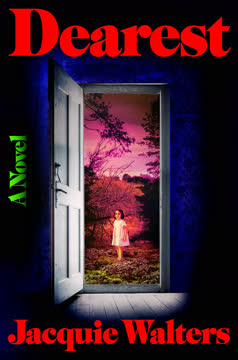
Dearest is a harrowing, deeply psychological exploration of motherhood, trauma, and the cyclical nature of harm. Jacquie Walters fuses domestic realism with supernatural horror to dramatize the ways in which the wounds of one generation are passed to the next—sometimes through silence, sometimes through violence, and sometimes through love twisted by fear. The novel's power lies in its refusal to offer easy answers: the line between love and harm, sanity and madness, victim and perpetrator, is always blurred. Through Flora's journey, Walters interrogates the myth of maternal instinct, the inadequacy of societal support for mothers, and the terror of losing oneself to forces—internal or external—beyond control. The supernatural elements serve not as mere scares, but as metaphors for the inescapable weight of generational pain. Ultimately, Dearest is a story of survival and the possibility of breaking the cycle: by naming the ghosts, by telling the truth, and by forging new connections in the aftermath of devastation. The novel's lesson is both cautionary and hopeful—healing is possible, but only through confrontation, sacrifice, and the courage to love fiercely in the face of fear.
Last updated:
Review Summary
Dearest by Jacquie Walters receives mixed reviews averaging 3.5 stars. Readers praise this horror debut for its creepy, fever-dream atmosphere exploring postpartum depression and toxic mother-daughter relationships. The audiobook, narrated by the author, earns particular acclaim. Flora, alone with her newborn while her husband is deployed, reaches out to her estranged mother for help, leading to supernatural occurrences. Many appreciate the body horror elements and unpredictable twists, though some find the ending rushed or convoluted. Common criticisms include graphic breastfeeding descriptions and a slow pace, with the postpartum psychosis trope feeling overused to some readers.