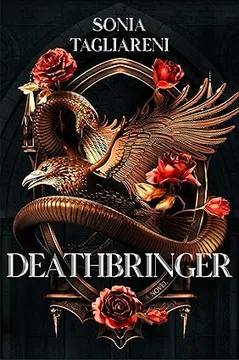


Plot Summary
Olivia Takes Her Place
At ten, Viola Corvi1 touches her grandmother Nan’s17 corpse and hears a warning that the dead’s final words carry danger. Her mother,20 Ava,20 asks which daughter1 inherited magic. Viola1 stays silent, but Olivia3 claims the gift despite having none. She knows Viola1 fears the magic blamed for their father’s death, so she takes Viola1’s place at Gorhail Academy, where mages are tested and registered.
Viola1 lets the lie stand, then waits years for her sister3 to come home. Olivia3’s choice protects Viola1 from the life she dreads, but it also begins a long separation: Olivia3 grows into Gorhail, while Viola1 builds her days around Nan’s17 garden, books, and the dead she cannot avoid hearing.
Olivia’s lie is both loving and costly. She assumes responsibility for Viola’s safety without asking whether the protection will become its own wound, while Viola mistakes that sacrifice for abandonment. Their bond is shaped by unequal knowledge: Olivia carries a secret for years, and Viola carries guilt for accepting the silence. The book’s central moral problem begins here, with protection becoming indistinguishable from control.
The Last Lake Riddle
In 1939, Viola1 works at Dearly Departed, a funeral home where touching corpses relieves the pressure of her whisperer magic. Olivia3 visits unexpectedly, solves a dead woman’s riddle, and tells Viola1 she is close to becoming High Magus. Viola1 asks her to leave Gorhail and join her in Osneau, but Olivia3 postpones the answer until Monday.
Before dawn the next day, a sheriff finds Olivia3’s body by Little Lake Albion. Her relic cuff is gone, and claw marks scar her arm. When Viola1 touches her, Olivia’s ghost3 gives one final warning about a serpent with a green eye. The authorities call the death an accident. Viola1 knows her sister3 feared water and begins to suspect murder.
The riddle turns grief into an obligation. Viola’s old magic, which she resented as an intrusion into other people’s mourning, becomes the only evidence that Olivia’s death was not what officials claim. The lost cuff also connects the sisters’ private deception to Gorhail’s public rules. Viola’s first response is self-accusation, a habit that will make her vulnerable to anyone willing to define her choices for her.
Victor in the Snow
At Gorhail, Sylas Archyr,2 an Aspieri who cannot die while wearing his ancestral Imortalis, hopes to join Firstline, the supernatural law-enforcement force. His friend Gryff Darro15 passes recruitment, but Sylas2 is held back for recklessness. Near the institute gates, they find Victor Carver,12 an Arcane Grand Magus, dead beneath a covering. His wounds resemble claws, not a poacher’s blade.
Overseer Rodric Paltro10 orders the body left untouched and discourages questions. Then he confronts Sylas2’s adopted brother,5 Beau Cardot:5 Victor12’s blood contains venom from Beau5’s aspier. Beau5 admits selling venom to Victor,12 though he did not know what Victor12 intended. The Grand House gives Sylas2 one day to prove Beau5 innocent or face execution.
Sylas’s failure and Victor’s body expose two versions of the same institutional logic. Firstline prizes a useful recruit over a grieving one, while the Grand House treats suspicious evidence as a verdict. Sylas’s anger is rooted in a genuine history of neglect, but it also blinds him to how quickly his own assumptions can become another form of accusation.
Brothers in the Woods
To clear Beau,5 Sylas2 bargains with reader Sierra Ducas13 for a way to cleanse Victor12’s blood. Sierra13 directs him to Fable Rowan,14 who demands three rare plants before dawn, forcing Sylas,2 Beau,5 and their sister Lyria4 to split up in the woods. Sylas2 reaches Junction Bridge, where their father was killed, and fights poachers before finding the needed plant.
A scream leads him to Lyria4 beside Beau,5 who has been fatally wounded. Sylas2 and his healer aspier, Railesza, cannot revive him. At nearly the same hour, Olivia3 is found dead at Albion’s lake. Sylas2 returns carrying his brother’s5 body and learns that three young people have been killed within two days, with their relics missing.
The failed rescue repeats Sylas’s deepest fear: that his impulsiveness costs the people he loves their lives. Yet the deaths are not simply consequences of personal mistakes. The killers exploit a system that sends young mages into danger and then calls their deaths routine. Sylas’s guilt is real, but it is also useful to those who would rather blame individuals than investigate a pattern.
Mara's Borrowed Body
After Olivia’s3 death, Viola1 retrieves Nan’s17 brass cuff and uses it to hear ghosts, hoping to learn who killed her sister.3 At Dearly Departed, she finds two unfamiliar corpses, one of them Victor’s,12 and hears a ghost direct her toward Gorhail’s catacombs. Her trusted boss, Mara,11 returns and attacks with claws and unnatural strength.
Viola1 flees through the forests, but Mara11 catches and wounds her. At Gorhail, Sylas2 is brought to the dying newcomer. Paltro10 makes him use Railesza, his healing aspier, to save her, and the healing creates a bond between them. Viola1 survives, but wakes in the House of Death with her sister’s3 cuff on her arm and no safe way back to Albion.
Mara’s transformation destroys the one refuge Viola had managed to build outside Gorhail. The funeral home once let her turn an unwanted ability into useful work; now its rooms and familiar rituals are part of the danger. Sylas’s forced bond introduces another contradiction: protection arrives through coercion, making safety feel less like rescue than a new obligation.
The School She Hated
Principal Grand Master Priya Parrish9 and House of Death overseer Aurelia Delaney7 tell Viola1 that the attacker may still be hunting her. Delaney7 offers Gorhail as protection, and Viola1 accepts only because she needs to investigate Olivia’s3 murder. Magister Lorne Lawton8 takes her on a tour, but his evasions about Olivia3 make Viola1 distrust him.
In Hollow Tree, she meets Sylas2 and his sister Lyria.4 Sylas2’s hostility toward Mortemagi clashes with Lyria4’s warmth, while both siblings grieve Beau.5 When Viola1 reveals she knows where Beau’s5 body is, Sylas2 asks her to help him contact his brother’s ghost.5 They agree to investigate the linked deaths, though neither trusts the other enough to call it an alliance.
Gorhail offers Viola knowledge and protection in the same breath, but neither is free. She enters by choice only in a narrow sense, under threat and with a purpose the institution can exploit. Sylas and Viola recognize each other’s grief before they can recognize each other’s character. Their tentative cooperation begins as a transaction, which makes every later act of trust hard-won.
The Door That Lied
Viola1 follows Sylas2 through the Poisoned Stairwell, a shifting passageway designed to confuse intruders and filled with dangerous ghosts. Its Doors of Desire show Sylas2 an illusion of Viola1 meeting a poacher. He throws a dagger at the apparent threat and wounds the real Viola1 instead. Railesza heals her, and Sylas2 recognizes that fear and prejudice made him mistake an image for evidence.
Viola1 still tells him where Beau’s5 body is, but she will not surrender all her information at once. When Victor’s ghost12 gives her a clue pointing to the catacombs, Viola1 and Sylas2 realize the dead may be guiding them toward more than a missing body. Their investigation now demands that Viola1 use the very magic she fears.
The illusion is a precise test of Sylas’s judgment. He has been taught to read Mortemagi as threats, so a false image confirms what he already expects to see. His mistake injures Viola physically and deepens her distrust. The stairwell makes the novel’s larger point concrete: perception is not neutral when fear has already chosen its answer.
Threads in the Catacombs
With Lyria4 guiding them, Viola1 and Sylas2 descend toward the catacombs to follow Victor’s12 message. The accumulated ghosts overwhelm Viola,1 trapping her in ghost paralysis until Lyria4 uses a killer aspier to stop her heart briefly, allowing Railesza to heal and reset it. Viola1 then learns to guide ghostly threads into an underground river instead of letting them drown her mind.
At the ancient burial chamber, Victor’s ghost12 directs her to his ancestral relic, a laurel. When Viola1 and the ghost12 touch it together, Victor12 becomes visible and solid enough to speak. Viola1 opens Beau’s5 family vault with Sylas,2 and Beau’s ghost5 appears too. The brothers can now help investigate, but neither has a living body.
Viola’s first real mastery comes through attention rather than force. She survives by sorting many voices into individual threads and finding a route for them, a skill that mirrors her work with riddles and grief. Lyria’s desperate intervention is both ingenious and dangerous. The scene makes the sisters’ and siblings’ different forms of care visible: Viola listens, Lyria acts, and Sylas learns to stay beside someone he cannot control.
Half a Life
Victor12 explains that he injected himself with Beau’s5 frost venom to slow his body’s decay, then asks Viola1 to reunite both ghosts12 with their bodies at Dearly Departed. Mara11 attacks again, while Victor12 uses illusion magic to expose her as a puppet controlled by a hidden puppeteer. Viola1 stitches Victor12 and Beau5 back into their bodies, and both brothers return to life.
Priya9 soon reveals the price: each resurrection has cut Viola’s1 lifespan in half, leaving her only a few years. Victor12 knew the danger and had not told her. He is imprisoned after the group helps cover their unauthorized magic with a false charge. Viola1 receives a Magus rank, but the title cannot restore the years she sacrificed.
The resurrection exposes a sharp difference between agency and consent. Viola chooses to help, but Victor withholds the cost, turning her compassion into a resource he can spend. Her survival is therefore not an uncomplicated triumph. The new rank recognizes her ability while the institution ignores the bodily price that ability exacted.
Fable's Last Secret
When Fable Rowan14 is found murdered and her silver dustmaker relic is missing, Sylas2 and Viola1 see the same pattern continuing. At the scene, Sylas2 admits he traded Olivia’s3 hidden status as a nonmagi to Sierra13 in exchange for help saving Beau.5 Viola1 feels that he exposed a secret that was not his to share, and she withdraws from him.
Victor12 later explains that Fable14 had threatened to reveal Olivia’s3 deception, then used a fabricated affair with Lorne8 to provoke her. The evidence suggests that Olivia3 left Gorhail in distress, though not that she intended to die. Firstline minimizes the killings as unrelated poacher attacks, so Viola1 and Sylas2 have reason to distrust both the official account and each other.
The rupture between Viola and Sylas is not a misunderstanding that affection can instantly repair. His disclosure may have been made under pressure, but it repeats the pattern of others deciding what Viola or Olivia should know. Fable’s false intimacy and real threat also show how gossip can become a weapon: private shame is used to move a person into physical danger.
The Lesson in Lifedrain
As Viola1 tries to learn enough magic to protect herself, Lorne8 teaches her about lifedrain and suggests she could recover her lost years by taking lifeblood from other people. He praises her potential and argues that desperate poachers would be acceptable victims. Viola1 refuses to kill for more time.
Lyria4 and Beau5 arrive before Lorne8 can press her further, and Lyria4’s research into healing magic gives the sisters a safer subject to pursue. Meanwhile, Sylas2 joins a Firstline unit in Gorhail Woods. A reader-whisperer poacher uses his memories to provoke him into disobeying orders, and the resulting battle kills most of the unit, including Wren, while Gryff15 is badly wounded. Sylas2 returns convinced he caused another catastrophe.
Lorne’s lesson gives Viola a practical choice between survival and reproducing the violence she fears. Sylas faces the inverse pressure: his institution calls killing a duty, even when it is driven by personal anger. Both are being offered power in exchange for moral surrender. Their different responses reveal that a magical capacity is not the same thing as a fixed ethical nature.
Scar in the Corvi Vault
In Riverview’s crypts, Viola1 opens the Corvi family vault and finds Scar, the long-missing aspier of the legendary Firstline officer known as the Deathbringer.18 Scar recognizes Viola’s1 blood and accepts her as an Aspieri, revealing that Viola1 inherited both poison and death magic. The Deathbringer,18 Alyria Parrish,18 was Viola’s mother.18
Nan17 had hidden Scar and concealed Viola’s1 parentage, leaving Viola1 to believe she was unwanted because she differed from Olivia.3 The revelation gives Viola1 a new family history, but not the comfort of an easy reunion. Her mother’s18 disappearance, Nan’s17 secrecy, and the relic thefts now converge around a legacy powerful enough to attract both Gorhail and its enemies.
The vault turns identity into an inheritance Viola never consented to receive. Scar does not simply add a second magical ability; she overturns the story Viola used to explain her childhood and her mother’s coldness. The revelation is emotionally double-edged: it offers evidence that Alyria acted to protect her, while exposing how secrecy can preserve a child physically and still leave her psychologically abandoned.
Ysenia's Confession
After Lyria4 is trapped in a silent, damaged state, Viola1 studies Olivia’s3 hidden letters and discovers that Olivia3 had planned to return to her and had taken The Founder’s Book of Relics. The letters show she removed pages describing dangerous relic rituals before giving the book to Delaney.7 Viola’s1 anchored ghost then guides her to Death Spire and reveals her identity: Ysenia Faro,6 founder of the House of Death.
Ysenia6 recounts her love for Rafael Grimm19 and how he turned his vision of magical freedom into murder. She explains that Sileas Ronin trapped Grimm’s19 soul in a relic, but someone released him decades ago. Viola1 now understands that the killings, the missing relics, and Delaney’s7 wish to restore her daughter are bound together.
The letters restore Olivia as a person with plans, friendships, and a future, rather than a sister defined by Viola’s loss. Ysenia’s testimony then complicates the official history of magic: Grimm’s language of freedom grew from genuine fear, but his answer was domination through sacrifice. The two revelations ask Viola to distinguish motive from consequence without excusing either.
Lyria's Empty Eyes
Grimm19 attacks Lyria4 in the Poisoned Stairwell after she gets too close to the conspiracy, leaving her alive but unable to respond. Beau5 takes her to St. Fabian’s Ward, while Sylas2 turns to Paltro10 for answers. A memory reader’s tea shows Sylas2 that his mother, Lilyana, once gave Ysenia’s cuff to Willow LaCroix, hoping to help their lifedrain research.
It also reveals that Rhea Corvi17 used the undead to kill Alyria,18 Viola’s mother,18 and Tobias, Viola’s father,1 while trying to control Viola’s1 bloodline. Sylas2 tells Viola1 what he saw. She cannot bear the news or surrender her cuff, and the two separate in anger just as Delaney7 moves to seize her.
The memory revelation makes family history an active political weapon rather than a private inheritance. Sylas trusts the record because readers are considered reliable, while Viola needs time to reconcile it with the grandmother who raised her. Neither response is irrational. Their fracture shows how evidence can be true and still arrive in a form that leaves no room for emotional processing.
The Magister's Real Face
After Delaney7 attacks Viola,1 Viola1 runs to Lorne8 for help, not knowing that he is connected to the danger. Sylas2 follows Ysenia’s6 warning to a hidden greenhouse, where he finds Viola1 bound and learns that Lorne8 is Grimm,19 inhabiting the Magister’s body. Sylas2 cuts her free, and they escape into the woods.
Grimm19 follows, summons the undead, and tries to turn Sylas2 against Viola1 by exploiting his prejudice and his family’s history. Viola1 counters by revealing that Delaney’s7 six stolen relics are meant to restore Willow, while Grimm19 intends to use the ritual to free himself. Delaney7 has mistaken his promise of help for loyalty, and Viola’s1 warning begins to break that alliance.
The reveal makes Lorne’s earlier conduct legible without making it harmless. His appeal to freedom is persuasive because Gorhail really does police magic, but he uses that grievance to justify killing and manipulation. Sylas’s rescue is a concrete change from their first encounter: he acts to protect Viola without waiting to know whether she will trust him afterward.
Six Relics, One Grave
Grimm19 pins Sylas2 down while Delaney7 gathers the six relics taken from murdered bloodlines. Viola1 tells Delaney7 that Grimm’s19 plan will kill both her and Willow, and Delaney7 hesitates. She nevertheless gives up the Corvi cuff, allowing Ysenia6 to possess Viola1 and interrupt the ritual. Grimm19 kills Delaney,7 then brings Willow back and kills her too, hoping to sever the tether that limits his power.
Ysenia6 takes Faro’s Cuff from Grimm19 and strips him of its protection, but the effort kills Viola.1 Sylas2 gives Viola1 the Imortalis, sacrificing his own immortality so Railesza can revive her. Grimm19 returns, wounds Sylas,2 and buries him alive before escaping. Viola1 survives, but the man she loves2 is gone.
The climax refuses a clean victory. Delaney’s grief has been converted into murder, but Grimm exploits it rather than honoring it; Ysenia’s intervention prevents his full return at the cost of Viola’s life, and Sylas answers that loss by surrendering the relic that kept him immortal. Love becomes action, but action cannot abolish consequence. Grimm remains free, and Viola inherits a world more dangerous than the one she entered.
The Cuff in the Cell
Two weeks later, Paltro10 has sent Viola1 to Riverview Prison on charges including murder, stolen relics, and unlawful magic. Priya9 and Viola’s maternal grandmother9 visit daily, while Beau5 and Gryff15 try to help her escape the coming sentence. During one visit, Priya9 urges Viola1 to follow a voice.
That night, Viola1 finds a hidden cuff attached to the fourth bar of her cell, engraved with a reminder of Sylas’s2 promise to her. She fastens it to her arm and feels her magic settle into place. Then a familiar presence offers to guide her toward the Underworld. Viola1 is still imprisoned, and Grimm19 is still at large, but the cuff gives her a direction beyond grief.
The cuff transforms imprisonment from a dead end into a threshold. Viola has lost Sylas, her freedom, and the certainty that Gorhail can protect anyone, yet she accepts the relic rather than treating magic as a curse to erase. The engraved message makes this choice relational as well as personal: Sylas’s absence remains painful, but his care becomes something she can carry into action.
Epilogue
In the Underworld, Sylas2 arrives with his body and is treated as an anomaly rather than an ordinary dead mage. He learns that Ysenia6 has returned and is trying to reach the God of Death, who has withdrawn from the world for centuries.
Ysenia6 insists on guiding Sylas2 back because Viola1 still needs him. Raiku, the killer aspier Sylas2 lost above, appears with him. Sylas2 agrees to follow Ysenia6 into the Underworld’s deeper passages, determined to return to Viola1 despite the danger and the uncertain rules governing the dead.
The epilogue reframes Sylas’s apparent death as an unfinished passage, not a reversal of its cost. He has entered a realm whose institutions are as procedural as those above, and Ysenia’s return suggests that even divine authority can become absent or inaccessible. Raiku’s presence gives Sylas a fragile link to his former life. His choice to proceed is not confidence that he will return, but a continuation of the commitment that made him give up immortality for Viola.
Analysis
Deathbringer makes magical institutions resemble the families they claim to regulate: both protect people through rules, and both can turn protection into secrecy, coercion, and inherited blame. Viola1’s childhood begins with an act of love that excludes her from the truth. Olivia3 takes her place at Gorhail, and Viola1 spends years reading that choice as abandonment. When the sisters3 are reunited, the old concealment has become dangerous because Viola1’s magic and the Corvi cuff are now objects of public interest. The murder mystery develops through competing forms of knowledge. Viola1 hears the dead but must interpret their riddles. Sylas2 relies on patrol reports and inherited histories, many of them distorted by the Houses. Readers can enter memories, yet even memory must be chosen and framed. The book therefore treats evidence as powerful but not self-explanatory. Sylas2’s certainty about Mortemagi and Viola1’s certainty about Nan17 both falter when new facts arrive, and neither character can simply exchange one belief for another without grief.
The romance grows from that pressure. Sylas2 first sees Viola1 as a danger and a means to reach Beau;5 Viola1 sees him as another person prepared to use her. Their intimacy becomes credible when each begins to act against their own inherited logic: he gives up immortality rather than letting her die, while she risks her life to restore the people he loves. Their bond does not erase the harms of secrecy or the cost of magic. It gives them a reason to choose responsibility without pretending that choice can undo the past. Grimm19’s argument for unrestricted magic gains force because DOTS is often cruel, self-protective, and willing to sacrifice its own people. Yet Grimm19 answers institutional control with private domination, turning a demand for freedom into permission to kill. The novel’s central distinction is not between regulated and unregulated power, but between power that recognizes other lives and power that treats them as material.
Review Summary
Reviews for Deathbringer are polarizing, averaging 3.68 stars. Fans praise its unique magic system, gothic atmosphere, found family dynamics, and emotional depth, with many eagerly anticipating the sequel. Critics frequently cite issues with pacing, heavy info-dumping, underdeveloped world-building, and an unconvincing insta-love romance. Many readers found the main characters—Viola and Sylas—frustrating and their relationship unearned. Several reviewers noted the book reads more YA than adult despite some spicy content. The ending, however, garnered widespread praise even from mixed reviewers.
Characters
Viola Corvi
Reluctant death whispererViola is a botanist and funeral-home worker who hears the last words of the dead through touch. She dislikes magic because it is entangled with the losses in her family, and she would rather build an ordinary future than enter Gorhail’s dangerous world. Her instinct is to take responsibility for other people’s pain, sometimes so completely that she neglects her own needs. Curiosity, loyalty, and a sharp eye for patterns gradually make her an investigator. Viola’s defining tension is not whether she can wield power, but whether she can choose what that power is for without letting guilt make the decision.
Sylas Archyr
Immortal Aspieri patrolmanSylas is a skilled Aspieri and a Secondline patrol leader, raised among the privileges and burdens of an old magical family. The Imortalis protects him from death, but it cannot protect him from grief or the guilt he carries over his father’s and brother’s5 losses. He values loyalty and action, yet his reflexive suspicion of Mortemagi often turns fear into prejudice. His fierce bond with his siblings and his friendship with Gryff15 show a more tender, dependable self beneath his volatility. Sylas’s deepest struggle is learning that responsibility does not mean controlling every outcome or condemning himself for every loss.
Olivia Corvi
Viola's absent sisterOlivia is Viola’s1 younger sister, a bright and socially confident young woman whose life at Gorhail becomes increasingly separate from home. She loves her family and wants to belong to the magical world, but she also carries a private burden that shapes her choices. Her warmth and daring make her easy to admire, while her secrecy leaves Viola1 struggling to understand what she wanted. Olivia is not simply the sister Viola1 remembers or the loss that drives the investigation. The letters and memories associated with her reveal a person trying to protect someone she loves while searching for a life of her own.
Lyria Archyr
Brilliant poison-house scholarLyria is Sylas’s2 younger sister, an exceptional student whose discipline and curiosity have brought her quickly through Gorhail’s ranks. She is emotionally perceptive, especially with people who feel isolated, and she treats research as a way to make loss useful. Her interest in her mother’s lifedrain theory draws her toward work other family members distrust. Lyria combines academic ambition with a generous instinct to mediate, but her loyalty can also make her willing to accept risks she has studied only in theory. She often sees possibilities before Sylas2 does, and her steady optimism gives the family a reason to keep looking ahead.
Beau Cardot
Adopted Archyr brotherBeau was adopted into the Archyr family after losing his parents, and he grew up as a brother to Sylas2 and Lyria4. He uses humor to keep grief from overwhelming a room, but his jokes do not mean he underestimates danger. His compassion can lead him into ethically risky choices, including selling aspier venom to help someone he believes needs it. Beau is resourceful, affectionate, and closely attuned to his siblings, often acting as the bridge between Sylas’s2 anger and Lyria’s4 hope. He wants to help people without being defined only by the tragedies that have shaped his family.
Ysenia Faro
Founder of death magicYsenia is one of Gorhail’s founders and the author of foundational texts on death magic. Her ideas shaped the rules, rituals, and ethical debates that Mortemagi still inherit. She is remembered as a formidable scholar whose work helped define the boundaries between communicating with the dead and manipulating death itself. The historical accounts around her are incomplete, and her legacy sits uneasily beside the institution that teaches her books while restricting her discipline. Ysenia’s presence connects Viola’s1 practical questions about magic to the older personal and political conflicts that Gorhail has tried to turn into settled history.
Aurelia Delaney
House of Death overseerDelaney leads the House of Death and carries considerable authority within Gorhail. She is disciplined, severe, and adept at presenting institutional decisions as inevitable formalities. Her respect for magical traditions coexists with a willingness to use rules as leverage, especially when confronting students who do not fit the expected order. Delaney’s concern for Gorhail’s reputation can make her seem protective, but it also places her at the center of the school’s tensions over safety, secrecy, and who deserves access to power. She is difficult to read because she rarely shows vulnerability in public.
Lorne Lawton
House of Death MagisterLorne is a young Magister assigned to teach and guide Viola1 when she arrives at Gorhail. He is sociable and attentive, with an instinct for making himself appear harmless, but his closeness to Olivia3 gives him a complicated place in Viola’s1 investigation. Lorne is ambitious and intellectually drawn to forbidden questions about death magic. He can be persuasive because he knows how to make dangerous ideas sound like practical solutions. His presence tests Viola’s1 ability to distinguish genuine care from attention that carries an agenda.
Priya Parrish
Principal Grand MasterPriya leads the House of Death and serves as Principal Grand Master of DOTS. She is politically powerful, controlled in public, and capable of bending procedure when she believes the ordinary process will cause greater harm. Priya recognizes the personal cost behind official decisions, though she also has to protect an institution that treats magic as both a resource and a threat. Her relationship to Gorhail’s history gives her reasons to care about certain students more deeply than she first admits. She balances compassion with strategic calculation, a combination that makes her difficult to fully trust.
Rodric Paltro
House of Poison overseerPaltro is the overseer of the House of Poison and guardian to Sylas2, Lyria4, and Beau5. He once served as a Firstline officer and remains devoted to the structures he believes keep mages alive. Paltro is protective but paternalistic, often making consequential decisions on behalf of younger people without telling them why. His affection for the Archyrs is genuine, yet he expects loyalty to the House to outrank private attachments. He embodies the uneasy space between family care and institutional authority.
Mara
Viola's funeral-home mentorMara is the director of Dearly Departed and the first adult in Albion to offer Viola1 steady work and friendship. She is practical, welcoming, and attentive to Viola’s1 need for a place outside her tense home. Their shared routines around the dead give Viola1 a sense of competence and belonging. Mara’s role matters because she represents the ordinary life Viola1 has tried to build: work, trust, and care expressed through repeated small acts.
Victor Carver
Arcane illusionist investigatorVictor is a gifted Arcane mage and student of illusions, clever enough to navigate dangerous secrets but not always candid about the risks he asks others to take. His concern for his mother shapes many of his choices, and his confidence in his own calculations can obscure the cost to other people. Victor’s friendship with Olivia3 connects him to the hidden history of her life at Gorhail. He is resourceful and perceptive, but his desperation sometimes makes him treat trust as something he can repair after the fact.
Sierra Ducas
Reader and family friendSierra is an Arkani reader whose magic allows her to access memories and secrets. She is close to Olivia3 and has long-standing ties to the Archyr family, particularly Lyria4. Sierra treats secrets as a form of exchange, a practice that makes her both useful and difficult to approach. Her work requires her to cross boundaries others cannot, and she understands the emotional cost of doing so. Beneath her caution is a strong sense of obligation to people she loves.
Fable Rowan
Dustmaker with a grudgeFable is an Arkani dustmaker from the Rowan family, known for her access to rare magical recipes and her sharp, self-protective instincts. She holds a long-standing resentment toward the Archyrs and is comfortable using private information as leverage. Her social relationships are tangled with rivalry and status, and she often chooses short-term advantage over loyalty. Fable’s presence shows how family grievances can persist inside an institution that claims to judge people by merit.
Gryff Darro
Sylas's closest field friendGryff is Sylas’s2 oldest friend and a capable Secondline patrol leader who values discipline and responsibility. He is steadier than Sylas2 on the field, but his loyalty does not make him passive; he challenges Sylas2 when recklessness places others at risk. Gryff has deep ties to the Archyr siblings and is particularly close to Lyria4. His reserve hides a fierce commitment to the people he serves beside, and his ambition is tied to changing the system from within.
Matilda Rhodes
Gorhail's deanRhodes is the dean of Gorhail and an accomplished Arkani inventor whose work supports the institute’s technology. She is formal, guarded, and highly concerned with keeping order. Her authority allows her to investigate students and set the school’s response to crises, but her instinct to preserve Gorhail’s public standing can conflict with honest inquiry. Rhodes represents an institution that may recognize individual brilliance while still protecting its own image.
Rhea Corvi
Former dean and matriarchRhea is Viola’s grandmother1 and a former dean of Gorhail, remembered for her formidable intellect and strict leadership. At home, she gave Viola1 books, stories, and the routines of a loving guardian. Her public and private selves do not always appear to match, and her influence persists through the library, relics, and rules she left behind. Rhea’s life raises questions about whether protecting a family can justify keeping the truth from it.
Alyria Parrish
Legendary Firstline officerAlyria is a celebrated Firstline officer known as the Deathbringer, whose record and disappearance continue to shape Gorhail’s culture. Students encounter her reputation through portraits, reports, and stories told by older mages. Her legacy represents both the glory and the cost of a life devoted to dangerous public service.
Rafael Grimm
Radical mage of historyGrimm is a powerful Mortemagi from the distant past whose writings and followers continue to influence Draterra. He argued for freedom to practice magic without the restrictions imposed by DOTS, but his methods and use of lifeblood made him a source of lasting fear. The official story of Grimm has been shaped by both political propaganda and genuine atrocities. His reputation is useful to purists who want tighter control, and to radicals who want to overturn it.
Ava Corvi
Viola and Olivia's motherAva is a nonmagi mother grieving a husband and trying to preserve her place in a family marked by magic. She is affectionate toward Olivia3 and more distant with Viola1, whose appearance and inheritance recall the family members she has lost. Her grief often emerges as criticism rather than comfort, leaving her daughters to interpret what she cannot say.
Plot Devices
The Corvi Cuff
A channel for death magicThe brass cuff is an ancient Mortemagi relic that focuses death magic. Without it, Viola1 hears the dead’s last words only through touch and suffers an escalating ring in her ears. Wearing it gives her access to ghosts and to more powerful forms of magic, but also exposes her to the voices concentrated in the Poisoned Stairwell and catacombs. Its history ties the Corvi family to the founders of Gorhail, while its value makes Viola1 a target for people seeking relics. The cuff therefore functions as both a tool and a claim on Viola’s1 body, inheritance, and future.
Living Aspiers
Relics that choose their wieldersAspiers are living serpentine relics bonded to Aspieri mages. Their abilities vary: some heal, others kill, and the rare Imortalis grants its wearer immortality. An Aspieri’s magic depends on these creatures, so losing an aspier is not like losing an ordinary tool. Bonds between mages can let them share magic and commit to putting one another’s lives first. The aspiers’ own choices often reveal loyalties before their human partners can admit them. This system anchors the story’s magic in relationships rather than abstract spellcasting.
The Dead's Last Words
Clues hidden in riddlesViola1 hears the final words of the dead when she touches their bodies. The words arrive as riddles, fragments, or apparently mundane requests, so she must interpret them before their meaning can help the living. Sharing a message can carry consequences, which makes Viola’s1 gift feel less like easy access to information than a responsibility she cannot set down. The mechanism drives the mystery forward through clues from Olivia3, Victor12, and other dead mages, while forcing Viola1 to decide when a message should be spoken and who deserves to hear it.
Founder Relics
A stolen set with ancient powerGorhail’s founder-era relics hold far more magic than ordinary heirlooms. The Imortalis, Faro’s Cuff, and the Arkani Coin are linked to the institute’s founding, while other heirlooms retain power through old bloodlines. Their disappearance gives the murders a pattern: killers target people whose relics can serve a larger purpose. The relics also expose the political fiction of magical Houses as separate and pure. Their histories cross family lines, and their power depends on cooperation as much as ownership.
Ghost Threads
A path between bodies and spiritsIn the catacombs, ghosts appear as threads of magic that can overwhelm an untrained whisperer. Viola1 learns to direct those threads into the Underiver, a current that carries the dead onward. A ghost can also be materialized through contact with an ancestral relic, allowing it to remain present despite conduits who might otherwise lead it away. The same thread magic can reconnect a ghost to its body, but the process exacts a terrible price from the Mortemagi who performs it. The device links the investigation’s clues to its central question: what may the living take from the dead, and at what cost?
Download PDF
Download EPUB
.epub digital book format is ideal for reading ebooks on phones, tablets, and e-readers.








