

Key Takeaways
Turn biblical promises into personal testimony, not empty repetition.
Speak what Scripture means. The devotional opens by reading Revelation 12:11 as a practical pattern: Christ’s sacrifice, God’s Word, and a believer’s testimony work together. Prince argues that repeating a religious phrase is less useful than knowing what Scripture says and applying it personally. His Passover image makes the point: Israelite families had to put the lamb’s blood on their doorways, rather than leave it in a basin.
Make the practice daily. Each entry pairs a short teaching with a prayer and a repeated declaration. The repetition is intended to make biblical claims available in moments of fear, temptation, or doubt. For Prince, speaking Scripture is not a charm; it is a deliberate act of faith and allegiance.
The method turns reading into rehearsal: a person recalls a belief, puts it into words, and connects it to a current concern. That can make an abstract conviction easier to access under stress. Its value depends on the distinction Prince draws between testimony and incantation. A declaration can shape attention and resolve, but saying something does not by itself establish that a desired outcome is guaranteed.
Let the cross define what you receive, not what you can earn.
A divinely planned exchange. The book presents Christ’s death as the basis for a broad exchange: Jesus bears human sin, punishment, shame, rejection, and death, while believers receive forgiveness, righteousness, acceptance, and life. Prince calls this atonement, the central support for God’s provision, rather than one benefit among many. Faith receives the gift; religious effort cannot purchase it.
Grace changes the starting point. The devotional repeatedly contrasts trusting Christ with trying to become acceptable through moral achievement. Its wooden-boat story illustrates redemption: a maker loses a boat, finds it for sale, and pays to reclaim what he originally made. The story expresses Prince’s claim that people belong to God by creation and, through Christ, are bought back.
The exchange framework gives the book a coherent center: spiritual growth begins with a received status, not a self-improvement project. It can also strengthen dignity by refusing to reduce a person to past failures. The important distinction is between accepting grace and treating every promised benefit as a material entitlement. The former addresses guilt and belonging; the latter requires interpretive care.
Confess honestly, and forgive without pretending the harm was harmless.
Bring the truth into view. Drawing on David’s account of hidden wrongdoing in Psalm 32, Prince argues that denial prolongs guilt, while confession opens the way to forgiveness. He connects forgiveness in two directions: receiving it from God and giving it to other people. In his reading, unresolved resentment obstructs spiritual freedom, and forgiveness is a decision rather than a feeling.
Name the limits clearly. The devotional asks readers to identify specific people they need to forgive and to stop concealing their own wrongs. That emphasis is strongest when it leads to honesty and release from bitterness. It should not be read as requiring a victim to excuse abuse, resume contact, or abandon necessary protection. Forgiveness and reconciliation are related ideas, but they are not identical.
The practical strength here is the move from vague moral advice to naming the injury and choosing a response. That can loosen the hold of rumination without denying that harm occurred. The theological claim that unforgiveness blocks divine forgiveness is more demanding than many readers will accept, and can burden people already harmed. A careful reading keeps accountability, boundaries, and safety alongside the call to release vengeance.
Accept righteousness as a gift, then let it alter your conduct.
A new standing, not a trophy. Prince explains justification as being acquitted and counted righteous through faith in Christ, rather than earning a favorable judgment by good behavior. He also insists that this gift should show up in actual life. In his account, righteousness is not merely a label: it becomes visible in relationships, choices, courage, and peace.
Let conduct follow grace. The devotional points to the biblical exchange in which Christ bears sin so believers can receive God’s righteousness. Prince links that assurance with confidence, joy, and freedom from condemnation. At the same time, he rejects using religious rules as a way to purchase acceptance. The order matters: trust the gift, then live in a manner consistent with it.
This distinction helps resolve a familiar tension: acceptance need not depend on flawless performance, yet it need not make behavior irrelevant. In ethical terms, identity can motivate change more steadily than shame does. The text sometimes speaks as if inward transformation follows from receiving righteousness almost automatically. In lived experience, habits and repair often require time, support, and repeated practice.
Train the new self through Scripture, choice, and repeated obedience.
Romans as a practical sequence. Prince calls Romans 6 a recipe for living out the gospel. Believers identify with Christ’s death and resurrection, regard the old sinful self as no longer their master, refuse to yield their bodies to destructive behavior, and offer their abilities to God. The point is not that temptation disappears, but that a person can respond differently.
Renew from within. The devotional describes the “old man” as the former pattern of life and the “new man” as a life shaped by God’s truth. Scripture nourishes that new life, while self-control and fellowship help translate belief into conduct. Prince recounts his struggle with depression: after interpreting it spiritually, he also describes years of rejecting habitual negative thoughts and replacing them with Scripture-based thinking.
The sequence combines belief with agency: a person is not asked merely to wait for change, but to practice a different response. That resembles skills training, where repetition makes a chosen action more available. The depression story should be handled with care. Spiritual meaning may support some people, but depression can also require clinical assessment and treatment; the book’s account is not a substitute for either.
Care for your body as sacred stewardship, without treating illness as blame.
The body belongs in the theology. Prince reads 1 Corinthians 6:19-20 to mean that redemption includes the body, which becomes a dwelling place for the Holy Spirit. He therefore urges reverence, self-discipline, and thoughtful choices about food, drink, sexuality, and physical care. Romans 12’s image of a living sacrifice becomes a call to place the whole person at God’s service.
Healing claims need context. The devotional also interprets Isaiah 53 as teaching that healing is provided through Christ’s suffering, and it lists possible spiritual or moral barriers to healing. These are Prince’s theological claims, not medical conclusions. The book’s central practical point, caring for the body rather than treating it as disposable, can stand apart from its stronger assertions about why illness occurs or whether healing should follow.
Seeing bodily care as stewardship can counter the idea that spiritual life concerns only private belief. It makes ordinary choices ethically meaningful. But illness is not reliable evidence of weak faith, hidden sin, or spiritual failure. Medical conditions have varied causes, and some do not resolve despite prayer. A humane application pairs spiritual practice with evidence-based care and avoids assigning blame to sick people.
Find your place in a church; maturity is built in relationship.
Belonging is part of growth. The devotional uses Paul’s image of the church as one body with many members. Different people have different functions, and no member can represent the whole body alone. Prince argues that believers need committed fellowship, mutual care, and a place to serve, rather than treating faith as a private project.
Acceptance has a social shape. The book connects adoption into God’s family with practical belonging among other Christians. Its images of an eye protected by the rest of the body and of stones smoothed by water and contact with one another show how weakness and friction can make a community more interdependent. The ideal is not uniformity: members retain distinct roles while supporting one another.
The community model makes spiritual formation reciprocal. Other people can offer correction, encouragement, and opportunities to contribute, while dependence on others challenges self-sufficiency. The same structure calls for safeguards: authority and discipline can nurture trust, but can also be misused. Healthy fellowship needs accountability, room for dissent, and protection for people harmed within religious communities.
Make worship a living connection to God, not religious performance.
The destination is relationship. Prince says Jesus is the way to the Father, and that access comes through the Holy Spirit. He distinguishes the spirit, which he describes as oriented toward God, from the soul, associated with thought and emotion, and the body, which relates to the physical world. Worship, in this framework, is the spirit’s communion with God, not simply music, ceremony, or strong feeling.
Let devotion produce fruit. The book treats worship as central to Christian life because it is meant to shape a person’s relationship with God and generate love, patience, kindness, and self-control. Its tabernacle imagery describes movement toward the innermost place of divine presence. The practical test is not how dramatic a service feels, but whether devotion becomes a more faithful way of living.
This account distinguishes worship from spectacle and links spiritual experience to character. That is a useful corrective wherever religious performance becomes a substitute for ethical change. The sharp separation between spirit, soul, and body is Prince’s interpretive framework, not a settled scientific map of human psychology. Readers can retain the practical distinction between contemplation, emotion, and bodily action without treating the categories as measurable anatomy.
Hold hope under pressure, but do not confuse faith with denial.
Endurance carries belief through delay. Prince draws on Abraham, who faced the apparent impossibility of having a child late in life yet continued trusting God’s promise. He emphasizes that Abraham did not ignore the facts; he believed God could act beyond what those facts seemed to allow. Hebrews adds endurance to faith: a promise may be claimed long before its fulfillment is visible.
Words matter, but they are not control. The devotional urges readers to keep their confession aligned with Scripture when circumstances become difficult. Prince also tells of Natan Sharansky, who repeatedly used a prayer during years of imprisonment and refused to make a false confession to secure release. The story illustrates steadiness under pressure, while the book extends that lesson to Christian testimony and hope.
The strongest version of this teaching is resilient hope that can acknowledge pain, uncertainty, and evidence without surrendering meaning. The danger lies in treating a declaration as a guarantee or interpreting an unmet request as a failure of faith. Persistence can sustain action and moral courage; it cannot ensure a specific outcome. Hope is most durable when it leaves room for grief and honest reassessment.
Practice gratitude before circumstances improve, and let it free your attention.
Thanksgiving is a deliberate practice. The book treats gratitude as both a response to God and a discipline of attention. Prince recalls complaining during his World War II service in the North African desert, then realizing that his constant dissatisfaction had crowded out awareness of God. He began giving thanks instead, drawing on Scripture’s instruction to be grateful in every circumstance.
Praise can cost something. The devotional distinguishes gratitude from pretending that life is easy. Praise may be offered precisely when circumstances are painful, as in David’s psalm while he was fleeing danger. Prince also connects worship with rest: people need to stop working long enough to receive, listen, and enjoy what has been made. Gratitude, in this account, loosens self-absorption and makes service more possible.
Gratitude can redirect attention from what is missing toward what remains available, and its vocal, repeated form can make the practice concrete. It should not be confused with forced positivity. Naming injustice, grief, and material need is compatible with thankfulness. Rest also matters because a spiritual practice that demands constant output can contradict its own message about dependence and renewal.
Turn faith outward: serve vulnerable neighbors and pray beyond your own circle.
Compassion tests devotion. Prince repeatedly points readers toward people easily neglected: widows, orphans, the poor, and the oppressed. He uses Job’s care for those without food, clothing, or protection as a picture of practical righteousness. Faith is not only inward assurance; it should become generosity, attention, and action on behalf of people who have little power.
Prayer reaches beyond personal needs. A distinctive emphasis in the devotional is prayer for Israel and Jerusalem. Prince reads biblical promises as a reason for Christians to show mercy to Jewish people, pray for Jerusalem, and offer comfort rather than contempt. That emphasis belongs to his particular theological interpretation. The wider principle is to let devotion widen concern beyond one’s own comfort and immediate community.
The book gives compassion a concrete test: who receives attention, resources, and protection? That shifts righteousness from private respectability toward responsibility for neighbors. Its Israel-centered teaching is a specific theological and political reading, so readers may distinguish care for Jewish people from agreement with every policy or interpretation of events. More broadly, prayer is most credible when it accompanies practical solidarity with people at risk.
Analysis
This devotional is less a single argument than a year-long training system. Its recurring pattern is compact: a biblical passage, an explanation, a prayer, and a declaration to repeat. Across the entries, the cross supplies the theological center. Prince interprets it as an exchange through which believers receive forgiveness, righteousness, acceptance, healing, and a new relationship with God. The daily practice is meant to move those claims from doctrine into speech, choice, worship, and communal life.
The book’s best organizing insight is that identity precedes effort. Readers are told they are accepted and redeemed, then asked to live as people whose bodies, words, time, and relationships belong to God. That sequence can counter shame and make moral change less dependent on self-condemnation. The author’s stories, from military service in the desert to pastoral encounters, give this theology a personal texture rather than leaving it as abstract doctrine.
The same confidence creates important interpretive tensions. Prince often treats scriptural promises as immediate rights and links confession with receiving their benefits. That can empower people who feel passive or spiritually disqualified, but it can also imply that adequate faith should produce healing, protection, or prosperity. When outcomes differ, readers may blame themselves or overlook medical, psychological, social, and material causes. The most responsible reading distinguishes spiritual hope from empirical guarantee, and prayer from treatment.
The book also combines personal devotion with strong claims about church authority, spiritual warfare, and Israel. These commitments shape its applications and are not neutral conclusions shared by all Christians. Readers can still use its central practices: read closely, name wrongdoing, seek reconciliation where safe, care for the body, cultivate gratitude, endure difficulty, and serve vulnerable people. Its lasting contribution is the insistence that belief should become a practiced way of life, while its strongest claims invite discernment rather than automatic assent.
Review Summary
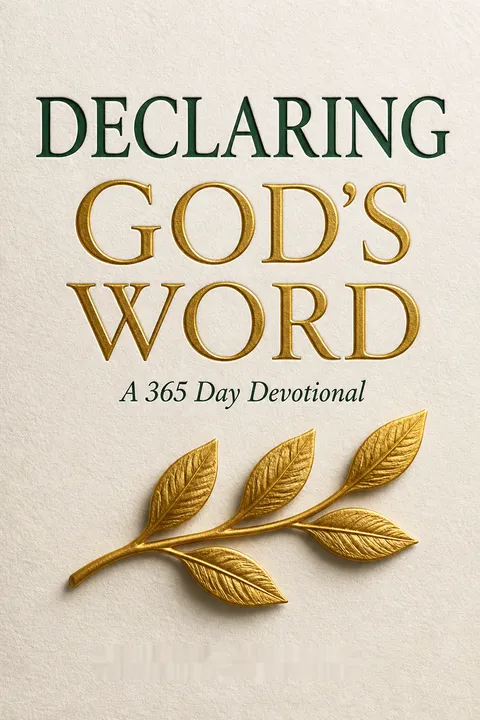
Declaring God's Word by Derek Prince is a highly-rated daily devotional book. Readers praise its ability to deepen their understanding of the Bible, God's nature, and Christian living. Many find it engaging and insightful, with some rereading it multiple times. The book's structured approach, focusing on a weekly Scripture verse for vocal confession, is appreciated. While some readers find certain parts challenging, requiring meditation, the overall sentiment is overwhelmingly positive, with many recommending it as an excellent year-long devotional.
People Also Read

Glossary
proclamation
spoken statement of faithA spoken declaration drawn from Scripture and applied personally to a situation. In the devotional, proclamation is a daily response to the reading, often repeated in prayer. Prince treats it as a way for believers to affirm what they understand God’s Word to say, rather than as a formula whose repetition alone produces an effect.
confession
agreement spoken aloudPrince uses confession in two connected senses: admitting sin honestly, and speaking in agreement with what Scripture says about Christ and the believer. In the second sense, confession is more than private belief. It is a continuing spoken expression of faith, which the devotional links to perseverance and Christian identity.
appropriating the blood
applying Christ’s sacrifice personallyA devotional term for receiving the benefits Prince associates with Jesus’ sacrificial death. He argues that the sacrifice must be personally applied through faith, obedience, and testimony, rather than treated as a distant historical event. The phrase refers to spiritual application, not a physical practice involving blood.
Romans Recipe
steps for resisting sinPrince’s practical name for his reading of Romans 6. The sequence begins with identifying with Christ’s death and resurrection, then treating the former sinful self as no longer the master, refusing to yield to sin, and offering one’s body and abilities to God. Its intended result is freedom from sin’s dominion.
identification with Christ
sharing Christ’s death and lifeThe theological idea that believers are united with Jesus in the significance of his death, burial, resurrection, and exaltation. Prince uses it to explain both release from the guilt and rule of sin and participation in new spiritual life. He presents this union as something received through faith and worked out in daily conduct.
old man
former sinful patternPrince’s term for the former human life shaped by sin and, in his interpretation, crucified with Christ. The old man is contrasted with a renewed life shaped by God’s truth. The concept does not mean that temptation or harmful habits vanish automatically; the devotional urges believers to resist their return and practice different choices.
new man
renewed life shaped by truthThe new man is Prince’s term for the life believers receive through Christ, characterized by righteousness and holiness. He connects its growth with Scripture, the Holy Spirit, and ongoing renewal. It describes a theological identity and direction for change, not a claim that every believer becomes morally flawless at once.
Spirit of adoption
assurance of belonging to GodPrince’s name for the Holy Spirit’s work of assuring believers that they belong to God as children and heirs. He contrasts this assurance with a fearful sense of religious bondage. The term emphasizes intimacy with God as Father and, in the devotional’s theology, confidence in a shared inheritance with Christ.
FAQ
What's Declaring God's Word: A 365-Day Devotional about?
- Daily Devotional Structure: The book is organized as a daily devotional, offering reflections, prayers, and scriptural declarations for each day of the year.
- Focus on Proclamation: It emphasizes the power of proclaiming God's Word as a tool for spiritual warfare and personal growth.
- Themes of Redemption: Key themes include redemption, healing, and understanding one's identity in Christ, highlighting the significance of Jesus' sacrifice.
Why should I read Declaring God's Word?
- Spiritual Growth: The devotional aims to deepen your understanding of Scripture and enhance your spiritual life through daily engagement.
- Practical Application: Each entry provides practical insights and declarations applicable to everyday situations, beneficial for both new and seasoned believers.
- Community of Believers: By reading, you join a global community of Christians declaring the same truths, creating a powerful corporate spiritual experience.
What are the key takeaways of Declaring God's Word?
- Power of Proclamation: Declaring God’s Word carries authority and can impact spiritual realities, reinforcing faith and authority as believers.
- Understanding Redemption: Readers gain a clearer understanding of redemption and how Jesus’ sacrifice affects their lives, emphasizing grace and forgiveness.
- Daily Affirmations: The practice of daily affirmations helps reinforce faith and encourages a positive mindset, fostering a habit of speaking God’s truth.
What are the best quotes from Declaring God's Word and what do they mean?
- Personal Testimony: “I testify to Satan personally as to what the Word says the blood of Jesus does for me.” This emphasizes the importance of personal testimony in spiritual warfare.
- Cleansing Power: “The blood of Jesus Christ, God’s Son, continually cleanses me from all sin.” This reassures readers of the ongoing cleansing power of Jesus’ blood.
- Exchange at the Cross: “Jesus was made sin with our sinfulness that we might be made righteous with His righteousness.” This encapsulates the core message of redemption through Jesus.
How does Declaring God's Word address spiritual warfare?
- Proclamation as a Weapon: Declaring God’s Word is taught as a form of spiritual warfare, equipping believers to confront and overcome challenges.
- Daily Declarations: Each entry includes proclamations to reinforce authority in Christ, empowering believers against spiritual attacks.
- Understanding Authority: Emphasizes the authority given through Christ, crucial for effective spiritual warfare, encouraging believers to recognize their position in Christ.
What is the significance of the blood of Jesus in Declaring God's Word?
- Cleansing Power: The blood of Jesus is highlighted for its cleansing power, offering forgiveness and purity to believers.
- Redemption and Healing: It is presented as the means for redemption and healing, emphasizing Jesus’ sacrifice for believers’ well-being.
- Spiritual Authority: The blood is portrayed as a source of spiritual authority, enabling believers to overcome Satan and his schemes.
How can I apply the teachings from Declaring God's Word in my daily life?
- Daily Proclamations: Incorporate daily proclamations into your prayer life to reinforce faith and authority.
- Prayer and Reflection: Use the provided prayers as a guide, reflecting on teachings to deepen your relationship with God.
- Community Engagement: Share teachings and proclamations with others, fostering community and mutual encouragement among believers.
What role does thanksgiving play in Declaring God's Word?
- Attitude of Gratitude: Emphasizes maintaining an attitude of thanksgiving, aligning believers with God’s will and opening doors for blessings.
- Reinforcing Faith: Giving thanks reinforces faith and acknowledges God’s provision, cultivating a positive mindset.
- Spiritual Connection: Thanksgiving enhances the believer’s relationship with God, encouraging gratitude for His goodness and faithfulness.
How does Declaring God's Word address the concept of identity in Christ?
- Understanding Identity: Teaches that believers’ identities are rooted in their relationship with God, crucial for overcoming inadequacy and insecurity.
- Acceptance and Worth: Reminds readers of their acceptance and value by God, contributing to a healthy self-image.
- Living Out Identity: Encourages believers to live out their identity in Christ, making choices that reflect their status as children of God.
What does Declaring God's Word say about the importance of confession?
- Confession as a Spiritual Tool: Declaring God’s Word enlists Jesus as our High Priest, indicating spiritual significance.
- Impact on Life's Direction: Words shape reality, as seen in Proverbs 18:21, emphasizing the power of the tongue.
- Encouragement to Speak Truth: Encourages alignment with God’s Word, reinforcing the idea that confession is crucial for spiritual authority.
How does Declaring God's Word explain the relationship between faith and hope?
- Faith as Present Reality: Defines faith as the substance of things hoped for, a tangible reality in the present.
- Hope as Future Expectation: Describes hope as a confident expectation of good, built upon the foundation of faith.
- Interdependence of Faith and Hope: Emphasizes that hope is essential for a vibrant Christian life, supporting faith.
What is the overall message of Declaring God's Word?
- Grace and Redemption: Highlights the transformative power of Jesus’ sacrifice, offering forgiveness, healing, and a new identity in Christ.
- Empowerment through Proclamation: Encourages declaring God’s Word to empower believers to live victoriously.
- Community and Unity: Promotes unity among believers, encouraging collective action in declaring God’s truths to advance His kingdom.
About the Author




Download PDF
Download EPUB
.epub digital book format is ideal for reading ebooks on phones, tablets, and e-readers.








