

Key Takeaways
Your conscious reasons often arrive after attraction, not before it.
The mind explains afterward. Trees argues that the body and unconscious mind often react before conscious thought catches up. In one study, men’s bodies responded to sexual images flashed too quickly for them to recognize. In another, men anticipating painful electric shocks later reported more attraction to a woman in the experiment. The feeling of desire may therefore be a label for reactions already underway, not a fully reasoned decision.
Reasons can distort preferences. When people were asked to explain their feelings about a new relationship, they sometimes changed their evaluation to fit the reasons they had just invented. Friends may be better than the self at spotting consistent patterns in someone’s behavior. The practical lesson is humility: notice what you feel, but do not assume your explanation of why is equally reliable.
What's striking is the distinction between experiencing a preference and explaining it. A person can be sincere about a reason and still be mistaken about its origin, which matters whenever a decision is emotionally charged. This is not a case for obeying every impulse. It is a case for treating intuition as useful evidence that deserves observation, rather than as either a command or a verdict. The studies described are largely controlled snapshots, so they illuminate possible influences more readily than they explain any one person's love life.
Biology shapes dating pressures, but it never excuses anyone's choices.
Pair bonds have a practical history. Drawing on evolutionary theory, Trees argues that human courtship reflects competing reproductive pressures. Men can produce many sperm; women have fewer reproductive opportunities and bear pregnancy's physical costs. Those differences may encourage different average mating strategies, but the book stresses that an evolutionary explanation is not a moral defense of deception or infidelity.
Children changed the equation. Human children depend on caregivers for years, giving pair bonding an advantage: a second parent could help protect and provide for a child. The arrangement is not a guarantee of fidelity or bliss. Trees contrasts it with the far more common polygamous mating systems found across many animal species, and describes monogamy as a social and biological compromise rather than an effortless instinct.
The useful contribution of this lens is that it makes dating conflict less mysterious without making it inevitable. A pressure shaped over many generations is not a personal destiny, and explaining a behavior does not absolve the person who chooses it. The distinction is essential because evolutionary accounts can slide too easily from average tendencies to rigid rules about what men and women are like. The book itself acknowledges individual variation, but readers should keep that qualification in view whenever a broad species-level story is applied to a particular couple.
Cut the candidate pile before comparison turns choice into paralysis.
More options can mean fewer decisions. In a supermarket study, 30 percent of shoppers who sampled six jams bought one, compared with only 3 percent offered twenty-four varieties. A larger display attracted attention but made choosing harder. Trees sees the same pattern in dating, especially online, where a seemingly endless supply of profiles invites constant comparison and makes any single choice feel premature.
Know when to stop browsing. The book borrows the terms maximizers and satisficers. Maximizers keep searching for the best possible option; satisficers stop when they find someone who meets a good-enough standard. Experiments on reversible choices also found that people often liked their selections less when they knew they could change them. That is not a reason to stay in a harmful relationship. It is a warning that endless alternatives can weaken satisfaction with a sound choice.
The jam example makes an abstract problem visible: choice has a decision cost, not just a benefit. Dating platforms amplify that cost by turning people into comparable profiles and making the next option feel perpetually available. A useful response is not to shrink one's standards, but to decide in advance which qualities matter and limit low-value browsing. There is a boundary to the analogy, however. A partner is not a product, and leaving an unsafe or deeply incompatible relationship is not mere consumer restlessness.
Treat dating as a market with blind spots, not a price tag.
Markets reveal patterns, not people. Economist Gary Becker modeled marriage as a process in which people tend to pair with others of roughly similar desirability. Trees uses this lens to explain why appearance, resources, commitment, education, and social status can affect opportunities, even when daters dislike admitting it. In one online-dating analysis cited in the book, shorter men faced a steep disadvantage in the responses they received, which income only partly offset.
Beware false precision. Dating sites marketed elaborate matching formulas, but the book notes that their systems had not passed the basic test of independent scientific review. Adding more traits can also make matches harder to define, not easier. Market thinking can expose pressures and trade-offs, but it cannot calculate a person's worth or reliably predict whether two people will build a good life together.
The market metaphor is powerful because it reveals that attraction is shaped by opportunity, status, and unequal bargaining power, not just private feeling. It is also dangerous when its descriptive categories become prescriptions. A statistical advantage is not a measure of human worth, and a dating profile cannot capture how people change in relationship. The strongest use of this lens is diagnostic: it helps explain why certain choices face friction. Its weakest use is optimization, when people start treating themselves or prospective partners as bundles of assets.
Use a search rule, then adjust to the feedback you receive.
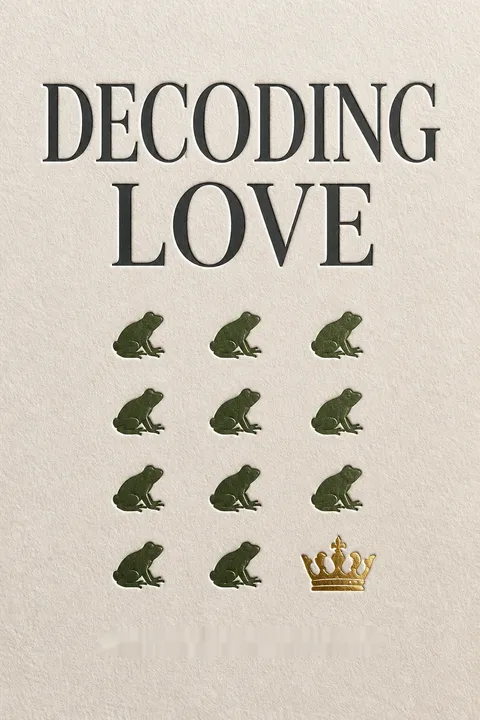
A dozen is a heuristic, not fate. Trees explains a mathematical mate-search model in which a person samples candidates, then chooses someone better than the early sample. The best stopping point changes with the goal: seeking the single top-ranked candidate takes a different strategy from seeking someone in a strong upper tier. The book's memorable summary is to search roughly a dozen candidates, rather than assume that the first spark must be destiny or that every possible partner must be considered.
Real dating includes mutual choice. The model assumes candidates are ranked and available for selection. Actual people can reject one another, and a person who aims far beyond the response they receive may remain single. Trees therefore treats the number as a starting point, not a guarantee: learn from experience, revise expectations, and do not confuse more searching with better judgment.
The model's value lies less in its headline number than in the discipline it encourages: a finite search, a clear threshold, and a willingness to update. That is a useful corrective to both fairy-tale impatience and endless browsing. But its assumptions are unusually clean. Real attraction is reciprocal, criteria change through experience, and people are not ranked on one shared scale. Used as a prompt for reflection, the rule can reduce aimless searching. Used as a literal quota, it risks making a complicated relationship decision look falsely mechanical.
Read the dating pool, not just your personal choices.
Small differences can compound. The book argues that dating prospects depend partly on population patterns, not only individual behavior. It cites a New York City ratio of about ninety men for every one hundred women, and discusses how age preferences, education, and income can affect who meets whom. A preference that seems minor in one encounter can shape opportunity when repeated across a large dating pool.
Averages are not verdicts. Trees describes how women pursuing education and careers could face a smaller pool of partners who met prevailing expectations about age, income, or education. He also notes that single women can be happier than cultural stereotypes suggest, while unmarried men face substantial health risks. These claims are drawn from the book's era and broad population averages. They can illuminate structural pressures, but they cannot predict an individual's prospects or prescribe a life path.
This perspective shifts part of the explanation away from individual failure and toward the structure of the available pool. That matters because people often interpret a difficult search as proof that something is wrong with them. The caution is equally important: demographic patterns depend on place, time, and which populations are counted. The book's gendered assumptions also leave many kinds of relationships outside its frame. Population data can describe constraints, but using those constraints to tell someone when to marry or which ambitions to sacrifice turns explanation into social pressure.
Let reciprocal signals guide escalation, not manipulative scripts.
Courtship is often nonverbal. Research described by Trees suggests that posture, facial expression, eye contact, and tone carry much of the meaning in early encounters. In one bar study, repeated eye contact paired with a smile led 60 percent of the men approached to start a conversation. Another observer found that women's cues initiated about two-thirds of bar encounters, challenging the stereotype that men always make the first move.
Look for a response. Researcher Timothy Perper described a common sequence: approach, talk, turn toward one another, touch, and synchronize movements. Each step depends on some sign of reciprocity. A touch that is not returned, or a clear shift away, is information to slow down or stop. The sequence is best used to notice mutual comfort, not as a checklist for persuading someone.
The emphasis on reciprocity gives nonverbal behavior an ethical use: it can help people notice whether an interaction is welcome, rather than provide a covert technique for overriding another person's signals. It also corrects a narrow picture of initiation by showing that an invitation can be subtle and still meaningful. The specific percentages come from particular settings, not universal laws. Cultural norms, personality, and safety concerns all change how signals are sent and interpreted, so direct communication remains important when cues are unclear.
Build dates around connection, not a manufactured spark.
Context colors attraction. Trees describes studies suggesting that people can mistake arousal from fear or excitement for attraction. In a bridge experiment, men crossing a frightening suspension bridge were eight times more likely to call an attractive woman afterward than men crossing a safer bridge. A woman interviewed by the author also realized that a beautiful restaurant, rather than the man she was with, had helped make an early date feel romantic.
Memory edits the evening. The peak-end rule describes how people often remember an experience through its most intense moment and its ending. In a medical study, patients given a less painful final stretch of a procedure remembered it more favorably. A date's mood and setting can therefore shape its remembered meaning. These effects are reasons to create an enjoyable encounter, not to engineer fear or mistake one thrilling evening for compatibility.
The insight is not that a restaurant or a rush of adrenaline makes attraction fake. It is that feelings are produced in context, and people often credit the person beside them for the whole emotional atmosphere. Designing a pleasant date is a form of care; deliberately provoking fear to manufacture desire is manipulation. The distinction preserves the practical value of the research while respecting agency. A memorable evening can open a door, but only ordinary interactions reveal whether the connection survives outside its lighting and soundtrack.
Make marriage durable through daily warmth, not conflict avoidance.
Disagreement is normal. In John Gottman's research, 69 percent of couples' recurring conflicts were never resolved. The key question was not whether partners argued, but how they treated each other while doing it. Gottman's four horsemen are criticism, defensiveness, contempt, and stonewalling. By contrast, a gentle opening and a complaint about a specific behavior leave more room for a useful response than an attack on someone's character.
Small interactions accumulate. Gottman found that stable couples maintained far more positive than negative exchanges, even during disagreements, and responded with interest to everyday bids for attention. Trees also warns that infatuation fades and that asking marriage to supply every form of happiness creates an impossible burden. Lasting partnership depends less on constant passion or perfect agreement than on repeated acts of attention, warmth, and repair.
The shift from avoiding conflict to managing its emotional climate is one of the book's most practical conclusions. It treats marriage as a repeated interaction, where small moments of attention can either build trust or deepen distance. The research offers patterns, not a guaranteed diagnostic formula, and a numerical ratio should not become another scorecard between partners. Its deeper point is more humane: disagreement need not threaten a relationship when both people can raise concerns without contempt and return to connection afterward.
Analysis
Decoding Love is strongest when it challenges the assumption that romantic feeling is a transparent guide to its own causes. Across perception, courtship, markets, and marriage, the book shows how context shapes attraction, how comparison can frustrate choice, and how private intentions meet social constraints. Its most coherent practical message is not that love can be engineered, but that people should be less certain about their explanations and more attentive to patterns of behavior.
The book's organizing contrast between science and a cultural romantic script is memorable, but it can overstate the authority of research. Many cited findings come from narrow experiments or population averages. A laboratory response, a dating-site statistic, or an evolutionary account does not automatically establish a universal rule for individuals. The book's most sensational claims about sex differences and biology should therefore be read as hypotheses or tendencies, not as instructions. Evolutionary explanations are especially vulnerable to sounding inevitable when they describe behavior that remains shaped by institutions, history, and choice.
There is also a tension between the book's critique of treating love as a market and its own market vocabulary. That language usefully exposes bargaining power and unequal opportunities, yet it can reproduce the very reduction it diagnoses by assigning people a score of desirability. The same tension appears in advice to women to delay sex, soften professional ambition, or account for age-related disadvantage. Such strategies may describe responses to social expectations, but they risk placing the burden of unfair norms on the people disadvantaged by them.
The most durable synthesis is therefore selective. Keep the skepticism about self-explanation, the warning against endless comparison, the attention to reciprocal signals, and the emphasis on everyday relationship behavior. Treat the evolutionary and demographic claims as context-dependent, especially because the book focuses on heterosexual dating in the United States as understood in 2009. Its science is most valuable as a tool for asking better questions, not as a machine for selecting a partner or predicting a marriage.
Review Summary
Decoding Love receives mixed reviews, with an average rating of 3.64 out of 5. Readers appreciate the book's comprehensive overview of scientific research on love and relationships, presented in an accessible style. However, some criticize its simplistic conclusions and lack of depth. Many find the evolutionary and biological perspectives interesting, while others feel it oversimplifies complex human emotions. The practical advice and insights into marriage are praised by some readers. Overall, opinions vary on the book's value and scientific credibility.
People Also Read


Glossary
romantic story line
Cultural script for loveTrees's term for the familiar cultural expectation that love should be spontaneous, passionate, centered on a uniquely destined partner, and sufficient to make a relationship happy. He argues that this script can raise expectations, make ordinary disappointment seem like proof of a wrong choice, and encourage people to restart the search rather than question their assumptions.
priming
A cue shifts a responseA psychological effect in which exposure to a stimulus influences a later response, often without conscious awareness. In the book, examples include a pleasant setting making a date feel more romantic and physical arousal being mistaken for attraction. Priming may shape a feeling, but it does not guarantee that attraction exists or that it will last.
framing
Context shapes interpretationThe way a question, choice, or experience is presented can alter how people interpret it. Trees describes a study in which changing the scale used to ask men about sexual behavior made similar behavior seem normal to one group and excessive to another. That altered how satisfied the men felt with their relationships.
parental investment
Resources spent raising offspringAn evolutionary concept used to explain how the costs of producing and raising offspring can influence mate choice and mating competition. The book applies it to the difference between men's abundant sperm and women's more limited reproductive opportunities, while also arguing that the prolonged dependence of human children encouraged pair bonding and parental cooperation.
Red Queen situation
Competition requires constant adaptationAn evolutionary condition in which one organism must keep adapting simply to maintain its position because competitors are adapting too. Trees applies the idea to mating: individuals may improve their appeal, but other people are competing and changing as well. The result is that dating remains difficult even when people become more sophisticated.
satisficers
People who stop at good enoughA term used in contrast with maximizers, who keep searching for the best possible option. Satisficers set a threshold for what they want and stop searching when a choice meets it. Trees argues that this approach can protect relationship satisfaction from endless comparisons, without requiring someone to accept a harmful or deeply unsuitable partnership.
twelve-bonk rule
A rough mate-search heuristicTrees's informal name for a mathematical search strategy suggesting that a limited sample of potential partners can provide useful information before someone chooses a candidate who exceeds that initial sample. The model depends on assumptions about rankings and available choices. It is a heuristic for avoiding both snap decisions and endless search, not a literal dating quota.
peak-end rule
Memory favors peak and endingA pattern in retrospective judgment in which people remember an experience disproportionately through its most intense moment and its ending, rather than through every moment equally. The book describes a medical procedure study where a less distressing final interval improved patients' memories of the experience, illustrating how the ending can color an overall evaluation.
four horsemen of the apocalypse
Four destructive conflict patternsJohn Gottman's label for criticism, defensiveness, contempt, and stonewalling, behaviors associated in his relationship research with marital distress. Criticism attacks a partner's character rather than naming a specific problem; defensiveness rejects responsibility; contempt communicates disrespect; and stonewalling withdraws from the exchange. The book presents these as warning patterns, not a stand-alone diagnosis.
Download PDF
Download EPUB
.epub digital book format is ideal for reading ebooks on phones, tablets, and e-readers.








