

Key Takeaways
Practice daily to make inner silence part of ordinary life
Freedom as a practice. The book asks who we are beneath the stream of thought, then offers meditation as a way to experience that quieter awareness directly. It calls this underlying awareness inner silence: a stable, peaceful presence beneath mental activity. The aim is not simply to feel calm for twenty minutes, but to make that stillness increasingly available during work, relationships, and difficulty.
Look beyond the session. The book describes progress as gradual: a person may become less reactive, more creative, and more compassionate, sometimes noticed by friends before by the meditator. It treats enlightenment as the fullest expression of this change. These are the book's spiritual claims, not promises that every practitioner will experience identical results.
What's compelling is the shift from meditation as a pleasant interval to meditation as training for everyday response. Psychology uses the term decentering for noticing thoughts and feelings without treating them as the whole self; that offers a useful, non-mystical way to understand some experiences described here. The book goes further, identifying awareness with a deeper and ultimately universal reality. That interpretation may be meaningful within its spiritual tradition, but a feeling of spacious awareness alone cannot establish a claim about the cosmos. The practical invitation remains clear even without accepting the metaphysics.
Return gently to the mantra whenever attention wanders
The core procedure. Deep meditation is the book's seated, mantra-based practice. Sit comfortably with eyes closed, take about a minute to settle, then think the sound mantra written as I AM. Use it for its sound, not its English meaning. Whenever you notice that attention has moved elsewhere, return to the mantra easily, without trying to suppress thoughts or hold perfect concentration.
Keep it effortless. The mantra may become indistinct or faint, and thoughts may appear alongside it. Neither requires correction. Continue favoring the mantra when you notice you have left it. The book recommends sessions of about twenty minutes, but the defining feature is not a special mental state. It is the gentle act of returning, repeated without strain.
This method makes attention training concrete: the task is not to prevent distraction, but to notice it and redirect attention without self-reproach. That resembles a useful principle in cognitive training, where repeated recovery of attention matters more than an unrealistic demand for uninterrupted focus. The method also avoids turning thoughts into enemies, which can make meditation less adversarial. Its particular sound mantra is a tradition-specific choice, not a universally necessary tool. The broader skill, noticing and returning, can still be understood independently of the book's spiritual explanation.
Treat meditation experiences as scenery, not proof of progress
Do not chase fireworks. The book describes thoughts, emotions, sensations, visions, and periods of stillness as symptoms of purification, its term for experiences it believes accompany inner change. Some sittings may feel ordinary; others may include bliss, unusual perceptions, or no clear sense of thought or mantra. None is a required milestone. When attention moves to an experience, the instruction is to return gently to the mantra rather than analyze or prolong it.
Measure what carries over. The book compares these changing inner events to scenery on a journey: interesting, perhaps, but not the destination. It recommends noticing how one feels after meditation and during daily activity. Greater calm or clarity matters more than a dramatic session, and an uneventful sitting can still count as practice.
The advice to avoid scoring meditation by peak experiences is a strong safeguard against spiritual performance, where unusual sensations can become status markers or objects of craving. It also resembles the distinction between an experience and an interpretation of that experience: seeing light or feeling bliss does not, by itself, prove a particular spiritual theory. The book's label of purification gives a coherent meaning to fluctuating sessions, but it is an explanatory model rather than a demonstrated diagnosis. Persistent or frightening symptoms deserve careful attention, not automatic reclassification as spiritual progress.
Make meditation comfortable, regular, and followed by real rest
Build a workable routine. The book's standard recommendation is about twenty minutes twice daily, ideally before the morning and evening meals and before activity. It advises against meditating immediately after eating or within an hour of bedtime, since digestion and sleep can be affected. A comfortable chair with back support is entirely acceptable; difficult postures are unnecessary. Regular activity between sessions helps carry the practice into daily life.
End slowly. After the mantra practice, sit quietly for a few minutes before opening the eyes and getting up. If a session feels especially intense or leaves the body unsettled, rest longer, sometimes lying down for five to ten minutes. Meditation is not a replacement for normal sleep. The book also says no special diet is required and that exercise can complement the practice.
The routine is notable for treating comfort and recovery as part of the method rather than signs of insufficient discipline. This accords with a general lesson from physical training: a repeatable dose and adequate recovery are often more useful than occasional extremes. The suggested times are practical defaults, not a dose validated for every body or schedule. A reader can preserve the underlying logic, a protected routine with a gradual transition back to activity, while adapting timing to health, caregiving, work, and other real constraints.
Reduce practice time when meditation unsettles daily life
Adjust the dose. Self-pacing is the book's term for changing meditation duration to maintain both progress and stability. If meditation is followed by persistent irritability, discomfort, or excessive energy, the recommendation is to reduce session length rather than push through. Once daily life feels steady again, increase in small steps, such as five minutes, and wait before making another increase. For most people the book expects little adjustment from its twenty-minute guideline, while acknowledging that some are more sensitive.
Choose steadiness over intensity. A regular, moderate schedule is preferred to erratic sessions that swing from a short sit to hours of practice and then none. The book compares spiritual practice to cultivating a plant: too much input can harm what measured care helps grow. The relevant signal is not ambition during meditation, but how well the practitioner functions afterward.
Self-pacing translates an abstract spiritual path into a form of load management: monitor the effects, reduce intensity when recovery is poor, and resume gradually. That is more responsible than treating distress as evidence that a practice must be working. It also makes the method responsive to individual differences instead of assuming one schedule fits everyone. A useful boundary is that meditation guidance is not a substitute for clinical assessment. Severe, persistent, or impairing changes in mood, sleep, or perception call for qualified support rather than simply further adjustments to practice.
When attention is overwhelmed, pause rather than force concentration
Respond to intensity simply. If a powerful stream of thoughts makes the mantra difficult to pick up, the book advises relaxing and observing the thoughts without engaging their content. When the stream eases, return to the mantra. If strong physical discomfort or emotion makes that return impossible, let attention rest naturally with the sensation, without judging or analyzing it, then resume when it subsides.
Make room for real life. A scratch, stretch, or change of posture is allowed; comfort matters more than maintaining an impressive pose. Noise and ordinary interruptions do not automatically end meditation. After an interruption, settle and continue if possible. An emergency is different: respond to it immediately, then rest when circumstances allow. The practice is meant to be gentle, not a reason to ignore bodily needs or urgent responsibilities.
The practical distinction is between ordinary distraction, which invites a gentle return, and overwhelming discomfort, which calls for easing off. That flexibility echoes trauma-informed approaches that prioritize choice and tolerable levels of attention rather than forcing exposure. It also guards against a common error in contemplative settings: interpreting every physical or emotional reaction through a single spiritual lens. The book presents many reactions as part of inner purification, but that label should not prevent someone from considering ordinary causes, changing posture, or seeking help when symptoms are unusual or persistent.
Carry inner stillness into activity instead of withdrawing from life
Notice the witness. The witness is the book's name for the quiet awareness that observes thoughts, feelings, sensations, and events without being identical to them. As meditation deepens, a practitioner may notice this observing quality during ordinary activity, not just while sitting. The book says this does not mean becoming numb or detached from other people. A person can still feel grief and pain while being less overwhelmed by them.
Practice in the world. Meditation is paired with active daily life, which the book sees as a way to stabilize inner silence. The claim is that steadier awareness can support wiser choices, greater resilience, and fuller participation, even under stress. The goal is not to avoid difficult circumstances, but to meet them with less reactivity and more capacity to respond.
The witness offers a memorable model of psychological distance: an emotion can be present without becoming the entirety of one's identity. That can support reflection and prevent an immediate feeling from dictating every action. The book's important counterweight is engagement; inner calm is not meant to excuse indifference or withdrawal. Still, observing experience is not enough by itself to guarantee wise conduct. Attention, empathy, practical judgment, and accountability remain necessary, especially when other people are affected by a decision.
Distinguish inner bliss from the changing energy called ecstasy
Two kinds of experience. The book describes bliss as the quiet happiness associated with inner silence. It uses prana, a traditional term for life-force, to explain energy experienced as moving through the body. Sensations such as heat, trembling, pleasure, or involuntary movement are presented as possible signs of that energy changing as practice continues. The author calls the pleasurable phase ecstasy, distinguishing it from the steadier quality of inner silence.
Do not force the process. The book proposes that these experiences may become less rough and more integrated over time, calling the blend of stable silence and refined energy ecstatic bliss. It also mentions other yoga practices as possible ways to support this development. For the meditation method itself, the instruction remains to return to the mantra, and to reduce practice if energy experiences become disruptive.
This distinction gives practitioners language for experiences that can feel very different: quiet well-being is not the same as bodily arousal or intense sensation. Such vocabulary can help people describe what happens without immediately treating every sensation as either alarming or sacred. The author's explanation through prana and nervous-system purification belongs to a spiritual model; it should not be mistaken for a measured neurological mechanism. Bodily responses can have many causes. Careful observation and sensible pacing preserve the usefulness of the account without requiring certainty about its metaphysics.
Let growing inner freedom widen your concern beyond yourself
Freedom turns outward. The book presents love and compassion as qualities that emerge as inner silence becomes more stable. Its reasoning is that a person who feels less ruled by fear and reactivity can attend more fully to other people. The author describes a further stage in which inner stillness and ecstatic energy combine, and calls the resulting outward movement divine love.
Service without a script. This is not framed as a fixed list of moral duties or a demand to abandon one's own life. Rather, the book expects people to express care through their ordinary inclinations and relationships. Its final picture of freedom is therefore not private serenity alone: a person becomes more capable of contributing to the wellbeing of others, while remaining engaged in everyday life.
The movement from self-regulation to care for others is a persuasive ethical direction: reduced reactivity can create more room for listening, patience, and useful action. It also gives contemplative practice a test beyond private sensation. Yet inner calm does not automatically make a person just, informed, or effective. Good intentions need to be joined to attention to consequences and to other people's actual needs. The book's vision is strongest when divine love is read not as a feeling to claim, but as a quality visible in how a person treats others.
Analysis
Deep Meditation is both an instruction manual and a spiritual argument. Its central practical move is unusually spare: sit comfortably, use a sound mantra, and return to it without force whenever attention wanders. Around that procedure, the book builds a developmental story. Repetition is said to cultivate inner silence, inner silence to become a stable witness during activity, and that stability to mature into ecstatic energy and outward compassion. The structure makes a long and uncertain process easier to navigate because it tells practitioners not to confuse vivid sessions with progress and gives them a way to adjust practice when daily life becomes unsettled.
The method's strongest feature is its built-in restraint. It rejects straining, posture-based heroics, experience chasing, and the assumption that more practice must be better. It also treats rest and ordinary activity as part of the discipline. Those choices make the instructions more usable than a simple exhortation to meditate harder. The book's recommendation of roughly twenty minutes twice daily is best read as a starting guideline, since the text itself allows individual adjustment.
The main interpretive caution concerns explanation. The book presents inner purification, prana, and the nervous system as parts of one account, then connects subjective experience to claims about universal consciousness and enlightenment. Readers can take the practice seriously without treating those explanations as established physiology or proof of metaphysical conclusions. The text offers experiential descriptions, but not independent evidence sufficient to settle those claims. This distinction matters most when unusual sensations or emotional distress appear: patience and self-pacing are useful, while medical or psychological concerns should not be dismissed as spiritual cleansing.
Taken on its own terms, the book's most durable insight is practical: meditation is not a performance of stillness. It is a repeated training in how to relate to thought, feeling, and sensation, with the value measured by what becomes possible in ordinary life. Its spiritual interpretation can enrich that practice for believers, while its instructions remain intelligible to readers who understand silence more psychologically than cosmically.
Review Summary
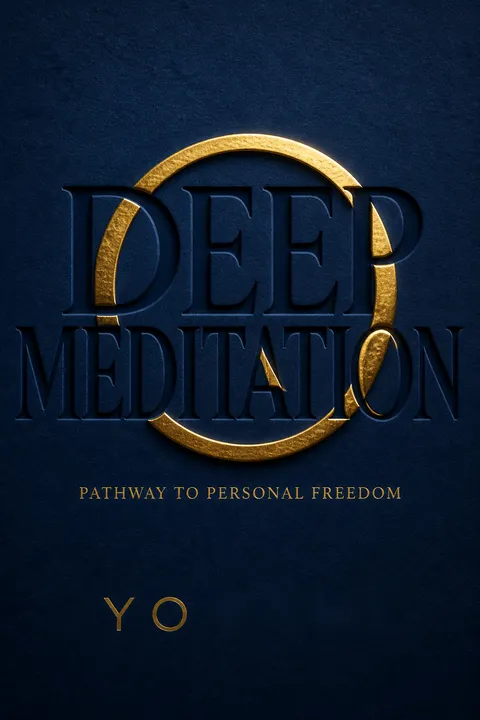
Deep Meditation - Pathway to Personal Freedom is widely praised for its simplicity and effectiveness. Readers appreciate the clear instructions for mantra meditation using "I AM". Many find it an excellent introduction for beginners, while also valuable for experienced practitioners. The book's concise nature and focus on consistency are highlighted. Some readers note its similarity to Transcendental Meditation. While a few find it too basic or repetitive, most reviewers recommend it as a practical guide to starting or refreshing a meditation practice, emphasizing its non-religious approach and potential for long-term benefits.
People Also Read







Glossary
Deep meditation
Mantra-based seated practiceThe specific practice taught in the book: sit comfortably with eyes closed, think a sound mantra easily, and return to it whenever attention wanders. The instruction is not to suppress thoughts or hold uninterrupted concentration. The author recommends regular sessions and treats their value as long-term cultivation of inner silence, rather than a search for special experiences.
Mantra
Sound used to settle attentionA sound or phrase used as the focus of the book's meditation practice. The book specifies I AM, used for its sound rather than its meaning. The meditator thinks it silently and gently, returning to it after noticing attention has moved elsewhere. It may become faint or indistinct without needing to be made clearer.
Inner silence
Awareness beneath thoughtThe book's term for a quiet, stable awareness experienced beneath ordinary mental activity. It is presented as more than temporary relaxation: daily meditation is said to make this stillness increasingly present during ordinary life. The author treats it as the foundation of personal freedom and, in a spiritual interpretation, as a glimpse of universal consciousness.
Symptoms of purification
Experiences accompanying inner releaseThe book's name for thoughts, emotions, physical sensations, unusual perceptions, and other experiences that it interprets as arising while inner obstructions are released through meditation. The term explains why sessions can vary widely. It is part of the author's spiritual model, not a clinical diagnosis or an independently established cause of any particular experience.
Self-pacing
Adjusting practice for stabilityThe practice of changing meditation duration to suit one's response and maintain stability in daily life. In the book's guidance, ongoing discomfort or excessive energy can indicate that a session is too long. The practitioner reduces duration, waits for steadiness, and then increases gradually if appropriate, rather than pushing harder to force progress.
The witness
Awareness observing experienceThe book's term for the quiet awareness that notices thoughts, emotions, bodily sensations, and events without being identical to them. It is described as becoming more apparent during daily activity as inner silence develops. The author presents the witness as an experiential aspect of the self, not as a separate being.
Prana
Traditional life-force energyA traditional yoga term the book uses for life-force associated with physical, mental, and emotional activity. The author links the movement of prana through the body to sensations that can arise during spiritual practice, including pleasurable or intense energy experiences. This is the book's explanatory framework and should not be confused with a directly measured physiological substance.
Ecstatic bliss
Bliss joined with energyThe book's term for a mature condition in which the quiet happiness associated with inner silence is said to blend with refined ecstatic energy. The author presents this as a gradual development, distinct from early, more intense energy sensations. It is part of the book's spiritual account of human transformation, not a standard clinical or scientific category.
About the Author
Other books by Yogani
Download PDF
Download EPUB
.epub digital book format is ideal for reading ebooks on phones, tablets, and e-readers.








