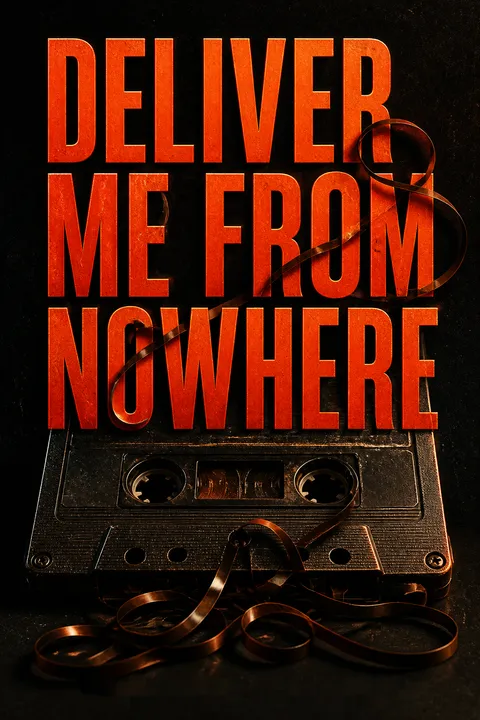


Key Takeaways
Nebraska's apparent detour made Springsteen's biggest album possible
A turn after triumph. After the E Street Band’s long River tour, Springsteen returned to a small rental house feeling isolated and uneasy about the success he had earned. He began writing and recording songs alone, without intending to make an album. The result, Nebraska, was almost the opposite of the polished, crowd-sized follow-up people expected after The River.
Two albums, one turning point. Springsteen also had songs that became Born in the U.S.A., but work on that record stalled while he struggled with Nebraska’s material. He later said the blockbuster might not have taken its eventual form without Nebraska coming first. This was not a calculated career maneuver. The quieter album gave him room to reject expectations before returning to them on his own terms.
What’s striking is that the career benefit came from a choice that was not made as career management. In innovation research, deliberate variation can protect a creator from repeating a successful formula, but variation is risky when audiences and institutions reward familiarity. Nebraska’s sequence with Born in the U.S.A. shows how a serious detour can enlarge an artist’s range, even when nobody can guarantee that the detour will pay off. The story should not be reduced to a clever strategy. Its force comes from the fact that Springsteen was answering a creative and personal need, not staging a contrast for the market.
Let the band remain a home, not a boundary around the work
A band needs breathing room. The River was Springsteen’s attempt to put the E Street Band’s live force onto a record. Its long sessions also exposed the strain of working closely together: guitarist Steven Van Zandt threatened to leave before Springsteen agreed to share production duties. The band’s closeness depended on negotiation, not on an effortless sense of unity.
Separation became part of the relationship. Nebraska was made alone, but it did not mean Springsteen had abandoned the band. He came to understand his work as involving both collaboration and solitude. That distinction let the E Street Band remain important without requiring every song, or every creative decision, to pass through the group.
The account offers a useful model of collaboration: lasting groups need both shared identity and room for individual work. Organizational psychology often distinguishes cohesion from conformity. A team can remain committed while allowing members to develop separate skills and projects. That flexibility may reduce resentment and keep collaboration creatively alive. Still, Springsteen’s freedom rested on unusual power as the bandleader and a successful solo artist. In less unequal groups, time apart and independent work require explicit agreements, or one person’s autonomy can become another person’s insecurity.
Use low-stakes tools to capture what polished studios can intimidate away
A bedroom became a working space. Springsteen asked his roadie, Mike Batlan, to set up a TEAC four-track cassette recorder so he could make rough references at home. In January 1982, sitting at the end of his bed with a guitar, he recorded most of the songs that became Nebraska. Batlan helped with the equipment but stayed out of the way. Springsteen was not trying to produce a finished record. He could sing without the pressure of a control room full of listeners.
The rough draft traveled far. Artists including Matt Berninger of the National later described Nebraska as proof that a major musician could make compelling work in a bedroom. The album became a touchstone for do-it-yourself recording, though it was not a planned manifesto for that movement.
The key advantage of the home setup was psychological as much as technical. A low-stakes environment can reduce self-monitoring, making it easier to explore ideas before they are judged. That resembles the distinction between practice and performance: the same person may behave differently once an audience is present. The cheap recorder did not create the songs or guarantee their quality. It changed the conditions under which Springsteen could hear and perform them. That distinction matters for anyone tempted to treat equipment, or informality itself, as a substitute for artistic judgment.
Preserve the accident when correction erases the song's human scale
The studio could not reproduce the room. Springsteen and the E Street Band tried recording several Nebraska songs at the Power Station, but the fuller arrangements did not work. Even versions with Springsteen alone felt wrong. He believed the songs’ characters and emotional atmosphere had disappeared in the process of making them cleaner and more professional.
Flaws became part of the sound. The demos were mixed through an Echoplex, an echo device, and a water-damaged Panasonic cassette player that ran slightly fast. Played on other machines, the music came back slower. When the team tried to transfer the tapes to professional formats, the results distorted. They ultimately had to master from the cassette itself, accepting a quieter record rather than losing its character.
The episode is a vivid example of a medium shaping its message. A recording is not simply a song stored in better or worse sound. Room acoustics, equipment, performance, and editing all direct attention and feeling. In that sense, the attempt to improve Nebraska changed what it communicated. Yet imperfection is not automatically meaningful. Distortion can be expressive, but it can also be merely distracting. The artistic test is whether a flaw helps preserve the work’s particular emotional logic, rather than whether it looks authentic from a distance.
Give damaged characters a voice without excusing their violence
The listener enters an unsettling mind. Springsteen’s song Nebraska began as a third-person account of murderer Charles Starkweather, whose 1958 killings had become a national television story. He changed the song into a first-person narration, placing the listener inside the killer’s voice. The move is disturbing because it invites attention to a perpetrator without turning his crimes into heroic acts.
Understanding is not acquittal. The album’s other stories also resist easy moral sorting. In Johnny 99, a laid-off worker commits murder; in Highway Patrolman, a lawman faces a conflict between duty and family loyalty. Springsteen drew on Flannery O’Connor’s fiction, where violent, flawed characters are rendered vividly without simple redemption. Nebraska asks what pressures and failures surround its people, not whether their actions should be forgiven.
This is a demanding form of narrative empathy. Psychology separates understanding another person’s perspective from approving of that person’s behavior, though public debate often collapses the two. A first-person criminal narrator can make that distinction harder, which is part of the song’s unsettling power. The approach also risks letting structural hardship overshadow personal responsibility. Nebraska keeps both in view: deprivation and alienation help explain the setting, but they do not erase the harm done to victims. That tension makes the songs more morally serious than a simple tale of either innocence or evil.
Borrow from forgotten traditions to loosen celebrity's grip
An artist can inherit rather than invent. Springsteen built songs around titles already used in country music, including Hank Williams’s A Mansion on the Hill and Dorsey Dixon’s Wreck on the Highway. In those traditions, titles, melodies, and themes circulated among working songwriters. Springsteen’s borrowing acknowledged a lineage of musicians whose work could outlast their fame.
Unlikely sources opened new territory. He also found a harsh, stripped-down musical mood in the duo Suicide, especially its confrontational recordings, and a cinematic world in Terrence Malick’s Badlands. Flannery O’Connor and Robert Frank’s photographs offered other ways to portray American lives without smoothing away their darkness. These sources did not supply a single recipe. They helped Springsteen step outside the familiar image of the stadium rock star.
The section challenges the romantic idea that originality means creating from nothing. Artists work inside traditions, whether they acknowledge them or not. Naming those inheritances can make influence more visible and widen the range of material that feels available. The country-song examples also complicate modern assumptions about ownership and authorship: older songwriting cultures often treated shared material differently from later ideals of the singular, confessional writer. Borrowing still has ethical limits. The value here lies not in taking without consequence, but in recognizing the older voices and social worlds carried into a new work.
Let listeners discover the record instead of explaining it for them
The album arrived without a guide. Springsteen gave no interviews to explain Nebraska and did not tour behind it. The cover used a bleak landscape photograph rather than a star portrait, and the label largely avoided selling it as a conventional hit record. Listeners had to encounter the songs without an official account of what they meant.
Silence still reached an audience. Nebraska became a critical success and reached number three on the album chart. Springsteen was interested in that reception, even if he was not focused on sales totals. He wanted listeners to have their own experience of the record rather than hear him define the characters and stories in advance.
Withholding an explanation can create interpretive space. Readers and listeners often form stronger connections when they are allowed to make meaning rather than being handed a definitive interpretation. Nebraska’s sparse presentation suited that invitation. But silence is not automatically generous: it can also leave an audience confused or excluded. Springsteen’s fame, a major label’s distribution, and the public’s prior interest in his work all helped the album reach listeners despite the absence of a tour. The method is powerful, but it depends on conditions that less established artists may not have.
Don't mistake powerful art for proof that its maker is well
The songs did not resolve the crisis. After finishing Nebraska, Springsteen drove west with a friend and, in a small town, felt painfully excluded from the ordinary community around him. He later described a severe depressive episode and began psychotherapy after manager Jon Landau urged him to seek professional help. The quiet record had been made during a period of intense self-examination, but its artistic force did not protect its maker from distress.
Cause is not simple. Springsteen connected the album to a return to childhood memories and acknowledged that he was struggling. At the same time, he was cautious about claiming that the songwriting directly caused the breakdown. The sequence matters, but it does not prove a single explanation.
The story resists the familiar myth that suffering is the price of important art. Creative work can give form to distress, but it is not a treatment plan, and a finished album is not evidence of recovery. The distinction matters because audiences often romanticize an artist’s pain once it has produced something moving. Springsteen’s account instead shows the value of a trusted person noticing danger and recommending professional care. The book also preserves uncertainty about causation, an important restraint when interpreting mental health from a life story.
Use anonymity to reclaim choice, not to renounce success forever
Disappearing was part of the work. Springsteen wanted to become nearly invisible while making Nebraska. He kept his face off the cover, avoided interviews, and sang stories that did not present him as their hero. That retreat came as success had widened the distance between him and the working-class places he wrote about.
Visibility could return on different terms. Springsteen had long seen Elvis Presley as proof that a person could remake himself, but Elvis’s troubled ending also warned that fame could estrange a person from his origins. Nebraska let Springsteen test what it meant to be unknown again. He then returned to the large-scale sound of Born in the U.S.A. The two records mark opposing answers to the same question, not a neat plan for managing his image.
The contrast shows that authenticity is not a fixed style. An artist can be sincere in a quiet, self-effacing work and in a commercially expansive one, provided neither is merely a mask imposed by expectation. The harder question is how much choice remains once success becomes an institution with employees, audiences, and financial stakes. Springsteen’s ability to retreat depended partly on a career that could survive the retreat. The episode is less a universal formula than a reminder that creative freedom sometimes requires establishing the right to move in more than one direction.
Analysis
Nebraska is both an album and a case study in how creative work acquires meaning through its conditions of production. The bedroom, inexpensive four-track recorder, damaged cassette player, and failed studio transfers are not incidental trivia. Together they shaped a sound that listeners interpret as intimate, unstable, and resistant to polish. The important distinction is that the equipment did not automatically make the music honest. Springsteen’s attention to the songs, and his decision to stop correcting them when correction erased their characters, turned technical limitation into artistic form.
That distinction complicates the usual mythology of authenticity. Nebraska can sound like a spontaneous document, yet it was still selected, mixed, mastered, packaged, and distributed by a major record company. Its roughness is real, but so is the craft involved in recognizing which accidents to preserve. Authenticity here is not the absence of mediation. It is a judgment about which forms of mediation remain faithful to a work’s emotional center.
The album’s cultural importance also depends on its contradictions. A famous musician makes a record that seems to reject fame, then releases it through the machinery that made his fame possible. A collection of songs about isolation reaches listeners partly because it arrives from an artist with an audience. A private set of demos becomes a public statement without having been designed as one. Those contradictions help explain why the album mattered to later home recordists without making Springsteen the sole origin of do-it-yourself music.
Finally, the book wisely keeps artistic achievement separate from mental health. Nebraska may illuminate Springsteen’s return to childhood and his struggle with belonging, but it does not offer a diagnosis or prove that the work caused his crisis. The strongest interpretation is therefore not that pain produced the album, but that artistic attention gave one part of a difficult period a lasting form. That form can be admired without romanticizing the suffering around it.
Review Summary
Deliver Me from Nowhere is highly praised for its in-depth exploration of Bruce Springsteen's Nebraska album. Readers appreciate Zanes' thorough research, engaging writing style, and insights into Springsteen's creative process. Many found the book captivating and difficult to put down. While some felt certain sections were repetitive, most reviewers consider it essential reading for Springsteen fans and music enthusiasts. The book offers a fascinating look at a pivotal moment in Springsteen's career and the cultural context surrounding Nebraska's creation and impact.
People Also Read



Glossary
TEAC Model 144 Portastudio
Four-track cassette recorderA portable cassette machine that allowed musicians to record and layer up to four tracks at home. Introduced shortly before Springsteen used it, the Model 144 was far less sophisticated than professional studio equipment. Its accessible format let him record the Nebraska demos in his bedroom, initially as references for later work with the band.
Echoplex
Tape-based echo deviceAn effects unit that creates echo by recording sound to tape and playing it back after a short delay. Springsteen sent the tracks of his home recordings through an Echoplex during mixdown, giving the voice, guitar, and other sounds a shared, vintage-style echo. The effect became part of Nebraska’s distinctive texture.
Slap echo
Brief, audible tape echoA short, distinct echo often associated with early rock and roll recordings. It adds a sense of space and repetition without creating a long reverberant tail. Springsteen connected this sound to the early Elvis Presley recordings and used it across the Nebraska demos, helping give the songs a feeling of distance and age.
FAQ
1. What is "Deliver Me from Nowhere" by Warren Zanes about?
- Deep dive into Nebraska: The book is an in-depth exploration of the making of Bruce Springsteen’s 1982 album "Nebraska," examining its origins, recording process, and cultural impact.
- Springsteen’s personal journey: It details Springsteen’s state of mind, creative struggles, and personal isolation during the period leading up to and following the album’s creation.
- Broader musical context: The book situates "Nebraska" within the context of Springsteen’s career, the evolution of American popular music, and the early 1980s cultural landscape.
- Interviews and analysis: Zanes incorporates interviews with Springsteen, his collaborators, and other musicians, blending biography, music criticism, and cultural history.
2. Why should I read "Deliver Me from Nowhere" by Warren Zanes?
- Unique artistic insight: The book offers a rare, behind-the-scenes look at one of Springsteen’s most enigmatic and influential albums, revealing the creative process of a major artist.
- Personal and universal themes: It explores universal themes of isolation, artistic risk, and the search for authenticity, making it relevant beyond just Springsteen fans.
- Rich storytelling: Zanes combines personal anecdotes, interviews, and cultural analysis, making the narrative engaging for readers interested in music, creativity, or American culture.
- Influence on modern music: The book demonstrates how "Nebraska" inspired generations of musicians and helped spark the home recording revolution.
3. What are the key takeaways from "Deliver Me from Nowhere" by Warren Zanes?
- Nebraska’s accidental creation: "Nebraska" was recorded as a set of home demos, never intended for release, but its rawness and honesty made it a landmark album.
- Artistic risk and vulnerability: Springsteen’s willingness to release such a stark, uncommercial record at the height of his fame is portrayed as an act of artistic bravery.
- Impact on music culture: The album’s lo-fi, DIY approach influenced countless artists and foreshadowed the rise of indie and home-recorded music.
- Personal transformation: The making of "Nebraska" coincided with a period of deep personal crisis for Springsteen, marking a turning point in his life and career.
4. How does Warren Zanes describe Bruce Springsteen’s mindset during the making of "Nebraska"?
- Post-tour isolation: After the massive success of "The River" and its tour, Springsteen felt hollow, isolated, and disconnected from his roots and band.
- On the edge of breakdown: Springsteen was approaching a depressive episode, which he later described as a “crash,” and was grappling with questions of identity and belonging.
- Creative solitude: He retreated to a small, sparsely furnished rental house, seeking solitude to write and record, which shaped the album’s intimate sound.
- Therapeutic songwriting: The process of writing "Nebraska" was a form of self-investigation, with Springsteen mining his childhood and personal trauma for material.
5. What makes "Nebraska" unique in Bruce Springsteen’s discography, according to "Deliver Me from Nowhere"?
- Home-recorded demos: Unlike his other albums, "Nebraska" was recorded on a TEAC 144 four-track cassette recorder in his bedroom, with minimal equipment and no band.
- Absence of production: There was no producer credit; the album’s “production” was simply the decision to release the demos as they were, with all their imperfections.
- Stark, raw sound: The album is characterized by its austere arrangements, lack of drums, and haunting, echo-laden vocals, standing in stark contrast to Springsteen’s previous band-driven records.
- Thematic darkness: "Nebraska" delves into themes of violence, alienation, and the American underbelly, with stories inspired by real-life events and literary influences.
6. How did the recording process for "Nebraska" unfold, as detailed in "Deliver Me from Nowhere"?
- DIY setup: Springsteen asked his roadie, Mike Batlan, to set up a simple home recording rig, resulting in the use of a TEAC 144 four-track and Shure SM57 microphones.
- One-take performances: Most of the album was recorded in a single night, with Springsteen sitting on the end of his bed, capturing songs quickly and without overthinking.
- Mixing quirks: The demos were mixed down to cassette using a water-damaged Panasonic boom box and processed through a Gibson Echoplex for slapback echo.
- Failed studio attempts: Attempts to re-record the songs with the E Street Band in a professional studio failed to capture the original spirit, leading to the decision to release the demos.
7. What were the main influences on "Nebraska," according to Warren Zanes and Bruce Springsteen?
- Literary and cinematic sources: Springsteen was inspired by Terrence Malick’s film "Badlands," Flannery O’Connor’s short stories, and Charles Laughton’s "The Night of the Hunter."
- Musical influences: The minimalist, haunting sound of the band Suicide, early rock and roll (Elvis, Johnny Cash), and country music (Hank Williams) shaped the album’s aesthetic.
- Personal history: Springsteen’s own childhood, family trauma, and feelings of alienation provided the emotional core for many of the songs.
- American landscape: The album reflects a fascination with the darker side of the American dream, small-town life, and the struggles of ordinary people.
8. How did "Nebraska" impact the music industry and future artists, as discussed in "Deliver Me from Nowhere"?
- Home recording revolution: The album’s success demonstrated that major artists could make powerful records outside of professional studios, paving the way for the rise of lo-fi and indie music.
- Influence on songwriters: Artists like Matt Berninger (The National), Steve Earle, Patty Griffin, and others cite "Nebraska" as a formative influence, inspiring them to pursue more personal, stripped-down approaches.
- Validation of imperfection: "Nebraska" showed that emotional authenticity and storytelling could outweigh technical perfection in music.
- Legacy of risk-taking: The album became a touchstone for musicians seeking to break from commercial expectations and embrace vulnerability.
9. What role did Springsteen’s personal life and psychological state play in the creation of "Nebraska," according to the book?
- Isolation and depression: Springsteen was living alone, recently out of a relationship, and experiencing a profound sense of loneliness and disconnection.
- Childhood trauma: The songs drew heavily on unresolved issues from his upbringing, including family loss and feelings of being an outsider.
- Therapeutic process: Writing and recording the album became a way for Springsteen to process his emotions, though it also led to a psychological crisis after the album’s completion.
- Turning point: The period marked the beginning of Springsteen’s journey into therapy and self-understanding, influencing his subsequent work and life.
10. How did the release and reception of "Nebraska" differ from Springsteen’s other albums, as described in "Deliver Me from Nowhere"?
- No promotion or tour: Springsteen did not tour or give interviews to promote the album, letting the music speak for itself.
- Critical acclaim: Despite its uncommercial nature, "Nebraska" was widely praised by critics for its bravery, storytelling, and emotional depth.
- Commercial risk: The album was a commercial gamble for both Springsteen and Columbia Records, lacking obvious singles and radio-friendly production.
- Enduring legacy: Over time, "Nebraska" has been recognized as a landmark album, influencing generations of musicians and listeners.
11. What are some of the most memorable quotes from "Deliver Me from Nowhere," and what do they reveal?
- Springsteen on Nebraska’s value: “Hundred years from now, what’s gonna play well? That record will play pretty well. It’ll always hold up.”
- On the recording process: “I had to lay myself way out there. I really had to do it. Mike was invisible in the room. It was like being there by myself.”
- On artistic risk: “Nebraska was an example of that in practice. One of the ways to keep the band together, to stay connected, was to disconnect.”
- On the album’s meaning: “Nebraska was about that American isolation: what happens to people when they’re alienated from their friends and their community and their government and their job.”
12. How does "Deliver Me from Nowhere" position "Nebraska" in the arc of Springsteen’s career and American music history?
- Pivotal transition: The book argues that "Nebraska" was the necessary precursor to "Born in the U.S.A.," allowing Springsteen to explore extremes of vulnerability before embracing mass success.
- Defining authenticity: "Nebraska" is portrayed as the most honest, unfiltered work of Springsteen’s career, setting a benchmark for artistic integrity.
- Cultural reflection: The album is seen as both a product of its time (Reagan-era America) and a timeless meditation on the American experience.
- Ongoing influence: "Deliver Me from Nowhere" concludes that "Nebraska" continues to inspire artists and listeners, remaining a touchstone for those seeking meaning in music’s imperfections and risks.
Download PDF
Download EPUB
.epub digital book format is ideal for reading ebooks on phones, tablets, and e-readers.








