

Plot Summary
Prologue
In 2016, Jude Farlow, a young clinician at Blackwood Institute, investigates the disappearance of a patient named Lucia. Beneath the hospital’s locked wards, he finds a bloodied torture room and Lucia restrained in a cell.
Professor Lazlo catches him, has guards electrocute him, and orders him transferred to the program run by Doctor Augustus. Jude’s attempt to expose the institute instead makes him its next captive, beginning the transformation that will later leave Brooklyn West with only a fellow prisoner to trust.
The prologue gives the institution a history before Brooklyn’s escape story begins. Jude enters Blackwood with the habits of a clinician: he notices a missing patient, follows evidence, and expects professional accountability. The basement reveals that the institution’s language of treatment conceals deliberate cruelty. His capture makes the danger personal, but the larger point is structural: a worker’s good intentions cannot protect him once the institution controls the records, the doors, and the meaning of what counts as illness. The scene also plants Lucia and Jude’s lost identity as later witnesses to Blackwood’s system.
A Grave in Scotland
After escaping Blackwood with the four men who love her, Brooklyn wakes in a remote Scottish cottage, having lost four months to captivity and exhaustion. On a lonely coast, she buries her journal beside a hole dug by hand and mourns Logan, the brother she imagined beside her in the basement.
She tells the others that their mother killed Logan when Brooklyn was ten, while their father helped conceal the crime. Hudson offers comfort, but Brooklyn cannot bear his touch until she chooses to lean into him. The burial gives her a first ritual of release, not recovery. She is alive, yet unsure whether the person who escaped is still Brooklyn West.
The opening makes survival feel materially real through the journal, the grave, and Brooklyn’s refusal of touch. Logan’s imagined presence helped her endure confinement, so burying the journal is not a neat severing from grief. It is an attempt to distinguish memory from the person she must become. Her confession about her mother establishes that the family wound predates Blackwood, while the men’s guilt shows how rescue cannot undo what happened during their separation. The scene begins the story with a difficult form of agency: Brooklyn decides what she can relinquish, and what remains too painful to name.
The Basement Comes Home
When the group demands to know what happened during Brooklyn’s imprisonment, Kade shows photographs of Blackwood’s Z Wing: shackles, isolation cells, and bloodied treatment rooms. Brooklyn admits that Augustus controlled her and another captive, Patient Seven, forcing them to carry out violent jobs under threat of punishment.
Seven wakes in the cottage, attacks Hudson, and stops only when Brooklyn pins him down and reminds him they escaped. She later hears Lucia and Patient Two describe years of torture, sensory deprivation, and electric shocks.
Lucia identifies Seven as the missing clinician Jude Farlow, Sadie’s brother, while confirming he became one of Augustus’s most lethal operatives. Their testimony turns private trauma into evidence of a wider program.
The photographs make Blackwood legible to the group, but testimony reveals the human cost those images cannot show. Brooklyn’s account complicates the men’s urge to treat her as a rescued victim: she was also coerced into causing harm. Seven’s attack makes the body’s learned violence visible before he can explain himself. Lucia and Two add a crucial distinction between survival strategies and free choices. The institution made obedience, dissociation, and brutality tools of continued existence. Their accounts connect individual wounds to a designed system, and shift the group’s problem from how to comfort Brooklyn to how to understand the machinery that shaped them all.
The Town Takes Her Back
Kade takes Brooklyn into a nearby Scottish town for supplies, offering her the ordinary choice of breakfast and a haircut. In a quiet car park, she initiates an intimate reunion with him, then panics when the town’s traffic and radio overwhelm her. At a cafe, Patient Eight takes over: Brooklyn attacks Kade with a broken table leg until he knocks her unconscious and uses her patient number to bring her back.
Unable to remember the episode, she hides from him. Eli joins her in the shower and later shaves her long hair into a short cut, giving her a visible change she chose herself. The small act of control cannot erase the violence, but it lets her face the mirror again.
The town exposes the gap between physical freedom and nervous-system safety. Brooklyn can choose breakfast and desire, yet ordinary noise sends her into a state where choice disappears. Kade’s decision to strike her is frightening, but it also prevents a public attack from escalating further. Her amnesia afterward leaves both of them carrying different versions of the event. The haircut then offers a modest counteraction: Eli changes her appearance at her request, not as an institutional procedure. The contrast matters. Brooklyn’s recovery cannot depend on claiming control over every symptom; it begins in moments where another person follows her choice rather than imposing one.
Bancroft Names Them
At the cottage, Seven learns that Sadie is his sister and that he disappeared from her life six years earlier. Their reunion is strained: he remembers fragments, while she struggles to reconcile her brother with the killer Augustus created.
Soon, Kade shows the group a national broadcast from Sir Joseph Bancroft, head of Incendia and Augustus’s father. Bancroft blames the Blackwood riot on the escapees, displays Brooklyn’s police photograph, and promises to recapture her. She sees Augustus and her mother in terrifying hallucinations, then bolts outside.
Seven brings her back by focusing her attention on him and the present. Phoenix later tells Brooklyn he loves her and accepts that she loves all four men, making their shared relationship a deliberate family rather than a secret to resolve.
Bancroft’s broadcast turns the group’s private flight into a public hunt and uses Brooklyn’s past arrest image to make his accusation appear settled. His power depends on framing: the institution’s survivors become dangerous criminals, while the institution itself claims to represent care. Sadie and Seven’s reunion offers a more intimate struggle over identity. She remembers the person he was, while he cannot simply return to that past. Phoenix’s declaration gives Brooklyn a different kind of naming. Instead of demanding a choice among the men, he affirms the family they have already made, countering Incendia’s effort to define them solely through diagnosis and criminality.
Sadie’s Double Life
With Incendia searching for them, the group agrees they cannot remain hidden in Scotland. Sadie admits that she entered Blackwood under an assumed identity while working for Sabre Security, a private firm investigating Incendia. Her colleague Theo arrives with forged documents and confirms that Sabre can help, though Sadie is due to infiltrate Harrowdean Manor under another name.
Brooklyn feels deceived, and an argument ends with Sadie leaving for her assignment before the family has repaired their trust. Kade also arranges a meeting with an anonymous online contact who claims to possess evidence. The plan is risky, but it gives the escapees a way to pursue proof instead of waiting for Bancroft to find them.
Sadie’s deception is not a simple betrayal. She concealed her mission because an investigation inside Blackwood required her to remain credible to the people running it, but that secrecy also deprived Brooklyn of a friendship she thought was genuine. The conflict exposes how surveillance and institutional danger corrode trust even among allies. Theo’s documents and Sabre’s resources offer a practical alternative to hiding, yet neither can guarantee safety. The group’s decision to pursue evidence marks a shift from escape as an end in itself to escape as the beginning of resistance. They now risk their fragile family for a future in which others might be believed.
Miss White’s Trap
In a London nightclub, the group meets Elizabeth White, Blackwood’s former warden, who claims to have records about Incendia. She recognizes Sadie’s alias and offers a drive, but her bargain is a trap: armed guards led by Blackwood officer Taggert arrive to seize Brooklyn and Seven. The family fights back.
Brooklyn kills Taggert, and Seven kills White after learning she knew about the Z Wing and did nothing. With the club no longer safe, Phoenix leads them to the rough neighborhood where he once ran a gang. His old associate Travis gives them shelter, but Phoenix’s return brings him face to face with the family he left behind. The group gains a refuge, while Incendia’s hunt becomes an open war.
White’s offer tests whether the group can separate useful information from a source’s moral claims. She has access to evidence, but she wants safety without accountability for her role in Blackwood. Her betrayal confirms that institutional knowledge can be valuable and still be weaponized. The violence that follows is also a point of no return: the fugitives are not merely evading capture; they are killing people sent to retrieve them. Phoenix’s return to his former neighborhood links that present danger to his past, bringing a new circle of family into the conflict and making the group’s shelter dependent on relationships he had tried to leave behind.
The Price of Home
Phoenix’s grandmother Pearl welcomes the group into her home, and his younger sister Charlie arrives eager to see him after two years apart. Before Phoenix can make amends, Bancroft’s forces descend by helicopter. In the confusion, Charlie is shot while trying to reach her brother.
Phoenix kills the gunman, but the rest of his family is seized or scattered; he is tranquilized and left behind, while Brooklyn and the others are taken into custody.
Brooklyn wakes at Sabre Security, where Hunter explains that the team intervened before Incendia could keep her. Phoenix, however, remains a hostage. The raid destroys the hope that a familiar neighborhood can hide them, and grief over Charlie becomes inseparable from the urgent need to get Phoenix back.
The raid makes the cost of the group’s pursuit painfully specific. Charlie is not a combatant or a symbol; she is a sister who came looking for Phoenix, and her death leaves him with the loss of a relationship he had only just regained. His prior gang life cannot protect her, and the family’s solidarity cannot prevent every bullet. The separation also creates unequal forms of captivity: some reach Sabre, while Phoenix remains with Incendia. Their rescue mission is therefore driven by love and guilt as much as strategy. Bancroft’s power works through the people the fugitives care about, turning intimacy into leverage.
Phoenix Becomes Bait
At Sabre, Brooklyn and her family learn that Phoenix is being tortured at an Incendia facility. A video shows Bancroft using freezing water and beatings to demand intelligence Phoenix does not have, then giving Brooklyn forty-eight hours to surrender herself and Seven. Hunter reveals that Professor Lazlo, presumed dead, is alive and may know where Phoenix is held.
Brooklyn insists she and Seven must meet him, despite Hunter’s objections. The two find Lazlo at an abandoned dockyard and overpower him. He claims Brooklyn’s mother helped him escape and says Incendia turned her into Patient Delta. Brooklyn nearly kills him in rage, but Seven stops her because Phoenix’s location matters more than revenge. They deliver Lazlo alive to Sabre.
Bancroft’s threat converts Phoenix’s body into a countdown, forcing the family to act before they can know whether their information is reliable. Lazlo’s reappearance links the early basement horror to the present campaign, while his claim about Melanie unsettles Brooklyn’s understanding of her own past. Seven’s intervention is significant because he restrains violence without denying its cause. He does not ask Brooklyn to forgive Lazlo; he asks her to keep him alive long enough to find Phoenix. The scene makes revenge and rescue competing imperatives, and shows the family beginning to choose actions that serve one another rather than only discharge pain.
Harrowdean’s Deadly Rescue
Sadie, working undercover at Harrowdean Manor, reaches Phoenix’s cell and helps him escape after he has lost several fingers and suffered severe beatings. Sabre’s team enters the institute during a public protest, but Incendia’s Patient Delta blocks the route out. She kills Sadie, stabs Phoenix, and forces the rescuers to confront Brooklyn’s mother, whom Lazlo’s claim identified as Melanie West.
Brooklyn recognizes her from childhood, but Melanie’s damaged mind offers only brief signs of recognition before the team pulls Brooklyn away. Seven refuses to let her die trying to reach her mother. Phoenix survives, though badly injured, and Sadie’s death leaves both Jude and Sabre grieving the woman who had risked everything to find the truth.
The rescue delivers the revelation about Melanie in its most painful form: not as a recovered parent, but as a living person altered by the same institution that shaped Brooklyn. Her faint recognition gives Brooklyn hope without giving her a relationship she can safely resume. Seven’s choice to drag Brooklyn away protects her, yet also repeats the helplessness of being separated from family by force. Sadie’s death binds the personal and political strands together. She was both Jude’s sister and Sabre’s operative, and her loss makes the investigation cost more than any eventual verdict can repay.
The Story Goes Public
At Sadie’s memorial, a man calling himself Patient Beta detonates a bomb, collapsing part of the church and injuring Kade, Hudson, and Brooklyn. Sabre’s agents survive, but the attack makes clear that Incendia can reach them even in public.
Once back at headquarters, Brooklyn and Eli face reporters outside and describe Blackwood’s abuse, illegal experiments, and the Z Wing. Eli, who has spent years unable to speak comfortably, stands beside her and answers the press. Their statement draws attention to the evidence.
Phoenix is later reunited with them, battered and grieving Charlie, and settles beside Eli and Brooklyn as he begins to recover. Speaking publicly brings them no immediate safety, but it makes silence harder for Incendia to enforce.
The bombing demonstrates that visibility can attract violence, yet the survivors choose visibility anyway. Brooklyn’s public account does not claim innocence; she names both her own crimes and the abuse that shaped them, refusing the false choice between victim and perpetrator. Eli’s presence gives the statement a second kind of force. His speech is not a polished performance but a risk taken in public, in the company of someone who makes him feel safe. Phoenix’s reunion follows that exposure, bringing the emotional stakes back from public spectacle to the damaged family that must live with what the cameras cannot repair.
Testimony and a Vanishing Prisoner
The group gives detailed testimony to the Serious Crimes Unit, while Lucia and Patient Two describe their years in the Z Wing. Hudson brings Teegan, Brooklyn’s former best friend, to a gathering; Teegan forgives Brooklyn for the injuries she caused during a breakdown, challenging Brooklyn’s belief that harm makes reconciliation impossible.
During a security alarm at Sabre, Brooklyn finds Lazlo dead in his cell, dismembered, with a blood-written message from the person who killed him. She glimpses Melanie across the street before her mother disappears again.
Soon the SCU declines to investigate Incendia and instead plans to prosecute the escapees. Bancroft sends Brooklyn an invitation to Blackwood’s reopening, promising that her mother is waiting there.
The testimonies turn memory into a public record, but Teegan’s forgiveness works on a more intimate scale. She does not deny the harm Brooklyn caused; she refuses to let that harm be the whole account of their friendship. The government’s rejection then exposes how evidence can be neutralized when institutions protect their own interests. Lazlo’s murder and Melanie’s escape transform the case from a legal struggle into a personal emergency, while the invitation to Blackwood makes the old institution a stage for Bancroft’s control. The survivors have told the truth, but truth alone has not yet made them safe.
Blackwood’s Final Choice
With the SCU preparing to take them, the group returns to Blackwood for Bancroft’s reopening gala, intending to expose him. He captures them, places the men in nooses, and gives Brooklyn a gun with a cruel choice: kill Patient Delta, her mother, or watch her loved ones die.
Melanie shows a brief return of recognition and signals that she accepts death. Brooklyn shoots her, believing she is ending her suffering. As Hunter, Enzo, Theo, and Seven’s intervention turns the gathering into a raid, Brooklyn attacks Bancroft and kills him.
The arriving agents arrest investors and officials as well as the surviving conspirators. The execution meant to make the escapees disappear instead puts Incendia’s crimes in front of witnesses and law enforcement.
Bancroft’s ultimatum reenacts the central coercion of Blackwood: he makes another person’s life depend on a choice Brooklyn is forced to make under threat. Her decision to shoot Melanie is not a clean victory. It is an act of mercy made inside an arrangement designed to make every option unbearable. Killing Bancroft immediately afterward refuses the role he assigned her as a controllable weapon. The arrests matter because violence finally occurs alongside public evidence and institutional witnesses, not in the hidden basement. The scene grants the survivors agency without pretending that agency can undo the losses on which it was built.
Recovery on Their Terms
After Bancroft’s defeat, the government drops the group’s charges, while Brooklyn and Jude accept a place at Clearview, the hospital where they can receive treatment rather than return to Incendia’s custody.
Their four partners remain outside, sending letters that record recovery, study, work, grief, and the patient effort to stay connected. Three years later, Brooklyn and Jude are discharged. Their friends meet them outside Clearview, and the six reunite around a restored camper van mapped for a trip across Europe.
Brooklyn leaves the hospital with no promise that the past has vanished. Instead, she leaves with treatment, chosen family, and a future she has agreed to enter. The ending answers her opening uncertainty with a decision to live, not a claim to be healed.
The resolution refuses the fantasy that surviving the final confrontation cures trauma. Brooklyn and Jude choose further care because freedom without stability would leave them vulnerable to the same patterns that kept them alive in captivity. The letters make separation an active relationship: the men keep building lives while addressing Brooklyn rather than waiting for her to return unchanged. The three-year leap gives recovery duration and setbacks beyond the scope of a single triumphant scene. Their reunion and road trip promise movement, not erasure. Brooklyn’s final agency is not the power to control every danger; it is the ability to choose help and imagine a life beyond the institution.
Epilogue
Three years after entering Clearview, Jude and Brooklyn are discharged. Their friends meet them outside, and the reunited family prepares to travel through Europe in a restored camper van. Eli speaks openly, Phoenix has begun helping young people facing addiction and gang violence, and the others have built work and lives beyond Blackwood.
Brooklyn still worries that Patient Eight might return, but Jude reminds her that their past is real without being the whole of their future. They leave Clearview together, carrying the history that shaped them without letting it decide every road ahead.
The epilogue makes the ending a departure rather than a cure. Clearview has not erased the patients’ histories; it has given Brooklyn and Jude time, treatment, and a route back to the people they love. The camper van matters because the group’s future is no longer organized around a locked institution or a single enemy. Their plans remain vulnerable, but they belong to them. Eli’s speech and Phoenix’s volunteer work show recovery extending beyond romance into participation in the wider world. Brooklyn’s question about Patient Eight recognizes that healing means integrating a survival self, not pretending that self never existed.
Analysis
The novel makes institutional abuse legible by showing how it recruits ordinary structures of authority. Blackwood has clinicians, wards, records, and procedures; its violence becomes more powerful because it can label resistance as illness and conceal punishment as care. Incendia extends that logic into public life. Bancroft’s media appearances, political ties, and control of the story show that reputations can function as barriers to accountability.
Brooklyn’s trauma is not treated as a puzzle with a single revelation that restores her. Patient Eight names a survival state produced under coercion, while Brooklyn’s later choices show the difficulty of living with actions she was forced to commit. The story’s insistence that she is both harmed and responsible avoids an easy division between innocence and guilt. Her companions face related struggles: Jude must decide whether he is only the weapon he became, Eli must risk being heard, and Phoenix must imagine a life beyond addiction and the street.
The romance’s shared structure also resists the demand that Brooklyn repair herself by selecting one attachment and discarding the others. The men make a family through mutual consent, though jealousy, possessiveness, and unequal histories remain real conflicts rather than idealized away. Their love supports survival, but it cannot replace treatment, testimony, or personal agency.
Ultimately, justice arrives through collective witness rather than private revenge alone. Brooklyn’s violence remains part of the ending, but the fall of Incendia depends on evidence, public attention, and people willing to risk their positions. Recovery then requires another choice: Brooklyn and Jude accept care and separation from their partners for a time, not because love has failed, but because living will demand work beyond the final battle.
Review Summary
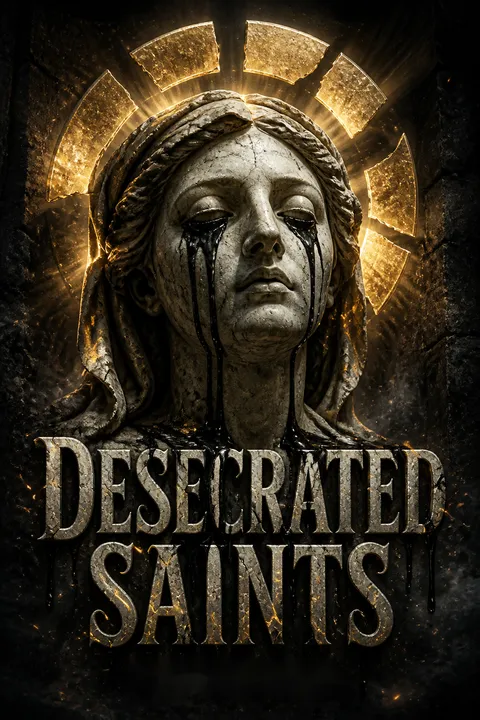
Desecrated Saints concludes a dark romance trilogy featuring Brooklyn and her group escaping the Blackwood Institute. Readers praised the intense plot, complex characters, and emotional depth, particularly appreciating the mental health representation and character growth. The addition of Seven/Jude to the reverse harem dynamic received strong reactions. While some found pacing issues and excessive spice, most lauded the anxiety-inducing storyline, powerful conclusion, and realistic healing journey. The brutal violence and heavy triggers aren't for everyone, but fans considered it masterfully written with perfect character arcs.
People Also Read







Characters
Brooklyn West
The fractured centerBrooklyn is the survivor around whom the novel’s tangled family and conspiracy revolve. Sharp, funny, and quick to violence, she has learned to treat dependence as a danger and self-punishment as a form of control. Blackwood’s conditioning leaves her with memory gaps, hallucinations, and a violent alternate identity she calls Patient Eight. Her attachment to Kade, Hudson, Phoenix, and Eli is intense, but she fears that love only gives others more ways to be hurt. She is also fiercely protective of other patients, including the people who remind her of the child she once was. Her central conflict is not whether she is good or bad, but whether she can acknowledge what she has done without surrendering her right to live.
Jude Farlow / Seven
The weapon who remembersJude is a former clinician whose captivity under Augustus strips away his name and turns him into Patient Seven. As Seven, he is watchful, ruthless, and frighteningly capable of violence. His bond with Brooklyn begins in the darkness of their shared imprisonment, where he keeps her alive through conversation and attention. Outside Blackwood, he has to contend with the difference between being useful as a weapon and being wanted as a person. He distrusts ordinary life and expects rejection, especially from the sister who remembers him as someone else. Beneath his threats and possessiveness is a man trying to recover enough of himself to choose what he will do next.
Kade Knight
The careful strategistKade is practical, observant, and inclined to turn fear into lists, plans, and evidence. He organizes supplies, studies Incendia’s records, and repeatedly tries to create structure for a family whose lives have become dangerously unpredictable. Brooklyn’s return exposes how helpless he feels about the damage done while she was gone, even as his steadiness gives her a point of contact with ordinary life. His love for her is part tenderness, part fierce insistence that she not disappear into her own shame. Kade also carries the burden of his family’s ties to power and money. Control helps him protect others, but it cannot guarantee the safety he wants to provide.
Hudson Knight
The guarded protectorHudson is Kade’s brother, a physically formidable man whose temper and possessiveness often conceal fear of losing the people he loves. His history with Brooklyn is marked by abandonment, harm, and a complicated intimacy that neither can simply set aside. He is quick to fight and slow to admit vulnerability, but he also notices when she needs space and when she needs someone to stay. His loyalty extends to the whole group, even as jealousy makes accepting Seven difficult. Hudson’s roughness is not presented as harmless: it can wound, and the people around him challenge his entitlement. His desire to protect becomes meaningful only when he listens as well as acts.
Phoenix Kent
The restless loyalistPhoenix brings humor, impulsiveness, and a volatile history with drugs and street crime into the group. His apparent lightness can hide depression and a deep fear that the people he loves will decide he is too damaged to keep. He is devoted to Brooklyn and Eli, and his understanding of their shared relationship grows into an open commitment rather than a demand for exclusivity. His former gang connections offer a practical refuge, but they also reconnect him with obligations and family he left behind. Phoenix wants a life beyond addiction and violence, though he knows that desire does not erase what he has done or the grief he carries.
Eli Woods
The quiet witnessEli is an observant, deeply sensitive man whose long history of trauma has made speech and ordinary public life difficult. He communicates through attention, touch, and small acts of care, especially with Brooklyn and Phoenix. His silence should not be mistaken for passivity: when someone he loves is threatened, his devotion becomes forceful. Eli’s scars and self-harm reflect how pain has served as a way to manage sensations he cannot otherwise contain. He is wary of crowds and unfamiliar choices, but he keeps trying to meet the world on his own terms. His presence gives the group a quieter form of courage, one based on staying rather than conquering.
Sadie Farlow / Alyssa
The hidden investigatorSadie is Jude’s sister and a Sabre operative who enters Blackwood under an assumed identity to learn what happened to him and the other patients. She is resourceful, disciplined, and willing to take risks that she cannot fully explain to the people around her. Her affection for Jude is complicated by the gap between the brother she remembers and the man shaped by captivity. She also tries to help Brooklyn, though the secrets required by her work strain that friendship. Sadie’s divided loyalties reflect the danger of investigating a powerful institution from inside its walls.
Sir Joseph Bancroft
Incendia’s polished faceBancroft leads Incendia and presents himself to the public as a benefactor devoted to mental health care. He understands that reputation, political influence, and carefully staged appearances can shield private cruelty. His response to the Blackwood escape is to frame the patients as monsters and use their loved ones as leverage. He values people according to their usefulness to the corporation, including the experimental subjects his organization has damaged. Bancroft’s calm public manner makes his private ruthlessness more chilling: he does not see his choices as an aberration, but as the ordinary exercise of power.
Professor Lazlo
The program’s architectLazlo is a senior Blackwood clinician who treats patients as material for experimentation rather than people with rights. He develops the Z Wing program and helps Augustus turn coercion into a method of control. His interest in science serves as a respectable cover for cruelty, and he is skilled at using patients’ memories and fears against them. Lazlo sees his work as a legacy and responds to resistance with manipulation rather than remorse. His role connects Blackwood’s everyday clinical authority to Incendia’s broader machinery.
Hunter Rodriguez
Sabre’s hard negotiatorHunter directs Sabre Security and is accustomed to taking responsibility for dangerous investigations. He is controlled, strategic, and protective of his team, though his focus on securing evidence can make him underestimate the personal cost borne by those providing it. His relationship with Sadie is both professional and intimate, creating a conflict between the case and the people at risk. Hunter wants to bring Incendia down through a process that can withstand scrutiny, but he knows that law and justice do not always point in the same direction.
Enzo
Sabre’s protective forceEnzo is Hunter’s second-in-command, an imposing operative whose size and bluntness make him a natural protector. Beneath the intimidating exterior, he is warm, loyal, and unusually willing to take vulnerable people into his care. He helps the escapees survive Sabre’s dangerous investigation and treats their safety as a personal responsibility. His strength is practical, but his compassion makes him vulnerable to the losses the case brings.
Theo
Sabre’s nervous technicianTheo is Sabre’s gifted technology specialist, responsible for surveillance, encryption, and the digital work that helps expose Incendia. Socially anxious and awkward, he is more comfortable behind a screen than in the field. His closeness to Sadie gives his technical work emotional stakes, while his grief affects the whole team. Theo’s skill helps turn hidden records into public evidence.
Lucia Killmore
The surviving witnessLucia entered Blackwood as a patient and was drawn into Lazlo’s experimental program. She learned compliance as a way to reduce punishment, but she also found the courage to preserve her bond with Patient Two. Her memories help the escapees understand how long the Z Wing operated and how its methods changed over time. Lucia is cautious, but not voiceless; she can identify what happened without pretending that recounting it is easy.
Patient Two
The first experimentPatient Two has endured years of Blackwood’s earliest experiments and cannot remember her former name. Blind and deeply wary, she relies on Lucia’s presence and touch. Her testimony explains the mechanics of the torture program, including sensory deprivation and electric shocks. She resists being reduced to a case number, even when her identity is one of the things Blackwood took from her.
Teegan Lopez
Brooklyn’s loyal friendTeegan is Brooklyn’s sharp-witted friend from Blackwood, known for her red hair, gothic style, and compulsions that others often misunderstand. She values directness and connection, even when social situations are uncomfortable. Her friendship gives Brooklyn a relationship outside the romantic family, one built on mutual recognition rather than protection. Teegan’s ability to hold affection and anger at the same time makes her an important counterweight to Brooklyn’s all-or-nothing shame.
Elizabeth White
Blackwood’s compromised wardenWhite is Blackwood’s former warden, a socially polished administrator who knows more about the institution than she is willing to admit. She values her own safety and status, and her professional language helps obscure the harm allowed under her watch. Her dealings with the escapees make clear that access to information does not equal moral courage.
Melanie West
The mother in memoryMelanie is Brooklyn and Logan’s mother, whose mental illness and treatment history shaped their childhood. Brooklyn’s memories of her hold both tenderness and fear: moments of family closeness sit beside the damage caused by paranoia and violence. Melanie is central to Brooklyn’s attempt to understand how illness, responsibility, and institutional harm can become tangled.
Logan West
Brooklyn’s protective brotherLogan is Brooklyn’s older brother, remembered as funny, warm, and fiercely protective. He stood between his sister and their mother’s violence, becoming a source of safety in a childhood that offered too little of it. Brooklyn’s memories of him return in altered forms when she is under extreme stress, reflecting how grief remains active in her present.
Pearl Kent
Phoenix’s formidable grandmotherPearl is Phoenix’s outspoken grandmother and the leader of the criminal network he once served. She is fiercely protective of her family and does not confuse affection with softness. Her home offers the fugitives temporary shelter, while her history shows how loyalty and criminal power can occupy the same family bond.
Charlie Kent
Phoenix’s younger sisterCharlie is Phoenix’s younger sister, still a teenager when she encounters him again after his long absence. She longs for her brother and approaches him with the urgency of someone who has waited too long.
Leroy Knight
The powerful family patriarchLeroy is Kade and Hudson’s father, a wealthy man with ties to Incendia and the political world around it. He uses family loyalty as a tool of control and regards his sons’ independence as a threat to his reputation. His influence links private family conflict to the corporation’s network of power.
Janet Knight
The family’s quiet dissenterJanet is Kade’s mother, who eventually rejects her husband’s involvement with Incendia. Careful and compassionate, she tries to protect her children without denying the danger surrounding them.
Cece Knight
Kade’s younger sisterCece is Kade’s younger sister. She shares her mother’s affection for the family and remains an important reason Kade hopes they can escape their father’s influence.
Plot Devices
The Z Wing
The hidden torture programThe Z Wing is Blackwood’s concealed experimental program, where patients are subjected to isolation, sensory deprivation, physical punishment, and coercion. Its patient numbers reduce individuals to roles that the institution can control and disavow. The program explains how Brooklyn and Jude are forced into violence, and why their memories and identities become unstable. Photographs, Lucia’s testimony, and Patient Two’s account gradually turn the hidden wing into evidence. It is the story’s central mechanism of institutional abuse, not simply a setting for individual suffering.
Patient Eight
A survival identityPatient Eight is the name Brooklyn associates with the violent, obedient state created by Augustus’s conditioning. Under pressure, she can lose time and experience herself as if another person has taken control. The number is both a tool used by her captors and a way to describe a survival response she cannot yet integrate. Her struggle is not solved by denying Patient Eight exists. The story instead asks whether Brooklyn can recognize the part of herself that kept her alive without treating it as the only self she is allowed to be.
The Journal and Photographs
Memory made tangibleBrooklyn’s journal preserves names and memories through periods when her sense of self is fragmented. The old family photographs carry a different kind of evidence: they show a time before the losses that dominate her present. At first, both are too painful for her to look at directly. Their changing role gives grief a physical form, from the journal she buries to the photographs she later uses in a farewell ritual. They mark the difference between forgetting the past and choosing how to carry it.
Sabre’s Evidence
Private testimony becomes publicSabre’s cameras, digital records, witness interviews, and sworn testimony give the survivors a way to challenge Incendia’s polished public story. Evidence does not automatically bring justice: Incendia can erase files, intimidate witnesses, and influence officials. The group must therefore decide when to keep information secure and when to release it publicly. The eventual exposure depends on combining patient accounts with records and witnesses, making the survivors’ voices part of a larger case rather than asking the world to trust one person’s memory alone.
The Hallucinated Dead
Trauma revises the presentBrooklyn’s visions of Augustus, her mother, and Logan make her past intrude on present danger. These appearances express trauma and sometimes distort what is happening around her, leaving the reader to follow her changing perception. The device also gives emotional weight to memories she has tried to bury. The novel distinguishes these visions from the living people and events she must face, while showing why that distinction is difficult for Brooklyn. Her recovery depends partly on grounding herself in the present and partly on revisiting what the visions represent.
Blackwood Institute Series



About the Author







Download PDF
Download EPUB
.epub digital book format is ideal for reading ebooks on phones, tablets, and e-readers.








