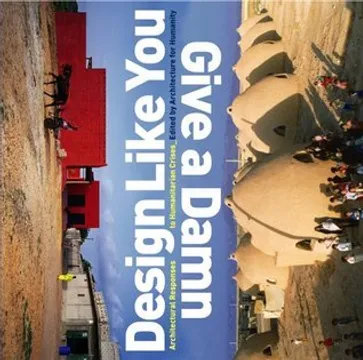


Key Takeaways
Treat shelter, water, and public space as life-saving infrastructure.
Design shapes daily survival. The book opens with a stark picture of need: in its 2006 framing, one person in seven lived in a slum or refugee camp, while more than three billion people lacked clean water or adequate sanitation. Homes, streets, clinics, and schools are not neutral backdrops. Their design affects health, safety, work, education, and whether people can participate in community life.
Architecture belongs in relief. The editors argue that design expertise is often absent precisely where it could matter most. Their organization, Architecture for Humanity, began by connecting designers with communities facing crises, then collected projects addressing shelter, health care, education, water, energy, and sanitation. The point is not that architecture can solve every humanitarian problem, but that poor design can deepen one.
What's important here is the shift from treating architecture as an aesthetic layer to seeing it as part of public health and basic infrastructure. A latrine, clinic, or shaded gathering place can influence exposure to disease, access to care, and social connection. That makes design consequential even when it is modest. Still, buildings cannot substitute for functioning health systems, secure land rights, or public funding. The strongest claim is therefore not that architecture saves people by itself, but that humanitarian programs are incomplete when they ignore the built conditions shaping everyday life.
Let residents define success before architects draw the first line.
Listen before proposing. In Bayview, Virginia, architect Maurice Cox's team initially arrived to address unsafe wells and failing sanitation. Residents redirected the conversation toward a larger ambition: restoring their community as a village. Their priorities shaped the process, from removing trash and derelict buildings to planning homes and shared facilities. One cleanup removed more than 27,000 pounds of rubbish, a visible early win that helped residents believe change was possible.
Participation meant power. The project took six years. Residents formed their own nonprofit, made design decisions, raised funds, and managed a complex development process. They chose to build subsidized rentals for the poorest neighbors before pursuing homes for ownership. The designers' job was not to impose a vision, but to make choices understandable and help the community act on its own priorities.
Bayview shows that participation is not simply a consultation meeting or a vote on finishes. It can build local capacity to negotiate with funders, make decisions, and carry a project through years of delay. This resembles procedural justice: people are more likely to trust outcomes when they have meaningful influence over how those outcomes are made. The caution is that participation takes time and labor. Communities should not be asked to provide unpaid project management as a substitute for government responsibility or professional support.
A tent is not recovery: design the bridge from emergency to home.
Shelter has stages. Emergency shelter protects people immediately; a transitional shelter is intended for a longer interval, supporting ordinary activities and livelihoods while permanent housing is arranged. Confusing these stages can leave families in unsuitable tents for months or years. The book highlights Oxfam's project in Tangalle, Sri Lanka, where 17 families received shelters designed to be dismantled after a year.
Plan for the next move. Built in a public playground, the homes used materials that families could later reuse or sell toward permanent housing. Residents helped design and construct them, and their paid work replaced some lost income. The arrangement let families remain near schools, work, and relatives while land and rebuilding questions were unresolved. Transitional shelter is useful only when the temporary phase has a credible path forward.
The useful insight is temporal: good shelter design considers not only where people sleep tonight, but what the structure makes possible next. Reusable materials can reduce waste and carry value into rebuilding, while a familiar location can preserve social and economic ties. Yet the word transitional can disguise indefinite waiting. Projects need clear timelines, transparent land decisions, and routes to permanent housing, or a carefully designed interim solution risks becoming a permanent holding pattern.
Budget for delivery, upkeep, and politics, not just construction.
A design needs a route to reality. Architecture for Humanity's first major effort was a competition for transitional homes for people returning to Kosovo. More than 220 teams from 30 countries entered. The competition cost less than $700 to run and helped raise about $100,000, but the organization could not build its proposed handful of homes. Local authorities wanted 20,000 homes or none, and permits, materials, and access were beyond the young group's reach.
Operating costs change the answer. The book's mobile clinic effort faced a related constraint: building a clinic could cost about $30,000, but running it and providing medicines could require roughly $1.5 million. Design must account for land, approval, supply chains, staffing, maintenance, and who controls funds. A prototype can prove that something is possible without proving that anyone can sustain it.
This is a lesson in implementation science: an intervention is not its object alone, but the network of rules, people, resources, and routines that keeps it working. The Kosovo story also exposes a mismatch between the scale of a donor's capacity and the scale a government may consider worthwhile. More funding does not automatically solve that mismatch. Projects benefit from early agreements about authority, procurement, ownership, and operating budgets, before designers invest in a solution that has no viable path to use.
Use local skills and materials, then test them against real hazards.
Context is a design input. Appropriate technology means choosing tools and methods that fit local materials, skills, climate, transport, and maintenance capacity, rather than importing a supposedly universal fix. During the mobile-clinic competition, African jurors challenged designs that depended on particular vehicles or spare parts unavailable in remote areas. A mix of transport options, including donkeys, could be more practical than a single high-tech fleet.
A familiar material can still fail. In Rwanda, refugees sold aluminum tent poles for cash and cut local trees for supports, worsening deforestation. Shigeru Ban proposed paper-tube frames as an alternative, but the UNHCR later found the system too costly and difficult to replicate. The episode shows that local acceptance matters, but so do price, supply, and the ability to build at scale.
The strongest version of local design is neither romantic traditionalism nor technological evangelism. It tests a proposal against actual use: Can people obtain the parts? Does the design respect existing practices? Does it remain safe in local weather and terrain? This resembles human-centered engineering, where users are involved early and prototypes are tested in context. Local materials are not automatically sustainable or safe, and community preference cannot eliminate structural risk. Both knowledge and technical verification belong in the process.
Support self-builders with expertise without taking away control.
Self-help is not abandonment. Self-help housing gives residents a central role in building or improving their homes, often with financing, training, or technical assistance. Hassan Fathy's New Gourna village in Egypt used traditional mud-brick construction, but residents resisted relocation and expected completed homes. Fathy's plan depended on their participation, yet the project did not give them enough ownership of the decision to move.
Partnership can work differently. In Burkina Faso, architect Diebedo Francis Kere designed a school for his home village using local earth bricks and trained residents to build it. The school was planned for 120 pupils but eventually served 350. The contrast is instructive: local labor and materials can reduce costs and build skills, but they work best when residents help define the project and when construction quality, funding, and public services are also addressed.
The distinction is between enabling agency and shifting responsibility onto people with the fewest resources. Self-building can create useful skills and let households shape homes around changing needs, but it may also consume time people need for paid work. Fathy's experience is a reminder that vernacular materials do not guarantee cultural fit. The more durable model combines resident choice with technical standards, access to land and services, and outside support that does not dictate the outcome.
Upgrade informal neighborhoods instead of clearing people out.
Clearance often destroys what it promises to fix. The book traces how postwar urban-renewal programs demolished whole neighborhoods in the name of progress, sometimes destroying more homes than they built. Large housing blocks were often poorly sited, badly maintained, and isolated from jobs and community networks. The same top-down impulse appeared in efforts to erase informal settlements, even when residents had built livelihoods and social ties there.
Improve the fabric people rely on. Rio de Janeiro's Favela-Bairro program took a different route, bringing roads, sanitation, public spaces, and community facilities into existing settlements. Projects included daycare centers and gathering places as well as infrastructure, helping connect neighborhoods to the wider city. By the book's account, the program reached about 500,000 people across 168 settlements. Upgrading does not mean accepting unsafe conditions; it means addressing them without treating residents as obstacles.
This approach recognizes that housing is embedded in networks of work, care, transport, and mutual support. Demolition may produce clean plans on paper while imposing large, often invisible costs on residents who lose access to those networks. Urban policy research likewise distinguishes physical improvement from displacement: the former can expand opportunity, while the latter may simply relocate hardship. Upgrading still requires safeguards. Better infrastructure can raise land values and invite eviction unless residents also have meaningful protection and a say in redevelopment.
Every low-cost device needs an affordable maintenance system.
Products need support around them. The Play-Pump uses children's movement on a roundabout to pump water into a storage tank. Its designers recognized that a clever mechanism would not be enough where users had little money for repairs. Advertising revenue covered installation and 15 years of maintenance, while a toll-free number let people report breakdowns. The model treated upkeep as part of the product, not an afterthought.
Design the whole service. The book also presents low-cost water filters made with local clay and sawdust, and pumps intended for small farmers to install and maintain. These designs depend on training, replacement parts, local production, or a reliable funding source. A device can be inexpensive to manufacture and still be costly to operate. The relevant question is not only whether it works, but who keeps it working after the launch team leaves.
This is systems thinking in practical form. A pump's performance depends on financing, repair skills, spare parts, and someone accountable for responding when it fails. The Play-Pump's advertising model turns visibility into a funding stream, but it also creates dependence on continued commercial sponsorship. Any maintenance plan should make its assumptions explicit and include a backup if revenue disappears. Reliability is not a technical property alone; it is an institutional achievement.
Coordinate relief before camps become preventable health emergencies.
Camp layout affects health. Disaster specialist Fred Cuny challenged the practice of placing displaced families in undifferentiated barracks. After an earthquake in Nicaragua, he organized households in smaller clusters, with shared services and open spaces. The book reports that this camp's population stabilized, major disease outbreaks did not occur, and operating costs were estimated at 40 percent below comparable camps. The design encouraged residents to care for shared facilities rather than treating the camp as a temporary warehouse.
Set minimum expectations. The Sphere Project brought aid organizations together to publish a humanitarian charter and minimum standards for water, sanitation, food, shelter, and health services. It gave agencies a shared reference point for what disaster-affected people should be able to expect. Standards cannot replace judgment in unusual conditions, but they can expose dangerous omissions and make organizations more accountable.
The important shift is from counting supplies delivered to asking whether a settlement supports health, dignity, and coordination. Camp planning links physical layout to sanitation, privacy, access, and the management of shared resources. That is a powerful design insight, but one camp's results do not establish a universal formula; climate, security, culture, and displacement patterns vary. Common standards are most useful as a floor for action, not a rigid template that prevents adaptation.
Connect public space, transport, and livelihoods in one urban plan.
Small changes can reorganize a city. Curitiba's mayor and planners redirected a proposed car overpass into a pedestrian street, then paired growth corridors with dedicated bus lanes. Parks along rivers helped manage flooding while adding public green space. The book calls this kind of targeted intervention urban acupuncture: a focused change at a strategic point that can influence how a wider urban system works.
Design for connection. The broader lesson is that streets, transit, parks, and housing should reinforce one another. Curitiba's bus network linked neighborhoods to the center, while the Favela-Bairro projects in Rio connected settlements to city services and public life. These examples treat mobility and civic space as part of housing policy, not decorative extras. Their results depended on planning, governance, and sustained investment, not a single architectural gesture.
Urban acupuncture is compelling because it asks planners to look for leverage: a relatively focused intervention can alter movement, access, or public use across a larger system. Curitiba's transit and flood-control strategies illustrate how transport, land use, and landscape can be coordinated. The concept should not be mistaken for a substitute for broad investment. A bus corridor cannot compensate for unaffordable housing or weak public services, and a celebrated city model may not transfer cleanly to another political or geographic setting.
Analysis
This book is both a showcase and an argument. Its projects range from emergency tents and water filters to schools, clinics, public housing, and urban plans. The opening history explains why humanitarian architecture became detached from relief work: modernist confidence in standardized mass production often ignored local preferences, while failed public-housing schemes weakened trust in design expertise. The project examples then test a more grounded proposition: design matters when it is joined to community knowledge, technical judgment, and institutions capable of delivering and maintaining it.
The book's most durable contribution is its definition of design as a process, not a finished object. The failed attempt to build homes in Kosovo, the contested relocation at New Gourna, and the long negotiations in Bayview each show that a good drawing cannot resolve conflicts over scale, land, authority, or money. Conversely, projects such as Gando's school and Rio's neighborhood upgrades show how local participation and practical expertise can produce both physical improvements and stronger community capacity.
The collection also has a built-project bias. It is easier to photograph a completed structure than to measure long-term health, safety, cost, displacement, or user satisfaction. Some projects are prototypes, some remain unbuilt, and some have uncertain outcomes. Their inclusion is valuable as a catalogue of possibilities, but readers should distinguish evidence of ingenuity from evidence of lasting impact. The most responsible standard is not novelty or visual distinction. It is whether a project fits its context, serves the people affected, can be maintained, and improves conditions without transferring hidden costs to those with the least power.
Ultimately, the book challenges architects to enter humanitarian work without assuming that architectural authority is enough. The strongest designer is not a distant problem-solver but a collaborator able to connect spatial ideas with governance, logistics, and lived realities.
Glossary
Transitional shelter
Bridge between emergency and permanenceA shelter intended to provide more than immediate survival after a disaster or displacement. It gives residents space to carry out daily tasks and livelihood activities while permanent housing is arranged. It may use materials that can later be reused or sold, and should have a clear purpose and transition plan so that temporary accommodation does not become indefinite.
Appropriate technology
Context-fitting tools and methodsTechnology selected for the conditions in which it will be used, including local materials, skills, climate, transport, cost, and capacity for repair. The term contrasts with solutions chosen mainly for technical novelty or assumed universality. A design is not appropriate simply because it is low-tech or locally made; it must also work safely and reliably in its setting.
Self-help housing
Residents build or improve homesAn approach in which households or communities take an active role in constructing or improving housing, sometimes with loans, materials, training, or technical support from government or aid organizations. It treats residents as capable contributors rather than passive recipients. The book emphasizes that self-help should not mean abandoning people to build without secure land, services, resources, or professional guidance.
Core housing
A basic home designed to expandA housing strategy that provides a small, structurally sound starting unit, often including a foundation and roof and sometimes basic utilities. Residents can add rooms or other features as their needs and finances change. The approach can make housing more affordable initially, but depends on secure occupancy and a design that allows expansion without creating unsafe or overcrowded conditions.
Sites-and-services
Serviced plots for household buildingA housing approach in which public or development agencies provide land and essential infrastructure, such as roads, water, and sanitation, while households build or improve their own homes. It emerged as an alternative to fully constructed public housing and slum clearance. Its effectiveness depends on affordability, access to secure tenure, and whether residents can reach jobs and services.
Sphere Project
Shared disaster-response standardsAn initiative led by humanitarian organizations that produced a charter and minimum standards for disaster response. Its standards cover areas including water and sanitation, nutrition, food aid, shelter, and health services. They describe what people affected by disasters should be able to expect from assistance, while allowing organizations to adapt indicators to local conditions.
Living Machine
Ecological wastewater treatment systemA system that treats wastewater through natural processes involving plants, microbes, and water. In examples in the book, wastewater moves through tanks and planted beds where pollutants are absorbed or broken down, then through additional planted areas for further treatment. Living Machines can serve individual buildings or larger developments, offering an alternative where conventional sewer infrastructure is unavailable.
Urban acupuncture
Targeted intervention with wider effectsA planning idea used to describe focused interventions at strategic places in a city, intended to improve how larger urban systems function. The book applies it to projects such as changes to public space, transportation, and parks. The concept emphasizes leverage and local specificity, but does not mean that small projects can replace sustained public investment or comprehensive planning.
Super Adobe
Earth-filled bags reinforced with wireA building method developed by architect Nader Khalili that uses earth-filled bags or tubes laid in courses, with barbed wire between them for reinforcement. The system can form domes and other structures using locally available soil, with relatively little specialized labor. It was applied to emergency shelter for Iraqi refugees in Iran, though adoption depends on local approval and construction conditions.
Mines to Vines
Restore mined land through farmingA Roots of Peace program that clears landmines and returns affected land to agricultural use. In the book's examples, former minefields in Croatia and Afghanistan were converted to vineyards or planted with fruit crops. The approach links demining with livelihoods and economic recovery, while also illustrating how dangerous contamination can continue to prevent communities from using land long after conflict.
Download PDF
Download EPUB
.epub digital book format is ideal for reading ebooks on phones, tablets, and e-readers.








