



Plot Summary
Prologue
Sin2 carries Vivian1 into the Shadow Realm after she refuses to free Leon3 from his collar and their fight leaves her badly hurt. Sin2 and Morgana4 had expected to keep watch from a distance until Vivian1 and Leon3 reunited, but reports that Leon3 might harm her changed their plan.
Sin2 knows the Council expects Vivian1 to matter to a prophecy, yet he distrusts what she represents and resents the Council that made him its weapon. Her injuries trouble him more than he wants to admit. When he notices she may have resisted Leon3 rather than submit, he wonders if the frightened mortal in his arms has more fight in her than anyone expected.
The opening binds rescue to suspicion. Sin protects Vivian while still reducing her to a role in a prophecy, a contradiction that anticipates the story’s central struggle over who gets to define her. His guilt is practical before it is tender: he recognizes that the plan to watch her unfold has exposed her to harm. Vivian’s injuries therefore become evidence, not merely vulnerability. The preface also gives the reader a sliver of Sin’s interiority before Vivian meets him, complicating her first impression of a captor without erasing his responsibility for taking her.
A Stranger Beyond the Bond
Vivian1 wakes bruised in a stone castle she does not recognize, remembering that Leon3 tried to force her to unlock his collar before she was seized. The man who identifies himself as Sin2 confirms she is in Morgana4’s Shadow Realm, beyond the reach of the painful bond that ties her to Leon.3
The relief is immediate, but it does not make Sin2 safe: he is the uncaged Destroyer she had been sent to help kill. Vivian1 learns that Sin2 took her because his allies feared Leon3 would hurt her. With no clear route home and no reason to trust either side, she decides the only person she can rely on is herself.
The first turning point changes Vivian’s immediate danger without resolving her lack of agency. Distance from Leon quiets the bond, making relief feel almost like evidence that she has been living under coercion. Yet Sin’s rescue is also a kidnapping, so safety arrives through another person’s unilateral decision. Vivian responds by converting fear into a private rule of self-reliance. That choice is understandable, but it also reveals her habit of treating dependence as a threat, even when she desperately needs help.
The Blanket Rope Fails
Vivian1 twists bedsheets into a rope, breaks a bathroom mirror for a cutting edge, and climbs from her third-floor window. The knots fail near the bottom; she hits the ground hard but can still walk toward the forest beyond the castle. Rosie,6 a pink-winged fairy who helped dress and bandage her, warns that the woods hold dangerous spirits.
Vivian1 turns back, then learns from Sin2 that her room was never locked and she may leave the castle, though nobody can help her leave the realm. The distinction forces her to reconsider what captivity means. She has not found freedom, but she can choose where to stand and whom to trust while she waits.
The failed escape is comic in its mechanics and serious in its consequence: Vivian’s first attempt to reclaim control nearly injures her again. Her assumption that every closed door is locked reflects how recent violence has narrowed her interpretation of risk. Sin’s correction does not make his conduct harmless, but it exposes the gap between physical confinement and the conditions that keep someone trapped. Rosie’s warning gives Vivian a concrete reason to retreat, and her decision is not surrender so much as an adjustment based on new information.
A Castle Becomes Company
In Magnus7’s warehouse, Vivian1 learns that the snake shifter7 trades magical objects and receives a pendant that warms when someone lies. Rosie6 and Magnus7 welcome her at dinner, while Damien,8 a Council guard she once encountered, supplies shoes and begins teaching her to run and defend herself. Their routines give her structure, and their company keeps her from being alone with her despair.
The welcome does not erase her suspicions: she still wonders whether the group means to trade her back to Leon.3 At dinner, Rosie6 explains that a Keeper should guide a Destroyer rather than obey him. She also recognizes that Vivian1’s pain, mental fog, and compelled desire are not normal features of their bond.
The castle’s domestic rhythms matter because they counter the isolating logic Vivian has adopted. Food, shoes, medical supplies, and lessons are small acts, but each offers care without demanding obedience in return. The lie-detecting pendant gives her a tool for testing trust, while Rosie’s explanation reframes the Keeper role from submission to ethical restraint. Most importantly, the group identifies Vivian’s symptoms as abnormal before she can finish blaming herself. The story begins to separate her distress from personal weakness and locate it in a system designed to distort consent.
Cassandra’s Past Returns
At Sin2’s offer, Vivian1 lets him open the barrier around memories from her previous life as Cassandra. The memories show Cassandra20 taken young by the Guardians, trained through violence, and later turning against them to rescue children, including Arianna.5 She loved Leon3 while hiding her identity and died defending the escape of the temple’s women and children when Atlantis fell.
At breakfast, Vivian1 confronts Sin2 over his role in the attack; he admits he served as the Council’s weapon but denies killing her himself. When he dismisses her as helpless, she throws a knife into the chair beside his neck. Sin2 responds by asking her to train, and Vivian1 begins to act on the strength her memories carry.
Cassandra’s memories widen Vivian’s identity without replacing it. The past supplies skills and emotional attachments, but Vivian still decides what those memories mean and how to use them. Her anger at Sin is therefore not simply inherited; it is a present judgment informed by history. The thrown knife marks a concrete shift from surviving insults to answering them with force. Yet the recollections also establish the cost of becoming useful to powerful institutions: Cassandra’s abilities were cultivated through exploitation, so Vivian must distinguish empowerment from being weaponized again.
The Mark Was a Siphon
During training, Sin2 manipulates Vivian1’s desire to provoke a response, pushing her toward the same loss of control she fears from the bond. When he sees the mark on her neck, he recognizes it as an energy siphon rather than the protective seal Leon3 claimed it was. Vivian1 explains that her power once produced a storm and later hurled Leon3 across a room when he tried to make her unlock his collar.
She had blamed herself for striking first and treated Leon3’s siphon as protection. Sin2 removes the mark, insisting that Leon3 took away the very power Vivian1 might have used to resist him. The revelation turns her guilt into suspicion, but the confrontation leaves her emotionally exhausted.
This scene makes coercion legible at the level of the body. A mark presented as protection has been redirecting Vivian’s energy, while the bond has trained her to interpret resistance as wrongdoing. Sin’s own use of sexualized emotional manipulation complicates his accusation: he recognizes the pattern partly because he has just reproduced it. The distinction between his intentions and Leon’s does not erase the harm. Vivian’s emerging judgment depends on seeing that protection cannot be defined solely by the powerful person who claims to provide it.
The Cliffside Choice
After the revelations about Leon3 and Cassandra,20 Vivian1 shuts down emotionally and climbs the cliffs above the sea, considering whether to jump. Her uncontrolled energy gathers into a vast purple storm over the water. Sin2 reaches her in time, contains the storm, and stays beside her while she admits how exhausted she is from guilt, trauma, and the effort of staying alive.
He does not treat her survival as weakness; he points instead to the people she could protect if she chooses to resist the Council. Vivian1 decides to stay in the Shadow Realm and fight. The next morning, she tells Rosie6 she will remain as long as Morgana4’s group does not threaten the Mortal Realm.
The cliff scene makes survival an active decision rather than a sentimental reassurance. Vivian’s crisis is tied to accumulated blame: she has learned that both her past and present were shaped by manipulation, then concludes that she herself must be defective. Sin’s intervention matters because he neither denies the suffering nor offers a simple cure. He connects continued life to the possibility of action. Vivian’s choice to stay is therefore provisional and conditional, a meaningful distinction from the forced loyalties that have defined her relationships with Leon and the Council.
A Refuge in the Fae Trees
Rosie6 takes Vivian1 and Sin2 into the Fae Realm to retrieve Rayne,11 an old ally fleeing the Seelie Queen with her newborn, Azar.12 Rosie6 reveals that her mother ordered her death after she chose loyalty to her Keeper14 over family obedience. Sin2 carries the sleeping infant across the Shadow Realm’s wards, while Vivian1 and Rosie6 follow.
A Fae guard fires an iron-tipped arrow at Rosie;6 Vivian1 shoves her clear and takes the wound herself. She wakes in an arrival house among refugees, where Sin2 explains that the city shelters people the Council would imprison or kill. The mission shows Vivian1 that Morgana4’s resistance is not only a conspiracy; it has built a home for those in danger.
The rescue converts abstract opposition to the Council into visible care for particular people. Rayne’s fear for her infant gives the mission immediate stakes, while Rosie’s history shows how political loyalty can sever family ties. Vivian’s decision to take the arrow is not an attempt to prove she is powerful; it is a spontaneous act of protection. The refugee city then complicates the image of Sin and Morgana as merely hidden rulers. Their political project already has a social consequence: people who would otherwise be discarded can live somewhere.
The Prophecy Was Engineered
When Morgana4 finally arrives, she reveals that an Atlantis oracle foretold a mortal who would love a Creator, be reborn to love a Destroyer, and change the realms. The Council feared that prediction and ordered Atlantis destroyed.
Morgana4 and Sin2 secretly turned the plan against the Council: Morgana4 killed Cassandra20 before the Council could make her immortal, then removed Leon3’s collar so his violent response would disgrace him and turn him into a Destroyer. They expected fewer deaths than Leon3 caused.
Vivian1 learns that Morgana4 herself fired the fatal arrows and has watched over her reincarnation. The prophecy does not specify which Destroyer Vivian1 must love, but its long manipulation leaves her distrustful of anyone claiming her future is settled.
The revelation recasts prophecy as political infrastructure. The Council treats a prediction as a threat to be managed, while Morgana uses the same prediction to manufacture the conditions for resistance. Neither strategy respects Vivian as a person; both make her life an instrument. The disclosure also complicates moral judgment without flattening responsibility. Morgana’s opposition to the Council has saved lives, but she admits to killing Cassandra and shaping Leon’s transformation. Vivian’s distrust is rational because the supposed struggle between freedom and control has been conducted through her without her knowledge.
The Forest Falls Silent
Morgana4 takes Vivian1 unarmed into the forest of the forgotten dead and leaves her among the forsaken, expecting her to awaken her power under threat. Vivian1 frees one spirit, then races through the woods as the creatures swarm her and tear at her body. When they overwhelm her, she stops fighting only to escape and feels the accumulated grief of both her own life and Cassandra20 ’s.
A burst of silver energy spreads through the forest and returns to her, leaving every forsaken transformed into a free spirit. Vivian1 refuses Morgana4’s authority over them and releases them from the forest. Her power saves her, but it also removes the Shadow Realm’s army and makes Morgana4’s forces more vulnerable to the Council.
Vivian’s power emerges through recognition rather than domination. She does not defeat the forsaken by commanding them more effectively; she sees their suffering and releases them from the structure that has made them weapons. The choice is ethically coherent but politically costly, since Morgana loses a defensive force. That consequence prevents the liberation from becoming an uncomplicated triumph. Vivian has begun to act from her own moral judgment, even when doing so unsettles the very allies she needs.
Arianna in the Maze
Sin2 explains that he and Morgana4 had watched Vivian1 for years, following a warning from Clotho,13 one of the Fates,13 and that he found her after her classmates attacked her. Soon the group learns that Arianna,5 the girl Cassandra20 rescued in Atlantis, has been taken from the Council’s prison and placed in its deadly maze.
Vivian1 insists on going because the Council cannot navigate the maze without her knowledge. She uses peanut butter to lure a small hedge creature into opening a route, finds Arianna,5 and carries her toward an exit while the bond’s pain and fog pull her toward Leon.3
Arianna5 strikes Vivian1 unconscious when the bond takes over, getting them both out. The rescue reunites Vivian1 with someone whose memories connect her to Cassandra.20
The maze fuses external danger with the coercive force of Vivian’s bond. She can know that Leon is dangerous and still feel her body moving toward him, dramatizing how consent can be compromised without conscious agreement. Arianna’s rescue is therefore not a simple test of courage; it requires another person to act when Vivian’s will is being overwhelmed. The hedge creature and its peanut-butter reward also preserve Vivian’s practical, improvised intelligence. She survives not by becoming a flawless warrior, but by noticing what might help.
The Past Joins the Team
Back in the Shadow Realm, Arianna5 confirms that Cassandra’s memories have not erased Vivian1’s own identity. The two reconnect through humor, shared stories, and a deliberately irreverent way of comparing the harms they have survived. Arianna5 describes her long imprisonment and abuse, while Vivian1 tells her about the coercive bond with Leon.3
Their reunion turns a rescued former child into a present-day ally, not merely a relic from Cassandra20’s past. Around the same time, Sin2 marks Vivian1 possessively, and she challenges him rather than accepting his claim as authority. The group’s arguments over the mark force Vivian1 to state that her choices remain her own, even as attraction and trust begin to complicate her partnership with Sin.2
Arianna’s return lets the novel explore continuity without pretending that a person remains unchanged across centuries. Vivian recognizes a bond grounded in Cassandra’s memories, but the relationship must be rebuilt between two living women with different experiences. Their joking comparison of trauma gives them a way to approach painful material without demanding immediate disclosure. In parallel, Vivian’s resistance to Sin’s possessiveness establishes an important distinction: desire may be mutual, but it does not grant him ownership. The relationship advances only when her autonomy remains visible.
The Party Turns to War
Morgana4 hosts a gathering for potential allies and presents Vivian1 and Sin2 as a pair capable of fulfilling the prophecy. Vivian1 endures the introductions and rebuffs three hostile sisters who belittle her and try to claim Sin2’s attention.
Later, Artorix19 of the Underworld Realm possesses Rosie,6 draws Vivian1 into the forest, and explains that he intends to kill them before returning unnoticed to the party. Vivian1 stabs him, discovers his wounds heal, and leads him back toward the crowd while keeping Rosie6 out of his reach.
Sin2 arrives and erases Artorix19 with his Destroyer power. He ends the gathering by warning the guests that they must choose a side. The political courtship has become open conflict, and the Shadow Realm’s caution is no longer enough to conceal the coming war.
The party is a performance designed to turn prophecy into coalition, but the performance collapses when Artorix makes violence personal. Vivian does not wait for rescue: she uses the dagger Sin gave her, recognizes that she cannot kill Artorix, and changes the goal to bringing him into view. Sin’s execution of the attacker protects her and Rosie while also confirming Morgana’s fear that displays of power will create enemies. The scene converts private resistance into public commitment, with consequences for every realm represented at the gathering.
The Reaper in the Wall
To understand Vivian1’s strange energies, she and Sin2 descend into the Underworld Realm to consult the ancient being trapped in its stone walls.10 A nightmare trap incapacitates Sin,2 and Vivian1 uses her silver energy to pull him out of the memory before guards arrive. A second trap removes Sin2’s Destroyer powers, but the being they find identifies himself as Hades10 and recognizes Vivian1 as a Reaper, a soul-guide absent for millennia.
He explains that the Fates have been consuming souls and that Vivian1’s mass release of the forsaken restored some of his strength. He also says death may break her Keeper bond and allow her Creator power to mature. Sin2 rejects the certainty of that risk, while Vivian1 now has an answer about what she is.
The Underworld visit changes the scale of the story’s conflict. Vivian’s power is not simply another weapon in a war between political factions; it is tied to the fate of souls themselves. Hades’ account suggests that the Council’s control reaches beyond governments into the basic passage of the dead. At the same time, his proposed solution places Vivian’s life at risk, making knowledge inseparable from ethical choice. Sin’s powerlessness during the journey reverses their usual roles and lets Vivian protect him through the ability he cannot provide.
A Bond Chosen Freely
Leon3 intercepts Vivian1 and Sin2 near the Underworld’s exit, using the corrupted bond to overwhelm Vivian1 and calling her back to him. Sin2 pulls her into a river and over a waterfall; Hades10 returns Sin2’s power long enough to carry them to safety. Afterward, Vivian1 accepts that ending her mortal life may be the only way to break Leon3’s bond, and Morgana4 agrees to help.
Before the planned death, Vivian1 and Sin2 acknowledge their love and choose a mate bond, one that joins their souls without the coercion that defined her bond with Leon.3 Their closeness does not erase the danger: Vivian1 still intends to sever the old bond, and the others fear what her death may cost. The choice is hers, but it hurts the people who care for her.
This turning point contrasts two forms of supernatural attachment. Leon’s bond overrides Vivian’s judgment, while the bond with Sin is presented as a choice made after explicit hesitation, discussion, and refusal of coercion. That contrast does not make the new relationship simple: Sin’s possessiveness and power remain real, and Vivian is choosing intimacy while facing possible death. Her decision to risk herself is not framed as romantic sacrifice alone. She believes the bond makes her a danger to her allies, so freedom and responsibility become painfully entangled.
The Trade at the Shore
Before Morgana4 can help Vivian1 break the Keeper bond, Need9 reports that Sarah,15 Conner,16 and Isaac17 have been seized and threatens mass murder in the Mortal Realm if Vivian1 is not returned as a mortal. Morgana4 sends Sin2 away by staging a breach in the wards, buying time for Vivian1 to choose. Vivian1 leaves Sin2 a note and his necklace, then goes with Arianna5 to the beach where she first freed Leon.3
Need9 arrives with the three friends as hostages, and Vivian1 refuses Leon3’s claim even as the bond floods her with pain and fog. She unlocks his collar to secure their release. Sin2 reaches the shore, but Leon3 seizes Vivian1 and breaks her neck before she can escape. Her mortal life ends, leaving the promised rescue and the war unresolved.
The ending makes the cost of Vivian’s attempt to protect others brutally concrete. She avoids turning Sin loose to destroy the realms, but the choice allows Need to reclaim control through hostages and threats against civilians. Vivian’s refusal to call herself Leon’s does not break the bond; her body remains subject to its pain even while her judgment resists it. The final violence leaves the central question suspended: whether her death will free her, or whether the Council has secured her as the weapon it intended to make.
Analysis
Destruction’s Desire frames power as a question of consent: who may direct another person’s body, memories, attachments, or future, and what counts as protection when the protected person has not chosen it? Vivian1’s corrupted bond with Leon3 makes coercion feel intimate. Pain and desire arrive through the same channel, while Leon3 interprets the bond as proof that she belongs with him. The narrative’s strongest counterpoint is not an absence of power, but a different use of it. Sin2 can control minds and bodies, yet his growing intimacy with Vivian1 becomes meaningful only when he pauses for her decisions. Even this contrast remains unstable, since his possessiveness repeatedly threatens to reproduce the structures he condemns.
The recovered memories of Cassandra deepen the question of identity. Vivian1 gains a warrior’s skills and inherits emotional ties, but she does not become a mere continuation of the past. Her choices toward Arianna,5 Sin,2 and the freed spirits are made in the present, even when memory supplies their weight. The novel thus treats memory as both inheritance and evidence: it can restore context, but it cannot absolve the living of deciding what to do next.
The political plot mirrors this intimate conflict. The Council, Morgana,4 and Need9 each justify manipulation through a promised future, whether prophecy, stability, or victory. Vivian1’s liberation of the forsaken is a moral act with a costly military consequence, refusing the idea that a good cause makes every instrument acceptable. Yet her final surrender to protect her friends15 shows how coercion adapts: when a bond cannot secure obedience, hostages can. The cliffhanger leaves Vivian1’s mortal body dead and her fate unresolved. Freedom has become more than escape from Leon;3 it requires dismantling the systems that keep converting people into tools.
Review Summary
Destruction's Desire, the second book in the Broken Souls trilogy, has captivated readers with its compelling mix of dark romance, humor, and emotional depth. Reviewers praise the fast-paced story, witty banter, strong character development, and steamy scenes. Vivian's journey from struggling with mental health to embracing self-love resonates deeply. The chemistry between Vivian and Sin draws widespread acclaim, with many comparing it favorably to popular series like ACOTAR. However, the cliffhanger ending leaves readers desperately awaiting book three, despite warnings included in the text.
People Also Read
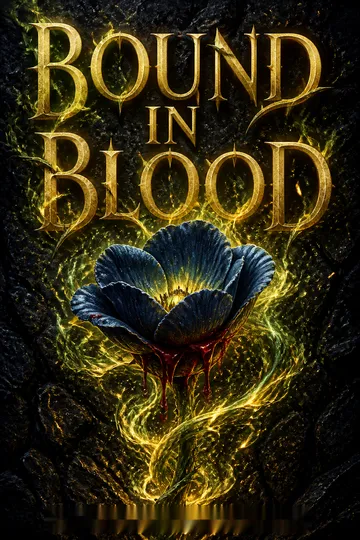
Characters
Vivian Ryans
A survivor reclaiming choiceA history and English student from the Mortal Realm, Vivian is thrown into a supernatural struggle when she becomes Keeper to Leon3. She uses humor, careful observation, and improvisation to manage fear, but she also habitually blames herself and suppresses emotions to avoid conflict. Her connection to Cassandra20’s past gives her unfamiliar memories and skills without erasing her own identity. Vivian is drawn to people who challenge her, yet she is increasingly alert to the difference between desire and coercion. Her choices are shaped by a fierce concern for friends and vulnerable strangers, and by a growing insistence that no prophecy, bond, or powerful ally should decide her life for her.
Sin
The guarded DestroyerAn ancient, uncollared Destroyer, Sin is Morgana4’s second in command and one of the Council’s former weapons. He is intimidating, blunt, and quick to use force, but he is also disciplined by a deep hatred of stolen free will. His care often arrives disguised as orders, training, or provocation, making it difficult for Vivian1 to distinguish protection from control. Their attraction intensifies his possessive instincts, while her resistance challenges his assumptions about what he can claim. Sin’s past as a poor villager who lost his family to the Council gives his political loyalties a personal foundation.
Leon
Vivian’s dangerous bondLeon is a powerful Creator turned Destroyer, and Vivian1’s Keeper bond ties her to him in ways she cannot initially understand. He believes their connection confirms a lasting love and treats their shared history as proof that he should direct her choices. His tenderness can coexist with anger and possessiveness, which makes Vivian1’s experience of him difficult to interpret. Leon’s memories of Cassandra20 are incomplete and idealized, while Vivian1 gradually learns that his version of their past does not account for her autonomy. He is both the source of the bond’s pull and a reminder that love cannot be inferred from destiny alone.
Morgana
The Shadow Realm leaderMorgana leads the Shadow Realm’s resistance and has spent centuries building networks to shelter people threatened by the Council. She is composed, strategically minded, and willing to make severe choices in pursuit of a larger political goal. Her authority rests on competence, but she can be secretive and expects others to accept risks she has chosen for them. Her bond with Sin2 is familial rather than romantic, and she acts as both leader and elder sister to him. Morgana’s belief in Vivian1’s importance is tempered by a pragmatic understanding that prophecy can be dangerous when institutions try to control its outcome.
Arianna
The shadow-trained survivorArianna is a fiercely independent operative with a talent for stealth and control over darkness. Her connection to Vivian1 reaches back through Cassandra’s memories, but she has also built a life and identity beyond that former relationship. She uses irreverent humor to approach painful experiences and dislikes being treated as fragile. Arianna’s loyalty is expressed through action, often in moments when someone else’s judgment or safety is at risk. Her guardedness reflects the cost of surviving institutions that repeatedly tried to make her useful to their causes.
Rosie
The fairy who makes sanctuaryRosie is a cheerful fairy, a gardener, and a Keeper whose loyalty is tested by her family’s political power. She makes practical kindness visible through food, medical care, clothing, and attention to whether others feel safe. Beneath her bright manner is a capable fighter and organizer, especially when friends are in danger. Rosie’s bond with Irena14 shapes her understanding of love as mutual rather than obedient. Her warmth gives Vivian1 an early model of belonging that does not require surrendering judgment.
Magnus
The charming black-market scoutMagnus is a snake shifter who trades magical goods and gathers intelligence through the black market. His charm and flirtation make him seem unserious, but his knowledge of enchantments and political networks is valuable to Morgana4’s resistance. He is attentive to Vivian1’s uncertainty and offers her a lie-detecting pendant so she can judge others for herself. Magnus is protective without trying to become her decision-maker, and his close partnership with Damien8 contributes to the group’s sense of chosen family.
Damien
The upbeat guard and trainerDamien works as a guard at the Council’s castle while secretly supporting Morgana4’s network. He is energetic, affectionate, and patient as Vivian1 learns basic survival skills. His humor helps make training less intimidating, though he becomes serious when he believes someone is in danger. Damien’s relationship with Magnus7 is grounded in trust and shared work. He recognizes the risks created by Sin2’s power and possessiveness, and he is willing to challenge his friend when Vivian1’s freedom may be at stake.
Need
The Council’s hidden handNeed is a powerful Council figure who recruits Vivian1 into the Keeper role and pursues an agenda that she does not fully disclose. She operates through political leverage, supernatural power, and strategic secrecy, treating individual lives as pieces in a much larger design. Her confidence in her authority makes her especially dangerous when someone resists her plans. Need’s relationship to Vivian1 is shaped by the belief that the young mortal can be made useful to the Council, while her actions expose the distance between public duty and private control.
Hades
The imprisoned ancient godHades is an ancient power confined within the Underworld’s stone, where he has endured the loss of his realm and much of his strength. He speaks with dry wit and a confidence that makes it difficult to know how much he reveals. Unlike the Council, he is not interested in serving its authority, and he possesses knowledge about souls and old magic that few others can offer. His encounters with Vivian1 force her to reconsider what the realms have hidden about death.
Rayne
A mother fleeing the Fae courtRayne is a Fae woman escaping political persecution with her newborn son12. Exhausted and wary, she protects her child12 before considering her own safety. Her circumstances reveal the danger faced by people whose relationships cross the rigid boundaries imposed by the Fae court. Rayne’s arrival gives Vivian1 a direct glimpse of the kind of refuge Morgana4’s network tries to provide.
Azar
Rayne’s newborn sonAzar is Rayne11’s infant son, only days old when the Shadow Realm group helps his mother11 escape. His mixed heritage makes him a target in a society that condemns children born across species lines. His vulnerability gives the rescue mission its most immediate stakes.
Clotho
A Fate behind the threadClotho is one of the Fates, a figure associated with the shaping of lives and destinies. She remains distant from most of the action, but her choices suggest that even the machinery of fate may not be entirely aligned with the Council. Her presence gives Vivian1’s strange survival a wider, unsettling context.
Irena
Rosie’s absent Keeper bondIrena is a Destroyer and Rosie6’s beloved Keeper bond, held by the Council when the story begins. Though absent from the central action, she shapes Rosie6’s loyalties and gives Vivian1 a point of comparison for what a Keeper bond can feel like when it is not coercive. Rosie6’s devotion to Irena informs her hope that they will be reunited.
Sarah
Vivian’s loyal college friendSarah is one of Vivian1’s close friends from college. Her warmth and loyalty remain important to Vivian1 even after supernatural events carry Vivian1 far from home. Sarah represents the ordinary life Vivian1 wants to protect, and the concern she shows when they meet again reflects the strength of their friendship.
Conner
Vivian’s teasing college friendConner is part of Vivian1’s close circle in the Mortal Realm, alongside Sarah15 and Isaac17. His easy humor and familiarity are among the ordinary comforts Vivian1 misses while trapped in supernatural politics. His friendship reminds her that the life she left behind includes people who care about her.
Isaac
Vivian’s steadfast college friendIsaac is one of Vivian1’s college friends and part of the small group she hopes to keep safe. He shares the concern and loyalty that define her connection to home. His presence links the supernatural conflict to the people who had no choice in becoming entangled with it.
Rydon
The Council’s guard captainRydon is the captain of the guard and an agent of the Council’s enforcement power. He helps carry out its orders and treats vulnerable people as leverage. His practical obedience illustrates how institutional violence is maintained by more than its most powerful leaders.
Artorix
The Underworld emissaryArtorix is a Council member from the Underworld Realm, polished in public and ruthless when he believes he can act unseen. He is politically invested in preserving the existing order and views Vivian1’s resistance as a threat to his position. His supernatural ability to possess others makes him dangerous beyond his physical strength.
Cassandra
Vivian’s warrior pastCassandra is the name associated with Vivian1’s previous life and the memories that return to her. She was a trained warrior who lived under the Guardians’ control and formed deep attachments while trying to protect children from them. Her history gives Vivian1 skills and emotional connections, but it also raises questions about how much of a former life can be carried into a new one.
Plot Devices
The corrupted Keeper bond
Coercion disguised as destinyThe bond links Vivian1 to Leon3 through pain, desire, and mental fog. Distance from him brings relief, while his presence can overwhelm her ability to think clearly or resist. Because Leon3 presents the bond as proof of love and fate, Vivian1 initially interprets its effects as evidence that she is failing to accept him. The device drives her flight, complicates every encounter with Leon3, and forces the story to distinguish a magical compulsion from freely chosen intimacy. Its apparent need for death to break becomes a central danger.
Cassandra’s recovered memories
Past life as skill and burdenSin2 opens the barrier holding Vivian1’s memories of Cassandra20, a former life shaped by the Guardians and the fall of Atlantis. The memories supply combat instincts, relationships, and context for Leon3’s attachment, but they also carry trauma and grief. They never simply replace Vivian1’s own consciousness. Instead, the story uses them to test how identity persists through radically different lives, and whether inherited experience can inform present choices without dictating them.
The prophecy
Political weapon disguised as fateAn oracle predicts a mortal who will love a Creator, return to love a Destroyer, and alter the realms. The Council treats the prediction as a threat, while Morgana4 and Sin2 use it to shape a resistance strategy. The prophecy attracts allies and enemies, but it does not specify which Destroyer Vivian1 must love. Its ambiguity allows the characters to argue over choice, yet powerful factions repeatedly treat the prediction as permission to manipulate Vivian1’s future.
Vivian’s silver energy
Release rather than commandVivian1’s silver power reaches trapped spirits and frees them from their damaged state. It first erupts when she is overwhelmed by grief and fear, then transforms the forsaken in Morgana4’s forest. The ability suggests that Vivian1’s power is not simply destructive or creative, but connected to the passage and liberation of souls. Its large-scale use restores Hades10’ strength while depriving Morgana4 of her army, making moral action carry immediate strategic consequences.
The lie-detecting pendant
A small test of trustMagnus7 gives Vivian1 a pendant that warms when someone lies. It offers a practical check on the intentions of people around her, especially while she cannot distinguish allies from captors. The pendant does not tell her what to do or reveal the whole truth behind a statement; it only gives her a bodily signal that makes trust something she can examine. Its function echoes Vivian1’s larger effort to recover judgment after magical manipulation.
Broken Souls Trilogy Series

About the Author
Other books by Melody Joanne

Download PDF
Download EPUB
.epub digital book format is ideal for reading ebooks on phones, tablets, and e-readers.








