

Key Takeaways
Build repeatable meals from vegetables, protein, and planned carbohydrates.
A practical daily rhythm. The book offers four weeks of menus organized around breakfast, two snacks, lunch, and dinner. Rather than asking readers to invent every meal, it repeats a small set of patterns: oatmeal or eggs at breakfast, a protein-centered dish with vegetables, and planned snacks. Examples include oatmeal listed at 207 calories, chicken with a large salad at 250 calories, and lentil stew at 453 calories.
Variety within a template. The menus rotate chicken, pork, beef, fish, eggs, beans, and vegetables, while allowing some meals to be swapped between days. The point is less a single ideal recipe than a ready-made structure for replacing improvised meals with home-cooked options.
The book's strongest practical contribution is reducing the number of daily food decisions. A menu can make a change feel doable before a reader has developed new cooking habits. Its repeated components also make substitutions easier: the meal pattern stays recognizable even as the protein or greens change. The limitation is that a template is not automatically appropriate for every person with type 2 diabetes. Its value lies in being a starting point for discussion and adjustment, not a universal prescription.
Make leafy vegetables the base of meals, not a decorative side.
A salad with substance. The recurring large salad combines spinach with shredded cabbage or lettuce, then adds a simple dressing. The book pairs that base with grilled chicken, salmon, tuna, pork, or a beef patty. It also proposes serving the salad as a meal with farmers cheese. In the recipes, vegetables are not merely a garnish beside meat; they occupy much of the plate.
Rotate the greens. The author suggests changing the leaves in salads and adding options such as kale, watercress, mustard greens, and dandelion greens to salads or stews. Cabbage is recommended when a more substantial texture is wanted. The book also encourages using generous amounts of vegetables in stir-fries and casseroles.
This approach makes the central meal-building choice visible: start with plants, then add the other components. That can be more useful than treating vegetables as a small, obligatory side. Variety also helps keep a repetitive plan appealing. Still, the book gives little quantified guidance about fiber or total carbohydrate, and a large salad does not by itself establish the nutritional quality of the whole meal. Readers benefit most when they treat the salad as a flexible base and consider the full recipe.
Rotate carbohydrate sources instead of trying to eliminate them.
Carbohydrates remain on the menu. The plan includes fruit every day and uses several carbohydrate sources: oatmeal, potatoes, lentils, beans, quinoa, buckwheat, and brown rice. The author advises changing these sources rather than repeatedly relying on the same meat-and-potato or stir-fry pattern. In Phase 1, oatmeal appears regularly, while potato or cooked buckwheat may appear elsewhere in the day.
Portions still matter. The recipes do not present carbohydrates as forbidden, but neither do they provide a consistent carbohydrate count for each meal. Some Phase 2 recipes include honey, fruit, rice, or other carbohydrate ingredients. A reader should not assume that a food described as wholesome has no effect on blood glucose.
The book resists a simplistic all-or-nothing message about carbohydrates, and its varied menu makes that principle concrete. It also points toward a useful distinction: food quality and carbohydrate amount are separate questions. The plan's weakness is that it offers calories for many Phase 1 dishes but not the carbohydrate information needed to individualize meals. For someone using glucose-lowering medication, variety alone cannot replace monitoring, portion awareness, or professional guidance.
Give each main meal a clear, sensible protein anchor.
Protein is built into the menu. Many meals specify a portion of fish, meat, or poultry alongside vegetables. Examples include four ounces of salmon, five ounces of lean pork or beef, and six ounces of chicken or tuna. Eggs, cottage cheese, yogurt, lentils, and beans provide additional options. The book uses these ingredients in salads, stews, stir-fries, and casseroles rather than relying on one cooking style.
Change the source. Across the sample weeks, readers encounter salmon, tuna, sardines, chicken, pork, beef, eggs, and legumes. Phase 2 allows more protein and richer meat portions than Phase 1. That is a change in the plan's portions and emphasis, not evidence that one protein source suits everyone.
A defined protein component can make a meal feel complete and give the menu a useful organizing principle. The source variety also prevents the plan from equating healthy eating with one narrow diet. But the book's frequent use of meat and fish means its 'whole foods' framing should not be mistaken for a predominantly plant-based approach. Personal preferences, medical conditions, budget, and the rest of the diet all matter when choosing which protein anchors to keep.
Treat the first four weeks as a transition, then adjust for maintenance.
Two phases, different aims. Phase 1 presents four weeks of weight-loss menus with listed calories for many meals. The author then describes Phase 2 as weight maintenance, with similar dishes but more protein, nuts, seeds, fruit, and richer breakfasts. Phase 2 removes the meat-and-potato lunches and does not list calories for many of its recipes, with the stated intention that the reader should not feel continually on a diet.
Keep the useful structure. Phase 2 still uses familiar meals such as oatmeal, salads, stews, and stir-fries. Its sample menus show how the same general approach can continue with larger or different portions. The book describes this phase as self-regulating, but does not provide a method to assess whether weight or glucose is actually stable.
Separating weight loss from maintenance recognizes that a short-term menu and a sustainable eating pattern serve different purposes. Familiar recipes can make that transition less abrupt. The phrase 'self-regulating,' however, is an aspiration rather than a demonstrated outcome in the book. Appetite, energy needs, medications, and daily activity vary, so a maintenance plan still requires feedback. The useful lesson is to revise portions and choices as circumstances change, not to assume that a named phase will regulate itself.
Prepare flexible components ahead so the plan survives busy days.
Cook once, use more than once. The book suggests making a larger batch of lentil stew and freezing a portion. It also gives a four-serving meatball recipe, then suggests freezing some for later casseroles. These examples turn a day of cooking into several future meals rather than requiring a fresh recipe every time.
Substitute without losing the pattern. The author allows fresh or frozen vegetables, proposes replacing some greens with kale, and recommends using the closest available ingredient when a recipe component cannot be found. Several dishes can be scaled beyond one serving. The menus also permit swapping lunches or dinners between days while keeping the overall rotation varied.
Flexibility is not a minor convenience here; it is what can make a four-week plan usable outside the page. Freezing portions and reusing ingredients reduce the gap between good intentions and an actual dinner. The book's substitutions are often casual, though, and ingredients are not always nutritionally interchangeable. A practical adaptation should preserve the meal's basic shape while checking labels and portions, especially for packaged broth, sauces, or prepared foods.
Make snacks predictable, but tailor their portions to your needs.
A recurring snack formula. Many Phase 1 snacks combine fruit with a small number of almonds and a cup of celery, broccoli, or cauliflower. Another common option is low-fat yogurt with raspberries or blueberries and vegetables. Sardines wrapped in lettuce, lean ham, and cooked buckwheat appear as alternatives on some days. Phase 2 expands some snacks with additional fruit or nuts.
Check the details. The author specifically warns readers to watch for sugar in ham. The snack list includes several different portion sizes, and the menu sometimes offers alternatives with different calories. These are examples to adapt, not a requirement to eat five times daily or to use the exact listed quantities.
A repeatable snack can prevent a meal plan from collapsing into whatever food happens to be nearby. The book's examples also pair fruit with other foods rather than presenting snacks as sweets alone. Yet frequent snacks are not inherently necessary, and the right timing depends on a person's routine and treatment. The useful principle is predictability, not a fixed schedule. Readers should use hunger, glucose guidance, and clinical advice to decide whether a snack belongs in their day.
Use smoothies to vary greens, not to disguise unlimited fruit.
A simple blending sequence. The smoothie section recommends adding liquid first, then chopped fruit or vegetables, and leafy greens gradually. Green tea, herbal tea, yogurt, or milk alternatives can serve as the liquid. The author suggests rotating greens such as spinach, kale, dandelion, chard, beet leaves, arugula, and parsley, and offers combinations with ingredients including apple, kiwi, avocado, broccoli, and seeds.
Keep the ingredients in view. The recipes are creative ways to combine produce, but some use multiple pieces of fruit or sweet ingredients. The book also includes honey-sweetened sweets and fruit-based desserts. Blending changes texture and convenience; it does not make the ingredients disappear or make every smoothie appropriate for every glucose target.
The rotation advice treats smoothies as a way to explore ingredients, rather than a single green recipe to repeat indefinitely. That can make unfamiliar vegetables easier to try. The caution is equally important: a drink can contain several fruit portions while seeming less substantial than a plate of food. The book gives preparation tips but no consistent carbohydrate analysis for its smoothie recipes. Readers who use them should count the ingredients they actually add and follow their own diabetes care plan.
Use this cookbook as a starting point, not as a diabetes prescription.
The book sets its own limits. Its disclaimer says the information is for general purposes and does not replace medical supervision. Although the book presents the menus as suitable for type 2 diabetes, it does not give individualized medication advice, glucose targets, or carbohydrate counts for every recipe. It also includes foods such as potatoes, fruit, rice, honey, and sweetened preparations, whose portions may matter to an individual's plan.
Verify before relying on a number. Many Phase 1 dishes include calorie figures, but calories alone do not show carbohydrate content or how a particular person will respond. The recipes sometimes have inconsistent or incomplete instructions. Readers should check ingredients, serving sizes, allergies, and nutrition information, and review substantial dietary changes with a qualified clinician.
The cookbook is most defensible as a recipe and planning resource, not as clinical evidence that its menu controls blood glucose or weight. That distinction protects the useful material: home-cooked dishes, repeatable menus, and ingredient variety can be adapted without accepting every health claim. A more complete diabetes resource would supply reliable carbohydrate estimates and explain how readers can individualize them. Until then, the clinician's role is not a formality; it is the bridge between a general menu and a safe personal plan.
Analysis
This is primarily a recipe collection organized around a four-week weight-loss menu and a shorter maintenance phase. Its value is practical rather than theoretical: it turns an abstract intention to eat differently into a calendar, recurring meal patterns, portioned recipes, and a pantry of substitutions. The most useful idea is the structure beneath the recipes. Vegetables recur across salads, stir-fries, and casseroles; protein changes from meal to meal; and carbohydrates remain present in several forms rather than being treated as a single forbidden category.
The book's 'superfoods' language is less informative than its actual cooking advice. The recipes rely on familiar ingredients such as spinach, cabbage, oats, lentils, eggs, fish, chicken, berries, and seeds. The real practical gain comes from combinations and preparation habits, including making stew or meatballs ahead, freezing portions, and rotating greens. That is a more transferable lesson than the implication that any branded category of food has a special therapeutic effect.
The main limitation is a mismatch between the confidence of the diabetes framing and the detail provided. Calories appear for many Phase 1 meals, but carbohydrate counts, consistent serving information, and individualized guidance are absent. A calorie estimate does not establish a meal's glucose effect, and a whole-food ingredient is not automatically suitable in every amount for every reader. Some recipes also contain honey, fruit, potatoes, rice, or other carbohydrate sources. The book's own disclaimer appropriately says it is not a substitute for medical supervision.
The best way to use the material is selectively: borrow the repeatable meal architecture, choose recipes that fit personal tastes and clinical needs, verify portions and ingredient labels, and use professional guidance to make the plan specific. Read this way, the book offers a useful kitchen system, not a tested diabetes treatment.
Review Summary
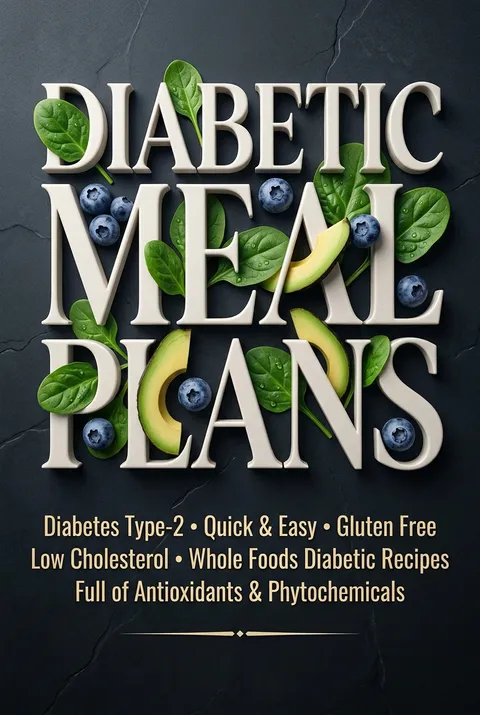
Diabetic Meal Plans: Diabetes Type-2 Quick & Easy Gluten Free Low Cholesterol Whole Foods Diabetic Recipes received mixed reviews on Goodreads, with an average rating of 3.56 out of 5. Some readers found it helpful, praising the quick recipes and meal plans for type-2 diabetics. Others were less impressed, citing issues with the table of contents, excessive advertisements, and inconsistent recipe quality. Criticism also included the lack of a reference guide for abbreviated allergy information and the need for more single-serving recipes. Overall, readers' opinions varied significantly on the book's usefulness and content quality.
Glossary
Phase 1
Four-week weight-loss menusThe book's initial eating plan, presented through four weeks of sample menus and recipes. It lists calories for many meals and repeatedly uses oatmeal, fruit, vegetables, salads, and measured portions of meat, fish, eggs, legumes, and other carbohydrates. The author frames it as a weight-loss phase for readers with type 2 diabetes, but it is not individualized clinical guidance.
Phase 2
Weight-maintenance meal patternThe book's maintenance plan, presented with sample menus and additional recipes. It largely retains Phase 1's foods while allowing more protein, nuts, seeds, or fruit and offering richer breakfasts. Many Phase 2 recipes have no calorie listings, and the author describes the plan as self-regulating. The text does not establish that it will maintain weight or glucose for every reader.
Large Fiber Loaded Salad
A leafy salad meal baseA recurring recipe foundation made from spinach and shredded cabbage or lettuce, with a choice of Italian or yogurt dressing and optional herbs or seasonings. The book serves it alongside chicken, fish, pork, or beef, and also describes a version with farmers cheese as a meal. Despite the name, the recipes do not state a measured fiber content.
Superfoods lifestyle
The author's plant-rich approachThe author's broad label for an eating pattern built around varied vegetables, greens, fruit, seeds, nuts, herbs, and minimally refined ingredients, alongside recipes using meat, fish, eggs, and dairy. The book uses the term to describe its food philosophy but does not define a nutritional standard for what qualifies as a superfood or demonstrate that the label itself confers a health benefit.
Download PDF
Download EPUB
.epub digital book format is ideal for reading ebooks on phones, tablets, and e-readers.








