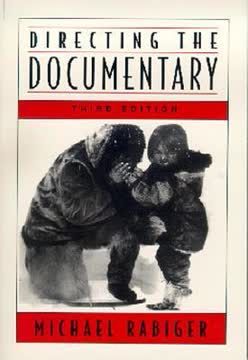
Key Takeaways
1. The Essence of Documentary: Creative Truth-Telling
Documentary always seems concerned with uncovering further dimensions to actuality and at the same time implying social criticism.
Beyond mere facts. A documentary transcends simple factual reporting; it delves into the mysteries of actual people in actual situations, aiming to reveal deeper truths and often implying social criticism. Unlike industrial or promotional films, true documentaries scrutinize the organization of human life and attempt to develop a humane consciousness in the audience. They are models of disciplined passion, showing the familiar in an unfamiliar way, inviting viewers to a keen level of awareness and even action.
Subjective interpretation. While often perceived as objective, filmmaking is inherently a series of highly significant choices: what to shoot, how to shoot it, what to use, and how to use it most effectively. The camera can never record anything objectively, as someone must always place it and decide when to turn it on and off. A documentary is a subjective construct, reflecting the richness and ambiguity of life, and going beyond objective observation to include impressions, perceptions, and feelings.
Social art form. Documentary is a truly social art, from its collaborative creation by a team to its reception by a collective audience. It explores issues through the prism of human temperament, presenting characters and events through an identifiable authorial persona. This personal stamp, visible in the works of renowned documentarians, brings a fresh, special, and engrossing involvement with the human condition, making visible what is often at the edge of society's consciousness.
2. The Director's Journey: Self-Discovery and Purpose
To make documentary is to practice living your life existentially, as though each day were your last.
Inner quest. Becoming a documentary director is a journey of self-discovery, requiring an inward exploration to recognize one's deepest concerns and the themes that flow from them. This process involves a non-judgmental inventory of one's most moving experiences, identifying core issues, and understanding how personal convictions drive the desire to create art. This self-knowledge forms the bedrock of a strong authorial voice.
Triple consciousness. Effective directing demands a highly evolved, triple consciousness: critical awareness of the world being filmed, understanding one's own evolving perceptions and emotions within that world, and mastering the medium's properties to represent this learning journey. This multi-layered awareness is cultivated through sustained practice, embracing mistakes, and developing faith and persistence, rather than relying solely on innate "talent."
Mission and impact. Documentary filmmaking is about wanting to do useful work in the world, contending for what is believed to be true and valuable. It's a vehicle for raising consciousness, linking with wonderful travel companions, and using cinematic language to create a record of our times. The director's mission is to embrace destiny, speak passionately of its presence in history, and examine choices for a more humane society.
3. Documentary as Evidence: The Courtroom Analogy
Whenever a film exposes us to good though contradictory evidence, we become jury members arbitrating truth.
Audience as jury. A documentary can be likened to a court case where evidence is presented to a jury (the audience) for consideration. The filmmaker, acting as both prosecutor and defense, must present all relevant information and viewpoints, not just those supporting a predetermined conclusion, to avoid creating propaganda. This approach encourages the audience to actively arbitrate truth based on the presented evidence.
Credibility of evidence. Not all proof is equally persuasive. The rules of evidence, distilled over time, help assess the credibility of accounts and determine where truth lies. In documentary, this means evaluating:
- Qualifications of witnesses (people, camera, sound recorder)
- Demonstrable facts supporting or undermining allegations
- Potential biases from loyalties, prejudice, or self-interest
- Authenticity of documents, pictures, memories, or records
Observational vs. participatory. The method of collecting evidence significantly impacts its meaning. Observational cinema aims for minimal intrusion, capturing spontaneous events as if the camera were invisible. Participatory cinema, conversely, actively involves participants, allowing the crew to become catalysts for events or to probe for "privileged moments." Both approaches, despite their differing claims, are ultimately mediated by human choices and editing.
4. Crafting the Narrative: Structure and Time
All satisfying stories need a sense of momentum, of going forward.
Dramatic imperative. Every successful documentary, like its fiction counterpart, tells a good story with engaging characters, narrative tension, and an integrated point of view. The traditional three-act structure (setup, complications, climax, resolution) is a powerful tool for organizing content, whether for an entire film or a single sequence. This structure helps to build momentum and ensure that the story progresses meaningfully.
Time's flexibility. How time is handled is paramount to a film's structure. Documentaries can present time chronologically (event-centered, process, journey, historical, biographical films) or reorganize it for dramatic effect (poetic, walled-city, thesis, catalogue, absurdist films). Reorganizing time allows for:
- Juxtaposing past and present for comparative insight
- Building suspense or revealing underlying causes
- Creating allegorical or metaphorical connections
Development is key. A major challenge for documentaries is showing change and development within a limited shooting period. Films must imply growth in characters or situations, even if not explicitly shown over long durations. This can be achieved by focusing on short-term conflicts, pivotal events, or by filming intermittently over extended periods to capture genuine transformations. Without a sense of movement, a documentary risks becoming a static catalogue of episodes.
5. The Power of the Shot: Screen Grammar and Perception
Really, a shot’s meaning can go very far beyond its subject.
Beyond denotation. A shot is more than just a framed image; it carries both denotative (what it literally shows) and connotative (what it suggests culturally or emotionally) meanings. The interplay of human choice, technology, subject, and environment imbues each shot with emotional weight and agenda. Understanding this allows filmmakers to craft images that evoke ideas and feelings, rather than merely depicting surfaces.
Juxtaposition's magic. When two images are cut together, the audience infers meaning from their relationship. This "juxtaposition" is the heart of film language, creating:
- Structural connections (building a scene, directing attention)
- Relational insights (contrast, parallelism, symbolism)
- Conflictual dynamics (still vs. dynamic, scale, graphic direction, light vs. dark)
This process mimics how human perception constantly organizes and interprets visual information, making film a universal language.
Mimicking consciousness. Editing, camera movement, and shot selection are analogs for human perception, action, and reaction. An effective film reproduces the shifts in our consciousness as we observe, interpret, and delve into events. This includes:
- Shifting eyelines between speakers to reveal subtext
- Using camera movement to reflect an observer's changing attention
- Employing abstraction (selective focus, abnormal motion) to suggest internal thought
By consistently humanizing these shifts, a film creates the sensation of an integrated, observing presence – the invisible storyteller.
6. Ethical Engagement: Participants and Permissions
To secure informed consent from participants means that you warn them that by publicly showing footage—though not necessarily by taking it—their reputation or even their life can be at risk, sometimes irreparably.
Trust and responsibility. Documentary filmmaking is built on trust, as directors gain access to people's lives, often without financial compensation. This creates an unavoidable risk of exploitation. Directors must act responsibly, treating participants' lives with respect and humility, and being transparent about motives. Never promise to show footage if it might lead to pressure for undesirable changes or if it could endanger the participant.
Embedded values. Filmmakers must critically examine their own "embedded values"—unquestioned assumptions that silently guide the film's outcome and can perpetuate stereotypes. This involves scrutinizing how the film represents:
- Class, wealth, race, and gender
- Appearances, belongings, and work
- Family dynamics and authority structures
The goal is to challenge assumptions and reflect the complexity and injustices of life, rather than reinforcing existing biases.
Consequences and consent. Films often alter the lives they record. Directors must assess the potential risks to participants, especially those unused to public scrutiny. Informed consent means fully apprising individuals of potential consequences, which can range from reputational damage to physical danger. While legal releases are important, moral obligations extend beyond them, requiring careful judgment, especially when a film's revelations could cause harm.
7. Preproduction: The Blueprint for Spontaneity
The thought and planning you invest before shooting, and how thoroughly you anticipate problems, go far to ensure a successful and trouble-free shoot.
Foundation of purpose. Preproduction is the critical phase where initial ideas are transformed into a concrete plan, ensuring the film's coherence and purpose. It involves defining a working hypothesis, conducting thorough site and background research, and developing trust with potential participants. This meticulous preparation is vital because the demands of shooting often preclude rarefied thought, making prior clarity essential.
Proposal as development. The documentary proposal serves not only to communicate intentions for funding but also as a stringent test of the filmmaker's organizational and thematic analysis. Writing and rewriting the proposal clarifies basic assumptions, explores imaginative variations, and identifies stylistic or structural possibilities. A well-crafted proposal demonstrates a deep understanding of the genre and the film's potential impact.
Anticipating challenges. Preproduction involves anticipating a myriad of practical and ethical problems. This includes:
- "Casting" participants based on their ability to contribute meaningfully and authentically.
- Scouting locations for lighting, sound, and logistical issues.
- Developing a detailed shooting schedule with contingency plans.
- Securing all necessary legal releases and permissions.
- Assembling a competent crew whose temperaments and skills align with the project's vision.
This foresight minimizes disruptions during the intense production phase.
8. Production: Mastering the Tools and the Moment
Directing an improvisation intended to crystallize life is a heady business.
Camera as observer. During production, the director's role is to guide the camera and crew to capture life as it unfolds, often spontaneously. This involves making real-time decisions about framing, composition, and movement, whether using a stable tripod for controlled shots or a mobile handheld camera for dynamic, subjective perspectives. The goal is to make the camera an instrument of revelation and storytelling, not just a passive recorder.
Sound's silent power. Location sound is crucial for documentary effectiveness, yet often overlooked. The sound recordist must meticulously manage signal-to-ambience ratios, minimize reverberation, and avoid system noise. This requires:
- Strategic microphone placement (close to source, out of frame).
- Understanding different mike pickup patterns (omnidirectional, directional, lavalier).
- Recording "presence tracks" to ensure consistent background atmosphere in editing.
Good sound enhances credibility and immerses the audience, while poor sound fatally disconnects them.
Directing participants. Achieving naturalness from participants is key. This involves making them feel at ease by giving them familiar activities to do, rather than asking them to "be themselves." The director must:
- Provide clear, positive instructions without being manipulative.
- Be aware of participants' self-consciousness and help them stay focused on their tasks.
- Understand that the camera's presence changes dynamics, but this can catalyze honesty and depth of feeling.
The director's empathy and ability to foster trust are paramount to eliciting authentic behavior.
9. Postproduction: The Art of Assembly and Refinement
The sum of the dailies viewing is a notebook full of choices and observations (both the director’s and those of the editor), and fragmentary impressions of the movie’s potential and deficiencies.
Editor as second director. Postproduction is where raw footage is transformed into a cohesive narrative, with the editor playing a crucial role akin to a second director. The editor brings an unobligated and unprejudiced eye, revealing possibilities and problems dormant in the material. This collaborative tension, ideally with the director, is essential for questioning assumptions and producing a tougher, better-balanced film.
Structuring the narrative. The editing process involves finding the best story within the dailies and the most effective way to tell it. This includes:
- Deciding how to handle time (chronological vs. reorganized).
- Identifying the film's dramatic curve (climax, rising/falling action).
- Using a "paper edit" to organize dialogue-driven content or an action-first approach for visually rich material.
The goal is to create a compelling, comprehensible story that engages the audience emotionally and intellectually.
Refinement and impact. Refining the cut involves achieving a seamless flow, using techniques like overlap cuts to smooth transitions and create counterpoint between sound and image. Narration, if used, must be succinct, add new information, and complement visuals without being didactic. Music should enhance mood, foreshadow events, or provide emotional depth without manipulating the audience. The final mix meticulously balances dialogue, music, and effects to create a rich, immersive soundscape, culminating in a film that leaves a lasting impact.
10. Building a Career: Passion, Skill, and Persistence
Filmmakers are seers and entertainers in an entertainment industry, and there is no finite quantity to what a society needs.
Strategic preparation. A career in documentary filmmaking is not a predictable ladder but an entrepreneurial journey requiring passion, skill, and persistence. Aspiring filmmakers must develop a strong portfolio of work, cultivate craft specialties (e.g., camera, sound, editing), and build a network of contacts. This strategic preparation, often starting during formal education or through self-study, is crucial for making oneself marketable in a competitive industry.
Networking and visibility. Attending festivals and conferences is vital for understanding industry trends, connecting with commissioning editors and distributors, and showcasing one's work. Festival awards serve as invaluable credentials, opening doors to funding opportunities and job interviews. A well-crafted documentary proposal and a compelling sample reel are essential tools for attracting support and demonstrating one's unique vision.
Creating opportunities. Documentary directors rarely find ready-made positions; they must create their own. This often involves starting with freelance crewing work to gain experience and financial stability, while simultaneously investing time and resources in personal projects. The ability to research, pitch ideas, and consistently produce high-quality, impactful films is what ultimately establishes a filmmaker's reputation and allows them to contribute meaningfully to public discourse.
Last updated:





