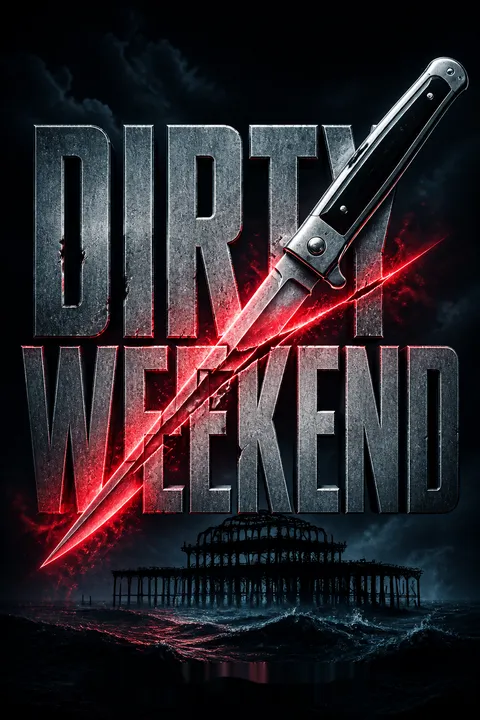


Plot Summary
The Window Across
Bella lives alone in a dark basement flat in Brighton, accepting a life of damp walls, poor light, and small expectations. Her eyesight is worsening, and the narrow square of sky outside offers little relief. One summer day, she notices a man watching her from a second-floor window across the courtyard. He does not look away when she catches him.
Later, she sees him again and draws the curtains, then locks the windows. The change is practical, but it shrinks her world further: she trades light and fresh air for a little imagined safety. Bella has spent years assuming that keeping quiet and asking little will protect her. The stranger's fixed attention begins to prove otherwise.
The opening makes vulnerability architectural. Bella's basement, dim window, and drawn curtains turn social power into a physical arrangement: she is below, watched from above, and increasingly confined by the precautions she must take. Her habit of minimizing her needs is not presented as simple passivity; it is a survival strategy that has worked only because no one has tested its limits. The watcher does. The novel's tension begins when private space ceases to be private, before any physical assault occurs.
A Voice Through Curtains
The watcher, Tim, finds Bella's unlisted phone number and calls to describe how he can see her moving behind her cheap curtains. He insults her, demands that she perform for him, and later dictates an imagined rape in graphic detail. Bella stops answering the phone, bolts her door, and tries to avoid him. In February, Tim finds her on a bench in Brunswick Square.
He sits close, grips her wrist, presses a magazine image of a bound woman against her, and threatens to enter her home and hurt her. Bella apologizes and says little, convinced that her smaller body leaves her no way to resist. Tim walks away, but his threats follow her home; he has made waiting for an attack part of her daily life.
Tim's control depends on making threat feel like an event already underway. He watches, calls, narrates violence, then uses an ordinary public bench to demonstrate that he can reach Bella anywhere. Her apologies are not consent; they are a defensive reflex in a situation where resistance could invite immediate harm. The scene exposes how coercion can colonize a person's attention long before an attacker enters the room. Tim does not need to touch her again for his presence to govern the space she inhabits.
Nimrod's Hard Choice
Seeking help, Bella visits Nimrod, an Iranian refugee who advertises clairvoyance but offers sharp, skeptical listening instead. As she recounts her past, she describes leaving college after a tutor used and discarded her, then surviving through prostitution under Joey, a pimp who could be both controlling and tender.
Nimrod challenges her belief that the past is all she is, and draws out the rage she admits she feels toward men. He produces a flick-knife, puts it in her hand, and argues that she cannot remain a spectator if others keep treating her as prey.
Bella leaves with the knife and a frightening new possibility: she might act before Tim reaches her. His advice gives her agency, but frames it as a choice between harming and being harmed.
Nimrod is neither a mystical savior nor a neutral therapist. His own history of exile and institutional punishment gives him a language for power, but his certainty narrows Bella's options into a violent binary. The knife becomes both a practical object and a test of whether she can imagine herself as more than the person men have used. Bella's account of Joey complicates simple victimhood: she remembers his cruelty alongside his care, suggesting how control can be disguised by intermittent tenderness. Nimrod's intervention awakens rage, but does not resolve what she should do with it.
Tim's Last Call
On Friday night, Bella waits for Tim to call, drinking vodka as she turns Nimrod's argument over in her mind. When Tim finally phones, she asks his name and answers his contempt with a confidence that unsettles him.
He says he is coming to collect what he believes she owes him, then threatens to throw acid on her. Bella recognizes that she cannot keep postponing a decision. She dresses warmly, covers her face with a scarf, takes a hammer, and crosses the courtyard into Tim's flat through his unlocked bathroom window.
She wakes him before striking. After killing him, she takes his cash and keys, makes herself food in his kitchen, and is disturbed by how little she feels. The first act of violence changes fear into a question she cannot yet answer.
Bella's first killing is not a clean transformation from frightened woman to triumphant avenger. She insists on waking Tim, preserving a remnant of ordinary moral restraint even as she attacks him. The scene's domestic details, including the meal she makes afterward, refuse to separate violence from everyday life. Her numbness frightens her more than the act itself, because it reveals that removing a threat does not restore an untouched self. Tim's death ends his immediate control, but leaves Bella with a new capacity and no settled account of its cost.
A Gun Behind the Counter
The next day, Bella enters a Brighton gun shop looking for a real firearm. Stan, a racist customer who boasts about weapons and military readiness, talks down to her; the shop assistant demonstrates an air revolver, then refuses to sell her a gun that fires bullets without a police licence.
Outside, a well-dressed customer named Brown offers another route. Bella gets into his car, submits to his search for police wires, and meets him later at a pub. Brown, a former military policeman, sells her an automatic pistol with one six-round clip for four hundred pounds.
He leaves the weapon hidden in a bin, and Bella retrieves it from a carrier bag. The transaction gives her a means of defending herself, but leaves her dependent on a secretive man with his own history of violence.
The gun shop presents protection as something regulated by institutions that Bella cannot readily access, while its customers display a casual intimacy with force. Stan's bluster and Brown's disciplined, transactional manner are different styles of the same masculine authority. Bella's purchase is therefore not uncomplicated empowerment: she gets a weapon by entering a stranger's car and accepting his terms. The contrast between an airgun and live ammunition turns legality into a question of who is trusted to use force. Bella crosses that boundary, but still has to improvise her safety through men.
Norman's Hotel Room
That Saturday night, Bella dresses in red and sits alone in a hotel bar. Norman, a self-important senior lecturer, joins her and presents himself as a sensitive intellectual who understands women's suffering. She accompanies him upstairs. When his attempt at sex falters, Bella laughs; Norman hits her with his shoe and kisses her violently.
He then asks her to tie him to a chair as part of a sexual game. Bella binds him with his belt, gags him with his shirt, and tells him she intends to kill him. She covers his head with a plastic bag until he suffocates. The killing is deliberate, unlike the attack on Tim, but Bella's bruised mouth and sleepless night leave her questioning whether she acted too quickly.
Norman's self-image as a caring intellectual collapses as soon as Bella's laughter threatens his authority. His violence restores the hierarchy he claims to transcend, while the sexual game briefly gives Bella control over the terms of contact. Her decision to kill him follows his assault, yet her later doubt prevents the scene from functioning as an easy verdict. The novel exposes how politeness and education can conceal entitlement, but it also asks what happens when a victim becomes judge and executioner. Bella's power is real; so is the moral uncertainty it creates.
The Dentist's Ride
On Sunday, Bella finds a dentist willing to treat the tooth Norman damaged. Reginald Mire drills the cavity without the pain relief she asks for, dismisses her discomfort, and charges her fifty pounds. He then offers her a lift. In his Mercedes, Reginald complains about patients and women's bodies, while showing Bella a photograph of his thirteen-year-old daughter and describing her as vulnerable to men.
His protective language curdles into threat: he believes Bella's presence in his car means she has invited sex. Reginald ties her wrists to the steering wheel and forces her to perform oral sex. Bella has left her gun at home, and must listen and wait for an opening rather than try to overpower him.
Reginald's professional authority and paternal concern are masks for possession. He treats Bella's request for pain relief as an inconvenience, then interprets her acceptance of a lift as permission to assault her. His fixation on protecting his daughter does not restrain his violence; it supplies a moral alibi for it. Bella's missing gun sharply exposes the limits of the security she thought she had purchased. She is again forced to survive by reading a man's behavior and waiting for a usable moment, a skill that has kept her alive but never made her safe.
The Mercedes Reverses
When Reginald gets out of the car to urinate, Bella slides into the driver's seat and starts the engine. She drives forward, crushing his leg against the lift door, then reverses and strikes him again at speed. With Reginald dead, she returns to her flat, packs a suitcase, collects the pistol, and decides to leave Brighton for London the following day.
She has little money and has left evidence behind, but refuses to wait for the police to identify her. The Mercedes gives her mobility and a temporary escape from the men she has killed. It cannot erase the violence done to her or guarantee that no one else will find her.
The car reverses the scene's power arrangement with brutal clarity: the vehicle that carried Bella into Reginald's control becomes the instrument by which she escapes it. Her action is improvised rather than planned, and that distinction matters. She has not become invulnerable; she has seized a narrow opportunity before it closes. Packing for London shows that survival now involves flight as well as retaliation. Yet the car and the weapon offer only provisional freedom, because Bella remains visible to the same culture of predation that made her flee.
The Alley Pyre
Later that night, three wealthy young men corner Mary, an elderly homeless woman, in a blind alley. They mock her, strip away her layers of clothing, and prepare to set her alight with scraps of newspaper and alcohol. Bella arrives in Reginald's Mercedes and gets out with her handbag. When the smallest man approaches, she draws her pistol and shoots him.
She kills the quiet accomplice and the bitter ringleader as well, the last after he charges her and she fires into his thigh, then finishes him at close range. Mary survives and gathers her scattered clothes. Bella leaves the bodies, throws the empty pistol from the car, and drives away. Her intervention saves a stranger, while making her escape more dangerous.
Mary's assault echoes the violence Bella has endured, but the reversal is not merely symbolic: Bella acts where bystanders have failed to appear. The three men use wealth, mockery, and group permission to turn cruelty into entertainment, even dressing their planned burning in the language of order and cleanliness. Bella's gun breaks their shared impunity. Still, the rescue is compromised by lethal force and by the evidence she leaves behind. The episode expands her action beyond personal revenge, while making clear that solidarity does not arrive as a clean or consequence-free alternative.
The Leper on Shore
Near dawn, Bella leaves the Mercedes on Brighton's seafront and walks alone beside the water, still intending to leave town. A hooded man watches her from the promenade and follows her beneath the ruined West Pier. He is a serial attacker who classifies women by how they resist, then strangulates them and assaults them.
He catches Bella from behind and begins squeezing her neck. As he holds her, he speaks gently and insists he will not hurt her, unaware that she has a flick-knife from Nimrod. Bella opens it and stabs him repeatedly, finally driving the blade into his chest. He falls into the sea, and she remains on the shore as the novel closes on a threat she has answered, not a secure escape.
The final encounter makes the book's circular structure explicit: after a weekend of retaliation, Bella is again alone and watched by a man who assumes he can interpret her body as an invitation. The attacker's tenderness is not a contradiction of his violence but one of its instruments, a way to keep control while disguising intent. Bella survives because Nimrod's knife, introduced as a symbol of choice, has become a usable tool. Yet the ending refuses the comfort of completed liberation. Her capacity to fight has changed; the conditions that make fighting necessary remain.
Analysis
Dirty Weekend makes its central argument through a chain of specific encounters rather than an abstract debate. Tim turns a window and a telephone into instruments of control; Norman converts a self-image of sensitivity into violence; Reginald turns professional authority and fatherly concern into permission to assault. Bella's attacks on these men reverse the immediate balance of power, but the book does not offer violence as uncomplicated repair. After killing Tim, she is frightened by her own numbness. After Norman, she questions whether she acted too quickly. After Reginald, she flees. Each act solves one immediate danger while changing what Bella believes she can do.
The novel also distinguishes individual malice from the wider conditions that shelter it. The three young men who attack Mary draw on wealth, group loyalty, and the language of public decency to make cruelty seem like a joke. Brown's account of military abuse shows a related contempt operating inside institutions. Bella's interventions answer particular threats, but do not transform the conditions that produce them. The ending reinforces that limit when a new predator follows her onto the shore.
Bella's humor is crucial to this design. It lets her name hypocrisies that polite social language conceals, and it keeps her from becoming only an emblem of victimhood. Yet her wit does not dissolve fear, pain, or moral uncertainty. The book's sharpest tension lies between the need for self-defense and the risk of turning survival into a private system of punishment. Bella gains agency, but not innocence, security, or a clean way out.
Review Summary
Dirty Weekend elicited polarized reactions, with many female readers finding it empowering and cathartic, while others criticized its graphic violence and dated elements. The novel follows Bella, a woman who snaps after enduring harassment and goes on a killing spree targeting abusive men. Readers praised its feminist themes, revenge fantasy elements, and provocative storytelling. However, some found the writing style repetitive and the plot far-fetched. Despite its controversial nature, the book remains a significant work in feminist literature, sparking discussions about violence against women and societal power dynamics.
Characters
Bella
The cornered survivorBella is a lonely, observant woman living in a Brighton basement, carrying a history of sexual exploitation and abandonment. She is neither a natural fighter nor a confident avenger at the outset; she avoids pain, apologizes under pressure, and has learned to make herself small. Her quick, sardonic intelligence lets her read the men around her, though it cannot protect her from them. She wants to be left alone, but also wants her existence to leave a mark. As the story progresses, she discovers that force can interrupt the helplessness she has accepted. That discovery does not make her peaceful or certain. Her humor, fear, tenderness, and capacity for violence continue to coexist.
Nimrod
The exiled counselorNimrod is an Iranian refugee, former journalist, and self-styled clairvoyant who lives in a dark basement. His wit and theatrical manner conceal the injuries of exile and imprisonment. He listens closely to Bella, challenges her belief that her past defines her, and offers her a knife. His advice helps her recognize her anger, but his framing of her options is severe and reductive. Nimrod understands power as something that must be confronted, partly because he has experienced what happens when resistance comes too late.
Tim
The window watcherTim is the man who watches Bella from across the courtyard, then extends that surveillance through obscene phone calls and public intimidation. He speaks with cold control rather than visible frenzy, making his threats feel calculated and ordinary. His behavior depends on Bella believing that resistance will only provoke him. Tim's entitlement is expressed through his conviction that watching, naming, and frightening a woman gives him a claim on her.
Brown
The weapons brokerBrown is a former military policeman who sells firearms outside ordinary legal channels. He is suspicious, disciplined, and openly shaped by his years in uniform, where he learned to equate power with control. His story about abuse inside military custody reveals how casually he treats institutional cruelty. He gives Bella access to a gun, but does so as a dealer protecting his own interests, not as an ally committed to her safety.
Stan
The gun-shop bigotStan is a blustering customer in the gun shop who boasts about weapons, nationalism, and racial separation. He sees himself as a protector, but his talk reveals fear and aggression more than courage. Bella listens politely while recognizing the threat behind his claims.
Norman
The self-styled intellectualNorman is a senior lecturer who presents himself as thoughtful, sensitive, and unusually appreciative of women. He uses academic language to elevate his opinions and dismiss those of his estranged wife. Beneath the cultivated manner is a need to control how others see him. Bella's mockery exposes the fragility of that self-image, while his response reveals how quickly professed gentleness can give way to punishment.
Reginald Mire
The possessive dentistReginald Mire is a dentist whose professional status and tidy habits support his conviction that he is entitled to judge others. He disregards Bella's requests during treatment and complains that patients and women are filthy. He speaks of his young daughter as someone he must protect, yet uses that concern to justify suspicion and control. His need to be listened to is as pronounced as his need to dominate.
Mary
The alley's vulnerable witnessMary is an elderly homeless woman who spends the night alone with her belongings in a Brighton alley. Her age, illness, and disorientation make her easy for the three young men to ridicule and overpower. She has endured danger before and understands the risks of being isolated, but her survival cannot depend on vigilance alone. Her encounter with Bella brings another vulnerable life into the story's widening circle of violence.
The three young men
The entitled packThe three young men are wealthy, fit, and accustomed to treating public space as their private playground. Their different temperaments, the small man's taunting confidence, the quiet man's complicity, and the bitter man's cruelty, do not prevent them from acting as a unit. Together they turn class privilege into permission to terrorize people with less power.
Jack
The hooded predatorJack is a serial attacker who studies his victims and sorts them by how they react to fear. He disguises predation with a soft voice and feigned tenderness, treating a woman's vulnerability as something he can manage. His careful methods reveal a practiced, self-justifying cruelty rather than impulsive rage. He represents the danger Bella cannot escape simply by leaving one abusive man behind.
Joey
Bella's former pimpJoey controlled Bella when she was a prostitute, taking the profits while offering occasional tenderness and gifts. Bella remembers him with mixed feelings, showing how care and exploitation can coexist within a relationship of unequal power.
Plot Devices
Nimrod's flick-knife
A hand-sized choiceNimrod gives Bella the knife after hearing her describe her fear and anger. Its practical use is established before the final attack, where she uses it against a predator who has caught her alone. The knife is not simply a weapon that guarantees safety: it requires Bella to act at close range, and it cannot prevent her from being surprised or hurt. Its movement through the story gives physical form to the decision Nimrod presses on her, while leaving the consequences of that decision unresolved.
The six-shot pistol
Borrowed lethal powerBella seeks a firearm after Tim's threats, but legal restrictions block her at the gun shop. Brown sells her an automatic pistol and one clip of six bullets, which she retrieves from a hidden carrier bag. The weapon later lets her intervene when three men attack Mary. Its limited ammunition, illegal source, and eventual abandonment make it a temporary instrument rather than a lasting solution. It gives Bella distance and force, but only after she accepts risk and secrecy to obtain it.
The red mental ledger
A private justice systemAfter Reginald's painful dental treatment, Bella imagines a little red book in which each person's misconduct earns an endorsement. The idea borrows the logic of a driving licence: enough offenses should lead to a permanent ban. It reflects Bella's desire to make punishment proportionate and legible in a world where formal authority has not protected her. But the ledger is private, maintained only in her mind, and its imagined rules cannot settle the moral question of how much punishment is enough.
Curtains and windows
Safety that confinesBella's basement windows begin as her only source of daylight, then become the route through which Tim watches her. Drawing the curtains, fitting locks, and shutting the windows make her feel safer while cutting her off from light and air. Later, she enters Tim's flat through his unlocked bathroom window. The recurring windows connect vulnerability with access: they are boundaries that can be watched, crossed, or defended, but never made entirely secure.
Download PDF
Download EPUB
.epub digital book format is ideal for reading ebooks on phones, tablets, and e-readers.








