

Key Takeaways
Treat marketing as customer-shaped product design, not a department that broadcasts.
Customers shape the brand. Colon argues that social networks, smartphones, and online reviews have shifted power from companies toward people who can publish, recommend, criticize, and remix. Marketing therefore cannot be confined to messages sent by a specialized department. It must also shape the product, service, culture, and customer experience people encounter. The book’s history makes the risk tangible: Bethlehem Steel faltered while lower-cost mini-mills served changing needs, and record labels fought Napster rather than fixing a CD model customers disliked.
Build what earns attention. A good product and a responsive company matter more than louder promotion. Every use, support interaction, or public response affects what customers tell others. Marketing is the work of understanding those reactions and improving what the organization offers.
What's striking is the move from marketing as persuasion to marketing as organizational learning. This aligns with service-dominant views of business, where value emerges through use and interaction, not simply from a product sold once. The shift also makes marketing everyone's responsibility, but it does not mean customers literally control every brand decision. Companies still choose what to build, which feedback to prioritize, and how to protect users. Customer influence is powerful, not absolute. The practical test is whether customer evidence can change product decisions, rather than merely decorate a presentation.
Ask what if before your industry's old playbook decides what is possible.
Look beyond the category. Colon uses the first paid radio advertisement to show how useful ideas can arrive from outside an industry. In 1922, New York station WEAF aired a promotion for Hawthorne Court Apartments, which had paid $50 for airtime. The commercial model drew on telephone billing: charge for access to communication over time, then apply the idea to radio. Radio insiders did not have to invent the model for it to transform broadcasting.
Challenge the default answer. The book recommends asking open-ended questions instead of treating every decision as a forced choice. A product launch might start with a press release that tests how the idea sounds, a small real-time experiment, or data that contradicts the assumed audience. There is no universal template; context should determine the approach.
The radio example illustrates a durable mechanism of innovation: transfer a working idea across domains, then adapt it to a new medium. This resembles recombination in evolutionary theory, where novelty often comes from rearranging existing parts rather than inventing from nothing. The What if? question also loosens premature certainty and invites alternatives. Still, open-ended thinking needs a boundary: teams can generate endless possibilities without learning which matter. A useful question becomes more powerful when paired with a test, a user problem, or a clear decision the answer could change.
Build hybrid teams that can interpret data, make things, and read people.
Cross the skill boundaries. The disruptive marketer is not only a strategist or a creative specialist. Colon favors people who can connect analytics, design, technology, storytelling, and customer understanding. His example is a colleague who could translate technical numbers into language clients understood, showing that communication across specialties is a practical advantage, not a soft extra.
Mix perspectives early. The book cites a reported problem-solving comparison in which a diverse group reached a solution in ten minutes, while a team of specialists took weeks. It also points to a study of chief marketing officers: those with both analytical and creative backgrounds were more likely to work in firms with stronger marketing capability. The lesson is not to reject expertise, but to avoid teams where every person sees the same slice of the problem.
Hybrid teams can reduce translation costs: a data finding is more likely to matter when someone can turn it into a usable design or message. Research on cognitive diversity similarly suggests that varied perspectives can improve problem-solving when teams integrate disagreement rather than merely assemble different people. Diversity alone is not a magic ingredient; status differences, poor facilitation, or rushed consensus can suppress its benefits. Nor should every employee be expected to master every discipline. The stronger model pairs deep expertise with enough breadth to collaborate, question assumptions, and carry an idea from evidence to execution.
Run small experiments at the edges, where tomorrow's mainstream starts.
Make room for tinkering. Colon describes DJ Grandmaster Flash developing new performance techniques by adapting and combining what other DJs had tried. The larger point is that innovation often begins as hands-on experimentation, before anyone knows it will become a movement. Colon recommends reserving at least 10 percent of a marketing budget for experiments that may not show immediate return, using them to discover emerging behavior and possible new approaches.
Measure to learn. The book’s cycle is to test, observe, and adjust. Colon’s early event promotion offers a small example: he and a friend tracked calls to an information line and estimated attendance from them. The estimate was imperfect, but it made a previously overlooked signal useful. Failure means little unless the team learns from it; continuing after evidence says stop is not resilience.
This is a practical argument for exploration alongside optimization. Organizations that spend all resources improving known channels can become efficient at a shrinking opportunity; small tests preserve the capacity to notice change. A portfolio approach also limits the cost of being wrong. The caution is that experiments need ethical boundaries, clear learning goals, and a way to distinguish noise from a meaningful result. Not every fringe behavior predicts a broad shift, and not every experiment deserves scaling. Treat the 10 percent suggestion as a provocation to protect exploration, not a universal budget law.
Design distribution before producing content people may never encounter.
Start where people share. Colon argues that strong content does not spread by itself. At BuzzFeed, teams tested how audiences shared stories and adapted the interface to those behaviors. One example: visitors arriving from Pinterest were much less likely to share a story on Twitter, so BuzzFeed emphasized Pinterest sharing for that audience. The book reports that Pinterest sharing increased tenfold after the adjustment.
Fit the moment. Spotify playlists offer another model. Instead of requiring listeners to know exactly which artist to search for, playlists organize discovery around moods and situations. Listening data then helps editors adjust what appears and where. This is distribution science: studying how, where, and when people encounter and pass along material, then using those patterns to shape both the product and its presentation.
Distribution-first thinking treats marketing as a problem of fit between content, context, and social behavior. It connects with the broader idea of affordances: an interface makes some actions easier to notice and perform than others. Yet distribution cannot rescue content that lacks meaning, and optimizing for shares can privilege easy reactions over trust or depth. The strongest approach joins editorial judgment with behavioral evidence. Data can reveal where a story travels; it cannot, by itself, determine whether the story deserves to travel or whether the attention it attracts is valuable.
Turn customers into producers, not merely audiences for a controlled brand story.
Creation is widely accessible. Colon calls the shift producerism: people can create and distribute material rather than only consume what companies publish. Cheap software and smartphones lowered barriers that once kept broadcasting, design, and publishing in professional hands. Colon’s path from college radio to podcasting illustrates the change: tools that had once been difficult to access eventually let him produce and distribute a show himself.
Invite contribution. Customers may review, remix, fund, or help shape products. Tumblr’s founder, David Karp, described releasing features and being surprised by the creative ways users applied them. Their behavior offered ideas for future development. Brands cannot assume that every customer wants to participate, but they can create useful openings for those who do, and learn from what people make.
Producerism reframes audiences as potential collaborators, echoing participatory culture and user innovation: people often adapt tools for needs their designers did not anticipate. This can generate insight and attachment because contribution gives users a stake in the outcome. But participation is not free labor that companies should quietly appropriate. Ownership, attribution, moderation, and compensation matter, especially when user contributions become commercial assets. Nor is every product improved by co-creation. The value depends on whether participation solves a real user problem, rather than serving as a brand’s performance of openness.
Design conversations into the customer experience, using digital as one tool among many.
Make interaction part of the design. Colon defines social by design as creating products and experiences that support ongoing conversation and relationships, rather than adding a social-media prompt to an otherwise one-way campaign. Customers’ responses can inform product changes, while company culture shapes whether those exchanges feel credible. The book contrasts this with brands that simply ask people to follow them, without giving them a meaningful reason to do so.
Think beyond screens. The post-digital idea does not mean life after technology. It means treating digital as one option among physical and human ways to connect. A conversation, event, useful service, or thoughtfully chosen offline experience may serve customers better than another app or notification. The medium should follow the human need, not the other way around.
The emphasis on designing interaction, rather than merely publishing content, is a useful bridge between product design and relationship marketing. In human-computer interaction, a good system makes valuable actions legible and easy without forcing them. That principle applies to social features as much as to interfaces. The limitation is that continuous conversation can become intrusive or emotionally demanding for customers and employees. A relationship is not measured by how frequently a brand appears. The design question is whether each interaction offers genuine utility, respect, or room to disengage.
Listen for human meaning in data, then change the product or service.
Replace broadcast with attention. Colon reverses the familiar sales maxim of always closing, proposing ABL, or Always Be Listening. Social data can expose assumptions that organizations mistake for facts. In one example, a client aimed its messaging only at men, but listening showed that women made up 30 percent of the audience. That finding could change both the audience strategy and the product conversation.
Interpret, then act. Data tools can count mentions or estimate sentiment, but they do not reliably explain what people mean. Context, culture, and emotional intelligence matter. Colon criticizes reports that surface useful customer insights but lead to no decisions. The goal is not to collect more data or present a polished dashboard. It is to identify a real need, decide what to change, and check whether that change improves the experience.
The distinction between collecting signals and interpreting them is central to sound decision-making. Quantitative data can reveal patterns, while qualitative listening helps explain what those patterns signify. Used together, they reduce the risk of confusing a convenient metric with a customer need. Listening is not automatically unbiased, however: platforms overrepresent some voices, automated sentiment can misread context, and vocal users are not always representative. Good practice combines social signals with direct research and makes explicit whose experience remains missing from the data.
Make ethics operational, because reputation is shaped by what a company does.
Responsibility must be visible in practice. The book treats corporate social responsibility as more than charitable messaging. It includes working conditions, environmental impact, inclusion, supply chains, and customer service. Its example is CVS, which stopped selling cigarettes in 2014, sacrificing potential sales while aligning its business with a health-focused mission.
Prove the commitment. Customers can investigate company behavior and share what they find, so a polished campaign cannot compensate for a contradiction between claims and operations. Colon argues that responsibility must be long-term and built into company policy and culture. A company should identify a social commitment connected to its purpose, make measurable progress, and communicate evidence rather than relying on fashionable language or one-time donations.
This view treats ethics as a governance issue with marketing consequences, not a decorative communications theme. That distinction matters because public trust depends on consistency between what an organization says and what it rewards internally. A strategic social commitment can clarify priorities and create accountability. At the same time, consumer preference is not the only reason to act responsibly, and responsible choices may involve trade-offs that do not produce immediate commercial gains. Independent reporting and meaningful standards help separate substantive change from greenwashing or cause-washing.
Treat learning as continuous product development, not a one-time training event.
Skills have a short shelf life. Colon argues that a fixed credential or years of experience cannot guarantee relevance when customer behavior and tools keep changing. He draws on educators who favor ongoing, practical learning over a single course or a four-year body of knowledge. His advice is to learn, unlearn, and relearn: acquire a skill, test it against reality, and abandon it when it no longer serves the work.
Make room for perspective. The book also recommends stepping away from screens and observing people, places, and culture. This is not an argument against data or technology. It is a way to notice experiences that dashboards do not capture and to generate questions that established routines overlook. In marketing, imagination and empathy need contact with the world they are meant to serve.
Continuous learning is most credible when embedded in work: small trials, peer feedback, and reflection can make training responsive rather than ceremonial. The emphasis on observation also counters a common measurement bias, where only what is easy to count receives attention. Still, experience is not worthless, and constant reinvention can become exhausting or wasteful. The goal is not to discard expertise on a timer. It is to keep expertise revisable, combining accumulated judgment with evidence from new contexts and voices.
Analysis
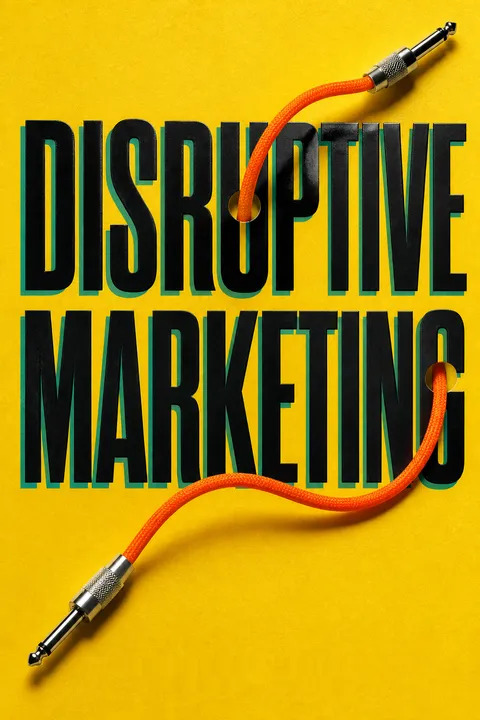
Disruptive Marketing is a business manifesto built around a change in power: customers can now publish, distribute, and shape meaning without a company’s permission. Colon makes the case through stories that move from early radio advertising to Napster, punk music, podcasting, and contemporary social platforms. Their common thread is not novelty for its own sake. It is the ability to notice behavior that established organizations have misread, then design a response around it.
The book’s most useful contribution is its insistence that marketing belongs inside product design, customer service, company culture, and everyday decision-making. Its practical concepts reinforce one another: ask open questions, build cross-functional teams, experiment at small scale, design distribution around real use, listen for context, and make ethical commitments operational. The combined framework is more durable than the specific technologies and platform predictions, many of which reflect the book’s 2016 setting.
Some claims need calibration. The author sometimes treats conventional marketing, large organizations, and MBA-trained managers as more uniform than they are. Hierarchy can obstruct learning, but it can also clarify accountability; specialist expertise can constrain perspective, but it is indispensable for solving technical problems. Likewise, customer participation is not automatically democratic or representative. Platforms amplify certain voices, and companies still control which feedback they act upon. More data can improve decisions only when organizations confront sampling gaps, privacy concerns, and the difference between attention and value.
The strongest reading is therefore not that all traditional marketing should be discarded. It is that its tools need to become subordinate to customer evidence and organizational adaptability. The book asks marketers to behave less like campaign owners and more like designers of useful, trustworthy experiences. Its enduring test is simple: does a company change what it makes or how it behaves after listening, or does it merely publish a more contemporary message?
Review Summary
Disruptive Marketing receives mixed reviews, with an average rating of 3.53 out of 5. Positive reviewers praise its thought-provoking content, innovative ideas, and ability to challenge traditional marketing approaches. They appreciate the author's storytelling and diverse examples. Critics argue the book lacks depth, contains outdated information, and rehashes common digital marketing concepts. Some find it difficult to engage with or feel it offers limited practical insights. Despite divided opinions, many readers recommend it for marketers seeking fresh perspectives and those willing to rethink their strategies.
People Also Read




Glossary
Disruptive marketing
Customer-centered adaptive marketingA way of designing marketing around changing customer behavior rather than relying on fixed, one-way campaigns. It combines data, creativity, empathy, and experimentation, and treats product design, service, culture, and communication as connected parts of the customer experience.
Information jamming
Creating media independentlyA strategy of producing and distributing a point of view directly instead of depending on established media or publishers to carry it. In the book, it also means using distinctive, sometimes provocative material to start discussion, rather than placing a conventional branded message in front of an audience.
Distribution science
Study of content circulationThe practice of analyzing how people encounter, share, and use content across platforms, then applying those findings to improve its reach and relevance. It includes attention to the audience's context and likely actions, not simply counting views after publication.
producerism
Customers create and contributeThe shift in which people act as producers as well as consumers because accessible tools let them make, publish, remix, or help develop content and products. Businesses can learn from or invite this activity, while respecting the contributors' interests and work.
social by design
Design for ongoing interactionA design approach that makes conversation and continuing relationships part of a product or service experience. Rather than attaching a social prompt to a one-way campaign, it places people's needs and interactions at the center, using feedback to inform improvement.
post-digital
Digital among human toolsA perspective that treats digital technology as an ordinary part of life, not as the sole focus of innovation. It considers how technology intersects with human behavior and recognizes that physical experiences, direct conversation, and other non-digital methods can be more appropriate than the newest platform.
ABL (Always Be Listening)
Listen before trying to persuadeColon's alternative to a sales-first posture. ABL means attending to customer behavior and conversation to understand needs, moods, and problems before responding. Listening is useful only when human judgment interprets the evidence and the organization can act on what it learns.
Insights-as-a-Service (IaaS)
Value derived from dataThe process of turning collected data into insights that can guide decisions. The term emphasizes that gathering large volumes of information is not itself the goal. Analysis must reveal something meaningful about behavior or context that a team can use to improve a product, service, or experience.
cognitive whisper
Relevant, quiet attentionA communication approach that seeks attention through relevance and context rather than through louder interruption. It recognizes that people face substantial message clutter and that a subtle, well-fitted experience can be more effective than an attention-grabbing pitch.
Download PDF
Download EPUB
.epub digital book format is ideal for reading ebooks on phones, tablets, and e-readers.








