

Key Takeaways
Treat self-pleasure as ordinary pleasure, not a disease or miracle cure
A fear with a history. For much of recorded history, masturbation was treated as ordinary, mocked, or socially low-status, not as a medical catastrophe. In the eighteenth century, the pamphlet Onania recast it as a cause of ailments from infertility to epilepsy. In the nineteenth century, physician John Harvey Kellogg blamed it for an even wider range of illnesses and promoted bland food, including corn flakes, as a deterrent to sexual desire.
Progress is not automatic. The book tracks how claims about bodily ruin persist in updated forms, from moral crusades to online wellness warnings. It also rejects the opposite exaggeration: masturbation is not a cure-all. Its central case is simpler. Self-stimulation is a common human behavior, and false claims of harm should not be replaced by grand promises of health benefits.
What's notable is how medical language can give moral disapproval the appearance of objective fact. The same pattern appears whenever institutions label a behavior dangerous before establishing what harm it causes. Historical perspective helps readers recognize that a confident health claim can reflect its era's values more than reliable evidence. Still, historical prevalence alone cannot prove that every behavior is beneficial or harmless in every circumstance. The useful distinction is between ordinary variation and a specific, demonstrable problem, rather than treating pleasure itself as a diagnosis.
Teach privacy without teaching children to hate their bodies
Curiosity is not misconduct. Infants and young children may touch their genitals because it feels soothing or pleasurable, without adult sexual motives. Some childhood self-stimulation has been mistaken for seizures, leading to unnecessary tests or treatment. The book argues that the response should depend on age, setting, and development. A toddler may not understand privacy; an older child repeatedly masturbating in public may need help understanding social boundaries.
Education protects. In 1994, Surgeon General Joycelyn Elders was fired after saying masturbation could be included in sex education. The author argues that age-appropriate teaching gives children accurate names for body parts, explains privacy, and helps them recognize and report abuse. Scolding and punishment can instead teach shame. The aim is not to encourage a child to masturbate, but to respond calmly and distinguish private self-exploration from exploitation by another person.
This distinction is a practical application of child safeguarding: informed children have language for describing boundaries and unwanted contact. It also reflects a broader developmental principle, that adults should interpret behavior according to a child's understanding rather than projecting adult motives onto it. Privacy education must be concrete and age appropriate, and it should not imply that children are responsible for preventing abuse. The strongest approach combines bodily literacy with clear boundaries, attentive adults, and access to trusted help.
Respect religious choice without dressing doctrine up as medical science
Belief and biology differ. Several religious traditions discourage or prohibit masturbation, often because sexuality is understood as belonging within marriage or serving procreation. The biblical story of Onan is frequently used as a basis for condemnation, although the story concerns disobedience to a specific family obligation and does not explicitly describe masturbation. The book also notes that reported masturbation among Catholics is common, with studies ranging from 60 to 91 percent.
No invented diagnosis required. People may choose to follow religious rules, reinterpret them, or leave a tradition. The author objects when religious arguments are reinforced with unsupported claims about physical damage, infertility, or depleted vitality. He contrasts strict teachings with religious figures who support sexual self-knowledge, and with Satanism, whose atheistic traditions often treat pleasure as a legitimate personal choice. Religious conviction is distinct from fabricated medical evidence.
Separating a moral claim from an empirical one makes room for both religious freedom and scientific accountability. A person can sincerely consider an act sinful without needing a biological scare story to justify that belief. Conversely, medical evidence cannot settle every question about meaning, obligation, or spiritual practice. This distinction is useful well beyond sexuality: public debate becomes clearer when participants identify whether they are arguing about measurable harm, moral authority, or personal values, instead of sliding between them.
Do not mistake semen retention for a testosterone or vitality plan
Semen is not stored fuel. Dhat syndrome is a cluster of distressing fears about losing semen, often accompanied by fatigue, weakness, sexual concerns, or depression. In one reported case, a man so feared semen loss that he cut off his penis. The book argues that this fear is not confined to South Asia: Western anti-masturbation claims have also portrayed ejaculation as a drain on health and masculinity.
The numbers puncture the myth. Semen contains zinc, but the average amount cited is about 0.561 milligrams, compared with an adult man's recommended daily intake of 11 milligrams. Claims that abstinence reliably boosts testosterone rest on small, inconsistent studies; a frequently cited study was retracted. Semen retention may be a spiritual practice, but the book finds no sound basis for promising it will build muscle, prevent disease, or confer extraordinary energy.
This section shows how a bodily fluid can become a symbol of cultural anxieties about masculinity, vitality, and self-control. The numerical comparison is helpful because it replaces vague claims of depletion with scale. It also illustrates why a biological explanation should be tested rather than inferred from a sensation such as post-orgasmic tiredness. The caution is that limited research does not establish every possible effect as impossible. It does, however, make sweeping promises about testosterone or health unjustified.
Judge distress by its causes, not by orgasm counts
A label can mislead. The book disputes the idea that frequent masturbation alone proves addiction. There is no DSM diagnosis for masturbation addiction, and a proposed diagnosis of Hypersexuality Disorder was not adopted for lack of sufficient evidence. The author notes that repetitive sexual behavior can still cause real distress or disrupt daily life, and may also be related to conditions such as mania, anxiety, or medication effects.
Check the conflict beneath it. Moral incongruence means distress that arises when someone's sexual behavior conflicts with their religious or moral beliefs. A person may interpret guilt after masturbating as proof of being out of control, even if the behavior is infrequent. Assessment should explore the behavior's effects, the person's values, relationship agreements, and its role in managing stress. The question is not merely how often someone masturbates, but what is happening around it.
This distinction resembles a core principle in clinical reasoning: symptoms are not explanations. Counting behavior can be useful, but it cannot by itself reveal whether distress stems from impairment, shame, relationship conflict, or another health concern. At the same time, rejecting an addiction label should not dismiss someone who feels unable to meet their responsibilities or wants help changing a pattern. A careful assessment validates the distress while keeping its possible causes open, instead of making abstinence the automatic treatment.
Read porn research as contested evidence, not a verdict
Measurement is a weak link. Research on pornography often uses different definitions and questions. A review of studies published from 1999 to 2009 found that 95 percent used a unique definition of pornography, while many did not clearly explain how use was measured. That makes studies hard to compare and broad claims hard to trust.
Association is not cause. Some studies link men's self-reported porn use with lower relationship satisfaction, but the relationship can run both ways: dissatisfaction may accompany increased viewing, too. Religiosity and disapproval can also shape how people experience porn. Brain scans showing differences among users cannot establish that porn caused those differences, especially when participants remain healthy and function normally. The book's conclusion is qualified: effects may matter for some people and relationships, but the evidence does not support universal claims that porn damages brains, causes violence, or destroys love.
The chapter is strongest when it treats research quality as part of the argument, not as an academic footnote. Inconsistent measurement limits what a field can confidently claim, while selective citation can make mixed findings appear settled. This is a lesson in scientific literacy: ask how a variable was defined, whether the study can show causation, and whose experience its sample represents. Nuance should not be mistaken for certainty in the opposite direction; the evidence leaves room for individual and relational problems.
Use self-knowledge, not performance myths, to shape sexual pleasure
Practice can teach response. Directed masturbation is a structured sex-therapy approach in which a person explores their body at home, often progressing through nonsexual touch, anatomy learning, fantasy, and sexual stimulation. Studies cited in the book report that 60 to 90 percent of women in these programs become orgasmic through masturbation, and 33 to 85 percent become orgasmic with a partner. A therapist guides and discusses the exercises; the patient does not masturbate in the session.
Timing is not a score. The stop-start technique involves pausing or easing stimulation as arousal rises, then resuming after it settles, to build awareness and control. Evidence for the technique alone is limited, and lasting longer is not automatically more pleasurable. The broader lesson is to learn what feels good and communicate it, rather than judging sexual functioning against myths about how quickly or slowly an orgasm should happen.
These techniques turn sexual response from a test into a form of learning. The approach resembles skills training in other areas: notice signals, experiment in manageable steps, and revise based on experience. It also counters a common measurement error, where duration is treated as a proxy for satisfaction. The evidence for directed masturbation is encouraging, while the limited findings for stop-start alone warrant modest claims. Treatment is most useful when it addresses the person's goal, not an arbitrary performance standard.
Choose sexual tools by comfort and safety, not cultural panic
Tools can expand access. Archaeologists have found ancient objects shaped like penises, though their exact use is sometimes uncertain. Modern vibrators became more visible through feminist education and popular culture. Research cited in the book finds that vibrator use is common and, for many women, is associated with better sexual functioning. That does not mean a vibrator is necessary, or that one method of stimulation is superior for everyone. The author also explains that external and internal genital stimulation can involve overlapping anatomy, so pleasure does not depend on finding a single supposedly universal spot.
Novelty needs judgment. Most use of sexual objects does not lead to injury, but objects that break, lack a safe base, or are inserted without suitable lubrication can cause serious harm. Breath restriction during solo sex carries particular danger, including accidental death. Curiosity is compatible with caution: the goal is pleasure, not an emergency visit or a medical case report.
The section reframes technology as an extension of bodily exploration rather than a rival to partnered sex. That matters because tools can help people discover forms of stimulation that a partner can then incorporate. It also resists the consumerist promise that a specialized product unlocks universal pleasure. Safety is not prudishness; it is a condition for agency. Good advice therefore avoids both extremes, treating every device as dangerous or assuming that an object's sexual marketing guarantees appropriate design or use.
Treat masturbatory labor as work, not a moral exception
Paid pleasure is labor. In the 1990s, New York Mayor Rudy Giuliani used zoning rules to drive many adult businesses out of Times Square, while presenting the effort as public order. The book finds no evidence that peep shows caused neighborhood crime or community sexually transmitted infections. As online camming grew, performers gained flexible work but also had to market themselves, manage harassment, and guard against recordings or exposure of personal information.
Dignity does not erase risk. Some performers describe sexual pleasure and greater comfort with their bodies as benefits; others face discrimination based on race, age, or body size. Neither empowerment nor exploitation describes every worker's experience. The author argues for treating sex work as work and improving working conditions, rather than deciding from outside that every worker must feel either liberated or degraded. Consent, privacy, and control matter in these spaces, as they do in other kinds of labor.
This argument connects sexual stigma to broader debates about labor and worker autonomy. Calling a job unreal because it involves sexual performance hides the actual work of marketing, managing clients, and protecting privacy. But celebrating flexibility can also obscure precarity, discrimination, and the worker's limited control over platforms or recorded content. The more useful framework evaluates concrete conditions: who controls the work, what risks are imposed, and whether workers can set boundaries and seek recourse.
Make room for pleasure in aging, care, grief, and death
Sexuality does not retire. The book reports that about 60 percent of older men and 30 to 45 percent of older women masturbated in the past year. Age may change what works: some people need more time, lubrication, privacy, or assistance. In long-term care, residents' privacy often depends on staff attitudes, and punishment or restrictive clothing is not a humane answer to public behavior. The need is for respectful boundaries and private space.
Care includes the whole person. The author describes end-of-life guidance that treats sexual expression as part of comfort, including access to medications, toys, or assistance when desired. After a partner dies, masturbation may be absent, comforting, or part of remembering the relationship; there is no universal mourning timetable. The conclusion also limits the promise of self-care: an orgasm may ease stress briefly, but it cannot repair harmful working conditions or other structural causes of distress.
This is a useful challenge to ageism and to care systems that treat bodily privacy as optional once someone needs assistance. Disability and aging do not cancel sexual agency, though support must respect capacity, consent, and the rights of others sharing a space. The self-care point also broadens the book's politics: individual pleasure can matter without being sold as a substitute for material change. Relief and justice are different goods, and people often need both.
Analysis
The book's organizing argument is that masturbation has repeatedly been turned into a public problem, then sold back to people as either a disease to cure or a wellness tool to purchase. Its historical examples are not merely comic curiosities. They show a recurring sequence: a moral judgment becomes a health claim, the claim acquires institutional authority, and people learn to interpret ordinary bodily experience as evidence of damage. The counterargument is not that every pattern is harmless. It is that harm should be identified by effects, context, and consent, rather than presumed from the behavior itself.
The book is especially persuasive when it distinguishes different kinds of claims. A religious rule is not a biological finding. A correlation is not a causal explanation. Frequent behavior is not automatically a disorder. These distinctions give readers a practical method for evaluating sexual misinformation beyond this subject. They also reveal why shame can be misdiagnosed: distress may arise from a conflict between behavior and values, from secrecy in a relationship, or from a wider emotional problem. Treating the act alone can miss the source.
Its limits are worth keeping in view. The evidence base is uneven, and the book sometimes moves from correcting an overstatement to a broad reassurance. The absence of proof for universal harm does not mean that every person's experience is positive, or that pornography, technology, or sexual habits have no relational consequences. The author's strongest position is therefore not blanket approval, but a demand for proportionate evidence and person-specific judgment.
The political thread matters as much as the medical one. Schools, religious institutions, employers, care facilities, and governments shape who can learn about pleasure, who can express it privately, and whose labor is considered legitimate. The book's most durable lesson is that sexual autonomy is not simply freedom from prohibition. It also requires accurate knowledge, privacy, safety, and the ability to make choices without coercion or shame.
Review Summary
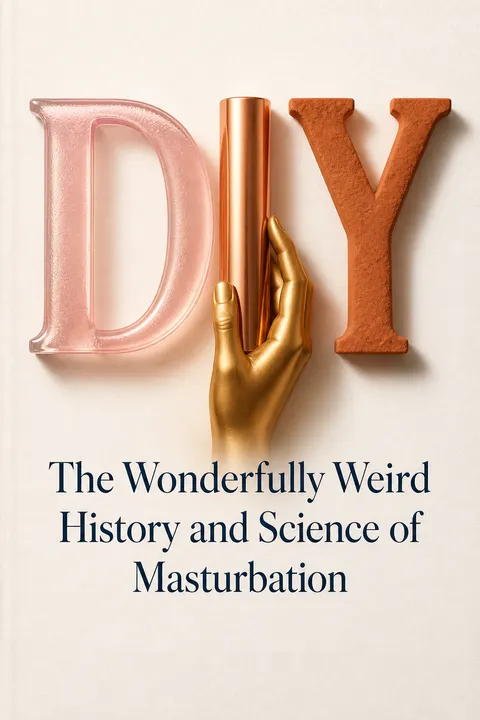
DIY is praised for its informative, humorous, and shame-free approach to masturbation. Readers appreciate Sprankle's blend of historical context, scientific research, and witty commentary. The book is seen as educational, debunking myths and addressing cultural taboos. Many reviewers found it both entertaining and enlightening, recommending it for sex educators, therapists, and anyone interested in sexual health. Some highlight its potential for healing shame around self-pleasure. Overall, the book is well-received for its accessible writing style and comprehensive coverage of the topic.
Glossary
Dhat syndrome
Fear of semen lossA distress pattern described especially in South Asian contexts, involving fears that semen is being lost, often through urination or ejaculation. It may be accompanied by concerns such as weakness, fatigue, sexual problems, or depression. The book uses it to show how cultural beliefs about semen can shape physical and psychological distress.
Moral incongruence
Conflict between values and behaviorDistress that can arise when a person's sexual behavior conflicts with their moral or religious beliefs. In the book's discussion, someone may interpret guilt about masturbation or pornography as evidence of addiction, even when frequency alone does not explain the distress. The concept directs attention to values and meaning as well as behavior.
Directed masturbation
Structured self-exploration therapyA sex-therapy approach in which a person completes guided exercises privately to learn about bodily sensation and develop the capacity for orgasm. Exercises may include nonsexual touch, learning genital anatomy, and exploring sexual stimulation, fantasy, or devices. The therapist discusses progress and difficulties but does not demonstrate or observe the masturbation.
Stop-start technique
Arousal-awareness practiceA behavioral exercise used to help someone notice and regulate rising arousal. During solo stimulation, the person pauses or changes the stimulation as arousal increases, then resumes when it decreases. The book notes that evidence for the technique by itself is limited and that longer time before orgasm does not necessarily mean greater satisfaction.
sexual transmutation
Redirecting sexual energyA concept associated in the book with some Taoist approaches to semen retention. It describes redirecting or internalizing sexual energy rather than releasing it through ejaculation. The author distinguishes this spiritual or metaphysical belief from claims that offer unsupported biochemical explanations or promise measurable health and performance benefits.
autoerotic asphyxiation
Restricting breath during solo sexA sexual practice involving restriction of breathing or blood flow to the brain during solo sexual activity. It can be arousing for some people, but the book emphasizes the risk of accidental death, particularly when restraints cannot be released if consciousness is lost. It is a high-risk behavior, not a routine safety concern.
polyembolokoilamania
Insertion of foreign objectsA clinical term for inserting objects into bodily openings, including the anus, vagina, urethra, mouth, nose, or ears. Motivations vary and may include sexual gratification. The book discusses the medical risks of unsuitable objects, such as injury, infection, or an object becoming trapped, and recommends caution rather than improvised insertion.
cliterourethralvaginal complex
Interconnected genital structuresA term used in the book for the connected nerves, erectile tissue, and glands involving the clitoris, urethra, and vagina. It helps explain why different kinds of genital stimulation can activate overlapping structures, and why pleasure does not depend on locating one universally responsive internal spot.
kink blink
New tools quickly become sexualA term for the short interval between the arrival of a new invention and its use for sexual pleasure. The book applies it to devices and everyday objects that people adapt for masturbation, illustrating the recurring relationship between new technology and sexual experimentation.
FAQ
What is "DIY: The Wonderfully Weird History and Science of Masturbation" by Eric Sprankle about?
- Comprehensive exploration: The book examines the history, science, and cultural attitudes toward masturbation, debunking myths and highlighting both the oppression and liberation of self-pleasure.
- Blend of genres: It combines health science, narrative storytelling, and prescriptive advice, all delivered with an irreverent and accessible tone.
- Focus on misinformation: Sprankle addresses the persistence of pseudoscientific and moralistic beliefs about masturbation, from religious dogma to modern wellness influencers.
- Advocacy for liberation: The book ultimately aims to normalize masturbation as a healthy, pleasurable, and shame-free part of human sexuality.
Why should I read "DIY: The Wonderfully Weird History and Science of Masturbation" by Eric Sprankle?
- Debunks persistent myths: The book provides evidence-based answers to common misconceptions about masturbation, including health risks and moral judgments.
- Engaging and humorous: Sprankle’s witty, irreverent style makes complex topics approachable and entertaining.
- Inclusive and comprehensive: It covers a wide range of perspectives, from religious and cultural prohibitions to sex-positive movements and scientific research.
- Practical guidance: Readers gain not only historical and scientific context but also advice on healthy attitudes and practices regarding masturbation.
What are the key takeaways from "DIY: The Wonderfully Weird History and Science of Masturbation"?
- Masturbation is normal: Across history, cultures, and even the animal kingdom, masturbation is a common and healthy behavior.
- Myths persist: Despite scientific evidence, pseudoscientific and moralistic myths about masturbation’s dangers remain widespread.
- Shame is learned: Feelings of guilt and shame around masturbation are culturally and religiously constructed, not inherent.
- Liberation is possible: Embracing masturbation as self-care and pleasure can be empowering, and the book encourages readers to reject shame and misinformation.
How does Eric Sprankle address the history of anti-masturbation beliefs in "DIY: The Wonderfully Weird History and Science of Masturbation"?
- Historical roots: The book traces anti-masturbation beliefs from early 18th-century pamphlets like "Onania" to 19th-century figures like Dr. Kellogg and Reverend Graham.
- Religious influence: Sprankle details how major religions (Christianity, Judaism, Islam) have condemned masturbation, often linking it to sin and disease.
- Pseudoscience and moral panic: He explores how medical professionals and wellness gurus have perpetuated unfounded health fears about masturbation.
- Modern parallels: The book connects historical crusades to contemporary anti-masturbation movements, showing how old ideas persist in new forms.
What scientific evidence about masturbation does "DIY: The Wonderfully Weird History and Science of Masturbation" present?
- Health impacts: The book reviews research showing masturbation is not harmful and may even have health benefits, such as stress relief and improved sexual function.
- Semen retention myths: Sprankle debunks claims that ejaculation depletes vital energy or nutrients, explaining the actual biology of semen and orgasm.
- Addiction debate: He discusses the lack of scientific consensus on "masturbation addiction," highlighting the role of moral incongruence over true dependency.
- Porn and the brain: The book critically examines studies on pornography and brain changes, emphasizing the lack of causal evidence for harm.
How does "DIY: The Wonderfully Weird History and Science of Masturbation" by Eric Sprankle address masturbation in childhood and adolescence?
- Early onset: The book explains that masturbation can begin in infancy and is a normal part of child development.
- Parental and societal reactions: Sprankle discusses how adults often misinterpret or punish childhood masturbation due to ignorance or discomfort.
- Sex education: He advocates for comprehensive, age-appropriate sex education that normalizes masturbation and reduces shame.
- Learning shame: The book explores how silence, punishment, and religious teachings instill guilt and confusion about self-pleasure from a young age.
What does Eric Sprankle say about the intersection of religion and masturbation in "DIY: The Wonderfully Weird History and Science of Masturbation"?
- Religious prohibitions: The book details how Catholicism, Mormonism, Judaism, and Islam have historically condemned masturbation as sinful.
- Scriptural interpretations: Sprankle analyzes biblical and Talmudic stories (like Onan) and how they’ve been used to justify anti-masturbation stances.
- Modern religious movements: He examines contemporary religious figures and online communities that continue to promote abstinence and guilt.
- Counterexamples: The book also highlights religious moderates and alternative spiritualities (like Satanism) that embrace or normalize masturbation.
How does "DIY: The Wonderfully Weird History and Science of Masturbation" address the concept of masturbation addiction and its treatment?
- Questioning addiction: Sprankle argues that "masturbation addiction" is not a medically recognized disorder and is often rooted in moral or religious conflict.
- Moral incongruence: The book introduces the concept that distress over masturbation usually arises when behavior conflicts with personal or cultural values.
- Treatment industry critique: He critiques expensive and unproven treatment programs, such as 12-step groups and residential clinics, for over-pathologizing normal behavior.
- Healthy coping: Sprankle suggests that masturbation can be a healthy coping mechanism and that therapy should focus on underlying issues, not just reducing frequency.
What unique or lesser-known concepts about masturbation are explored in "DIY: The Wonderfully Weird History and Science of Masturbation"?
- Semen retention and culture-bound syndromes: The book discusses Dhat syndrome, Taoist beliefs about semen, and the modern NoFap movement.
- Sex toys and legal battles: Sprankle covers the history of dildos, vibrators, and the criminalization of sex toys in places like Texas.
- Masturbation techniques and therapy: He explains directed masturbation, edging, gooning, muffing, and the use of sex toys for self-exploration.
- Communal masturbation: The book explores peep shows, camming, jack-off clubs, and the social aspects of mutual masturbation.
How does "DIY: The Wonderfully Weird History and Science of Masturbation" discuss the role of masturbation in aging and end-of-life care?
- Masturbation in older adults: The book dispels the myth that sexuality ends with age, showing that many older adults continue to masturbate for pleasure and well-being.
- Assisted living challenges: Sprankle addresses issues of privacy, staff attitudes, and the need for sexual autonomy in long-term care facilities.
- Palliative care: He advocates for recognizing sexual needs, including masturbation, as part of quality end-of-life care.
- Grief and remembrance: The book even explores mourning rituals involving masturbation, such as using sex dolls or mementos to honor deceased partners.
What are the best quotes from "DIY: The Wonderfully Weird History and Science of Masturbation" by Eric Sprankle and what do they mean?
- "Sexual progressiveness, from a historical perspective, is not a linear process. It has always been two orgasms forward, one orgasm back." — Highlights the non-linear, often regressive nature of sexual liberation.
- "Masturbation is simply a moment of pleasure." — Emphasizes the book’s core message that masturbation need not be pathologized or overanalyzed.
- "The god assigned to you at birth does not have to be yours for your entire life. If it is religion and spirituality you seek, find a religious and spiritual home that aligns with your pleasure." — Encourages readers to question inherited beliefs and seek personal fulfillment.
- "You should be free to masturbate on your own time when you desire it. The liberty to masturbate in bed. To masturbate in the shower. To masturbate while eating corn flakes and fantasizing about flogging Dr. Kellogg." — Uses humor to advocate for sexual autonomy and freedom from shame.
What practical advice or recommendations does Eric Sprankle offer in "DIY: The Wonderfully Weird History and Science of Masturbation"?
- Embrace pleasure: Masturbation is a healthy, normal, and pleasurable activity that should be free from guilt and shame.
- Question myths: Be skeptical of claims about health risks, addiction, or moral decay associated with masturbation, especially those lacking scientific support.
- Communicate openly: Discuss masturbation and sexual boundaries with partners, children, or caregivers to foster understanding and reduce secrecy.
- Prioritize self-care: Use masturbation as one of many self-care tools, but recognize that it’s not a cure-all for life’s problems—address underlying stressors when possible.
What is the overall message and impact of "DIY: The Wonderfully Weird History and Science of Masturbation" by Eric Sprankle?
- Liberation over shame: The book’s central message is to liberate masturbation from centuries of stigma, misinformation, and moral panic.
- Science over superstition: Sprankle urges readers to rely on scientific evidence and personal experience rather than outdated or pseudoscientific beliefs.
- Celebrate diversity: The book acknowledges the wide range of human sexual expression and encourages acceptance of individual differences.
- Empowerment and autonomy: Ultimately, Sprankle advocates for sexual autonomy, self-acceptance, and the right to enjoy one’s body without interference from external authorities.
Download PDF
Download EPUB
.epub digital book format is ideal for reading ebooks on phones, tablets, and e-readers.








