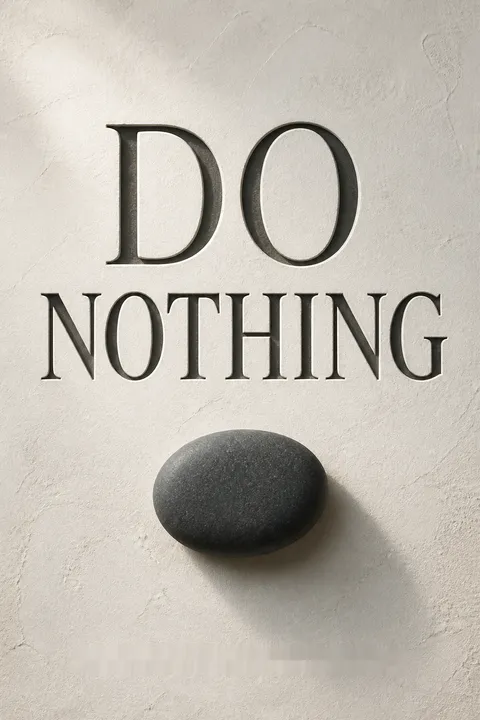


Key Takeaways
Stop treating every hour as an investment in output
The efficiency trap. Celeste Headlee begins with a personal puzzle: after paying off her debts and gaining financial stability, she still felt exhausted. The empty space in her schedule filled with new projects, meetings, and obligations. Her problem was not simply difficult circumstances. It was a habit of treating constant activity as proof of a worthwhile life. She calls this mindset the cult of efficiency: faith that optimizing every task will save time and improve well-being.
More is never enough. The hedonic treadmill describes how people tend to return to their usual level of happiness after good or bad changes. A raise, achievement, or new purchase can feel thrilling, then become ordinary. When dissatisfaction returns, working harder may seem like the answer, but it can restart the same cycle. Headlee argues for making room for activities that matter in themselves, not only because they produce something.
The book's opening is persuasive because it separates external hardship from an internalized standard of worth. That distinction helps explain why a better income or a more capable calendar may fail to bring relief. The hedonic treadmill also cautions against expecting one achievement to permanently settle dissatisfaction. Yet not every desire for productivity is pathological: purposeful work can support identity, mastery, and security. The useful test is not whether an activity is productive, but whether its benefits serve a life the person actually values.
The factory clock made time a commodity, not just a rhythm
A recent arrangement. Headlee challenges the assumption that long, clock-governed workweeks are timeless. She describes European labor records in which many medieval workers put in shorter workdays and had substantial religious and seasonal holidays. Those accounts concern particular populations and do not describe everyone, especially enslaved people. Still, they complicate the idea that modern schedules are simply human nature.
Industry changed the bargain. Steam-powered factories gathered workers around machines, paid them by the hour, and made longer machine operation a path to higher output. Time increasingly became something employers could purchase and measure. Religious ideas that praised labor and condemned idleness reinforced this economic shift. The eight-hour-day campaigns were therefore not only a fight for new protections. They also sought to recover time and flexibility that many workers had lost.
The historical lens usefully makes work culture seem changeable rather than inevitable. It also reveals how measurement shapes morality: once paid hours become visible and comparable, time away from work can look like a personal failing. The comparison with preindustrial schedules needs care, since historical labor records are incomplete and rural work was not necessarily gentle or predictable. The stronger point is not that the past was better. It is that today's standard workweek was built through political and economic choices, so different choices remain possible.
More hours can produce less work and worse judgment
Attention has limits. Headlee argues that time at a desk is a poor proxy for useful work. Switching among email, messages, and a demanding task repeatedly interrupts concentration; returning to deep focus can take much longer than the interruption itself. Parkinson's Law describes a related pattern: work tends to expand to fill the time allotted, so an open-ended task can consume a full day without becoming more valuable.
Try focused pulses. In a thirty-day experiment, Headlee stopped watching the clock, muted distractions, and worked until her attention flagged. She averaged about four hours of focused work a day. During the experiment, she wrote more and read more research than she had while working longer days. A Swedish hospital unit that shortened staff shifts also reported increased output, suggesting that less time need not mean less work.
This is a strong challenge to presenteeism, the practice of treating visible attendance as evidence of contribution. Cognitive research supports protecting attention from interruptions, while the examples show why shorter schedules deserve serious trials. Still, a single writer's self-experiment cannot establish a universal ideal, and hospital results may depend on staffing, workflow, and the tasks involved. The practical lesson is to measure outcomes and fatigue in context, not to replace an eight-hour norm with a new four-hour commandment.
Schedule leisure that cannot be recruited back into work
Rest is not spare time. Headlee distinguishes leisure from the leftover minutes used to recover for another work session. Leisure is time separated from job demands and free of the pressure to improve performance. A walk can count, as can reading, making things, or sitting without a plan. The activity matters less than allowing it to be valuable in its own right.
Let the mind wander. During unfocused periods, the brain's default mode network becomes active. Headlee describes it as supporting reflection, memory, imagining the future, and considering other people's feelings. She recommends scheduling real breaks rather than trusting a crowded calendar to leave room for them. Her own practice included a weekly day without email or social media. At first she repeatedly checked her inbox, a sign of how deeply work had entered her habits.
The distinction between leisure and recovery time is important: rest need not be justified by making someone more productive afterward. The discussion of the default mode network gives a plausible account of why unstructured time can support reflection and creative connections. However, leisure is not equally available to everyone. Care work, insecure schedules, disability, and financial pressure can constrain genuine time off. Advice to schedule leisure is most helpful when paired with recognition that some people need workplace protections and material support to make that choice real.
Your phone accelerates an older culture of constant work
The habit predates the device. Headlee tried three weeks of reduced technology use, relying on basic phone functions and limiting computer time. She remained overbooked and driven to optimize her schedule. The experiment led her to treat technology as an amplifier of an existing productivity culture, not its original cause.
Design exploits attention. Smartphones make work and social demands portable, while alerts and variable rewards encourage repeated checking. Headlee describes how digital communication can fragment attention, disturb sleep, and create an expectation of immediate replies. She also warns that online networks can simulate connection without supplying close friendship. Her response is not to reject every tool, but to use tools deliberately: limit checking, silence nonessential alerts, and stop treating instant availability as a measure of commitment.
This framing avoids a familiar mistake: blaming a new tool for norms that were already in place. The phone is powerful partly because it fits a culture that rewards responsiveness and visible busyness. Design choices can intensify compulsive use, so individual discipline is not the whole answer. At the same time, technology can sustain relationships across distance and offer access that in-person systems cannot. The distinction worth preserving is between intentional use that serves a human purpose and habitual checking that merely answers a platform's demand for attention.
Trade shallow digital contact for voices, groups, and shared time
Connection is a human need. Headlee draws on research linking social isolation with poorer health and lower well-being. She argues that a large online audience is not equivalent to a small circle of trusted friends. Voice and face-to-face conversation carry tone and emotional cues that text often leaves out, making it easier to recognize another person's feelings and perspective.
Start with small encounters. In a study discussed in the book, people who smiled, made eye contact, and briefly spoke with a barista reported a more positive mood than people who kept the exchange strictly efficient. Headlee recommends conversation with neighbors, joining clubs, and spending time with friends. For group work, she suggests generating ideas individually, then evaluating options together, so collaboration improves judgment instead of turning every idea into a committee meeting.
The argument connects social well-being with everyday design: a brief exchange can interrupt isolation, while recurring groups create the familiarity that deeper relationships require. The team recommendation also makes a useful distinction between solitary idea generation and collective evaluation. Still, social contact is not automatically nourishing. Hostile, exclusionary, or exhausting relationships can undermine health, and introverts may prefer smaller doses. The goal is not maximum interaction. It is dependable, meaningful contact that fits people's needs and treats them as more than messages to be answered.
Do not prescribe better calendars for unequal workloads
The load is uneven. Headlee describes how women often shoulder more household administration, caregiving, and routine chores, even when they also work for pay. In the research she cites, working mothers spent substantially more time on household and child-related duties, while fathers had more time for leisure. Women may respond by multitasking and scheduling more tightly, but those techniques do not remove the unequal work.
Bias is not a time-management flaw. The book also describes evidence of a motherhood penalty in hiring and pay, alongside a fatherhood bonus in some assessments. Intensive parenting adds another layer: parents may try to secure children's success through constant supervision and activities, even when this can weaken children's independence. Headlee's advice to women is to be kinder to themselves, while insisting that lasting change requires fairer expectations and policies.
This section strengthens the book by refusing to turn structural inequality into a personal optimization problem. A planner cannot redistribute unpaid care, correct hiring bias, or create adequate leave. The discussion also invites attention to mental load, the often invisible work of anticipating needs and coordinating a household. Its broad gender framing should not erase differences in class, family structure, or culture, but it identifies a consequential pattern: advice to simply work smarter can become another demand placed on the person already carrying too much.
Audit your hours before believing everyone else is busier
Perception distorts the schedule. Headlee uses the term time perception for awareness of how one's time is actually spent. She tracked her days in half-hour blocks for three weeks and discovered that email, social media, and online shopping consumed far more time than she had realized. The diary did not create extra hours; it gave her a clearer basis for choosing how to use them.
Comparison makes the pressure worse. People often overestimate their work hours, and public accounts of busyness can turn a packed calendar into a badge of importance. Social media adds a distorted comparison, presenting edited glimpses of other people's work and social lives. Headlee recommends comparing against real needs and observable behavior, not celebrity lifestyles or polished posts. A flexible ideal schedule can support choices without becoming another rigid scorecard.
A time diary is valuable because it replaces vague guilt with evidence, much like a household budget reveals where money goes. The method can also expose activity that feels urgent mainly because it is habitual. Yet tracking can become its own form of surveillance if every minute is judged for its usefulness. The purpose is not perfect accounting. It is to identify a few choices that matter, then use the information to create breathing room rather than a more elaborate productivity system.
Choose life outcomes first, then treat productivity tactics as disposable
Separate ends from means. Headlee distinguishes end goals, such as health, connection, or a fulfilling life, from means goals, such as a promotion, a target weight, or a particular schedule. Means are tools, not sacred obligations. If a tactic does not move someone toward the larger aim, it can be changed without abandoning the aim. Asking why repeatedly can help reveal what an apparent goal is really meant to serve.
Protect the conditions for choice. Headlee's practical suggestions include working fewer hours when possible, buying time through help with chores, setting boundaries around email, and investing in leisure and relationships. She also recognizes that low wages and weak benefits leave many workers little flexibility. For them, individual habits are not enough. A society serious about well-being must address working conditions and how productivity gains are shared.
The means-and-ends distinction offers a useful defense against mistaking a measurable proxy for a meaningful outcome. It also makes failure less final: a missed promotion or abandoned routine need not defeat the deeper purpose it was supposed to serve. The argument becomes strongest when individual choice and institutional conditions remain together. A person cannot simply opt out of financial necessity, and leisure cannot substitute for fair pay. The challenge is to judge both personal tactics and public systems by whether they make worthwhile lives more attainable.
Analysis
Do Nothing is part personal investigation, part labor history, and part practical guide. Its central reversal is memorable: the problem is not merely that people lack time, but that they have learned to treat time as a resource whose value depends on how efficiently it produces. Headlee traces that belief from factory schedules and moral praise of labor into modern workplaces, homes, parenting, and digital habits. The narrative gains force from her own failed assumption that financial success would naturally end exhaustion, and from her later experiments with time tracking, focused work, and digital boundaries.
The book's most important contribution is to connect individual distress with social arrangements. Advice to disable notifications or schedule a walk can help, but the argument does not pretend that these steps fix low wages, unpaid care, or workplaces that reward hours over results. Its practical recommendations work best as experiments, not universal prescriptions. The author's four-hour focus days and historical comparisons are suggestive, yet neither establishes a single ideal schedule for every occupation or household. Some historical labor estimates are also necessarily incomplete, and preindustrial life should not be romanticized.
The deeper question is how societies distribute the gains from productivity. If technology allows a task to take less time, the benefit might become higher output, higher profit, shorter work, or some combination. That is a political and organizational choice, not a law of human nature. Headlee asks readers to recover leisure, play, and community from the assumption that every activity must justify itself economically. The book is most compelling when it treats those things as components of a good life, not merely instruments for better work. Its invitation is therefore both personal and civic: inspect the habits that consume attention, and question the institutions that teach people to confuse busyness with value.
Review Summary
Do Nothing receives mixed reviews, with ratings ranging from 1 to 5 stars. Many readers appreciate the book's well-researched exploration of work culture, productivity obsession, and the importance of leisure. Some find it eye-opening and transformative, praising its historical context and practical advice. However, others criticize it for rehashing familiar ideas, lacking depth, and offering solutions mainly applicable to those with flexible work arrangements. Critics also note that the book spends more time defining problems than providing solutions. Overall, readers value its message but disagree on its effectiveness and relevance.
People Also Read










Glossary
Cult of efficiency
Faith in constant optimizationHeadlee's term for a culture that treats continual activity, productivity, and optimization as inherently virtuous. Its members assume that finding a more efficient method will save time and improve life, even when the methods themselves consume attention, increase stress, or distract from meaningful aims.
Hedonic treadmill
Return to a happiness baselineA tendency for people to adapt to changes in their circumstances and return toward a relatively familiar level of happiness. A positive event, such as a raise or new purchase, may lift mood temporarily, but the improvement often fades as the change becomes ordinary. Headlee uses the concept to explain why achievement alone rarely ends dissatisfaction.
Polluted time
Work leaking into personal hoursTime outside formal working hours that is compromised by work demands. It can include answering messages, remaining on call, or mentally rehearsing work problems during evenings, weekends, or holidays. The concept highlights how a person can feel continuously employed even when official work-hour totals do not appear unusually high.
Time perception
Awareness of time useIn Headlee's discussion, time perception means knowing how one's hours are actually spent. Keeping an honest record of activities can reveal unnoticed habits and reduce mistaken assumptions about being constantly busy. Greater awareness can help people choose leisure deliberately instead of relying on a vague sense that no time remains.
Parkinson's Law
Work expands to fill timeAn adage that tasks tend to consume the time available for their completion. Headlee applies it to workplaces where meetings, messages, and extra procedures can stretch work to fill a standard day, even when the underlying task could be finished sooner. It is a caution about treating time spent as a reliable measure of value.
Default mode network
Brain activity during mind wanderingA set of connected brain regions that becomes active during periods when attention is not directed toward an external task. Headlee associates this mode with reflection, memory, imagining the future, and considering other people's perspectives. Unstructured breaks can allow these processes to occur, rather than keeping attention fixed on work or digital input.
Dunbar number
Approximate manageable social circleA proposed estimate of the number of social relationships a person can maintain with meaningful investment. Headlee invokes the figure of 150 to contrast human relational limits with the much larger audiences available online. The term emphasizes that accumulating contacts is not the same as sustaining close, emotionally substantial relationships.
Means goals and end goals
Methods versus deeper aimsMeans goals are specific steps or achievements used to pursue a broader purpose, such as earning a promotion to gain security. End goals are the more fundamental outcomes those steps are meant to serve, such as health, connection, or a satisfying life. Headlee argues that tactics should remain flexible when they stop serving the underlying aim.
Idle Theory
Survival through reduced effortA theory discussed by Headlee that treats the ability to meet survival needs with less work as an advantage. It does not equate idleness with doing nothing at all. Rather, it suggests that conserving effort can support survival and that intense activity should be balanced with periods of rest and leisure.
FAQ
What's Do Nothing about?
- Focus on Overworking: Do Nothing by Celeste Headlee examines the harmful effects of overworking and the societal pressures that push individuals to constantly pursue productivity.
- Cult of Efficiency: The book critiques the "cult of efficiency," a mindset that equates busyness with self-worth, leading to stress and dissatisfaction.
- Call for Leisure: Headlee advocates for embracing idleness and leisure as essential for a fulfilling life, emphasizing meaningful connections over relentless productivity.
Why should I read Do Nothing?
- Addressing Modern Issues: The book is relevant in today's fast-paced world, offering insights for those overwhelmed by work and technology.
- Practical Advice: Headlee provides actionable strategies to break free from overwork, encouraging readers to prioritize leisure and well-being.
- Personal Insights: The author shares relatable experiences, making the book engaging for readers facing similar challenges.
What are the key takeaways of Do Nothing?
- Value of Leisure: Leisure and idleness are crucial for creativity and well-being, defined as "nonproductive activity" by Headlee.
- Challenge Perceptions: Readers are encouraged to question their views on productivity, as constant busyness doesn't equate to fulfillment.
- Long-Term Perspective: Sustainable habits that prioritize mental health and genuine connections are emphasized over mere productivity.
What is the "cult of efficiency" in Do Nothing?
- Definition of Cult: The "cult of efficiency" is a societal belief that constant activity and productivity are virtuous, often at the expense of personal well-being.
- Historical Context: Headlee traces this mindset through history, showing its evolution and entrenchment in modern culture.
- Consequences: The book highlights increased stress and loneliness as consequences, urging readers to break free from these beliefs.
How does technology contribute to the issues in Do Nothing?
- Increased Connectivity: Technology blurs personal and professional boundaries, increasing stress and overwhelm.
- Illusion of Productivity: While offering efficiency tools, technology often creates a false sense of productivity, with individuals feeling busy but achieving little.
- Social Isolation: Despite connecting us, technology can lead to isolation, replacing meaningful interactions with digital communication.
What strategies does Celeste Headlee suggest for overcoming overwork?
- Challenge Your Perceptions: Question whether your busy schedule truly reflects your values and goals.
- Invest in Leisure: Actively engage in leisure activities that bring joy and fulfillment, essential for mental health.
- Make Real Connections: Prioritize genuine human connections over superficial interactions for greater happiness and satisfaction.
What is Idle Theory in Do Nothing?
- Definition of Idle Theory: Idle Theory suggests humans benefit from idleness, with "lazier creatures" having an evolutionary advantage.
- Evolutionary Advantage: Those meeting survival needs with minimal effort are more successful, challenging the notion that constant work is good.
- Implications for Modern Work: Embracing idleness can lead to better health and increased creativity, countering the glorification of busyness.
How does Do Nothing address the gender dynamics of work?
- The Busiest Gender: Women often bear the brunt of overwork, juggling professional and household duties, leading to stress and burnout.
- Cultural Expectations: Societal pressures push women to excel in both work and home life, resulting in feelings of inadequacy.
- Call for Change: Headlee advocates for recognizing the value of leisure for all genders and a more equitable distribution of responsibilities.
How does Do Nothing redefine the concept of productivity?
- Quality Over Quantity: Headlee emphasizes quality experiences and meaningful connections over mere busyness.
- Embracing Idleness: Idleness and leisure are necessary for true productivity, fostering creativity and well-being.
- Long-Term Fulfillment: Productivity should be viewed through a long-term lens, prioritizing sustainable habits for genuine happiness.
What are some practical solutions offered in Do Nothing?
- Track Your Time: Keep a diary to reveal patterns of overwork and identify areas for improvement.
- Create an Ideal Schedule: Design a daily schedule prioritizing leisure and social interactions to enhance well-being.
- Limit Work Hours: Work fewer hours, as "work expands to fit the time available," improving productivity and mental health.
What is the relationship between work and happiness in Do Nothing?
- Work is Not Essential: While work can provide meaning, leisure is a requirement for happiness, as lack of it leads to illness.
- Pursuit of Happiness: True happiness comes from leisure, social connections, and personal fulfillment, not work achievements.
- Balance is Key: Balancing work with leisure is crucial for well-being, as a work-focused life can lead to burnout.
What are the societal implications discussed in Do Nothing?
- Cultural Shift Needed: Headlee calls for a shift away from glorifying busyness, prioritizing well-being and community.
- Economic Considerations: Current systems often reward overwork, creating environments detrimental to mental health.
- Reclaiming Humanity: Embracing leisure and social connections can lead to healthier individuals and communities.
About the Author
Other books by Celeste Headlee

Download PDF
Download EPUB
.epub digital book format is ideal for reading ebooks on phones, tablets, and e-readers.








