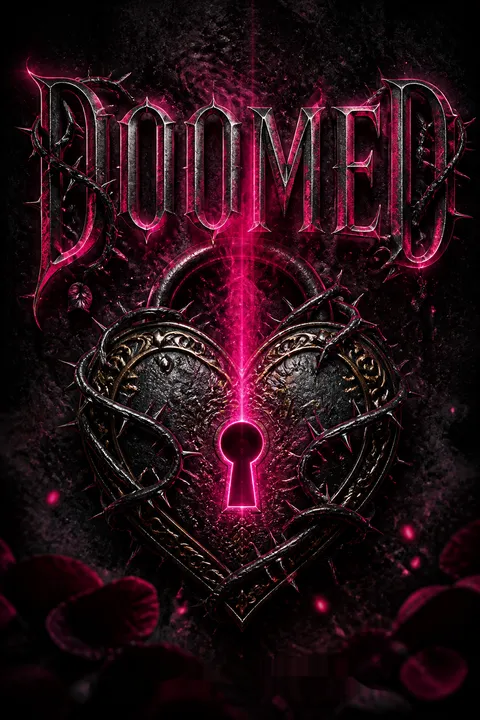


Plot Summary
A Slap in the Gallery
After the Blackwoods kill distributor Morrison for trying to rewrite their terms, Knox is given a different assignment: find erotic artwork for Purgatory, the family’s club. At Elliot’s gallery, he meets Bianca Hayes, a newcomer who paints desire with unnerving honesty. Knox admires her canvases, then steps too close and touches her face after she has asked him to keep his distance.
Bianca slaps him. Rather than retaliate, Knox admits that he crossed a line, photographs her work, and offers it to his brother Xavier for a commission. Bianca agrees only to consider the job after learning where her paintings might be displayed. Knox leaves intrigued by the first woman in Ravenwood Hollow who has openly refused him.
The commission makes art the first language between these two, but their encounter also establishes a crucial imbalance: Knox can turn a business opportunity into an intrusion because his family’s power protects him. Bianca’s slap briefly interrupts that privilege. Knox’s amused response is not yet respect; he reads her refusal as an exciting challenge. The scene therefore plants the romance’s central tension without making it morally simple. Her artistic independence attracts him, while his access to money and force threatens the autonomy that defines her. The gallery is both workplace and boundary line, and Knox crosses it before he understands what Bianca’s resistance means.
Purgatory Has Teeth
Bianca’s roommate, Michelle, warns that the Blackwoods control Ravenwood Hollow’s underworld, so Bianca goes to Purgatory to inspect the club before accepting its work. Knox appears, needles her, and offers to dance; she refuses.
Later, when every taxi ignores her, she realizes Knox has arranged it and reluctantly accepts a ride on his motorcycle. He uses the journey to crowd her and press for a kiss, while she keeps rejecting his claims over her. Two weeks later, Bianca delivers her first painting to Xavier and signs a six-piece contract.
Knox barges into the meeting, makes another crude advance, and sees her leave without giving him the response he wants. Her work now hangs in his world, but she still insists on keeping business separate.
Bianca’s visit is an act of investigation, not surrender: she wants to see the institution before lending it her work. Yet Knox controls the conditions around her, from the taxis to the motorcycle, turning ordinary choices into pressure. The contract gives Bianca a degree of agency and a practical reason to return, while also placing her inside a business whose rules she barely understands. Knox mistakes proximity for progress, and the book invites readers to notice that his persistence is coercive even as Bianca feels attraction. Their early chemistry depends on a sharp split between what she chooses and what he tries to arrange.
The Monster Behind Knox
Knox brings Bianca coffee and pastries while she paints, revealing that he once studied piano in foster care. The softer moment collapses when she overhears him order a man’s fingers broken over the phone. Before she can settle what she has learned, Knox embraces her from behind and the two kiss; Elliot interrupts them.
Later, Bianca returns to Purgatory with another canvas and sees Knox torturing a bound distributor beside Xavier. Knox catches her trying to flee, pins her to the corridor wall, and demands silence. He ultimately lets her leave, and she does not report him. In her car, Bianca is shaken by the brutality she witnessed and by the fact that she is already wondering when she will see him again.
This turn strips away any easy explanation of Knox as merely a flirt with a rough reputation. Bianca sees that violence is not rumor or theatrical posturing: he orders it, performs it, and treats it as routine. His tenderness and his cruelty belong to the same person, which is precisely what destabilizes her judgment. Her attraction does not erase her fear, and the narrative makes that contradiction part of her experience rather than proof that the danger is harmless. Knox’s response to being witnessed also matters: he uses physical control before allowing her to go. The relationship has moved from provocative pursuit into an encounter with genuine criminal power.
An Invitation in Black
At Bianca’s gallery opening, a wealthy guest touches her despite her discomfort. Knox intervenes, removes the man, and calls Bianca his possession; she thanks him for stopping the harassment but rejects the claim. Afterward, she deliberately flirts with another man at Purgatory to provoke Knox.
He notices, then asks Xavier to invite her to the Hollow’s Hunt, the Blackwoods’ secret annual event. Bianca receives an ornate invitation naming her prey and a dense liability waiver. Michelle knows the Hunt only through rumors and urges her to demand answers.
Knox explains that women receive a head start before the hunters pursue them, but withholds what happens after capture. He kisses Bianca without waiting for her agreement; she leaves furious, then signs the papers anyway.
The gallery rescue contains real protection and possessive display in the same gesture. Knox stops one man from violating Bianca’s boundaries, then speaks as though she belongs to him. Bianca’s jealousy game suggests that she too is testing the connection, but it does not cancel her objections or make Knox’s unwanted kiss consensual. The Hunt invitation turns their private pursuit into a formal system backed by contracts, secrecy, and social power. Bianca signs partly from anger and curiosity, not because she has been given a full account of the risks. The scene sharpens the book’s distinction between erotic fantasy and meaningful information: her choice is real, but it is made under conditions Knox has carefully shaped.
The Mask Arrives
Before the event, Elliot tells Bianca that he has participated in the Hunt for years and that Knox has not explained its full stakes. Elliot offers to capture her first, partly to thwart Knox and partly because another hunter has threatened to make Elliot prey if he fails to claim a woman.
Bianca refuses his rescue plan, admitting she no longer wants to avoid Knox. Their conversation also reveals the family histories beneath their polished lives: Elliot grew up under a father who left and a mother whose expectations keep him guarded, while Bianca fled a gambling-addicted father after her mother died.
The night before the Hunt, Knox sends Bianca a blue porcelain mask and conducts a sexually charged video call. She joins in but refuses to send him an intimate image.
Elliot’s warning supplies the information Knox withheld, making Bianca’s decision more conscious without making the event safe. His offer is driven by rivalry and fear, and his own discomfort with the hunters’ rules hints at a private conflict he cannot yet name openly. The conversation with Bianca creates connection through parallel histories of parental loss and impossible expectations. Both learned to manage instability by controlling what they reveal. The mask and call then recast anticipation as a performance: Bianca chooses to participate in erotic play, but also draws a limit when Knox asks for an image. That refusal matters because desire here is not a single, unconditional yes.
The Maze Starts Moving
At Purgatory, six women enter the maze in colored silk and masks, with thirty minutes to get ahead of fifteen hunters. Bianca, dressed in blue, studies each turn instead of running blindly. When the horn releases the men, the walls begin sliding, closing the route behind her and funneling her toward a chamber filled with restraints and mirrored surfaces.
Knox enters through another door and corners her. He teases her about wanting to be caught, but says he will not continue until she asks for what she wants. Bianca eventually does, and Knox gives her a safe word, an exception to the Hunt’s usual practice. Their first encounter begins with explicit limits, even as the event’s coercive structure continues to surround them.
The maze makes the Hunt’s imbalance physical. Bianca receives a head start, but the moving walls reveal that time and navigation were never the only rules; the architecture itself directs prey toward capture. Her planning shows that she remains an active thinker inside the spectacle. Knox’s safe word is a meaningful change in his behavior, since he recognizes that Bianca requires a way to stop what the event otherwise presents as inevitable. Still, private negotiation occurs within a system built on secrecy, waivers, and unequal power. The scene holds both facts together: Bianca expresses desire, and the conditions surrounding that desire are deliberately engineered by the hunters.
Bianca Becomes the Canvas
After their first encounter, Knox gives Bianca another chance to run, and she chooses to keep moving through the shifting maze. In a rope room, she waits for him and asks through her actions for another encounter; he suspends her and marks her skin.
Later, Knox leads her to Gallery 7, a chamber he designed with easels and paints. He strips away her dress, binds her wrists, and paints her body, intending to turn the artist into his artwork. Then he stops.
Bianca’s earlier vulnerability and her words about desire have made the scene feel unlike his usual conquests, and he admits he does not know what he is doing. Knox frees her, makes love to her slowly, and tells her he wants her beyond the Hunt. Bianca answers by kissing him of her own accord.
Gallery 7 literalizes the romance’s central metaphor, but its important action is Knox stopping. He begins by arranging Bianca as an object within a room he designed; her presence exposes how thoroughly that impulse resembles the control he has used elsewhere. His hesitation does not erase his history of boundary violations, yet it marks the first time he allows uncertainty to alter his conduct. Bianca’s voluntary kiss shifts their dynamic from pursuit and resistance toward mutual disclosure. Art no longer functions only as Knox’s excuse to possess her image. It becomes a medium through which he recognizes that the person before him can change the terms of the scene.
Claimed Before Ravenwood
The Hunt’s horn sends Knox and Bianca from Gallery 7 to Purgatory’s orgy room, where Bianca initially fears that the other hunters will treat her as communal property. Knox explains that she can decide whether to involve anyone else, and she chooses to be touched by three men while he remains present and sets limits.
Afterward, the prey are dressed in masks matching their hunters and brought before the group. Knox claims Bianca for a full year, the maximum term, and she publicly accepts the bond. The ceremony also changes Elliot’s place in the group: Julian claims him, and Elliot accepts rather than hiding from the role. The Hunt ends with Bianca and Knox bound by a public commitment, not simply a private encounter.
The orgy scene makes consent unusually explicit within the story’s coercive world: Bianca voices a preference, Knox checks that she wants the others involved, and he establishes boundaries around what they may do. The public ceremony then transforms erotic possession into a year-long social obligation. That shift is not merely symbolic, since Bianca must leave her former life and live within the Blackwoods’ orbit. Elliot’s acceptance of Julian’s claim offers a parallel image of someone stepping into a desire he had previously concealed. Both arcs test whether a chosen role can feel liberating when the surrounding institution is powerful and its rules are not equally negotiated.
The Hunt Follows Home
After the Hunt, Bianca tells Michelle only what her nondisclosure agreement allows. She is unsettled by the one-year claim but cannot dismiss the intimacy she shared with Knox. When the cooling-off period ends, Knox visits her apartment and persuades her to move into his penthouse.
They fall into an intense domestic routine, and he begins showing affection beyond the Hunt. At a business meeting, Bianca learns that supplier Ilya Orlov tried to ambush the Blackwoods’ trusted carnival crew after they refused to give him their route into Ravenwood.
Knox admits the dispute may escalate, then tries to keep Bianca from dwelling on the danger. Their private relationship has become serious just as his criminal world starts pressing against their home.
The move from Purgatory to the penthouse changes the scale of the relationship: Bianca is no longer entering Knox’s world for a commission or a weekend event but living inside its daily rhythms. Her uncertainty persists, especially because the year-long claim was buried in paperwork she did not fully understand. Knox’s attention begins to look less like conquest and more like attachment, but the outside threat complicates that change. The Orlov dispute is not a decorative danger; it grows directly from the Blackwoods’ supply business and creates a route by which violence can reach Bianca. Domestic closeness offers comfort, while also increasing the cost of Knox’s choices.
Orlov Takes Bianca
While Knox is away at a meeting, Orlov’s men break into the penthouse and seize Bianca, who is wearing the blue silk ribbons she had arranged as a surprise for Knox. Orlov takes her to the old Ivanov estate, where he taunts her with details from private moments recorded by hidden cameras in Knox’s home.
His surveillance turns intimacy into a weapon and leaves Bianca furious as well as frightened. He also insists Knox has not come for her, hoping to make her doubt the relationship.
Bianca refuses to wait passively: recalling Knox’s practical advice about improvised weapons, she hides a metal pen and studies the guards’ routines. At the warehouse, Knox finds the broken door and a torn ribbon, recognizes Orlov’s cologne, and begins planning a rescue.
Orlov’s attack converts the couple’s private symbols into evidence of vulnerability. The ribbons were meant as an intimate gift; left behind, they become the trace that tells Knox who took Bianca and why. Hidden cameras make the violation especially invasive, collapsing the boundary between criminal surveillance and romantic privacy. Orlov also understands that psychological pressure can be as useful as physical restraint, so he attacks Bianca’s trust in Knox while keeping her captive. Bianca’s response is significant: she grieves the intrusion but immediately studies her surroundings and prepares to act. She is endangered, not rendered helpless, and Knox’s parallel investigation does not replace her own agency.
The Pen and the Raid
Knox’s brothers and their security specialist locate Bianca at the Ivanov estate and plan a covert entry rather than rushing Orlov’s main compound. Knox and Landon reach the upper floor, where Bianca has prepared to attack a guard with the pen hidden in her sleeve. She mistakes masked Knox for another captor and nearly strikes him before recognizing him.
Their reunion is brief: alarms sound, and the group races toward the exit. When guards surround them, Bianca knocks one down with a garden statue and reaches for his fallen gun. Knox and Landon cover the escape while Xavier and Vane hold the route open. They reach the SUV under fire. Bianca is free, though Knox has been grazed by a bullet.
The rescue pays off both sides of the preparation. Landon’s intelligence gives the Blackwoods a viable entry route, while Bianca’s observation and improvised weapon mean she is already trying to free herself when Knox arrives. Her first reaction to him is caution, not automatic trust, a consequence of being masked and of the danger surrounding them. At the estate’s perimeter, she moves from planning to direct action, striking a guard and helping the group escape. Knox’s violence remains central to the operation, but rescue is not a solitary act of masculine possession. It depends on coordinated work, Bianca’s judgment, and the family’s ability to follow a plan.
A Life Beyond the Hunt
At the safe house, Bianca treats Knox’s gunshot graze, and they reconnect after the rescue. In the weeks that follow, Knox hires a self-defense instructor rather than trying to keep Bianca sheltered. She trains at Purgatory and becomes more confident, while their intimacy grows into an openly declared love.
At an illegal street race, Bianca watches Knox win against Vane, and later the couple continue to explore their shared sexual interests with Jenson. Four months after the Hunt, Knox celebrates his birthday surrounded by the Blackwood circle and their partners.
The relationship that began with a commission and a slap now includes friendship, chosen trust, and a life beyond the Hunt’s contract. Bianca remains an artist with her own strength, not merely Knox’s claimed prize.
The resolution does not ask Bianca to prove love by accepting permanent dependence. Knox’s decision to provide self-defense training acknowledges that protection without autonomy would repeat the control that marked their first encounters. Bianca’s growing confidence makes her a participant in the future they build, rather than an object transferred from one dangerous situation to another. Their continuing sexual play preserves the book’s dark-romance register, but the emotional emphasis has shifted toward communication and reciprocal attachment. The birthday gathering broadens the ending beyond the couple, showing a community shaped by chosen partners and complicated loyalties. Bianca’s work and agency remain essential parts of the person Knox loves.
Epilogue
One year after the Hunt, Knox takes Bianca by motorcycle to Eagle Point, the overlook where he first told her about his childhood. He has arranged her favorite foods, candles, and a blue-silk table, then proposes with a diamond ring bordered by sapphires. Bianca accepts.
Their celebration turns physical, but the scene’s defining change is the promise attached to it: the woman once bound to Knox for a year now chooses marriage with him. At the place where he first showed her his vulnerable history, they begin a future that belongs to them by choice.
Eagle Point returns as a place of memory, but its meaning has changed. At their first visit, Knox used humor to retreat from the vulnerability he had just revealed; now he builds a deliberate ritual around Bianca’s tastes and risks asking for a future he cannot control. The ring’s blue stones echo the color that has marked their relationship since the Hunt, turning a symbol once associated with pursuit into one of mutual commitment. Bianca’s yes matters because the novel began with Knox treating her boundaries as obstacles. The epilogue presents a different form of possession: not a contract imposed by the Hunt, but a shared promise accepted by both.
Analysis
Doomed organizes its romance around a deliberately unstable distinction between desire and power. Knox’s wealth, criminal authority, and confidence let him manipulate ordinary circumstances, from Bianca’s transportation to her access to the Hunt. The novel does not hide those acts: he crosses boundaries, makes threats, and treats refusal as something to overcome. Bianca’s attraction coexists with anger and fear, which makes her interior conflict more complicated than a simple conversion from resistance to submission. Her artistic work offers an alternative vocabulary, allowing her to explore desire as contradiction rather than as a fixed identity.
The Hollow’s Hunt externalizes that contradiction. Its maze, masks, contracts, and ceremonial claims transform pursuit into an institution, but the formal rules do not make the event neutral. Bianca’s choices occur within a framework designed by the powerful, and the novel’s most meaningful shifts happen when Knox makes room for explicit limits, most notably by offering a safe word and asking for her decision before involving other men. Those gestures are significant precisely because they differ from his earlier conduct. They do not retroactively make his coercion harmless, and the romance remains a fantasy shaped by unequal power rather than a model of healthy courtship.
The book also links intimacy to the characters’ histories of abandonment. Knox’s loyalty to his brothers grew from a childhood in foster care; Bianca left a home damaged by grief, addiction, and debt; Elliot hides parts of himself beneath social performance. Each character has learned to control exposure as a form of self-protection. The Hunt makes exposure literal, while Bianca’s art and Knox’s eventual disclosures make it emotional. The rescue gives that vulnerability an external consequence: Orlov weaponizes the couple’s private life, and Bianca survives partly by applying what she has learned rather than waiting for Knox.
The ending’s strongest development is not that Bianca becomes claimed, but that her agency remains visible afterward. Knox supports her self-defense training, and Bianca chooses a life with him beyond the contract. The proposal at Eagle Point revisits the relationship’s origin and offers a contrasting form of commitment, one accepted rather than imposed.
People Also Read


Characters
Bianca Hayes
Artist with a fierce edgeBianca is an independent painter who creates sensual, emotionally charged work after years of making safer art to please other people. She has left a financially unstable home and is careful about building a life on her own terms. Her sharp intelligence appears in how she researches unfamiliar situations, reads people, and turns observation into action. Bianca is drawn to intensity but does not mistake attraction for uncomplicated trust; she challenges Knox, names her boundaries, and remains alert to the danger surrounding him. Her art gives her a vocabulary for desire and contradiction, while her resilience comes from learning that self-reliance need not mean refusing every form of closeness.
Knox Blackwood
The reckless Blackwood heirKnox is the youngest Blackwood brother, a charismatic club owner and criminal enforcer who uses humor, sexual bravado, and violence to control the atmosphere around him. He is accustomed to getting what he wants and initially interprets Bianca’s refusals as a challenge rather than a limit. Beneath that swagger are the scars of foster care, fierce loyalty to his brothers, and a private relationship with music that he rarely discusses. Bianca attracts him because she sees through his performance and refuses to flatter his status. His central psychological struggle is whether he can love someone without reducing her to a possession or a conquest.
Xavier Blackwood
The calculating eldest brotherXavier is the eldest Blackwood brother and the family’s strategic leader. He manages business, weighs risks, and expects loyalty from those around him. As a child, he fought to keep his brothers together in foster care, and that protective instinct remains entwined with his command of the family’s criminal empire. Xavier is controlled where Knox is impulsive, but his composure can conceal a taste for danger and a willingness to use power as a lesson. He is the person most likely to see through his brothers’ excuses, even when his own judgments are not impartial.
Vane Blackwood
The sharp-tongued brotherVane is one of Knox’s brothers and a trusted partner in the Blackwoods’ operations. Competitive and quick with a cutting joke, he helps keep the family’s banter alive while sharing its capacity for brutality. Vane understands Knox well enough to recognize when his teasing masks a real fixation, and he is willing to challenge him rather than indulge every claim. His confidence comes from competence and loyalty, though his possessive instincts place him firmly within the brothers’ dangerous world.
Landon Blackwood
The methodical strategistLandon is Knox’s brother, a quiet planner who favors surveillance, patience, and carefully calculated action. His analytical temperament contrasts with Knox’s impulsiveness, making him valuable when the family faces a threat that cannot be solved by force alone. Landon keeps his feelings closely guarded and often reads people more accurately than he lets on. His relationship with Sadie draws him toward a different kind of contest, one built around intellect, resistance, and control.
Michelle
Bianca’s candid roommateMichelle is Bianca’s roommate and closest friend in Ravenwood Hollow, a nurse whose directness often cuts through Bianca’s rationalizations. She knows the Blackwoods’ reputation and warns Bianca against confusing charm with safety. Michelle is protective without trying to make Bianca’s decisions for her; she asks difficult questions, offers practical support, and gives Bianca room to speak when she is ready. Her grounded friendship provides a useful counterweight to the heightened world of Purgatory and the Hunt.
Elliot
The guarded gallery ownerElliot owns the gallery where Bianca works and serves as her professional patron and friend. He is polished, socially careful, and deeply involved in Ravenwood’s private elite, though he keeps much of his inner life hidden. Elliot understands the Hunt’s traditions better than Bianca does and recognizes how dangerous Knox can be. His restrained manner reflects a lifelong effort to meet other people’s expectations, even when those expectations conflict with what he privately wants.
Ilya Orlov
The rival Russian supplierOrlov is a Russian criminal supplier seeking greater control over the Blackwoods’ territory and distribution. He is patient enough to use leverage and surveillance, not just direct violence, and treats people as instruments in a negotiation. His polished manners make his cruelty feel deliberate rather than impulsive. Orlov’s pressure exposes how the Blackwoods’ business decisions create risks that reach beyond their own organization.
Julian Frost
A forceful Hunt participantJulian is one of the men in the Blackwoods’ private circle and a participant in the Hollow’s Hunt. He carries himself with confidence and enjoys a commanding role, while also paying close attention to the person he is with. His presence matters especially to Elliot, whose guardedness contrasts with Julian’s more direct manner.
Mira Sullivan
The investigative outsiderMira is a journalist working undercover at Purgatory, using a service position to investigate the Blackwoods. Ambitious and observant, she believes proximity will give her access to a story that powerful people want buried. Her willingness to enter their private world reflects both courage and confidence in her professional instincts. Xavier recognizes the threat she represents, making Mira a distinct presence among the Hunt’s participants.
Jenson
The trusted operations aideJenson is a trusted member of the Blackwood organization, valued for his intelligence work and steady competence. Though not related to the brothers by blood, he has earned a place among them through years of loyalty. He is observant and dryly humorous, and his calm often helps balance the Blackwoods’ more volatile personalities.
Lia
A confident Hunt participantLia is one of the women involved in the Hollow’s Hunt and is paired with Vane. She carries herself with enough confidence to stand out in a group shaped by secrecy and spectacle. Her presence helps show that each woman brings a different temperament to the event, rather than serving as interchangeable prey.
Sadie Reynolds
Landon’s intellectual foilSadie is one of the women selected for the Hunt and is paired with Landon. She is intelligent, capable, and difficult to read, meeting his methodical nature with resistance of her own. Their dynamic suggests that she values independence as much as he values control, giving their connection the texture of a contest between equals.
Cora Pike
The mayor’s rebellious daughterCora is the mayor’s daughter and one of the Hunt’s most conspicuous participants. Her willingness to enter the elite’s secret spectacle stands in tension with the public respectability attached to her family name. She draws attention from both the hunters and the powerful people watching the event.
Tyson
The carnival supplierTyson leads the traveling carnival crew that supplies the Blackwoods’ operation. His organization provides reliable deliveries and an alternative to Orlov’s proposed supply arrangement. He is practical, business-minded, and trusted because his crew keeps its commitments.
Lars
The carnival crew’s enforcerLars works with Tyson’s carnival crew and oversees parts of its business with the Blackwoods. He is physically imposing, blunt, and comfortable among men who use violence as a routine tool. His presence reinforces that the Blackwoods’ criminal network extends beyond the brothers themselves.
David
Bianca’s kind admirerDavid is Michelle’s coworker, a warm and attentive man who shows interest in Bianca at a night out. He represents an ordinary, low-pressure possibility outside Knox’s dangerous orbit. His kindness makes Knox’s possessive response more revealing.
Morrison
A treacherous distributorMorrison is a major Blackwood distributor who tries to use market fears to demand lower prices, reduced orders, and extra security. His attempt to renegotiate demonstrates how the brothers enforce loyalty within their criminal business.
Mikey Rodriguez
A skimming distributorMikey is a street-level distributor who steals from the Blackwoods over several months. His betrayal becomes an example of the violent discipline Knox and Vane use to police their operation.
Plot Devices
Bianca’s Art Commission
Work becomes an entranceXavier needs new erotic artwork for Purgatory, and Knox finds Bianca through Elliot’s gallery. The commission gives them a legitimate reason to meet again after their first hostile encounter, then brings Bianca into the Blackwoods’ club and private spaces. Her paintings also give Knox a way to understand her imagination, while the special gallery room he designs later turns her own artistic practice into part of their intimacy. Art links professional independence, desire, and the question of who gets to frame another person.
The Hollow’s Hunt
A chase becomes a contractThe Hunt is a private annual event in which selected women receive a head start through a maze before male hunters pursue them. Participants sign extensive nondisclosure and liability documents, while the event’s customs include masked roles, capture, public ceremonies, and a possible year-long claim. It supplies the central romance with a literal pursuit structure and gives Ravenwood’s elite a system for disguising coercive power as a game. Bianca’s eventual consent to particular encounters does not remove the importance of the incomplete information and unequal authority built into the Hunt.
Masks and Moving Walls
The maze controls the chaseColored masks identify hunters and prey, while the maze’s shifting walls alter routes after the women enter. The mechanism turns Bianca’s thirty-minute head start into a fragile advantage and funnels her toward rooms designed for the Hunt’s encounters. The masks also make recognition uncertain during the rescue at Orlov’s estate, when Bianca initially mistakes Knox for an enemy. Across the story, masks mark the difference between public identity and private desire, but they can also make a dangerous person harder to recognize.
Bianca’s Paintings
Desire becomes visibleBianca’s paintings depict bodies, power, restraint, and longing before she can comfortably speak about her own attraction to Knox. He recognizes their emotional intensity and commissions them for Purgatory, while Bianca’s work draws attention from collectors and gives her an independent professional identity. The paintings later shape Gallery 7, where Knox tries to turn her body into art and is forced to reconsider the difference between looking at someone and seeing her. Art functions as both a mirror for hidden feeling and a test of who controls its meaning.
The Carnival Supply Route
Business sparks the kidnappingThe Blackwoods rely on Tyson’s traveling carnival crew to deliver product through a route that attracts little attention. Orlov wants the Blackwoods to abandon that supplier and accept his own terms. When they refuse, he uses Bianca as leverage, tying the romantic plot directly to the criminal business introduced at the beginning. The supply arrangement also explains why the brothers cannot simply appease Orlov without consequences: the dispute concerns territory, trust, and who controls access to Ravenwood’s market.


Download PDF
Download EPUB
.epub digital book format is ideal for reading ebooks on phones, tablets, and e-readers.








