

Key Takeaways
Treat inherited history as a living obligation, not a private family tragedy
A family story becomes a public duty. Tankian begins with his grandfather Stepan, an Armenian child forced from his village during the 1915 genocide. Stepan lost his father and brother, endured a death march, and spent years separated from his mother. He survived, but the history did not end with survival: the Turkish state’s denial of the genocide made remembering an ongoing struggle against erasure.
Tankian links his own activism to a promise to keep telling Stepan’s story. The obligation is not only to Armenians. He sees recognition as part of resisting the conditions that allow atrocities to be repeated, and describes his grandfather’s stubborn will as a legacy he carries into his own life.
The memoir treats memory as both inheritance and responsibility, a powerful alternative to the idea that the past is safely over once survivors are gone. Family testimony can preserve details that official narratives exclude, while public acknowledgment gives private grief a civic dimension. Still, inherited trauma should not be mistaken for a fixed biological destiny or a debt every descendant must repay in the same way. The account is strongest when it presents remembrance as a chosen practice: a way to honor the dead without reducing the living to their ancestors’ suffering.
Let displacement sharpen empathy without pretending every wound is your own
War changes the meaning of distance. Tankian’s family fled Beirut during the Lebanese Civil War when he was seven. He remembers bombs shaking the apartment and a child’s world shrinking to the rooms where his family could shelter. That experience made later reports of civilians being bombed feel personal, not like distant geopolitical abstractions.
He uses the Armenian word grvakhentsor, or “battle apple,” for places turned into battlegrounds by forces larger than their residents. His family’s moves from Lebanon to California, and his later visits to Armenia, also left him unsure where home was. Displacement gave him an outsider’s perspective, but he is careful not to claim that his family suffered as much as others in the war.
The account offers a grounded form of moral imagination: personal exposure to danger can make distant civilian suffering harder to dismiss as a strategic statistic. The important distinction is between empathy and equivalence. One person’s experience can illuminate another’s without claiming to contain it. The term grvakhentsor is useful because it shifts attention from borders and leaders to the people whose homes become terrain. That lens also guards against romanticizing resilience, since surviving a conflict often reflects chance as much as character.
Choose work that makes you feel alive, even when it looks impractical
A sensible path can still be wrong. Tankian’s father loved music but abandoned the idea of a musical life after a professional oud player described its loneliness and instability. He worked instead, eventually building a shoe business. Years later, Tankian faced his own choice: continue in jewelry and software, study law, or pursue music. During a rainy drive home from an LSAT class, he realized that becoming a lawyer repelled him and that music was the work that made him feel most alive.
He did not leap blindly. He built successful jewelry software, then sold the business so he could devote himself to music. His father supported the choice, despite the family’s financial hardship. Later, Tankian made an Armenian folk album with his father, giving him a chance to perform again.
The story separates practical planning from treating income as the ultimate measure of a life. Tankian’s software business gave him room to choose, while his father’s support helped turn an inward preference into a viable commitment. That is more persuasive than a simplistic call to quit and follow a dream: vocation still depends on resources, responsibilities, and timing. The deeper lesson is that security can be a tool for pursuing meaningful work, but it becomes a trap when it is mistaken for meaning itself.
Use a cultural platform to make distant injustice emotionally legible
Music can carry a cause farther. Tankian was an activist before he became a professional musician. Armenian Youth Federation concerts first showed him how songs could bind a community around history and resistance. With System of a Down, he later used a growing audience to raise awareness of the Armenian genocide, including through benefit shows and songs.
In 2002, he and Rage Against the Machine guitarist Tom Morello founded Axis of Justice, an organization connecting musicians and concertgoers with grassroots groups. At festivals, nonprofits could reach audiences who might not otherwise encounter their work. Tankian also points to Peter Gabriel’s song about anti-apartheid activist Steve Biko as an example of music introducing listeners to a struggle beyond their immediate world. Music did not replace organizing; it amplified it.
Art’s distinctive political strength is not that it supplies a complete policy analysis, but that it can make unfamiliar suffering vivid enough to command attention. A song can create an emotional entry point, while organizers provide context, strategy, and sustained action. This division of labor matters: celebrity attention can be fleeting, and audiences may remember the performer more readily than the cause. The most durable model in this account pairs cultural reach with practical pathways, such as information tables, fundraising, and direct support for existing organizations.
When fear makes silence seem patriotic, defend nuance with care
A crisis can punish complexity. Two days after the September 11 attacks, while System of a Down’s Toxicity had just reached number one, Tankian published an essay arguing that US foreign policy helped create grievances exploited by terrorists. He warned that retaliation could produce further civilian deaths and cycles of revenge. The essay drew fierce backlash, death threats, and demands that the band distance itself from him.
On Howard Stern’s show, Tankian calmed the confrontation rather than defending his argument. He later regretted yielding to fear of ridicule, violence, and damage to the band. His point is not that every moment is equally suitable for every argument. It is that crisis can make dissent feel disloyal precisely when scrutiny of state power matters most.
This episode captures a familiar crisis dynamic: public grief narrows the range of acceptable explanations, and questioning policy can be heard as minimizing victims. That risk calls for care in framing, not automatic silence. Tankian’s regret also reveals that courage is not simply having an opinion; it includes accepting the cost of explaining it when an audience is hostile. His later reflection remains personal rather than a universal prescription. Protecting vulnerable people and preserving a band’s livelihood were real stakes, even if retreat left him dissatisfied.
Use meditation to notice conflict, not to excuse avoiding it
Calm is not the same as passivity. Tankian turned to transcendental meditation when stress and panic began disrupting his life. A teacher gave him a mantra to repeat, while encouraging him to let thoughts arrive without fighting them. The practice helped him slow down, listen more carefully, and feel greater compassion for other people.
But he initially misread nonattachment as a reason to avoid difficult conversations. Inside System of a Down, he often let creative disputes pass rather than challenge Daron’s control over songs and publishing. Resentment accumulated. Tankian eventually names the missing skill compassionate confrontation: addressing a real problem directly while still treating the other person with care. Meditation helped him see others more fully, but it could not make the hard conversation for him.
The distinction between emotional regulation and conflict avoidance is essential. A calmer person may be better equipped to disagree without escalating, but calm alone does not guarantee action; it can even make withdrawal feel virtuous. In organizational life, unspoken grievances often become invisible rules that shape who gets credit and influence. Tankian’s account gives mindfulness a practical test: does it increase the capacity to speak honestly and listen, or merely reduce immediate discomfort? Compassion is most useful when it supports clarity rather than replacing it.
Enter powerful institutions without letting them write your script
Reach and independence can coexist. System of a Down chose a major label partly because its distribution could carry the band’s unconventional music and political ideas to a much larger audience. Tankian describes this as entering a room in order to make noise inside it, rather than remaining outside with less reach.
That arrangement still required boundaries. When the label rejected a video for the antiwar song Boom, Tankian threatened to leave the band unless the label supported the project. The label relented, and the video used footage from protests before the Iraq invasion. Elsewhere, he inserted protection for his activism into a solo contract. The strategy is neither total purity nor blind compromise: use institutional resources, but identify in advance which decisions are not for sale.
This is a useful model of strategic participation. Institutions offer infrastructure, money, distribution, and audiences, but those advantages come with incentives to smooth away risk. The question is not whether an artist can remain untouched by commerce; success itself depends on commercial systems. A more workable standard is whether the artist retains meaningful veto power over core commitments. Tankian’s story also suggests that leverage is strongest when a boundary is specific and credible, rather than expressed as a general dislike of compromise.
Treat creative partnerships as relationships that need explicit boundaries
Shared history does not guarantee shared process. System of a Down grew from the musical chemistry between Tankian and guitarist Daron Malakian, but success intensified disputes over songwriting, credit, and control. Tankian often accepted arrangements he disliked, including uneven publishing shares, then found himself increasingly resentful. Touring and recording together for years made the band feel like family, but did not resolve the practical question of how decisions should be made.
In 2018, he proposed equal creative input, equal publishing, a veto for every member, and final control of a song for its writer. The band could not agree on this new structure. Tankian later suggested they find another singer rather than hold his bandmates back, but the others did not adopt the plan. Affection remained; a workable creative partnership did not.
The memoir makes a strong case for discussing governance before conflict hardens into identity. Creative groups need clarity about authorship, decision rights, credit, and what happens when a member wants to leave. Yet equal shares and unanimous vetoes do not automatically create fairness; they can also stall decisions or obscure unequal contributions. The valuable move is not one fixed formula, but making the rules discussable and revisable. Tankian’s own admission matters here: a boundary that is never voiced cannot be expected to protect a relationship.
Measure activism by changed attention and lives, not only final victories
Progress arrives with reversals. System’s music and activism helped bring attention to the Armenian genocide, and the band’s 2020 releases about Azerbaijan’s attack on Artsakh raised about $700,000 for injured soldiers and veterans. Tankian argues that the songs also helped shift international news coverage, although they could not change the military outcome. In 2019, the US Congress recognized the genocide, and President Biden did so in 2021. Tankian notes that geopolitical tensions with Turkey helped create the opening, not only moral persuasion.
The memoir also recounts Armenia’s 2018 Velvet Revolution, when mass nonviolent protest forced Serzh Sargsyan to resign. Yet Artsakh’s later defeat and mass displacement showed how fragile political gains can be. Activism, in this account, means working for real change while recognizing that victories can be partial, contingent, and reversible.
The account resists two tempting errors: declaring activism useless when it cannot prevent catastrophe, and claiming credit for outcomes shaped by many actors and geopolitical forces. Its emphasis on attention, fundraising, and public recognition gives smaller measures of impact their due without confusing them with safety or justice achieved. There is also a hard institutional lesson: symbolic acknowledgment can matter deeply to survivors and descendants while leaving perpetrators’ behavior unchanged. Effective movements need both public memory and mechanisms that alter the incentives behind violence.
Let home be a practice of belonging, not a single point on a map
Belonging can have several addresses. Tankian was born in Beirut, raised in California, and later felt physically at ease in New Zealand. Armenia gave him a different recognition: there, his history and identity did not need explaining. Yet his ancestors’ village, Efkere, lies in present-day Turkey, where Armenian history has been denied and erased. No single place resolves that fracture.
Home also becomes relational. His father’s Armenian songs, his own family, and the bond with his System bandmates all carry a sense of belonging. Even after creative conflict and years apart, Tankian describes the band as a place he can return to, without needing to live there full time. The ending reframes home as connection, memory, and the freedom to leave and come back.
This plural account of home fits the experience of diaspora better than a simple choice between birthplace and homeland. Place matters, but so do language, recognition, family, and the ability to inhabit one’s identity without explanation. The unresolved ancestral village prevents the idea from becoming sentimental: belonging can be real while restitution remains absent. The band adds another dimension, showing that home can be a relationship rather than a territory. Such attachments need not cancel one another, though they can pull a person in conflicting directions.
Analysis
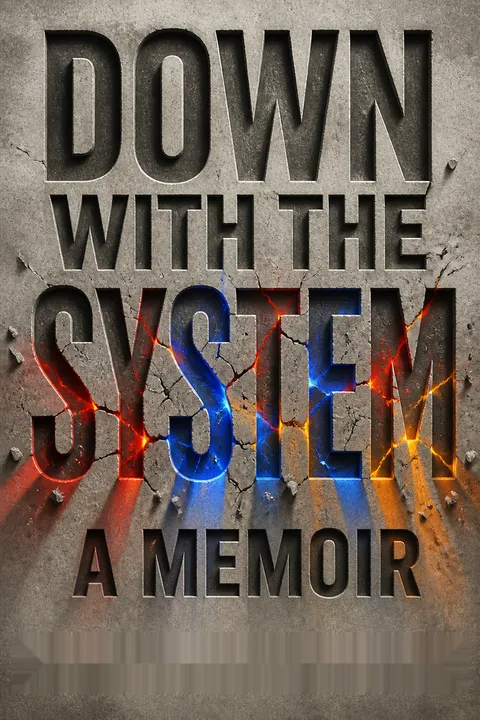
Down with the System is a memoir about the costs of belonging to institutions that can offer both opportunity and injury. The title works in several registers: governments that suppress history, corporations that police acceptable speech, the music industry that packages rebellion, and System of a Down itself, whose creative community becomes difficult to inhabit. Tankian’s life is not a simple march from outsider to star. Each new platform creates leverage, but also exposes him to pressure from bandmates, executives, political leaders, and audiences.
The book’s most convincing tension is between nonattachment and responsibility. Meditation helps Tankian become less reactive and more compassionate, yet he discovers that detachment can disguise fear when he avoids speaking up inside the band. Conversely, political confrontation can feel easier than intimate conflict because public causes offer clearer moral language than relationships do. The memoir’s practical ethic therefore rests on a difficult pairing: resist injustice outside the self, and name it honestly within one’s closest circles.
Its activism narrative is strongest when it distinguishes influence from control. Music can attract attention, help raise money, and give organizers access to new audiences; it cannot by itself undo military asymmetry or compel a state to acknowledge its crimes. The account celebrates recognition of the Armenian genocide while noting the geopolitical interests that shaped its timing. That qualification protects the story from becoming a self-congratulatory tale of celebrity changing history alone.
As memoir, the book is necessarily one person’s account of contested relationships and political events. Tankian often acknowledges his own errors, but readers hear far more of his interpretation than those of his bandmates. That asymmetry is a limit, not a reason to discount the candor. The result is a portrait of an artist trying to keep creative freedom, inherited memory, public responsibility, and family affection in the same life, without pretending they always harmonize.
Review Summary
Down with the System is a memoir by Serj Tankian that garnered mostly positive reviews. Readers appreciated Tankian's insights into Armenian history, activism, and his musical career with System of a Down. Many found the book emotional, informative, and inspiring, praising Tankian's storytelling and passion. Some readers were surprised by the focus on activism over band history. A few critics found Tankian's tone pretentious or disagreed with his political views. Overall, fans of Tankian and SOAD enjoyed the deep dive into his life and motivations.
Glossary
grvakhentsor
battlefield for outside powersAn Armenian term Tankian translates literally as “battle apple.” He applies it to places such as Lebanon, Vietnam, and Armenia when they become arenas for larger powers and ideological conflicts. The term emphasizes how ordinary residents can suffer the long aftermath of struggles they did not choose and may have little power to shape.
compassionate confrontation
honest disagreement with careTankian’s phrase for addressing a conflict directly without abandoning respect or concern for the other person. It differs from aggression, which seeks to dominate, and from passivity, which avoids the issue. In his account, it means stating what is not working, listening to the other person, and accepting that care may require an uncomfortable conversation.
lifer
artist by inner necessityA music-industry term Tankian uses for someone whose commitment to music is not dependent on earning a living from it. A lifer makes music because the practice makes life feel meaningful, regardless of fame, income, or public recognition. The idea describes Tankian’s decision to pursue music before he knew whether it could become a career.
Axis of Justice
music-linked grassroots activismA nonprofit founded by Tankian and Tom Morello in 2002 to connect musicians and fans with grassroots political organizations. It brought groups focused on human rights, anti-racism, environmental protection, and other causes to concerts, and also supported direct actions and benefit events. Its model used the audience and visibility of live music to strengthen existing organizing.
g-tummo
monastic meditation practiceA meditation technique practiced by Tibetan Buddhist monks and discussed in Tankian’s account of research into meditation and bodily heat. He describes a 1981 study in which a Harvard physician measured monks raising their body temperature through the practice. Tankian presents it as an example of how sustained mental training can affect bodily experience, not as a technique he personally uses.
FAQ
What's Down with the System: A Memoir about?
- Personal Journey: The memoir chronicles Serj Tankian's life, from his Armenian heritage and childhood in Lebanon to his rise as the lead singer of System Of A Down.
- Art and Activism: It explores the intersection of his music career with his activism, particularly regarding the Armenian Genocide and social justice issues.
- Band Dynamics: The book delves into the inner workings of System Of A Down, highlighting creative tensions and personal relationships among band members.
Why should I read Down with the System: A Memoir?
- Inspiring Story: Tankian's journey from a child of immigrants to a rock star and activist is compelling and relatable, showcasing resilience and creativity.
- Cultural Insights: The memoir provides a unique perspective on Armenian culture and history, particularly the impact of the Genocide.
- Musical Exploration: Fans of music will appreciate the behind-the-scenes look at the creative process of System Of A Down and Tankian's solo work.
What are the key takeaways of Down with the System: A Memoir?
- Art as Activism: Tankian emphasizes that art can be a powerful tool for social change, with artists having a responsibility to speak out against injustice.
- Personal Growth: The memoir illustrates Tankian's journey of self-discovery and the importance of confronting personal and creative challenges.
- Community and Connection: It highlights the significance of community, both within the band and in the broader Armenian diaspora.
How does Down with the System: A Memoir address the Armenian Genocide?
- Personal Connection: Tankian shares his family's history and the impact of the Genocide on his identity, shaping his activism and artistic expression.
- Advocacy Through Art: The memoir discusses how Tankian uses his music to raise awareness about the Genocide and advocate for recognition.
- Cultural Legacy: Tankian emphasizes the importance of preserving Armenian culture and history in the face of denial, arguing for the necessity of acknowledgment for healing and justice.
What role does music play in Down with the System: A Memoir?
- Creative Outlet: Music serves as a vital form of expression for Tankian, allowing him to channel his emotions, experiences, and activism into powerful songs.
- Platform for Advocacy: Through System Of A Down, Tankian uses music to raise awareness about social and political issues, particularly those affecting the Armenian community.
- Personal Journey: The memoir chronicles Tankian's evolution as a musician, detailing the creative process behind iconic songs and the challenges faced in the music industry.
How does Serj Tankian's activism influence his music in Down with the System: A Memoir?
- Political Themes: Tankian infuses his music with political and social commentary, using his platform to address issues such as the Armenian Genocide, war, and environmental concerns.
- Personal Connection: His activism is deeply personal, rooted in his family's history and experiences, adding authenticity and urgency to his lyrics.
- Call to Action: Through his music, Tankian encourages listeners to engage with social issues, fostering a sense of responsibility and awareness among his audience.
What challenges did Serj Tankian face in System Of A Down?
- Creative Tensions: Tankian describes the struggles of collaboration within the band, particularly regarding songwriting and creative control.
- Personal Relationships: The memoir reveals the complexities of Tankian's relationships with his bandmates, including moments of conflict and reconciliation.
- Public Scrutiny: As a prominent figure, Tankian faced intense media scrutiny and backlash for his political views and activism.
How does Down with the System: A Memoir reflect on the music industry?
- Challenges of Success: Tankian candidly discusses the pressures and expectations that come with success in the music industry, including the struggle to maintain artistic integrity.
- Corporate Influence: He critiques the commercialization of music and the impact of corporate interests on artistic expression, particularly in relation to his activism.
- Evolving Landscape: Tankian notes how the music industry has changed over the years, particularly with the rise of digital platforms, encouraging artists to adapt.
What is the significance of meditation in Down with the System: A Memoir?
- Mental Clarity: Tankian discusses how meditation helped him manage stress and anxiety, providing a sense of peace amidst the chaos of his life and career.
- Creative Inspiration: He credits meditation with enhancing his creativity, allowing him to tap into deeper emotional and spiritual insights that inform his music and lyrics.
- Personal Growth: The practice of meditation becomes a tool for self-discovery, helping Tankian navigate the challenges of fame, activism, and personal relationships.
What are the best quotes from Down with the System: A Memoir and what do they mean?
- “Open your eyes, open your mouths, close your hands, and make a fist.”: This quote encapsulates the call to action for awareness and activism, urging individuals to speak out against injustices.
- “The art is always in the doing, not the memorializing.”: This reflects Tankian's belief in the process of creation as the true essence of art, rather than focusing solely on the end product.
- “Injustice anywhere is a threat to justice everywhere.”: A nod to Martin Luther King Jr., this quote underscores the interconnectedness of social justice issues.
How does Tankian balance his music career with activism in Down with the System: A Memoir?
- Time Management: Tankian discusses the challenges of juggling his music career with his activism, particularly as a father, emphasizing the importance of prioritizing his time and energy.
- Integration of Values: He believes that music and activism are intertwined, striving to incorporate his values into his artistic work.
- Community Engagement: Tankian highlights the importance of connecting with others who share his values, finding strength in collaboration and solidarity with like-minded individuals.
What is the significance of the title Down with the System?
- Critique of Authority: The title reflects Tankian's rebellious spirit and his critique of oppressive systems, both in politics and the music industry.
- Personal Journey: The phrase "down with the system" also represents Tankian's personal struggles with conformity and the pressures of fame.
- Call to Action: The title serves as a rallying cry for those who seek to fight against injustice and advocate for change.
Download PDF
Download EPUB
.epub digital book format is ideal for reading ebooks on phones, tablets, and e-readers.








