

Plot Summary
A Maid in the Parterre
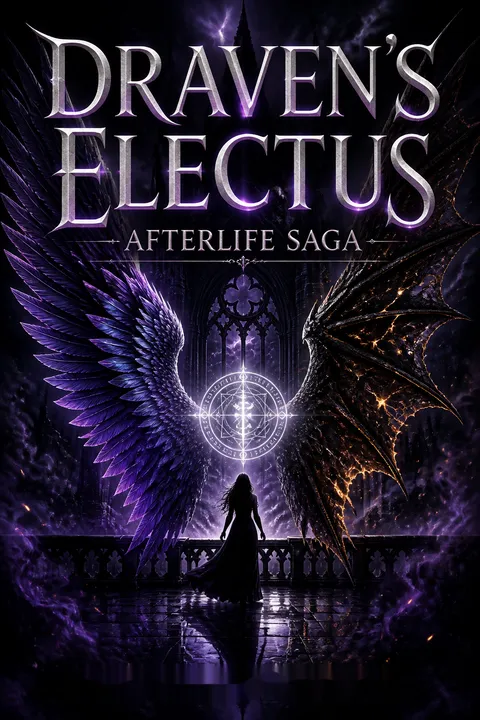
In a dream set at Witley Court in 1867, Draven, a centuries-old king living among humans, watches a new maid slip away from a gathering. She sneaks into the stables to feed sugar to a horse, and when her hood falls, he recognizes the woman he has been waiting for across lifetimes. His brother Vincent suspects she is Draven's Electus, the prophesied companion meant for him.
The maid gives her name as Keira and accepts Draven's offer of riding lessons. He sees her as his future queen, though she knows only that her intimidating employer has taken an unusual interest in her. The meeting gives shape to Draven's longing, but his dream soon turns from a promise into a warning.
The vision makes recognition feel less like romantic luck than a collision between fate and personal choice. Draven's certainty is immediate, but Keira has not consented to the role he imagines for her. His wealth, authority, and supernatural knowledge give him power over the encounter, while her cautious attention to the horse offers a small but important counterweight: she approaches beauty through care, not possession. The opening therefore establishes the story's central tension early. Draven believes destiny has delivered Keira to him, but he must learn that destiny cannot substitute for her trust.
A Dream Turns Fatal
The 1867 dream carries Draven from their meeting into a darker sequence. Keira is mistaken for a thief, punished by the household cook, and later attacked in Draven's chambers by a figure whose identity shifts in the dream. Wounded and terrified, she reaches the tower roof and falls before Draven can catch her.
He wakes in the present with his wings wrapped around the sleeping Keira, the dream's images still vivid. He takes the vision as evidence that his true nature will frighten her into danger. Rather than tell her what he is or ask what she wants, he carries her home and decides to sever their growing bond, believing rejection can keep her alive.
The nightmare turns Draven's protective instinct into a rationale for control. He treats a possible future as proof, then makes a life-altering decision without giving Keira any voice in it. His fear is sincere, but sincerity does not make the decision harmless. The dream also binds two kinds of danger together: the physical threats posed by supernatural enemies and the emotional harm Draven inflicts while trying to anticipate them. His choice begins the novel's cycle of protection becoming abandonment, a pattern he will have to confront before Keira can trust his assurances.
A Rejection With Teeth
At the club where Keira works, Draven disguises the truth about the attack she partly remembers and presents Celina, a council member, as his fiancée. He tells Keira that her feelings for him are mistaken and removes her from the VIP section. Keira refuses to accept the humiliation quietly: she quits, then drives to a lookout and tears up a photograph of Draven, scattering its pieces into the wind.
Draven secretly gathers the fragments and understands that she has treated the gesture as a goodbye. He does not reverse his decision. Instead, he keeps away, watches her through others, and searches her records for clues about her life, turning separation into surveillance rather than allowing her to choose whether to stay close.
Draven's lie is designed to make Keira leave, but its method reproduces the very injury he claims to prevent. By framing her affection as childish error, he converts a mutual bond into a source of shame. Keira's destruction of the photograph is a concrete act of reclaiming agency: she cannot control Draven's story, so she chooses what to keep of him. His retrieval of the pieces reveals the contradiction at the center of his behavior. He wants her to move on, yet cannot tolerate the material sign that she might actually do so.
The File Beneath Her Silence
During the weeks apart, Draven obtains Keira's police file and learns that, at university, a lecturer named Hugo Morgan abducted her for forty-three days. Morgan had murdered others and built a private collection around his fixation on Keira; the case records show how little investigators understood about what she endured.
Draven's anger drives him to destroy his office and fight until his own people can barely keep up. Wanting to know how Keira is coping, he disguises himself as a therapist and meets her under the name Miss Johnson.
She describes recurring nightmares and admits that she fell in love with her boss, though she tries to conceal that he is Draven. He prescribes sleep medication, then leaves with proof that her feelings have survived his rejection.
The file gives Draven information without giving him intimacy. He can read evidence and reconstruct events, but Keira's refusal to testify has preserved a boundary around her experience. His violent reaction to the records partly expresses compassion, yet it also risks replacing her story with his revenge. The disguised therapy session repeats that imbalance: he learns what she cannot bring herself to say to him, while she believes she is speaking to a stranger. Her nightmares show that silence has not erased the past, and her admission of love makes Draven's chosen distance harder to defend.
Halloween's Red Warning
At the club's Halloween event, Keira arrives in a striking red costume, and Draven, masked as a demon, draws her into a dance. For a few moments their attraction replaces the distance he imposed. Then the windows seem to shatter, the room transforms into a bloody wasteland, and Keira disappears from his reach.
In the vision, the vampire king Lucius takes her and leaves Draven with the image of her dying. Draven wakes from the nightmare shaken by how real it felt. Vincent then shows him hospital surveillance from two years earlier: Lucius visited Keira while she was being treated after her escape from Morgan. The footage proves Lucius knew of her long before Draven found her.
The Halloween sequence stages Draven's fear as spectacle: a public dance becomes a private nightmare, and the lover he has tried to hide is suddenly visible as his greatest vulnerability. The surveillance footage then gives that fear a factual basis. Lucius has not merely appeared in Draven's dreams; he has already had access to Keira. This shift matters because it changes the question from whether danger exists to what Lucius has been waiting for. Draven's instinct is still to protect by withholding, but the evidence makes secrecy less defensible and his delay more consequential.
Malphas at the Table
Draven summons Malphas, a powerful representative of Hell, to ask about Lucius and the Electus. Keira arrives at the club with Jack, a human friend, and Draven's jealousy erupts when Jack kisses her. He has Jack removed, prompting Keira to confront him in front of Malphas. Malphas offers to escort her home, and Keira accepts before Draven's brother Vincent intercepts them and brings her back safely.
Later Draven sees Keira and Jack kiss again, and recognizes that his own rejection pushed her toward someone else. The next day she challenges Draven about his contradictory behavior and quits her job. He cannot explain himself without revealing too much, so she leaves him with anger instead of the trust he wants.
Keira's choice to accept Malphas's offer is reckless, but it also exposes the cost of Draven's claim that she is only an employee. He wants the privileges of a protector while denying the obligations of a partner. Jack's presence makes that contradiction visible, and Keira's confrontation is one of the few moments when she acts on her own account rather than responding to Draven's commands. The scene also distinguishes jealousy from care. Draven's possessiveness is intense, but until he tells the truth and respects Keira's choices, it cannot serve as evidence that she is safe with him.
The Childhood She Buried
After Keira quits, Draven investigates her childhood and finds school reports written when she was seven. They describe her drawing a blood-feeding demon, refusing to play with classmates, and insisting that a boy in her class was a monster. Her teachers considered sending her to a special school, but the records stop before explaining what changed.
The discovery shows Draven that Keira has seen supernatural beings for most of her life and learned to contain the visions by sketching them. He recognizes that the mental defenses he mistook for recent strength were built over years of isolation. Rather than continue pretending she is ordinary, he decides to acknowledge her as his Electus and tell her what he is.
The childhood reports recast Keira's resilience as practiced adaptation rather than a miraculous immunity. Drawing becomes a way to give frightening visions a boundary: she can place them on paper and keep them from taking over her waking life. Yet this coping method has a social cost. Adults interpret her descriptions as evidence that something is wrong with her, so she learns to conceal what she sees. Draven's discovery should invite humility, because her defenses are not a puzzle he owns. They are the tools she built to survive disbelief.
Morgan Walks Free
Before Keira can meet Draven to hear the truth, his people discover that Morgan has escaped the institution where he was held. A caller claims Keira's sister Libby has been attacked, and Keira tries to leave the club to reach her.
Draven intercepts her, confirms with police inspector Matthews that the emergency is false, and insists she remain at Afterlife for protection. He takes her phone and uses chloroform when she refuses to come quietly. Once inside, Keira wakes, tries to escape through the unfamiliar house, and is found by Sophia.
Draven tells her he will let her leave if she explains her past, hoping for an honest account. The bargain gives Keira a reason to speak, though he still intends to keep her safe whether she agrees or not.
The false emergency exploits Keira's most reliable moral reflex: she moves toward family in danger. Draven's response may prevent her from walking into a trap, but his methods echo Morgan's use of force and deepen the risk of retraumatizing her. The narrative makes this resemblance uncomfortable rather than invisible. Draven's stated motive is protection, but he removes Keira's phone, incapacitates her, and offers a bargain he has already decided not to honor fully. His good intentions are tested not by what he feels, but by whether he can make protection compatible with her agency.
Forty-Three Days
Keira begins with her childhood visions, then explains how Morgan became her art lecturer and gradually turned his attention into stalking. After she planned to report him, he abducted her and held her for forty-three days, subjecting her to confinement and physical abuse. She describes cutting herself with a shard from a music box, not to die, but to force Morgan to take her to a hospital and give her a chance to escape.
That distinction enrages her when Draven assumes the act was a suicide attempt. She tells him she acted to protect herself and her family. Seeing how much his assumption wounds her, Draven stops arguing and listens. Their confrontation gives way to a first intimate encounter, built on her choice to remain close.
Keira's account restores intention to an act that other people, including Draven, have misread. The scars are not proof that she wanted death; they record a desperate strategy for survival under conditions designed to make every choice dangerous. Her correction matters because it refuses the easy diagnosis that would make her legible at the cost of her own account. Draven's willingness to listen marks a small but crucial change: he must accept that loving Keira does not make him the authority on what she has endured. Her disclosure is not a cure, but it changes the terms of their intimacy.
No Fiancée, No Goodbye
After their first night together, Keira worries that Draven is still engaged to Celina. He brings Celina in to clarify that they have never been engaged or lovers, revealing that he invented the fiancée to drive Keira away. He then explains that he is part angel and part demon, a ruler among supernatural beings who feed on emotion.
Keira initially fears that he has used her pain for power, but Draven tells her she cannot be fed upon and is his prophesied Electus. He answers her questions about his abilities and admits to watching over her. When he speaks to her sister Libby, Draven openly declares his love; Keira confirms to Libby that she loves him too.
The confession does not erase Draven's deception, but it changes its purpose from a mystery Keira must solve into a choice she can evaluate. Celina's testimony removes the rival he invented, while the supernatural explanation gives Keira a framework for experiences she has hidden since childhood. The most important shift is reciprocal naming: Draven's love stops being an internal certainty and becomes something he risks saying aloud, while Keira acknowledges her own attachment without surrendering her judgment. Their bond begins to move from fate imposed on her toward a relationship she can consciously enter.
The King Beside Her
Draven brings Keira into his supernatural world instead of keeping her at the edge of it. She meets his council, learns that Sophia has burned part of her college to disrupt her routine, and responds to the group's attention with wary curiosity.
At a birthday gathering for Sophia and Vincent, Keira handles a cherry-stem trick that turns an awkward moment into laughter, then faces Aurora, Draven's former lover, without retreating. Draven's possessive attention remains obvious, but Keira also teases, questions, and sets limits, including insisting they honor Sophia's celebration.
Their growing closeness gives Draven a rare calm. Meanwhile, the club's records and Morgan's recorded therapy sessions reveal that a demonic presence has been speaking through the escaped killer.
Keira's inclusion in the council is more than a ceremonial welcome. It places her among the beings she once feared and gives her a chance to respond as a person rather than a patient or victim. Her humor and small acts of defiance matter because they keep her from being absorbed into Draven's grand narrative of a destined queen. At the same time, his ease around her does not dissolve the power imbalance between them. The growing threat in Morgan's recordings makes their newly shared world unstable, testing whether intimacy can coexist with honest information.
The Nightmare Door
Keira's nightmares become more than memories when an unseen presence traps her inside a dream and blocks Draven from reaching her mind. He breaks through the imagined barrier after she calls for him, wakes her, and learns that the dream included Morgan and a voice she could not identify. Draven recognizes the intruder as Sammael, an ancient fallen being he once imprisoned.
He explains to his council that Sammael has a history of trying to manipulate human hosts and that Draven's past defeat of him may be driving this attack. The group searches for a demon connected to Morgan, but the body they find has been tortured and left as a decoy. The failed hunt proves their enemy has planned around Draven's need to protect Keira.
The nightmare turns Keira's private coping space into contested territory. Draven can enter only because she calls for him, a detail that preserves her agency even as the threat tries to exploit her vulnerability. His ability to rescue her is meaningful, but it also exposes a danger: protection can become a kind of mental invasion if consent is ignored. The decoy corpse expands the conflict from a personal pursuit into a strategic one. Sammael understands Draven's habits and can predict how concern for Keira will shape his decisions, making the king's love both a source of courage and a point of leverage.
A Stolen Ride to the Cabin
During the celebration, a caller tells Keira that Libby has been attacked and sends a supposed police officer to collect her. Keira leaves despite Draven's earlier precautions, trusting the familiar appeal to family. The officer is part of Sammael's plan, and Morgan is with him. At Afterlife, Draven discovers that the demon brought in by his men was a decoy; by the time he understands the deception, Keira is gone.
She leaves a note explaining her departure, and Takeshi traces its connection to a stolen police car abandoned in the woods. Draven follows the scent of the vehicle to a remote cabin. Inside, Morgan has Keira bound and wounded, while Sammael waits to confront Draven and turn the rescue into a trap.
The abduction succeeds because it uses care as camouflage. Keira is not fooled by supernatural spectacle; she is moved by the possibility that her sister needs her. Her decision repeats the self-sacrificing logic she described during captivity, placing other people's safety above her own. Draven's safeguards fail partly because they rely on controlling access rather than understanding what will persuade her to leave. The note she sends him is both an act of trust and a boundary: she believes she can manage the danger herself. The cabin reveals how completely Sammael has learned to weaponize those instincts.
The Ravine's Last Inch
Draven tears open the cabin to reach Keira, throws Morgan aside, and kills him when he threatens her with a blade. Sammael then attacks with creatures from Hell and challenges Draven directly. Their fight drives the battle toward a ravine, where Morgan, revived as a vessel for Sammael's scheme, drags Keira toward the edge.
Draven is briefly overwhelmed by Sammael's black soul, but calls on his demonic nature to break free. He reaches Keira as she falls, catches her, and sends Sammael's soul into Tartarus. Morgan dies below. Draven brings Keira home alive, but the victory does not end the larger danger: Lucius has been arranging events from afar, and a phone call from him confirms that their conflict is still active.
The climax literalizes the cost of Draven's earlier nightmare: this time Keira falls, but he reaches her. The rescue is earned through more than strength. He has learned to hear her warning about the trap, even though his anger and fear still propel him into battle. Morgan's final use as a vessel shows how abuse can be extended by forces beyond the victim and perpetrator, while Sammael's defeat leaves the larger system of manipulation intact. Draven saves Keira's life, but the story refuses to confuse survival with safety. The call from Lucius turns the reunion into a precarious beginning.
Epilogue
Draven returns to his council after carrying Keira to safety, but new threats crowd the room. Lucius had made a bargain with Sammael, and a hidden company linked to the name Evelyn Sam points toward two unknown sons who may be Nephilims. Draven also learns that Layla has escaped confinement.
He keeps these dangers from Keira while his people search for the brothers and prepare for another conflict. Then Lucius calls. The old ally turned enemy addresses Draven as a friend, leaving the king with no illusion that the rescue has settled anything.
The ending gives Keira immediate safety but denies the reader a closed victory. Draven has defeated the threat in front of him, yet the epilogue reveals that the conflict belongs to a wider network of bargains, hidden heirs, and escaped prisoners. His instinct is still to protect Keira by withholding information, which means the old problem has not vanished with Sammael. The call from Lucius is especially effective because it returns the story to the intimate scale of a personal relationship while widening the stakes again. Draven has won the person he feared losing, but must now decide whether keeping her safe means trusting her with the danger.
Analysis
The novel's central conflict is not simply the struggle between supernatural good and evil. It is the struggle over who gets to define safety. Draven believes his power and long experience qualify him to make decisions for Keira, especially when enemies threaten her. Yet his attempts to protect her through lies, surveillance, and confinement reproduce the structure of control that already shaped her trauma. The story makes this contradiction concrete: Keira is most endangered when other people treat her as an object to possess, rescue, or hide.
Keira's sketches offer the counter-image. As a child, she cannot make others believe her visions, but she can give them form and keep them from swallowing her. Her art is not a cure or a mystical weapon so much as a practice of self-definition. Likewise, her account of cutting herself revises the meaning others attach to her scars. She acts to survive and protect her family, not because she has surrendered to despair. The book's insistence on her own explanation challenges the clinical and romantic impulse to interpret a person's pain from the outside.
The prophecy complicates this question rather than resolving it. Draven and Keira are destined for one another, but destiny does not automatically produce a healthy relationship. Their bond becomes more credible when Draven begins telling the truth and Keira is allowed to question, resist, and choose. Even then, the ending remains uneasy. Draven catches her from the ravine, but the larger threats remain, and his instinct is still to hide danger from her. The final call from Lucius suggests that love has made Draven more vulnerable, but it may also force him to become more accountable. The book's most durable insight is that devotion is not measured only by what someone will risk to save another. It is also measured by whether they can share power, tell the truth, and let the beloved remain a person rather than a possession.
Review Summary
People Also Read


Characters
Draven
The divided immortal kingDraven is a ruler who carries both angelic and demonic power, along with the impatience and authority of someone accustomed to being obeyed. He has spent lifetimes awaiting his Electus, Keira, and his immediate certainty about her becomes both devotion and a threat to her independence. He protects through force, surveillance, and secrecy because he fears that his enemies will use love against him. Those methods repeatedly injure the person he means to keep safe. His deeper struggle is not whether he can fight, but whether he can treat Keira as an equal whose choices matter. His humor and tenderness emerge most clearly when he lets go of command.
Keira Williams
The resilient seerKeira, whose full name is Catherine Keiran Williams, is a university student and waitress who has learned to manage visions of supernatural beings since childhood. She sketches what she sees, using art to contain experiences that adults have dismissed or misunderstood. Her compassion often moves her toward other people in danger, even when that instinct puts her at risk. The scars she hides are connected to a captivity she has never publicly described, and her guardedness is a survival strategy rather than a lack of courage. Keira is drawn to Draven but refuses to let attraction erase the need for honesty, respect, and choice. Her humor and defiance keep her from becoming merely the object of his prophecy.
Vincent
Draven's steady brotherVincent is Draven's brother, a powerful angel and one of the few people willing to challenge his decisions without flinching. He acts as mediator when Draven's fear turns into anger, and he often sees the emotional consequences his brother refuses to face. His loyalty is not passive: he argues, fights, and intervenes when doing so may prevent a larger disaster. Vincent's perspective helps expose the difference between protecting Keira and controlling her.
Sophia
The fierce sister and allySophia is Draven and Vincent's sister, a supernatural being with a warm attachment to Keira and little patience for Draven's evasions. She supports Keira as a friend rather than treating her only as a prophesied figure. Her wit, bluntness, and occasional taste for destruction make her a lively presence at the council, but her strongest function is emotional: she tells Draven when his choices are hurting the person he claims to love.
Lucius
The rival vampire kingLucius is a vampire king and former ally of Draven whose long history with him has curdled into rivalry. He is patient, strategic, and skilled at turning information into leverage. His interest in prophecy and powerful objects places him near the center of the supernatural political conflict. Even at a distance, he makes Draven question whether a threat has passed or merely changed form.
Sammael
The ancient fallen adversarySammael is an ancient supernatural power whose conflict with Draven reaches back through a long and violent history. His influence is associated with corrupted souls, manipulated minds, and schemes that make human obsession serve larger ambitions. He is dangerous not only because of his strength but because he understands how to turn an enemy's attachments into weapons.
Morgan
The obsessive former lecturerHugo Morgan is a former art lecturer whose apparent charm hides a possessive and distorted fixation on Keira. He interprets her kindness as permission and cannot accept her autonomy. His violence is bound up with a fractured identity and a history he struggles to distinguish from the present. Morgan's role complicates the idea of a single, self-contained villain, since his own instability makes him vulnerable to manipulation by more powerful beings.
Celina
The council's composed memberCelina serves on Draven's council and is accustomed to handling delicate assignments with calm discretion. Draven uses her in a deception meant to drive Keira away, but Celina remains composed and later clarifies the truth about their relationship. Her presence links the supernatural council to Draven's earlier life and reminds him that even a well-intended lie can create unnecessary harm.
Malphas
The calculating Hell emissaryMalphas represents powerful interests in Hell and approaches Draven with his own questions about the prophecy. He is courteous in the manner of someone measuring every weakness in the room. His encounter with Keira exposes how vulnerable she is to supernatural politics before she understands their rules, and his interest unsettles Draven's effort to keep her unknown.
Jack
Keira's loyal human friendJack is Keira's friend, a human man whose affection for her is complicated by a past connection to Celina. He offers Keira companionship outside Draven's supernatural world and becomes an unwelcome mirror for Draven's jealousy. Jack's loyalty is shown through actions rather than claims: he respects Keira's confidence and carries out a request without exploiting it for his own advantage.
Aurora
Draven's resentful former loverAurora is a member of Draven's council and a former lover who resents Keira's place beside him. Her beauty and confidence conceal a competitive streak, and she uses pointed remarks to test Keira's security.
Zagan
The loyal security chiefZagan is Draven's trusted security chief and a powerful supernatural being. He carries out the king's orders, protects the club, and is married to Sophia. His loyalty is practical and steady, though the events surrounding Keira test whether following orders is enough when the king's judgment is clouded.
Takeshi
The time-seeing SeekerTakeshi is a Seeker who can access visions of past events through a connection to the god of time. He supplies Draven's group with clues when ordinary investigation fails, though supernatural interference can obstruct his sight.
Ranka
The determined investigatorRanka is one of Draven's capable agents, responsible for gathering records and following leads across human and supernatural institutions. Her thoroughness helps connect Keira's childhood, Morgan's history, and the conspiracies surrounding her.
Ava
Draven's demonic companionAva is Draven's supernatural bird and a trusted scout. She can search from the air and defend Keira when Draven must leave her side.
Inspector Matthews
Keira's conscientious investigatorInspector Matthews is the police officer who handled parts of Keira's case. He is troubled by the failures in the investigation and remains concerned about her safety, even when supernatural forces make ordinary police work inadequate.
Libby
Keira's protective sisterLibby is Keira's sister and an important source of family connection. Her safety matters deeply to Keira, which makes appeals to family especially powerful ways to influence her decisions.
Frank
Keira's brother-in-lawFrank is Keira's brother-in-law and Libby's partner. He belongs to the family circle Keira is determined to protect, and his ordinary human ties become vulnerable to supernatural deception.
Plot Devices
The Electus prophecy
Fate creates a bondThe Electus is the human prophesied to bond with a supernatural king. Draven recognizes Keira as his destined partner, and that certainty shapes his behavior long before she understands the prophecy. The device gives their attraction a cosmic scale, but it also raises a difficult question: does being destined for someone grant a right to decide for them? The story repeatedly tests that assumption. Draven's status and the prophecy can explain why he feels so intensely, but they cannot replace Keira's consent or her own interpretation of their relationship.
Keira's visions and sketches
Fear made visibleSince childhood, Keira has seen supernatural beings that other people cannot perceive. She sketches them as a way to contain and manage the visions, and her old school reports preserve evidence of this practice. The drawings connect her past to the supernatural conflict before she knows how much she is involved in it. They also provide a model for her coping: rather than simply deny what she sees, she gives it a visible form and a boundary. When an enemy invades her dreams, that carefully built defense becomes a crucial part of her survival.
Mind influence and memory
Control disguised as protectionDraven and other supernatural beings can influence human minds, alter memories, or interfere with perception. Draven uses these powers to hide his nature, monitor Keira, and protect her from threats. The same abilities allow her enemies to manipulate guards, create false impressions, and attack through dreams. This device keeps the conflict from being purely physical, but its ethical weight is central: every alteration risks making safety indistinguishable from coercion. Keira's unusually strong mental defenses complicate the power balance and prevent Draven from treating her mind as territory he can freely occupy.
Blood and immortal essence
Intimacy changes the bodySupernatural beings draw power from human emotions, while physical intimacy and blood exchange can pass supernatural essence between bodies. Draven's bond with Keira has consequences beyond desire: his essence begins to affect her mortal body and may eventually make her more resilient. The device binds romantic closeness to danger and transformation. It also gives Draven a concrete temptation to decide what is best for Keira without asking her, since he imagines immortality as protection. The story leaves tension between his wish to preserve her and her right to understand what is happening to her body.
Decoys and false emergencies
Trust becomes a trapSammael's scheme relies on false identities, a decoy prisoner, manipulated guards, and a fabricated report that Keira's sister has been hurt. Each deception exploits a believable human response, allowing the conspirators to evade Draven's supernatural security. The false emergency is especially effective because Keira acts from love and responsibility, not foolishness. The device turns the story's most admirable trait into a vulnerability and shows why sheer strength cannot solve every threat. Draven's failure to anticipate the emotional logic of the lie gives the enemy the opening needed to take Keira.
About the Author
Other books by Stephanie Hudson


Download PDF
Download EPUB
.epub digital book format is ideal for reading ebooks on phones, tablets, and e-readers.








